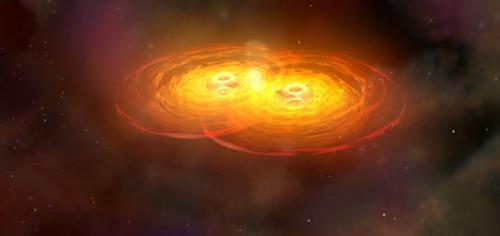
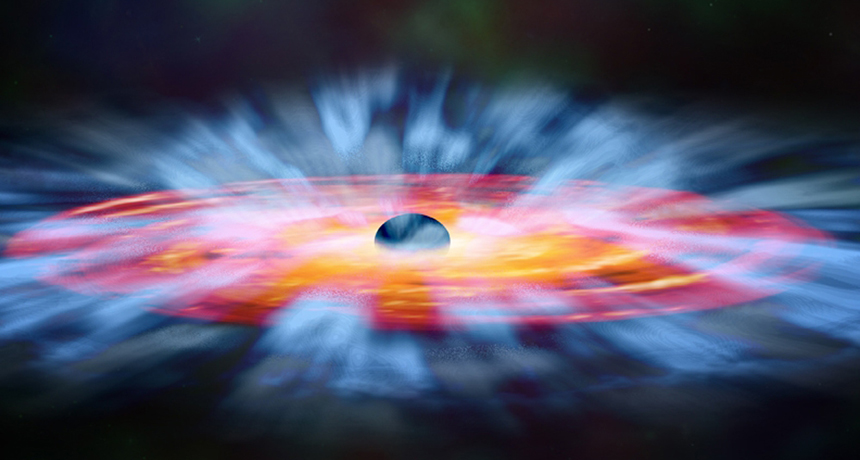
If a particle and its antiparticle pop into being on the event horizon, one gets sucked in. The other gets away. If the antiparticle gets sucked into the black hole, and the particle breaks free, the particle no longer has a chance to annihilate. It is now real, and not virtual. Its presence and energy count in the universe. And real radiation leaking from a black hole means that the black hole itself is slowly shrinking. (Credit: Chandra Observatory, NASA, Inglis-Arkell)
via io9
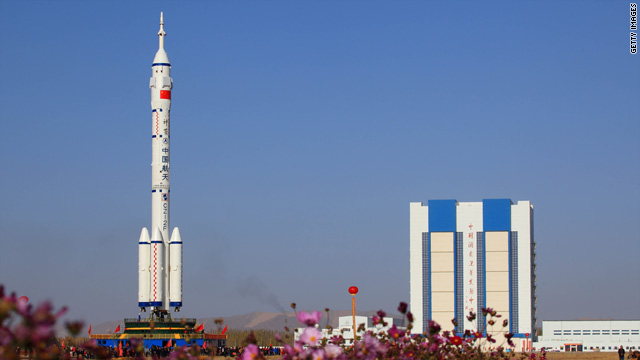
The U.S. Defense Department has highlighted China’s increasing space capabilities, however, saying China was pursuing activities aimed at preventing its adversaries from using space-based assets during a crisis.(Credit: Jaime FlorCruz – CNN Beijing Bureau Chief)
via reuters
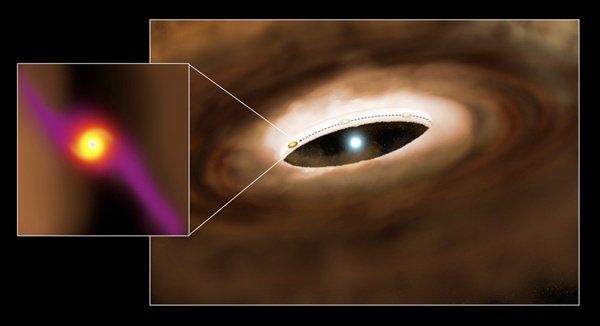
The new planet would be an uninhabitable gas giant at least three times the size of Jupiter, and the distance from the star would be about the same distance that Saturn is from the Sun. This graphic is an artist’s conception of the young massive star HD100546 and its surrounding disk. (Credit: VP. Marenfeld & NOAO/AURA/NSF)
via astronomy
If our understanding is correct, then the universe as a whole could be in a locally stable configuration, but it could also jump to a lower energy state through a process of quantum tunneling. If that happened, the universe would collapse and we’d all go bye bye. So to our best understanding, it is possible for the universe to collapse. (Credit: )
via phys.org
Quarks have one of three “color charges,” which are analogous to the primary colors red, green and blue. Just as an atom strikes a balance between positive and negative electrical charges, particles made of quarks balance colors to reach a neutral state. In the color analogy, that means combining colors to make white. (Credit: Quanta Magazine)
via wired
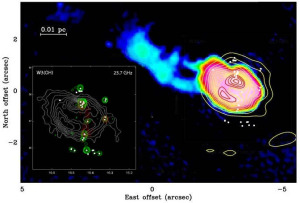
There is a giant cloud of alcohol in outer space. It’s in a region known as W3(OH), only about 6500 light years away. Unfortunately it is methyl alcohol (commonly known as wood alcohol, though this stuff is not derived from wood), so it isn’t suitable for drinking. There is some ethyl alcohol (the drinkable kind).(Credit: Hubble)
via phys.org
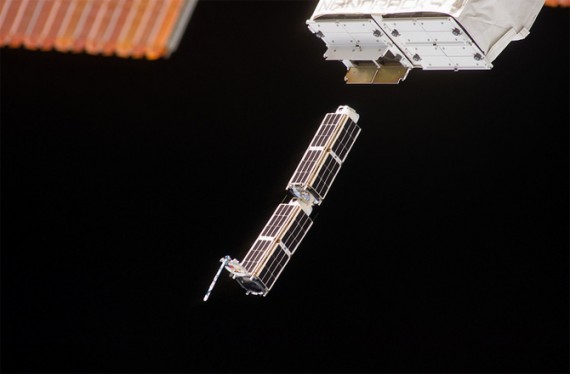
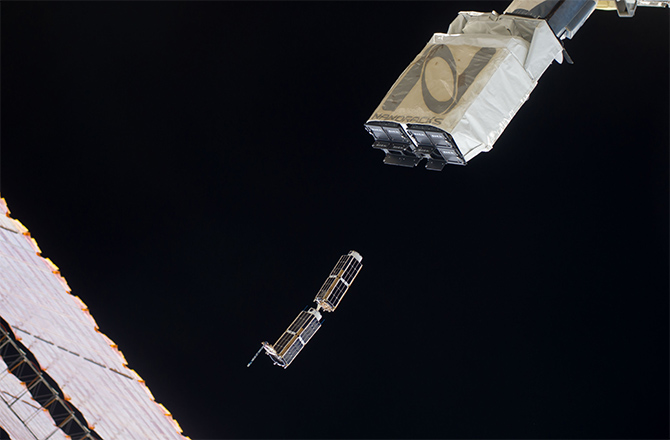
Two tiny satellites escaping on their own doesn’t sound too bad … except it’s not the first time this has happened. On August 23rd, NASA reports that two other CubeSats set themselves free. OK, 4 out of 100 doesn’t sound too bad either … except only 12 have been launched so far, which means a quarter of the CubeSats un-tethered themselves. (Credit: NASA)
via mysteriousuniverse
Classical black holes have “no hair”, meaning that they are simply described by their mass, charge and rotation. Because of this, you could toss an object (with a great deal of entropy) into a black hole, and the entropy would simply go away. (Credit: NASA/Chandra, B. Koberlein )
via phys.org
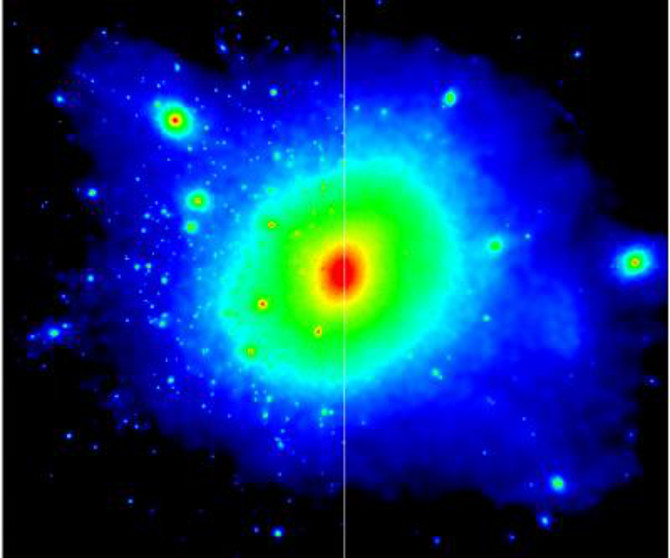
Two models of the dark matter distribution in the halo of a galaxy like the Milky Way, separated by the white line are shown. The colors represent the density of dark matter, with red indicating high-density and blue indicating low-density. On the left is a simulation of how non-interacting cold dark matter produces an abundance of smaller satellite galaxies. On the right the simulation shows the situation when the interaction of dark matter with other particles reduces the number of satellite galaxies we expect to observe around the Milky Way. (Credit: Durham University)
via forbes
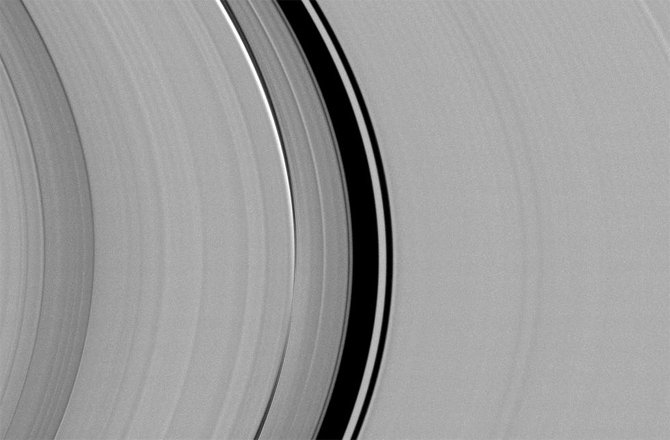
Cassini spied just as many regular, faint clumps in Saturn’s narrow F ring (the outermost, thin ring), like those pictured here, as Voyager did. But it saw hardly any of the long, bright clumps that were common in Voyager images. (Credit: NASA/JPL-Caltech/SSI)
via discovery
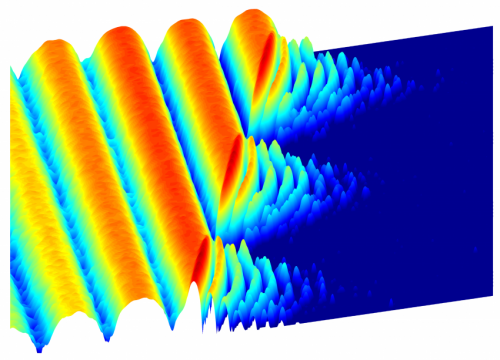
Oscillations of photons create an image of frozen light. At first, photons in the experiment flow easily between two superconducting sites, producing the large waves shown at left. After a time, the scientists cause the light to “freeze,” trapping the photons in place. Fast oscillations on the right of the image are evidence of the new trapped behavior. (Credit: Princeton University)
via phys.org
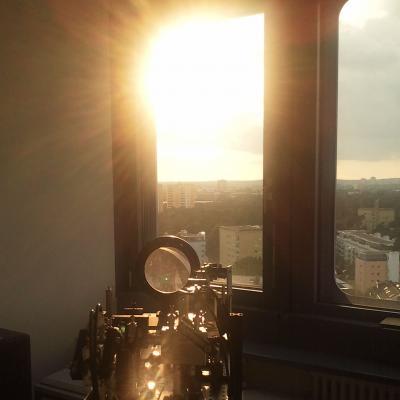
Erlangen-based physicists have sent bright pulses in sensitive quantum states through the window of a technical services room on the roof of the Max Planck Institute for the Science of Light to a building of the University Erlangen-Nürnberg. These types of light flashes are easy to receive even when the sun is shining brightly, unlike the signals of individual photons used to date. (Credit: MPI for the Science of Light)
via sciencecodex
The gravity of a black hole swallows the matter around it. The link between tensor networks and quantum entanglement may prove useful in studying the physics of black holes, some physicists propose. (Credit: M. Weiss, Chandra X -ray Center/NASA)
via sciencenews
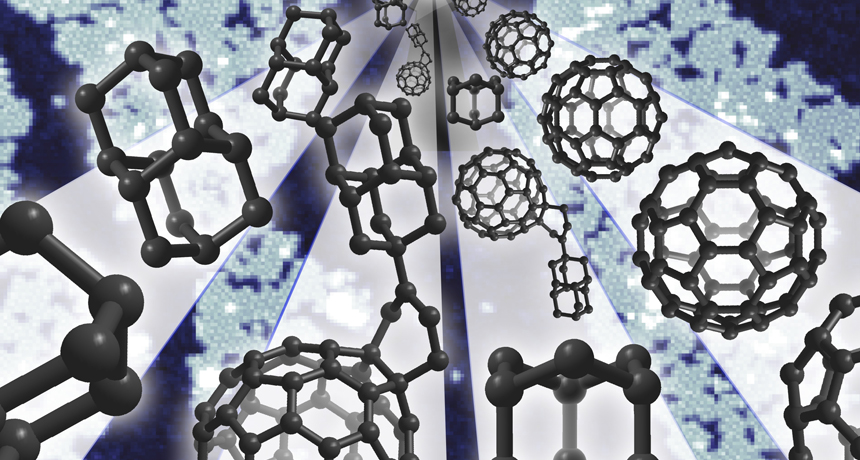
Square, cage-shaped molecules called diamondoids (left) linked to soccer-ball shaped buckyballs (right) create a new molecule called a buckydiamondoid, center, in this illustration. These new hybrid molecules may be useful for developing molecular electronic devices in the future. (Credit: Manoharan Lab/Stanford University)
via sciencenews
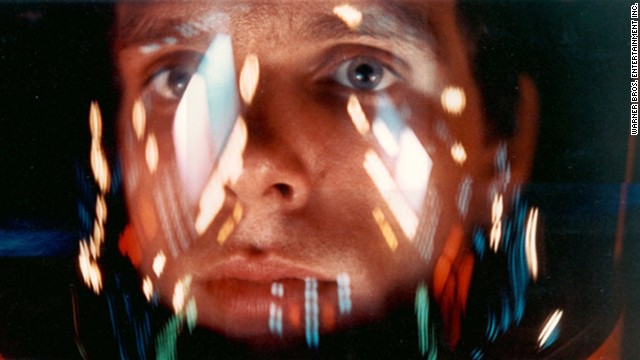
Machines have surpassed humans in physical strength, speed and stamina. What if they surpassed human intellect as well? Science fiction movies have explored this question. In the classic “2001: A Space Odyssey,” astronaut David Bowman, played by Keir Dullea, struggles for control of the spacecraft against the sentient computer HAL 9000.
via cnn
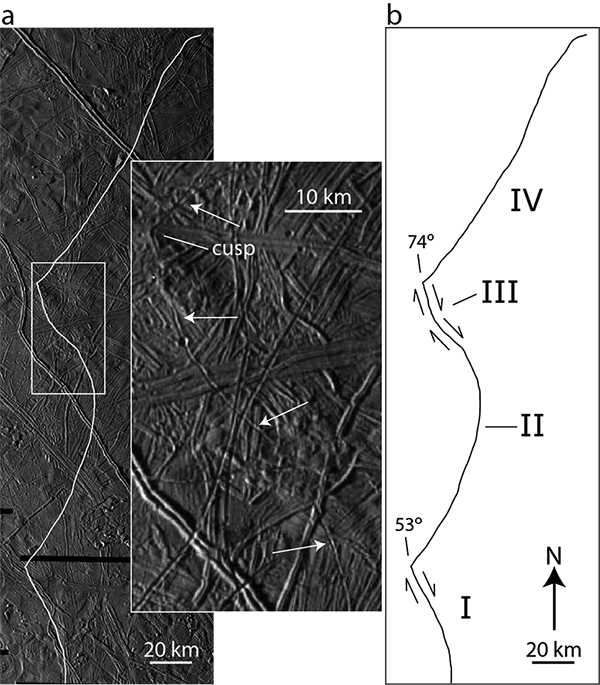
Schematic sketch of the growth mechanics of a cycloid Note that the reversal in curvature of the second segment above cannot be explained by the previous model of cycloid formation. (Credit: Marshall & Kattenhorn (2005))
via motherboard
“What Mark has done is put his finger on a key ingredient of how space-time is emerging: entanglement,” says Gary Horowitz, who studies quantum gravity at the University of California Santa Barbara. Horowitz says this idea has changed how people think about quantum gravity, though it hasn’t yet been universally accepted. “You don’t come across this idea by following other ideas. It requires a strange insight,” Horowitz adds. “He is one of the stars of the younger generation.”
via dailygalaxy
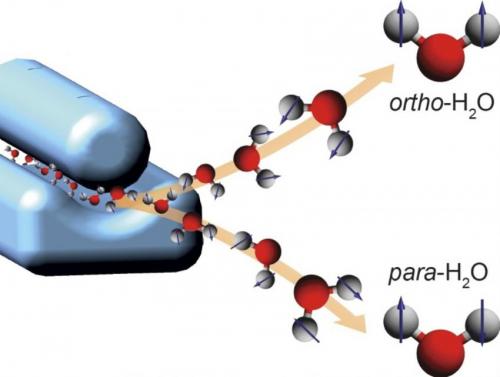
Researchers have separated the nuclear spin states of water. In para water, the spins (depicted as arrows) of water’s two hydrogen nuclei cancel out. They add up in ortho water. The scientists produced an ultracold, supersonic beam of water molecules — a mixture of para and ortho water — and sent it through an electric deflector (blue device on the left). The deflector acts as a prism for nuclear spin states, separating para and ortho water molecules in space (right). (Credit: Daniel A. Horke, CFEL/DESY)
via phys.org
In this Sunday Sept. 7, 2014, publicly distributed handout photo provided by the Nicaraguan Army shows an impact crater made by a small meteorite in a wooded area near Managua’s international airport and an air force base. Nicaraguan government spokeswoman Rosario Murillo said Sunday that a loud boom heard overnight by residents of the capital was a “relatively small” meteorite that “appears to have come off an asteroid that was passing close to Earth.” (Credit: Nicaraguan Army/AP)
via newsweek
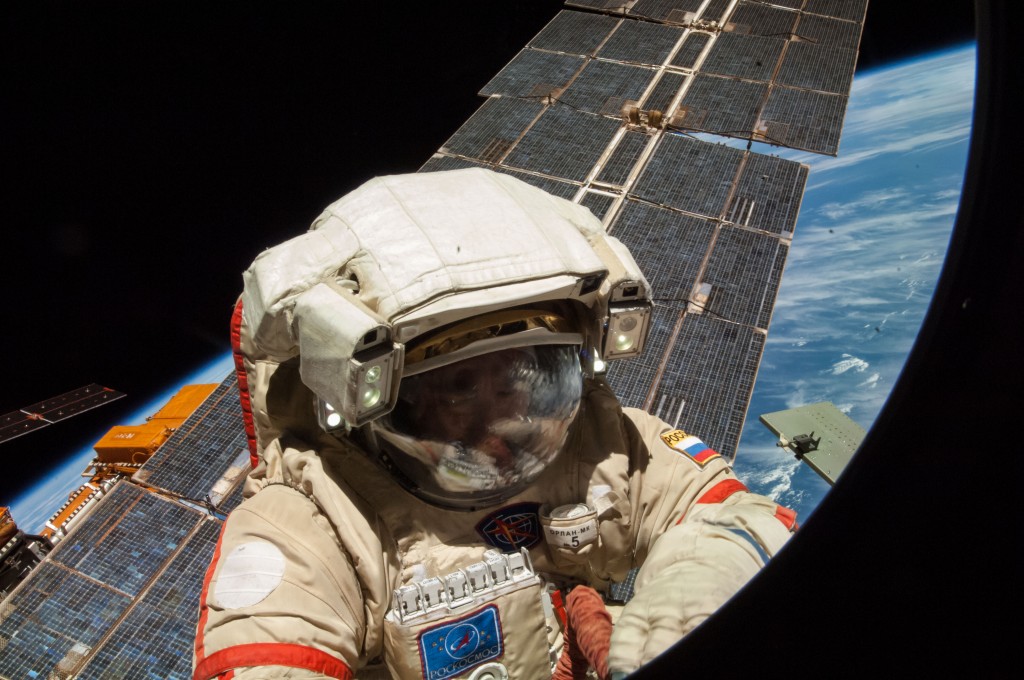
Russian cosmonaut Alexander Skvortsov, performs maintenance and retrieves science experiment packages during a spacewalk on Aug. 18. Skvortsov, along with two other astronauts return to Earth on Sept. 10. (Credit: NASA)
via pbs
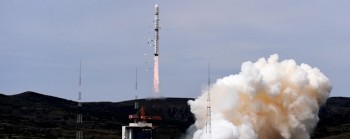
As usual for this type of satellite, the Chinese media is referring to the new satellite as ‘a new remote sensing bird that will be used for scientific experiments, land survey, crop yield assessment, and disaster monitoring.’ (Credit: NASA)
via nasaspaceflight
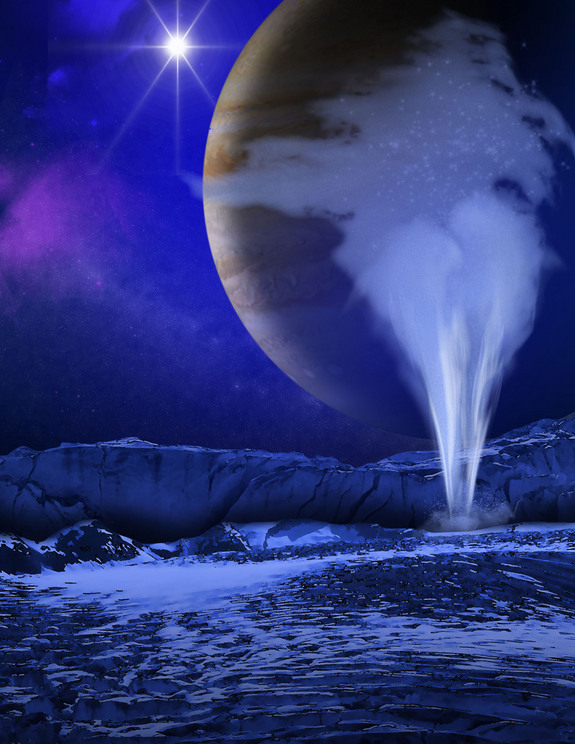
In 2013, huge active plumes containing water vapour being released from the surface of Jupiter’s moon Europa were discovered. This sensational find was made using the NASA/ESA Hubble Space Telescope. Europa has been a focus of extraterrestrial research for some time now, as there were clear indications that it harbors a liquid ocean beneath its icy crust. Now, it appears, the geysers have vanished. (Credit: K. Retherford, Southwest Research Institute, NASA/ESA/K.)
via dailygalaxy
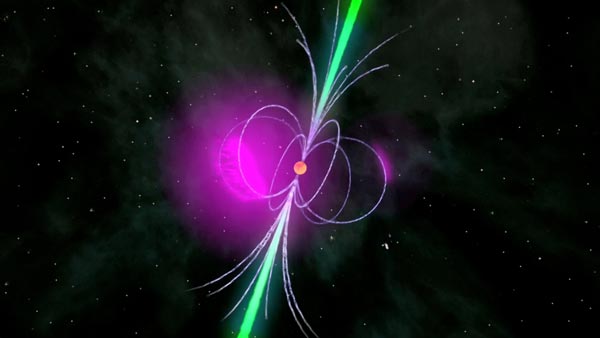
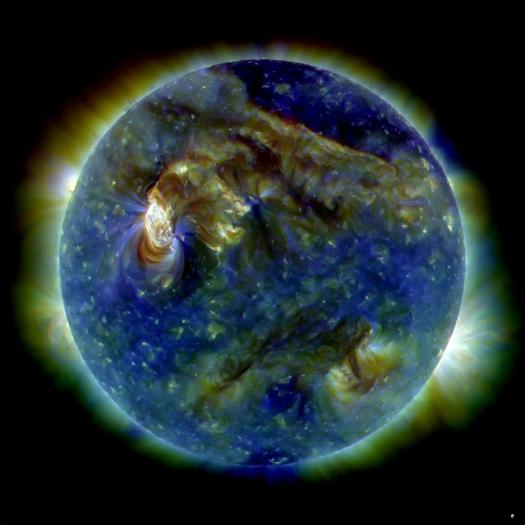
A pulsar is the rapidly spinning and highly magnetized core left behind when a massive star explodes. Because only rotation powers their intense gamma-ray, radio and particle emissions, pulsars gradually slow as they age, and eventually cease their characteristic emissions. (Credit: F. Reddy of Goddard Space Flight Center, NASA)
via onislam
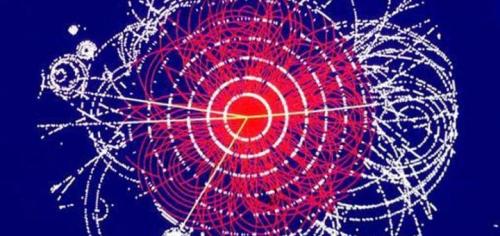
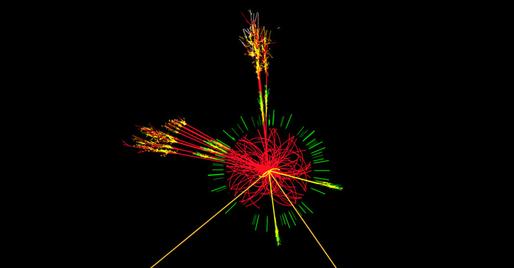
A weird theoretical cousin of the Higgs boson, one that inspired the decades-long hunt for the elusive particle, has been properly observed for the first time. The discovery bookends one of the most exciting eras in modern physics. The above is a simulation of the production and dec (Credit: Slezak)
via newscientist
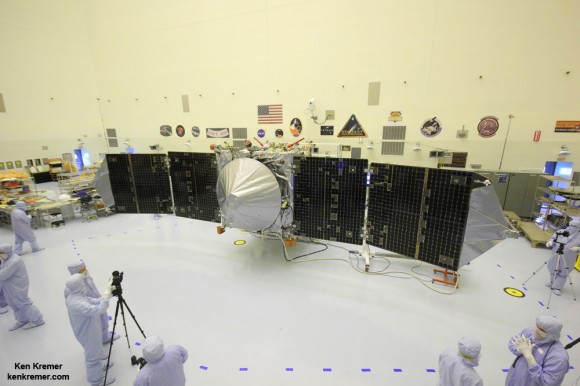
MAVEN is NASA’s next Mars orbiter and launched on Nov. 18, 2014 from Cape Canaveral, Florida. It will study the evolution of the Red Planet’s atmosphere and climate. Universe Today visited MAVEN inside the clean room at the Kennedy Space Center. With solar panels unfurled, this is exactly how MAVEN looks when flying through space and circling Mars and observing Comet Siding Spring. (Credit: Ken Kremer)
via universetoday
“This is a time of very rapid advances in the field. You don’t know on any given day what new discovery you’re going to see posted that night on arXiv,” said Liam McAllister, associate professor of physics and a specialist in string theory. (Credit: Glaser)
via cornell
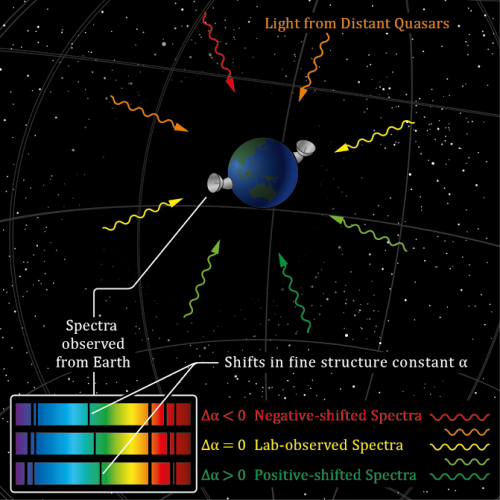
Diagram illustrating quasar observations. In 2010, a research team looked at light from distant quasars that had passed through large intergalactic clouds of gas. They found evidence of some slight variation of alpha depending on the direction we looked in the sky, which would imply a spatial variation of the physical constants. This made lots of news in the press, but the findings were not strong enough to be conclusive. (Credit: J. C. Berengut, Koberlein)
via phys
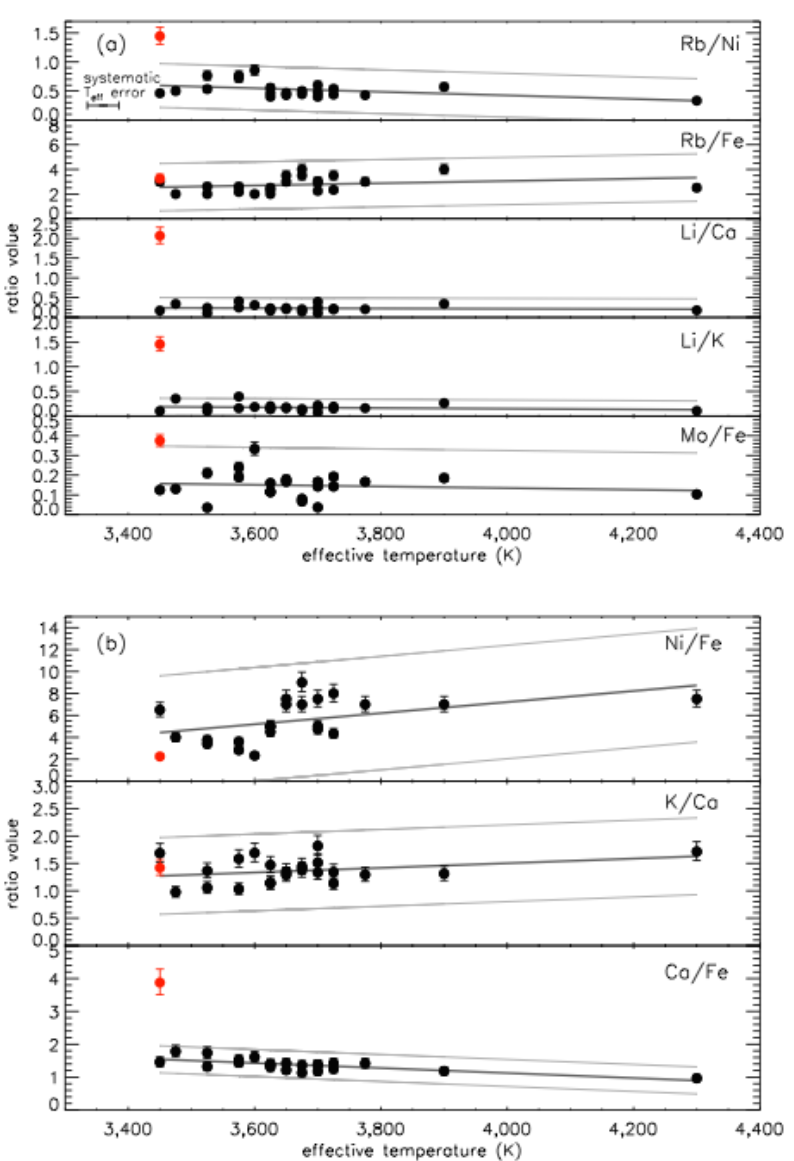
The ratios of various elements found in the sample of RSGs, where the dark gray line is the theoretical model for a RSG, the lighter grey shows a three sigma deviation from normal, and the black points show the observed ratios for the sampled stars. The red, however, are the ratios observed in the TZO candidate HV 2112- indicating some elements are present at ratios far from expected. (Credit: E.Levesque et al.)
via astrobites
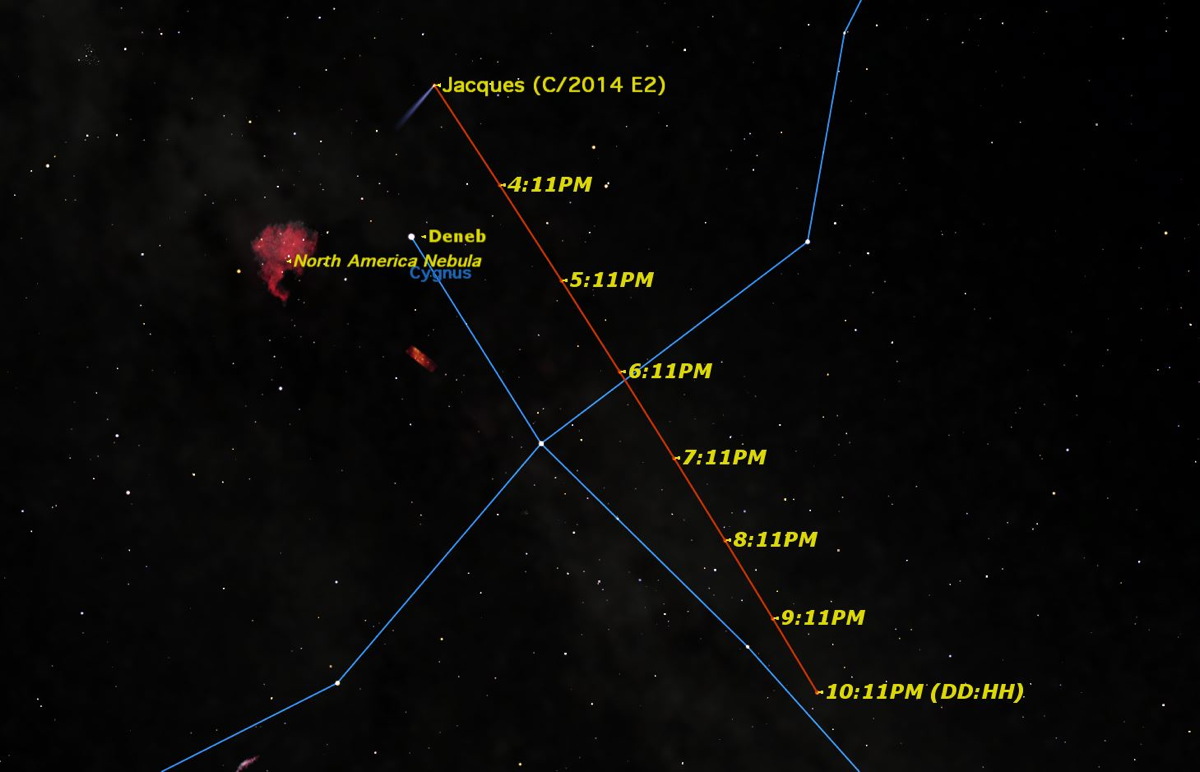
Once every year or two, a comet appears in the sky that is bright enough to be seen with a small telescope or binoculars. Right now, observers anywhere in the Northern Hemisphere can see such a comet. (Credit: Starry Night Software)
via space
Sofie Carsten Nielsen, Danish science minister, and Swedish education minister Jan Björklund break ground for the €1.84bn European Spallation Source in Lund, Sweden. (Credit: ESS)
via physicsworld
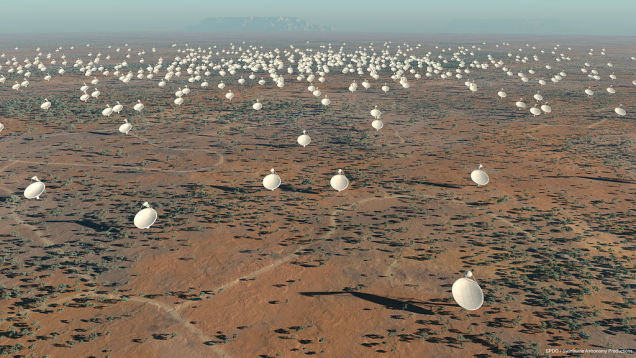
Artist impression of the Square Kilometer Array. If all goes according to plan in the next decade, we could see these small perturbations on the moon—and begin to solve some of the mysteries of space. (Credit: SKA)
via gizmodo
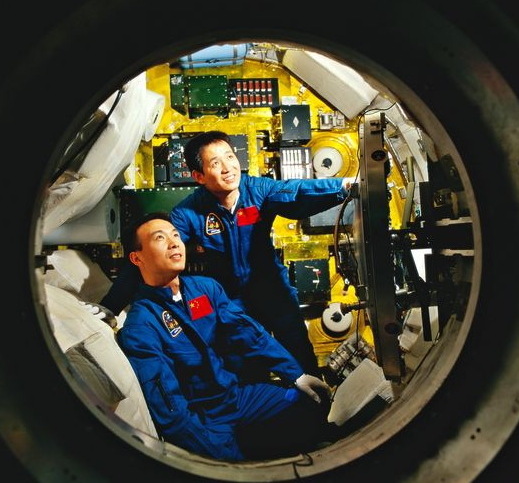
Space travelers from around the world are headed to China this month for an international Planetary Congress, which will explore the possibilities for expanding human spaceflight cooperation among different countries. Pictured above is China’s first astronaut, Yang Liwei, is now vice director of the China Manned Space Engineering Office. (Credit: CMS)
via space
An animation of the quicksort algorithm sorting an array of randomized values. The red bars mark the pivot element; at the start of the animation, the element farthest to the right hand side is chosen as the pivot. (Credit: RonaldH)
via wired
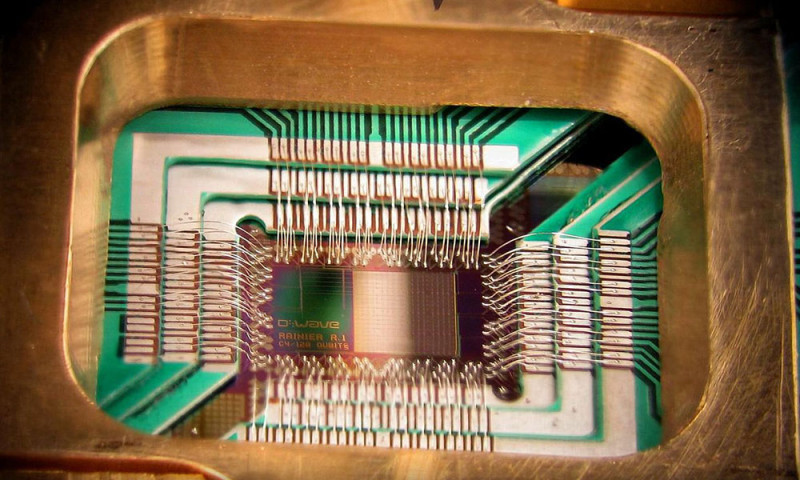
Rather than keeping all its eggs in D-Wave’s basket, Google’s “Quantum A.I. Lab” announced that it is starting a collaboration with an academic quantum computing researcher, John Martinis of the University of California-Santa Barbara. (Credit: Wiki, Timmer)
via arstechnica