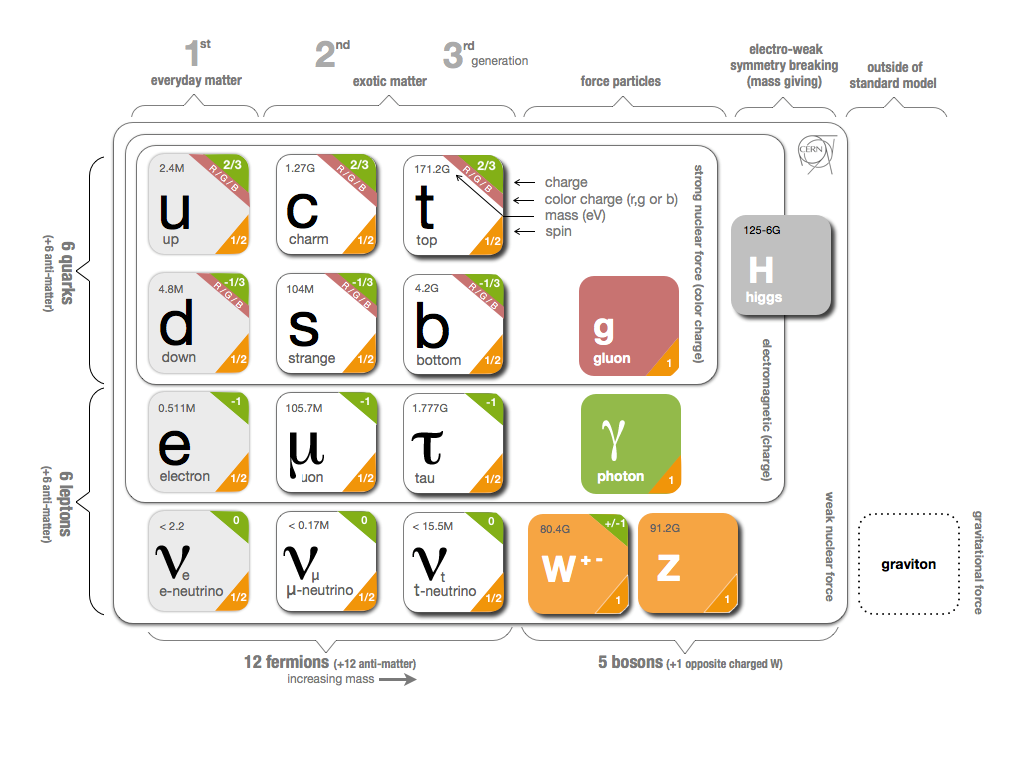
Agravity, short for ‘adimensional gravity’, is one of the most recent Theory of Everything proposals in a long line of such proposals that have come about ever since the problem of reconciling Gravity with the Standard Model was realized by physicists. It attempts to merge gravity with the Higgs interaction, and thus the rest of the Standard Model, by reconciling the huge difference between the Planck Scale and the relatively small masses of all the other particles. (Credit: SGTW, Daniels)
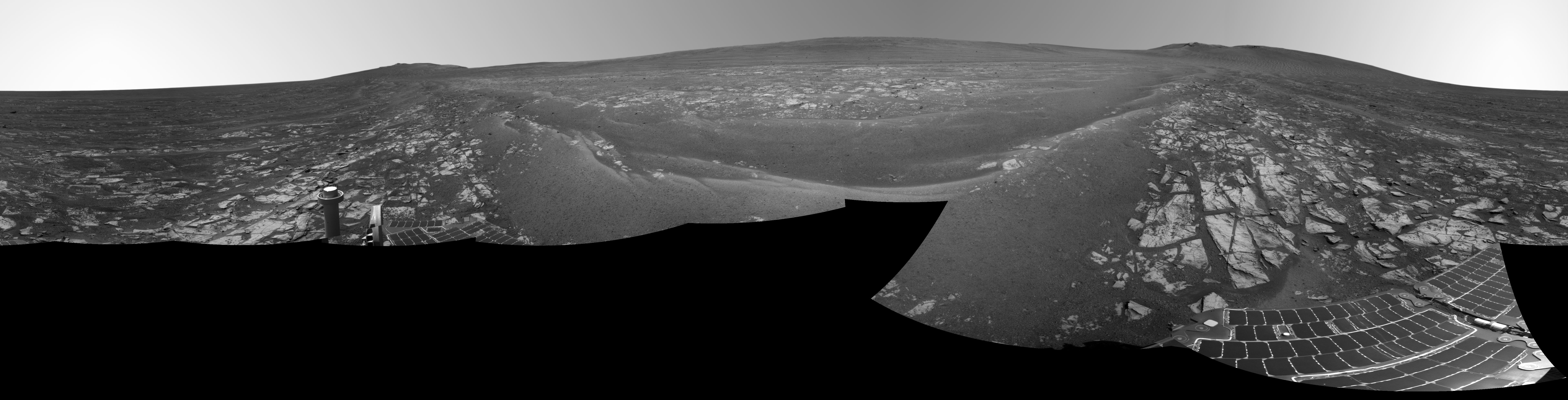
The decision to reformat Opportunity’s flash memory early next month is prompted by the multiple computer resets the rover has been experiencing. This month alone, Opportunity has had to be rebooted a dozen times, interrupting valuable time that should be taken up with carrying out science near the rim of Endeavour crater. (Credit: NASA, O’Neil)
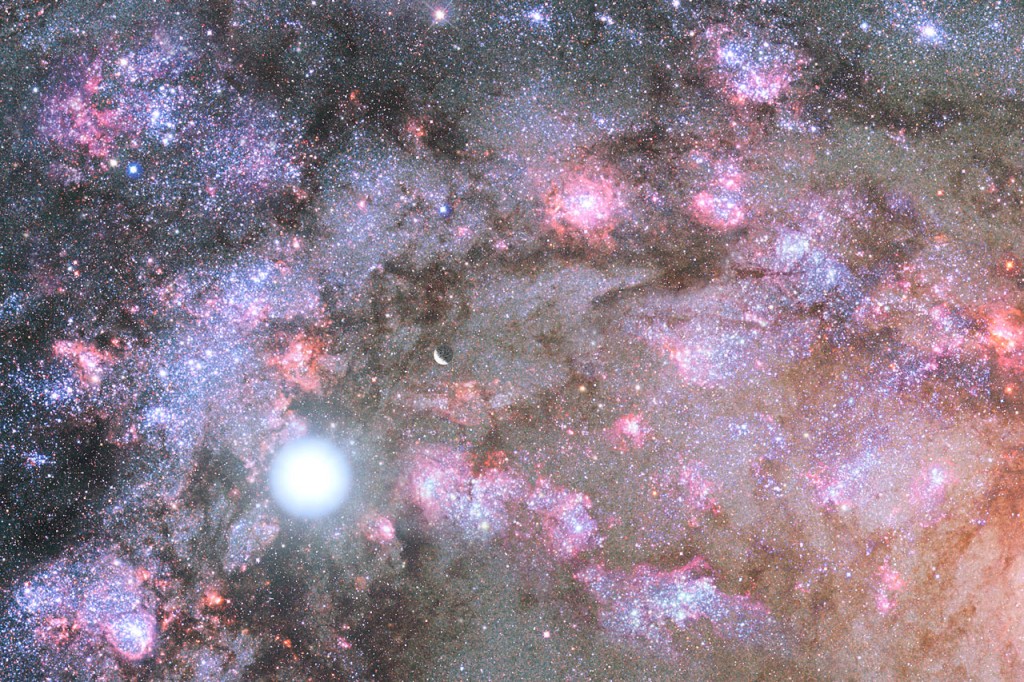
“It’s fascinating that the early universe could make galaxies in this way and the modern universe just can’t anymore, and we’re really beginning to understand in a profound way how different the early universe was than it is now,” said Erica Nelson of Yale University. (Credit: Neslson)
via washingtonpost
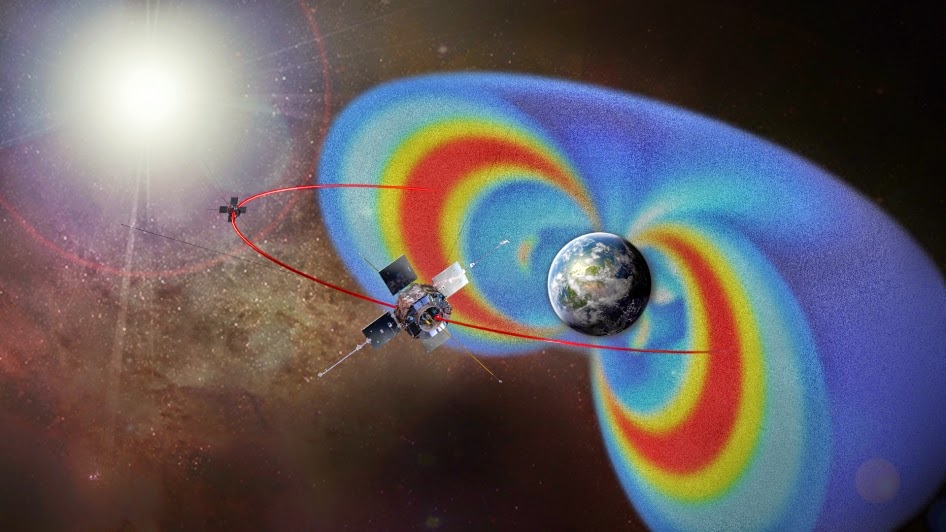
NASA’s Van Allen Probes orbit through two giant radiation belts surrounding Earth. Their observations help explain how particles in the belts can be sped up to nearly the speed of light. Image (Credit: NASA)
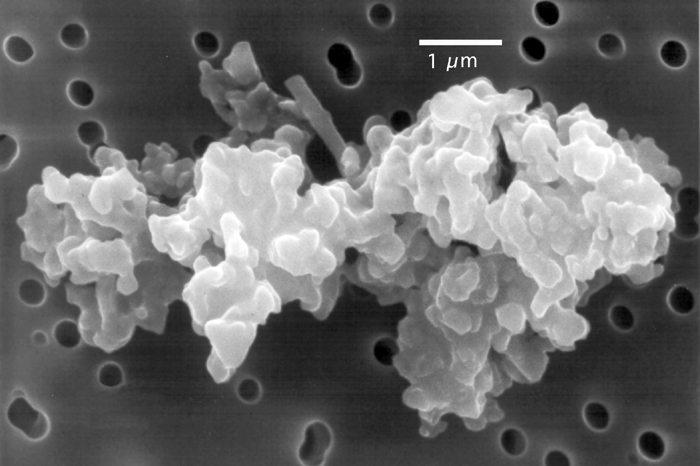
This is a scanning electron microscope image of an interplanetary dust particle that has roughly chondritic elemental composition and is highly rough (chondritic porous: “CP”). CP types are usually aggregates of large numbers of sub-micrometer grains, clustered in a random open order. (Credit: Donald E. Brownlee)
via phys.org
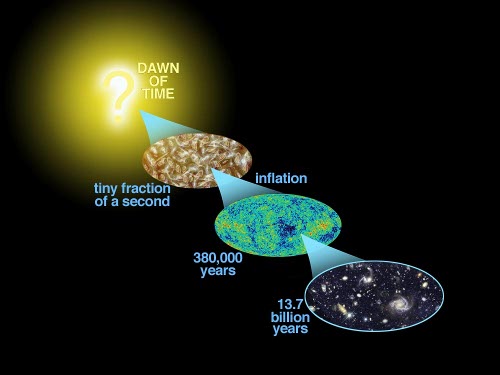
Inflation explains the origin of the large-scale structure of the cosmos. Many physicists believe that inflation explains why the Universe appears to be the same in all directions (isotropic), why the cosmic microwave background radiation is distributed evenly, why the universe is flat, and why no magnetic monopoles have been observed. (Credit: NASA)
via science20
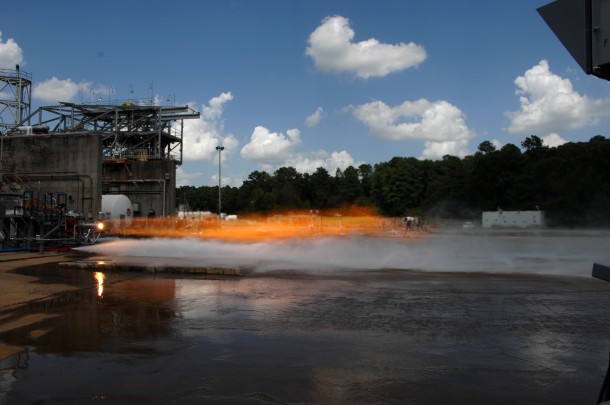
Engineers just completed hot-fire testing with two 3-D printed rocket injectors. Certain features of the rocket components were designed to increase rocket engine performance. The injector mixed liquid oxygen and gaseous hydrogen together, which combusted at temperatures over 6,000 degrees Fahrenheit, producing more than 20,000 pounds of thrust. (Credit: NASA photo/David Olive)
via spacefellowship
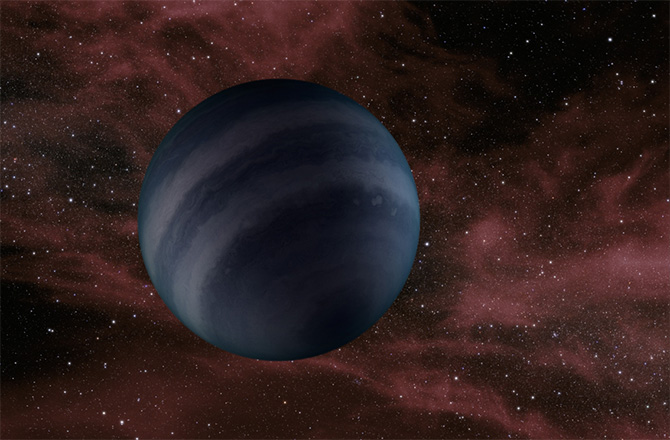
Finding clouds of water floating in the atmosphere of an alien world is a significant find. Now, astronomers have reported preliminary findings that water clouds have been detected in the atmosphere of a brown dwarf, a mere 7.3 light-years from Earth. (Credit: NASA, JPL-Caltech, O’neil)
via discovery
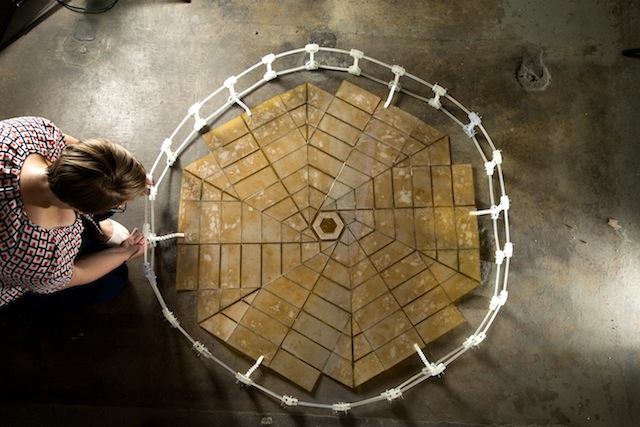
NASA mechanical engineer, Brian Trease, worked with Brigham Young University doctoral student Shannon Zirbel, and collaborated with origami expert Robert Lang, who has long been active in promoting it in science, and BYU professor Larry Howel, to combine different traditional folds for an 82-foot solar array that whirls down to 8.9 feet. (Credit: BYU, Meier)
via hyperallergic
“If we find a noise we can’t get rid of, we might be detecting something fundamental about nature – a noise that is intrinsic to space-time,” said Physicist Aaron Choi, the holometer project’s lead scientist. (Credit: NASA, ESA)
via interactions
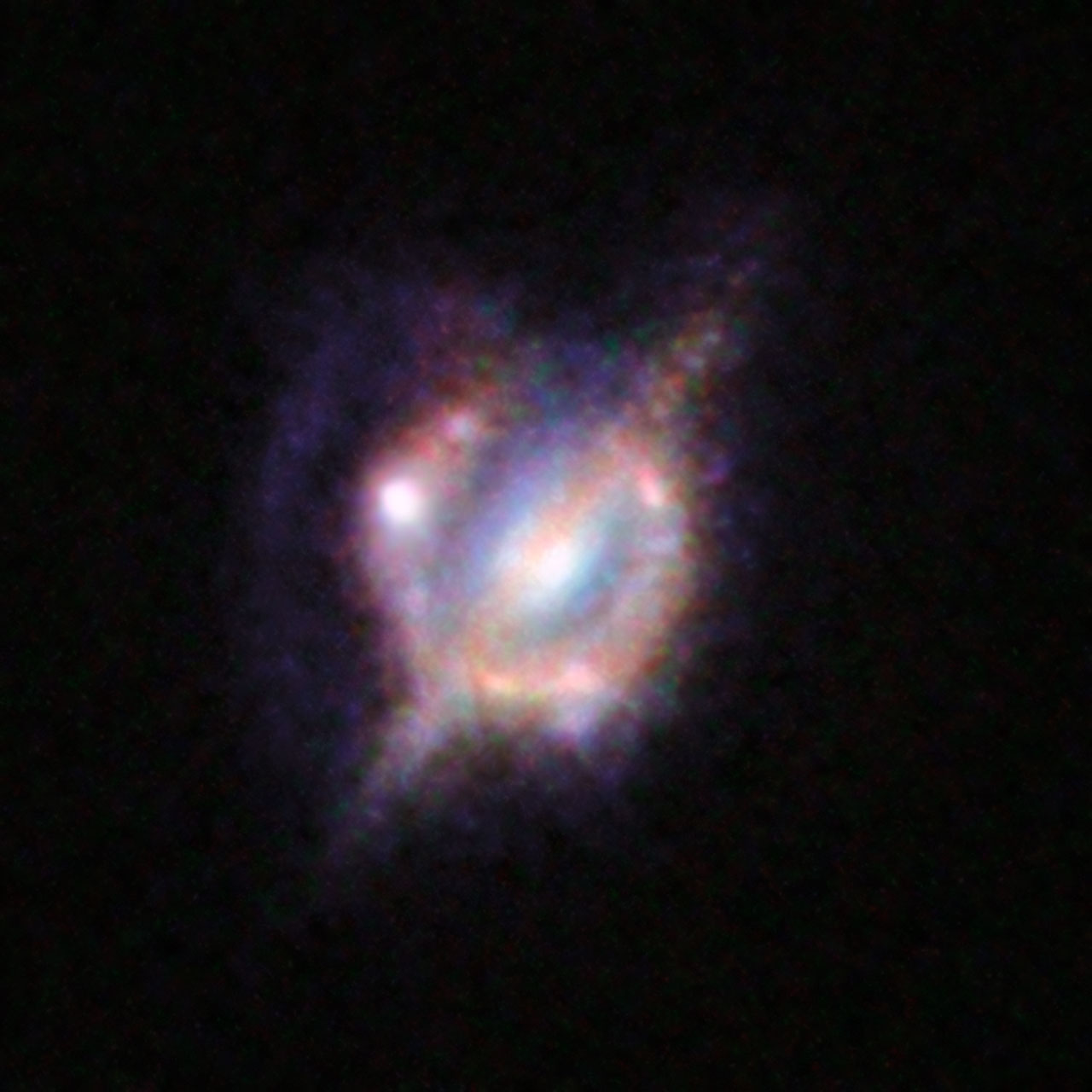
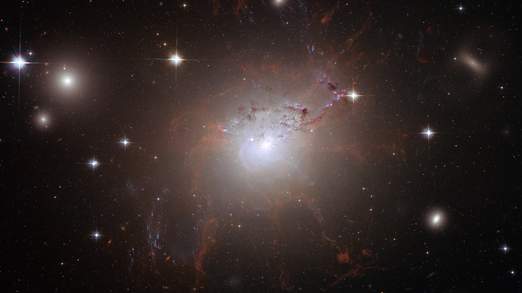
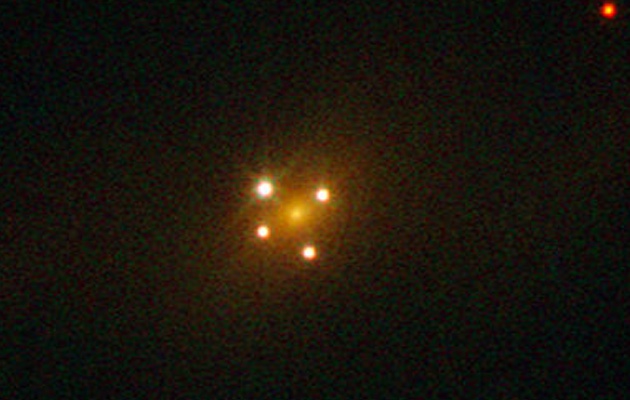
In this picture, which combines views from Hubble and the Keck-II telescope on Hawaii (using adaptive optics), you can see a foreground galaxy that is acting as the gravitational lens. The galaxy resembles how our home galaxy, the Milky Way, would appear if seen edge-on. But around this galaxy there is an almost complete ring — the smeared out image of a star-forming galaxy merger far beyond. (Credit: NASA, ESA)
via spacetelescope
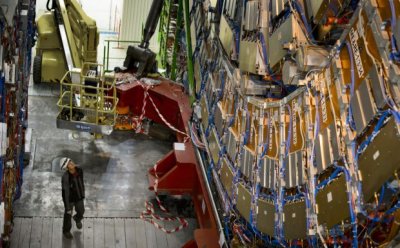
With a circumference of 52km, the “Higgs Factory” would be almost twice the size of Europe’s equivalent, and significantly more powerful. The Chinese said it is due to be completed by 2028. Image above is the Large Hadron Collider. (Credit: Getty)
via cityam
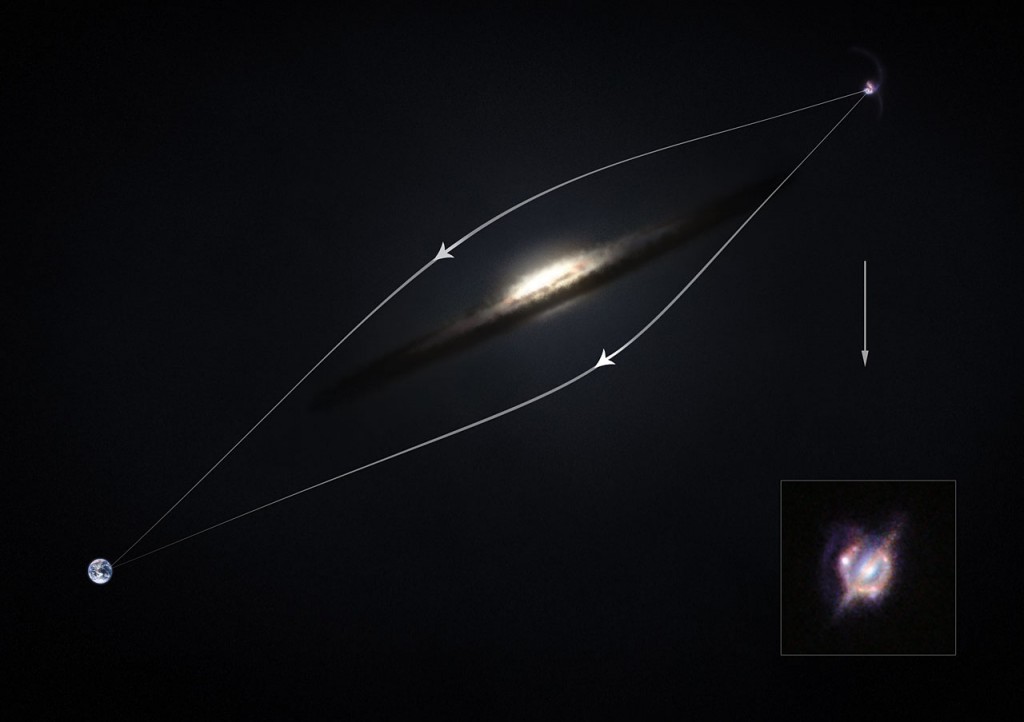
This diagram shows how the effect of gravitational lensing around a normal galaxy focuses the light coming from a very distant star-forming galaxy merger to created a distorted, but brighter view. (Credit: ESA/ESO/M. Kornmesser)
via washingtonpost
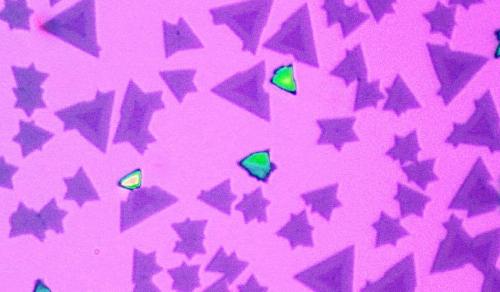
As seen under an optical microscope, the heterostructures have a triangular shape. The two different monolayer semiconductors can be recognized through their different colors. (Credit: U of Washington)
via phys.org
“It’s the most distant object for which the spin has been directly measured. The universe is about 13.7 billion years old, so this is going significantly back towards when the epoch of furious galaxy formation was happening,” says, Astrophysicist, Mark Reynolds.
via motherboard
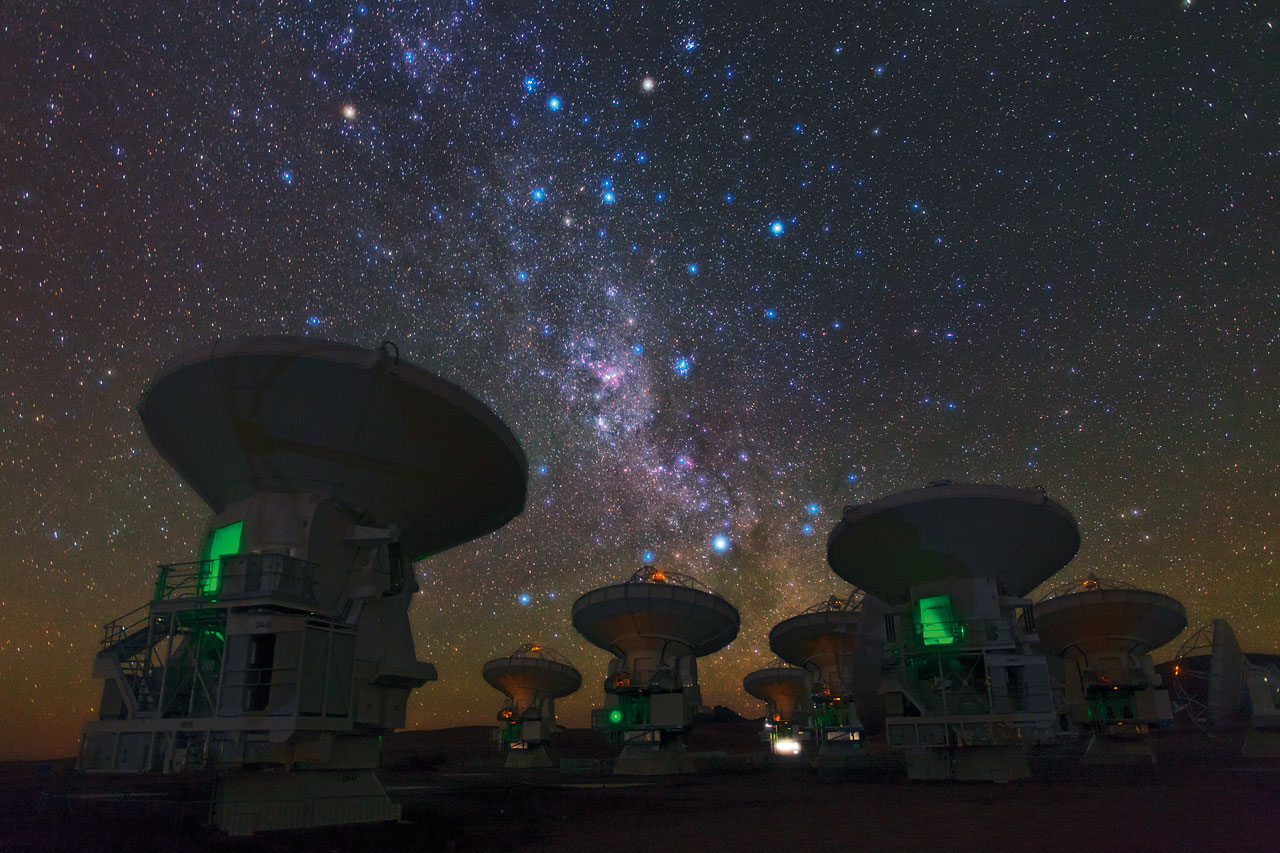
Dark matter and dark energy continue to be cosmological conundrum for physicists worldwide. Nobel prize winner Brian Schmidt offers his perspective in an interview. The image shown here is of the ALMA antennas and the constellations of Carina (The Keel) and Vela (The Sails). The dark, wispy dust clouds of the Milky Way streak from middle top left to middle bottom right. (Credit: ESO, B. Tafreshi)
via sciencenordic
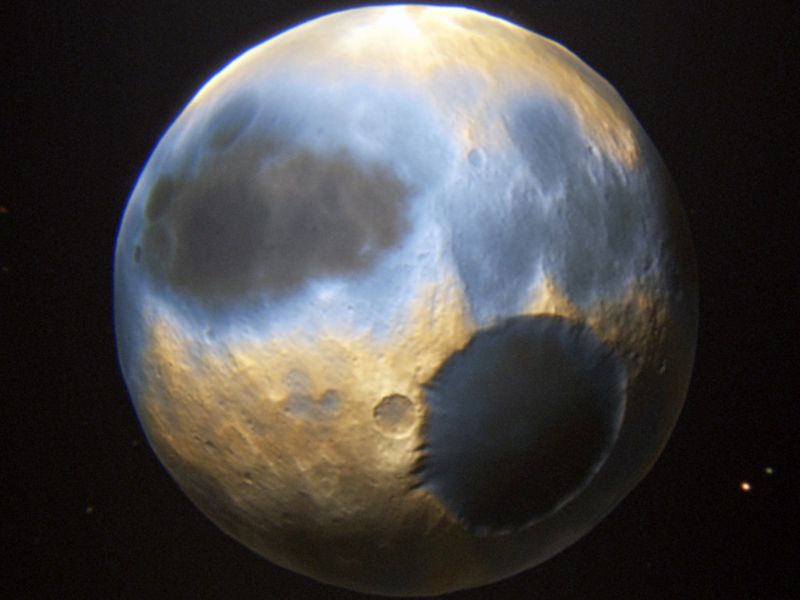
“Our model predicts different fracture patterns on the surface of Charon depending on the thickness of its surface ice, the structure of the moon’s interior and how easily it deforms, and how its orbit evolved,” said Alyssa Rhoden of NASA’s Goddard Space Flight Center. (Credit: NASA)
via dailygalaxy
Open network environments have become essential in the sciences, enabling accelerated discovery and communication of knowledge. Yet, the real revolution began when open community databases allowed researchers to build on existing contributions and compare their results to established knowledge. (Credit: King, Uhlir)
via acm
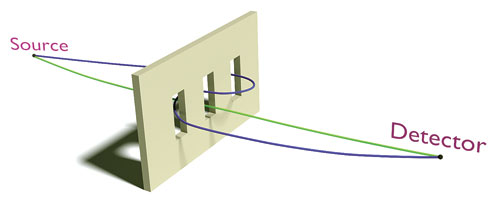
Indian physicists propose a tabletop experiment that will provide scientists their first opportunity to measure the probability that particles can move through slits in a twisted path, depicted by the purple ray. (Credit: Aninda Sinha and Urbasi Sinha)
via telegraphindia
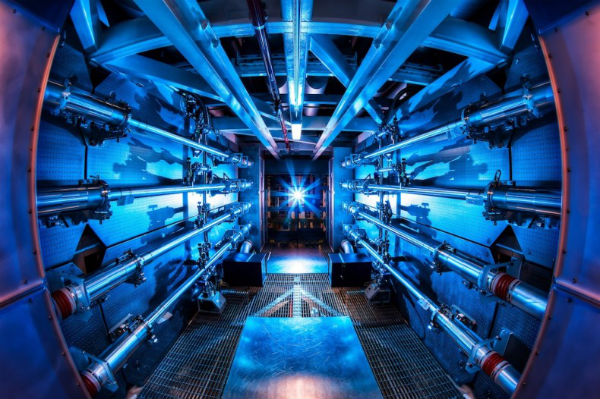
Physicists in the US have compressed a synthetic diamond to pressures of 50 million Earth atmospheres to recreate conditions in the cores of giant planets. (Credit: National Ignition Facility)
via sciencealert
. A novel class of electronic materials – the so-called transition-metal oxides – hold promise for exciting, new applications. Where layers of this novel class of electronic materials touch, often a unique, and unprecedented phenomenon occurs: for instance, the interface between two insulators can become superconducting, or a strong magnetic order can build up between two non-magnetic layers.
via phys.org
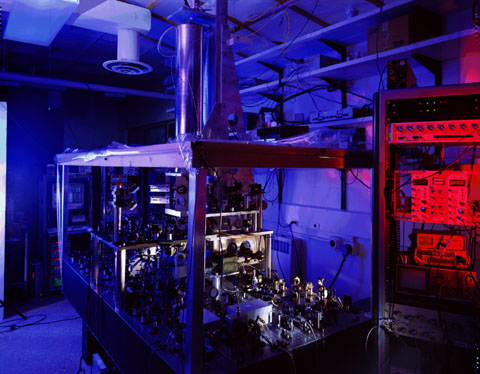
NIST-F1 contributes to the international group of atomic clocks that define Coordinated Universal Time (UTC), the official world time. Because NIST-F1 is among the most accurate clocks in the world, it makes UTC more accurate than ever before. (Credit: Time and Frequency Division of NIST’s PML)
via guardianlv
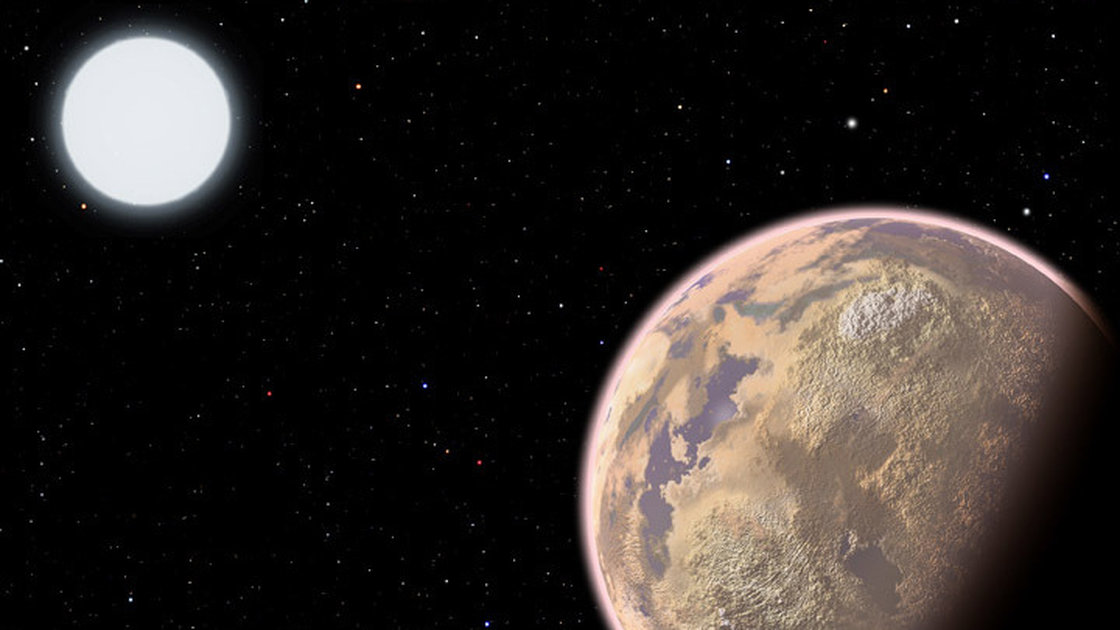
Artist’s conception of the atmosphere of an Earth-like planet displaying a brownish haze as the result of widespread pollution. (Credit: Christine Pulliam/Harvard-Smithsonian Center for Astrophysics)
via npr
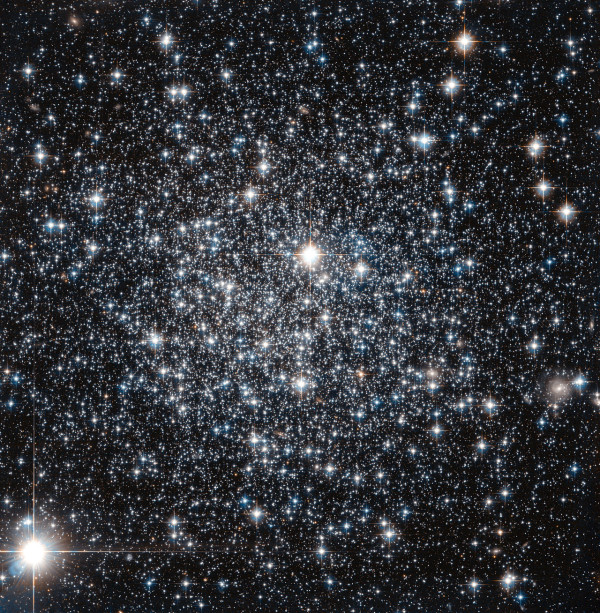
This new NASA/ESA Hubble Space Telescope image shows the globular cluster IC 4499. A cosmic archaeological dig has unfolded within a giant ball of stars some 55,000 light-years away. (Credit: NASA)
via nationalgeographic
Top: A typical set-up for squeezing injection in the first demonstrations of squeezing at GEO600 and LIGO, both using DC readout [36,37]. Bottom: Proposed design for future detectors. This design features an in-vacuum OPO. The remainder of the squeezed light source remains outside of vacuum. (Credit: E. Oelker, L. Barsotti, S. Dwyer, D. Sigg, and N. Mavalvala)
via opticsinfobase
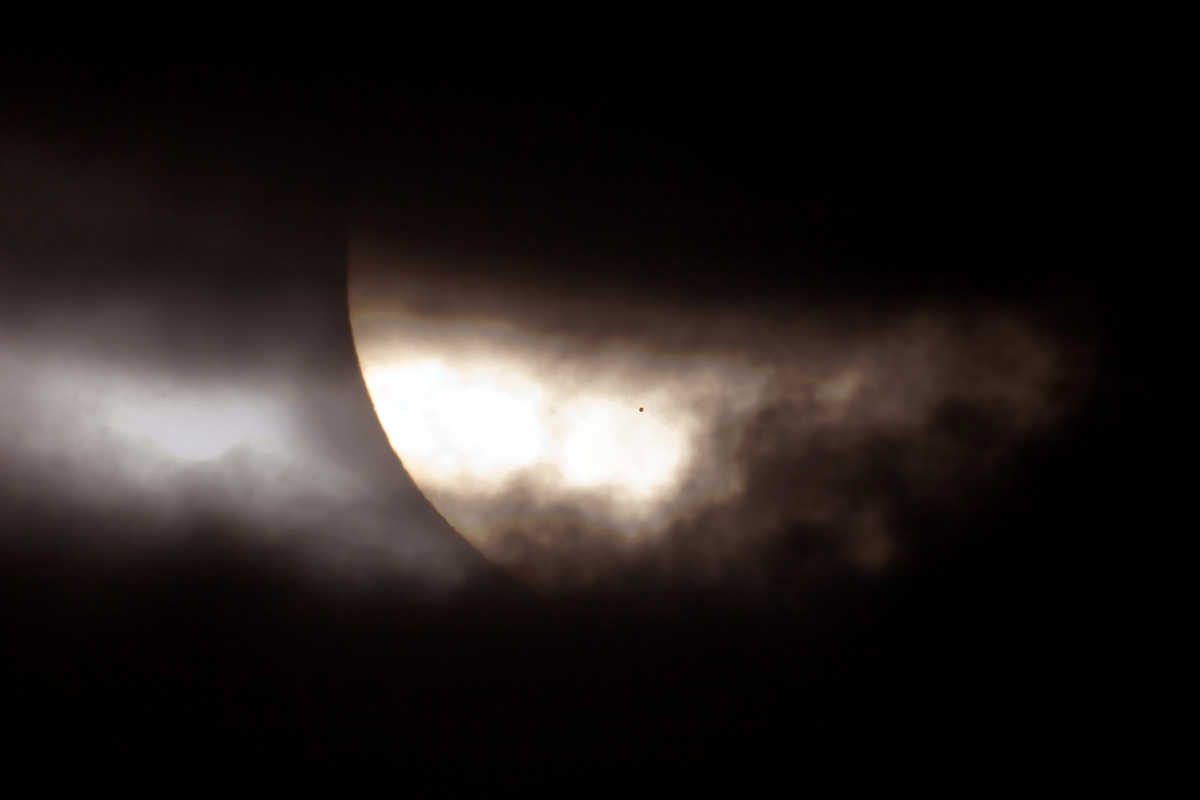
What’s that dot on the Sun? If you look closely, it is almost perfectly round. The dot is the result of an unusual type of solar eclipse that occurred in 2006. Usually it is the Earth’s Moon that eclipses the Sun. This time, the planet Mercury took a turn. (Credit: D. Cortner, NASA, K. Schmidt)
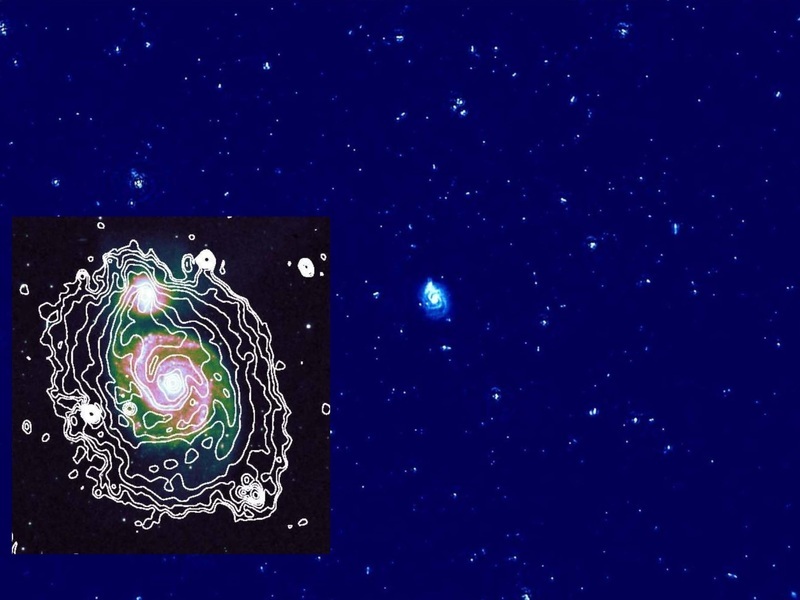
“Maybe we will see how galaxies are magnetically connected to intergalactic space. This is a key experiment in preparation for the planned Square Kilometre Array (SKA) that should tell us how cosmic magnetic fields are generated,” says Rainer Beck, lead astronomer with the Max Planck Institute.
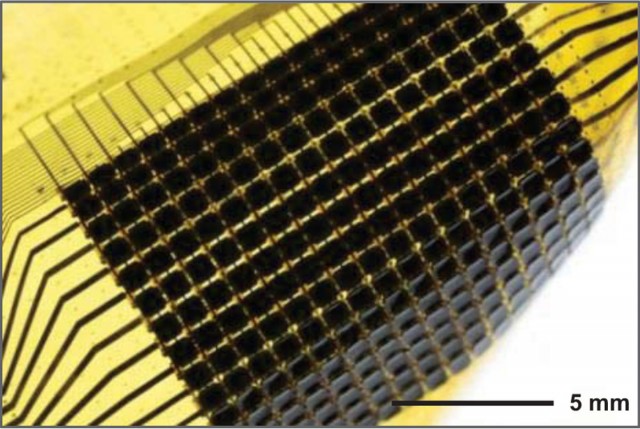
Researchers have developed a flexible structure that can sense ambient conditions and adjust its color to match them. At the moment, it only works in black and white. (Credit: PNAS, Timmer)
via arstechnica
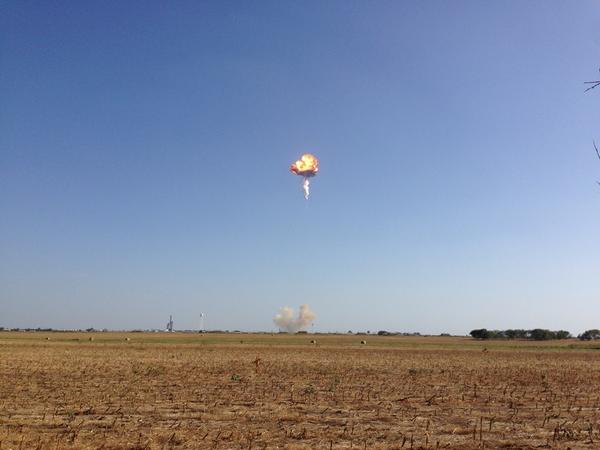
In a conversation with Mashable via Twitter, McGregor resident @EthansMommy17, who tweeted the above image of the explosion, claimed cows had been killed by debris from the explosion. She was unable to provide images or other confirmation of the affected livestock, however. (Credit: @EthansMommy17)
via mashable
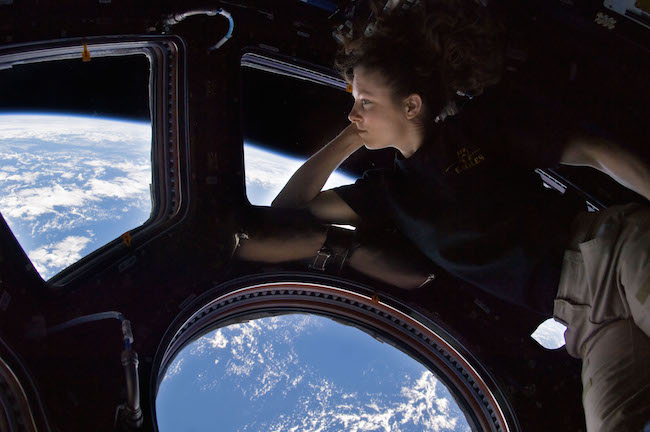
The space specialist said that the ISS surface was polluted very strongly due to operation of space engines and other factors. “We are conducting special works to polish somehow and put illuminators in order. This is particularly needed during long space flights,” Solovyev added. (Credit: Tracy Caldwell Dyson)
via forbes
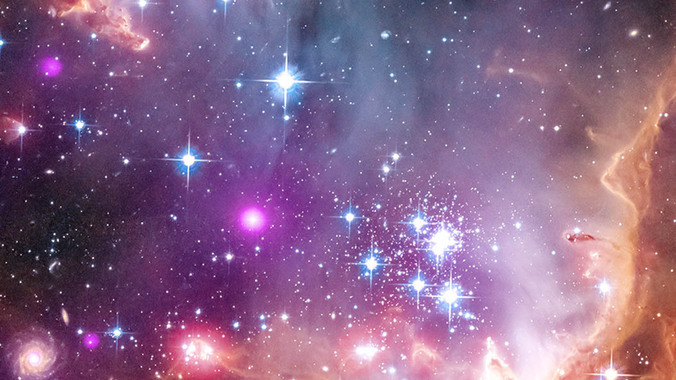
Although they are gigantic, ranging from one to a few hundred lightyears in size, the physical process that causes these nebulae to emit their own light (rather than merely reflect light from nearby stars) occurs at the atomic level. It is the same process that makes familiar florescent lights shine here on Earth. (Credit: NASA, Prozesky)
via mg
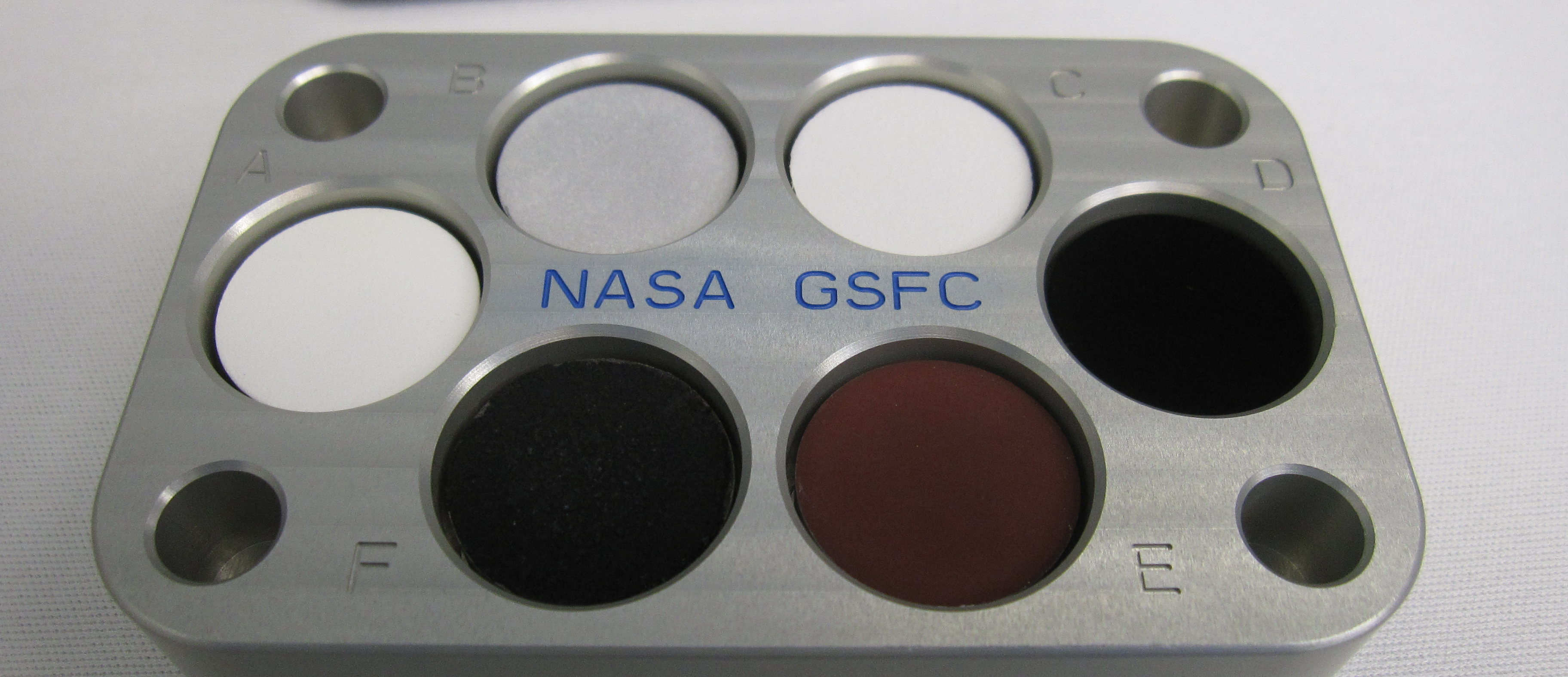
On July 29th, the the Automated Transfer Vehicle launched carrying samples of the stuff to the ISS, where it docked on August 12th. There, astronauts will conduct tests on the paint, which absorbs 99.5 percent of visible light (and 99.8 percent of longer wavelength light). (Credit: NASA, Campbell-Dollaghan)
via gizmodo
Google Inc. has conducted more than 300,000 miles of driverless car testing with vehicles. They navigate by collecting real-time sensor data and comparing it to pre-loaded maps that specify exact locations for roads and signs, while adapting to obstacles such as people and cars. (Credit: Justin Sullivan/Getty Images, Kearns)
via bloomberg
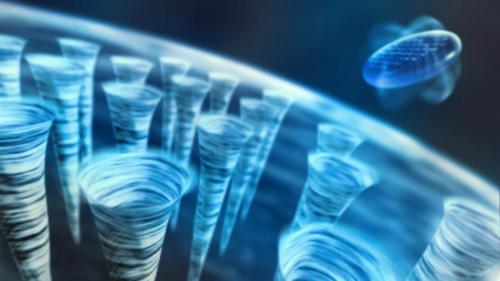
A patterned 3-D grid of tiny whirlpools, called quantum vortices, populate a nanoscale droplet of superfluid helium. Researchers found that in a micron-sized droplet, the density of vortices was 100,000 times greater than in any previous experiment on superfluids. An artistic rendering of a wheel-shaped droplet can be seen in the distance. (Credit: SLAC National Accelerator Laboratory)
via phys
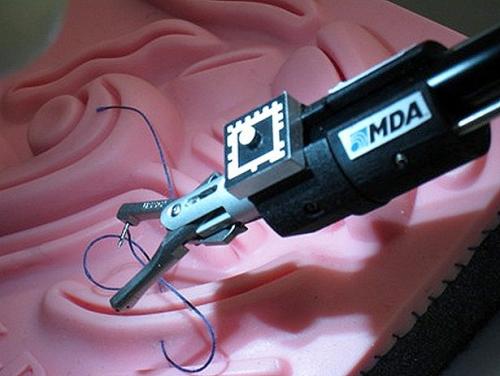
The suturing tool demonstrates image-guided anastomosis, which means the connecting of parts such as vessels. The target on the top of the tool is used to lead the tool’s tip. This is the same technology used to track the robotic systems on the space shuttle and the International Space Station. (Credit: MDA and CIGITI)
via phys
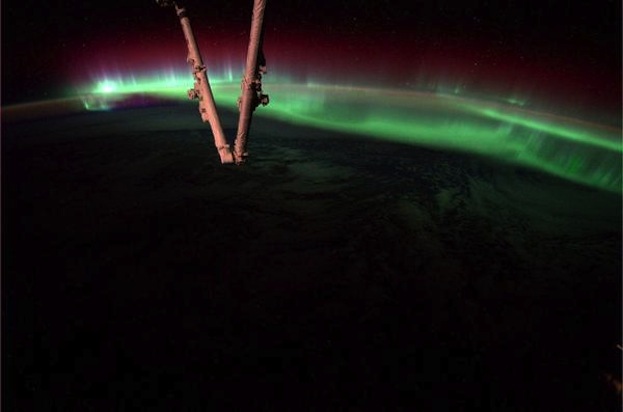
An aurora dances in the atmosphere on Aug. 20, 2014, as the International Space Station flew over North America. This image was captured by astronaut Reid Wiseman from his vantage point on the ISS. (Credit: NASA/Handout/QMI Agency)
via cbc




![Top: A typical set-up for squeezing injection in the first demonstrations of squeezing at GEO600 and LIGO, both using DC readout [36,37]. Proposed design for future detectors. This design features an in-vacuum OPO. The remainder of the squeezed light source remains outside of vacuum. (Credit: E. Oelker, L. Barsotti, S. Dwyer, D. Sigg, and N. Mavalvala)](https://timeincosmology.org/wp-content/uploads/2014/08/screen-shot-2014-08-24-at-10-39-30-am.png)