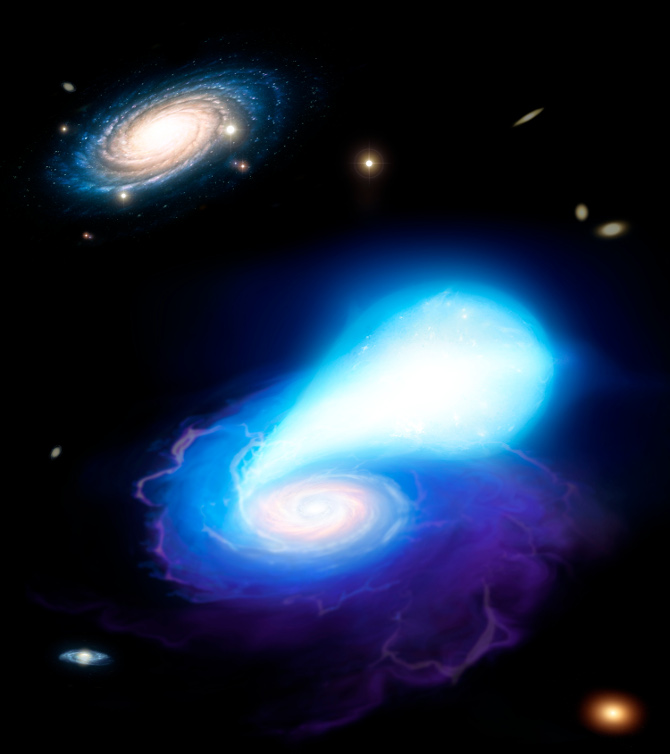
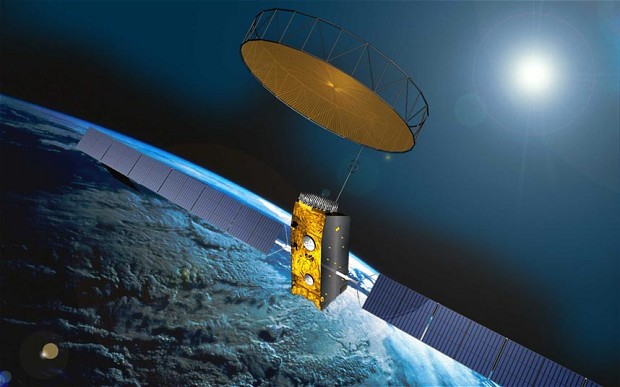
University of Warwick researchers explain mystery of the loneliest supernovas. Compact binary star systems that have been thrown far from their host galaxy when one star of that pair became a neutron star, go through a second trauma when the remaining white dwarf star is eventually pulled onto the neutron star. (Credit: Mark A. Garlick / space-art.co.uk / University of Warwick)
via forbes
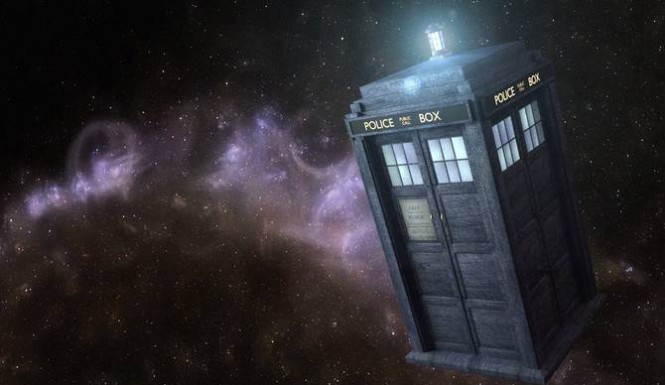
While time travel may be theoretically possible, there are unfortunately several drawbacks to the researchers’ TARDIS concept. In order to function, it requires the use of exotic matter, which has yet to be shown to exist in our universe. Time travel would also have to violate classical mechanics, and in order to move in anything other than a circular direction in both time and space, more than one TARDIS curve would need to be constructed, raising the possibility of exiting the time vortex into a universe of anti-matter. (Credit: Bitbillions)
via inquisitr
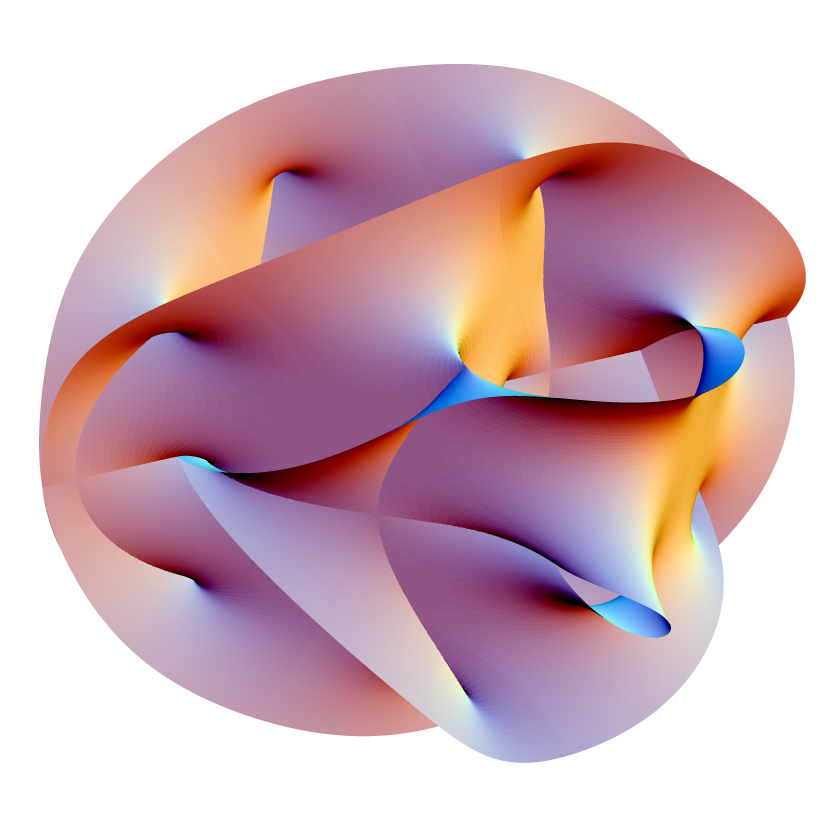
A construction for computer visualization of certain complex curves. Science journalist, Tom Siegfried, has been one of the most vociferous proponents of string theory for many, many years, but even his faith seems like it might be failing as the decades roll on. (Credit: CC BY-SA 2.5)
via columbia
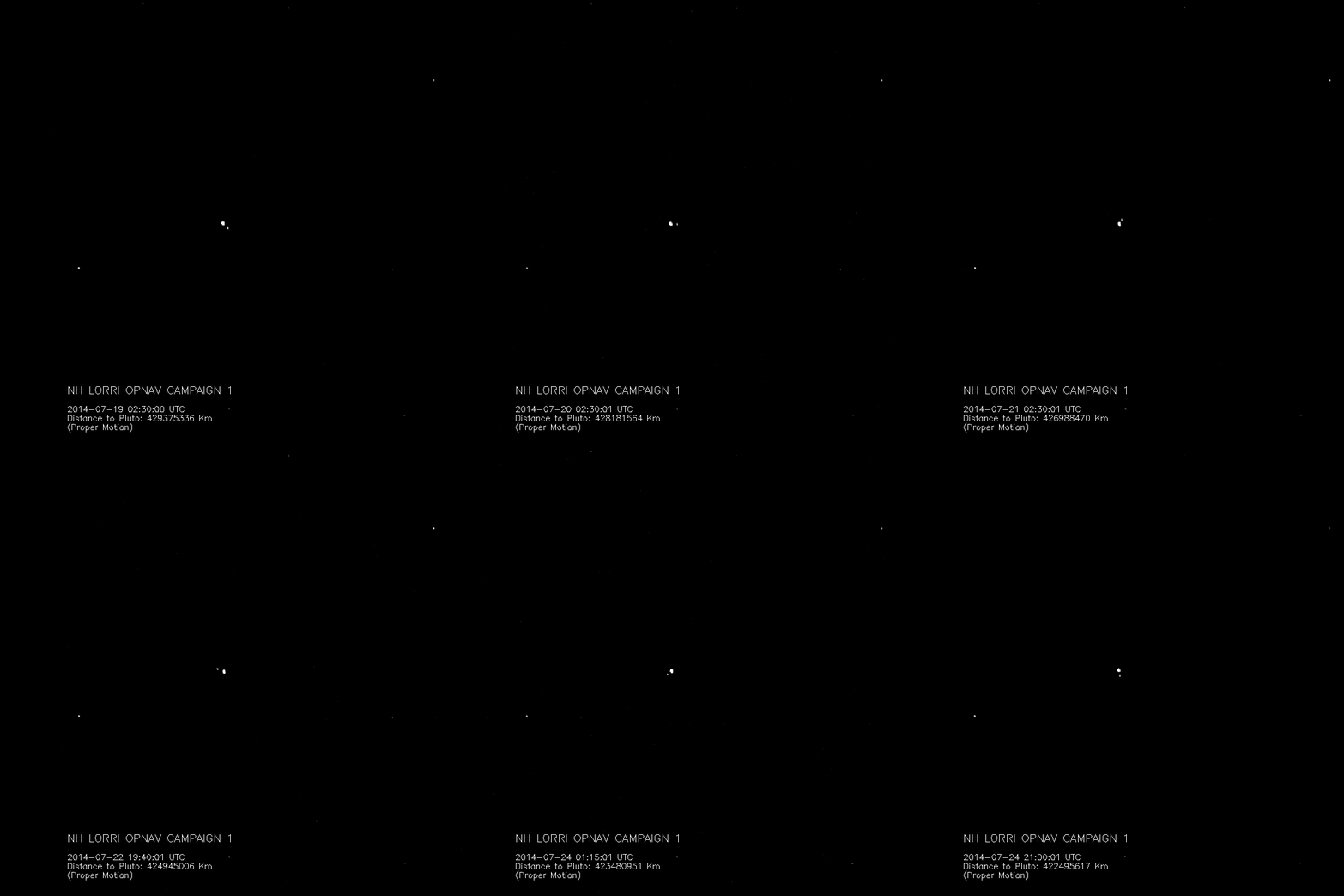
Animation of Pluto and Charon showing nearly a full rotation (Credit: NASA/Johns Hopkins University Applied Physics Laboratory/Southwest Research Institute)
via universetoday
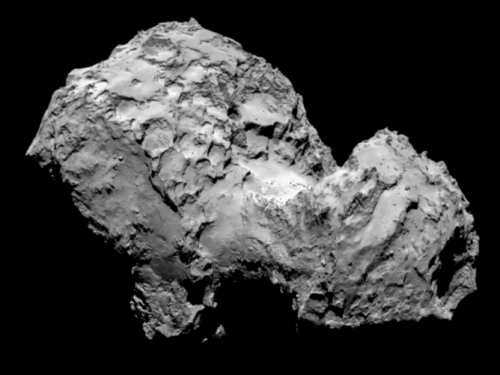
Do you see a duck? On August 6, millions of miles away from Earth, the firing of a rocket thruster signalled the end of a decade-long journey by a European spacecraft to reach its ultimate target – the ‘duck’ comet. (Credit: ESA/Rosetta/MPS)
via phys
A typical magnifying glass works by bending light (i.e. refraction) to a focus point, in this case your eye. In a similar way, gravitational lensing also works by bending light, but in this case it is mass from another galaxy bending the light. This galaxy that extends far into space causes light rays passing near and through its gravitational field to bend and again refocus onto a particular location. The more massive and dense the matter, the more bending and refracting. (Credit: Flickr, Hubble Heritage)
via united-academics
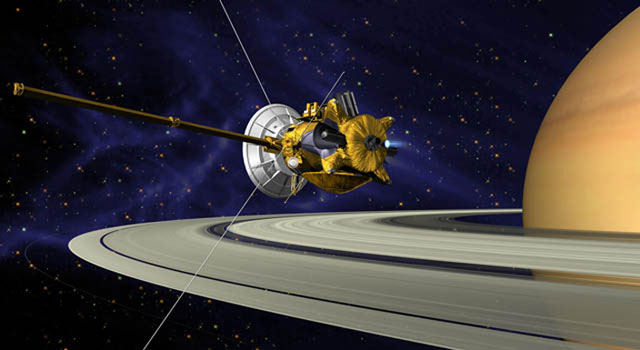
This is an artists concept of Cassini during the Saturn Orbit Insertion (SOI) maneuver, just after the main engine has begun firing. (Credit: NASA/JPL)
via phys
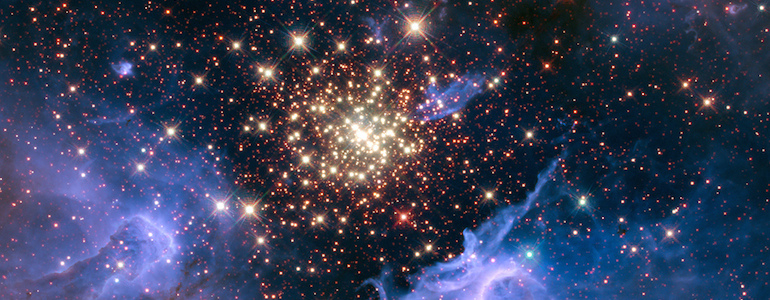
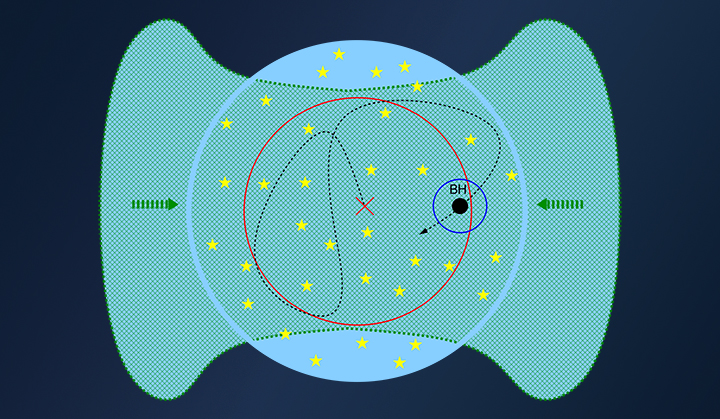
This graphic shows the center of a newly formed star cluster (stars are in yellow), within which the seed black hole gets its super boost of gas (shown in blue).
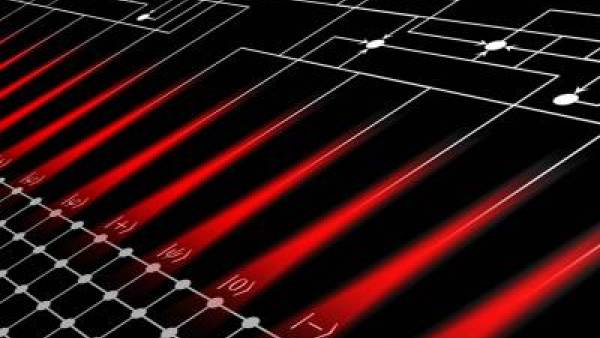
A team of researchers from TU Wien (Vienna) the National Institute for Informatics (Tokyo) and NTT Basic Research Labs in Japan has now proposed a new architecture for quantum computing, based on microscopic defects in diamond. (Credit: TU Wien (Vienna) and Japan. (National Institute of Informatics and NTT Basic Research Labs)
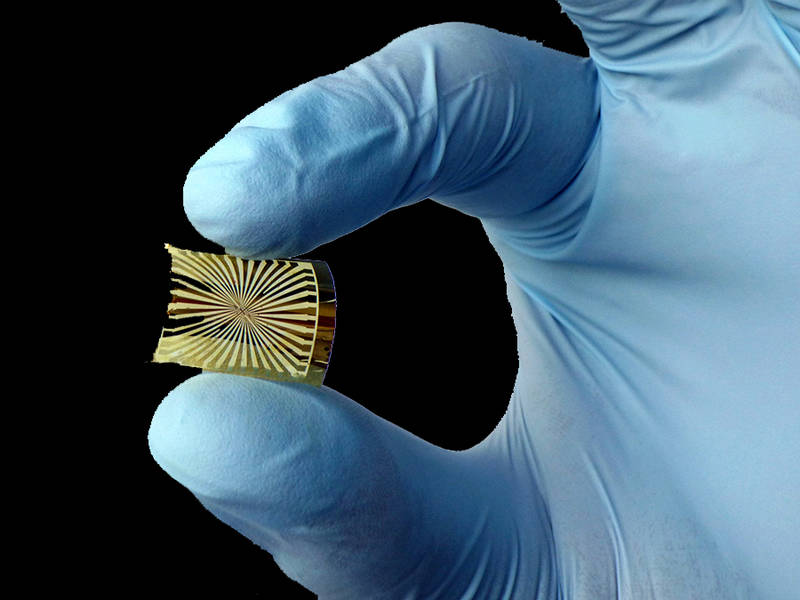
Graphene electronics can be prepared on flexible substrates. Only the gold metal leads are visible in the transparent graphene sensor. (Credit: Natalia Hutanu / TUM)
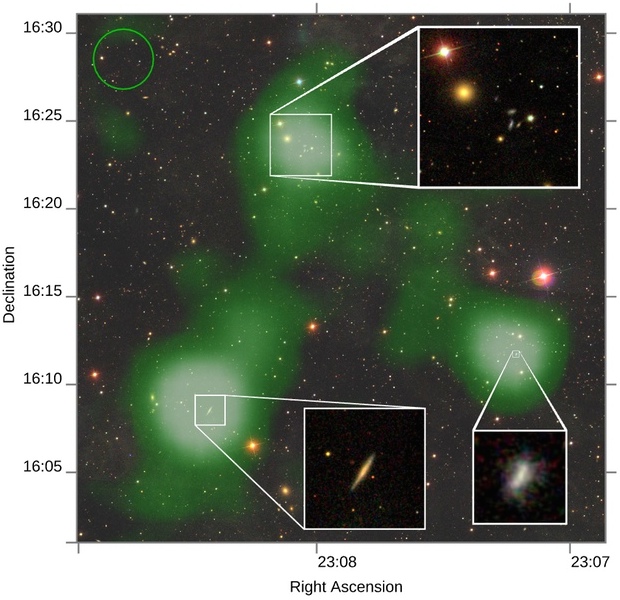
The bridge of gas (shown in green) stretches from the large galaxy at the bottom left to the group of galaxies at the top. A third nearby galaxy to the right also has a shorter stream of gas attached to it. (Credit: Rhys Taylor / Arecibo Galaxy Environment Survey / The Sloan Digital Sky Survey Collaboration.)
via motherboard
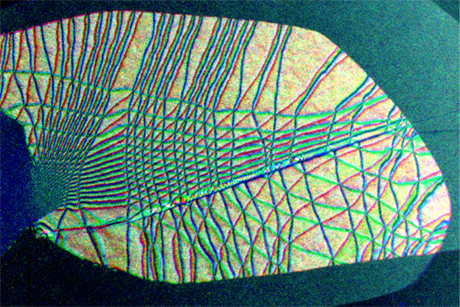
Three dark field-transmission electron microscopy images of bilayer graphene are overlaid with colors to show diffraction angles. The lines are soliton boundaries. (Credit: Muller lab)
via newscientist
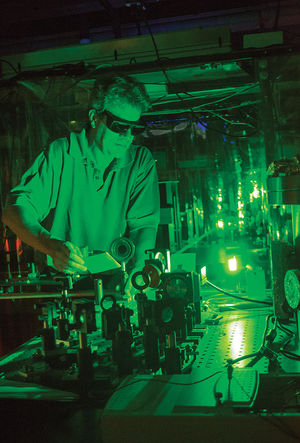
Professor Howard Milchberg. University physicists working in the Intense Laser Matter Interactions group have made two breakthroughs in recent months: One allows them to send high-powered lasers through atmosphere, and another uses this technology to collect weak signals from a distance. (Credit: Samantha Medney/For The Diamondback)
via diamondbackonline
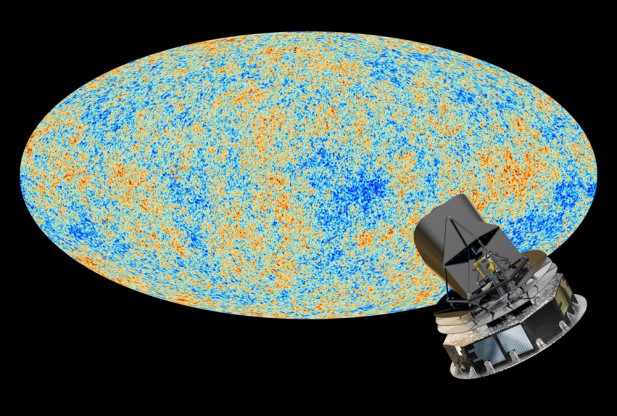
The anisotropies of the Cosmic microwave background (CMB) as observed by Planck. The CMB is a snapshot of the oldest light in our Universe, imprinted on the sky when the Universe was just 380 000 years old. It shows tiny temperature fluctuations that correspond to regions of slightly different densities, representing the seeds of all future structure: the stars and galaxies of today. (Credit: ESA and the Planck Collaboration – D. Ducros)
via redorbit
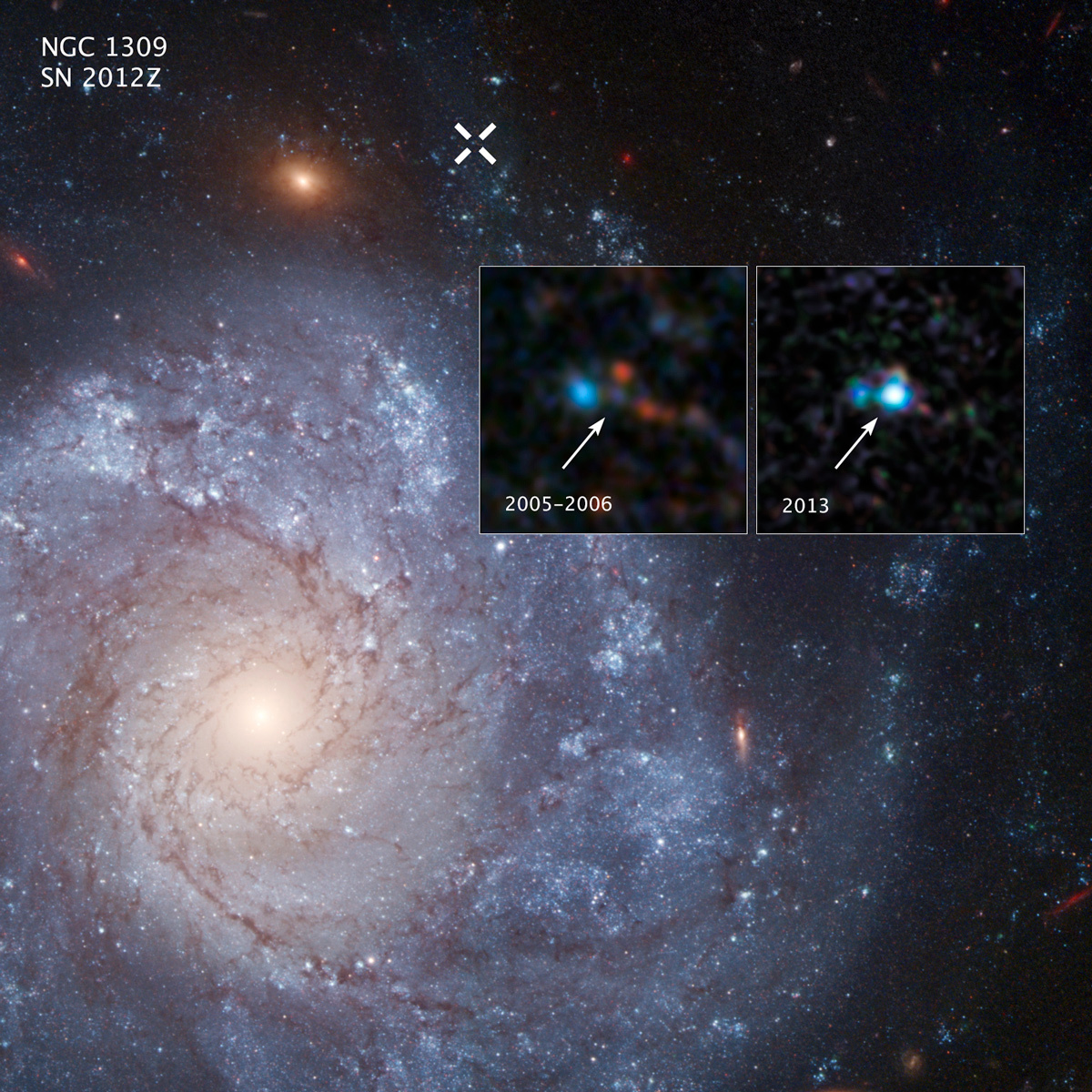
The two inset images show before-and-after images captured by NASA’s Hubble Space Telescope of Supernova 2012Z in the spiral galaxy NGC 1309. The white X at the top of the main image marks the location of the supernova in the galaxy. (Credit: NASA)
via time
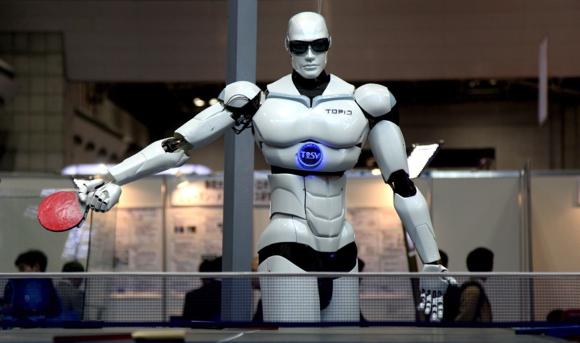
Nearly half of the respondents (48%) predicted that robots and AI will displace more jobs than they create over the coming decade. While that left a slim majority believing the impact of technology on employment will be neutral or positive. (Credit: Humanrobo/Wikimedia Commons)
via forbes
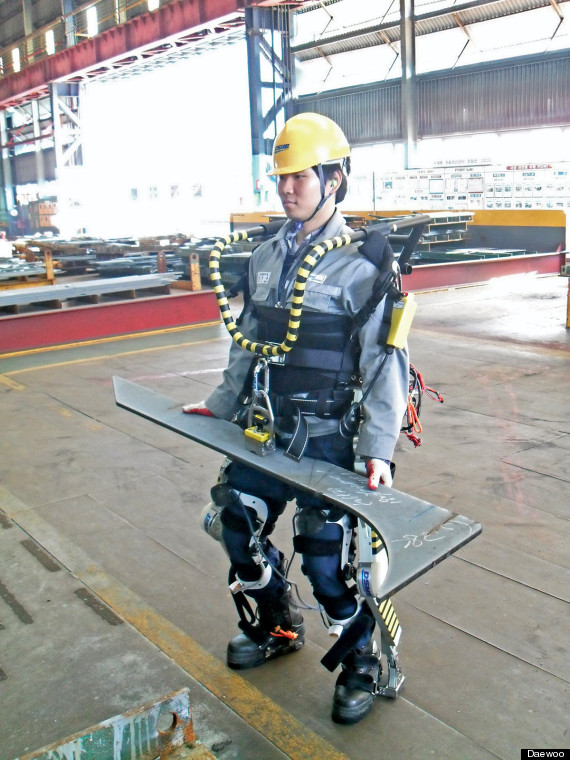
Chu says worker feedback from the trial has been mostly positive. Testers were pleased that the exoskeleton let them lift heavy objects repeatedly without strain, but everyone also wanted it to move faster and be able to cope with heavier loads. (Credit: Daewoo)
via cnet
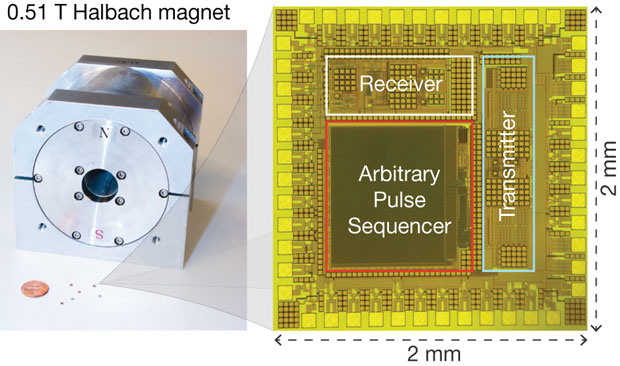
Harvard electrical engineering and applied physics professor Donhee Ham and his colleagues have drastically shrunk the size of the electronics even further, fitting the RF receiver, transmitter and other components on a tiny seed-sized chip. (Credit: Dongwan Ha/Harvard SEAS)
via ieee
Footage from the Venus Express orbiter confirmed sightings of hot spots on the surface of the planet, in accordance with volcanoes still simmering. (Credit: NASA)
via slashgear
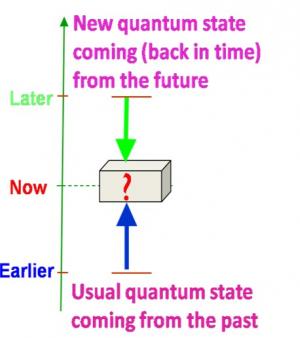
At the present moment another measurement is performed which is influenced both by what happened earlier and what happened later. (Credit: Jeff Tollaksen)
via phys
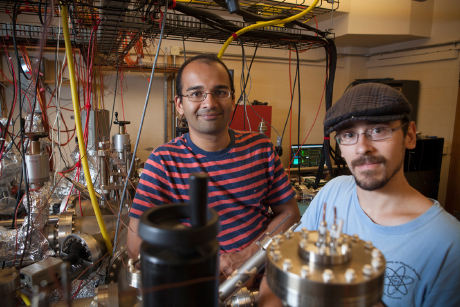
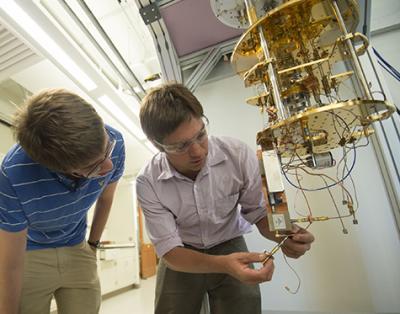
Kater Murch (right), assistant professor of physics at Washington University in St. Louis, and junior Chris Munley work with the equipment that can map a quantum device’s trajectory between two points in quantum state space, a feat until recently considered impossible. (Credit: Joe Angeles/WUSTL Photos)
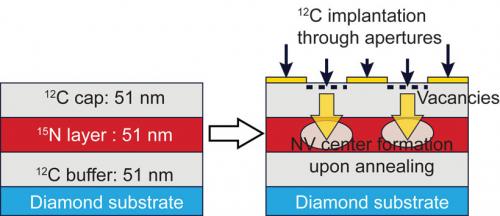
This is a schematic of the process to localize NV centers in 3-D. The researchers blasted carbon ions through holes to create vacancies and heated the diamond to make the vacancies mobile within the crystal. NV centers could form in the nitrogen-doped layer below where the holes were placed. (Credit: F.J. Heremans and D. Awschalom/U. Chicago and K. Ohno/UCSB)
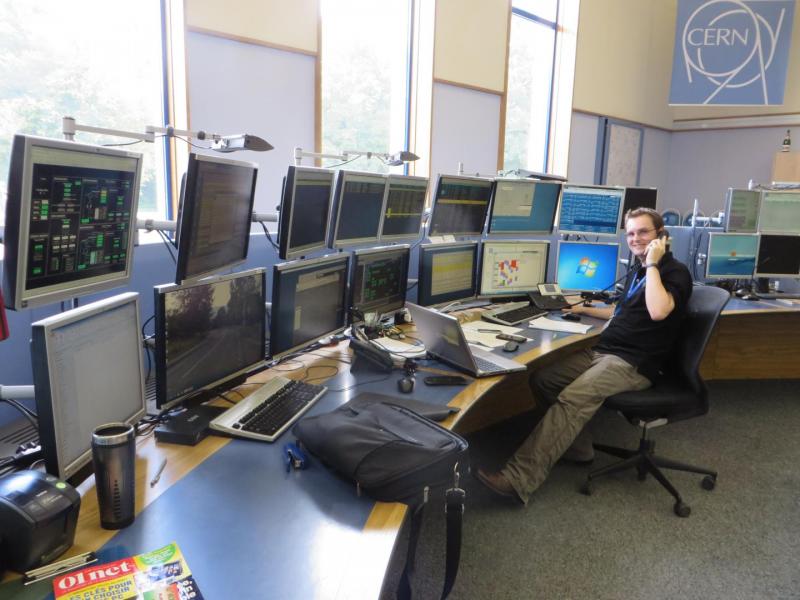
Chris Wetton of CERN’s Technical Infrastructure Operation group keeps a keen eye on the monitors at the CERN Control Centre (Credit: Stephanie Hills)
via cern
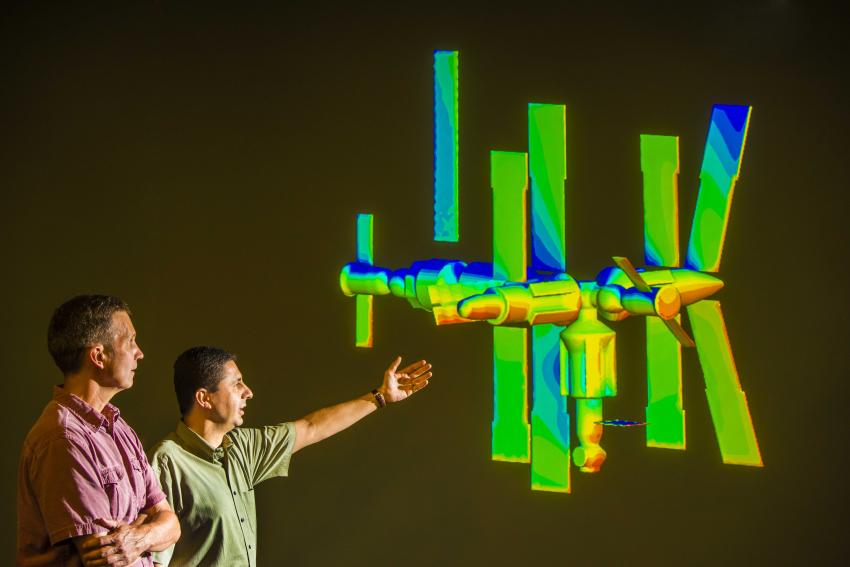
Sandia National Laboratories researchers Steve Plimpton, left, and Michael Gallis look at a projection of a model of the Russian MIR space station, which fell out of orbit several years ago and disintegrated, with the remains ending up at the bottom of the Indian Ocean. Using Sandia’s 3-D code SPARTA, the calculation is simulating an instance of the process of de-orbiting. (Credit: Randy Montoya)
via phys
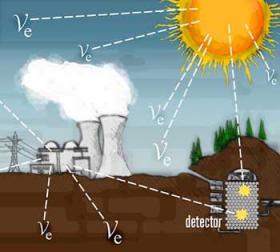
Japanese scientists recently published a paper that showed they could monitor neutrinos by putting a detector in the back of a van and parking it outside the reactor.
via wvtf
Of course science has overturned earlier notions of how the Universe works. But sometimes, those rules are shown to be true so much and so often that when you come up with an idea that overthrows all of it, you’d better have iron-clad evidence of it. (Credit: Phil Plait, Paramount Pictures)
via slate
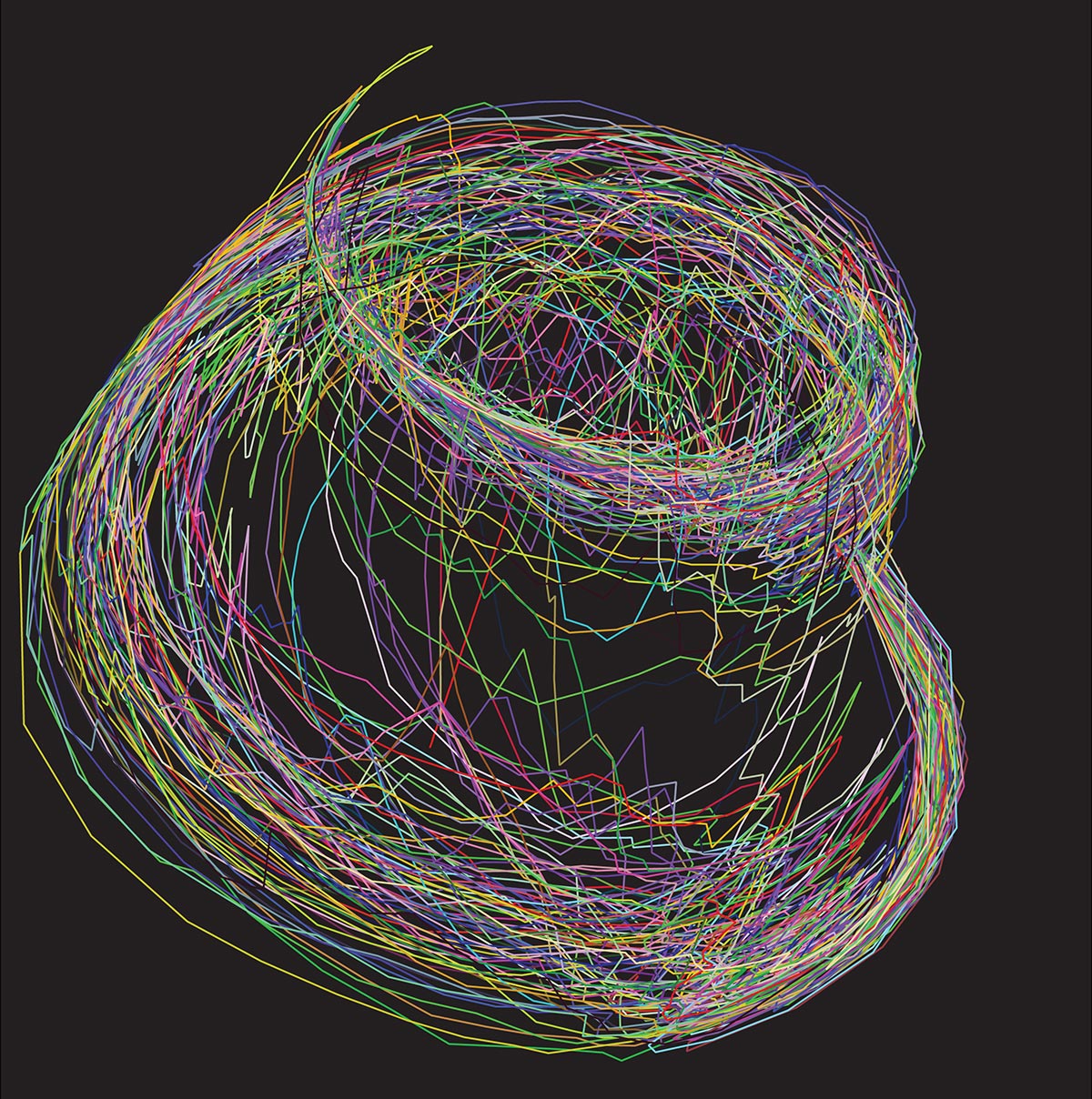
The work verifies theoretical models of the most likely way in which a quantum system will collapse, proving that the probable path can be predicted. This paves the way to actively controlling a quantum system in the future by steering it towards a certain outcome.(Credit: Irfan Siddiqi, UC Berkeley)
via newscientist
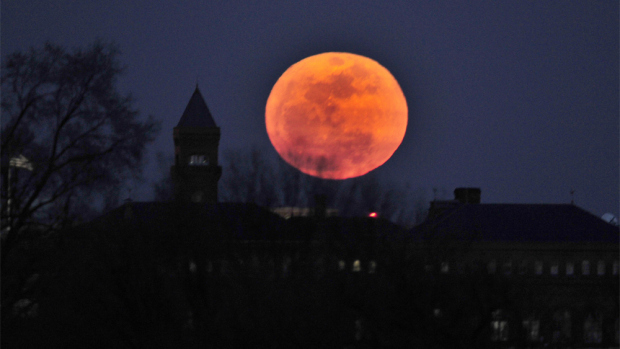
A perigee moon rises in Washington, DC, on March 19, 2011. A perigee moon is visible when the moon’s orbit position is at its closest point to Earth during a full moon phase. The full moon coincided with its closest approach to the Earth, 221,565 miles (356,575 km), making the so-called “super moon” look slightly larger than average. (Credit: JEWEL SAMAD/AFP/Getty Images)
via cbs
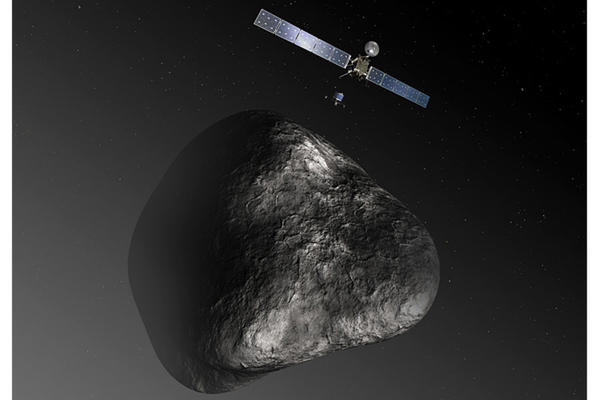
An artist’s impression shows what the Rosetta orbiter will look like when it deploys the Philae lander to a comet later this year. (Credit: ESA)
via csmonitor