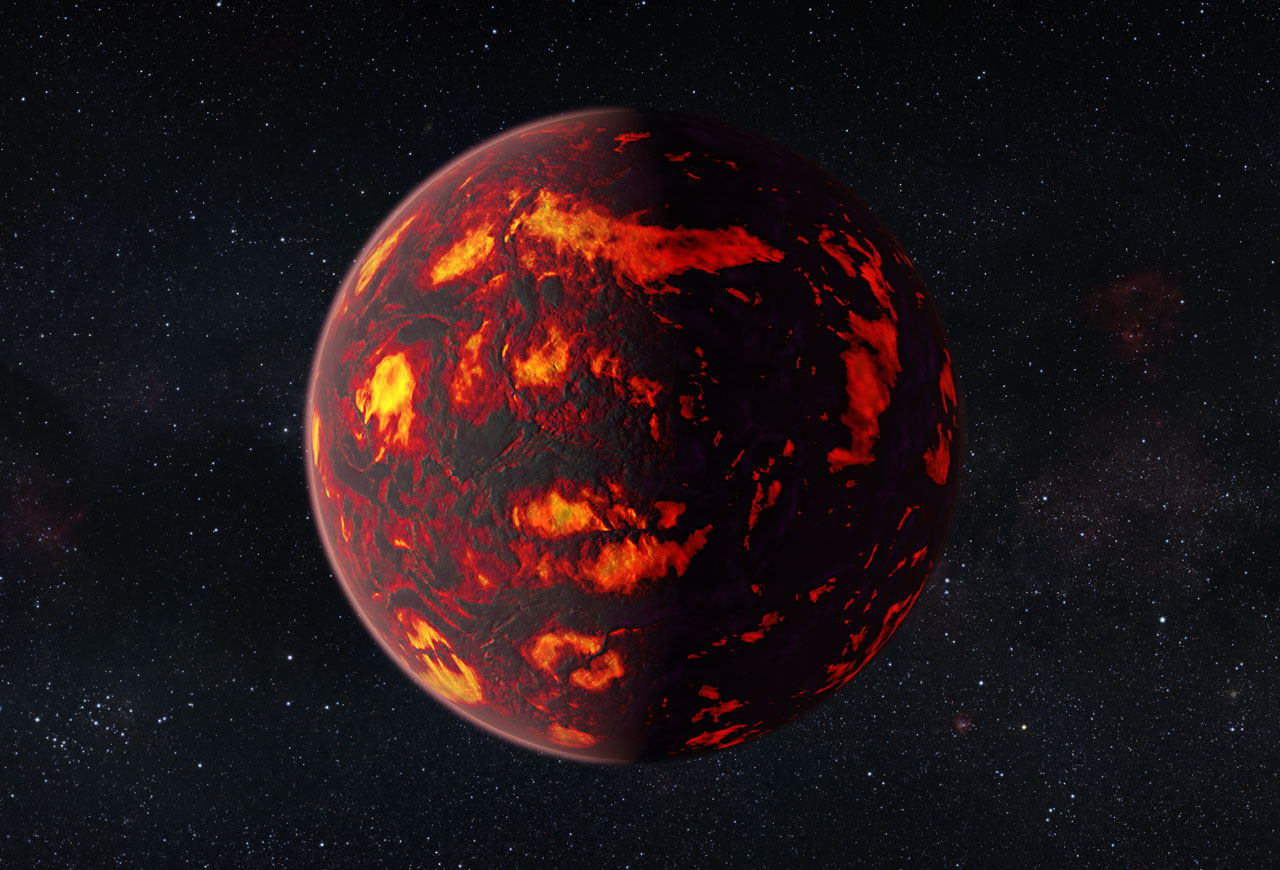
For the first time astronomers were able to analyze the atmosphere of an exoplanet in the class known as super-Earths
(Credit: ESA/Hubble, M. Kornmesser)
Using data gathered with the NASA/ESA Hubble Space Telescope and new analysis techniques, the exoplanet 55 Cancri e is revealed to have a dry atmosphere without any indications of water vapor. The results, to be published in the Astrophysical Journal, indicate that the atmosphere consists mainly of hydrogen and helium.
The international team, led by scientists from University College London (UCL) in the UK, took observations of the nearby exoplanet 55 Cancri e, a super-Earth with a mass of eight Earth-masses [1]. It is located in the planetary system of 55 Cancri, a star about 40 light-years from Earth.
Using observations made with the Wide Field Camera 3 (WFC3) on board the NASA/ESA Hubble Space Telescope, the scientists were able to analyse the atmosphere of this exoplanet. This makes it the first detection of gases in the atmosphere of a super-Earth. The results allowed the team to examine the atmosphere of 55 Cancri e in detail and revealed the presence of hydrogen and helium, but no water vapour. These results were only made possible by exploiting a newly-developed processing technique.
“This is a very exciting result because it’s the first time that we have been able to find the spectral fingerprints that show the gases present in the atmosphere of a super-Earth,” explains Angelos Tsiaras, a PhD student at UCL, who developed the analysis technique along with his colleagues Ingo Waldmann and Marco Rocchetto. “The observations of 55 Cancri e’s atmosphere suggest that the planet has managed to cling on to a significant amount of hydrogen and helium from the nebula from which it originally formed.”
Super-Earths like 55 Cancri e are thought to be the most common type of planet in our galaxy. They acquired the name ‘super-Earth’ because they have a mass larger than that of the Earth but are still much smaller than the gas giants in the Solar System. The WFC3 instrument on Hubble has already been used to probe the atmospheres of two other super-Earths, but no spectral features were found in those previous studies [2].
55 Cancri e, however, is an unusual super-Earth as it orbits very close to its parent star. A year on the exoplanet lasts for only 18 hours and temperatures on the surface are thought to reach around 2000 degrees Celsius. Because the exoplanet is orbiting its bright parent star at such a small distance, the team was able to use new analysis techniques to extract information about the planet, during its transits in front of the host star.
Observations were made by scanning the WFC3 very quickly across the star to create a number of spectra. By combining these observations and processing them through analytic software, the researchers were able to retrieve the spectrum of 55 Cancri e embedded in the light of its parent star.
“This result gives a first insight into the atmosphere of a super-Earth. We now have clues as to what the planet is currently like and how it might have formed and evolved, and this has important implications for 55 Cancri e and other super-Earths,” said Giovanna Tinetti, also from UCL, UK.
Intriguingly, the data also contain hints of the presence of hydrogen cyanide, a marker for carbon-rich atmospheres.
“Such an amount of hydrogen cyanide would indicate an atmosphere with a very high ratio of carbon to oxygen,” said Olivia Venot, KU Leuven, who developed an atmospheric chemical model of 55 Cancri e that supported the analysis of the observations.
“If the presence of hydrogen cyanide and other molecules is confirmed in a few years time by the next generation of infrared telescopes, it would support the theory that this planet is indeed carbon rich and a very exotic place,” concludes Jonathan Tennyson, UCL. “Although hydrogen cyanide, or prussic acid, is highly poisonous, so it is perhaps not a planet I would like to live on!”
Notes
[1] 55 Cancri e has previously been dubbed the “diamond planet” because models based on its mass and radius have led to the idea that its interior is carbon-rich.
[2] Hubble observed the super-Earths GJ1214b and HD97658b in 2014, using the transit method. The observations did not show any spectral features, indicating an atmosphere covered by thick clouds made of molecular species much heavier than hydrogen.
More information
The Hubble Space Telescope is a project of international cooperation between ESA and NASA.
The results were summarized by Tsiaras et al. in the paper “Detection of an atmosphere around the super-Earth 55 Cancri e” which is going to be published in the Astrophysical Journal.
The team of astronomers in this study consists of A. Tsiaras (UCL, UK), M. Rocchetto (UCL, UK), I. P. Waldmann (UCL, UK), O. Venot (Katholieke Universiteit Leuven, Belgium), R. Varley (UCL, UK), G. Morello (UCL, UK), G. Tinetti (UCL, UK), E. J. Barton (UCL, UK), S. N. Yurchenko (UCL, UK), J. Tennyson (UCL, UK).
University College London was founded in 1826. It was the first English university established after Oxford and Cambridge, the first to open up university education to those previously excluded from it, and the first to provide systematic teaching of law, architecture and medicine. UCL is among the world’s top universities, as reflected by performance in a range of international rankings and tables. UCL currently has over 35 000 students from 150 countries and over 11 000 staff.
Links
Contacts
Angelos Tsiaras
UCL
United Kingdom
Tel: +44 (0)20 3549 5844
Email: atsiaras@star.ucl.ac.uk
Giovanna Tinetti
UCL
United Kingdom
Tel: +44 (0) 7912509617
Email: g.tinetti@ucl.ac.uk
Olivia Venot
KU Leuven
Belgium
Email: olivia.venot@ster.kuleuven.be
Mathias Jäger
ESA/Hubble, Public Information Officer
Garching, Germany
Tel: +49 176 62397500
Email: mjaeger@partner.eso.org
Anita Heward
Europlanet Media Centre
Tel: +44 (0) 7756 034243
Email: anita.heward@europlanet-eu.org
Rebecca Caygill
Media Relations Manager
UCL Communications & Marketing, United Kingdom
Tel: +44 (0)20 3108 3846
Email: r.caygill@ucl.ac.uk
Source Article: http://www.spacetelescope.org/news/heic1603/
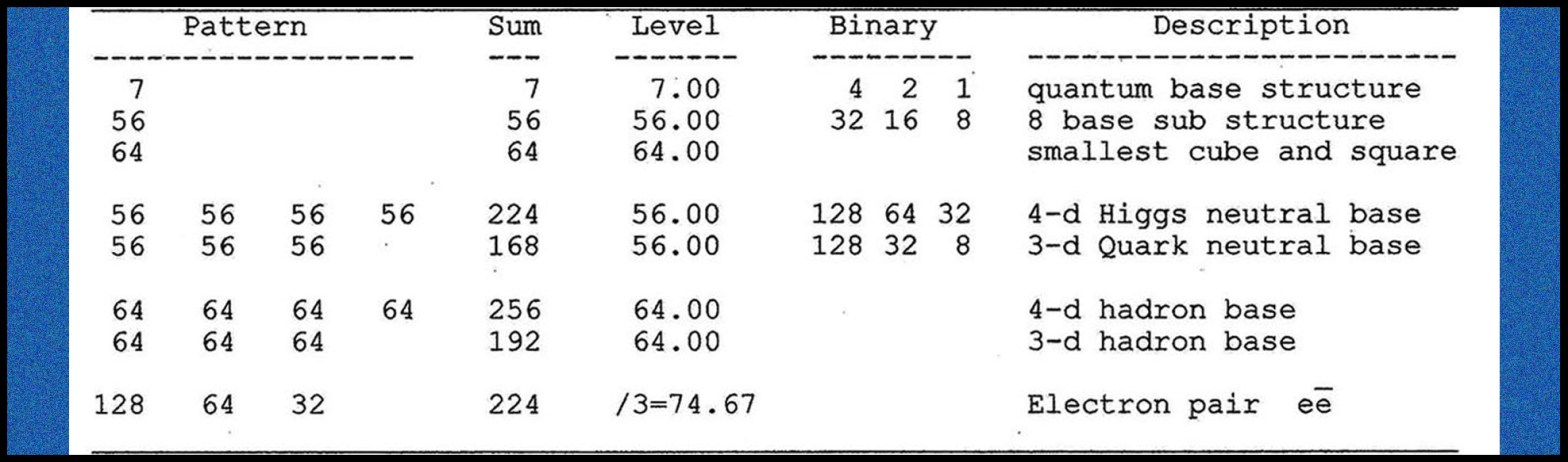

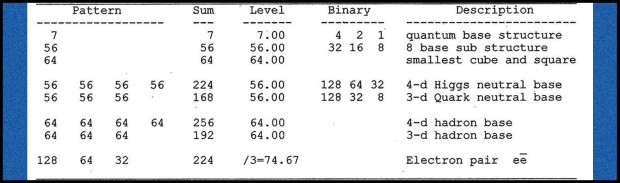 Top section of table 7 in book chapter 4
 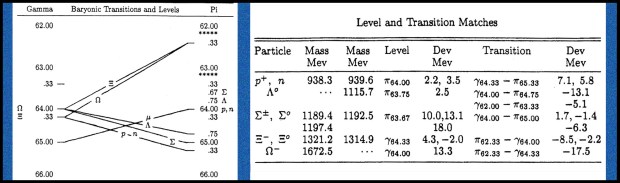 Book figure 4.5 and first section of table 4 in chapter 4
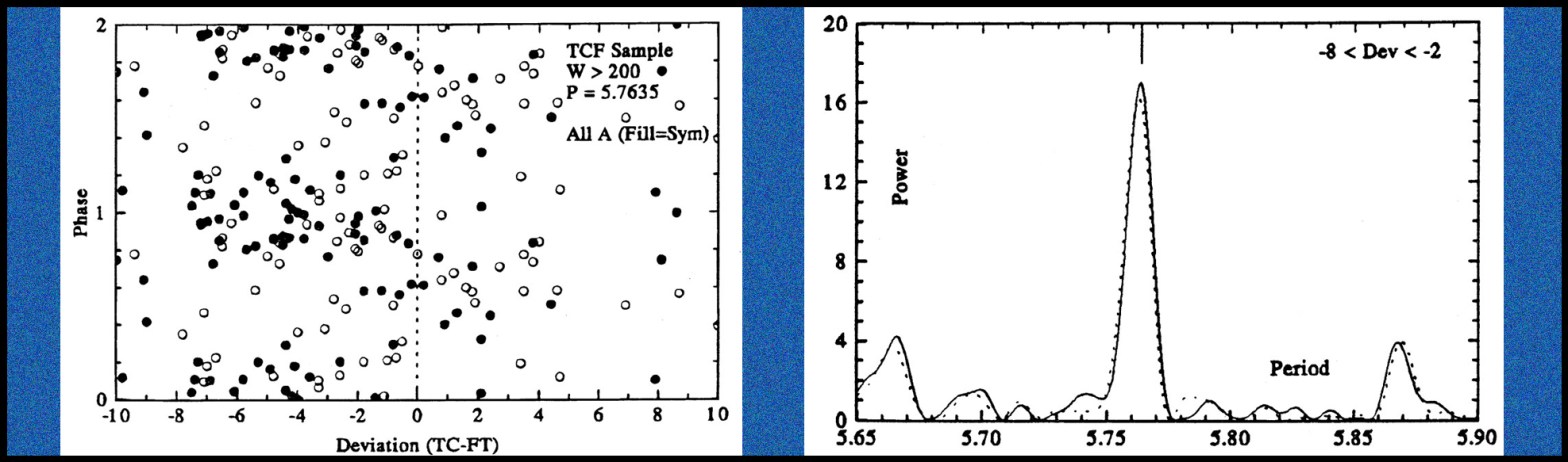
 Book figures 3.12 & 3.13
 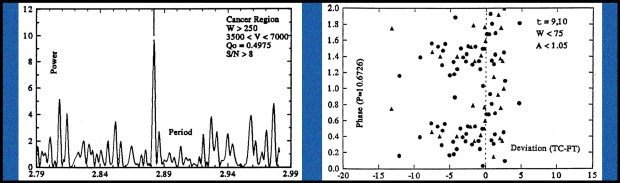 Book figures 3.14 & 3.47
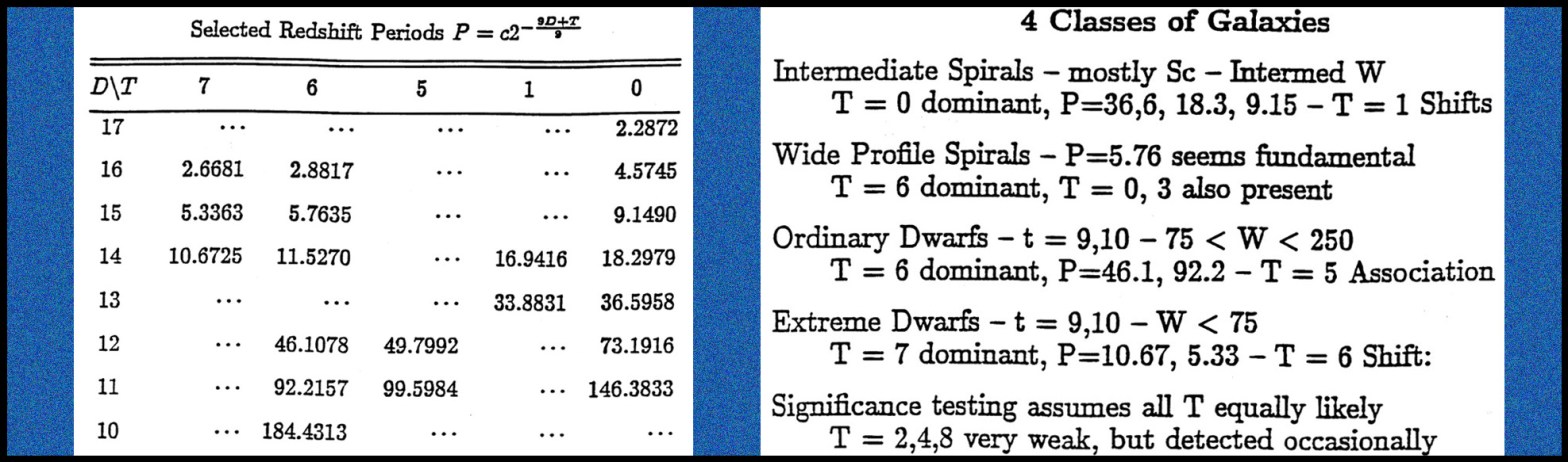
 Book figures 3.8 and 3.9
 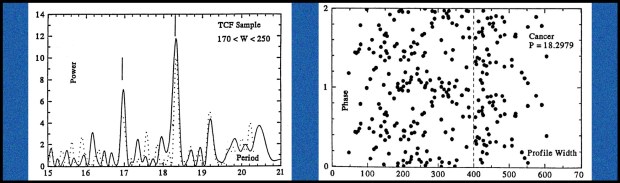 Book figures 3.10 and 3.20