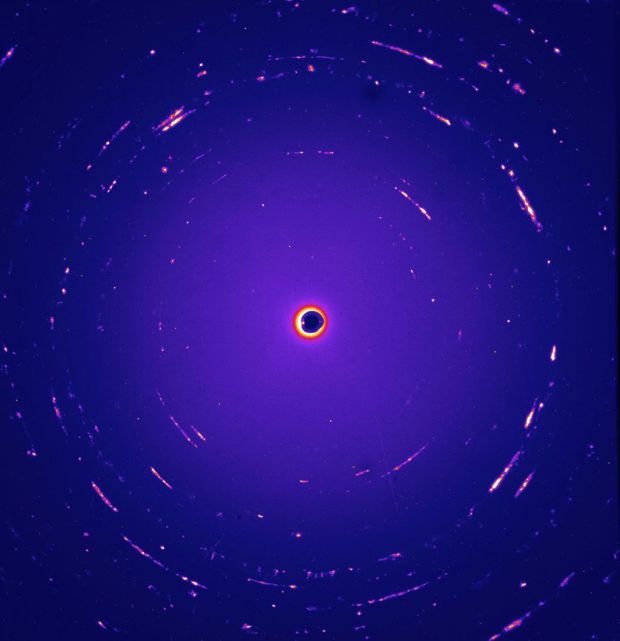
A team of researchers has identified seven dust particles that were returned to Earth in 2006 by NASA’s Stardust spacecraft, which might have originated in the interstellar medium. This false-color image shows a diffraction pattern created by one of these particles, named Orion. Image (Credit: Zack Gainsforth)
via americaspace
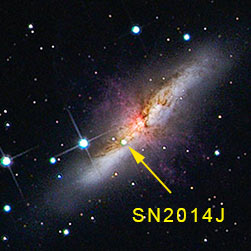
“While it may sound a bit odd, we actually learned a great deal about this supernova by detecting absolutely nothing,” said Raffaella Margutti of the Harvard-Smithsonian Center for Astrophysics (CfA) in Cambridge, Massachusetts, who led the study. “Now we can essentially rule out that the explosion was caused by a white dwarf continuously pulling material from a companion star.” (Credit: NASA)
via marketwatch
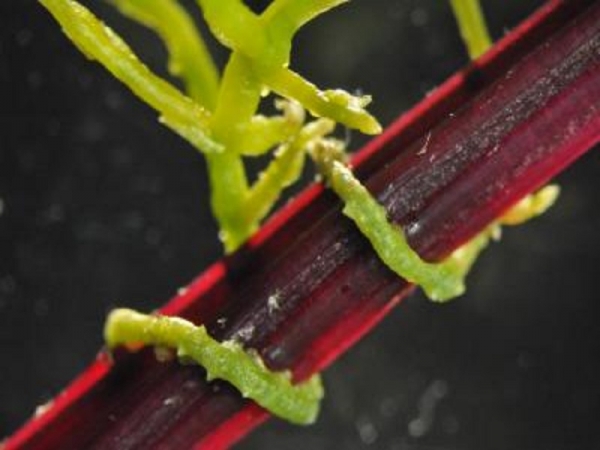
When parasitic plants such as dodder attack plants like the sugar beet shown here, there is a vast exchange of genetic information between the plants, a Virginia Tech researcher has discovered. (Credit: Virginia Tech College of Agriculture and Life Sceinces)
via techtimes
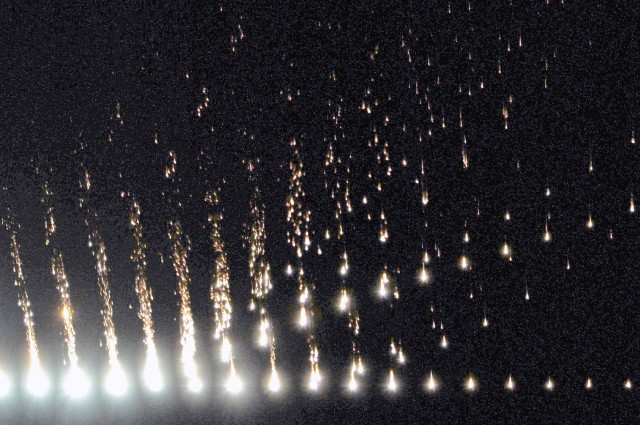
The fragmentation of the Novato meteorite on Oct. 17, 2012, as depicted in a horizontally mirrored image to show the progression of the event (from left to right). (Robert P. Moreno Jr., Jim Albers and Peter Jenniskens/NASA-SETI)
via kqed
Engineering PhD student Willem Olding aims to take out the tedium in creating mapping systems to free-up time for more important work. (Credit: Richard Jupe)
via themercury
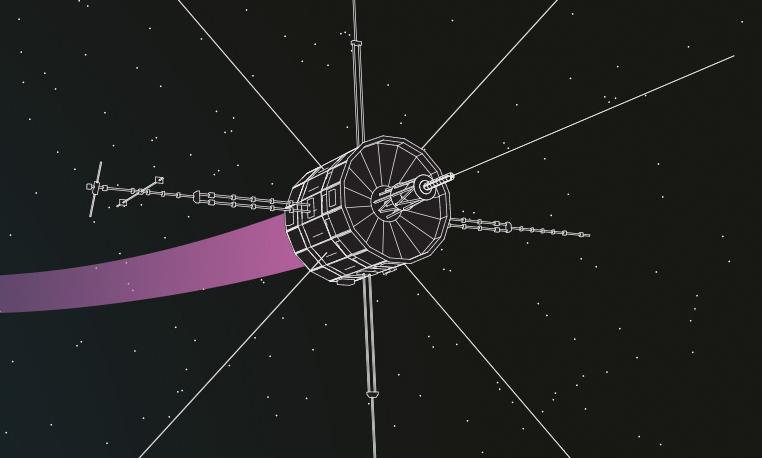
NASA’s International Sun-Earth Explorer 3 spacecraft, which launched in 1978, flew by the moon on Aug. 10, 2014 and is heading toward the sun. (Credit: SpacecraftforAll.com)
via tvtechnology
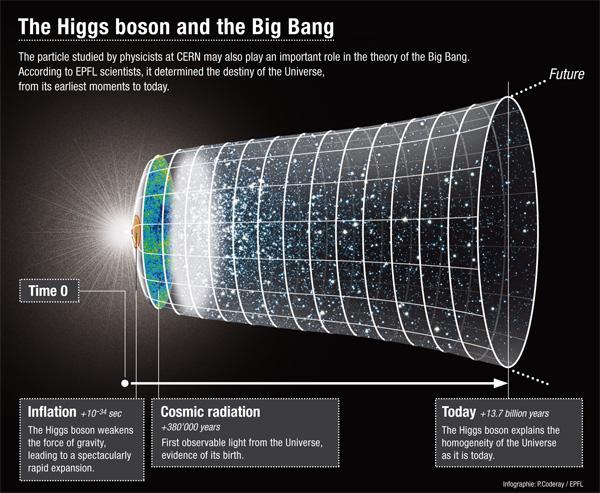
The influence of the Higgs boson and its field (inset) on cosmological inflation could manifest in the observation of gravitational waves by the BICEP2 telescope (background). (Credit: EPFL)
via phys.org
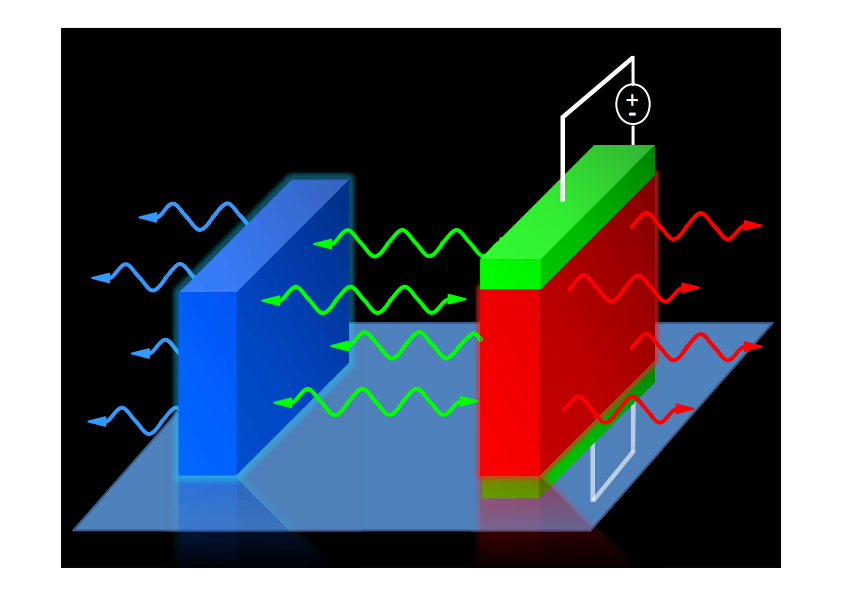
A bit of heat. Two parallel, thin plates that exchange heat via thermal radiation can form a thermal “bit” that changes rapidly between “one” and “zero.” One of them is made of a material like VO2 that switches between two states with different thermal properties, depending on its temperature. (Credit: P. Ben-Abdallah/Univ. of Paris-Sud)
via physics.aps
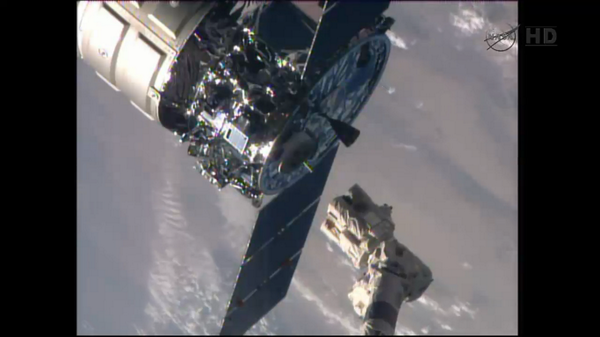
Cygnus Orb-2 spacecraft ‘Janice Voss’ bids farewell to the ISS at 6:40 a.m. EDT, Friday, Aug. 15, 2014. It’s set to reenter the atmosphere on Aug. 17. (Credit: NASA TV)
via universetoday
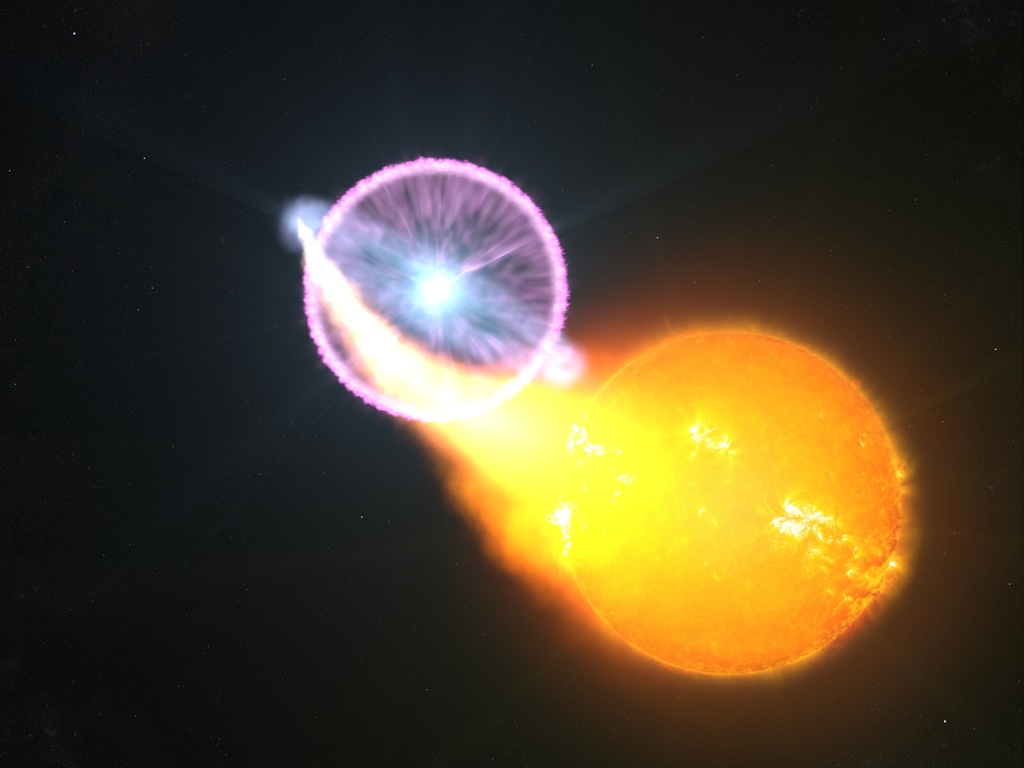
Novae typically originate in binary systems containing Sun-like stars, as shown in this artist’s rendering. NASA’s Fermi Space Telescope discovered that a nova in a system like this likely produces gamma rays (magenta) through collisions among multiple shock waves in the rapidly expanding shell of debris. (Credit: NASA’s Goddard Space Flight Center/S. Wiessinger)
via americaspace
Beam out: elongated “Landau” states – Instead of rotating uniformly at a particular frequency, an international team of researchers has found that electrons in a magnetic field are capable of rotating at three different frequencies, depending on their quantum properties.
via physicsworld
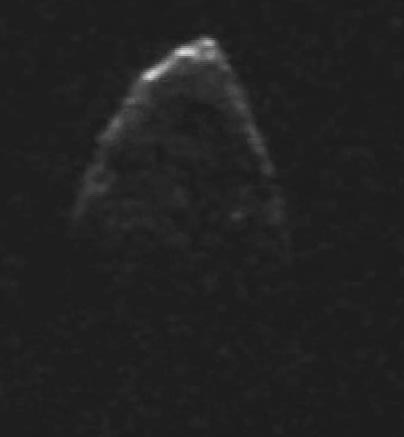
Asteroid 1950 DA. “Following the February 2013 asteroid impact in Chelyabinsk, Russia, there is renewed interest in figuring out how to deal with the potential hazard of an asteroid impact,” said Rozitis. “Understanding what holds these asteroids together can inform strategies to guard against future impacts.” (Credit: NASA)
via tntoday
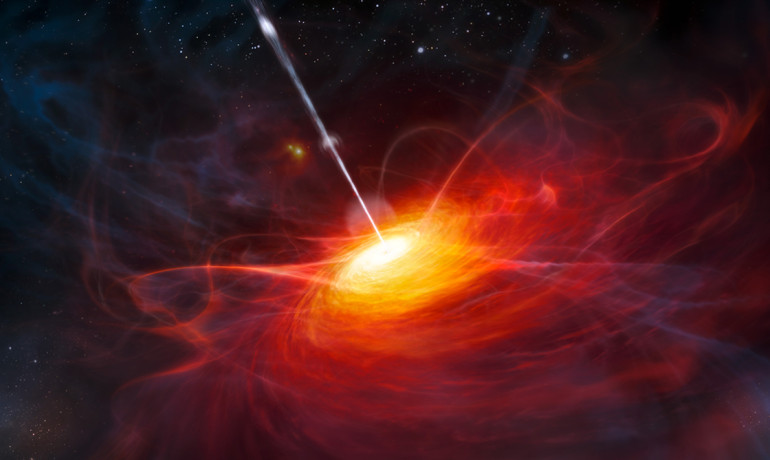
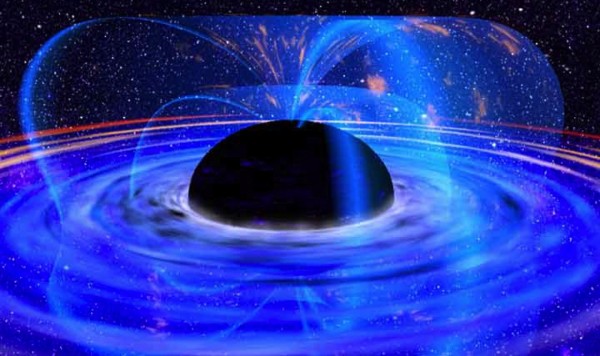
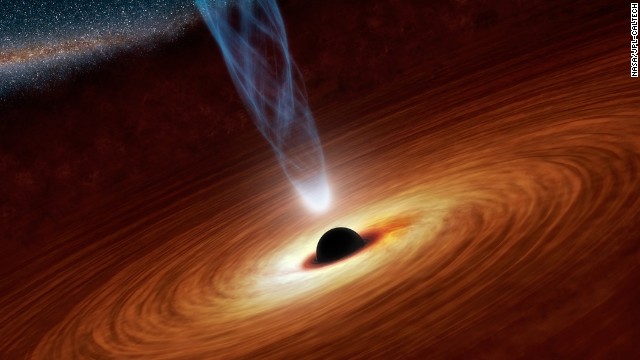
“The puzzle has been how these ‘seed’ black holes grew into the monsters that we now see within the time available, a few billion years at best,” says Priyamvada Natarajan, who proposes that early quasars took in a “super boost,” feasting from large reservoirs of gas that were part of early star clusters. (Credit: Lollito Larkham/Flickr)
via futurity
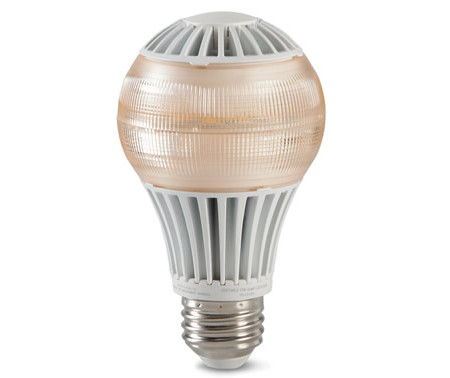
Lighting Science created special lightbulbs for the ISS. There are daylight bulbs with bluer light to encourage energy and activity during what would be daytime hours, and then there are lightbulbs that dial back on the blue to boost astronauts’ production of melatonin for a good night’s sleep. (Credit: Lightning Science)
via cnet
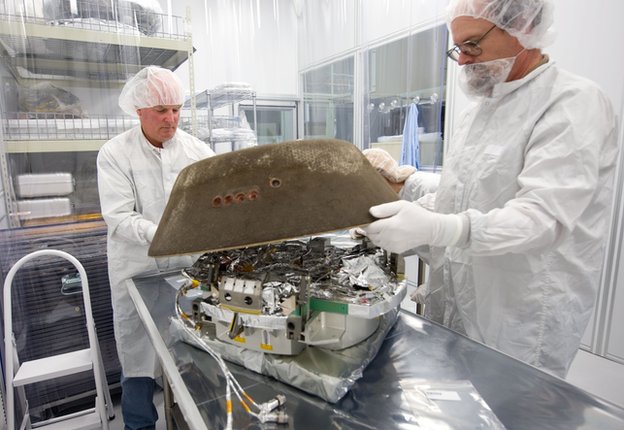
Scientists may have identified the first known dust particles from outside our Solar System, in samples returned to Earth by a Nasa space mission. (Credit: NASA)
via bbc
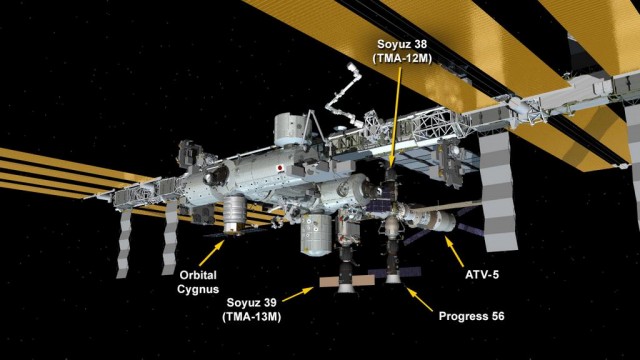
Here’s an awesome photo to start your day: The International Space Station currently has five spacecraft docked to it — the most that can be currently attached. If any of the world’s space agencies, or private companies like SpaceX were to send up another spacecraft today, they’d need to circle until another parking space becomes available. (Credit: NASA)
via extremetech
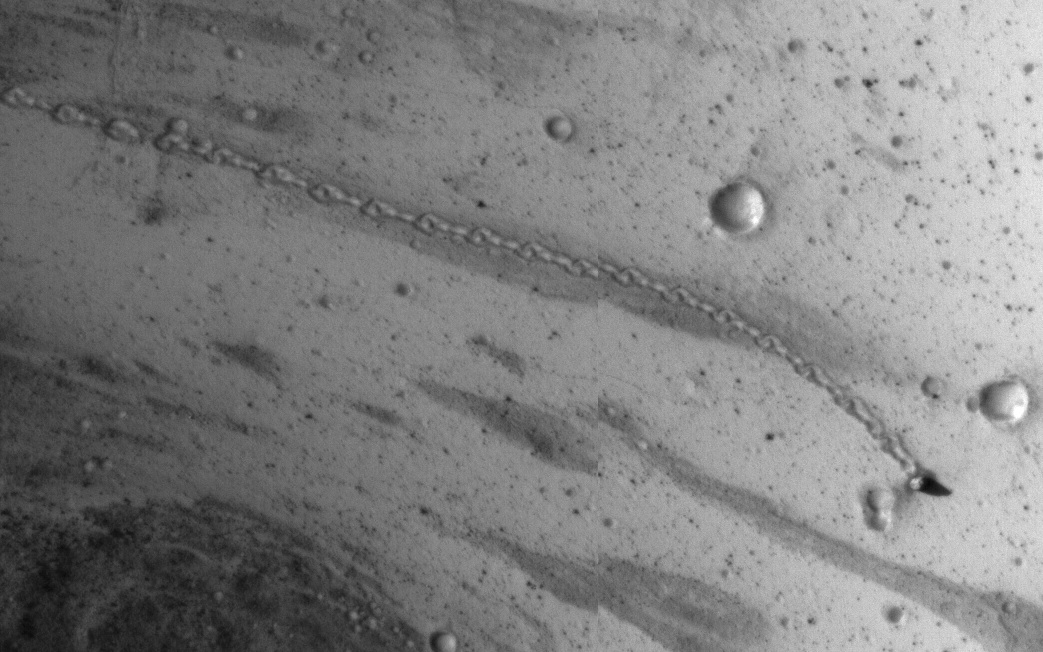
NASA’s Mars Reconnaissance Orbiter spotted the trail from an oblong boulder that rolled down a slope on the Red Planet. The image was taken on July 3, 2014. (Credit: NASA)
via space
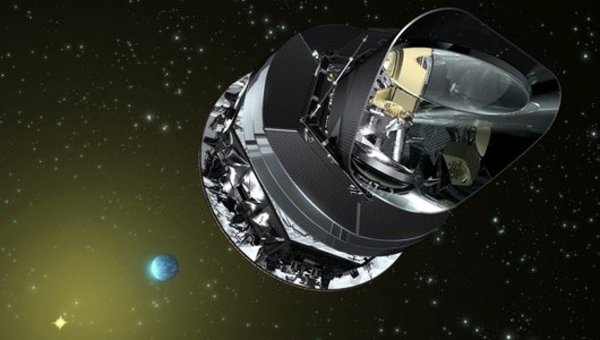
“This piece of information, that has always been a dream, and never was thought of as being within human grasp. But here in the year 2014 on finds that perhaps this mission is going to be telling us how the universe started,” said Harwit, who is an expert in infrared astronomy and works as a member of the ESA’s Submillimeter Wave Astronomical Satellite, as well as on the Herschel Telescope. (Credit: East News/ Science Photo Library)
via en.ria
Plot of CPU transistor counts against dates of introduction. Note the logarithmic vertical scale; the line corresponds to exponential growth with transistor count doubling every two years. The curve shows Moore’s law – the doubling of transistor counts every two years. The y-axis is logarithmic, so the line corresponds to exponential growth. (Credit: Wgsimon)
via arstechnica
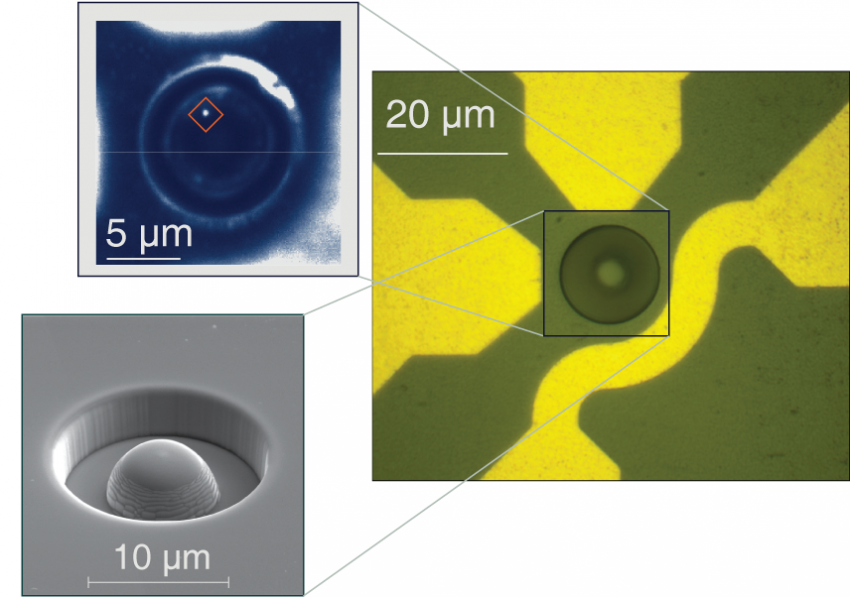
These images show a diamond sample with a hemispherical lens (right and lower left), and the location of a single electron spin/quantum state visible through its light emission (upper left). The scale bar on the image at upper left measures five microns, the approximate diameter of a red blood cell. (Credit: Courtesy of Awschalom Lab/University of Chicago)
via phys
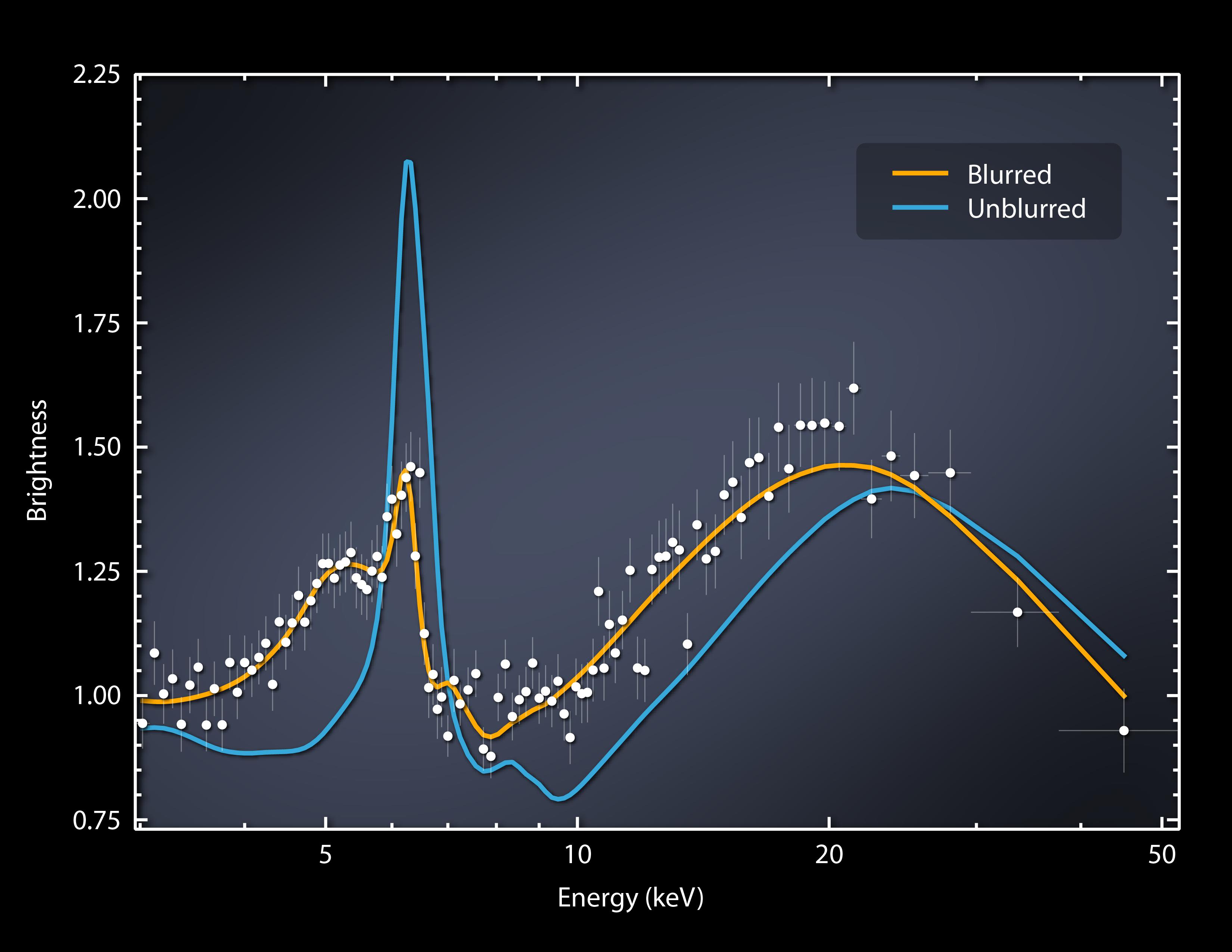
This plot of data captured by NASA’s Nuclear Spectroscopic Telescope Array, or NuSTAR, shows X-ray light streaming from regions near a supermassive black hole known as Markarian 335. (Credit: NASA)
via universetoday
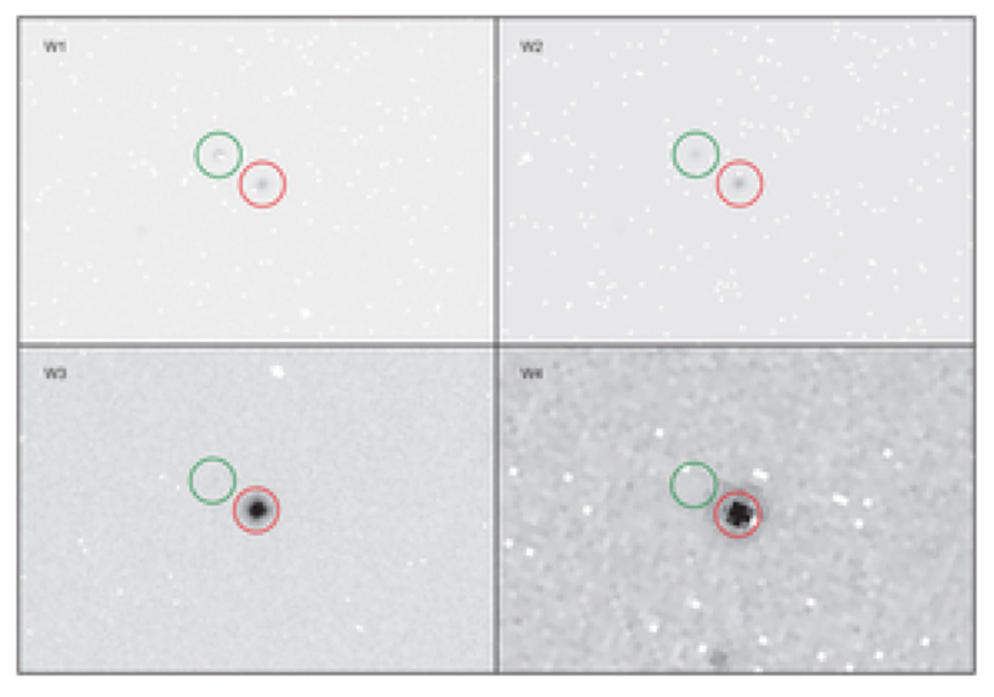
WISE thermal-infrared images of (29075) 1950 DA. The image scale is 2.75 arcsec per pixel for the W1, W2 and W3 bands and 5.53 arcsec per pixel for the W4 band. White pixels are ‘bad’ pixels that do not contain data. The object seen in the red circle is (29075) 1950 DA. (Credit: Rozitis, MacLennan, Emery)
via techtimes
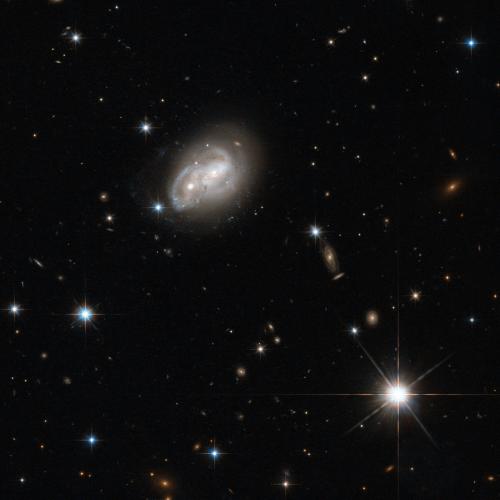
From objects as small as Newton’s apple to those as large as a galaxy, no physical body is free from the stern bonds of gravity, as evidenced in this stunning picture captured by the Wide Field Camera 3 and Advanced Camera for Surveys onboard the NASA/ESA Hubble Space Telescope. (Credit: ESA/Hubble & NASA, Acknowledgement: Luca Limatola)
via phys
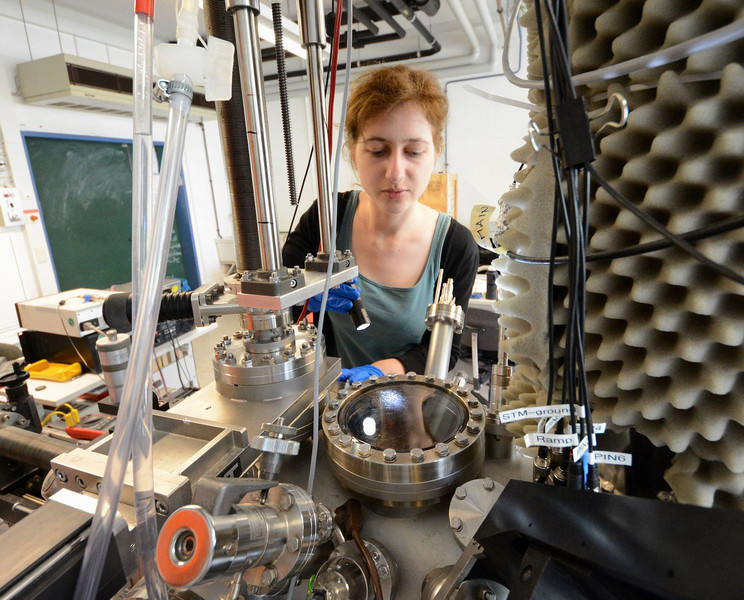
Alissa Wiengarten, PhD student at the TUM Department of Physics, heats a porphine powder in a vacuum chamber. (Credit: Thorsten Naeser/Munich-Centre for Advanced Photonics)
via azonano
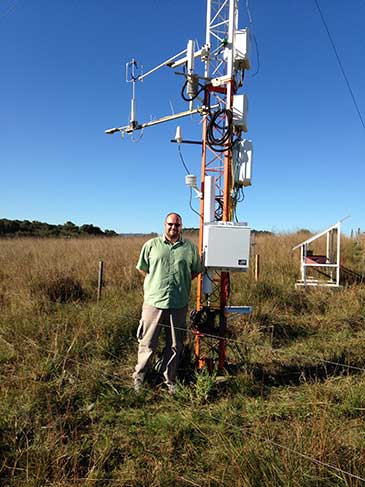
Dr Rosolem with the cosmic-ray soil moisture sensor installed at the the Federal University of Santa Maria SulFlux site in Brazil. (Credit: Univ Bristol)
via bristol
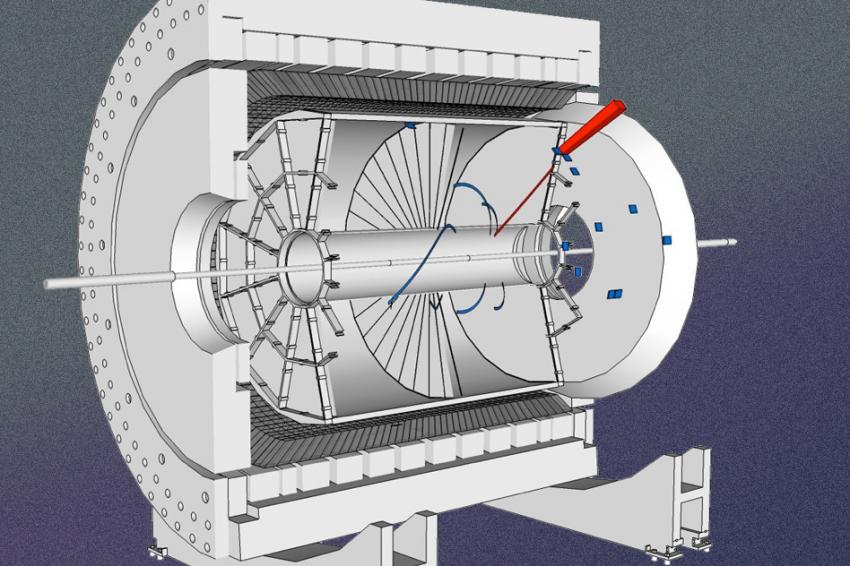
The STAR detector, used in the researchers’ experiment, measures the energy and angle of the electron from the W boson decay produced in the proton collision. (Credit: STAR Collaboration)
via phys
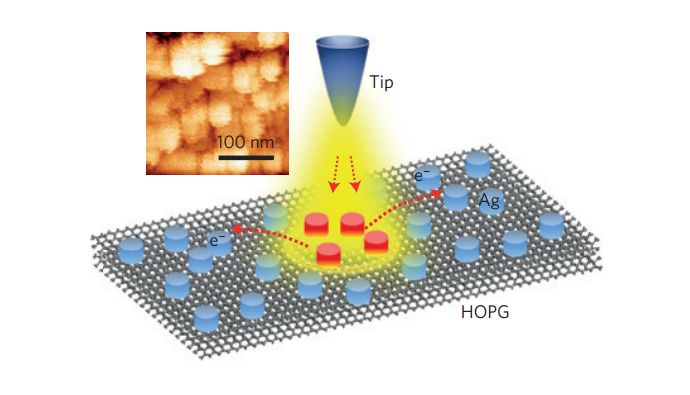
Experimental arrangement. A tip is approached to a distance of micrometres from a grounded highly ordered pyrolytic graphene (HOPG) surface carrying Ag nanostructures (illustrated in the inset). Electrons are field-emitted from the tip when a negative tip voltage Vt of hundreds of volts is applied, and the surface plasmon resonance (SPR) of the Ag nanostructures is excited by the field-emitted electrons under a strong electric field introduced by the tip–sample bias. The backscattered electrons are collected and analysed by the TEEA. (Credit: Nature Physics (2014) doi:10.1038/nphys3051)
via asianscientist
Because of that alacrity, and the fact that they had repeat observations at roughly a decade’s detach, the Russian scientists were able to single out stars that dimmed by at least tenfold. They’ve been named 1RXS J114727.1 + 494302, 1RXS J130547.2 + 641252, and 1RXS J235424.5-102053. (Credit: Davies, NASA)
via slashgear
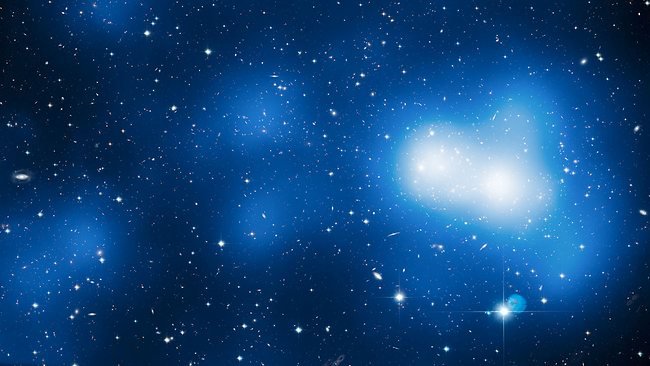
Could a mystery signal that has been detected be proof of dark matter? While searching through the fundamental structures of various galaxy clusters, astrophysicists located at Harvard University found a bizarre discharge line they are having trouble in identifying. (Credit: Kimberly Ruble)
via guardianlv
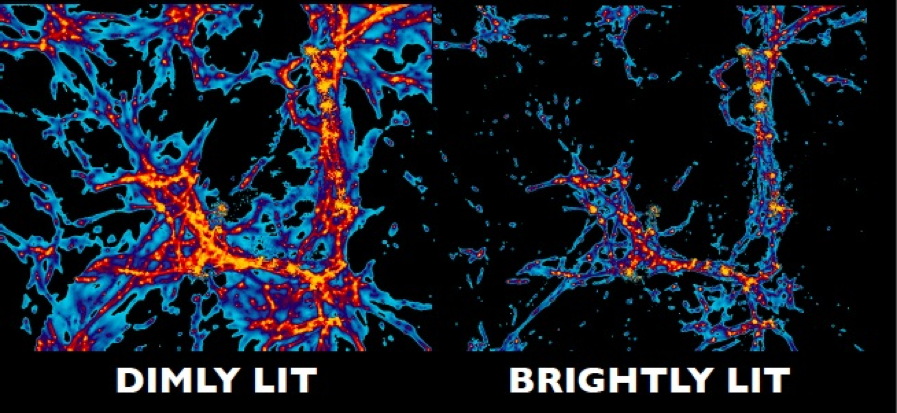
New data from the Hubble Space Telescope and computer simulations have revealed that the universe has much less ultraviolet light than previously thought. (Credit: Ben Oppenheimer and Juna Kollmeie)
via space
Now, a mathematician has announced the completion of an epic quest to formally prove the so-called Kepler conjecture. “An enormous burden has been lifted from my shoulders,” says Thomas Hales of the University of Pittsburgh, Pennsylvania, who led the work. “I suddenly feel ten years younger!” (Credit: Ray Tang/Rex)
via newscientist