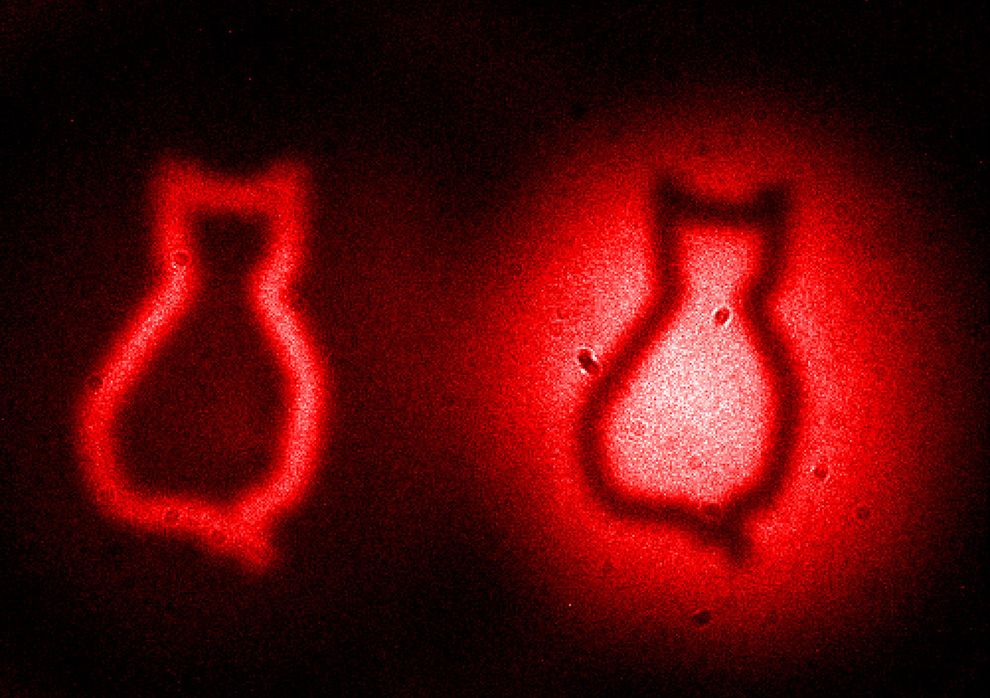
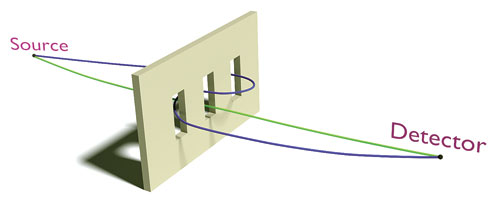
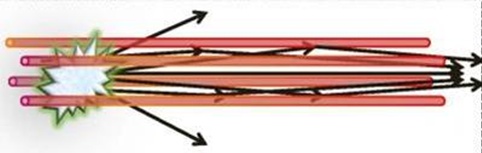
“This is a long-standing, really neat experimental idea,” says Paul Lett, of the National Institute of Standards and Technology in GaithersburgLett, “Now we have to see whether or not it will lead to something practical, or will remain just a clever demonstration of quantum mechanics.”(CreditBarreto-Lemos, Vergano)
via nationalgeographic
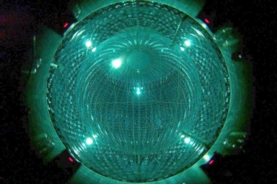
The Borexino neutrino detector uses a sphere filled with liquid scintillator that emits light when excited. This inner vessel is surrounded by layers of shielding and by about 2,000 photomultiplier tubes to detect the light flashes.(Credit: Borexino Collaboration)
via scientificamerican
MOLECULAR MODEL In the molecular model, quark-antiquark pairs form two color-neutral mesons that become weakly linked as a molecule.DIQUARK MODEL The particles form quark-quark and antiquark-antiquark pairs, which are forced to combine to balance their color charges.
via simonsfoundation
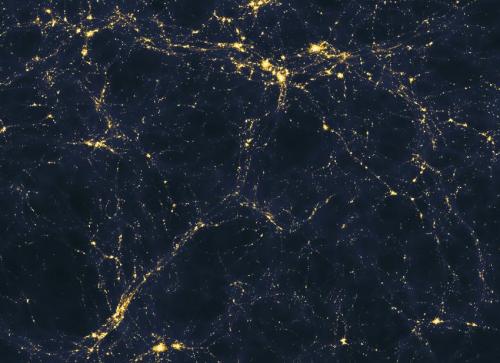
A computer model shows one scenario for how light is spread through the early universe on vast scales (more than 50 million light years across). Astronomers will soon know whether or not these kinds of computer models give an accurate portrayal of light in the real cosmos. (Credit: Andrew Pontzen/Fabio Governato)
via phys
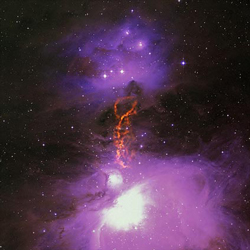
Radio/optical composite of the Orion Molecular Cloud Complex showing the OMC-2/3 star-forming filament. GBT data is shown in orange. Uncommonly large dust grains there may kick-start planet formation. (Credit: S. Schnee, et al.; B. Saxton, B. Kent (NRAO/AUI/NSF)
via rdmag
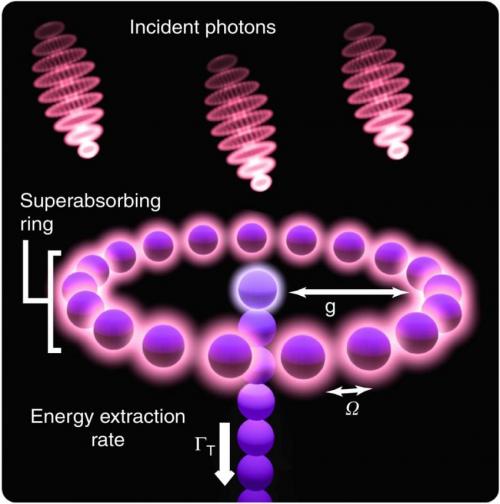
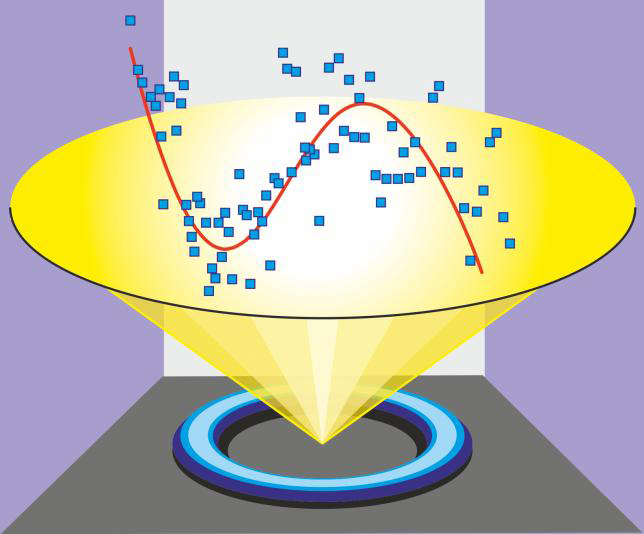
In one potential method to realize superabsorption, a superabsorbing ring absorbs incident photons, giving rise to excitons. (Credit: Higgins, et al.)
via phys.org
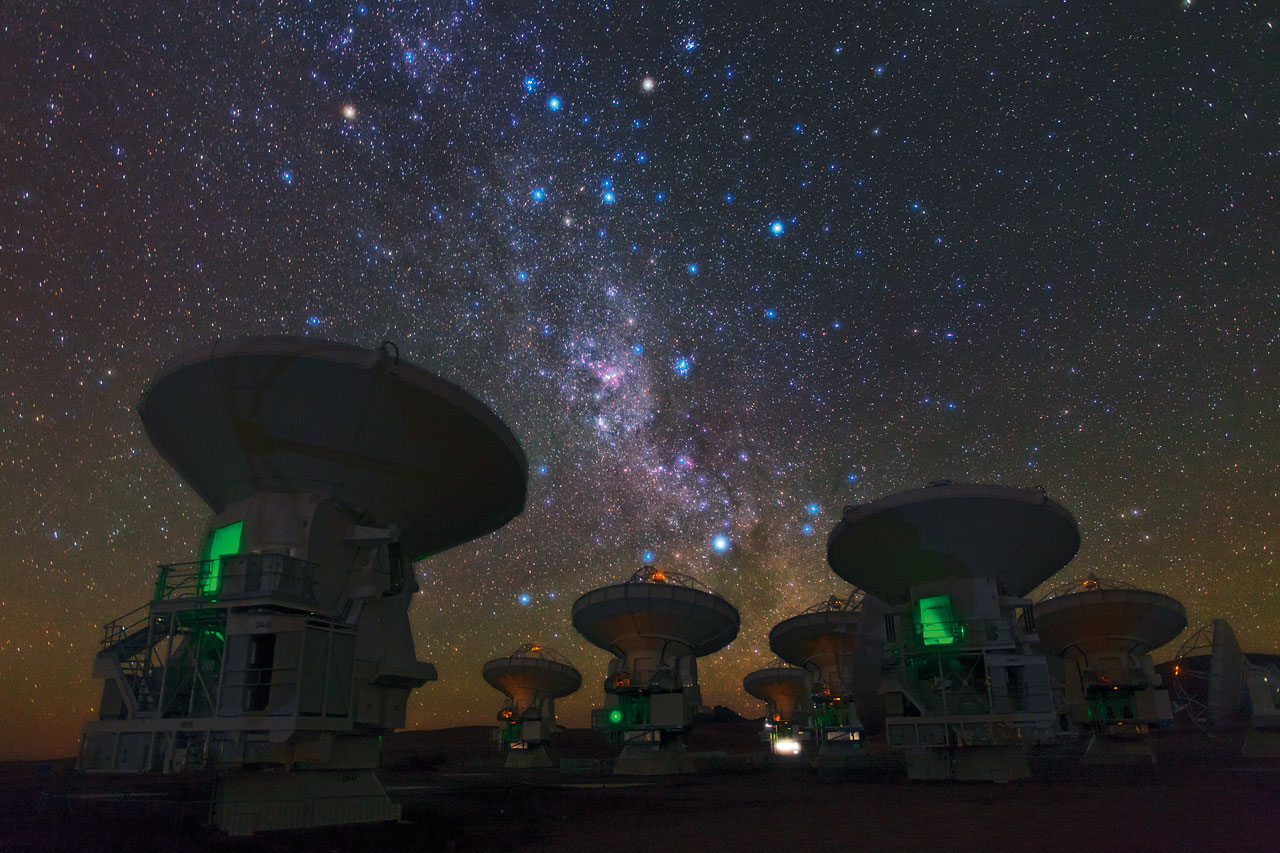
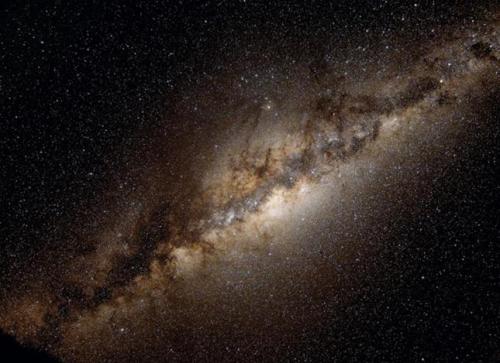
Dark matter and dark energy continue to be cosmological conundrum for physicists worldwide. Nobel prize winner Brian Schmidt offers his perspective in an interview. The image shown here is of the ALMA antennas and the constellations of Carina (The Keel) and Vela (The Sails). The dark, wispy dust clouds of the Milky Way streak from middle top left to middle bottom right. (Credit: ESO, B. Tafreshi)
via sciencenordic
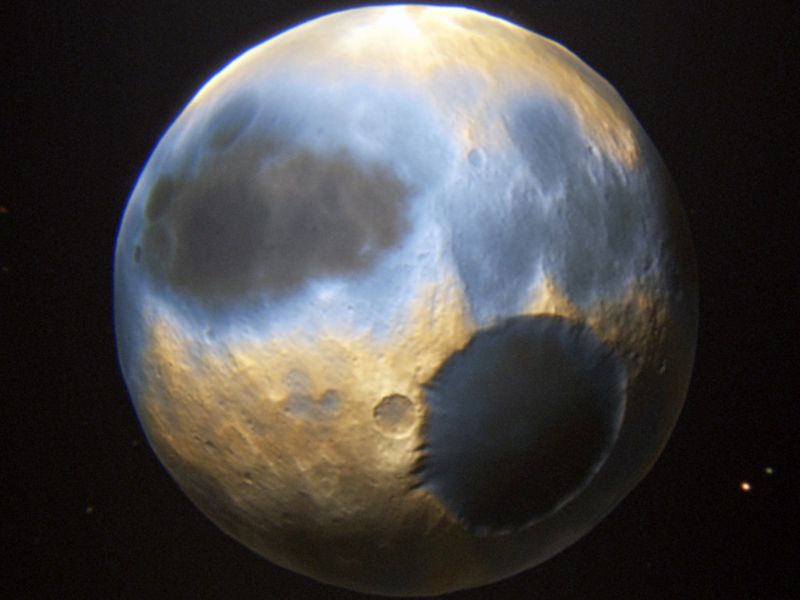
“Our model predicts different fracture patterns on the surface of Charon depending on the thickness of its surface ice, the structure of the moon’s interior and how easily it deforms, and how its orbit evolved,” said Alyssa Rhoden of NASA’s Goddard Space Flight Center. (Credit: NASA)
via dailygalaxy
Open network environments have become essential in the sciences, enabling accelerated discovery and communication of knowledge. Yet, the real revolution began when open community databases allowed researchers to build on existing contributions and compare their results to established knowledge. (Credit: King, Uhlir)
via acm
Indian physicists propose a tabletop experiment that will provide scientists their first opportunity to measure the probability that particles can move through slits in a twisted path, depicted by the purple ray. (Credit: Aninda Sinha and Urbasi Sinha)
via telegraphindia
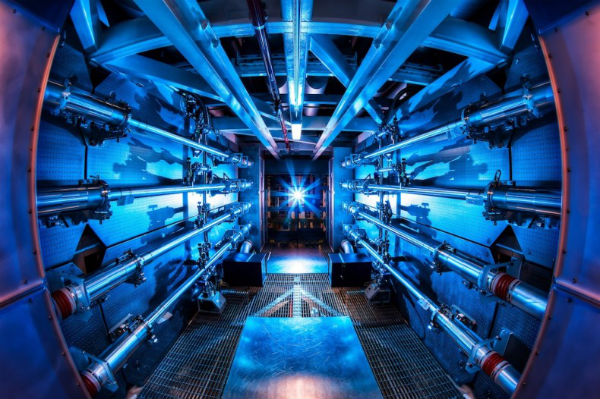
Physicists in the US have compressed a synthetic diamond to pressures of 50 million Earth atmospheres to recreate conditions in the cores of giant planets. (Credit: National Ignition Facility)
via sciencealert
. A novel class of electronic materials – the so-called transition-metal oxides – hold promise for exciting, new applications. Where layers of this novel class of electronic materials touch, often a unique, and unprecedented phenomenon occurs: for instance, the interface between two insulators can become superconducting, or a strong magnetic order can build up between two non-magnetic layers.
via phys.org
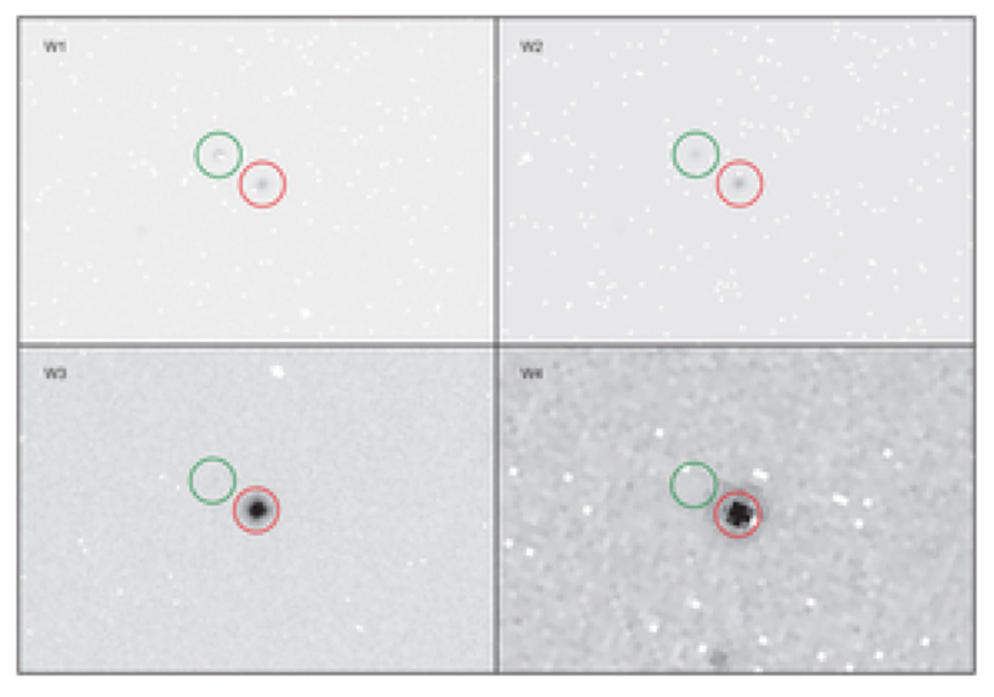
WISE thermal-infrared images of (29075) 1950 DA. The image scale is 2.75 arcsec per pixel for the W1, W2 and W3 bands and 5.53 arcsec per pixel for the W4 band. White pixels are ‘bad’ pixels that do not contain data. The object seen in the red circle is (29075) 1950 DA. (Credit: Rozitis, MacLennan, Emery)
via techtimes
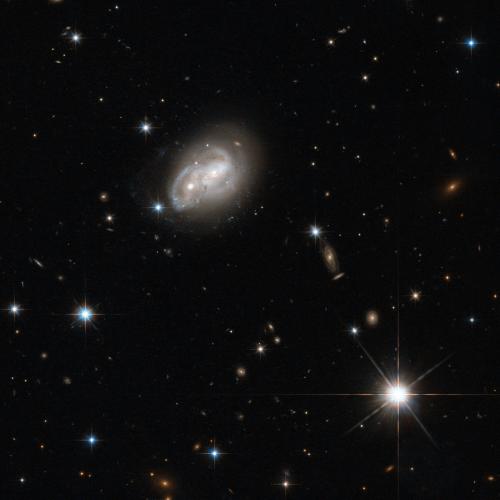
From objects as small as Newton’s apple to those as large as a galaxy, no physical body is free from the stern bonds of gravity, as evidenced in this stunning picture captured by the Wide Field Camera 3 and Advanced Camera for Surveys onboard the NASA/ESA Hubble Space Telescope. (Credit: ESA/Hubble & NASA, Acknowledgement: Luca Limatola)
via phys
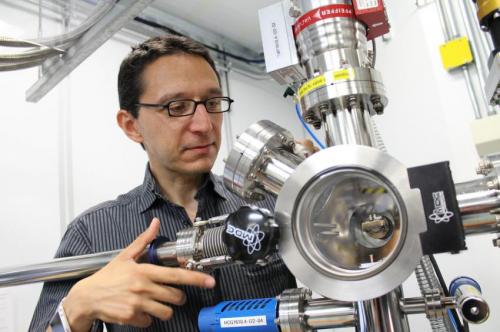
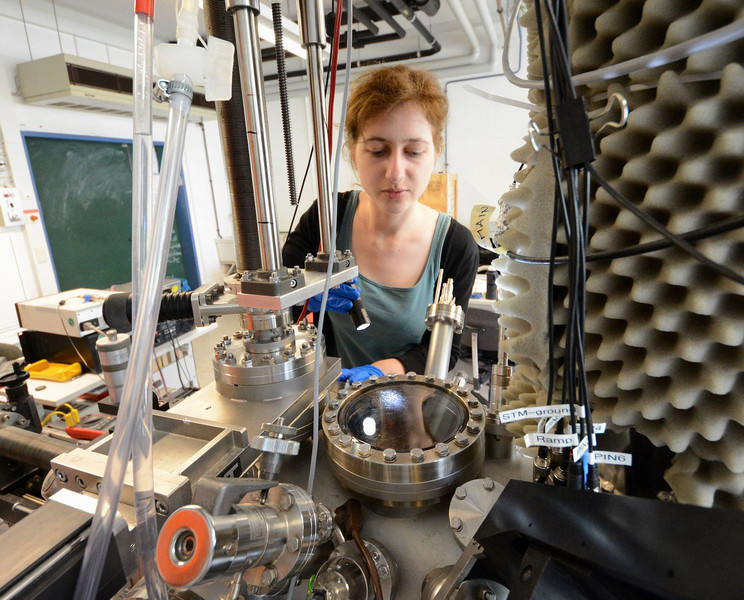
Alissa Wiengarten, PhD student at the TUM Department of Physics, heats a porphine powder in a vacuum chamber. (Credit: Thorsten Naeser/Munich-Centre for Advanced Photonics)
via azonano
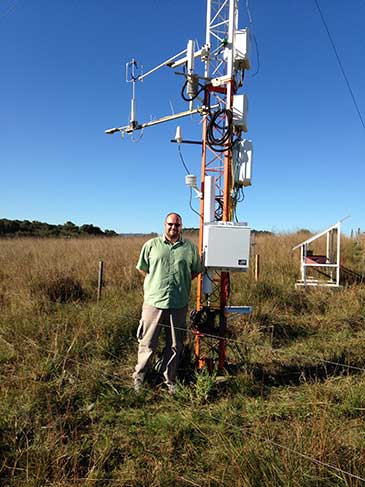
Dr Rosolem with the cosmic-ray soil moisture sensor installed at the the Federal University of Santa Maria SulFlux site in Brazil. (Credit: Univ Bristol)
via bristol
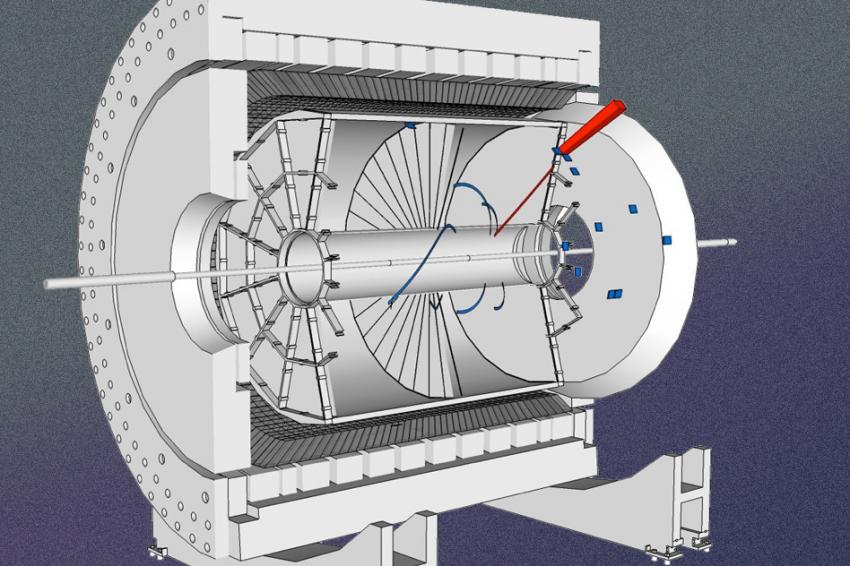
The STAR detector, used in the researchers’ experiment, measures the energy and angle of the electron from the W boson decay produced in the proton collision. (Credit: STAR Collaboration)
via phys
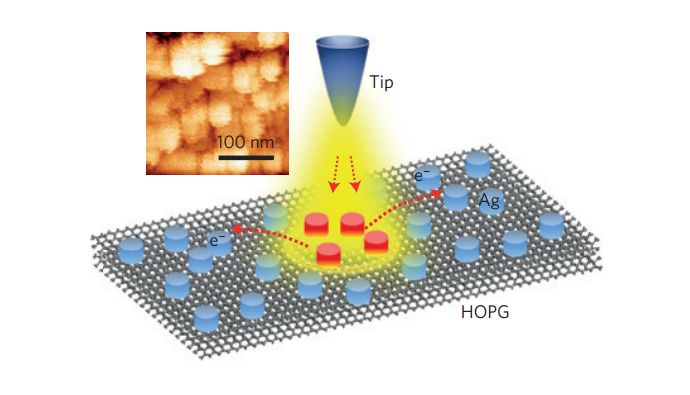
Experimental arrangement. A tip is approached to a distance of micrometres from a grounded highly ordered pyrolytic graphene (HOPG) surface carrying Ag nanostructures (illustrated in the inset). Electrons are field-emitted from the tip when a negative tip voltage Vt of hundreds of volts is applied, and the surface plasmon resonance (SPR) of the Ag nanostructures is excited by the field-emitted electrons under a strong electric field introduced by the tip–sample bias. The backscattered electrons are collected and analysed by the TEEA. (Credit: Nature Physics (2014) doi:10.1038/nphys3051)
via asianscientist
Because of that alacrity, and the fact that they had repeat observations at roughly a decade’s detach, the Russian scientists were able to single out stars that dimmed by at least tenfold. They’ve been named 1RXS J114727.1 + 494302, 1RXS J130547.2 + 641252, and 1RXS J235424.5-102053. (Credit: Davies, NASA)
via slashgear
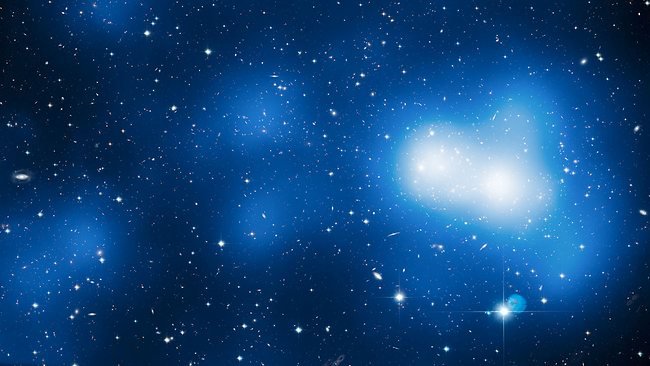
Could a mystery signal that has been detected be proof of dark matter? While searching through the fundamental structures of various galaxy clusters, astrophysicists located at Harvard University found a bizarre discharge line they are having trouble in identifying. (Credit: Kimberly Ruble)
via guardianlv
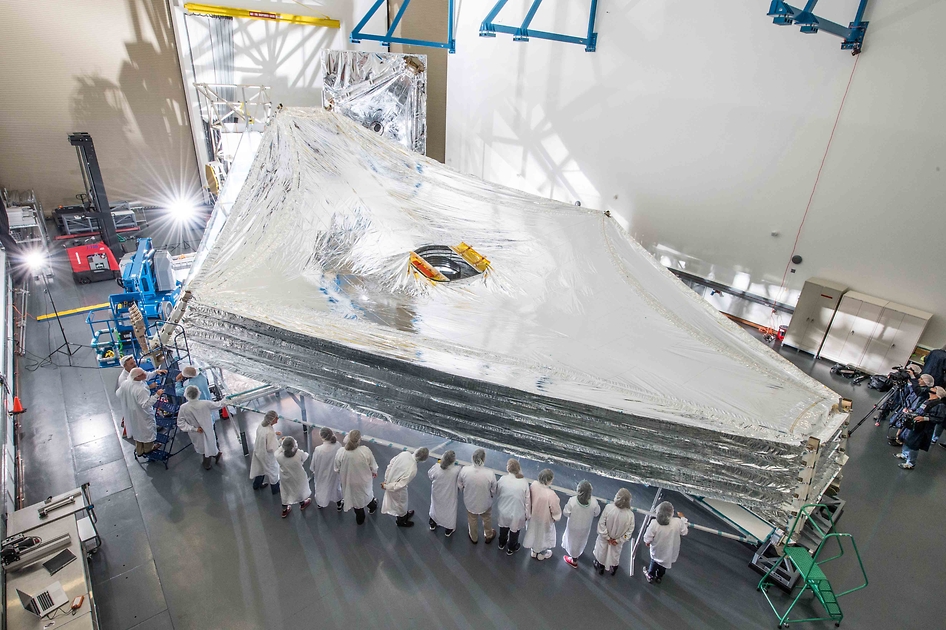
The James Webb Space Telescope (sometimes called JWST) is an orbiting infrared observatory that will complement and extend the discoveries of the Hubble Space Telescope, with longer wavelength coverage and greatly improved sensitivity.(Credit: NASA/Chris Gunn)
via nasa
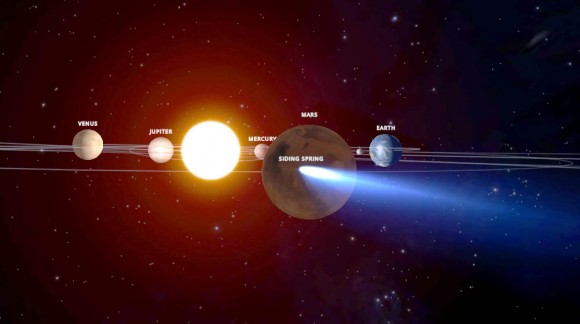
Simulation depicts comet C/2013 A1 Siding Spring during its close Mars flyby on Oct. 19. Its nucleus will miss Mars by about 82,000 miles (132,000 kilometers). The comet’s trail of dust particles shed by the nucleus might be wide enough to reach the planet. Click to see the interactive, animated view. (Credit: Solarsystemscope.com)
via universetoday
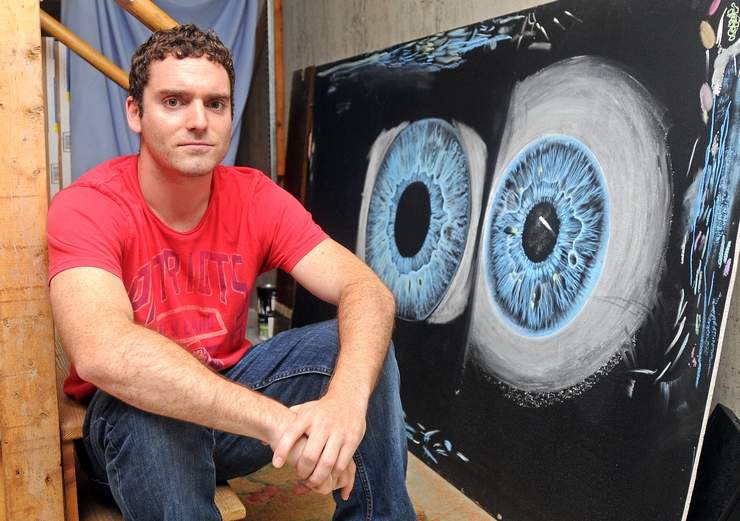
Justin Dowd, a Princeton man who won a contest and will be traveling into outer space next year, sits next to an illustration used in the opening scene of his educational video. (Credit: T&G Staff/STEVE LANAVA)
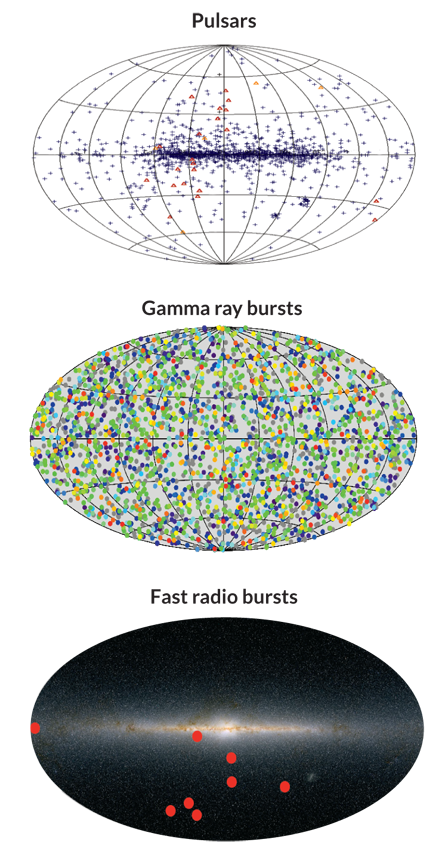
Mapping signals on the sky can offer clues about where the signals originate. Pulsars (top) concentrate in the Milky Way, because most of the ones we see sit in our galaxy. Gamma bursts (middle) come from everywhere, which means they’re parked in other galaxies. Fast radio bursts (bottom) seem to mostly avoid our galgaxy, a hint that they may come from very far away.(Credits: Green Bank Telescope, West Virginia Univ; G. Fishman et al/BATSE, CGRO, NASA.; J. Carpenter, T.H. Jarrett/2MASS, R. Hurt, C. Crockett)
via sciencenews
Evidence of gravitational waves in the infant universe may have been uncovered by the BICEP2 radio telescope. (Credit: NASA/JPL-Caltech)
via uncommondescent
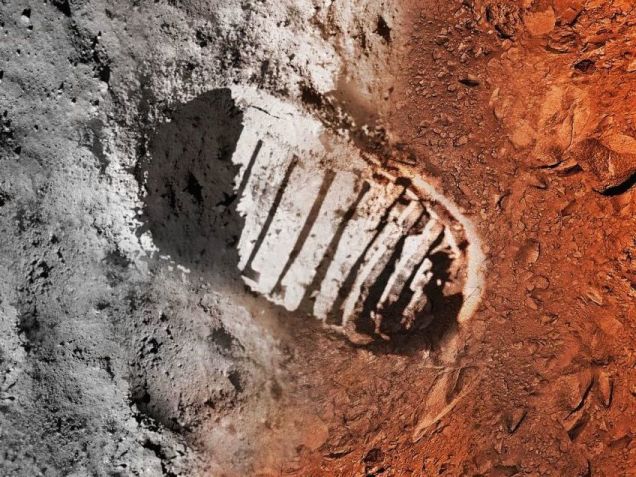
The first Giant Leap was Apollo 11 landing astronauts on the moon. The next Giant Leap could be Apollo 45 landing humans on Mars. (Credit: NASA)
via io9
An “air waveguide” has been used to enhance light signals collected from distant sources. A single waveguide could be used to send out a laser and collect a signal. (Credit: Howard Milchberg)
via theengineer
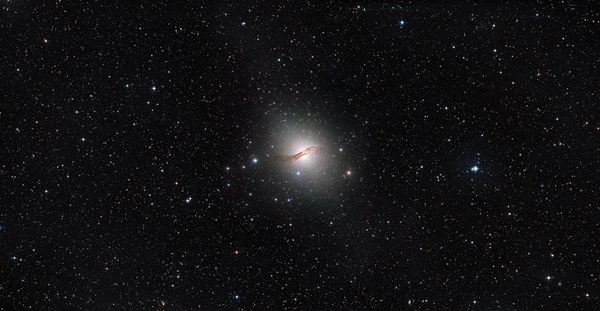
This image shows the stunning elliptical galaxy Centaurus A. Recently, astronomers have used the NASA/ESA Hubble Space Telescope to probe the outskirts of this galaxy to learn more about its dim halo of stars. (Credit: ESA/Hubble)/NASA/Digitized Sky Survey/MPG/ESO
via astronomy
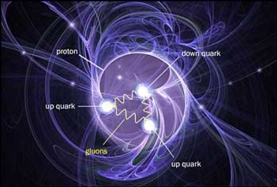
Physicists long assumed a proton’s spin came from its three constituent quarks. New measurements suggest particles called gluons make a significant contribution (Credit: Brookhaven National Laboratory)
via scientificamerican
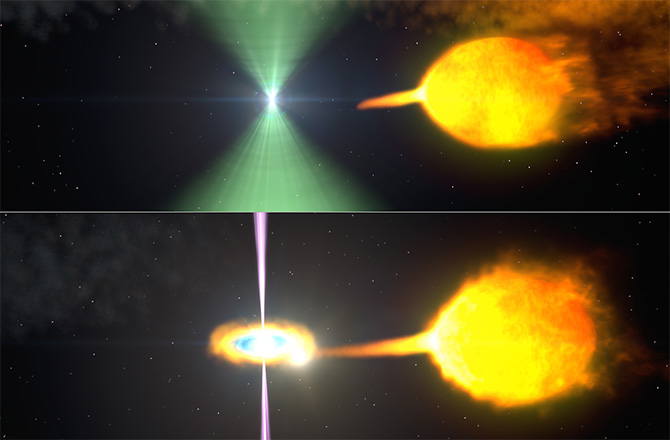
These artist’s renderings show one model of pulsar J1023 before (top) and after (bottom) its radio beacon (green) vanished. Normally, the pulsar’s wind staves off the companion’s gas stream. When the stream surges, an accretion disk forms and gamma-ray particle jets (magenta) obscure the radio beam. (Credit: NASA’s Goddard Space Flight Center)
via discovery
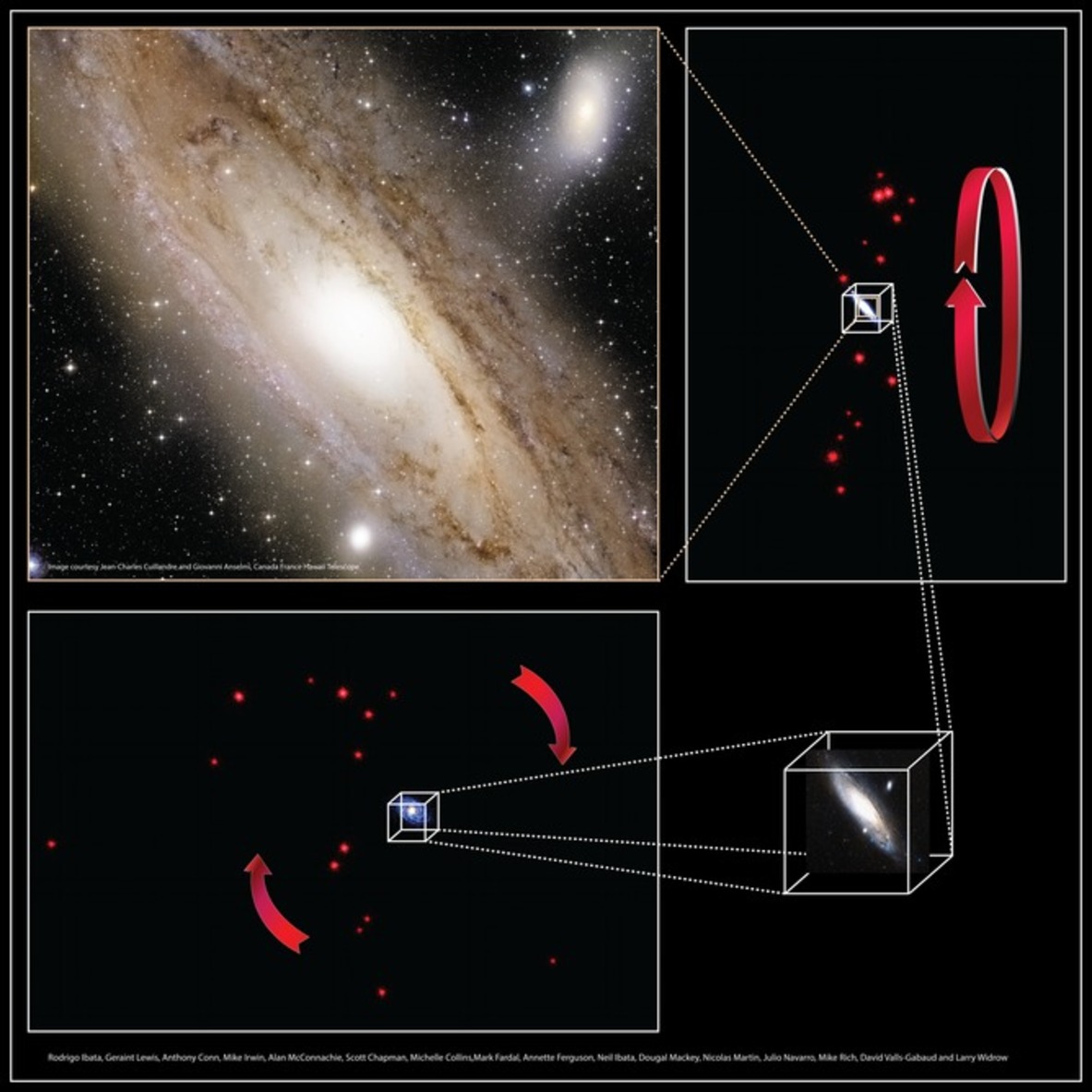
The research group demonstrates that adding such massive neutrinos to the standard model does not really explain all datasets. (Credit: The Milky Way, NASA.)
via phys.org
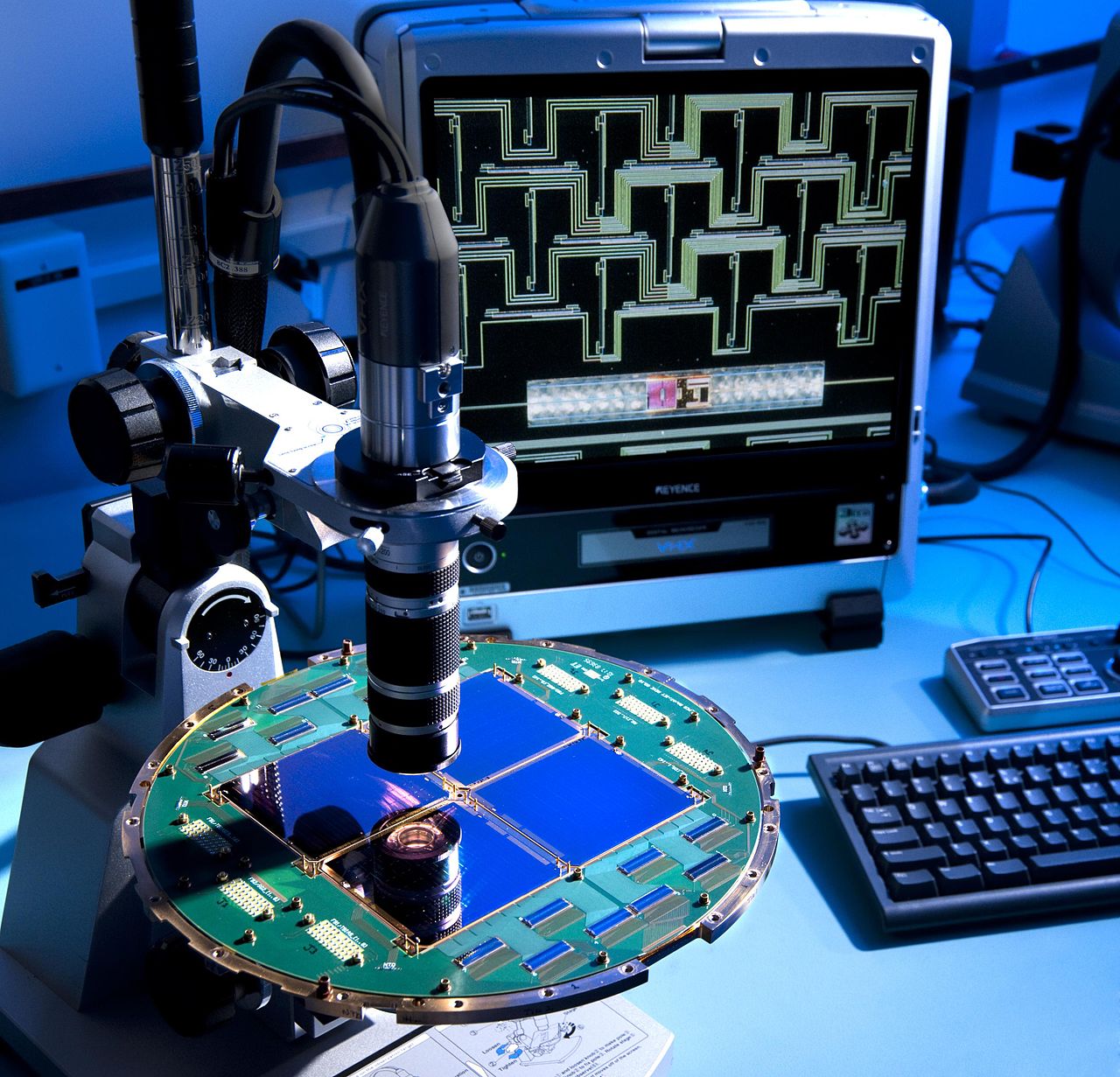
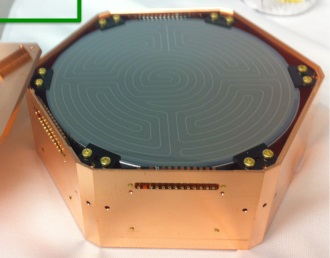
The Super Cryogenic Dark Matter Search is an international, multimillion dollar dark matter experiment currently based in Minnesota with plans to progress the project by building a more sensitive detector at SNOLAB. (Credit: SNOLAB)
via queensu
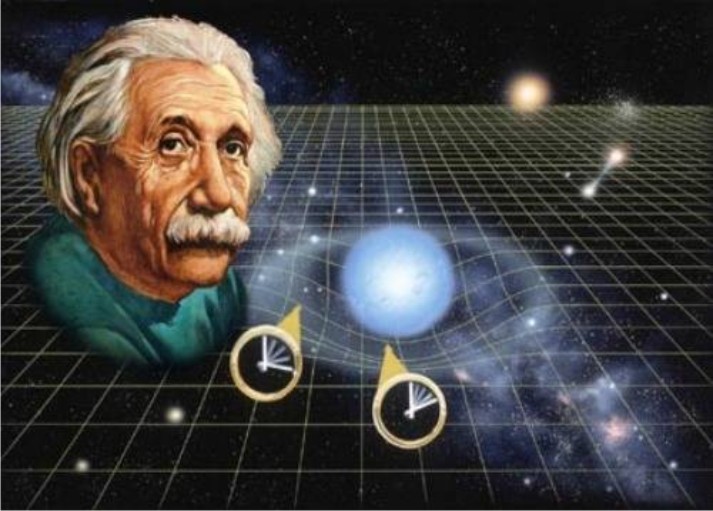
What is the view of time that Albert Einstein presents to us in special relativity? Einstein tells us that there is no separate ‘time’ or ‘space.’ ‘Time’ and ‘space’ cannot be separated; they are a united whole.
via davidreneke