“The dark matter seems to ‘know’ how the visible matter is distributed. They seem to conspire with each other such that the gravity of the visible matter at the characteristic radius of the dark halo is always the same,” said Dr. Benoit Famaey (Universities of Bonn and Strasbourg).
via dailygalaxy
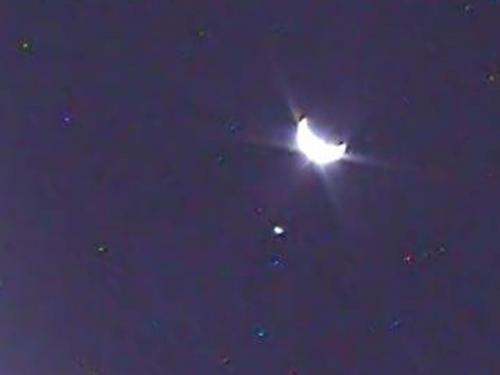
A zoomed-in image of Earth from the perspective of NASA’s Lunar Crater Observation and Sensing Satellite (LCROSS). The small dot below it is the moon. Credit: NASA Ames
via phys.org
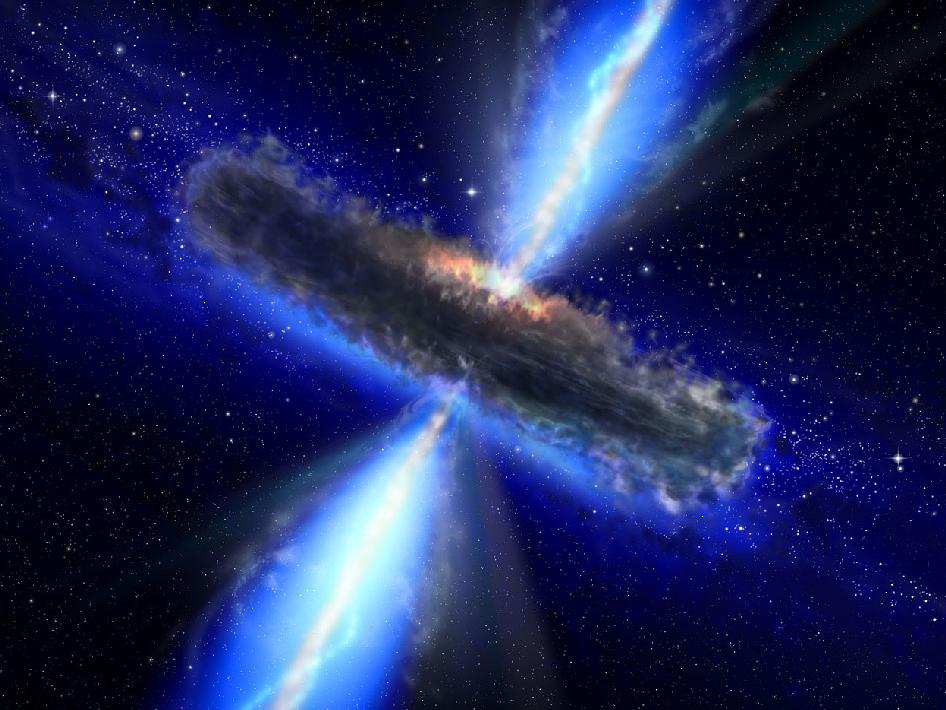
An artist’s concept illustration shows a quasar, or feeding black hole, similar to APM 08279+5255, where astronomers discovered huge amounts of water vapor. (NASA/ESA)
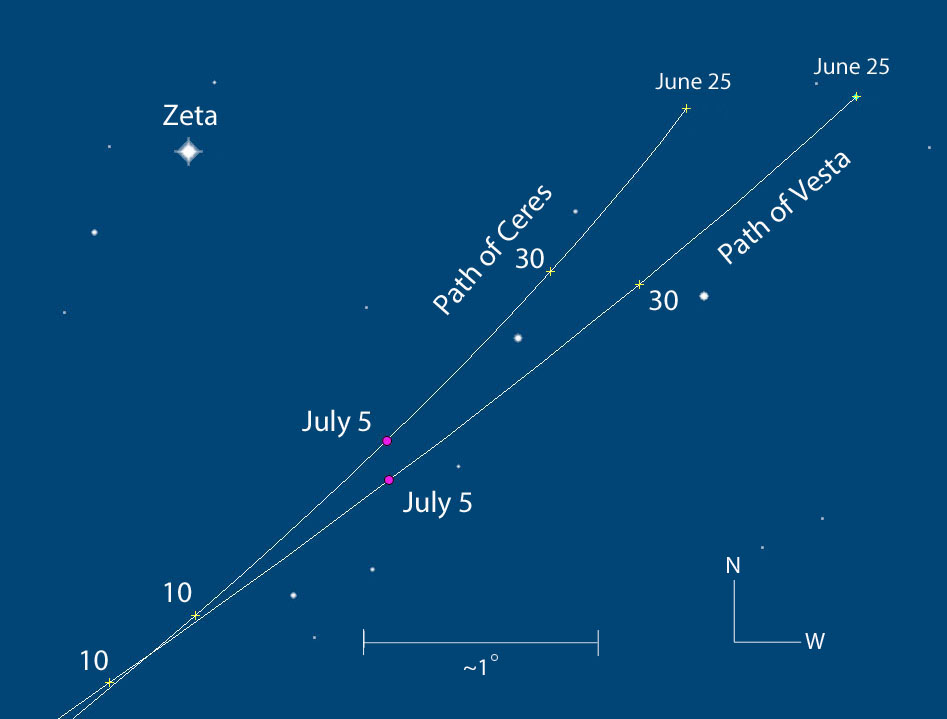
Map showing Ceres and Vesta as they approach each other closely this coming week. Both asteroids are near the easy-to-find star Zeta in Virgo not far from bright Mars. Although the asteroids appear very close together in the sky, they’re really about 51 million miles apart with Vesta in the foreground. (Credit: Chris Marriott’s SkyMap)
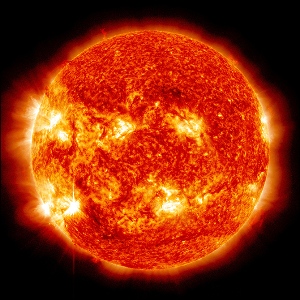
By filtering light from the sun, CQT researchers have made a strong detection of a quantum effect known as ‘photon bunching’ in its light. This is a hallmark of the sun radiating like a black body. (Credit: NASA/SDO)
via azoquantum
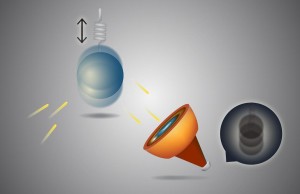
Mechanical oscillators translate an applied force into measurable mechanical motion. The Standard Quantum Limit is imposed by the Heisenberg uncertainty principle, in which the measurement itself perturbs the motion of the oscillator, a phenomenon known as “quantum back-action.” (Credit: Kevin Gutowski)
via newscenter
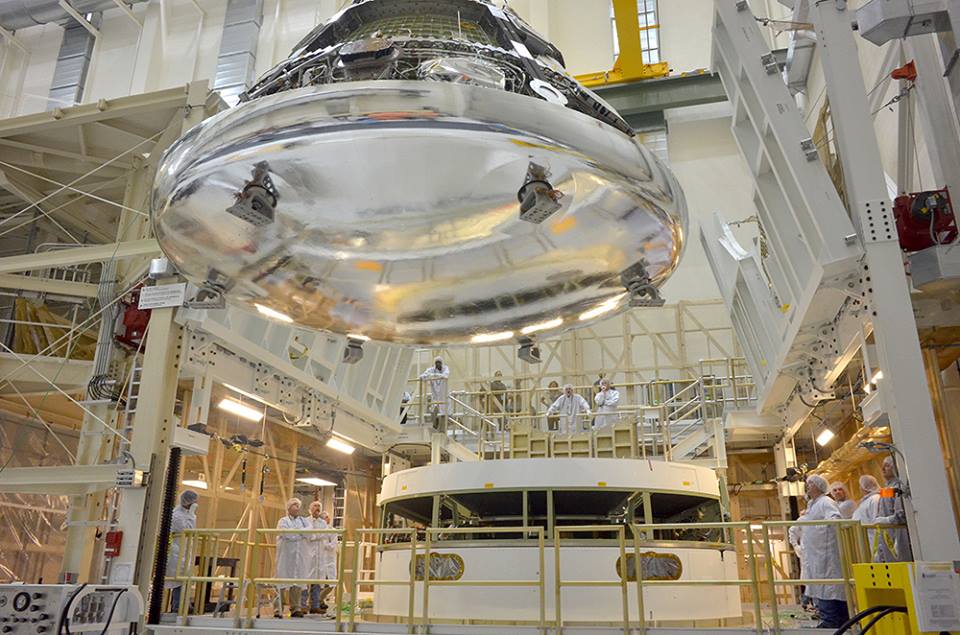
Orion, seen here with its heat shield installed, being maneuvered for stacking on the spacecraft’s service module at KSC earlier this month. (Credit: NASA)
via americaspace
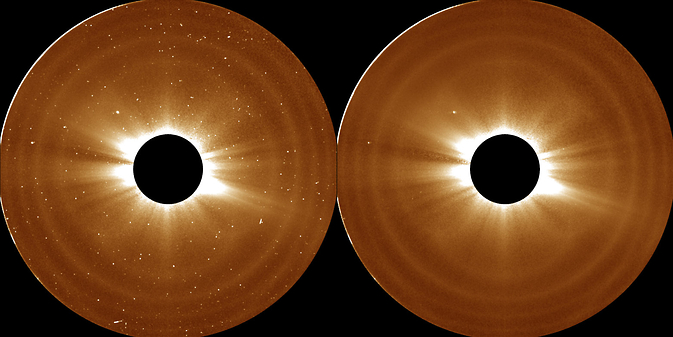
Scientists used these observations of the sun’s atmosphere (the bright light of the sun itself is blocked by the black circle at the middle) from NASA’s Solar Terrestrial Relations Observatory on Aug. 5, 2007, to define the outer limits of the solar atmosphere, the corona. (Credit: NASA/STEREO)
via NASA
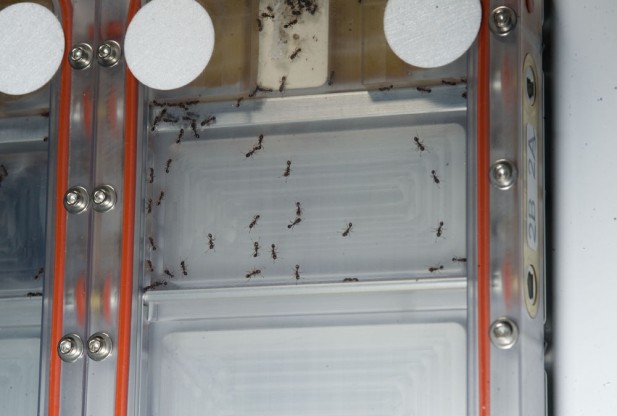
The Ants In Space CSI-06 investigation looks at how an ant colony responds to the extreme environment of microgravity aboard the International Space Station to solve their collective need for resources. Data gathered from this study may help with algorithms for robotics on Earth. (Credit: NASA)
via NASA
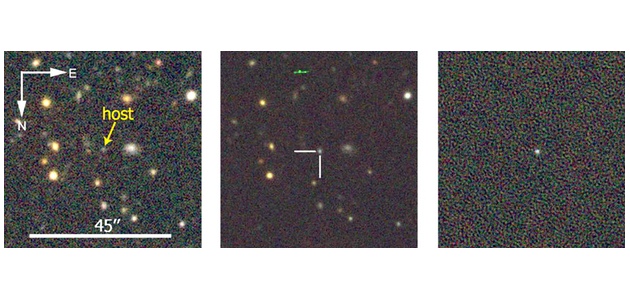
Before (left) and after (center) images of the region where DES13S2cmm was discovered. On the right is the supernova. (Credit: Dark Energy Survey)
via motherboard.vice.com
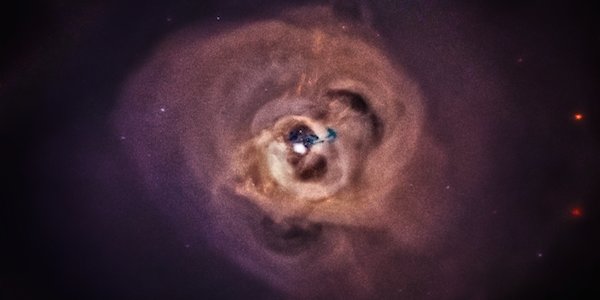
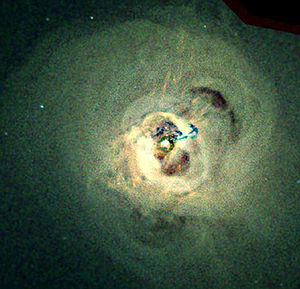
This composite image of the Perseus Cluster combines data equivalent to more than 17 days of observation time over a decade. (Credit: X-ray: NASA, CXC, SAO, E.Bulbul, et al.)
via NASA
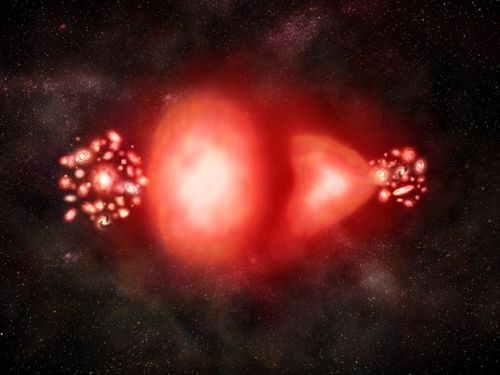
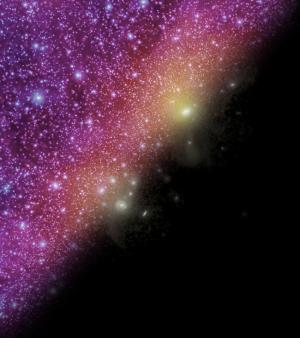
The visible galaxies in the Local Group simulation, shown in the lower right, only trace a tiny fraction of the vast number of dark matter halos, revealed in the upper left. (Credit: John Helly, Till Sawala, James Trayford, Durham University)
via phys.org
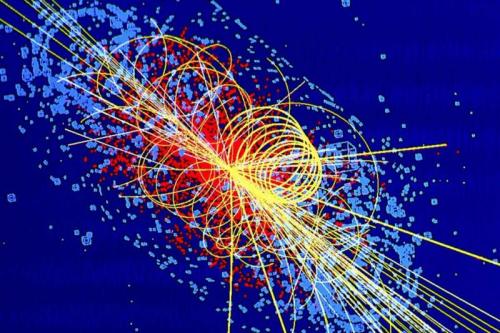
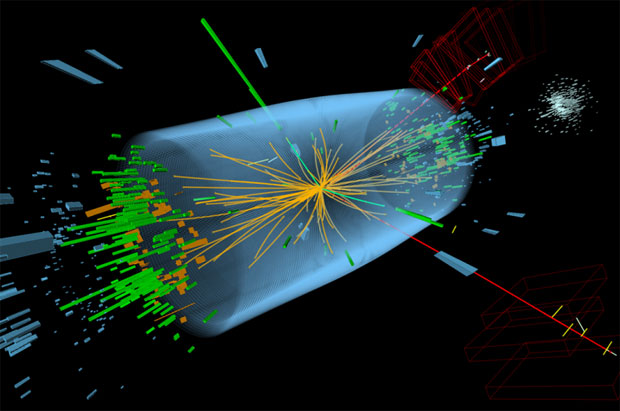
Candidate Higgs boson events from collisions between protons in the LHC. The top event in the CMS experiment shows a decay into two photons (dashed yellow lines and green towers). The lower event in the ATLAS experiment shows a decay into 4 muons (red tracks).(Credit: NASA)
via discovermagazine
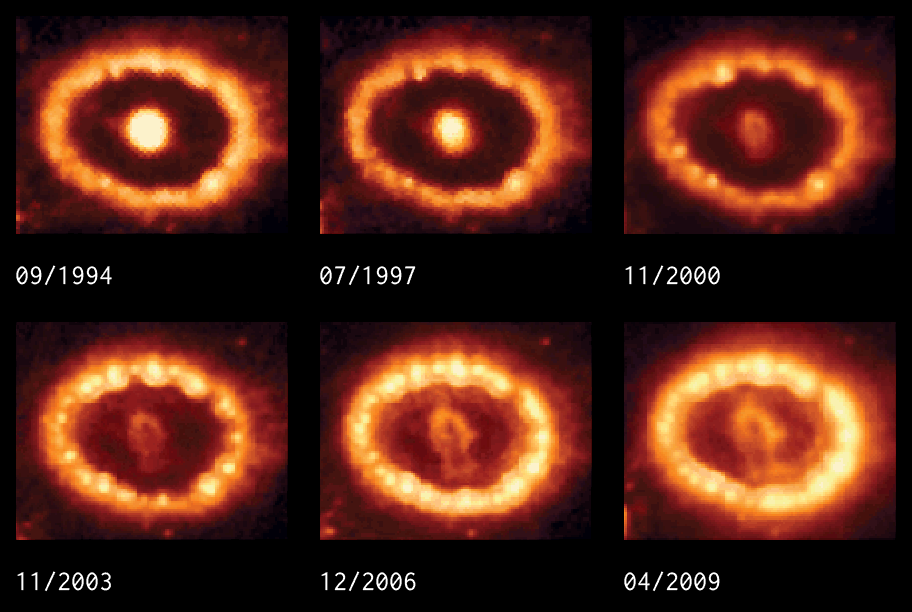
A time sequence of Hubble Space Telescope images, taken in the 15 years from 1994 to 2009, showing the collision of the expanding supernova remnant with a ring of dense material ejected by the progenitor star 20,000 years before the supernova. (Credit: NASA)
via extremetech
Computational techniques developed by a team from NIST and IU could enable precise computation of atomic properties that are important for nuclear medicine, as well as astrophysics and other fields of atomic research. Image: Paco Ayala (Fotolia)
via sciencenewsline
The Perseus galaxy cluster is one of the most massive objects in the universe, containing thousands of galaxies immersed in a vast cloud of multimillion degree gas. (Credit: NASA)
via geek.com
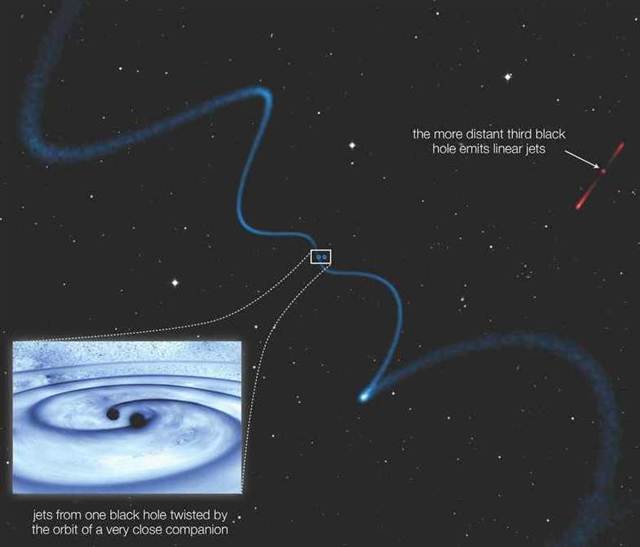
Two closely orbiting black holes in a galaxy about 4.2 billion light-years from Earth emit wavy jets, seen as a bluish spiral, while the third black hole in the trio is more distant, emitting linear jets off to the right.
via abc.net
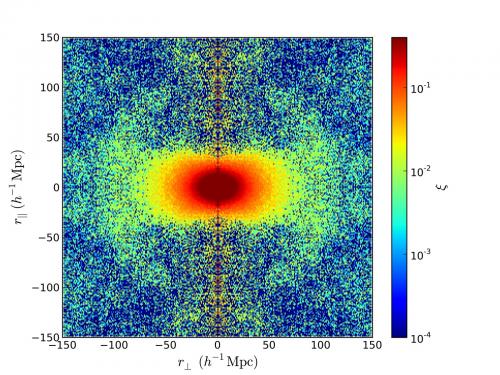
More than 600 000 galaxies from the BOSS survey were utilized to measure the strength of gravitational interactions of galaxies extremely far away from each other. This is a visual representation of that measurement; the amount that the circles are distorted, or squashed from perfect concentric rings, indicates the velocity that galaxies are falling towards each other and hence the strength of the gravitational interactions. (Credit: BOSS/U. Portsmouth)
via phys.org
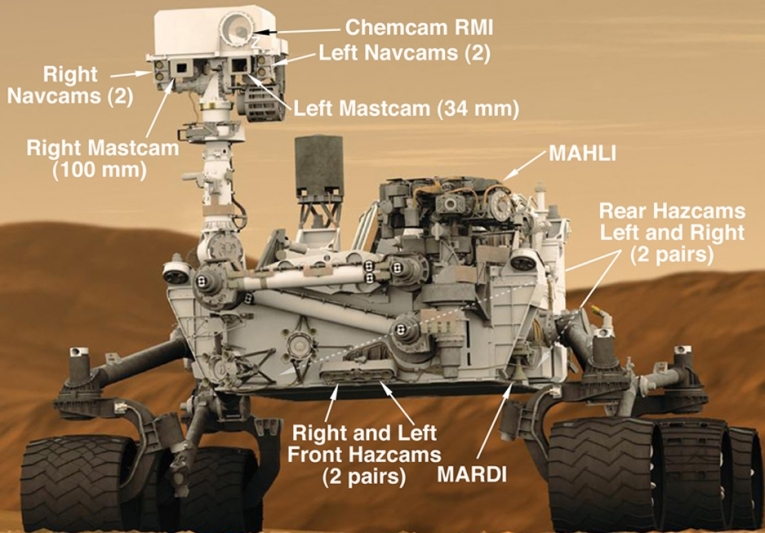
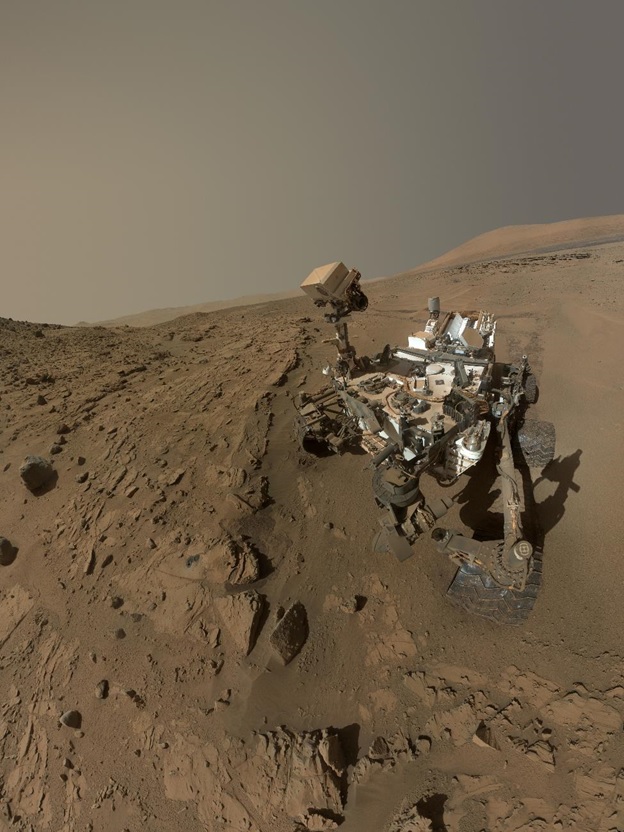
NASA’s Mars Curiosity Rover captures a selfie to mark a full Martian year — 687 Earth days — spent exploring the Red Planet. (Credit: NASA/JPL-Caltech/MSSS)
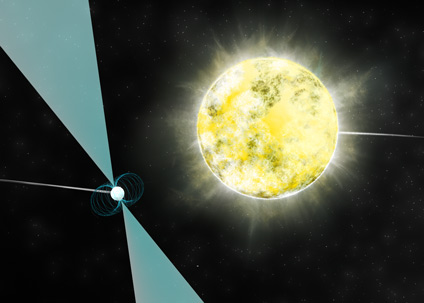
Artist impression of a white dwarf star in orbit with pulsar PSR J2222-0137. It may be the coolest and dimmest white dwarf ever identified. (Credit: B. Saxton NRAO/AUI/NSF)
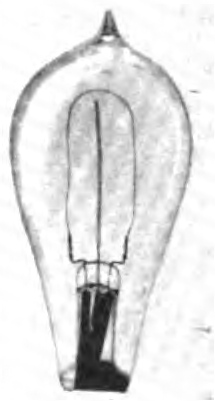
One of the bulbs Thomas Alva Edison used to discover thermionic emission (the Edison Effect) in 1884. Edison found when he connected an ammeter between the filament and the auxiliary electrode, a current would flow, passing through the evacuated space of the bulb from filament to electrode. This current was later found to consist of electrons.
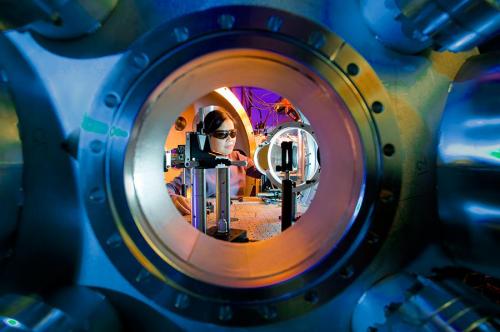
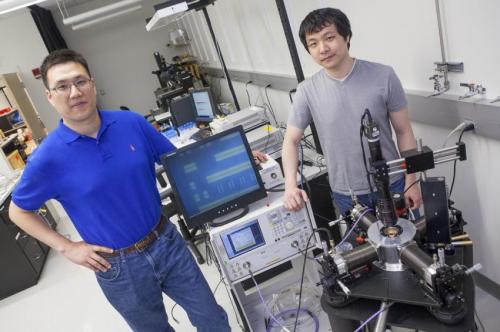
This image shows professor Donhee Ham and his student Hosang Yoon are in the laboratory at the Harvard School of Engineering and Applied Sciences. (Credit: Eliza Grinnell, Harvard SEAS.)