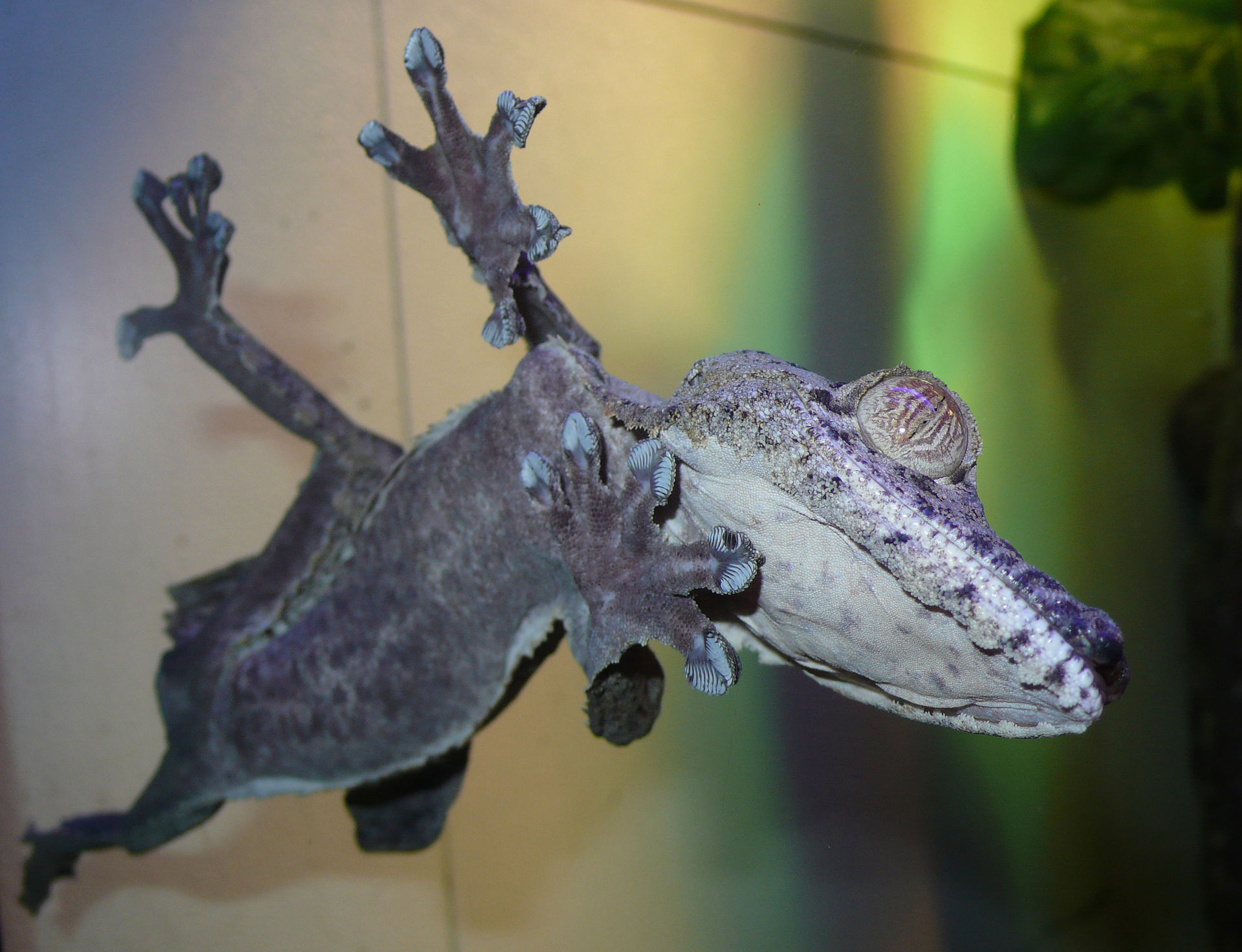
Progress is busily working to re-establish a connection with the operating system — currently on autopilot — before all hope is lost. (Credit: Tim Vickers )
via aljazeera
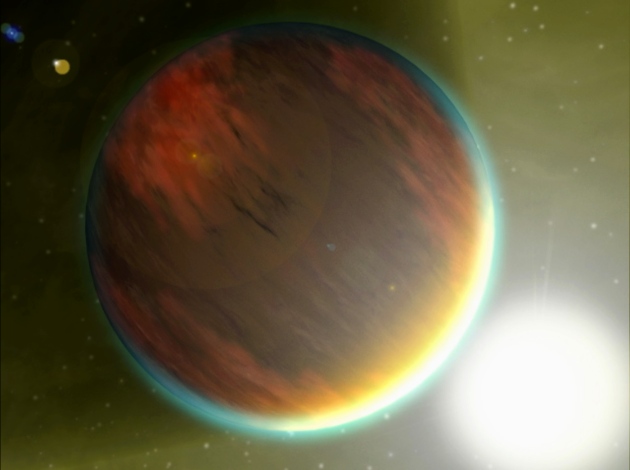
The exoplanet 209458b, a gas giant, is located 150 light-years from Earth. Dry atmospheres of three exoplanets challenge ideas of how planets form. (Credit: NASA/JPL-Caltech)
via nature
A new scientific theory suggests that when black holes reach the end of their lifespan, they explode into “white holes” and release all of their matter into space. (Credit: Reuters / NASA)
via rt
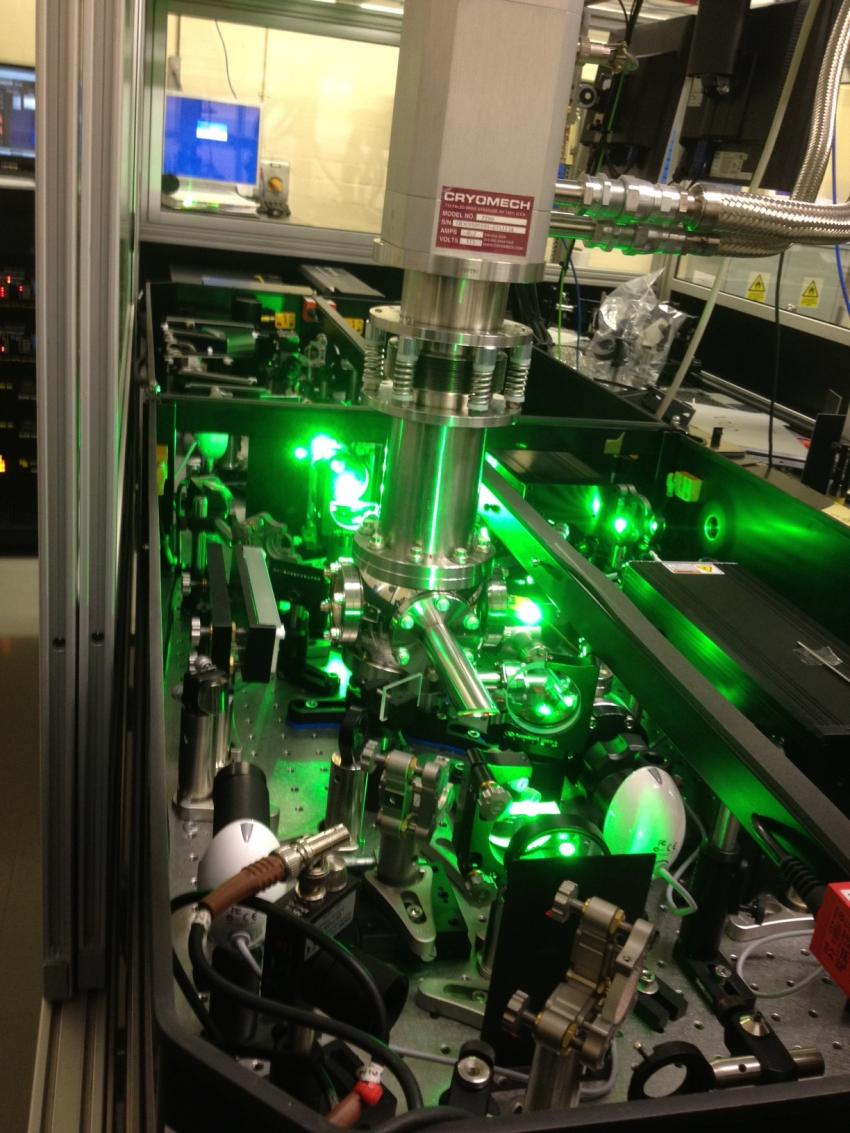
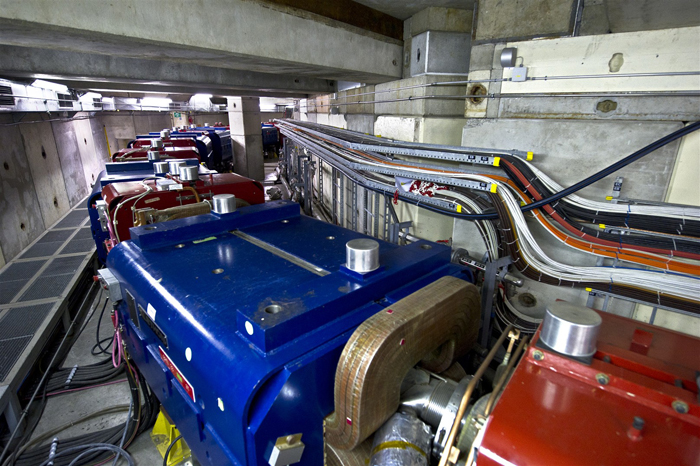
The experiment was undertaken at Rutherford Appleton Laboratories in the Artemis laser facility using an advanced femtosecond laser system to resolve rotations of complexes. The picture shows a section of the laser system used during the experiments. (Credit: Gediminas Galinis, University of Leicester.)
via phys
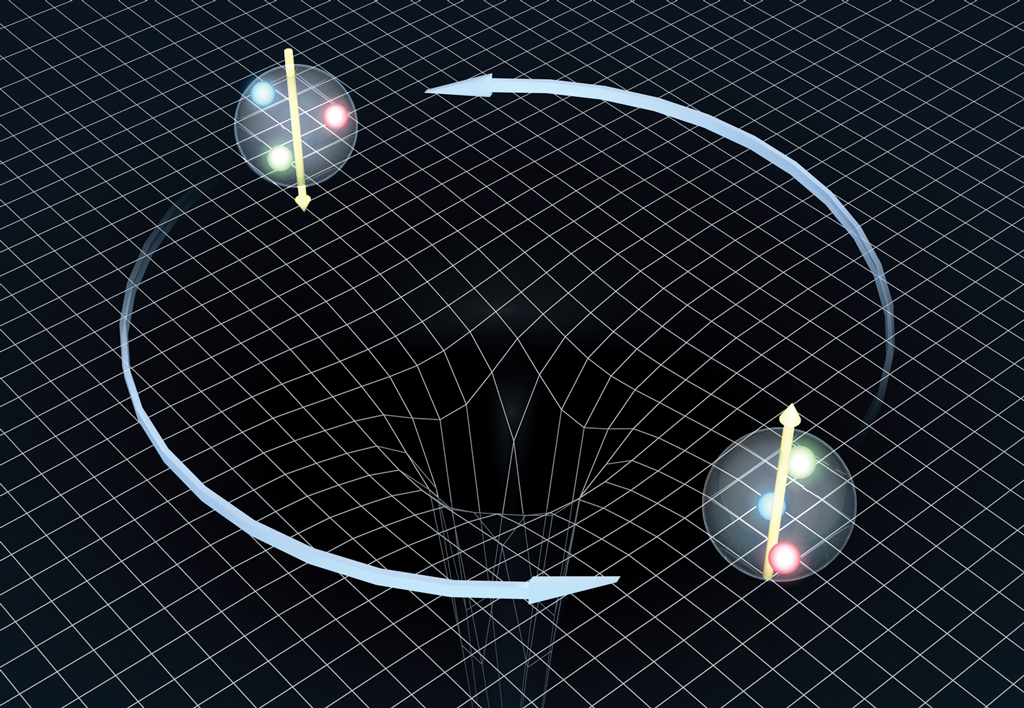
Figure 1: Nucleons (protons and neutrons) are made up of quarks (colored spheres) and have an orientation called spin (indicated by up and down arrows). The spin–orbit force is the interaction between two orbiting nucleons, resulting in a potential well (center) that holds them together. (Credit: Keiko Murano, RIKEN Nishina Center for Accelerator-Based Science)
via phys.org
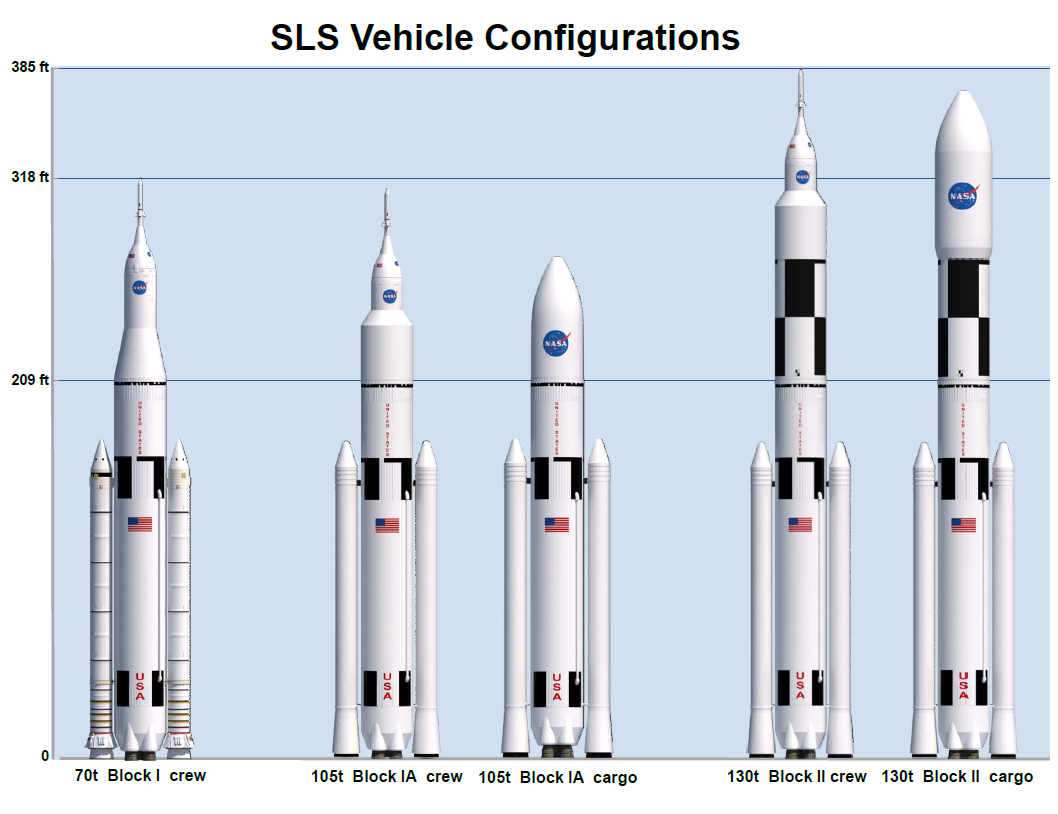
Space Launch System’s planned variant vehicle configurations. The agency’s current funding plan for SLS may be $US400 million short of what the program needs to launch by 2017 (Credit: NASA)
via theregister
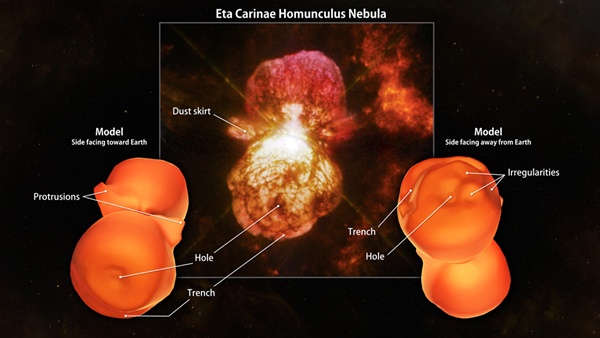
A new shape model of the Homunculus Nebula reveals protrusions, trenches, holes and irregularities in its molecular hydrogen emission. The protrusions appear near a dust skirt seen at the nebula’s center in visible light (inset) but not found in this study, so they constitute different structures. (Credit: NASA Goddard, ESA, Hubble SM4 ERO Team)
via astronomy.com
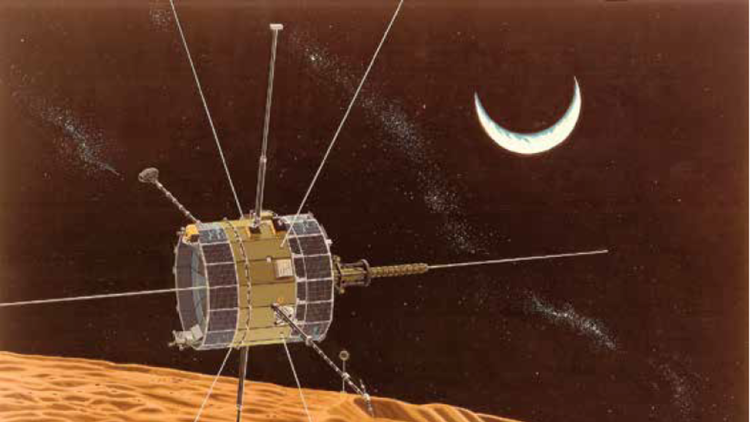
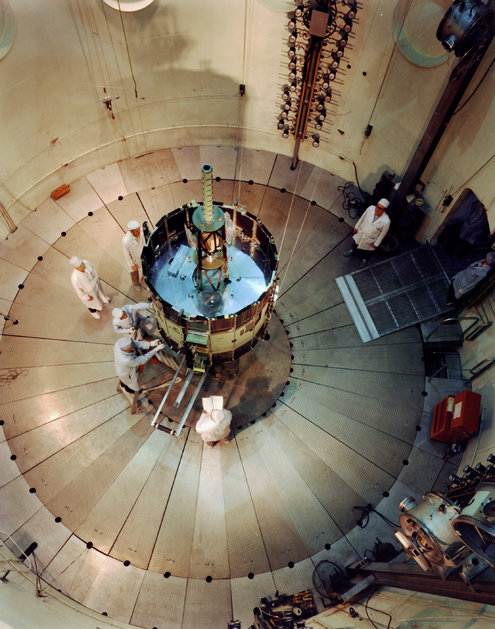
Engineers failed to resolve fuel system problems on NASA’s retired ISEE-3 satellite Wednesday. An artist’s rendition shows the spacecraft during a close lunar pass. (Credit: NASA)
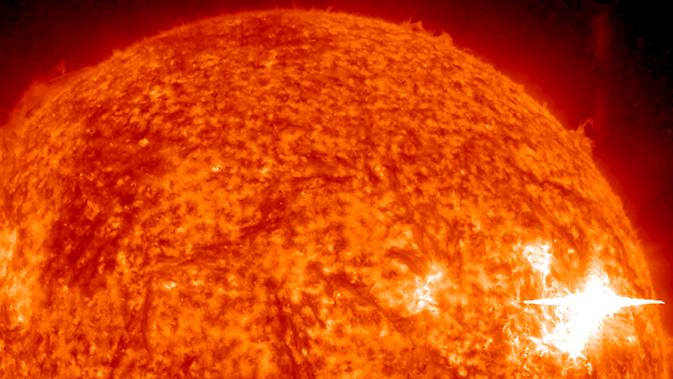
A solar flare erupted on the far side of the sun on June 4, 2011, and sent solar neutrons out into space. Solar neutrons don’t make it to all the way to Earth, but NASA’s MESSENGER, orbiting Mercury, found strong evidence for the neutrons, offering a new technique to study these giant explosions. (Credit: NASA/STEREO/Helioviewer)
via nasa
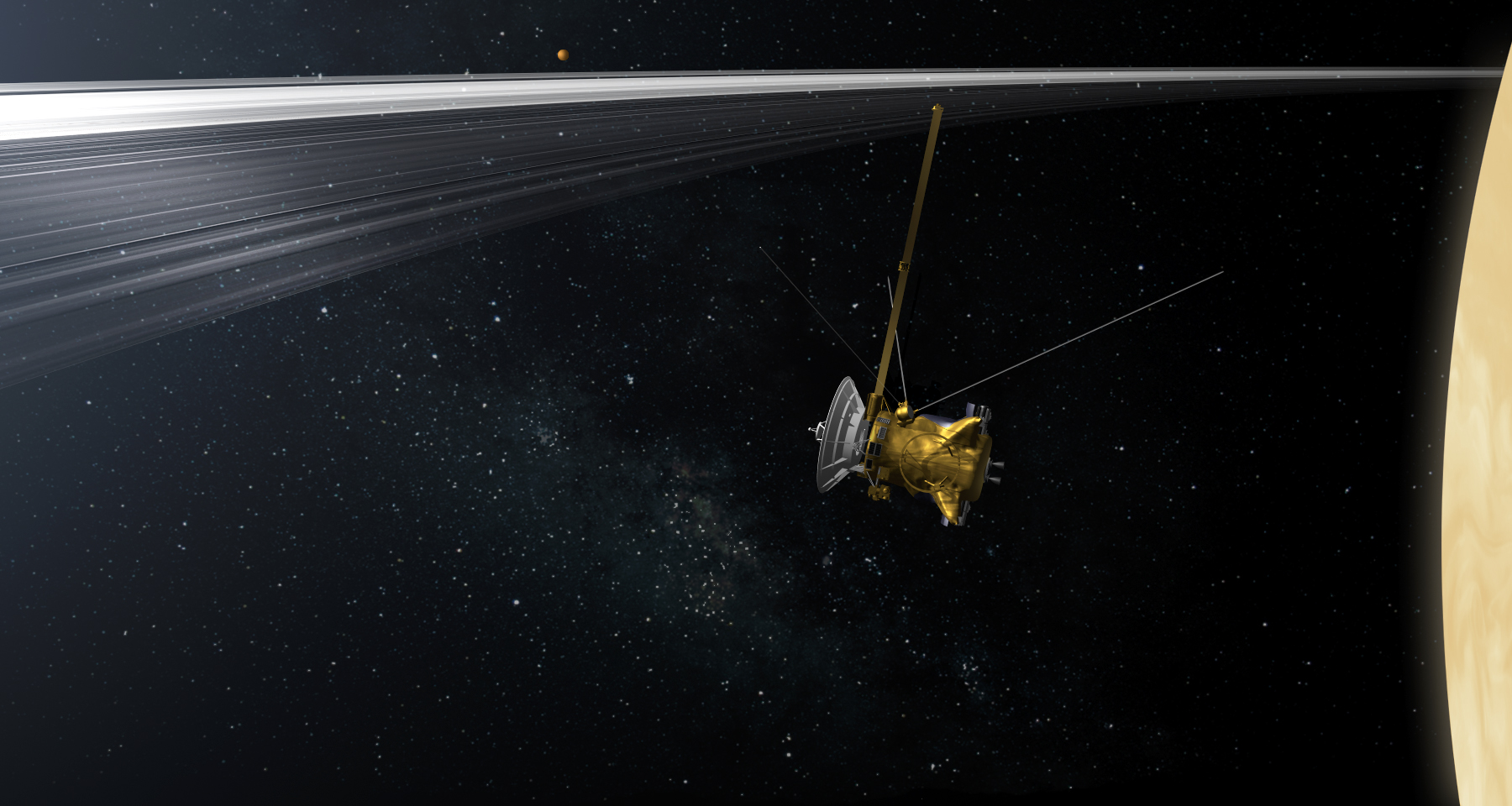
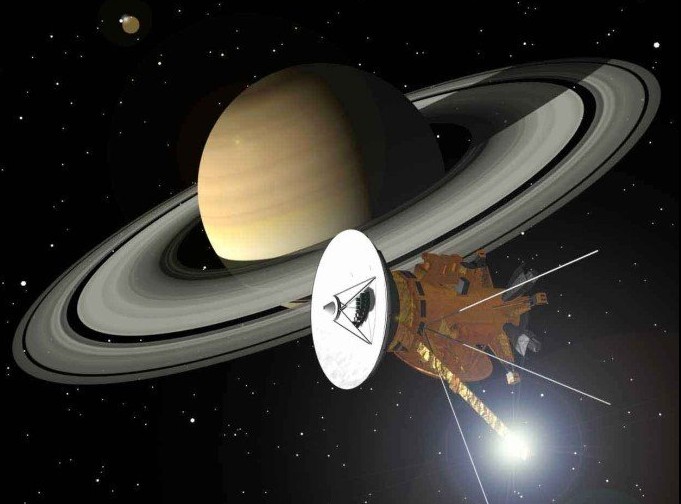
Cassini will end its historic mission with 22 breathtaking loops passing through the gap between Saturn and its innermost ring. (Credit: NASA)
via scientificamerican
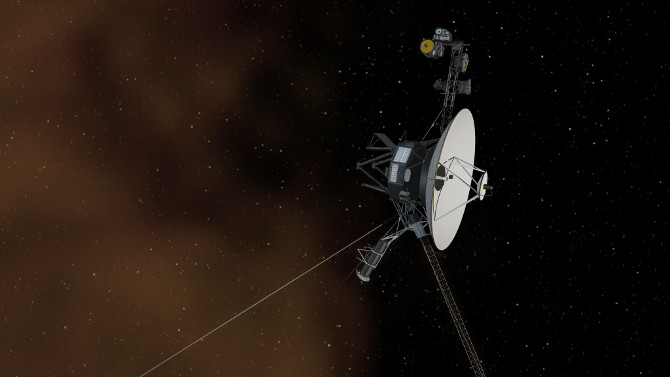
This artist’s concept shows the Voyager 1 spacecraft entering the space between stars. Interstellar space is dominated by plasma, ionized gas (illustrated here as brownish haze), that was thrown off by giant stars millions of years ago. (Credit: NASA/JPL-Caltech)
via forbes
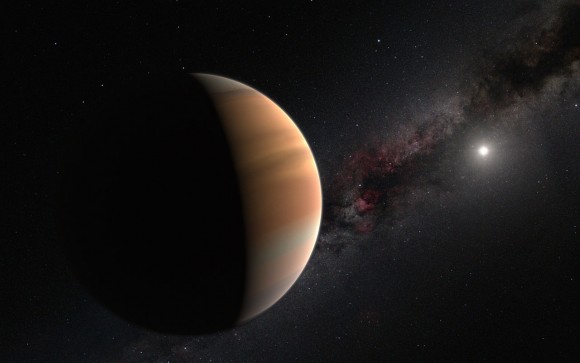
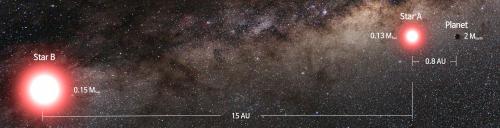
This artist’s rendering shows a newly discovered planet (far right) orbiting one star (right) of a binary star system. The discovery, made by a collaboration of international research teams and led by researchers at The Ohio State University, expands astronomers’ notions of where to look for planets in our galaxy. (Credit: Cheongho Han, Chungbuk National University, Republic of Korea.)
via phys.org
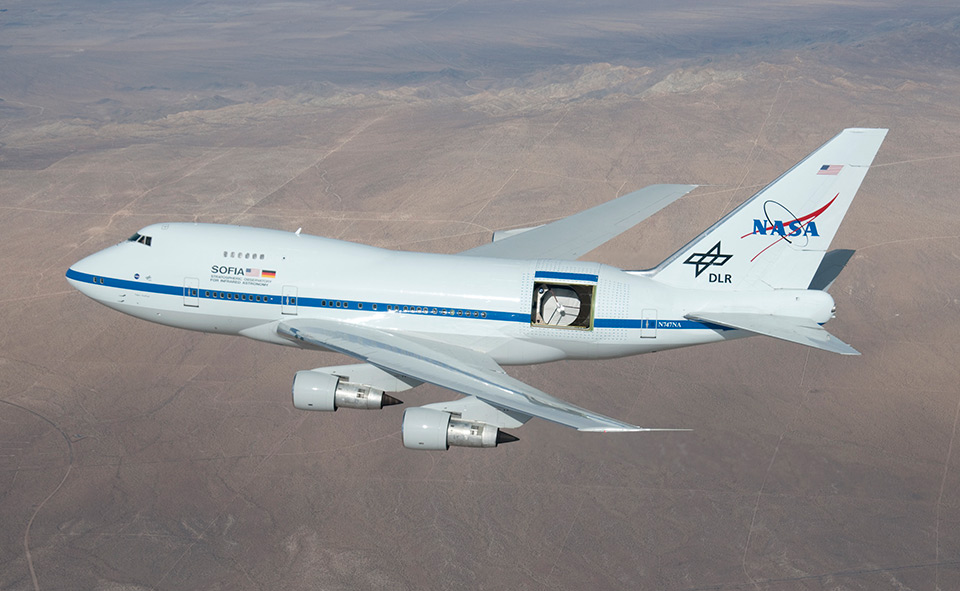
By sticking a 17-ton telescope into a Boeing 747, you can launch it up to 45,000 feet and get past 99 percent of our atmosphere’s water vapor. (Credit: NASA)
Cassini has uncovered a trove of exciting scientific information by discovering new moons of Saturn, exploring the jetting geysers of Enceladus, and studying the bizarre polar hexagon at Saturn’s north pole. (Credit: NASA)
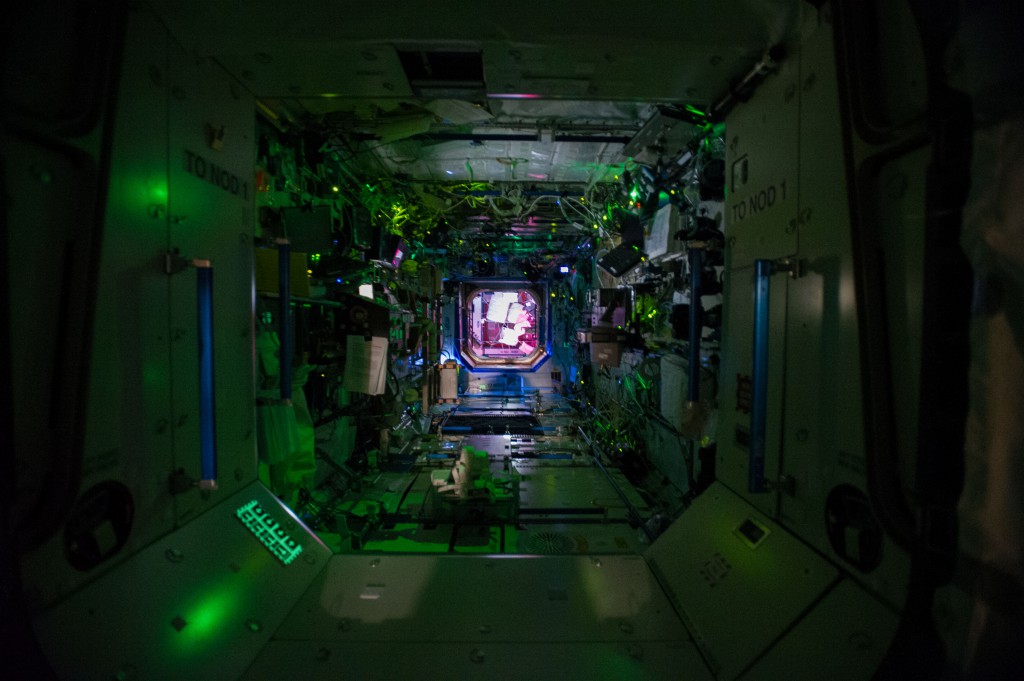
This view is looking into the Destiny Laboratory from Node 1 (Unity) with Node 2 (Harmony) in the background. Destiny is the primary research laboratory for U.S. payloads, supporting a wide range of experiments and studies. (Credit NASA)
This ad should have a huge asterisk somewhere explaining that Koreshanity was a cult started by a guy who shocked himself and woke up thinking he was Jesus.(Credit: Wired)
via wired
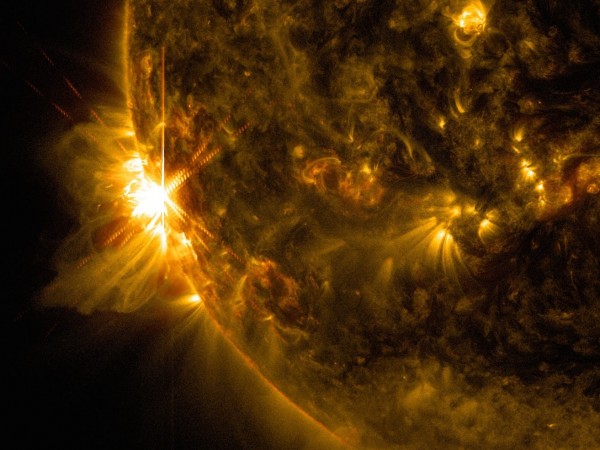
This image from NASA’s Solar Dynamic Observatory captures the first of three giant flares erupting from the sun’s surface on June 10, 2014. (Credit: NASA/SDO/Goddard/Wiessinger)
via newswatch
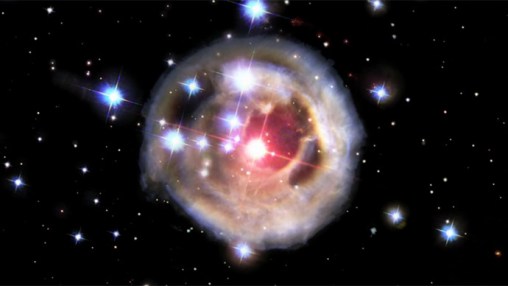
V838 created an expanding light echo that illuminated the interstellar dust surrounding it and generated one of the most amazing scenes captured by Hubble. (Credit: NASA)
via rt.com
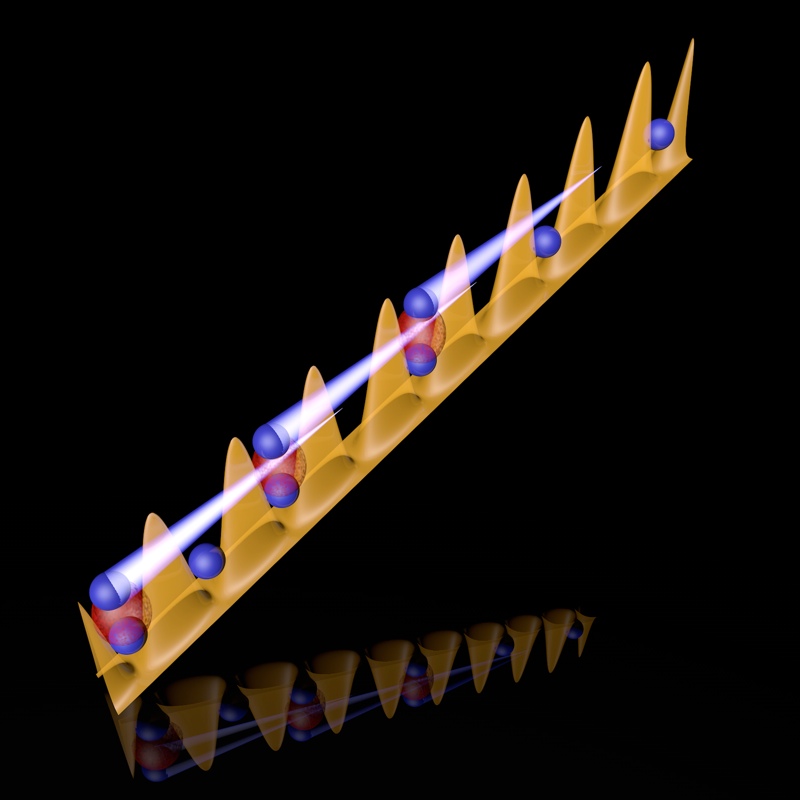
Quantum particles transmit through a whole series of barriers under conditions where a single particle could not do the move. (Credit: University of Innsbruck)
via livescience
Researchers at Washington State University have used a super-cold cloud of atoms that behaves like a single atom to see a phenomenon predicted 60 years ago and witnessed only once since.
via scientificcomputing.com
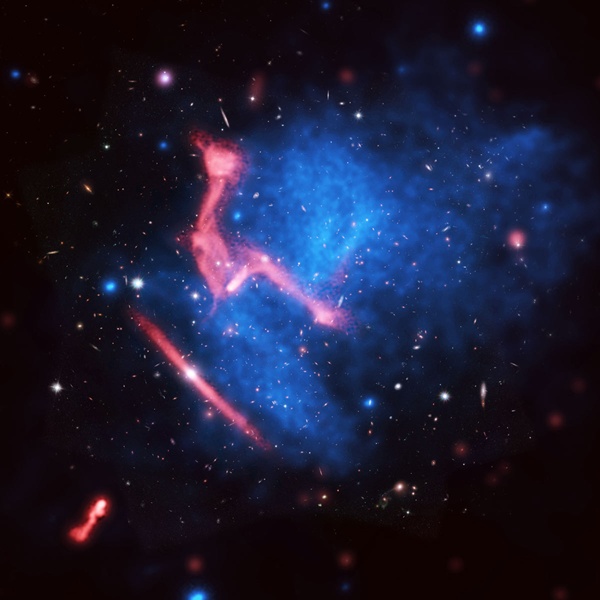
Colliding galaxy clusters MACS J0717+3745, more than 5 billion light-years from Earth. Background is Hubble Space Telescope image; blue is X-ray image from Chandra, and red is VLA radio image.
via www.astronomy.com
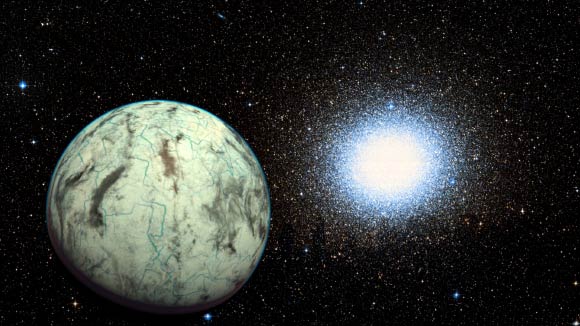
This artistic representation shows the potentially habitable exoplanet Kapteyn b and the globular cluster Omega Centauri in the background. It is believed that this cluster is the remaining core of a dwarf galaxy that merged with our own Milky Way Galaxy billions of years ago bringing Kapteyn’s star along. Image credit: PHL / UPR Arecibo / Aladin Sky Atlas.
via www.sci-news.com
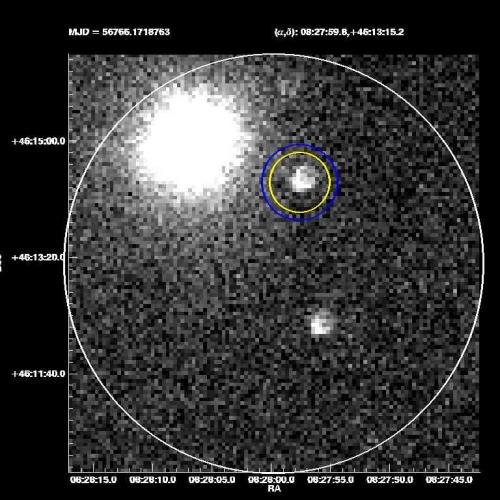
Light from the explosion 12 billion years ago of a massive star at the end of its life reached Earth recently. An image of its peak afterglow, circled with blue and yellow, was captured by Southern Methodist University’s ROTSE-IIIb telescope at McDonald Observatory, Fort Davis, Texas. A bright star sits alongside the afterglow from GRB 140419A. Credit: ROTSE-IIIb, SMU
via phys.org
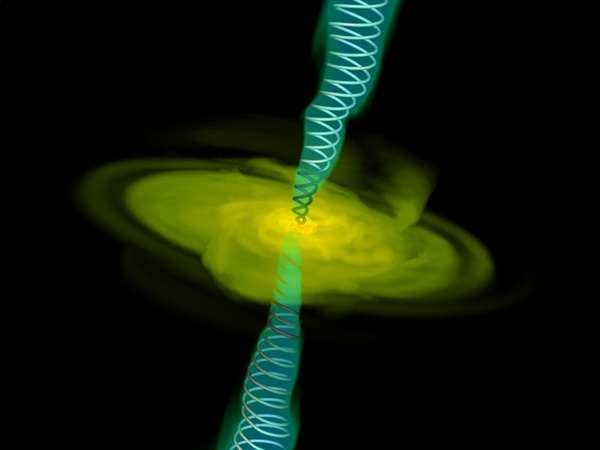
A computer simulation of gas (in yellow) falling into a black hole (too small to be seen). Twin jets are also shown with magnetic field lines. Alexander Tchekhovskoy (LBNL)
via www.astronomy.com
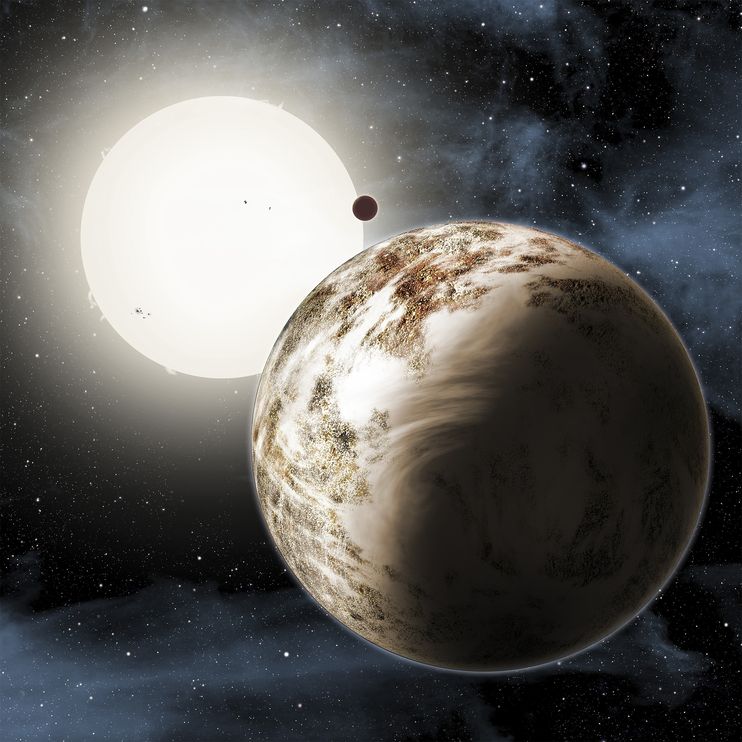
Rocky world could be the first of an entirely new class of planet. An illustration of mega-Earth Rocky world could be the first of an entirely new class of planet. An illustration of mega-Earth The newly discovered ”mega-Earth” Kepler-10c dominates the foreground in this artist’s conception released by the Harvard-Smithsonian Center for Astrophysics in Cambridge, Massachusetts on June 2, 2014.
via news.nationalgeographic.com
Penn astrophysicist Mark Devlin and Jackie Tileston, an associate professor of fine arts at PennDesign, collaborated on the ARTacama Project, the “highest known art installation in the world” three miles above sea level in the Chilean mountains.www.upenn.edu