Physics in the News

Sunday, August 17, 2014

Dust in the interstellar wind: Seven particles of possible interstellar origin identified in samples returned by NASA’s stardust spacecraft

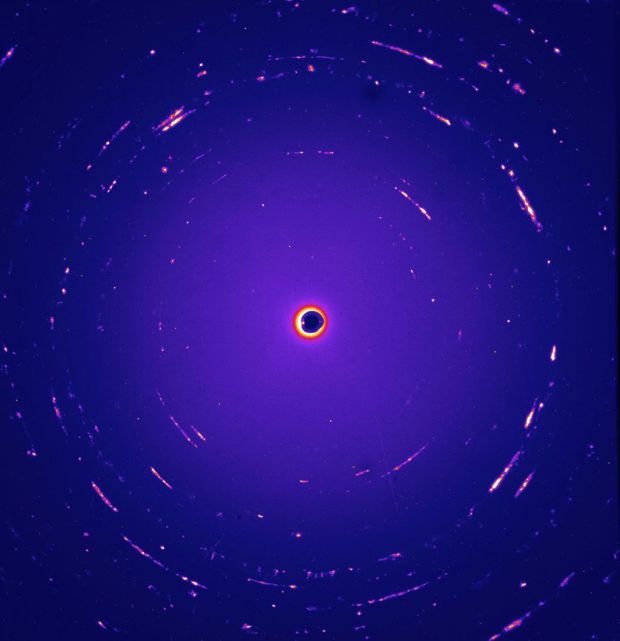
A team of researchers has identified seven dust particles that were returned to Earth in 2006 by NASA’s Stardust spacecraft, which might have originated in the interstellar medium. This false-color image shows a diffraction pattern created by one of these particles, named Orion. Image (Credit: Zack Gainsforth)
via americaspace

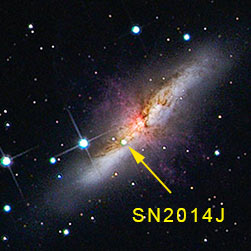
NASA’s Chandra observatory searches for trigger of nearby supernova

“While it may sound a bit odd, we actually learned a great deal about this supernova by detecting absolutely nothing,” said Raffaella Margutti of the Harvard-Smithsonian Center for Astrophysics (CfA) in Cambridge, Massachusetts, who led the study. “Now we can essentially rule out that the explosion was caused by a white dwarf continuously pulling material from a companion star.” (Credit: NASA)
via marketwatch

RNA exchange by vampire-like plant strangleweed inspires scientists

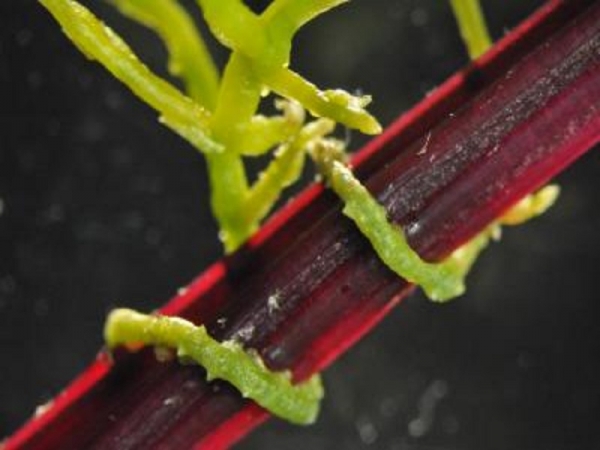
When parasitic plants such as dodder attack plants like the sugar beet shown here, there is a vast exchange of genetic information between the plants, a Virginia Tech researcher has discovered. (Photo : Virginia Tech College of Agriculture and Life Sceinces)
When parasitic plants such as dodder attack plants like the sugar beet shown here, there is a vast exchange of genetic information between the plants, a Virginia Tech researcher has discovered. (Credit: Virginia Tech College of Agriculture and Life Sceinces)
via techtimes

The violent past of a space rock that fell to Earth in Novato

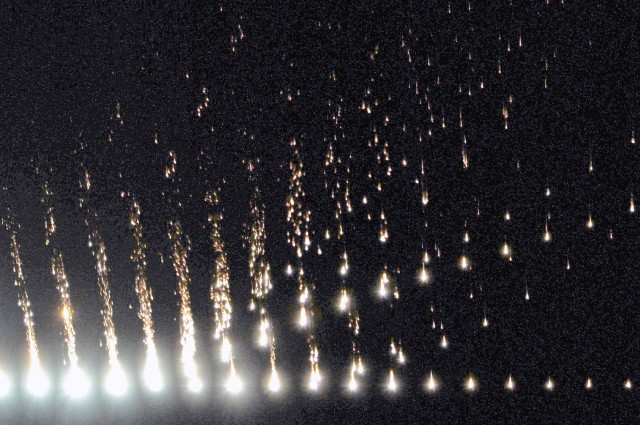
The fragmentation of the Novato meteorite on Oct. 17, 2012, as depicted in a horizontally mirrored image to show the progression of the event (from left to right). (Robert P. Moreno Jr., Jim Albers and Peter Jenniskens/NASA-SETI)
via kqed

Young Hobart engineer Willem Olding maps out a revolutionary future in artificial intelligence

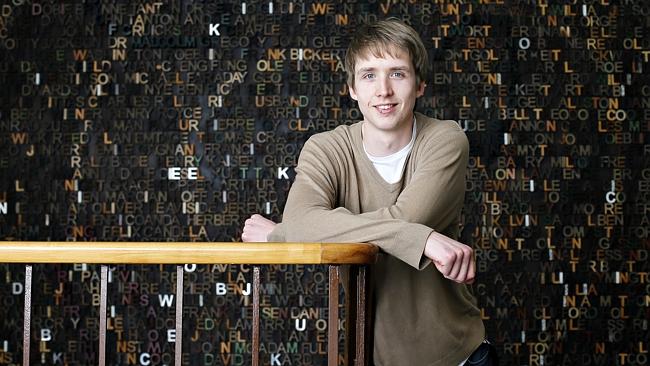
 Engineering PhD student Willem Olding aims to take out the tedium in creating mapping systems to free-up time for more important work. (Credit: Richard Jupe)
Engineering PhD student Willem Olding aims to take out the tedium in creating mapping systems to free-up time for more important work. (Credit: Richard Jupe)
via themercury

ISEE-3 Reboot Team Unable to Change Spacecraft’s Trajectory

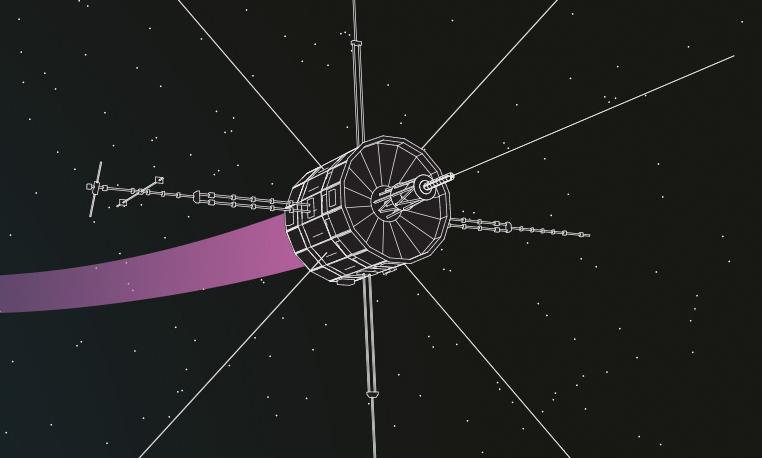
NASA's International Sun-Earth Explorer 3 spacecraft, which launched in 1978, will fly by the moon on Aug. 10, 2014. Credit: SpacecraftforAll.
NASA’s International Sun-Earth Explorer 3 spacecraft, which launched in 1978, flew by the moon on Aug. 10, 2014 and is heading toward the sun. (Credit: SpacecraftforAll.com)
via tvtechnology

Atomic force microscope sensitivity increases 20 times, thanks to laser cooling

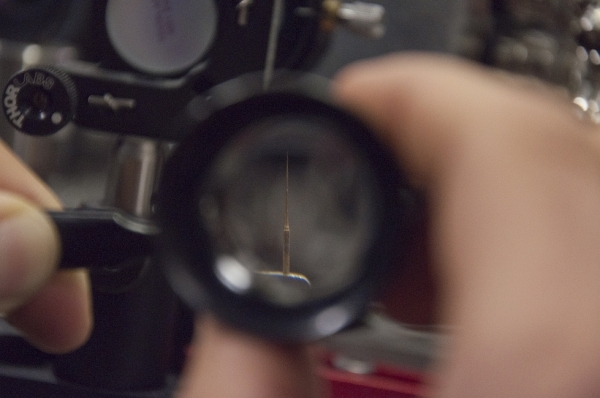
Lasers can be used to super-cool microscopes, making them 20 times more sensitive than ever before. (Photo : Quantum Optics Group, ANU
Lasers can be used to super-cool microscopes, making them 20 times more sensitive than ever before. (Credit: Quantum Optics Group, ANU)
via techtimes

Higgs boson could also explain the earliest expansion of the Universe

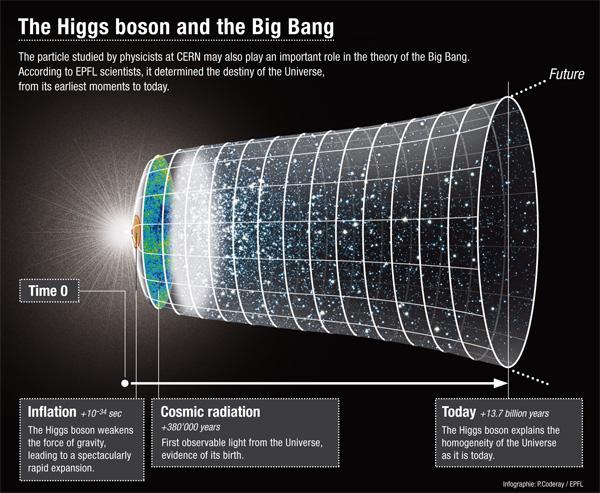
The influence of the Higgs boson and its field (inset) on cosmological inflation could manifest in the observation of gravitational waves by the BICEP2 telescope (background). (Credit: EPFL)
via phys.org

Focus: Fast bit-switching in a thermal memory

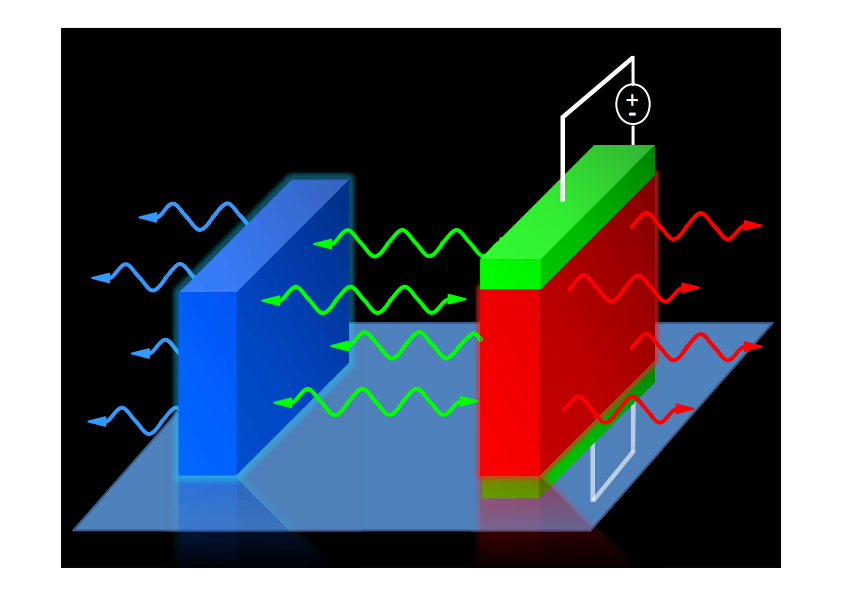
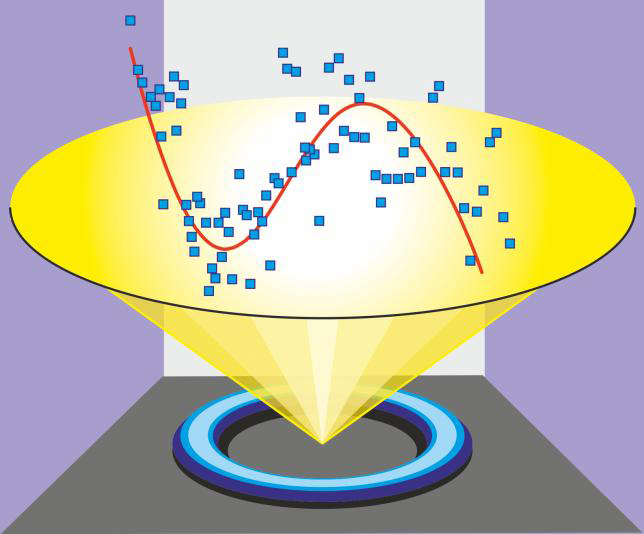
A bit of heat. Two parallel, thin plates that exchange heat via thermal radiation can form a thermal “bit” that changes rapidly between “one” and “zero.” One of them is made of a material like VO2 that switches between two states with different thermal properties, depending on its temperature. (Credit: P. Ben-Abdallah/Univ. of Paris-Sud)
via physics.aps

Cygnus commercial cargo ship ‘Janice Voss’ finishes resupply mission and departs space station

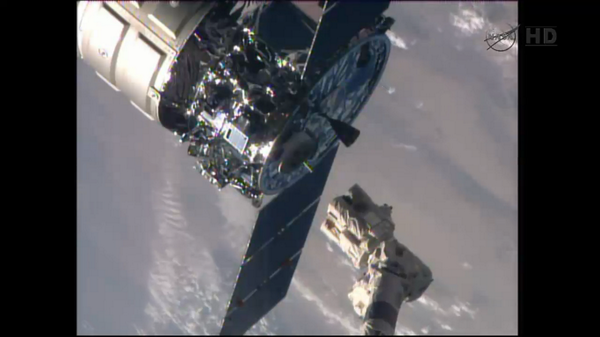
Cygnus Orb-2 spacecraft ‘Janice Voss’ bids farewell to the ISS at 6:40 a.m. EDT, Friday, Aug. 15, 2014. It’s set to reenter the atmosphere on Aug. 17. (Credit: NASA TV)
via universetoday

Physics in the News

Saturday, August 16, 2014

NASA develops origami style solar panels to be used in space(VIDEO)

via designboom

The improbable case of the high-energy novae: NASA’s Fermi space telescope detects new gamma ray sources

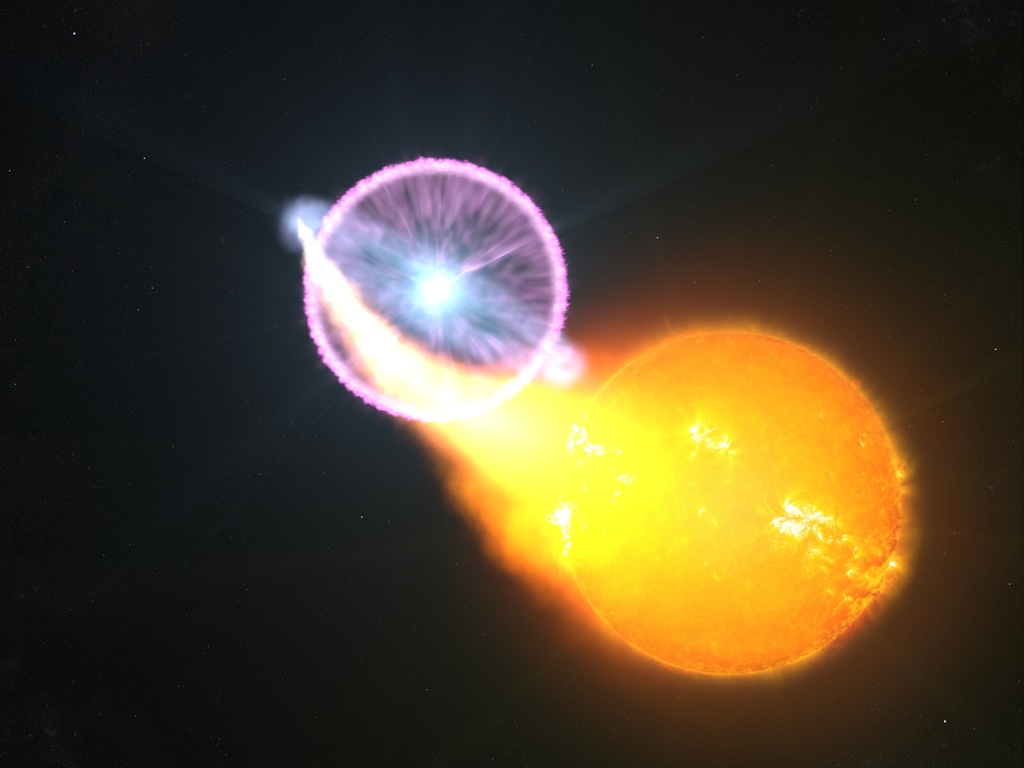
Novae typically originate in binary systems containing Sun-like stars, as shown in this artist’s rendering. NASA’s Fermi Space Telescope discovered that a nova in a system like this likely produces gamma rays (magenta) through collisions among multiple shock waves in the rapidly expanding shell of debris. (Credit: NASA’s Goddard Space Flight Center/S. Wiessinger)
via americaspace

Electrons in magnetic field reveal surprises

Beam out: elongated "Landau" states - Instead of rotating uniformly at a particular frequency, an international team of researchers has found that electrons in a magnetic field are capable of rotating at three different frequencies, depending on their quantum properties.
Beam out: elongated “Landau” states – Instead of rotating uniformly at a particular frequency, an international team of researchers has found that electrons in a magnetic field are capable of rotating at three different frequencies, depending on their quantum properties.
via physicsworld

How can we clean up that space junk(VIDEO)?

via universetoday

Weird blurred light near giant black hole(VIDEO)

via space

UT research uncovers forces that hold gravity defying near earth asteroid together

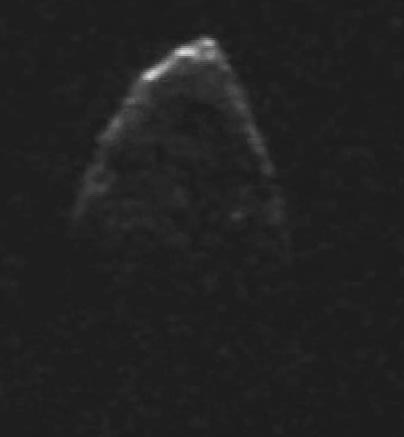
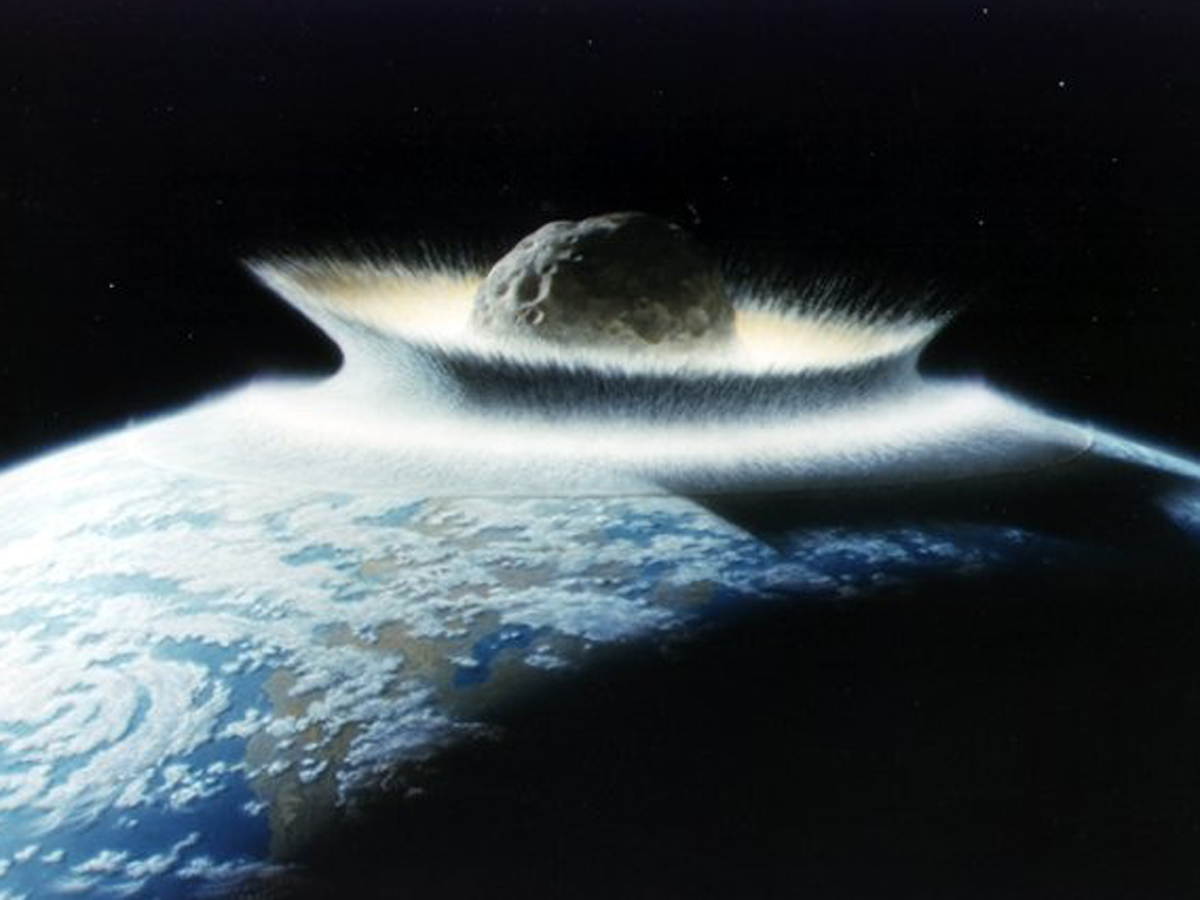
Asteroid 1950 DA. “Following the February 2013 asteroid impact in Chelyabinsk, Russia, there is renewed interest in figuring out how to deal with the potential hazard of an asteroid impact,” said Rozitis. “Understanding what holds these asteroids together can inform strategies to guard against future impacts.” (Credit: NASA)
via tntoday

‘Monster’ quasars got that way by gorging on gas

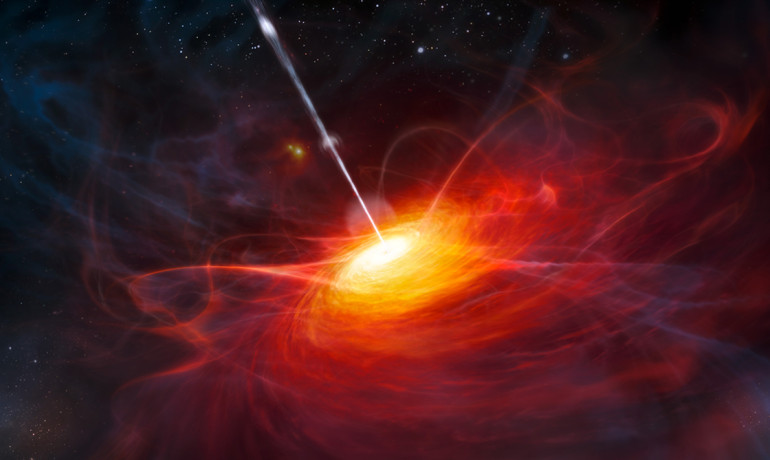
"The puzzle has been how these 'seed' black holes grew into the monsters that we now see within the time available, a few billion years at best," says Priyamvada Natarajan, who proposes that early quasars took in a "super boost," feasting from large reservoirs of gas that were part of early star clusters. (Credit: Lollito Larkham/Flickr)
“The puzzle has been how these ‘seed’ black holes grew into the monsters that we now see within the time available, a few billion years at best,” says Priyamvada Natarajan, who proposes that early quasars took in a “super boost,” feasting from large reservoirs of gas that were part of early star clusters. (Credit: Lollito Larkham/Flickr)
via futurity

LHC research, presented in tangible tidbits

via symmetrymagazine

NASA sleep promoting light bulb hopes to send you to snoozeland, ASAP!

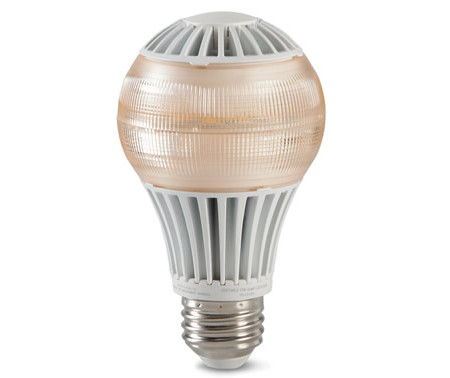
Lighting Science created special lightbulbs for the ISS. There are daylight bulbs with bluer light to encourage energy and activity during what would be daytime hours, and then there are lightbulbs that dial back on the blue to boost astronauts’ production of melatonin for a good night’s sleep. (Credit: Lightning Science)
via cnet

NASA funds robotic tumbling cubes for space exploration

via spectrum

Physics in the News

Thursday, August 14, 2014

Asteroid defies laws of physics, baffles researchers

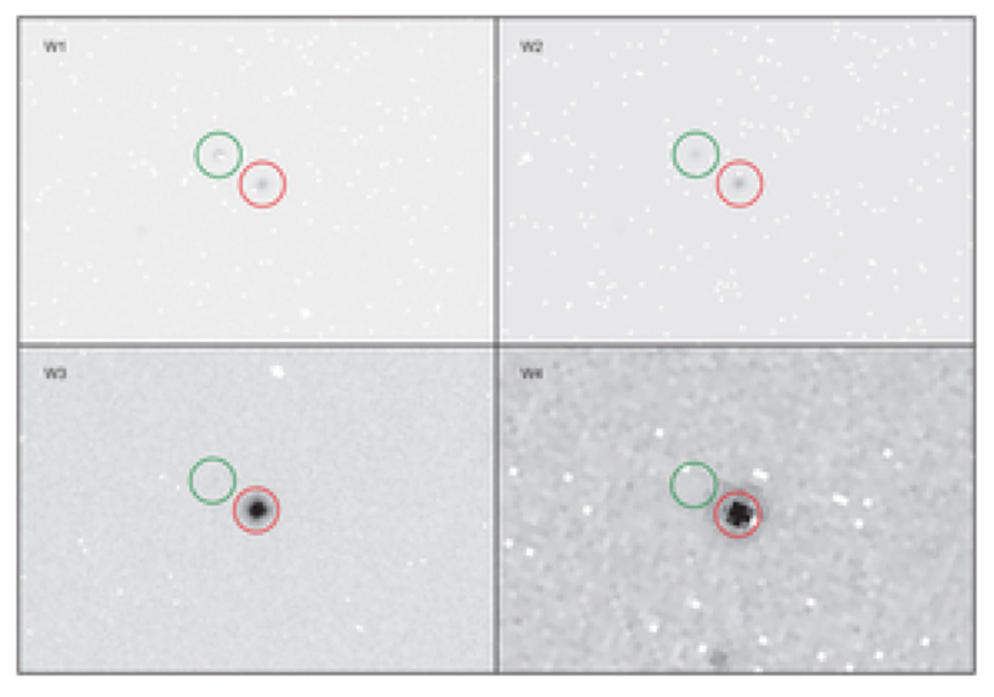
 WISE thermal-infrared images of (29075) 1950 DA. The image scale is 2.75 arcsec per pixel for the W1, W2 and W3 bands and 5.53 arcsec per pixel for the W4 band. White pixels are ‘bad’ pixels that do not contain data. The object seen to the upper left of (29075) 1950 DA (red circle) (Credit: Rozitis, MacLennan & Emery)
WISE thermal-infrared images of (29075) 1950 DA. The image scale is 2.75 arcsec per pixel for the W1, W2 and W3 bands and 5.53 arcsec per pixel for the W4 band. White pixels are ‘bad’ pixels that do not contain data. The object seen in the red circle is  (29075) 1950 DA. (Credit: Rozitis, MacLennan, Emery)
via techtimes

Hubble eyes galaxy as it gets a cosmic hair ruffling

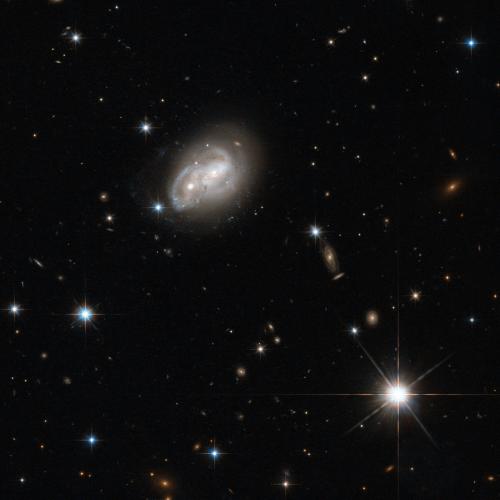
From objects as small as Newton's apple to those as large as a galaxy, no physical body is free from the stern bonds of gravity, as evidenced in this stunning picture captured by the Wide Field Camera 3 and Advanced Camera for Surveys onboard the NASA/ESA Hubble Space Telescope. (Credit: ESA/Hubble & NASA, Acknowledgement: Luca Limatola)
From objects as small as Newton’s apple to those as large as a galaxy, no physical body is free from the stern bonds of gravity, as evidenced in this stunning picture captured by the Wide Field Camera 3 and Advanced Camera for Surveys onboard the NASA/ESA Hubble Space Telescope. (Credit: ESA/Hubble & NASA, Acknowledgement: Luca Limatola)
via phys
Novel project to develop tiny flat molecule tapes

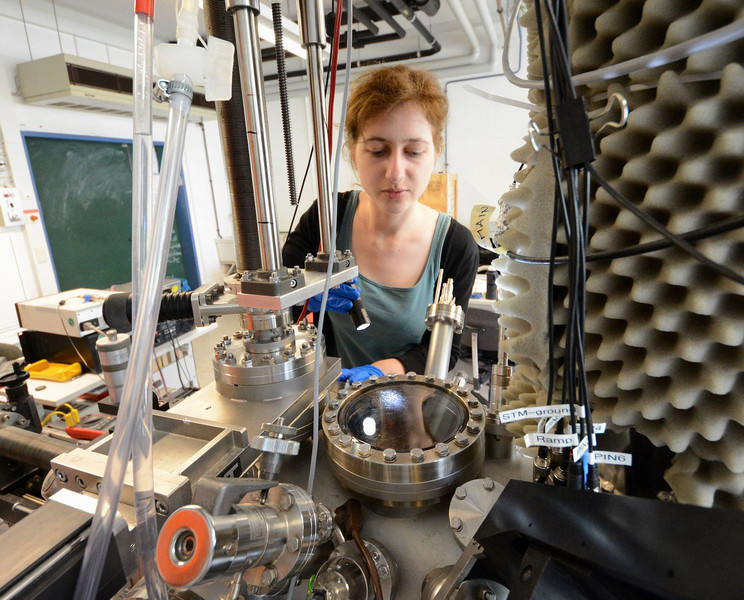
Alissa Wiengarten, PhD student at the TUM Department of Physics, heats a porphine powder in a vacuum chamber. (Credit: Thorsten Naeser/Munich-Centre for Advanced Photonics)
via azonano

Quantum-Memory imprint discovered in light emission

Semiconductor quantum-dot microring laser emits light whose emission intensity exhibits oscillations due to quantum memory between excitation and light Emission. Pressestelle der Philipps-Universität Marburg/Fachgebiet Theoretische Halbleiterphysik
Semiconductor quantum-dot microring laser emits light whose emission intensity exhibits oscillations due to quantum memory between excitation and light Emission. (Credit: Philipps-Universität Marburg/Fachgebiet Theoretische Halbleiterphysik)
via innovations-report

Investigating soil moisture dynamics using cosmic-ray technology

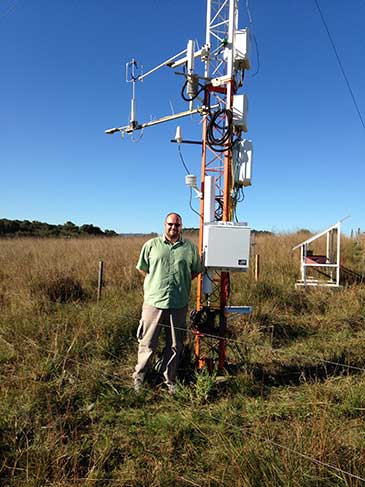
Dr Rosolem with the cosmic-ray soil moisture sensor installed at the the Federal University of Santa Maria SulFlux site in Brazil
Dr Rosolem with the cosmic-ray soil moisture sensor installed at the the Federal University of Santa Maria SulFlux site in Brazil. (Credit: Univ Bristol)
via bristol

Particle physicists measure the spin contribution of the proton’s antiquark

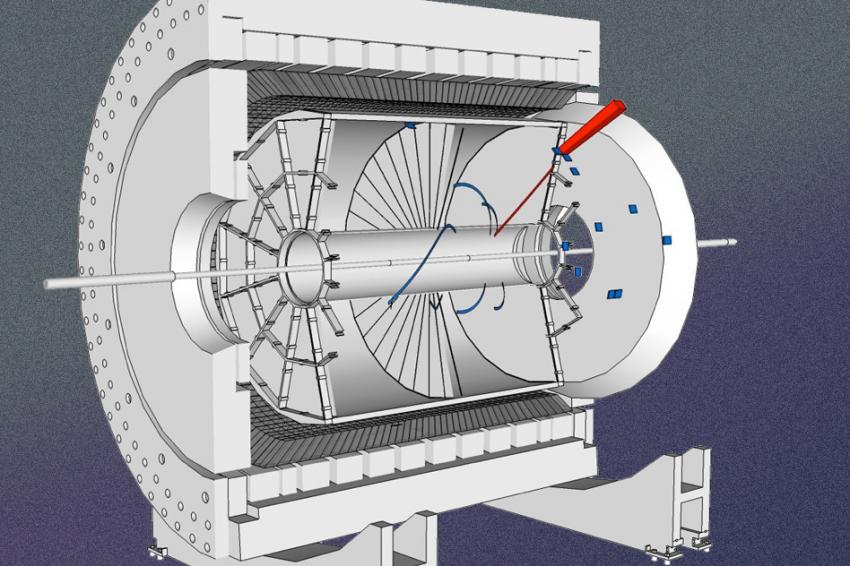
 The STAR detector, used in the researchers' experiment, measures the energy and angle of the electron from the W boson decay produced in the proton collision. (Credit: STAR Collaboration)
The STAR detector, used in the researchers’ experiment, measures the energy and angle of the electron from the W boson decay produced in the proton collision. (Credit: STAR Collaboration)
via phys

Nanosilver gives electron microscopy a boost

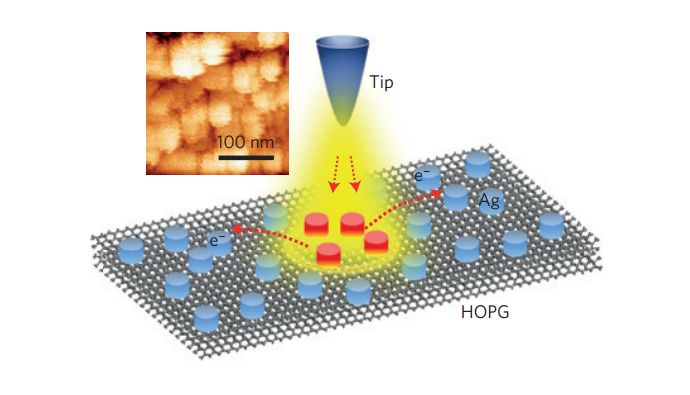
Experimental arrangement. A tip is approached to a distance of micrometres from a grounded highly ordered pyrolytic graphene (HOPG) surface carrying Ag nanostructures (illustrated in the inset). Electrons are field-emitted from the tip when a negative tip voltage Vt of hundreds of volts is applied, and the surface plasmon resonance (SPR) of the Ag nanostructures is excited by the field-emitted electrons under a strong electric field introduced by the tip–sample bias. The backscattered electrons are collected and analysed by the TEEA. (Credit: Nature Physics (2014) doi:10.1038/nphys3051)
via asianscientist

Supermassive black holes’ diets revealed: Crushed stars and X-rays

Because of that alacrity, and the fact that they had repeat observations at roughly a decade's detach, the Russian scientists were able to single out stars that dimmed by at least tenfold. They've been named 1RXS J114727.1 + 494302, 1RXS J130547.2 + 641252, and 1RXS J235424.5-102053. (Credit: Davies, NASA)
Because of that alacrity, and the fact that they had repeat observations at roughly a decade’s detach, the Russian scientists were able to single out stars that dimmed by at least tenfold. They’ve been named 1RXS J114727.1 + 494302, 1RXS J130547.2 + 641252, and 1RXS J235424.5-102053. (Credit: Davies, NASA)
via slashgear

Could Mystery Signal Detected Be Proof of Dark Matter?

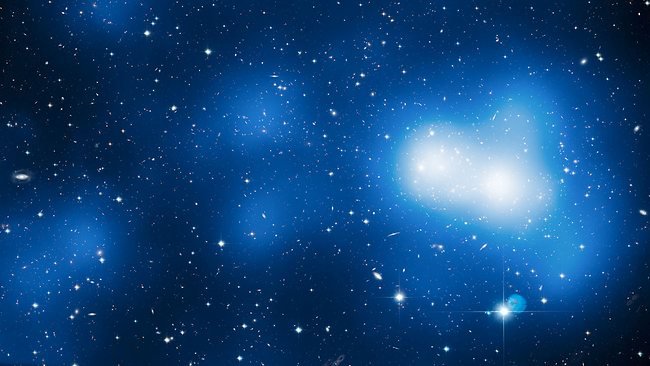
Could a mystery signal that has been detected be proof of dark matter? While searching through the fundamental structures of various galaxy clusters, astrophysicists located at Harvard University found a bizarre discharge line they are having trouble in identifying.  (Credit: Kimberly Ruble)
Could a mystery signal that has been detected be proof of dark matter? While searching through the fundamental structures of various galaxy clusters, astrophysicists located at Harvard University found a bizarre discharge line they are having trouble in identifying. (Credit: Kimberly Ruble)
via guardianlv

Physics in the News

Wednesday, August 13, 2014

First robotic telescope captures clear images of exoplanet stars

via spectrum

What?! The universe appears to be missing some light

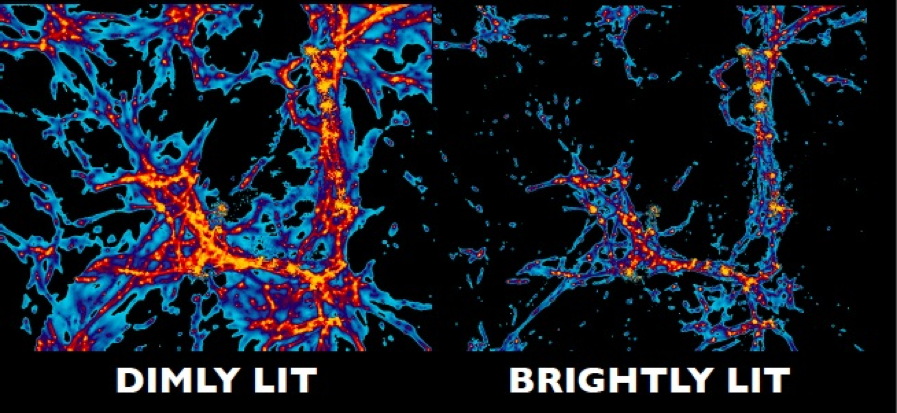
New data from the Hubble Space Telescope and computer simulations have revealed that the universe has much less ultraviolet light than previously thought. (Credit: Ben Oppenheimer and Juna Kollmeie)
New data from the Hubble Space Telescope and computer simulations have revealed that the universe has much less ultraviolet light than previously thought.
(Credit: Ben Oppenheimer and Juna Kollmeie)
via space

Here’s the world’s first robotics company to pledge not to make ‘killer robots’

Clearpath Robotics "Husky," an autonomous vehicle. (Credit: Clearpath Robotics)
“Husky,” an autonomous vehicle. (Credit: Clearpath Robotics)

via businessinsider

Planck’s mystery cosmic ‘cold spot’ may be an error

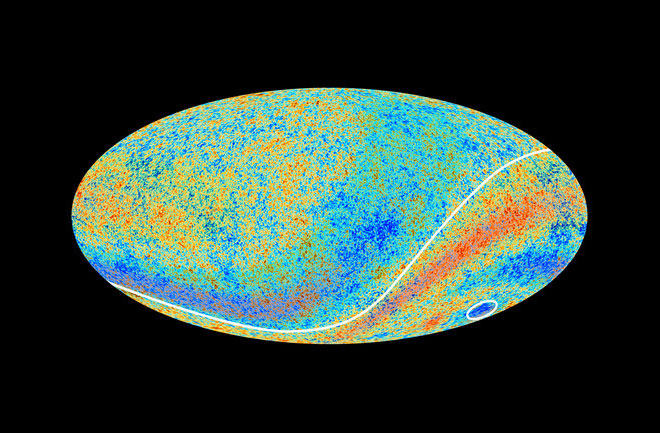
The European Space Agency's Planck space telescope mapped the cosmic microwave background. (Credit: ESA and the Planck Collaboration)
The European Space Agency’s Planck space telescope mapped the cosmic microwave background. (Credit: ESA and the Planck Collaboration)
via space

Proof confirmed of 400-year-old fruit-stacking problem

Now, a mathematician has announced the completion of an epic quest to formally prove the so-called Kepler conjecture. “An enormous burden has been lifted from my shoulders,” says Thomas Hales of the University of Pittsburgh, Pennsylvania, who led the work. “I suddenly feel ten years younger!” (Credit: Ray Tang/Rex)
via newscientist

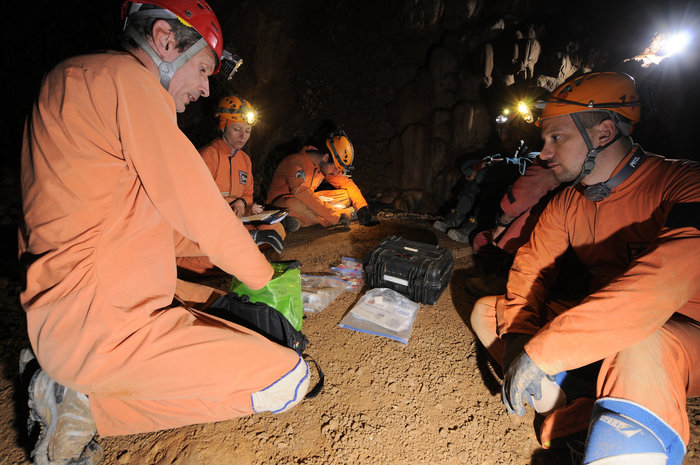
Introducing this year’s underground astronauts

Astronauts will be working together, deep underground. (Credit: ESA—A. Romeo)
via phys
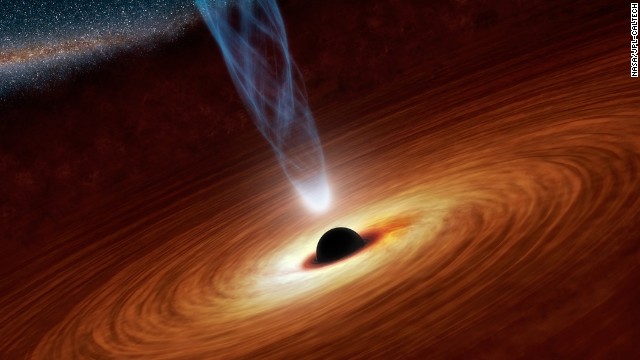
How to build a supermassive black hole in less than a billion years

This artist's rendering shows one possible configuration for a corona, but that its true shape is unknown. (Credit: NASA/JPL-Caltech)

via arstechnica

Physics in the News

Tuesday, August 12, 2014

The smallest possible scale in the universe

Every once in a while I think that there maybe is no fundamentally smallest unit of length; that all these arguments for its existence are wrong. I like to think that we can look infinitely close into structures and will never find a final theory, turtles upon turtles, or that structures are ultimately self-similar and repeat.(Credit: Sabine Hossenfelder)
Every once in a while I think that there maybe is no fundamentally smallest unit of length; that all these arguments for its existence are wrong. I like to think that we can look infinitely close into structures and will never find a final theory, turtles upon turtles, or that structures are ultimately self-similar and repeat.(Credit: Sabine Hossenfelder, Sanghyuk Moon)
via medium

Cosmologist Laura Mersini-Houghton claims black holes do not exist(VIDEO)

via thewatchers

Europe’s last cargo ship reaches space station

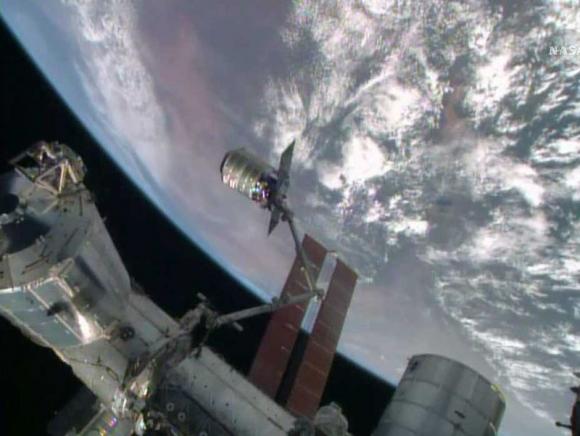
The International Space Station's robotic arm, Canadarm2, grapples the Orbital Sciences' Cygnus cargo craft, as seen in this still image taken from NASA TV July 16, 2014.  (Credit: Reuters/NASA TV/Handout via Reuters)
The International Space Station’s robotic arm, Canadarm2, grapples the Orbital Sciences’ Cygnus cargo craft, as seen in this still image taken from NASA TV July 16, 2014. (Credit: Reuters/NASA TV/Handout via Reuters)

via reuters

Follow the radio waves to exomoons, astrophysicists say

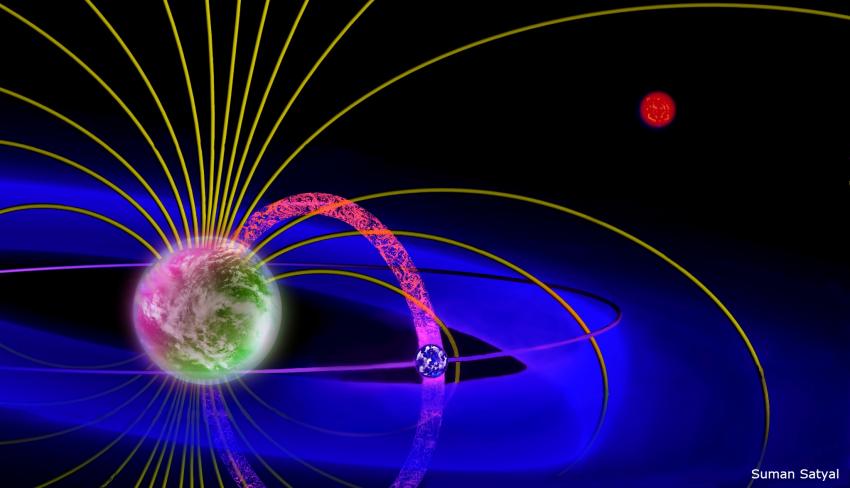
This is a schematic of a plasma torus around an exoplanet, which is created by the ions injected from an exomoon's ionosphere into the planet's magnetosphere. (Credit: UT Arlington)
This is a schematic of a plasma torus around an exoplanet, which is created by the ions injected from an exomoon’s ionosphere into the planet’s magnetosphere. (Credit: UT Arlington)

via phys
NASA is contest-sourcing solutions to its deepest problems

(Credit: NASA/Don Davis)
“As NASA continues to push the boundaries of human imagination and innovation, we have seen the value in utilizing a citizen-based professional crowd to complement our internal efforts and solve complex real-world challenges,” Jason Crusan, director of NASA’s Tournament Lab. (Credit: NASA/Don Davis)
via motherboard

Schrödinger’s cat explained on physicist’s 127th birthday(VIDEO)

via cbc

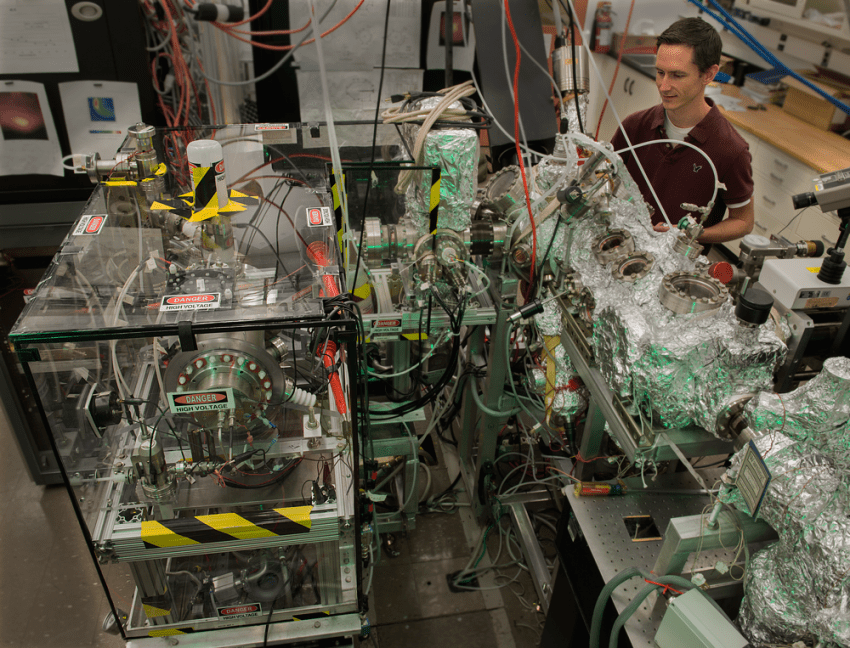
Beyond six nines: Ultra-enriched silicon paves the road to quantum computing

NIST researcher Kevin Dwyer with the silicon enrichment apparatus. The process begins at the left, where natural-abundance silicon in the form of silane gas (SiH4) is ionized. The ions pass through a magnetic field (top left), which causes their paths to curve to different degrees based on their mass. The silicon-28 ions, now separated from the other silicon isotopes, are decelerated through an ultra-high vacuum chamber (top center) and into the deposition chamber (top right) (Credit: Pomeroy, NIST, Dwyer)
via phys

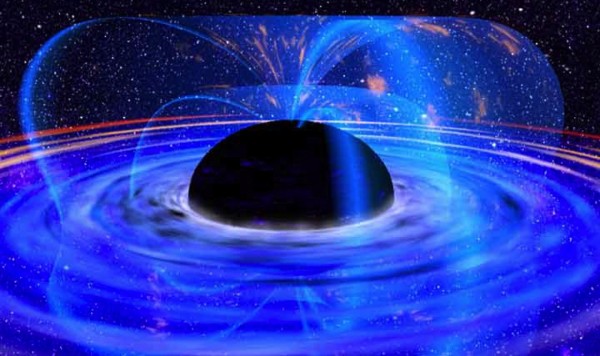
NASA’s NuSTAR sees rare blurring of black hole light

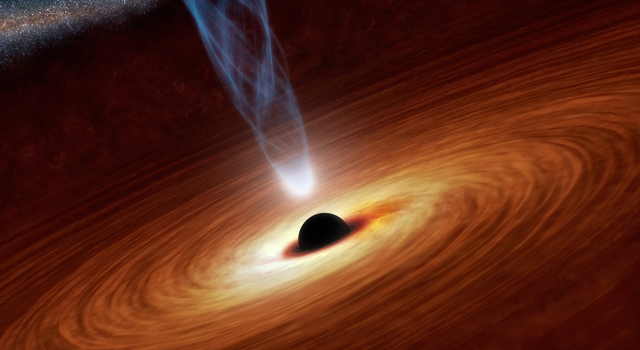
This artist’s concept illustrates a supermassive black hole with millions to billions times the mass of our sun. Supermassive black holes are enormously dense objects buried at the hearts of galaxies. (Credit: NASA/JPL-Caltech)
via pasadenanow

 From eons to seconds, proteins exploit the same forces

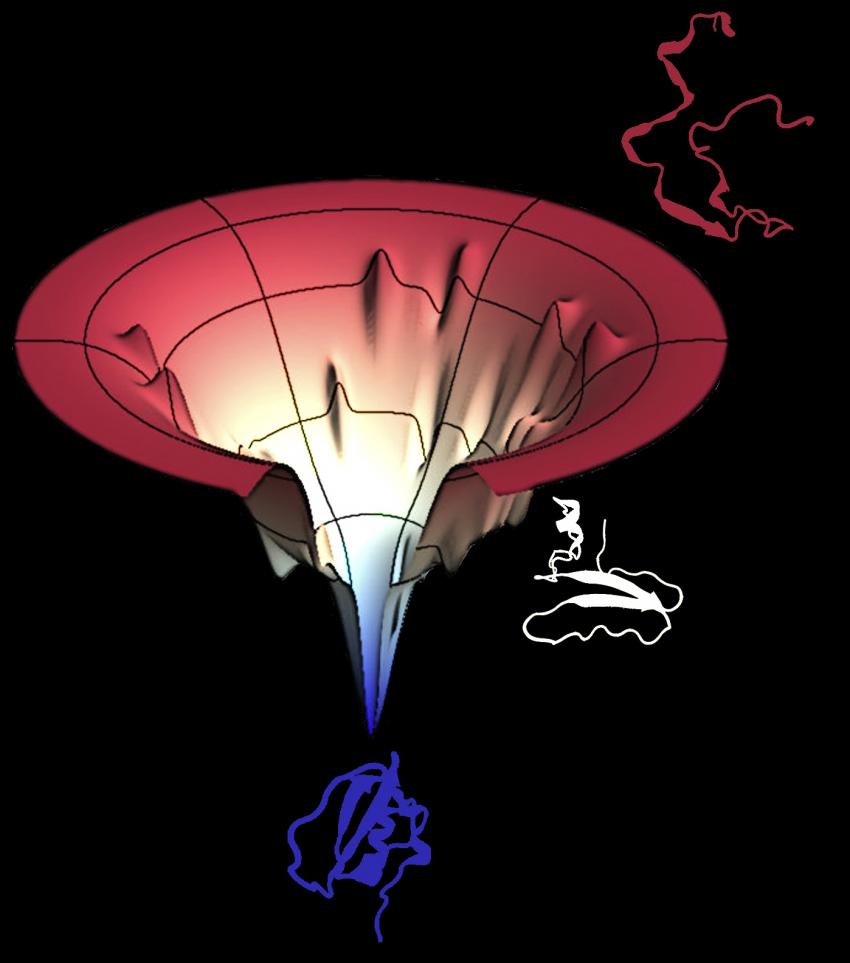
A protein folding funnel, the product of algorithms created by Rice’s Center for Theoretical Biological Physics, is a graphic representation of the energy landscape a protein navigates as it goes from its initial floppy state to a folded, functional unit. The funnel shows smooth slopes as well as outcroppings where parts of a protein may pause while others catch up, and also traps that could cause a protein to misfold. New Rice research shows how the interplay between evolution and physics developed the skills necessary to conserve useful proteins. (Credit: Center for Theoretical Biological Physics/Rice University)
via phys