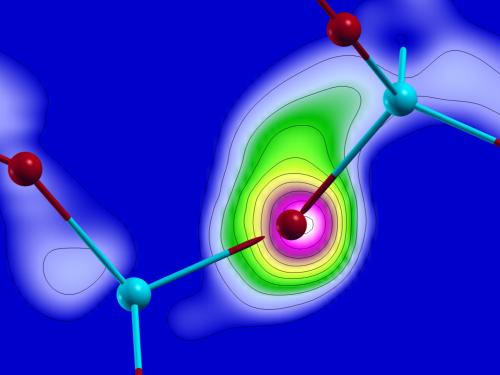
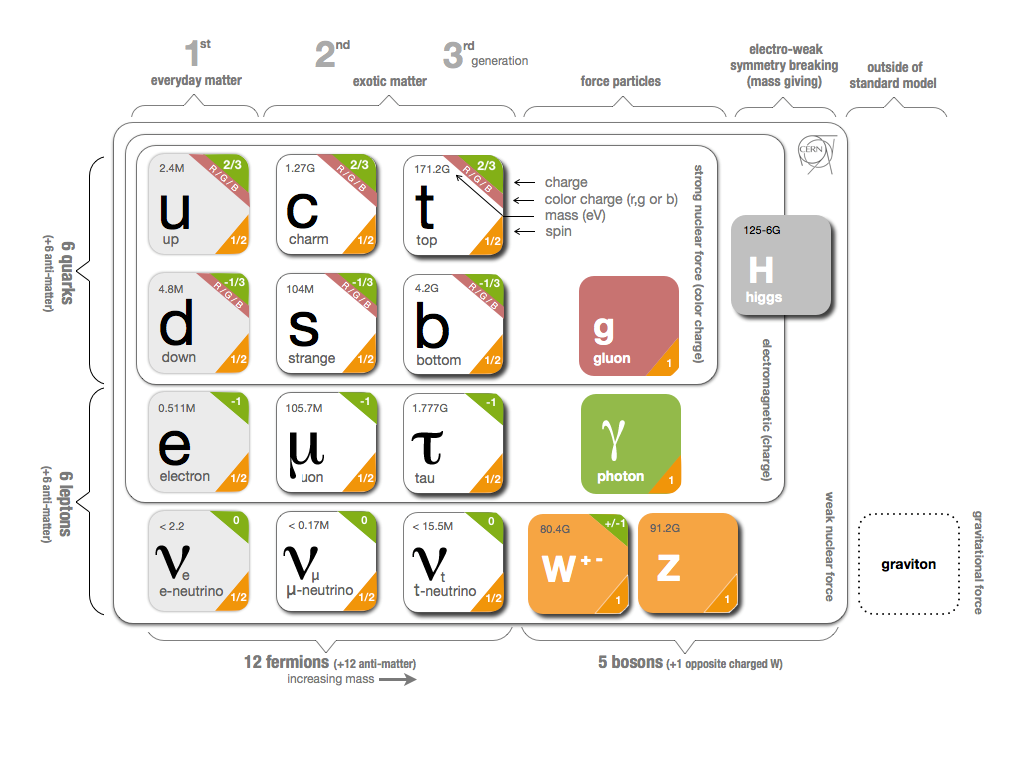
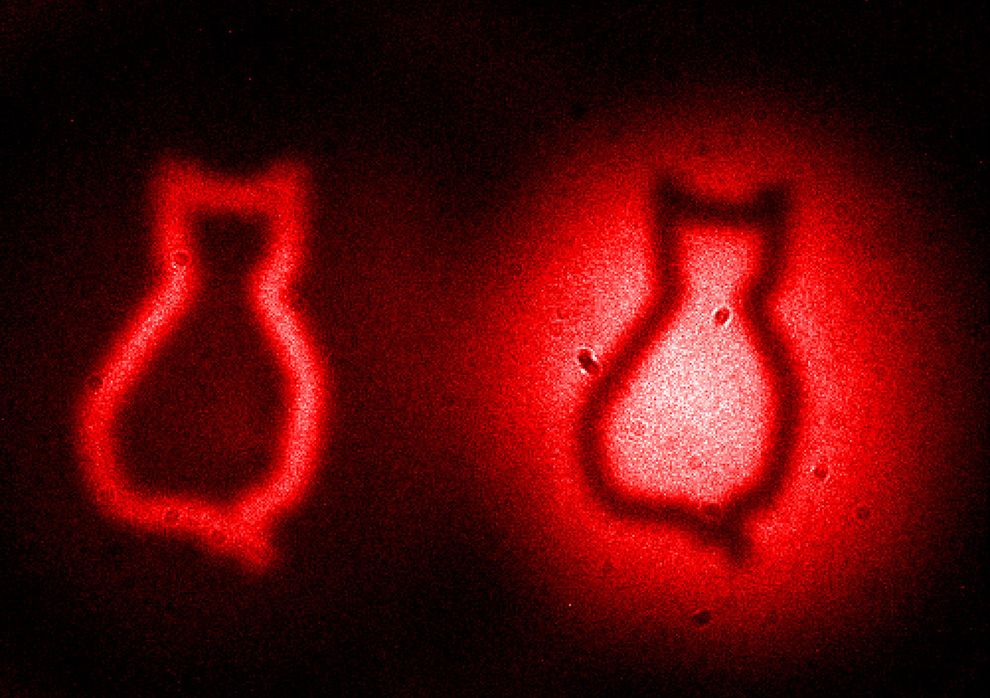
The spook and the weirdness, they stand in for non-locality and contextuality, they replace correlations and entanglement, pure and mixed states, non-commutativity, error correction, path integrals or post-selection. Unfortunately, all too often the technical vocabulary is entirely absent rather than briefly introduced. This makes it very difficult for interested readers to dig deeper into the topic. (Credit: C. Reed, S. Hossensfelder)
via backreaction
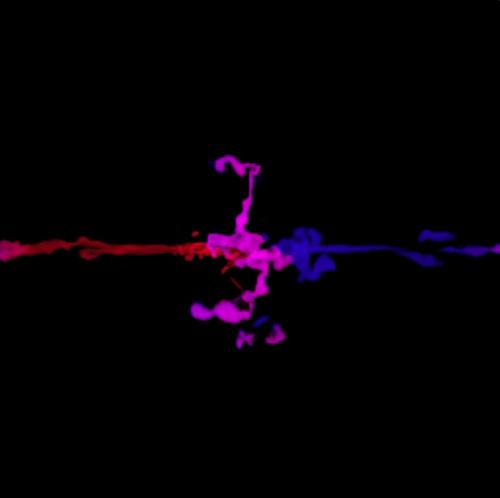
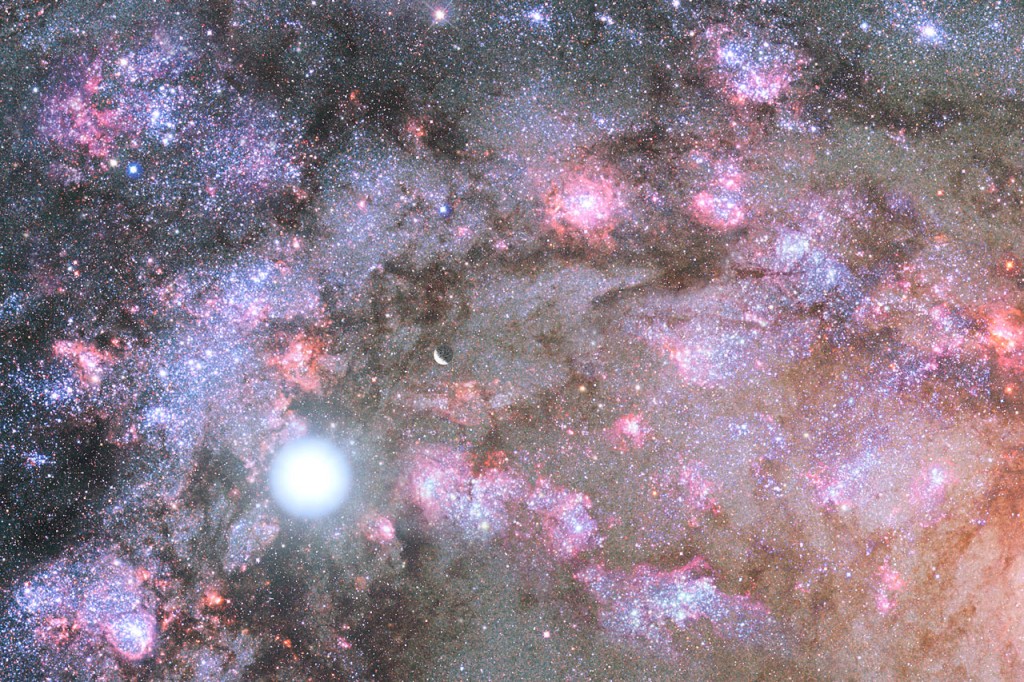
This computer simulation shows a collision of two streams of interstellar gas, leading to gravitational collapse of the gas and the formation of a star cluster at the center. In this image, the gas streams were labeled with blue and red “tracer dyes,” and the purple color indicates thorough mixing of the two gas streams during the collapse. (Credit: Y. Feng and M. Krumholz)
via phys
Scientists at the Vienna University of Technology have been able to change the properties of quartz glass into metal for very brief moments using laser pulses. (Credit: Vienna University of Technology)
via pbs
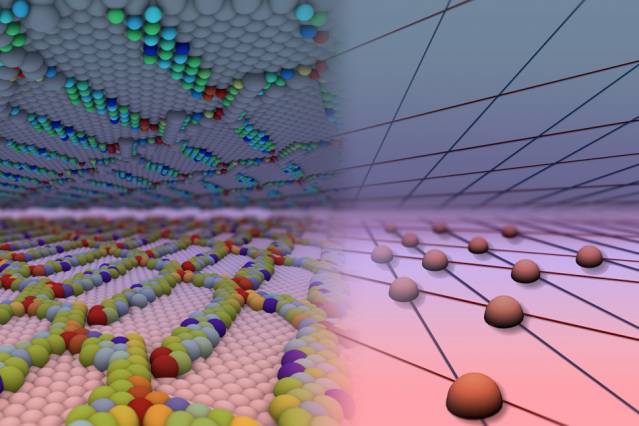
Interfaces between solid materials are surfaces with intricate, internal structure (shown on the left). To control that structure, and to use it for specific applications, researchers model it a simplified way (shown on the right). (Credit: Niaz Abdolrahim and Jose-Luis Olivares/MIT)
via mit
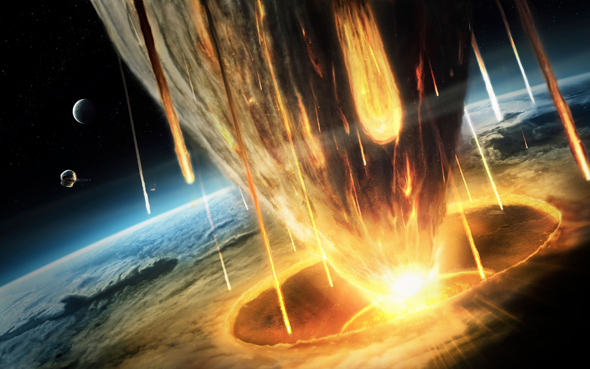
(29075) 1950 DA is a near-Earth asteroid. Among asteroids more than 1 km in diameter, it is notable for having the highest known probability of impacting Earth. (Credit: Stocktrek Images Inc./Alamy)
via scientificamerican
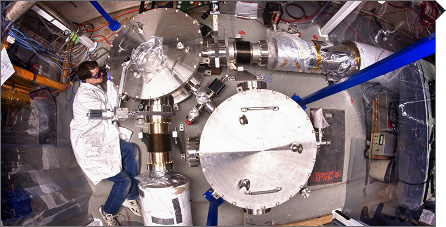
The Fermilab Holometer is a new kind of instrument designed to study the quantum character of space itself. It measures the quantum coherence of location with unprecedented precision. (Credit: Fermi)
via fermi
Agravity, short for ‘adimensional gravity’, is one of the most recent Theory of Everything proposals in a long line of such proposals that have come about ever since the problem of reconciling Gravity with the Standard Model was realized by physicists. It attempts to merge gravity with the Higgs interaction, and thus the rest of the Standard Model, by reconciling the huge difference between the Planck Scale and the relatively small masses of all the other particles. (Credit: SGTW, Daniels)
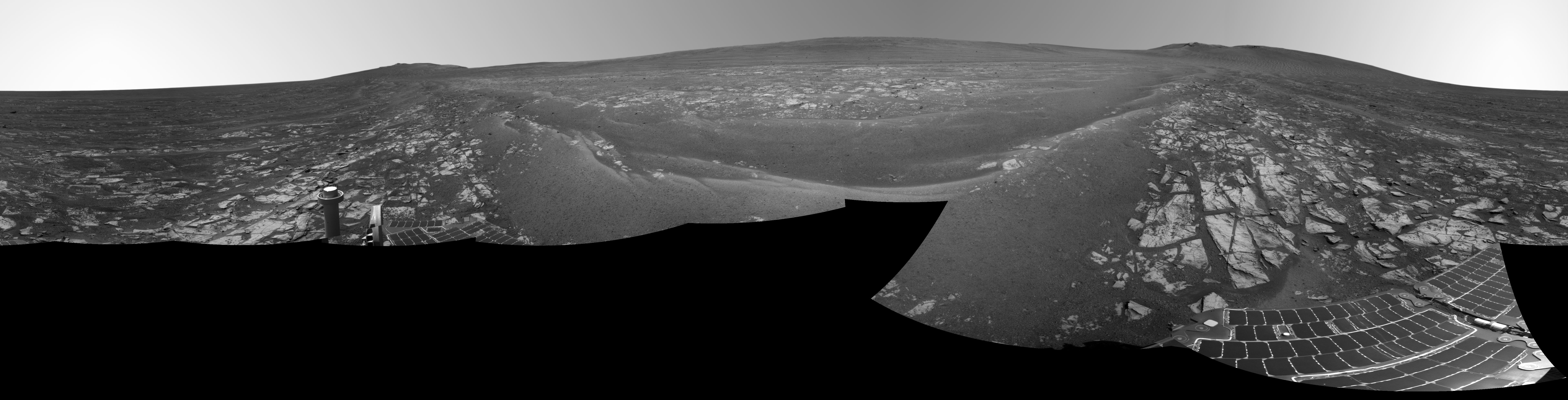
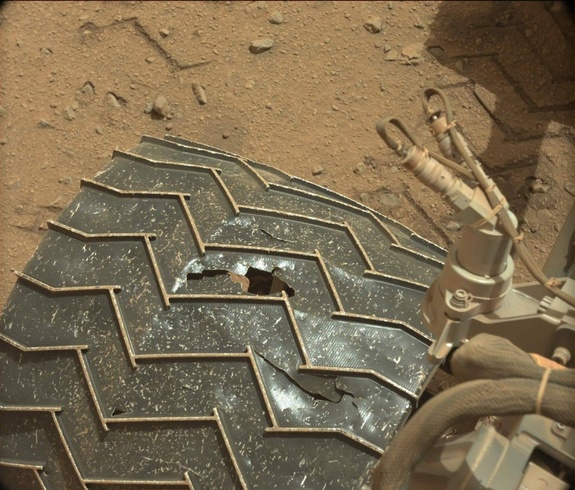
The decision to reformat Opportunity’s flash memory early next month is prompted by the multiple computer resets the rover has been experiencing. This month alone, Opportunity has had to be rebooted a dozen times, interrupting valuable time that should be taken up with carrying out science near the rim of Endeavour crater. (Credit: NASA, O’Neil)
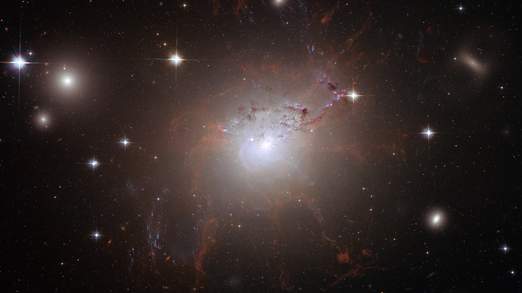
“It’s fascinating that the early universe could make galaxies in this way and the modern universe just can’t anymore, and we’re really beginning to understand in a profound way how different the early universe was than it is now,” said Erica Nelson of Yale University. (Credit: Neslson)
via washingtonpost
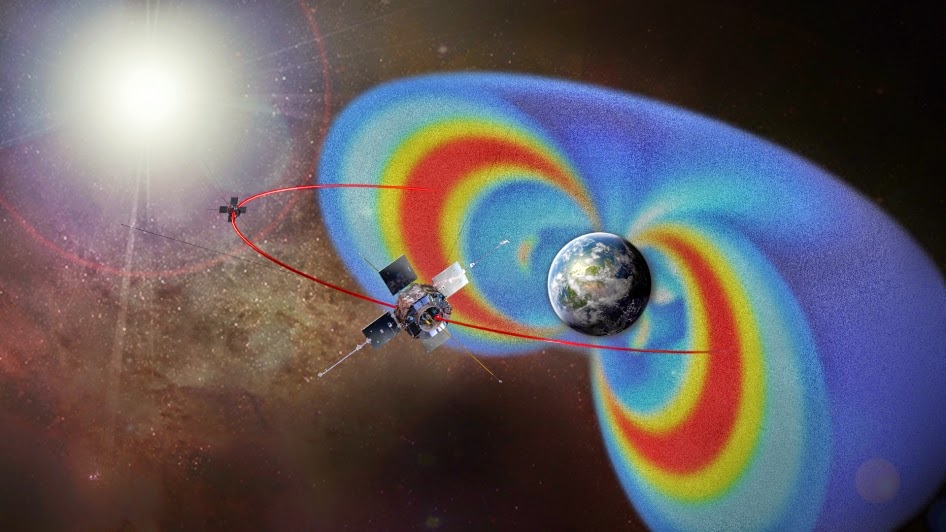
NASA’s Van Allen Probes orbit through two giant radiation belts surrounding Earth. Their observations help explain how particles in the belts can be sped up to nearly the speed of light. Image (Credit: NASA)
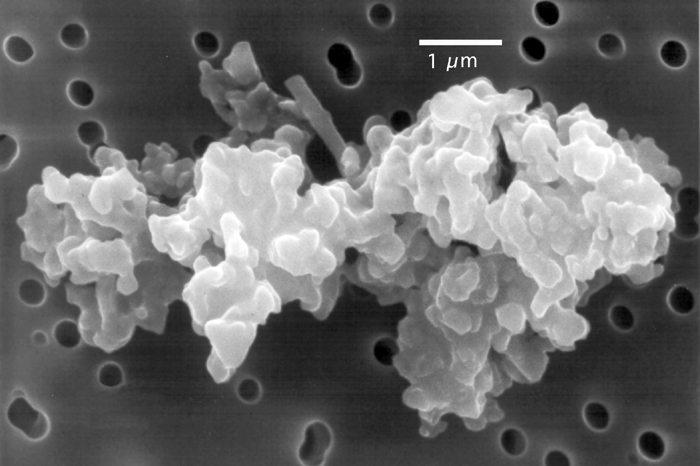
This is a scanning electron microscope image of an interplanetary dust particle that has roughly chondritic elemental composition and is highly rough (chondritic porous: “CP”). CP types are usually aggregates of large numbers of sub-micrometer grains, clustered in a random open order. (Credit: Donald E. Brownlee)
via phys.org
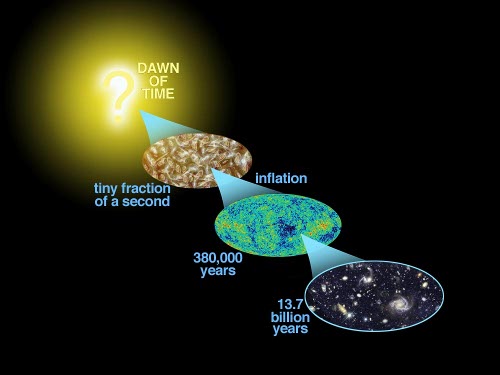
Inflation explains the origin of the large-scale structure of the cosmos. Many physicists believe that inflation explains why the Universe appears to be the same in all directions (isotropic), why the cosmic microwave background radiation is distributed evenly, why the universe is flat, and why no magnetic monopoles have been observed. (Credit: NASA)
via science20
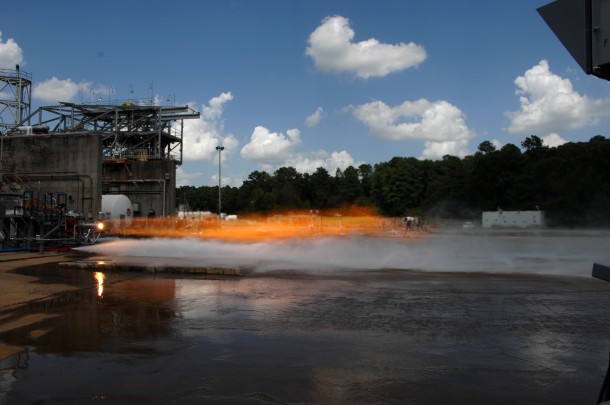
Engineers just completed hot-fire testing with two 3-D printed rocket injectors. Certain features of the rocket components were designed to increase rocket engine performance. The injector mixed liquid oxygen and gaseous hydrogen together, which combusted at temperatures over 6,000 degrees Fahrenheit, producing more than 20,000 pounds of thrust. (Credit: NASA photo/David Olive)
via spacefellowship
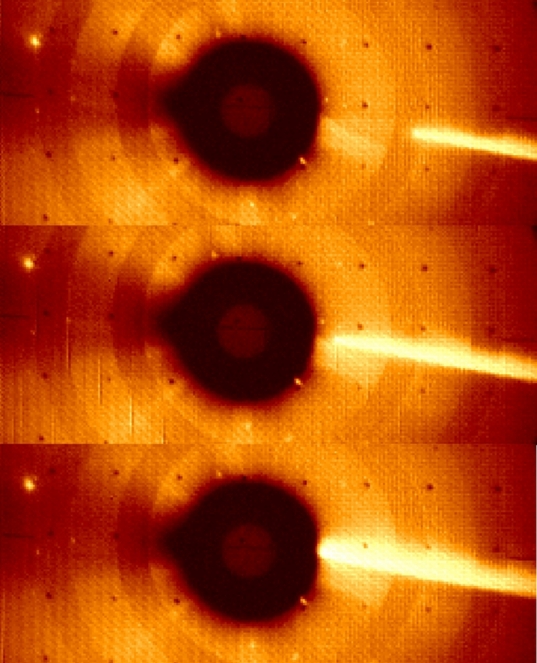
Three consecutive images of comet C/1979 Q1 plunging into the solar atmosphere on August 30, 1979. In these SOLWIND coronagraph images, the Sun is masked behind the solid disk in the center of the image. (Credit: NRL)
via planetary
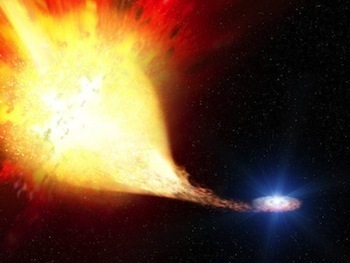
Before the big explosion: The artist’s impression shows a binary star system where mass is transferred from a companion to a white dwarf. As soon as sufficient matter has collected on the surface of the dwarf star, this can trigger a nuclear explosion which in turn ignites the catastrophic nuclear burning and destroys the white dwarf – a type Ia supernova flares up. (Credit: ESA, Justyn R. Maund)
via newscientist
Director of distilling, Bill Lumsden. Ardbeg Scottish whisky was sent into space three years ago in an experiment looking at the impact of gravity on how it matures. It will return to Earth September 12th. (Credit: Paul Dodds/Ardbeg/PA)
via theguardian
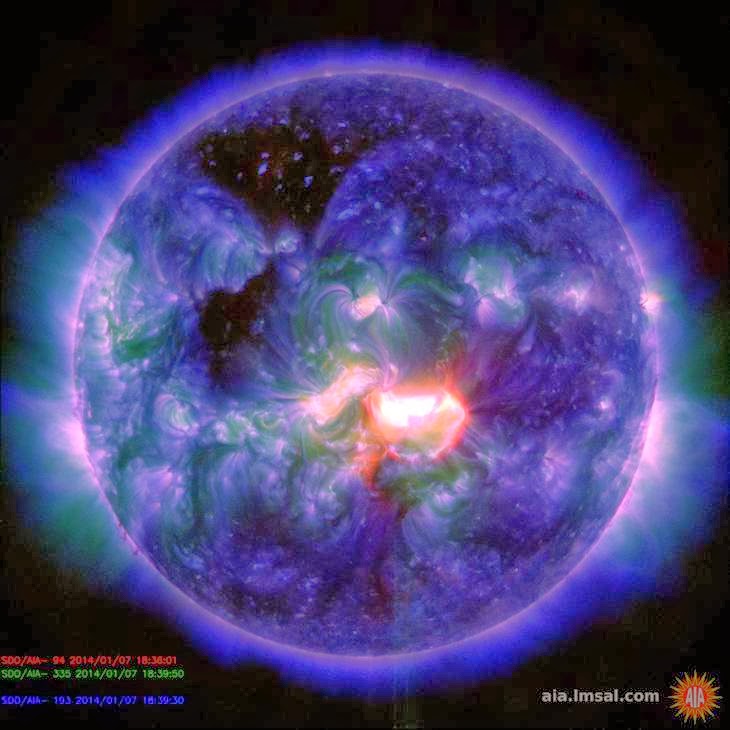
NASA has warned that a new sunspot spewing powerful X-class flares is beginning to rotate to a position directly in line with Earth. (Credit: NASA)
via austriantribune
In the past decade an extraordinary claim has captivated cosmologists: that the expanding universe we see around us is not the only one; that billions of other universes are out there, too. (Credit: Slim Films, Ellis)
via scientificamerican
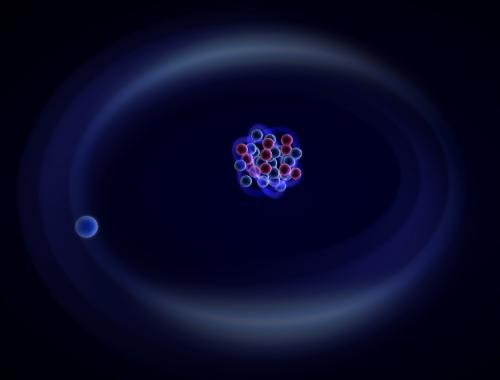
Neutron-rich magnesium nuclei have a neutron halo that extends beyond the tightly packed core of the nucleus. (Credit: K. Yoneda, RIKEN Nishina Center for Accelerator-Based Science)
via phys.org
On August 30th, 1984, the space shuttle Discovery launched on its first voyage to space. It wasn’t the first, but over the next 27 years it became the undeniable king of NASA’s shuttle program. (Credit: NASA)
via gizmodo
“This is a long-standing, really neat experimental idea,” says Paul Lett, of the National Institute of Standards and Technology in GaithersburgLett, “Now we have to see whether or not it will lead to something practical, or will remain just a clever demonstration of quantum mechanics.”(CreditBarreto-Lemos, Vergano)
via nationalgeographic
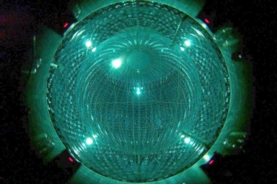
The Borexino neutrino detector uses a sphere filled with liquid scintillator that emits light when excited. This inner vessel is surrounded by layers of shielding and by about 2,000 photomultiplier tubes to detect the light flashes.(Credit: Borexino Collaboration)
via scientificamerican
MOLECULAR MODEL In the molecular model, quark-antiquark pairs form two color-neutral mesons that become weakly linked as a molecule.DIQUARK MODEL The particles form quark-quark and antiquark-antiquark pairs, which are forced to combine to balance their color charges.
via simonsfoundation
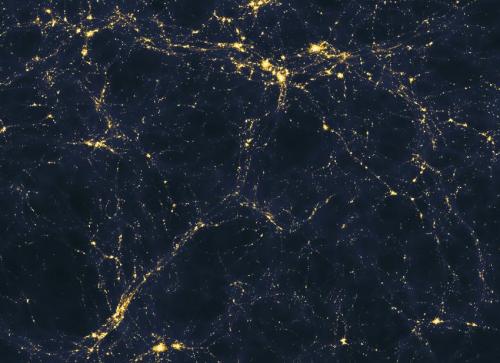
A computer model shows one scenario for how light is spread through the early universe on vast scales (more than 50 million light years across). Astronomers will soon know whether or not these kinds of computer models give an accurate portrayal of light in the real cosmos. (Credit: Andrew Pontzen/Fabio Governato)
via phys
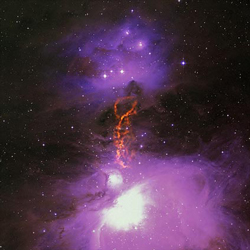
Radio/optical composite of the Orion Molecular Cloud Complex showing the OMC-2/3 star-forming filament. GBT data is shown in orange. Uncommonly large dust grains there may kick-start planet formation. (Credit: S. Schnee, et al.; B. Saxton, B. Kent (NRAO/AUI/NSF)
via rdmag
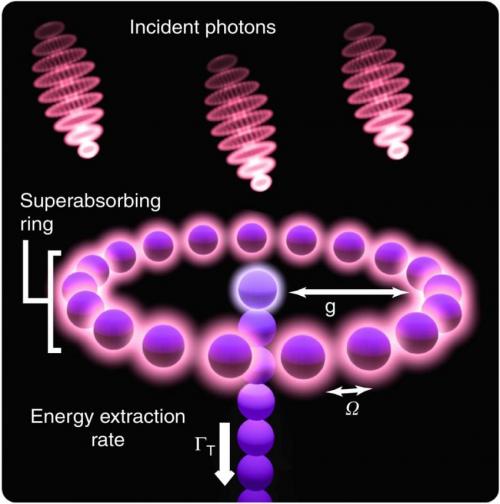
In one potential method to realize superabsorption, a superabsorbing ring absorbs incident photons, giving rise to excitons. (Credit: Higgins, et al.)
via phys.org
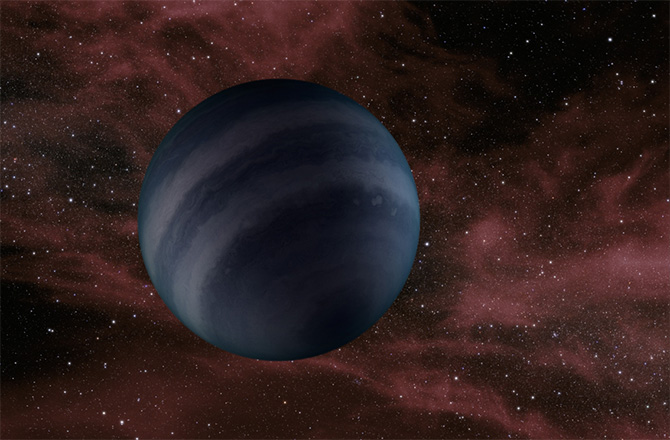
Finding clouds of water floating in the atmosphere of an alien world is a significant find. Now, astronomers have reported preliminary findings that water clouds have been detected in the atmosphere of a brown dwarf, a mere 7.3 light-years from Earth. (Credit: NASA, JPL-Caltech, O’neil)
via discovery
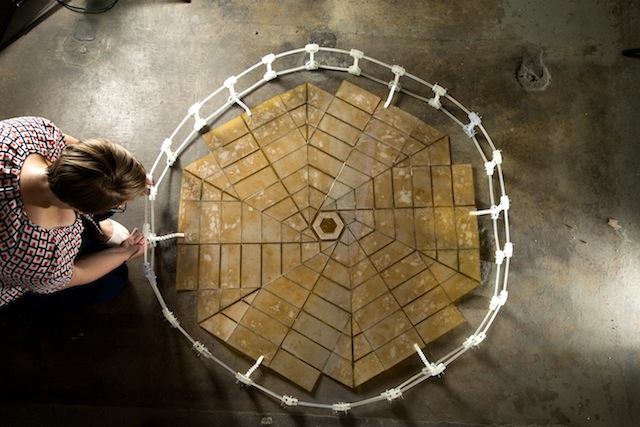
NASA mechanical engineer, Brian Trease, worked with Brigham Young University doctoral student Shannon Zirbel, and collaborated with origami expert Robert Lang, who has long been active in promoting it in science, and BYU professor Larry Howel, to combine different traditional folds for an 82-foot solar array that whirls down to 8.9 feet. (Credit: BYU, Meier)
via hyperallergic
“If we find a noise we can’t get rid of, we might be detecting something fundamental about nature – a noise that is intrinsic to space-time,” said Physicist Aaron Choi, the holometer project’s lead scientist. (Credit: NASA, ESA)
via interactions
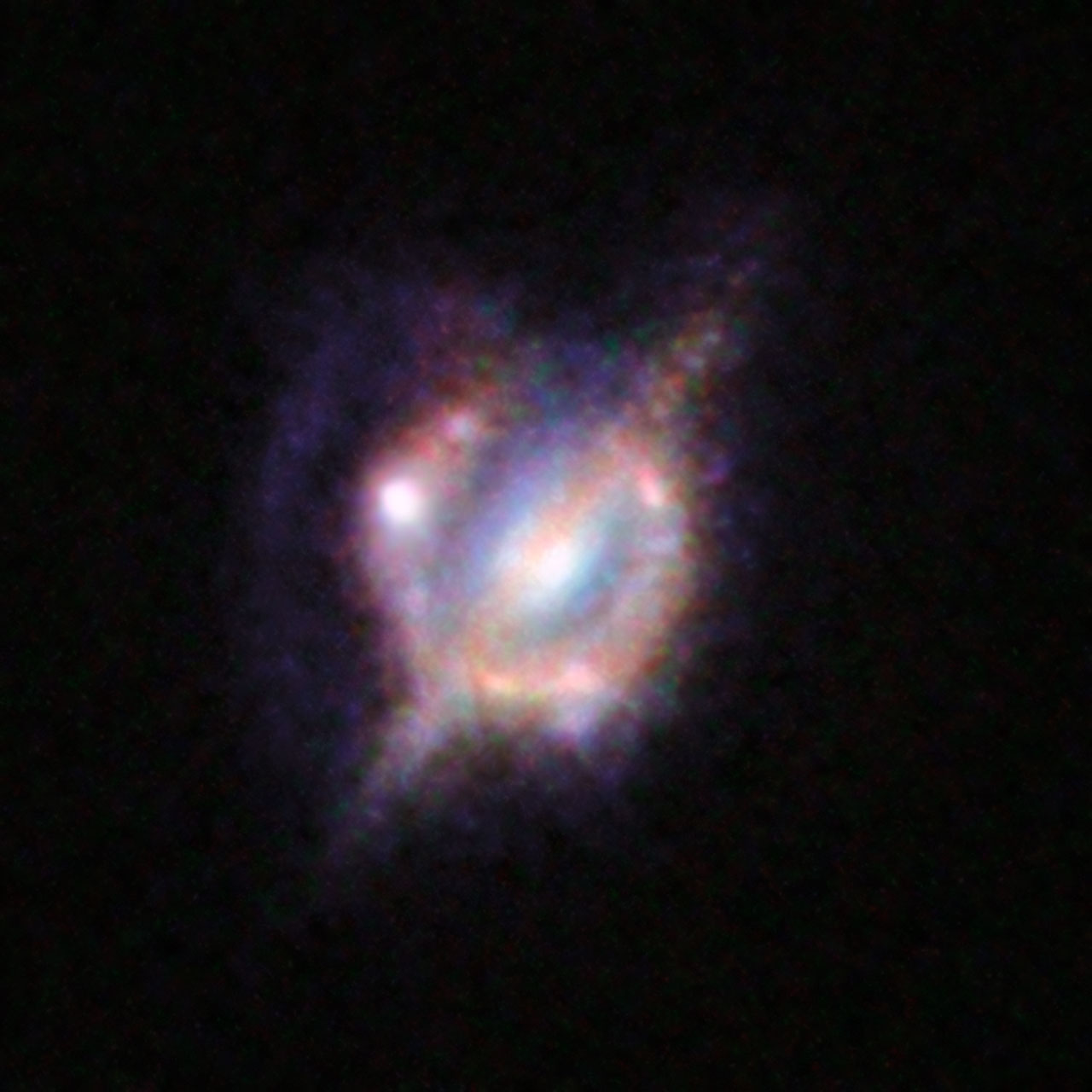
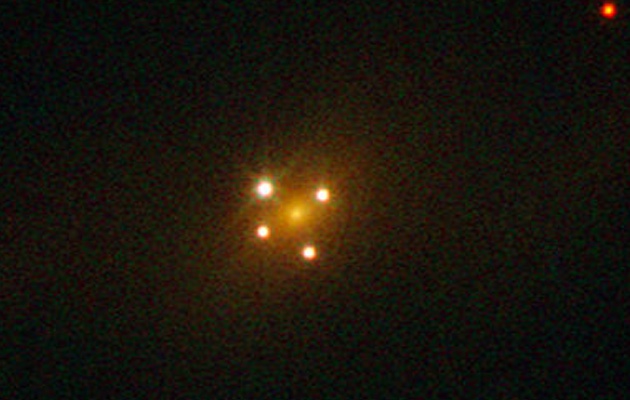
In this picture, which combines views from Hubble and the Keck-II telescope on Hawaii (using adaptive optics), you can see a foreground galaxy that is acting as the gravitational lens. The galaxy resembles how our home galaxy, the Milky Way, would appear if seen edge-on. But around this galaxy there is an almost complete ring — the smeared out image of a star-forming galaxy merger far beyond. (Credit: NASA, ESA)
via spacetelescope
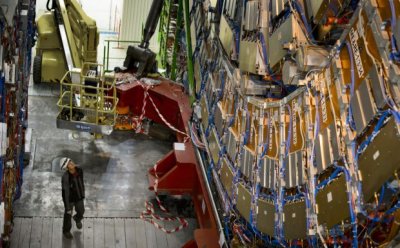
With a circumference of 52km, the “Higgs Factory” would be almost twice the size of Europe’s equivalent, and significantly more powerful. The Chinese said it is due to be completed by 2028. Image above is the Large Hadron Collider. (Credit: Getty)
via cityam
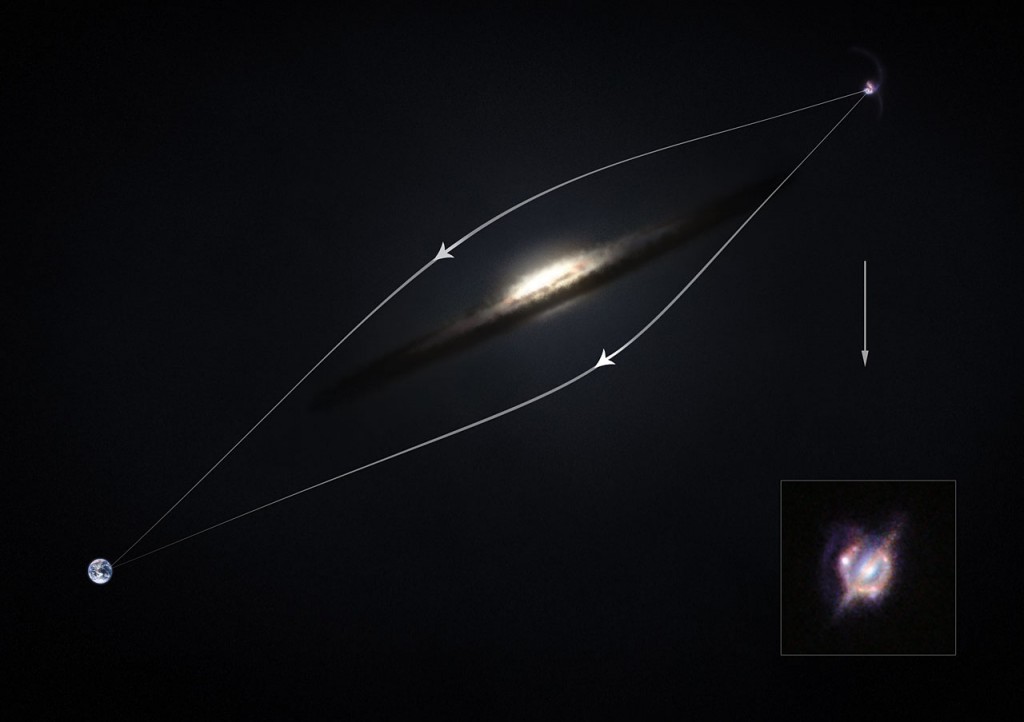
This diagram shows how the effect of gravitational lensing around a normal galaxy focuses the light coming from a very distant star-forming galaxy merger to created a distorted, but brighter view. (Credit: ESA/ESO/M. Kornmesser)
via washingtonpost
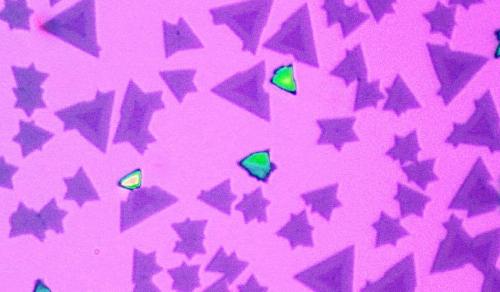
As seen under an optical microscope, the heterostructures have a triangular shape. The two different monolayer semiconductors can be recognized through their different colors. (Credit: U of Washington)
via phys.org
“It’s the most distant object for which the spin has been directly measured. The universe is about 13.7 billion years old, so this is going significantly back towards when the epoch of furious galaxy formation was happening,” says, Astrophysicist, Mark Reynolds.
via motherboard