Physics in the News

Tuesday, July 22, 2014

Researchers reveal why giant black hole’s ‘galactic fireworks’ were a flop(VIDEO)

via nature

Physicist George Ellis knocks physicists for knocking philosophy, falsification, and free will
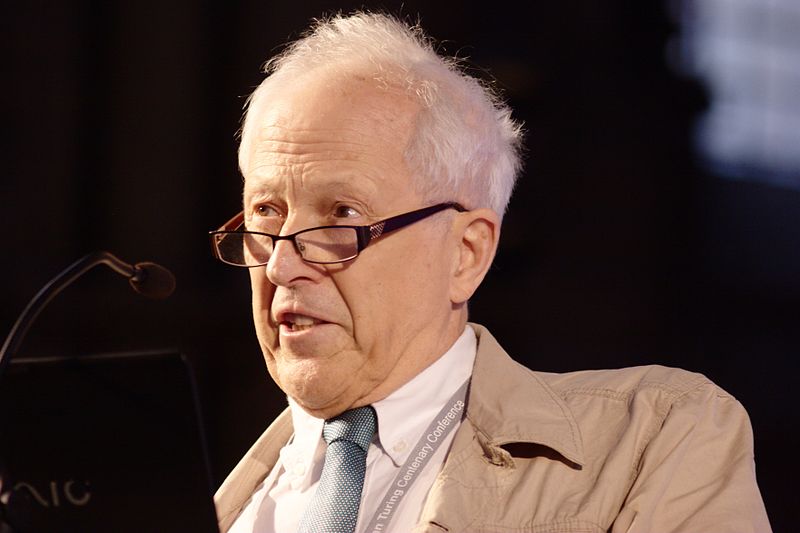
"You cannot do physics or cosmology without an assumed philosophical basis," says George Ellis. (Credit: David Monniaux)
“You cannot do physics or cosmology without an assumed philosophical basis,” says George Ellis. (Credit: David Monniaux)

via scientificamerican

Boosting the force of empty space

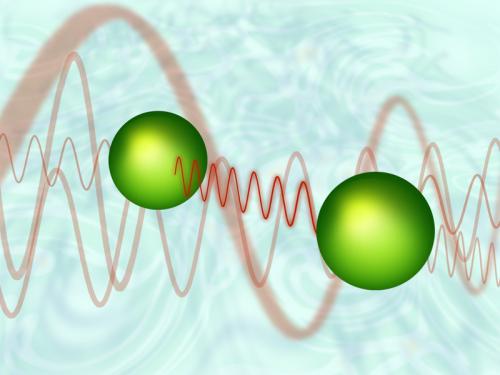
Two atoms exchanging a virtual photon. Empty space around them is not as empty as one might think. (Credit: Vienna University of Technology, TU Vienna)
via phys.org

Beyond energy, matter, time and space
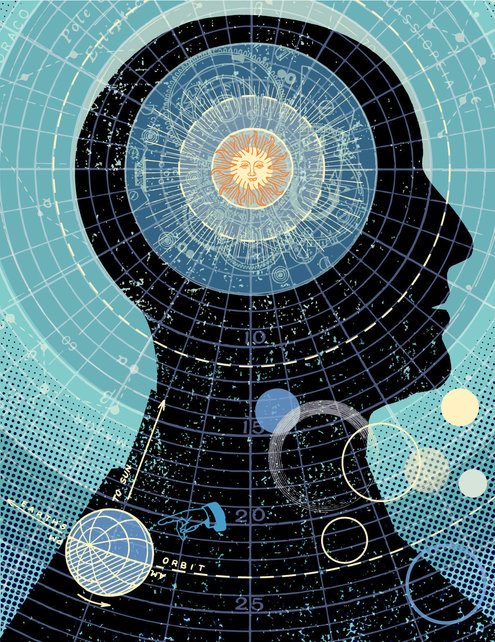
New particles may yet be discovered, and even new laws. But it is almost taken for granted that everything from physics to biology, including the mind, ultimately comes down to four fundamental concepts: matter and energy interacting in an arena of space and time. (Credit: Carl Wiens)
via nytimes

‘Quantum Bounce’ theory claims black holes explode
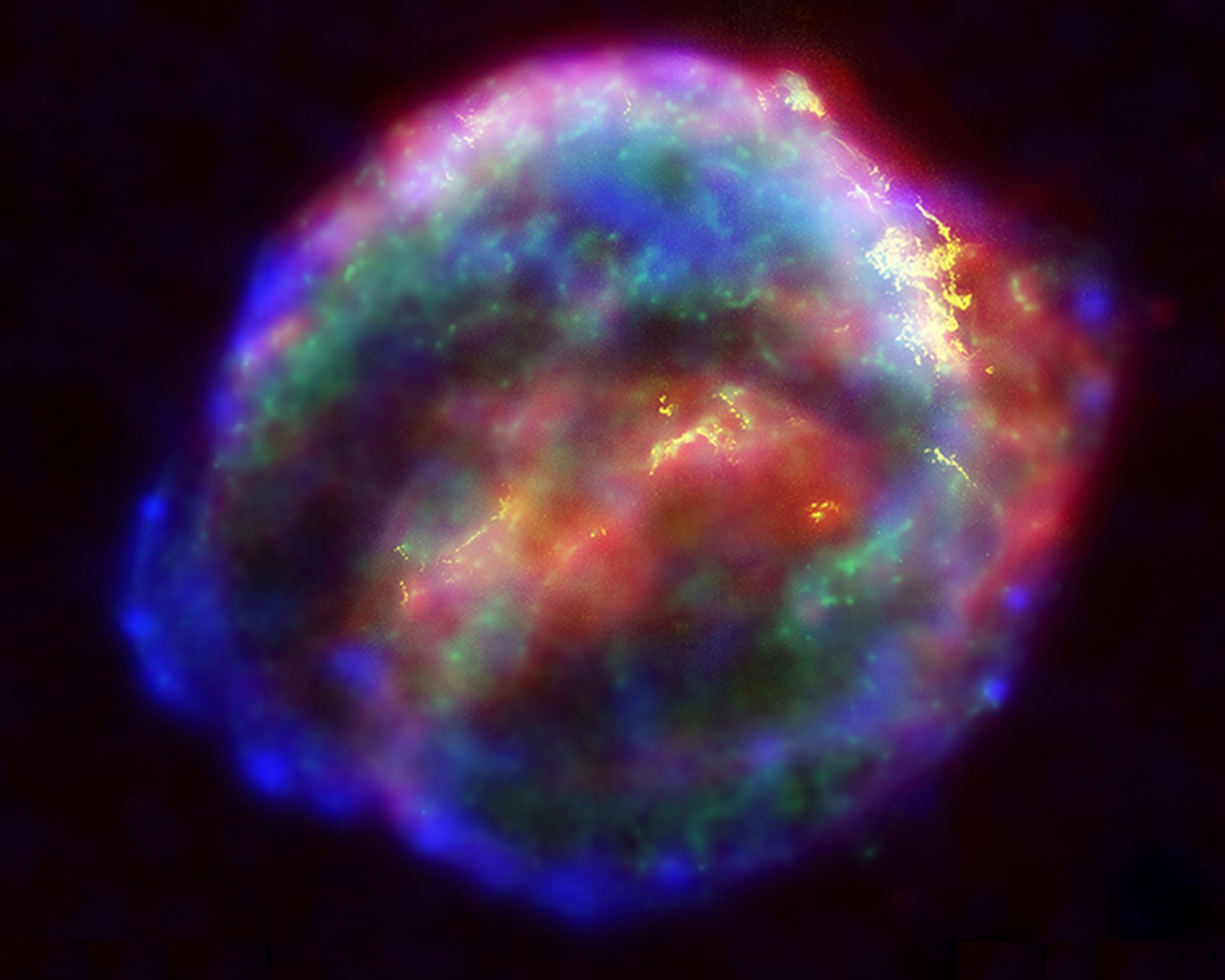
Kepler's Supernova Remnant "On October 9, 1604, sky watchers -- including astronomer Johannes Kepler, spotted a "new star" in the western sky, rivaling the brilliance of nearby planets. "Kepler's supernova" was the last exploding supernova seen in our Milky Way galaxy. (Credit: NASA/ESA/JHU/R.Sankrit & W.Blair)
Kepler’s Supernova Remnant “On October 9, 1604, sky watchers — including astronomer Johannes Kepler, spotted a “new star” in the western sky, rivaling the brilliance of nearby planets. “Kepler’s supernova” was the last exploding supernova seen in our Milky Way galaxy. (Credit: NASA/ESA/JHU/R.Sankrit & W.Blair)
via nature

We only use 10% of our brains? That’s a myth
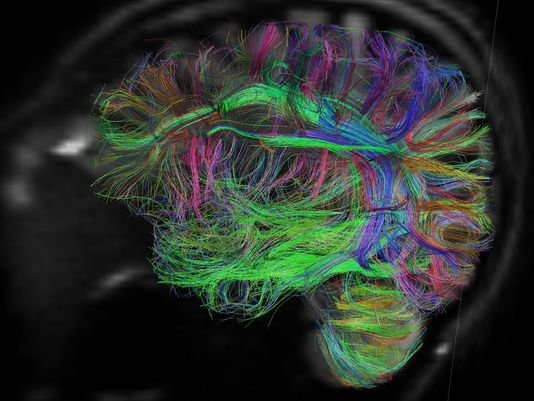
A Diffusion Spectrum MRI (DSI) of the human brain obtained with the MGH-UCLA Human ?Connectom? Scanner. The fiber tracks are color-coded by direction: red=left-right, green  =anterior-posterior, blue=through brain stem. (Credit: National Institutes of Biomedical Imaging and Bioengineering and National Institutes of Health)
A Diffusion Spectrum MRI (DSI) of the human brain obtained with the MGH-UCLA Human ‘Connectom’ Scanner. The fiber tracks are color-coded by direction:  red=left-right, green=anterior-posterior, blue=through brain stem. (Credit: National Institutes of Biomedical Imaging and Bioengineering and National Institutes of Health)
via theatlantic

Physics in the News

Monday, July 21, 2014

Astronauts testing free-flying “housekeeper” robots

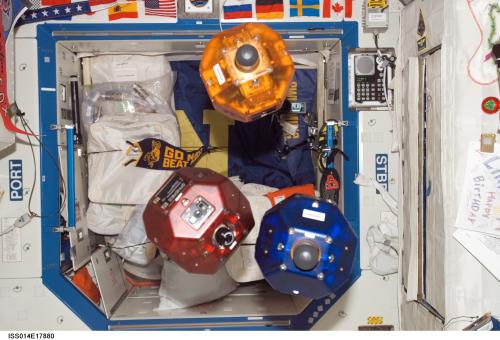
Three satellites fly in formation as part of the Synchronized Position Hold, Engage, Reorient, Experimental Satellites (SPHERES) investigation. This image was taken during Expedition 14 in the Destiny laboratory module. (Credit: NASA)
via phys.org

Rare photos reveal fascinating views of the Apollo 11 moon landing

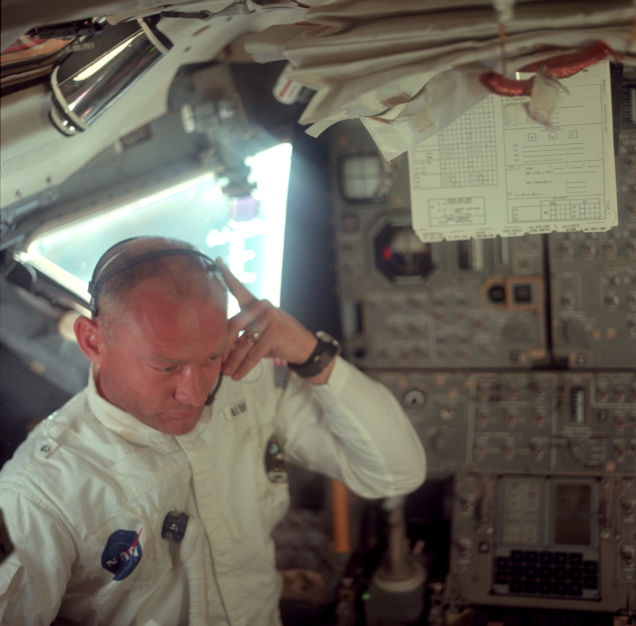
Buzz Aldrin listening to mission control transmission during translunar coast NASA/Project Apollo Archive
Buzz Aldrin listening to mission control transmission during translunar coast. (Credit: NASA/Project Apollo Archive)
via gizmodo

New noble gas cage for extracting radioactive elements from air and water

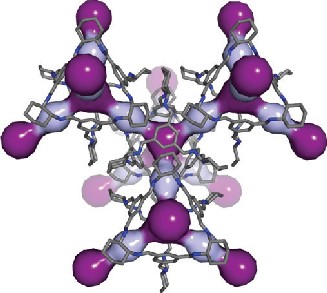
In this computer simulation, light and dark purple highlight the cavities within the 3D pore structure of CC3. (Credit: Nature Materials 2014)
via news.liv

Physicists succeed in revealing the scaling behaviour of exotic giant molecules

According to Efimov's prediction, bound states of three atoms can be universally described under certain conditions. The scientist found that infinitely many quantum mechanical bound states for the "ménage à trois" exist, even if two of the atoms cannot bind together. (Credit:  Heidelberg Uni.)
According to Efimov’s prediction, bound states of three atoms can be universally described under certain conditions. The scientist found that infinitely many quantum mechanical bound states for the “ménage à trois” exist, even if two of the atoms cannot bind together. (Credit: Heidelberg Uni.)
via phys.org

Vast rock arches sculpt themselves out of sand

Delicate Arch and many other gigantic arches in the US are made of the stuff. It is a "locked sand", whose angular grains can catch on each other.(Credit: Brad Goldpaint/Aurora Open/Corbis)
Delicate Arch and many other gigantic arches in the US are made of the stuff. It is a “locked sand”, whose angular grains can catch on each other.(Credit: Brad Goldpaint/Aurora Open/Corbis)
via newscientist

Researchers watched electrons jumping between fragments of exploding molecules

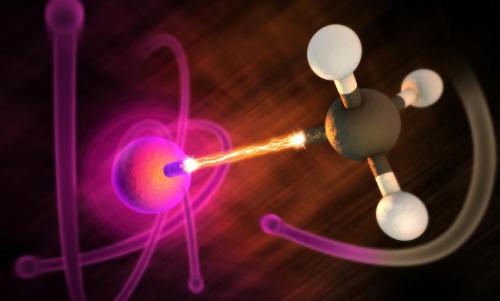
An artistic view of the electron transfer inside an iodomethane molecule. After the interaction with an ultrafast X-ray laser, the electrons from the methyl group, on the right, jump to the iodine atom, on the left. (Credit: SLAC National Accelerator Laboratory)
An artistic view of the electron transfer inside an iodomethane molecule. After the interaction with an ultra fast X-ray laser, the electrons from the methyl group, on the right, jump to the iodine atom, on the left. (Credit: SLAC National Accelerator Laboratory)
via azoquantum

Physics in the News

Sunday, July 20, 2014

Diversity in the Robot Reporter Newsroom

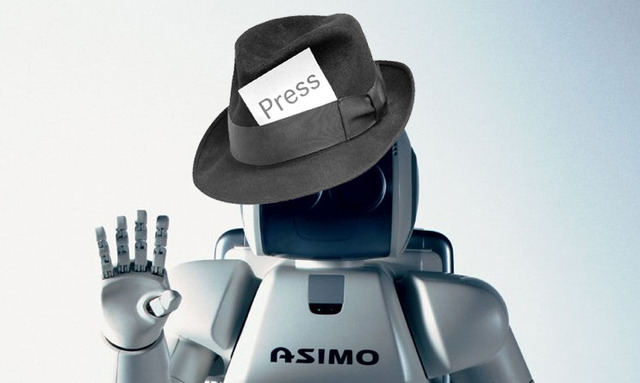
(Credit: The Verge)
The Associated Press recently announced a big new hire: A robot reporter from Automated Insights (AI) would be employed to write up to 4,400 earnings report stories per quarter. (Credit: The Verge)
via towcenter

Bee-Inspired bots skitter and swarm at NYC’s Museum of Mathematics

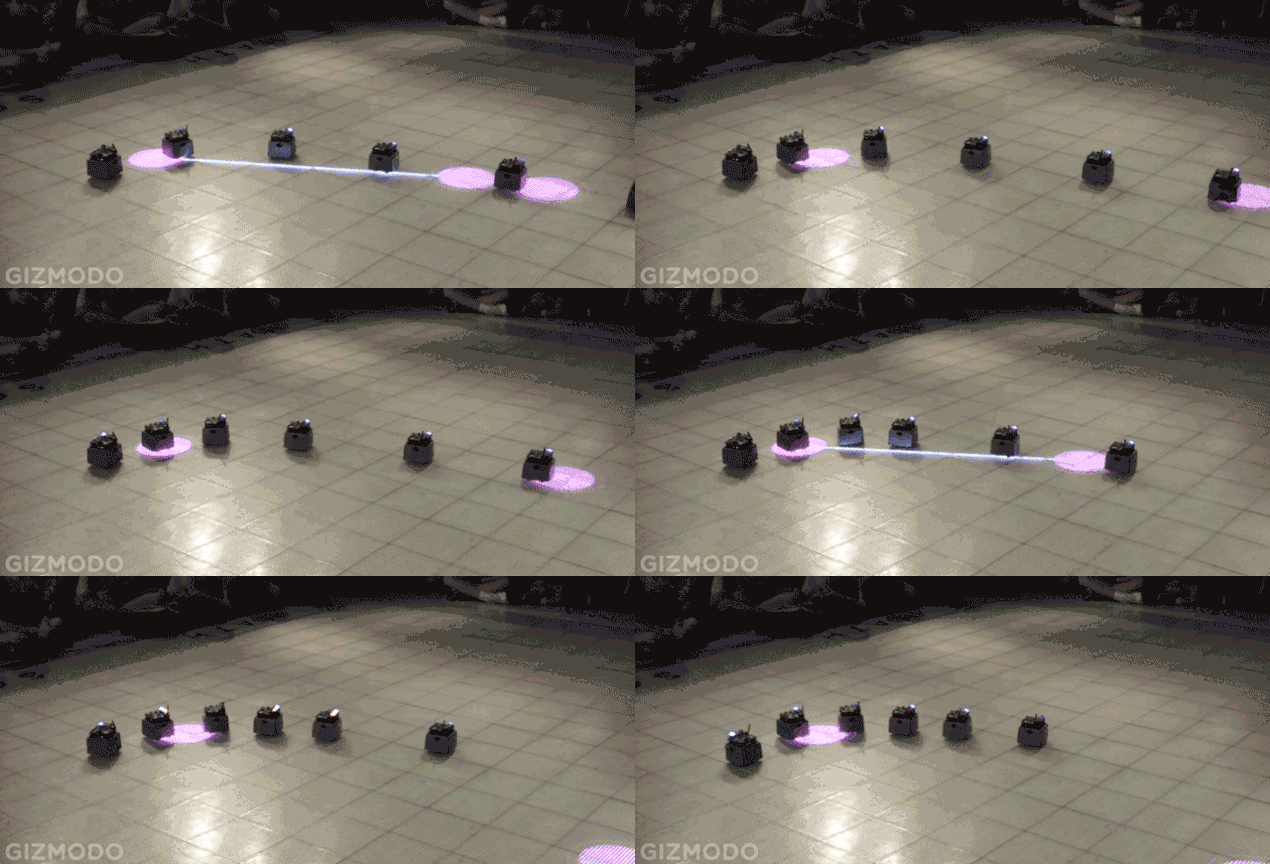
Credit: Rsorokanich
Credit: Rsorokanich
via gizmodo

Fear a terrifying killer robot revolution?

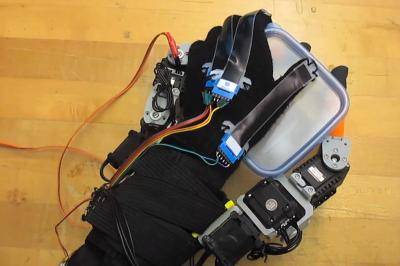
MIT's robot fingers get a grip. (Credit: Melanie Gonick/MIT)
MIT’s robot fingers get a grip. (Credit: Melanie Gonick/MIT)
via theregister

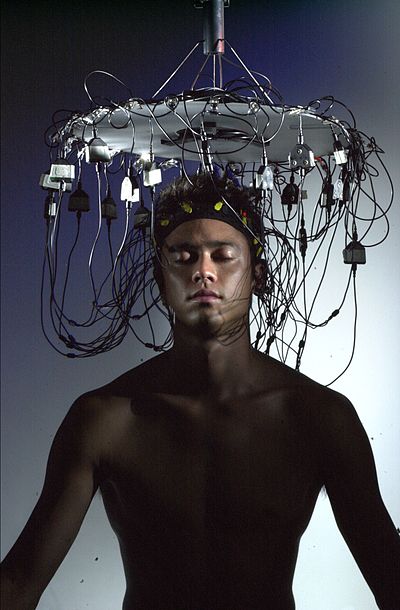
Can Our Minds Control Electronic Devices?

Brainwave electrodes for regenerative musical performance (Credit: BY-SA 3.0)
via theepochtimes

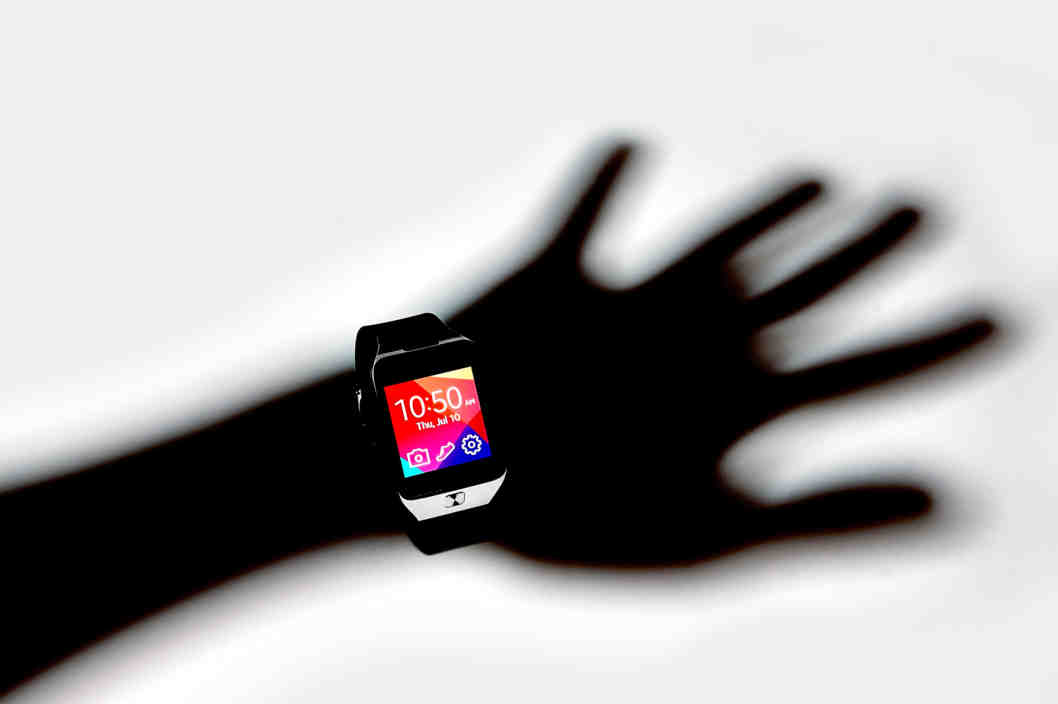
Does anyone outside Silicon Valley even want a smart watch?

In the past week, I’ve been called “Inspector Gadget” twice, had a near-calamitous accident involving spray-on sunblock, and felt my arm vibrate so often I started treating it as a phantom limb. (Credit: Photo: Bobby Doherty/New York Magazine)
via nymag

NASA Rover’s images show laser spark martian rock(VIDEO)

via sciencedaily

US Department of Energy funds new 5-year search for ‘dark light’

 US Department of Energy is funding Dr. Peter W. Graham research effort to the tune of $750,000.
US Department of Energy is funding Dr. Peter W. Graham research effort to the tune of $750,000.
via geek.com

Physics in the News

Friday, July 18, 2014

Is the universe a bubble? Let’s check(VIDEO)

via perimeterinstitute

Meet the electric life forms that live on pure energy(VIDEO)

via newscientist

Scientists crush diamond with pressure from world’s biggest laser(VIDEO)

via upi

Asteroid Vesta Has a Colorful History(VIDEO)

via nationalgeographic

NASA space station commander discusses life and work floatig in space(VIDEO)

via spaceref

Physics in the News

Tuesday, July 15, 2014

New qubit design provides parity bit for Schrödinger cat states

The device combines a superconducting microwave resonator to trap the photons and a circuit quantum electrodynamic qubit that's linked to the resonator.(Credit: Schoelkopf Lab, Yale)
The device combines a superconducting microwave resonator to trap the photons and a circuit quantum electrodynamic qubit that’s linked to the resonator.(Credit: Schoelkopf Lab, Yale)
via arstechnica

The world’s first photonic router

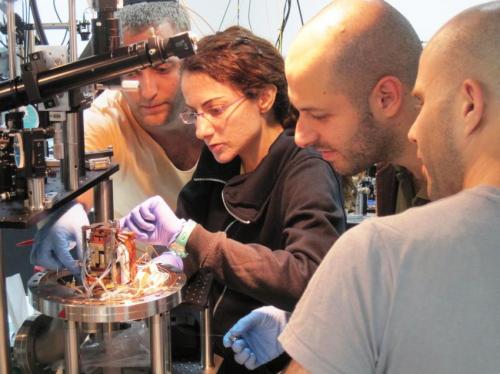
 This image depicts from left to right Serge Rosenblum, Yulia Lovsky, Orel Bechler and Itay Shomroni.  At the center of the photonic router is a single atom that routes photons  in different directions. (Credit: Weizmann Institute of Science)
This image depicts from left to right Serge Rosenblum, Yulia Lovsky, Orel Bechler and Itay Shomroni. At the center of the photonic router is a single atom that routes photons in different directions. (Credit: Weizmann Institute of Science)
via phys.org

Two anomalies worth noticing

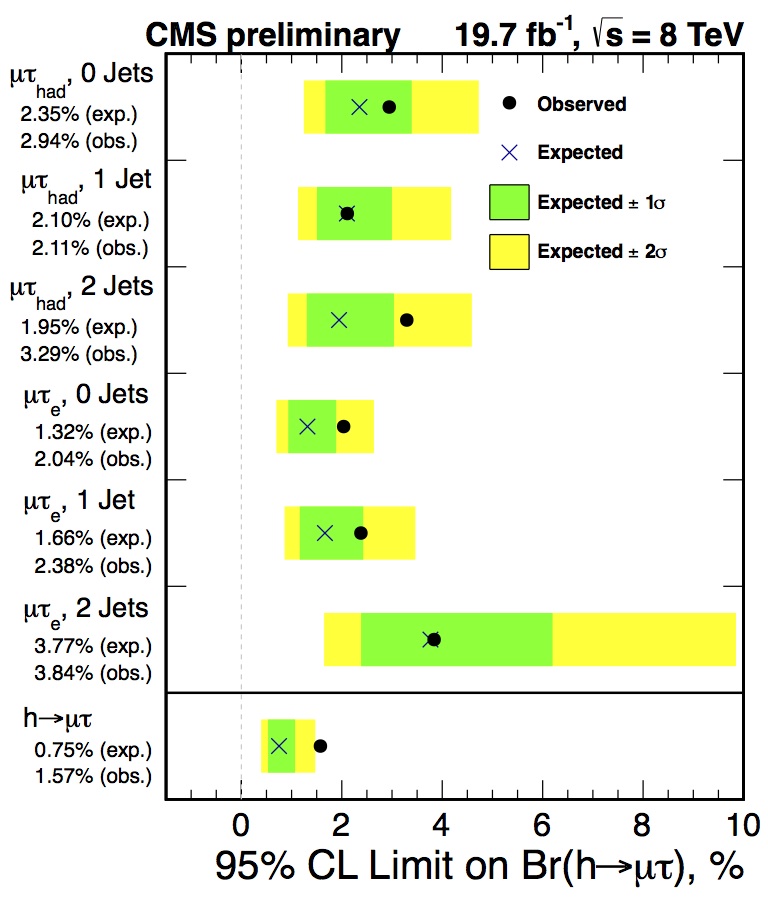
The results obtained by the CMS Collaboration showing that six different channels all give a non-zero value for the decay rate of Higgs boson into pairs of tau and muon. (Credit: Pauline Gagnon)
The results obtained by the CMS Collaboration showing that six different channels all give a non-zero value for the decay rate of Higgs boson into pairs of tau and muon.
(Credit: Pauline Gagnon)
via quantumdiaries

Ukraine to turn Chernobyl into ‘biosphere radiologic reserve’

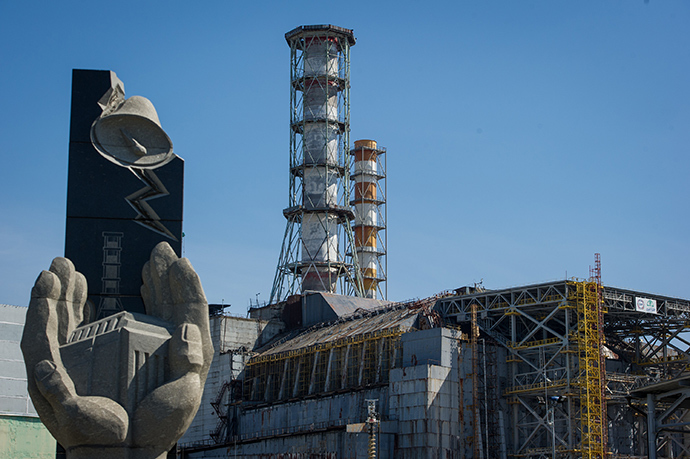
The damaged 4th unit of the Chernobyl Nuclear Power Plant and a memorial sign “Heroes, Professionals – those who protected the world from nuclear disaster” in the Chernobyl Exclusion Zone (Credit: RIA Novosti)
via rt.com

Smallest Swiss cross—made of 20 single atoms

20 bromine atoms positioned on a sodium chloride surface using the tip of an atomic force microscope at room temperature, creating a Swiss cross with the size of 5.6nm. The structure is stable at room temperature and was achieved by exchanging chlorine with bromine atoms. (Credit: Department of Physics, University of Basel)
via phys.org

Consider the ‘Anticrystal’

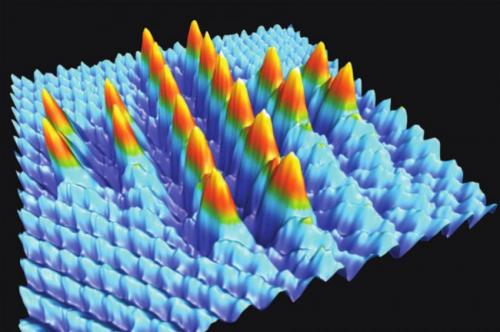
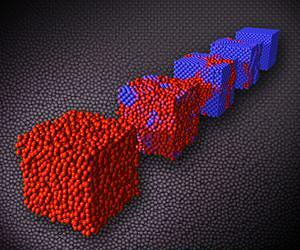
Materials can be described as being on a spectrum from a perfectly ordered crystal to a perfectly disordered anticrystal. (Credit: Liu, Goodrich, Nagel)
via spacemart

A Critical Test of Quantum Criticality

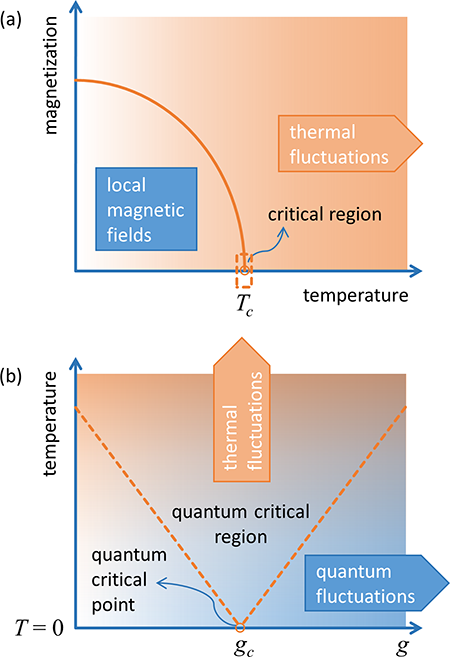
a) An example of the classical phase transition in a ferromagnet. Thermal fluctuations causing the random reorientation of the constituent spins grow with temperature. They compete with the tendency of the local magnetic fields to align the spins. As a result, the net magnetization in the ordered state continuously decreases with temperature (orange line) and drops to zero at a critical temperature Tc, surrounded by a narrow critical region (dashed rectangle). (b) A generic example of the quantum phase transition. Quantum fluctuations controlled by the nonthermal parameter g lead to a similar phase transition at a critical value gc, the so called quantum critical point, already at zero temperature, T=0. Their interplay with thermal fluctuations opens up a progressively broader, V-shaped quantum critical region extending much above the zero temperature (dashed lines).
via physics.aps

Online Isaac Newton manuscripts workshop

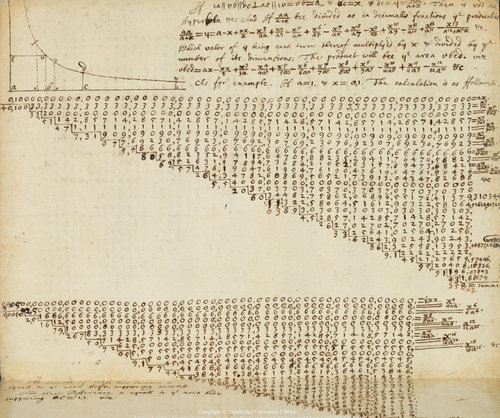
India's Zetatrek citizen science initiative is online workshop starting on 19th July, where science and math hobbyists from all over the world are invited to study the original manuscripts of Sir Isaac Newton.
India’s Zetatrek citizen science initiative is online workshop starting on 19th July, where science and math hobbyists from all over the world are invited to study the original manuscripts of Sir Isaac Newton.
via boingboing