Physics in the News

Wednesday, August 20, 2014

Life in space? Sea plankton discovered attached to ISS outer hull

Creature from the deep: Bioluminescence plankton at Penmon. (Credit: Kris Williams )
via rt

Scientists discover potential signs of life on Mars

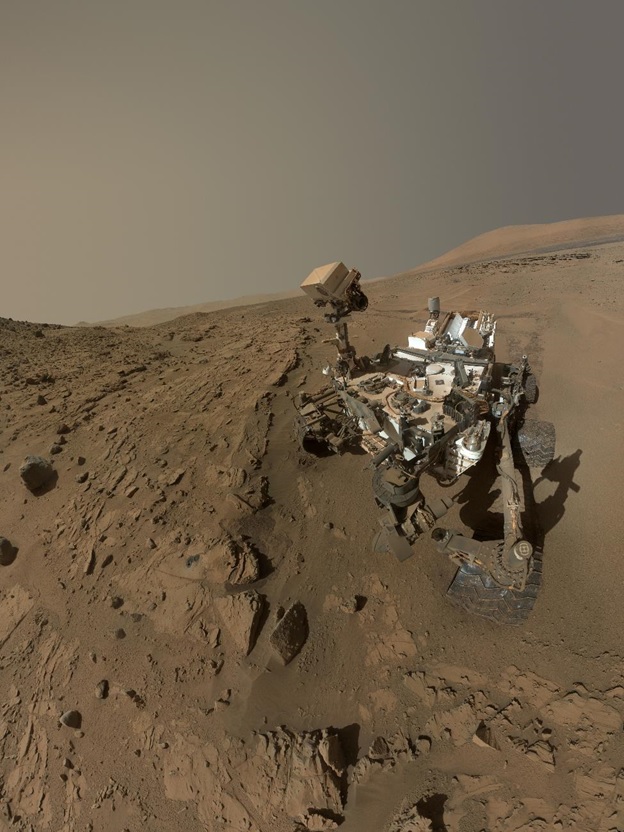
NASA’s Mars Curiosity Rover captures a selfie to mark a full Martian year — 687 Earth days — spent exploring the Red Planet. (NASA/JPL-Caltech/MSSS)
Scientists have discovered mineral-rich structure on Mars that might be the evidence of niche environment on the planet’s subsurface that could support life. (NASA/JPL-Caltech/MSSS)
via aninews

SpaceX denies report it is raising massive funding round, valued at $10B

SpaceX CEO Elon Musk and the new Dragon V2, which will soon carry people to the International Space Station (Credit: SpaceX_
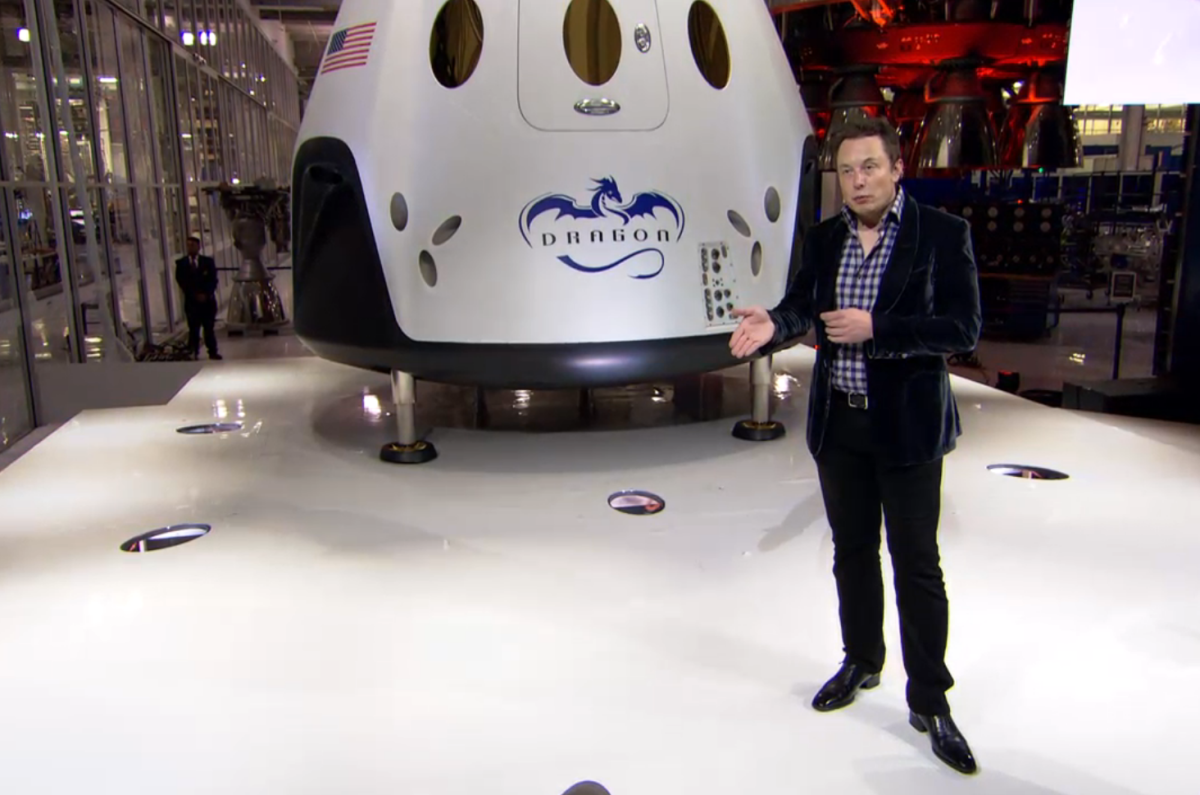
SpaceX CEO Elon Musk and the new Dragon V2, which will soon carry people to the International Space Station (Credit: SpaceX)
via gigaom

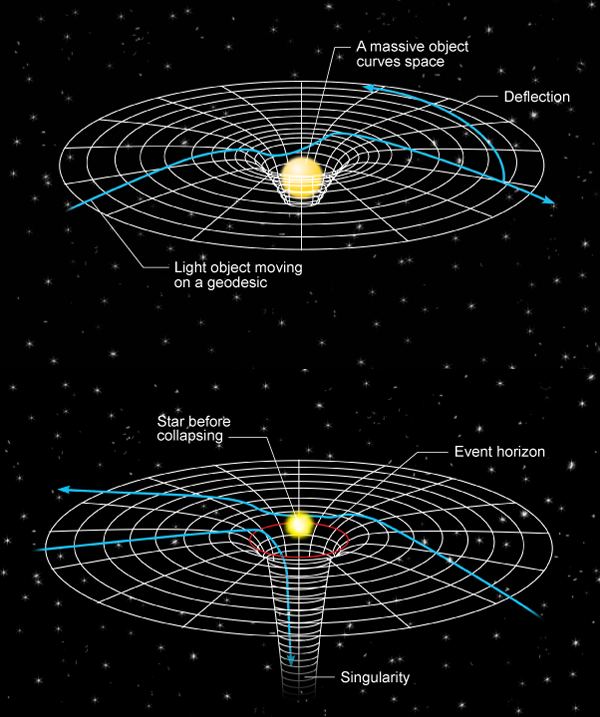
Why didn’t the Universe become a black hole?

In Einstein’s general theory of relativity, gravity is nothing more than the curvature of spacetime. A massive object, such as the sun, causes a deformation of the spacetime grid, while another object such as a planet or a light beam follows the shortest path (a “geodesic”) on this grid. To an observer, this looks like a deflection of the trajectory caused by gravity. (Bottom) A collapsing star can form a black hole so dense and massive that it creates a region of infinite curvature (a “singularity”) so that—inside the event horizon—light cannot escape. Current research in gravitation is attempting to modify general relativity to account for such objects consistent with quantum theory. (Credit: Carin Cain)
via medium

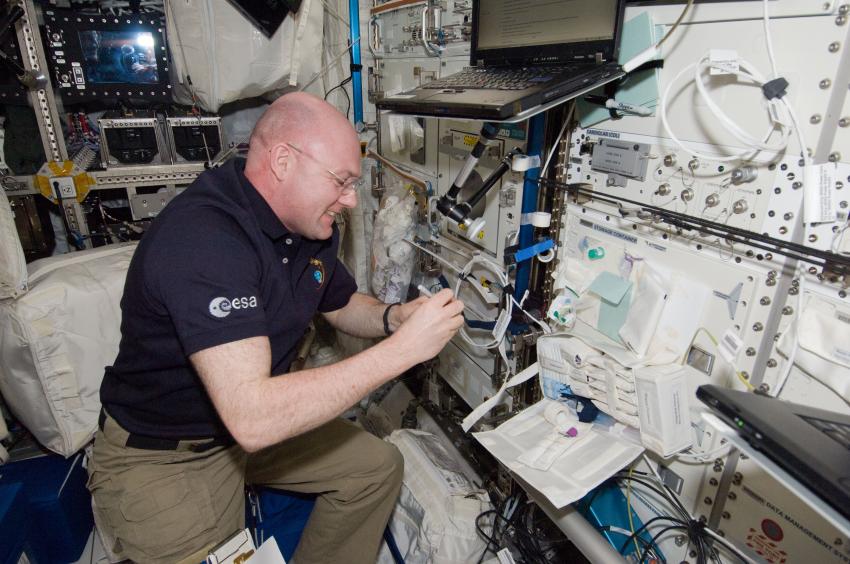
Study reveals immune system is dazed and confused during spaceflight

European Space Agency astronaut Andre Kuipers, Expedition 30 flight engineer, prepares vials in the Columbus laboratory of the International Space Station for venous blood sample draws during an immune system investigation. (Credit: NASA)
via phys.org
Sizing up an Exoplanet(VIDEO)

via NASA

Theoretical physics: The origins of space and time(VIDEO)

via nature

 So what exactly is a ‘killer robot’?

For as long as we’ve been able to make robots, we’ve been worried about them killing us. (Credit:  Ociacia/Shutterstock)
For as long as we’ve been able to make robots, we’ve been worried about them killing us. (Credit: Ociacia/Shutterstock)

Robots to cook and serve food in restaurant in Kunshan, China

 A robot carries food to customers in a restaurant in Kunshan, China. Photo: Johannes Eisele. (Credit: AFP)
A robot carries food to customers in a restaurant in Kunshan, China. Photo: Johannes Eisele. (Credit: AFP)
via news.com

New ‘mapping nearby galaxies at Apache Point observatory’ survey launched

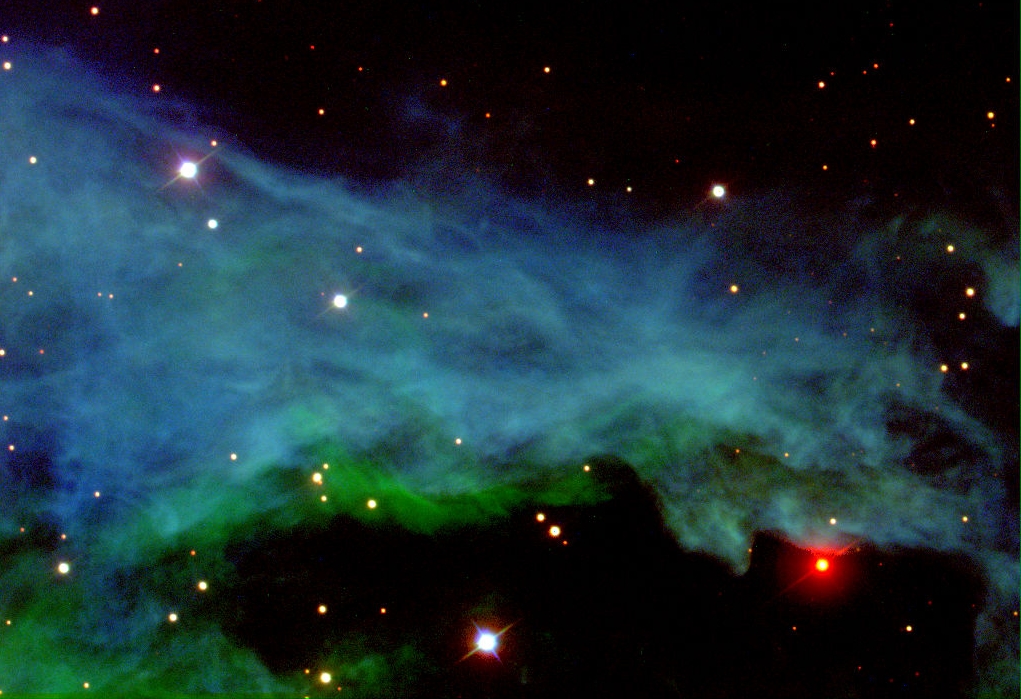
Shown above is part of one of the most imaged parts of the night sky, the Orion Nebula. Since the angular size of Orion's Nebula is so large on the sky, only a portion is shown here. Located just below "Orion's Belt" this star-forming region is dominated by four young, massive O stars (known as the Trapezium, not pictured here). The wispy blue, green gas seen above is composed mostly of hydrogen, the main element used in forming stars. The Orion Nebula is an astrophysical laboratory, providing an up-close view of the birth of stars (Credit: Sloan Digital Sky Survey)
Shown above is part of one of the most imaged parts of the night sky, the Orion Nebula. Since the angular size of Orion’s Nebula is so large on the sky, only a portion is shown here. Located just below “Orion’s Belt” this star-forming region is dominated by four young, massive O stars (known as the Trapezium, not pictured here). The wispy blue, green gas seen above is composed mostly of hydrogen, the main element used in forming stars. The Orion Nebula is an astrophysical laboratory, providing an up-close view of the birth of stars. (Credit: Sloan Digital Sky Survey)

via azoquantum

Alternative propulsion concepts power debate

Greased Lighning (GL10) project 10 engine electric prototype remote control plane. Photo taken 8/14/14 (Credit: NASA Langley/David C. Bowman)
via thespacereview

Indian nuclear team head to US

A file photograph of Adani Power's thermal power plant in the western Indian state of Gujarat.(Credit: Reuters)
A file photograph of Adani Power’s thermal power plant in the western Indian state of Gujarat.(Credit: Reuters)
via breakbulk

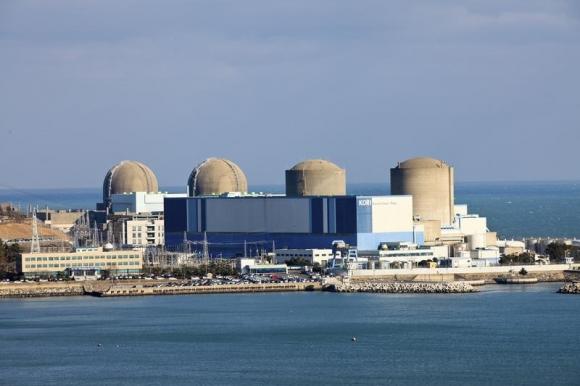
South Korea running out of spent nuclear fuel storage space – advisory body

The Kori nuclear power plant in Busan, southeast of Seoul, is seen in this picture released by the plant to Reuters.  South Korea needs to quickly find additional space where it can store its spent nuclear fuel because some of its temporary storage capacity will be full by 2016, (Credit: Reuters/Kori Nuclear Power Plant/Handout)
via reuters

Physics in the News

Sunday, August 3, 2014

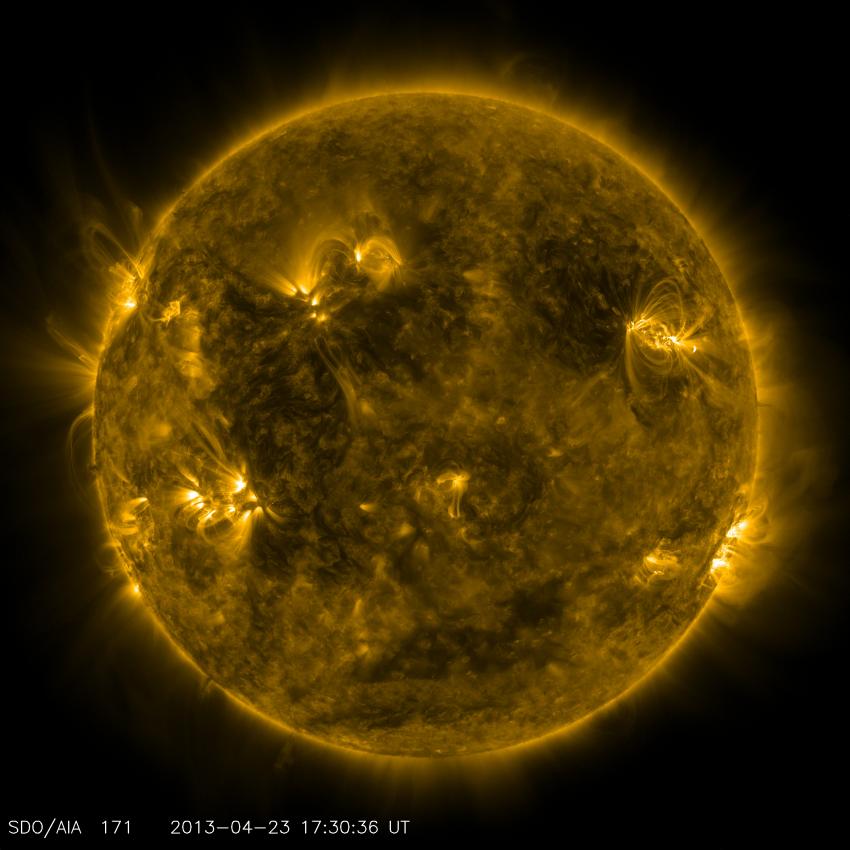
Best evidence yet for coronal heating theory

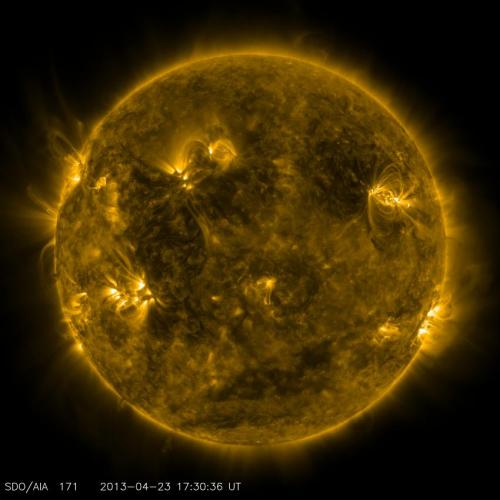
NASA's Solar Dynamics Observatory captured this image of what the sun looked like on April 23, 2013, at 1:30 p.m. EDT when the EUNIS mission launched. EUNIS focused on an active region of the sun, seen as bright loops in the upper right in this picture. (Credit: NASA/SDO)
NASA’s Solar Dynamics Observatory captured this image of what the sun looked like on April 23, 2013, at 1:30 p.m. EDT when the EUNIS mission launched. EUNIS focused on an active region of the sun, seen as bright loops in the upper right in this picture. (Credit: NASA/SDO)
via phys.org
Robot Olympics planned for 2020 powered by Japan’s ‘Robot Revolution’

via singularityhub

Moon closer to Mars, moving toward Saturn

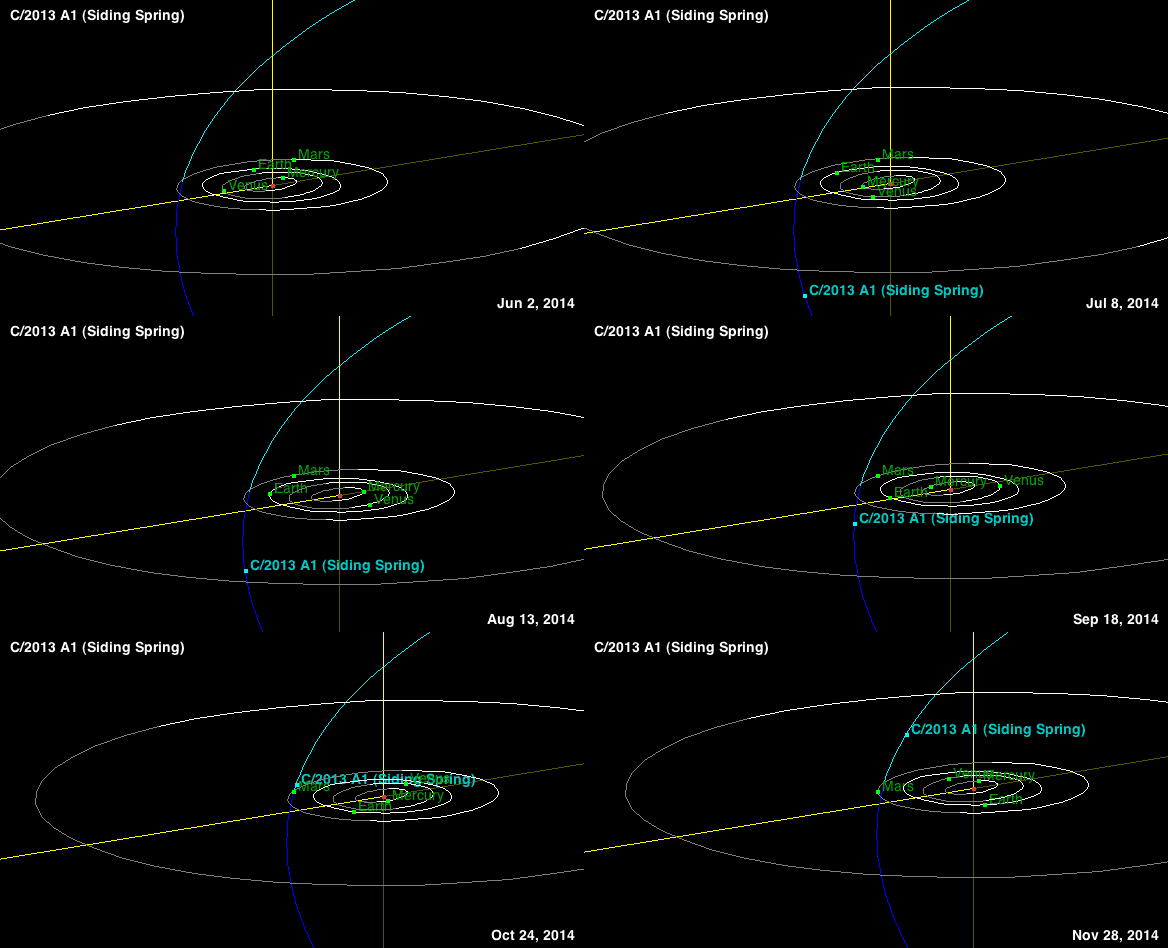
Animation of Comet C/2013 A1 Siding Spring / Mars encounter. (Credit: Near-Earth Object (NEO) office and NASA JPL)
via earthsky

Scientists separate a particle from its properties

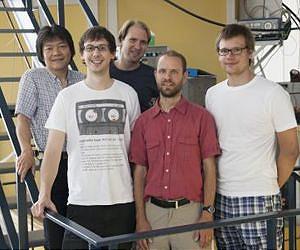
he study, carried out at the Institute Laue-Langevin (ILL) and published in Nature Communications, showed that in an interferometer a neutron's magnetic moment could be measured independently of the neutron itself, thereby marking the first experimental observation of a new quantum paradox known as the 'Cheshire Cat'. Pictured are Yuji Hasegawa, Tobias Denkmayr, Stephan Sponar, Hartmut Lemmel, and Hermann Geppert. (Credit: Vienna University of Technology.)
The study, carried out at the Institute Laue-Langevin (ILL) and published in Nature Communications, showed that in an interferometer a neutron’s magnetic moment could be measured independently of the neutron itself, thereby marking the first experimental observation of a new quantum paradox known as the ‘Cheshire Cat’. Pictured are Yuji Hasegawa, Tobias Denkmayr, Stephan Sponar, Hartmut Lemmel, and Hermann Geppert. (Credit: Vienna University of Technology.)
via spacedaily

Companion planet could keep alien Earths warm in old age

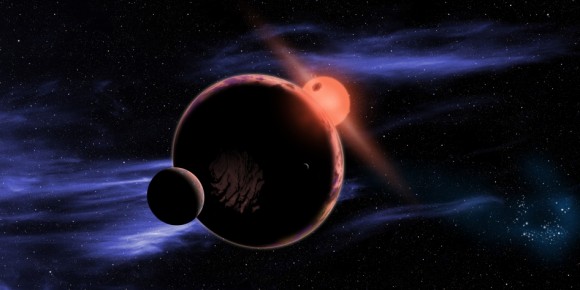
An artist’s concept of a rocky world orbiting a red dwarf star. (Credit: NASA/D. Aguilar/Harvard-Smithsonian center for Astrophysics)
via universetoday

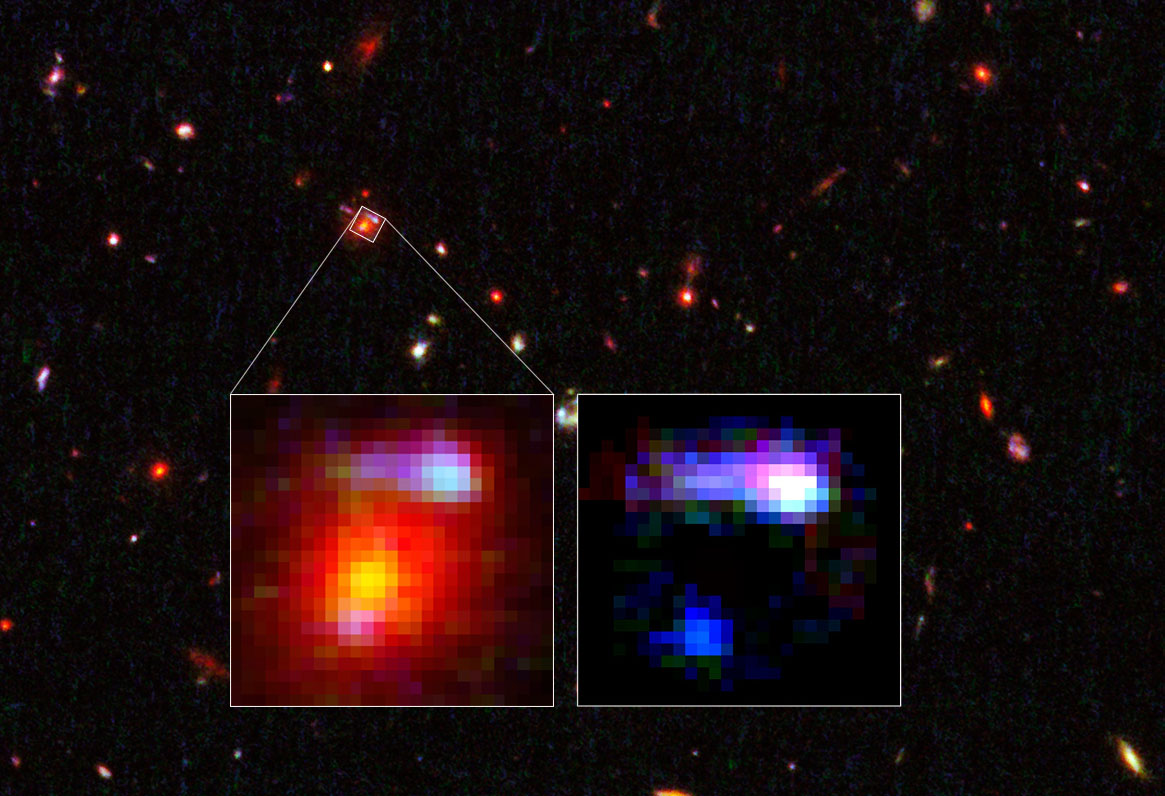
Exclusive: NASA’s Hubble finds ‘magnifying lens’ galaxy

In this image from the Hubble Space Telescope, a giant elliptical galaxy 9.6 billion light-years away appears as a red patch. The bluish dot and tadpole-shaped smear are the distorted and magnified shapes of a more distant spiral galaxy 10.7 billion light-years away. (Credit: NASA, ESA, K.-V. Tran (Texas A&M University), and K. Wong)
In this image from the Hubble Space Telescope, a giant elliptical galaxy 9.6 billion light-years away appears as a red patch. The bluish dot and tadpole-shaped smear are the distorted and magnified shapes of a more distant spiral galaxy 10.7 billion light-years away.
(Credit: NASA, ESA, K.-V. Tran (Texas A&M University), and K. Wong)
via space

Scientists in Scotland have created a working tractor beam

(Credit: iStock/360/Getty)
The Dundee tractor beam is not entirely dissimilar from those in “Star Wars” and “Star Trek,” in that it draws an object toward it without making physical contact. The device works by taking advantage of an acoustic wave’s natural push effect, called radiation pressure. (Photons also exert radiation pressure, which is part of the reason comet tails always point away from the sun.) What the Dundee team was able to demonstrate was an example of negative radiation pressure, otherwise known as pull. (Credit: iStock/360/Getty)
via thenewyorker

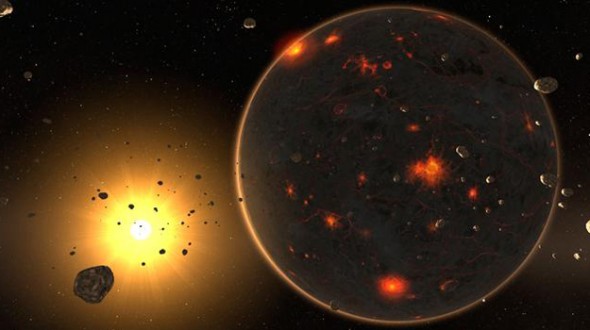
Giant asteroids reshaped Earth 4 billion years ago

The team says that during this 500 million year period the planet likely experienced three to seven impacts by objects more than 300 miles wide. There were also as many as four impacts by titanic space rocks more than 600 miles across. If there had been any life on the Earth, a 600 mile wide monster asteroid probably would have wiped it out. Surprisingly, these impacts are compatible with the existence of liquid water on the surface as early as 4.3 billion years ago.
The team says that during this 500 million year period the planet likely experienced three to seven impacts by objects more than 300 miles wide. There were also as many as four impacts by titanic space rocks more than 600 miles across. If there had been any life on the Earth, a 600 mile wide monster asteroid probably would have wiped it out. Surprisingly, these impacts are compatible with the existence of liquid water on the surface as early as 4.3 billion years ago. (D. A. Aguilar, Harvard-Smithsonian Center for Astrophysics)
via geek

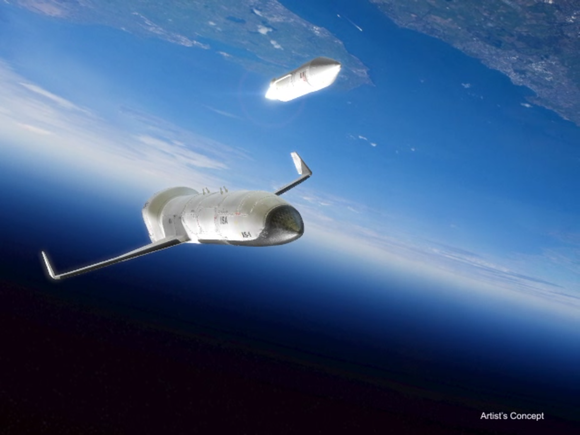
Will DARPA’s new space shuttle crush the SpaceX Grasshopper?

DARPA's hypothetical "space plane." (Credit: DARPA)
DARPA’s hypothetical “space plane.” (Credit: DARPA)
via fool

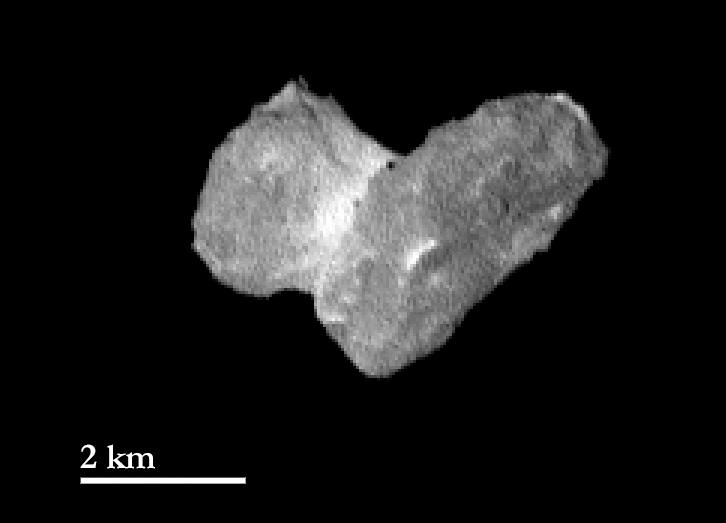
European spacecraft to attempt historic comet rendezvous this week

The European Space Agency's Rosetta spacecraft saw the nucleus of comet 67P/Churyumov-Gerasimernko from a distance of 1,210 miles (1,950 kilometers). Image taken July 29, 2014. (Credit: ESA/Rosetta/MPS for OSIRIS Team MPS/UPD/LAM/IAA/SSO/INTA/UPM/DASP/IDA)
The European Space Agency’s Rosetta spacecraft saw the nucleus of comet 67P/Churyumov-Gerasimernko from a distance of 1,210 miles (1,950 kilometers). Image taken July 29, 2014.
(Credit: ESA/Rosetta/MPS for OSIRIS Team MPS/UPD/LAM/IAA/SSO/INTA/UPM/DASP/IDA)
via space

Physics in the News

Monday, July 21, 2014

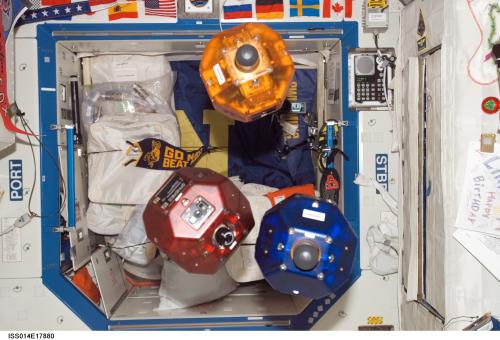
Astronauts testing free-flying “housekeeper” robots

Three satellites fly in formation as part of the Synchronized Position Hold, Engage, Reorient, Experimental Satellites (SPHERES) investigation. This image was taken during Expedition 14 in the Destiny laboratory module. (Credit: NASA)
via phys.org
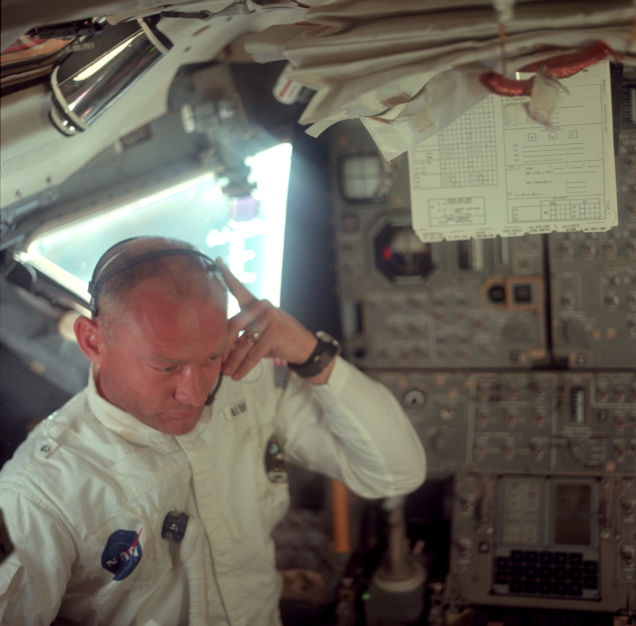
Rare photos reveal fascinating views of the Apollo 11 moon landing

Buzz Aldrin listening to mission control transmission during translunar coast NASA/Project Apollo Archive
Buzz Aldrin listening to mission control transmission during translunar coast. (Credit: NASA/Project Apollo Archive)
via gizmodo

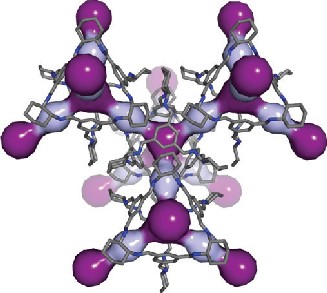
New noble gas cage for extracting radioactive elements from air and water

In this computer simulation, light and dark purple highlight the cavities within the 3D pore structure of CC3. (Credit: Nature Materials 2014)
via news.liv

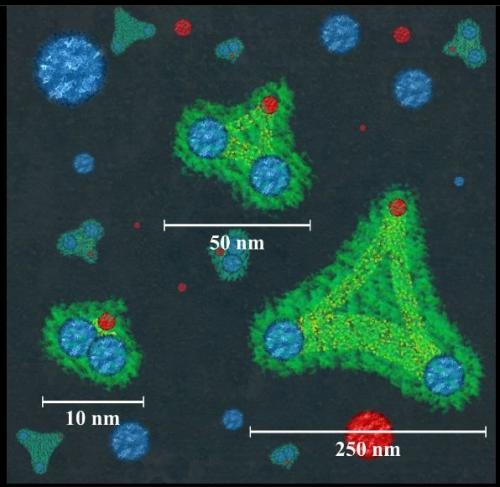
Physicists succeed in revealing the scaling behaviour of exotic giant molecules

According to Efimov's prediction, bound states of three atoms can be universally described under certain conditions. The scientist found that infinitely many quantum mechanical bound states for the "ménage à trois" exist, even if two of the atoms cannot bind together. (Credit:  Heidelberg Uni.)
According to Efimov’s prediction, bound states of three atoms can be universally described under certain conditions. The scientist found that infinitely many quantum mechanical bound states for the “ménage à trois” exist, even if two of the atoms cannot bind together. (Credit: Heidelberg Uni.)
via phys.org
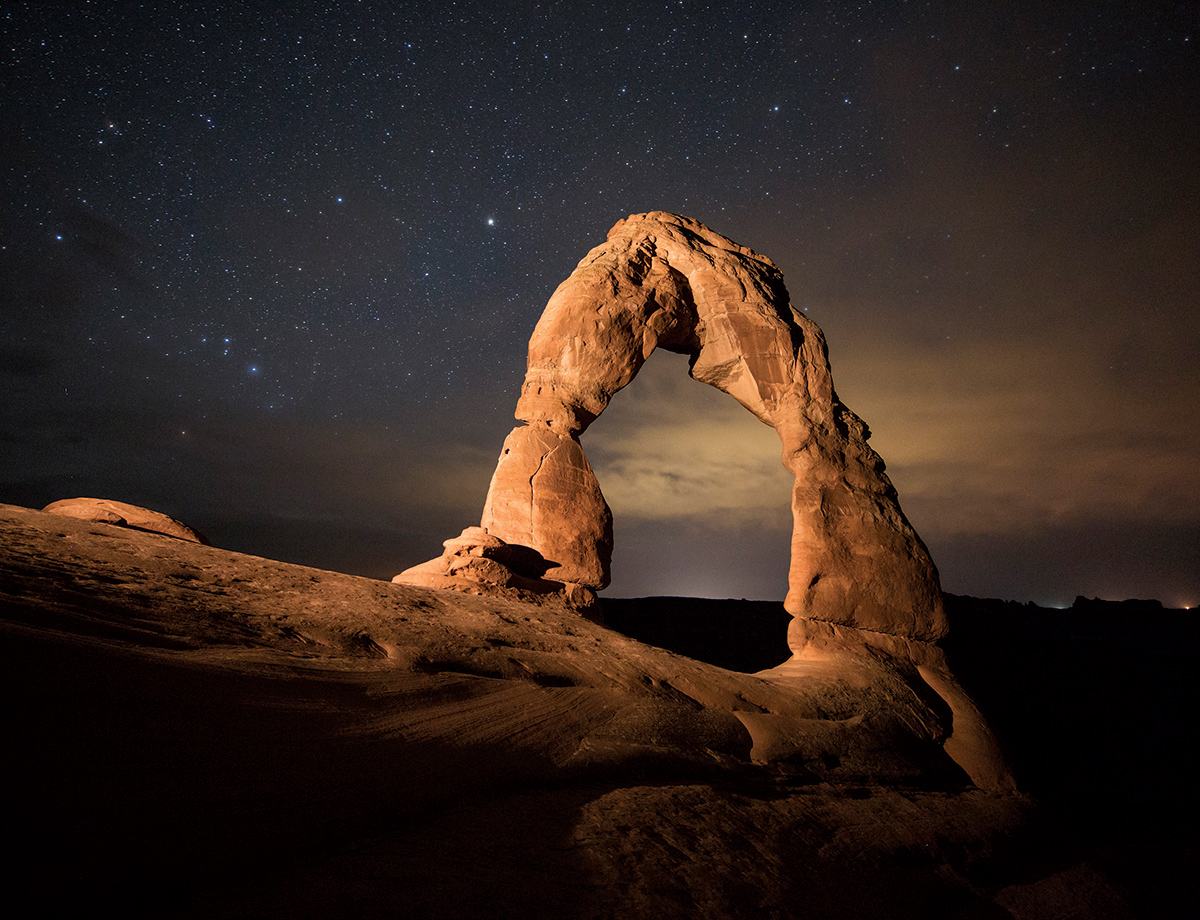
Vast rock arches sculpt themselves out of sand

Delicate Arch and many other gigantic arches in the US are made of the stuff. It is a "locked sand", whose angular grains can catch on each other.(Credit: Brad Goldpaint/Aurora Open/Corbis)
Delicate Arch and many other gigantic arches in the US are made of the stuff. It is a “locked sand”, whose angular grains can catch on each other.(Credit: Brad Goldpaint/Aurora Open/Corbis)
via newscientist

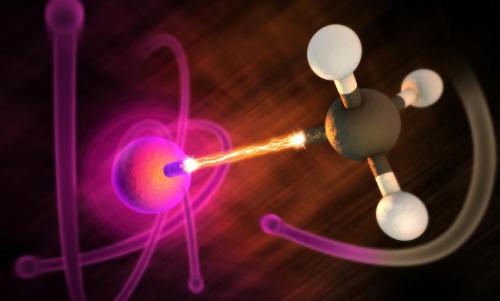
Researchers watched electrons jumping between fragments of exploding molecules

An artistic view of the electron transfer inside an iodomethane molecule. After the interaction with an ultrafast X-ray laser, the electrons from the methyl group, on the right, jump to the iodine atom, on the left. (Credit: SLAC National Accelerator Laboratory)
An artistic view of the electron transfer inside an iodomethane molecule. After the interaction with an ultra fast X-ray laser, the electrons from the methyl group, on the right, jump to the iodine atom, on the left. (Credit: SLAC National Accelerator Laboratory)
via azoquantum

Physics in the News

Thursday, June 26, 2014

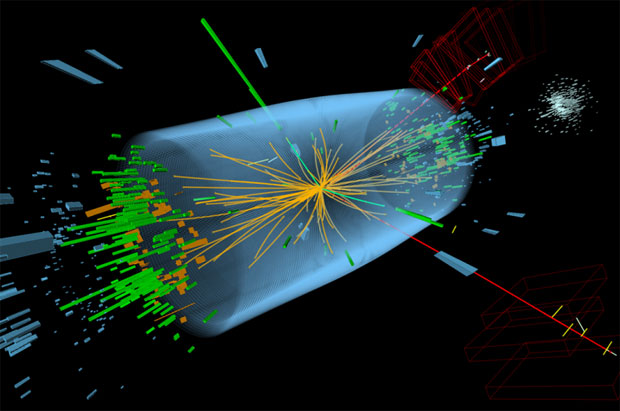
Confirmed: That Was Definitely the Higgs Boson Found at LHC

Candidate Higgs boson events from collisions between protons in the LHC. The top event in the CMS experiment shows a decay into two photons (dashed yellow lines and green towers). The lower event in the ATLAS experiment shows a decay into 4 muons (red tracks).[
Candidate Higgs boson events from collisions between protons in the LHC. The top event in the CMS experiment shows a decay into two photons (dashed yellow lines and green towers). The lower event in the ATLAS experiment shows a decay into 4 muons (red tracks).(Credit: NASA)
via discovermagazine

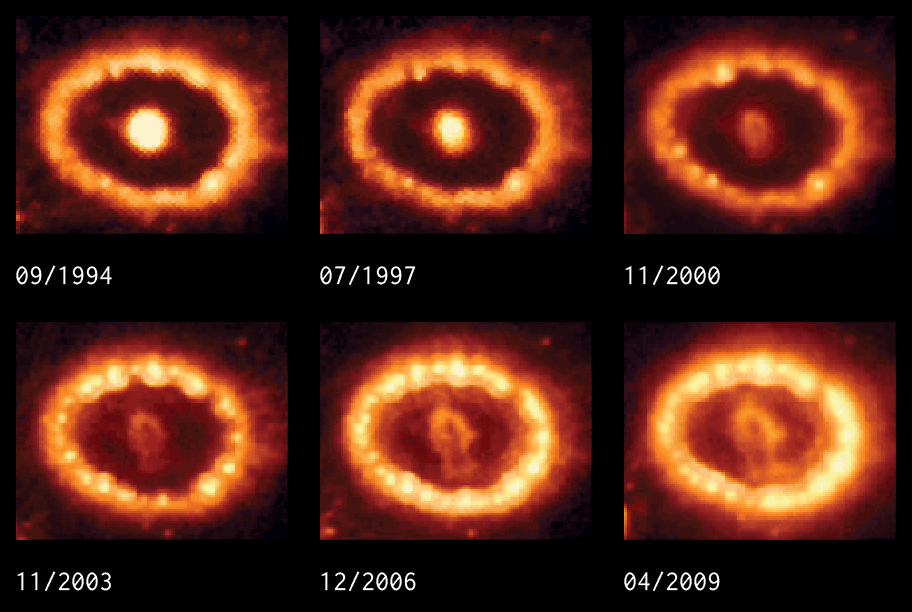
Einsteins biggest blunder? The 25-year-old supernova that could change the speed of light forever

A time sequence of Hubble Space Telescope images, taken in the 15 years from 1994 to 2009, showing the collision of the expanding supernova remnant with a ring of dense material ejected by the progenitor star 20,000 years before the supernova. (Credit: NASA)
 via extremetech
 

New Math Technique Improves Atomic Property Predictions to Historic Accuracy

Computational techniques developed by a team from NIST and IU could enable precise computation of atomic properties that are important for nuclear medicine, as well as astrophysics and other fields of atomic research. Image: Paco Ayala (Fotolia)
via sciencenewsline


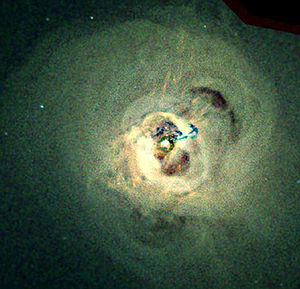
We may have just glimpsed dark matter, about 240 million light years away

The Perseus galaxy cluster.
The Perseus galaxy cluster is one of the most massive objects in the universe, containing thousands of galaxies immersed in a vast cloud of multimillion degree gas. (Credit: NASA)
via geek.com

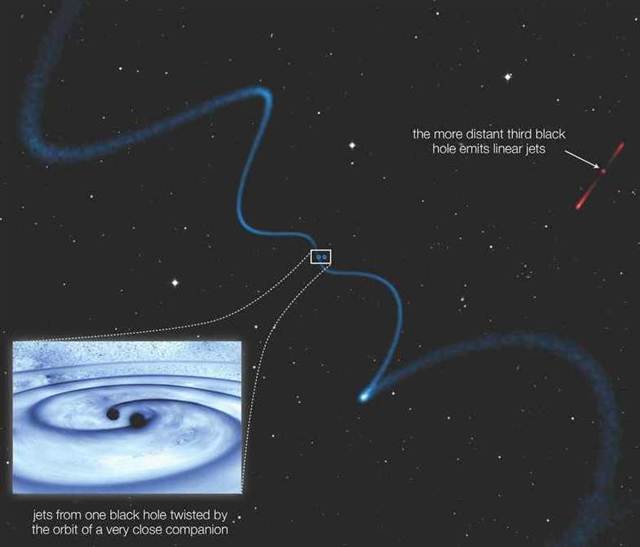
Supermassive black hole trio discovered

Two closely orbiting black holes in a galaxy about 4.2 billion light-years from Earth emit wavy jets, seen as a bluish spiral, while the third black hole in the trio is more distant, emitting linear jets off to the right.
via abc.net

Catching A Gravitational Wave

Monash and Warwick astronomers are searching for gravitational waves emitted by Scorpius X-1.
via phys.org
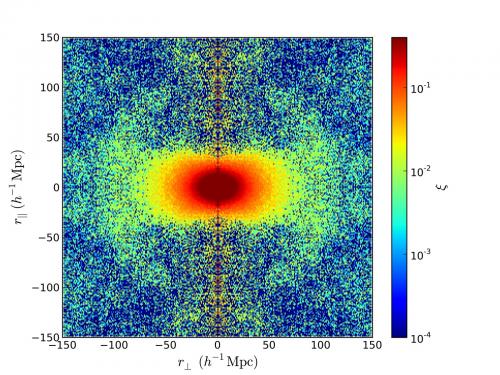
Clumped galaxies give General Relativity its toughest test yet

More than 600 000 galaxies from the BOSS survey were utilized to measure the strength of gravitational interactions of galaxies extremely far away from each other. This is a visual representation of that measurement; the amount that the circles are distorted, or squashed from perfect concentric rings, indicates the velocity that galaxies are falling towards each other and hence the strength of the gravitational interactions. Credit: BOSS/U. Portsmouth
More than 600 000 galaxies from the BOSS survey were utilized to measure the strength of gravitational interactions of galaxies extremely far away from each other. This is a visual representation of that measurement; the amount that the circles are distorted, or squashed from perfect concentric rings, indicates the velocity that galaxies are falling towards each other and hence the strength of the gravitational interactions. (Credit: BOSS/U. Portsmouth)
via phys.org

Physics in the News

Tuesday, June 10, 2014

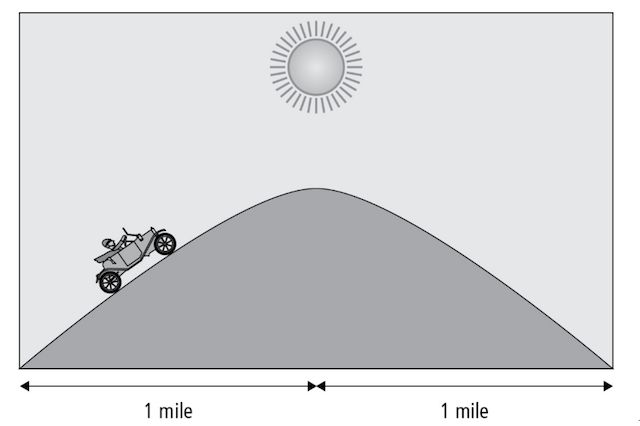
The Simple Problem Einstein Couldn’t Solve … At First

Einstein fell for this teaser
via farnamstreetblog
 

Black hole? Or wormhole in disguise?

Wormholes-infographic

via cosmonline
 

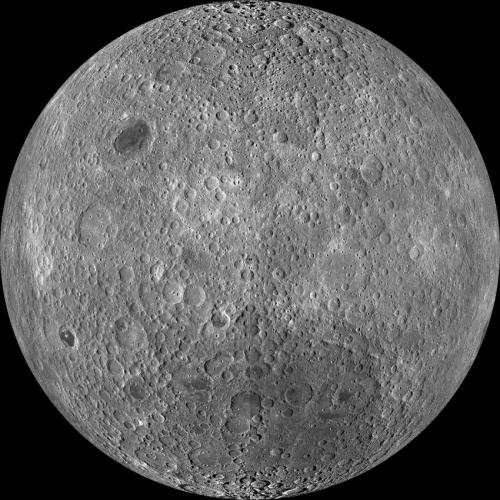
55-year old dark side of the Moon mystery solved

This is a composite image of the lunar farside taken by the Lunar Reconnaissance Orbiter in June 2009, note the absence of dark areas. Credit: NASA
via phys.org
 

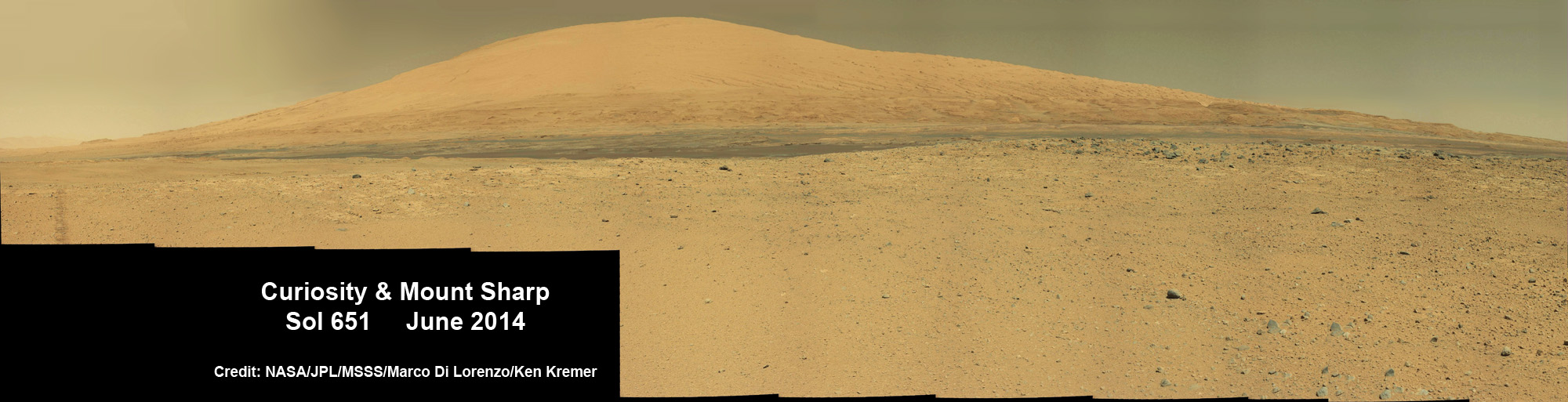
Curiosity captures stunning new Mount Sharp panorama ‘on the go’
Curiosity rover panorama of Mount Sharp captured on June 6, 2014 (Sol 651) during traverse inside Gale Crater. Note rover wheel tracks at left. She will eventually ascend the mountain at the ‘Murray Buttes’ at right later this year. Assembled from Mastcam color camera raw images and stitched by Marco Di Lorenzo and Ken Kremer. Credit: NASA/JPL/MSSS/Marco Di Lorenzo
via phys.org