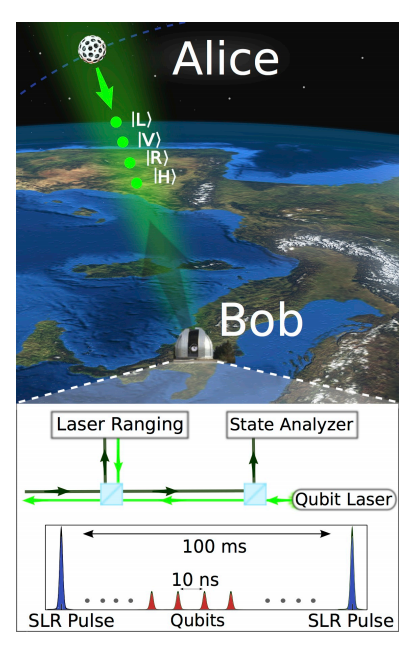
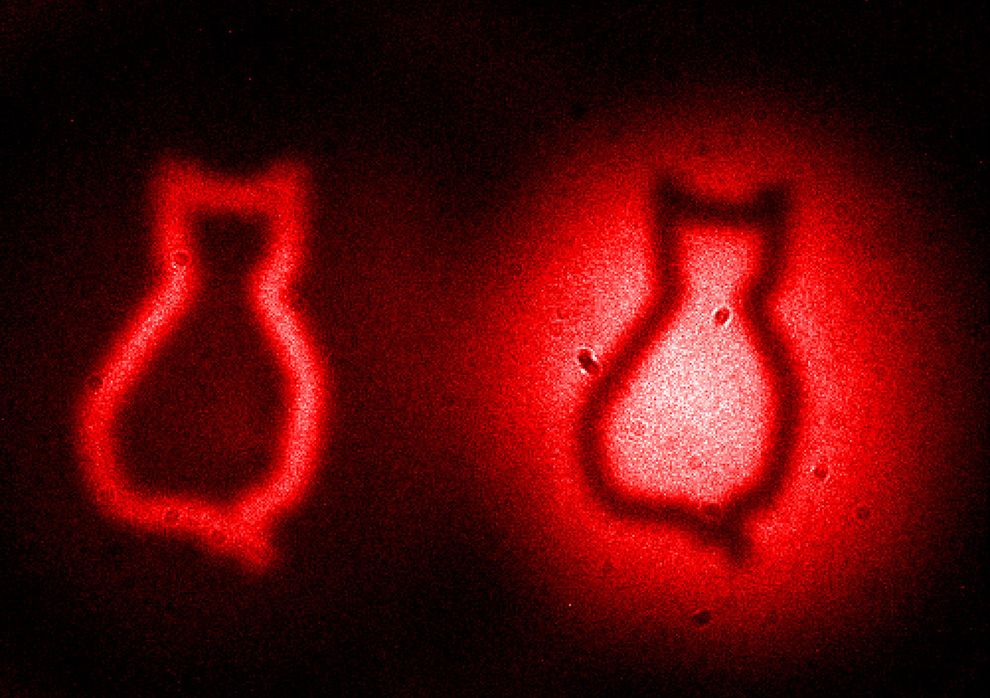
“This is a long-standing, really neat experimental idea,” says Paul Lett, of the National Institute of Standards and Technology in GaithersburgLett, “Now we have to see whether or not it will lead to something practical, or will remain just a clever demonstration of quantum mechanics.”(CreditBarreto-Lemos, Vergano)
via nationalgeographic
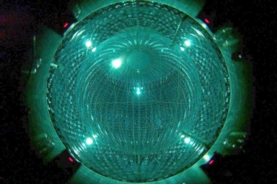
The Borexino neutrino detector uses a sphere filled with liquid scintillator that emits light when excited. This inner vessel is surrounded by layers of shielding and by about 2,000 photomultiplier tubes to detect the light flashes.(Credit: Borexino Collaboration)
via scientificamerican
MOLECULAR MODEL In the molecular model, quark-antiquark pairs form two color-neutral mesons that become weakly linked as a molecule.DIQUARK MODEL The particles form quark-quark and antiquark-antiquark pairs, which are forced to combine to balance their color charges.
via simonsfoundation
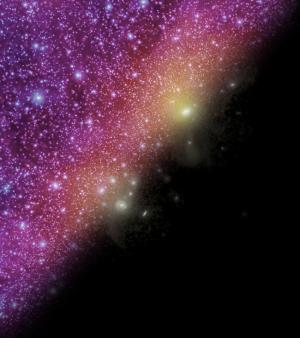
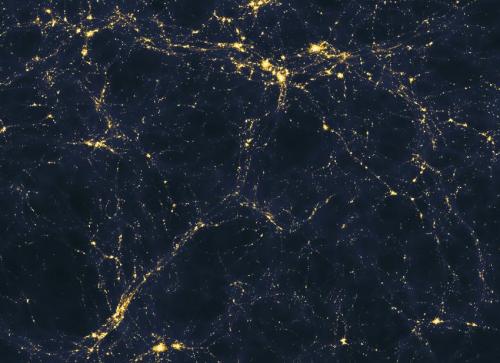
A computer model shows one scenario for how light is spread through the early universe on vast scales (more than 50 million light years across). Astronomers will soon know whether or not these kinds of computer models give an accurate portrayal of light in the real cosmos. (Credit: Andrew Pontzen/Fabio Governato)
via phys
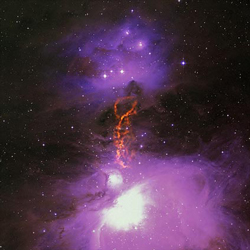
Radio/optical composite of the Orion Molecular Cloud Complex showing the OMC-2/3 star-forming filament. GBT data is shown in orange. Uncommonly large dust grains there may kick-start planet formation. (Credit: S. Schnee, et al.; B. Saxton, B. Kent (NRAO/AUI/NSF)
via rdmag
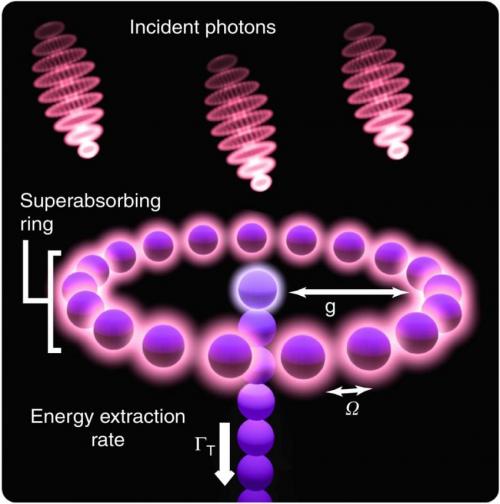
In one potential method to realize superabsorption, a superabsorbing ring absorbs incident photons, giving rise to excitons. (Credit: Higgins, et al.)
via phys.org
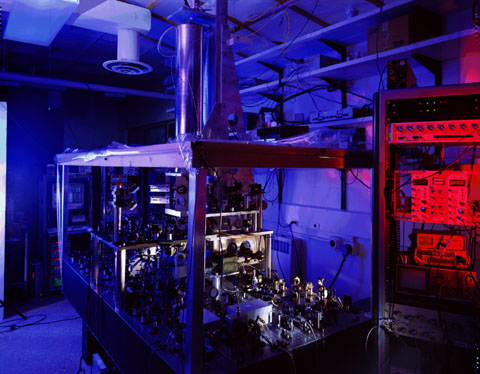
NIST-F1 contributes to the international group of atomic clocks that define Coordinated Universal Time (UTC), the official world time. Because NIST-F1 is among the most accurate clocks in the world, it makes UTC more accurate than ever before. (Credit: Time and Frequency Division of NIST’s PML)
via guardianlv
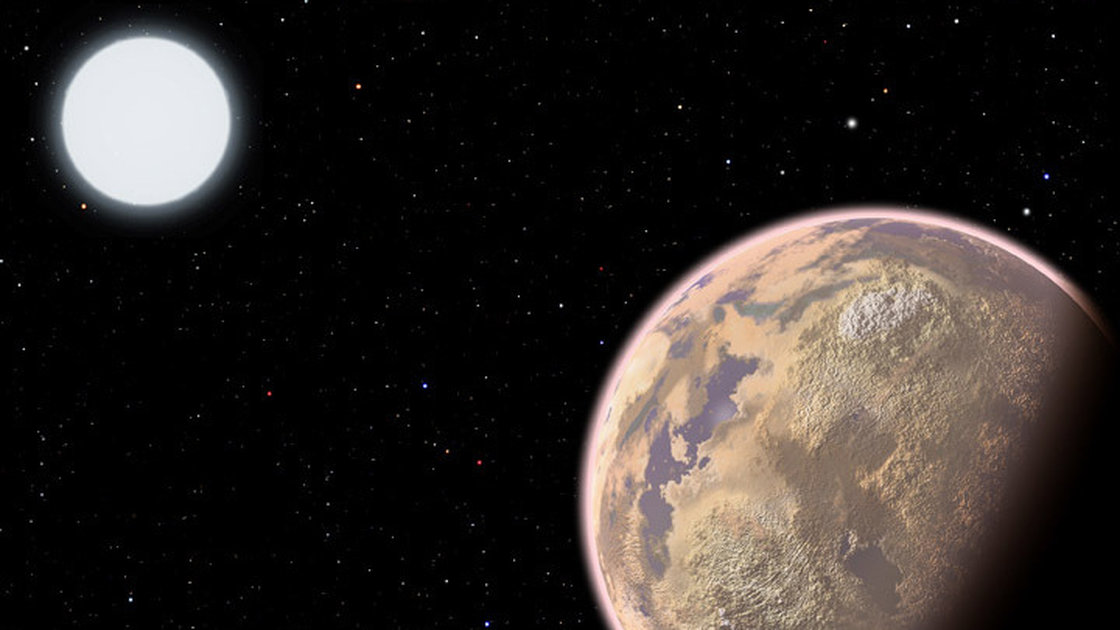
Artist’s conception of the atmosphere of an Earth-like planet displaying a brownish haze as the result of widespread pollution. (Credit: Christine Pulliam/Harvard-Smithsonian Center for Astrophysics)
via npr
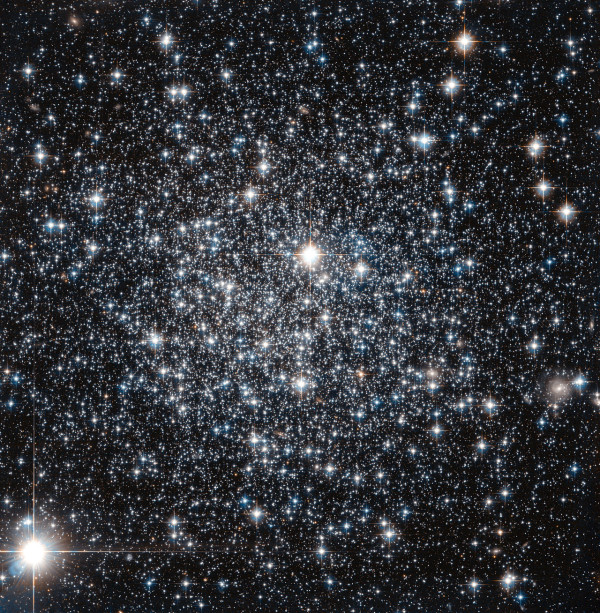
This new NASA/ESA Hubble Space Telescope image shows the globular cluster IC 4499. A cosmic archaeological dig has unfolded within a giant ball of stars some 55,000 light-years away. (Credit: NASA)
via nationalgeographic
Top: A typical set-up for squeezing injection in the first demonstrations of squeezing at GEO600 and LIGO, both using DC readout [36,37]. Bottom: Proposed design for future detectors. This design features an in-vacuum OPO. The remainder of the squeezed light source remains outside of vacuum. (Credit: E. Oelker, L. Barsotti, S. Dwyer, D. Sigg, and N. Mavalvala)
via opticsinfobase
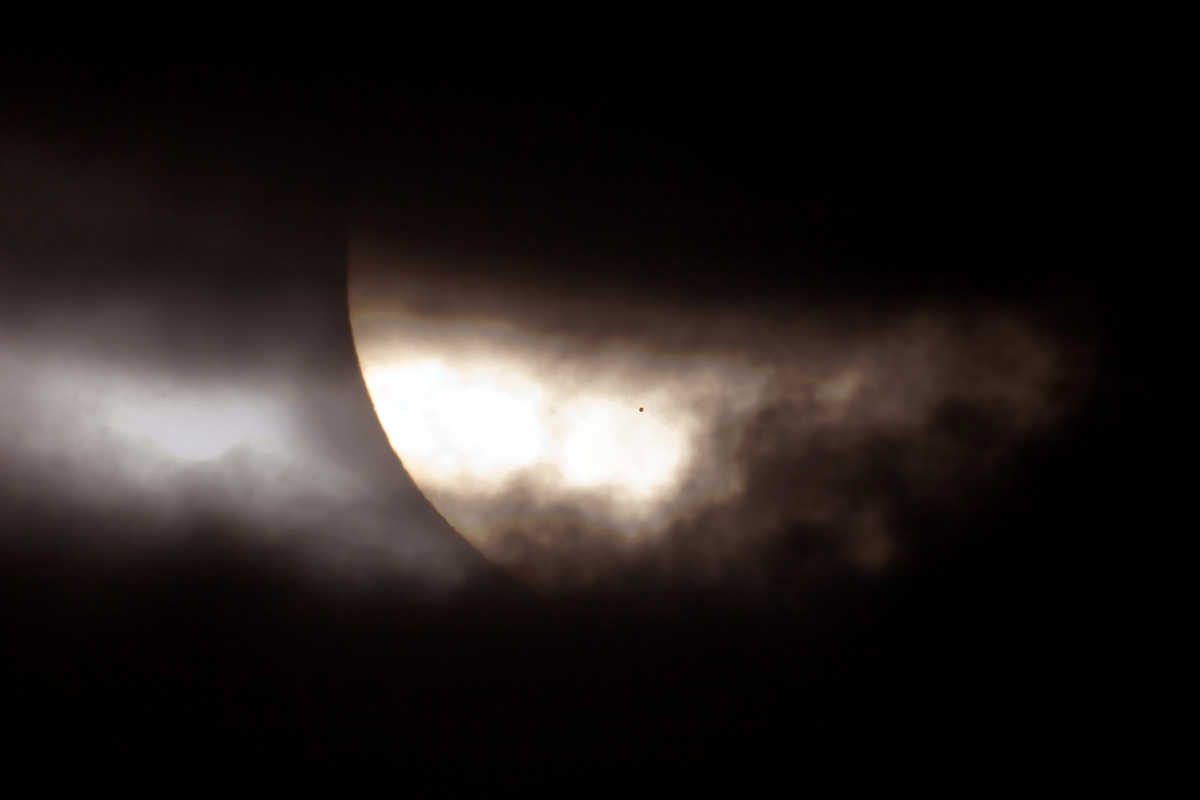
What’s that dot on the Sun? If you look closely, it is almost perfectly round. The dot is the result of an unusual type of solar eclipse that occurred in 2006. Usually it is the Earth’s Moon that eclipses the Sun. This time, the planet Mercury took a turn. (Credit: D. Cortner, NASA, K. Schmidt)
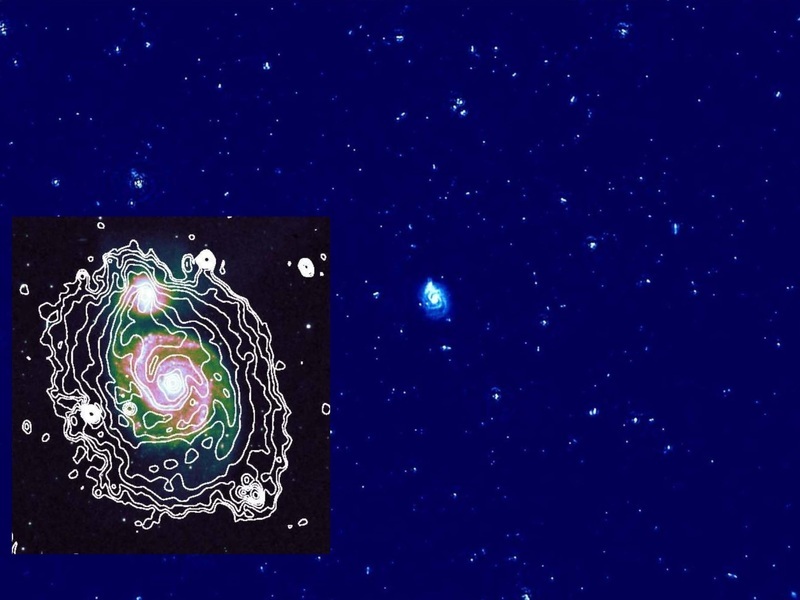
“Maybe we will see how galaxies are magnetically connected to intergalactic space. This is a key experiment in preparation for the planned Square Kilometre Array (SKA) that should tell us how cosmic magnetic fields are generated,” says Rainer Beck, lead astronomer with the Max Planck Institute.
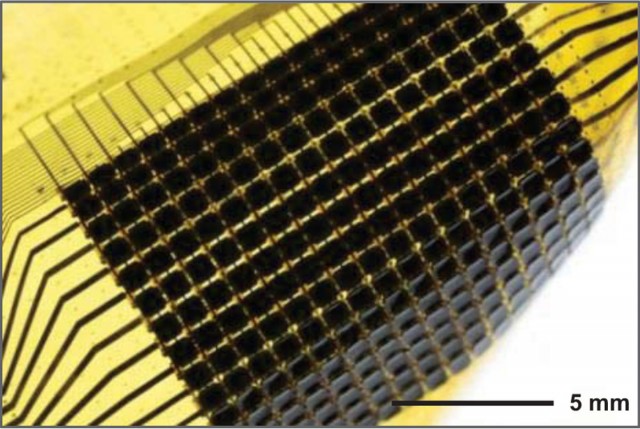
Researchers have developed a flexible structure that can sense ambient conditions and adjust its color to match them. At the moment, it only works in black and white. (Credit: PNAS, Timmer)
via arstechnica
High temperatures expanding the seal material could have either impeded the flow, or have precluded the latch valve from opening even with the microswitch indicated to telemetry that the valve was open. (Credit: Farquhar, R, Muhonen, D, Church, L, Curtis, M.S)
via wattsupwiththat
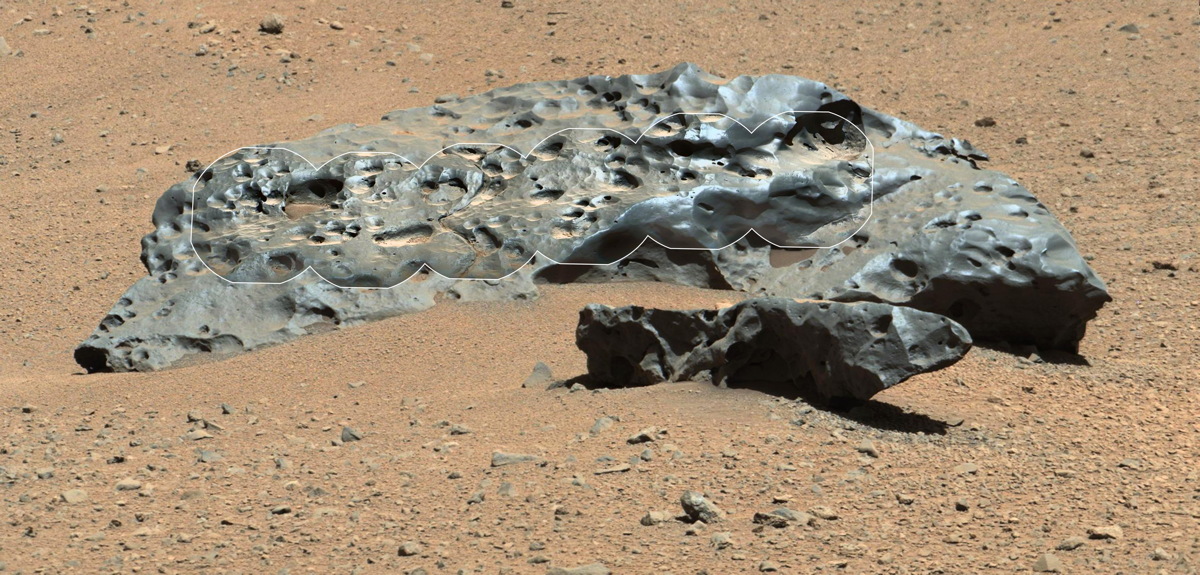
This photo by NASA’s Curiosity Mars rover shows the huge iron meteorite “Lebanon” (7 feet wide) and its smaller companion “Lebanon B.” The two meteorites were found by Curiosity on May 25, 2014. The circular insets are more detailed views by Curiosity’s Chem-Cam instrument overlaid on an image by the rover’s Remote Micro-Imager. (Credit: NASA/JPL-Caltech/LANL/CNES/IRAP/LPGNantes/CNRS/IAS/MSSS)
via space.com
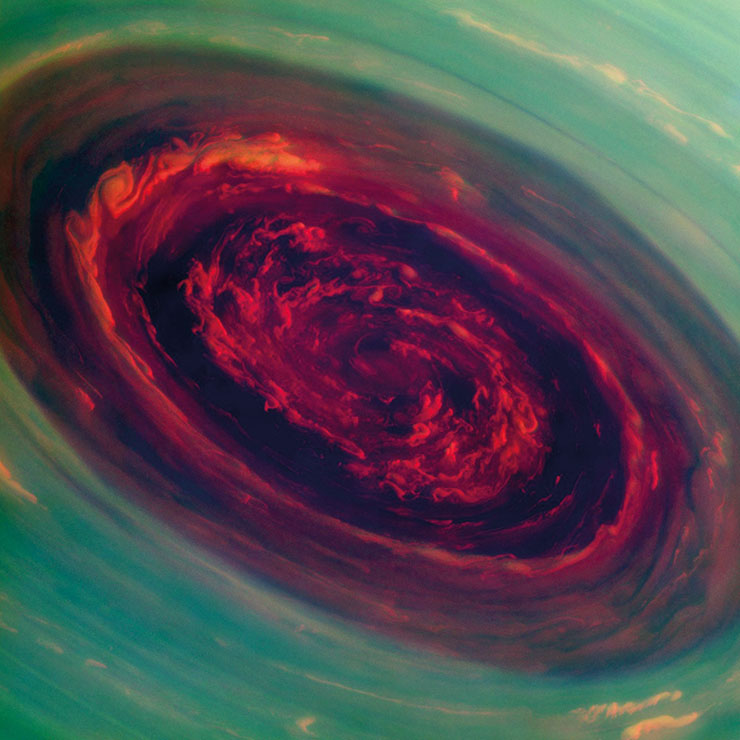
The clear central eye of the storm is about 2000 km across – ten times the typical size on Earth – and clouds at the outer edge of the hurricane on Saturn are moving at more than 500 kph – rather faster than on Earth. (Credit: NASA/JPL-Caltech/SSI)
via dailygalaxy
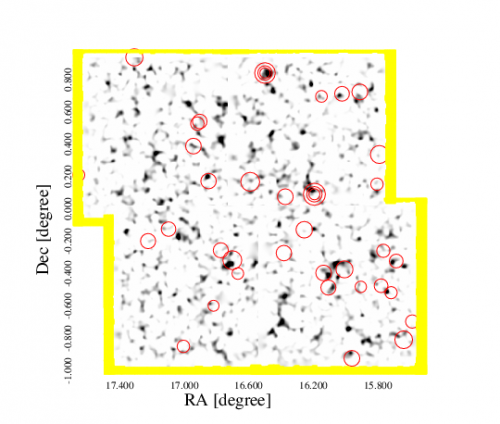
This map shows the distribution of dark matter (black) in the Universe, overlapping with optical measured clusters of galaxies (red circles). The mass peaks in the map contain significant cosmological information, will provide us with an improved understanding about the dark side of the Universe. The size of this map is about 4 square degrees corresponding to only 2.5% of the full CS82 survey footprint shown in the next figure. (Credit: CS82, SDSS)
via phys.org
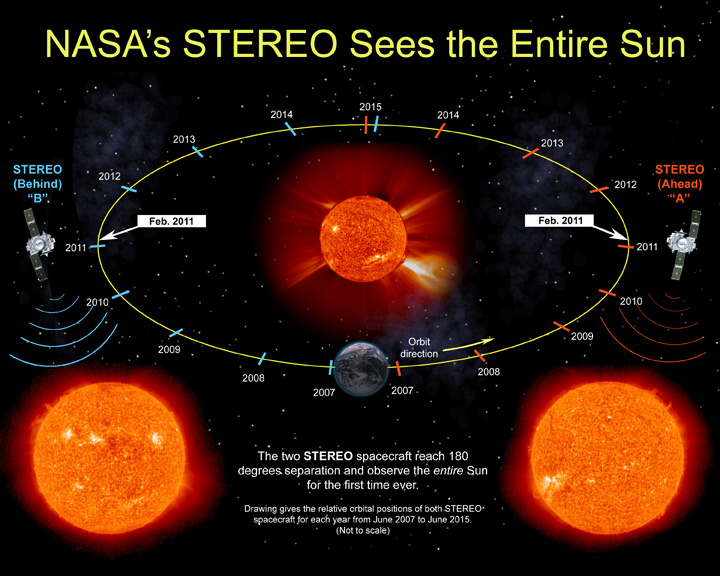
Illustration of the positions of the two STEREO spacecraft show that they attain 180 degrees of separation in Feb. 2011, thus allowing the world to see the entire Sun for the first time. (Credit: NASA/STEREO/SSC)
via thewatchers
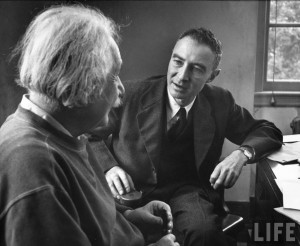
Einstein and Oppenheimer: Both men in their later years dismissed black holes as anomalies, unaware that they contained some of the deepest mysteries of physics (Image: Alfred Eisenstaedt, LIFE magazine)
via scientificamerican
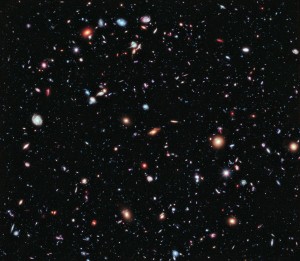
Hubble Space Telescope image. (Credit: NASA, ESA, G. Illingworth, D. Magee, and P. Oesch (University of California, Santa Cruz), R. Bouwens (Leiden University), and the HUDF09 Team)
via scientificamerican
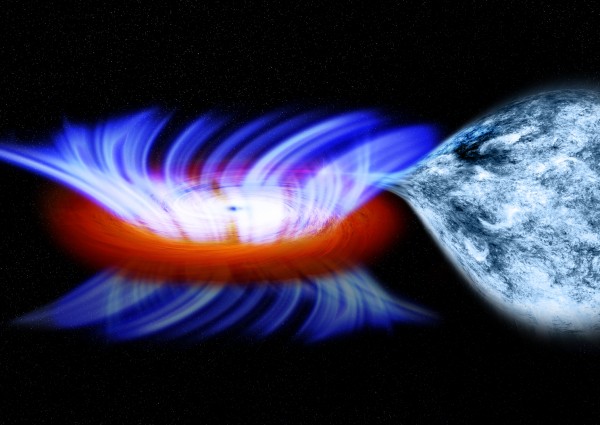
A binary system containing a stellar-mass black hole called IGR J17091. The strong gravity of the black hole, on the left, is pulling gas away from a companion star on the right. This gas forms a disk of hot gas around the black hole, and the wind is driven off this disk(Credit: NASA/CXC/M.Weiss)
via scienceblogs.com
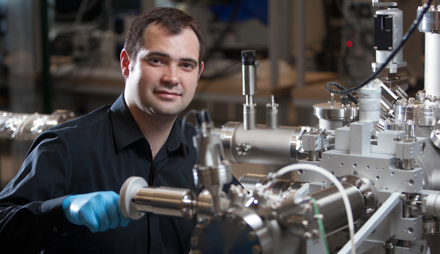
A new technique developed by a Binghamton University physicist and his colleagues will improve the quality of flexible, conductive, transparent glass. (Credit: NASA)
via phys.org
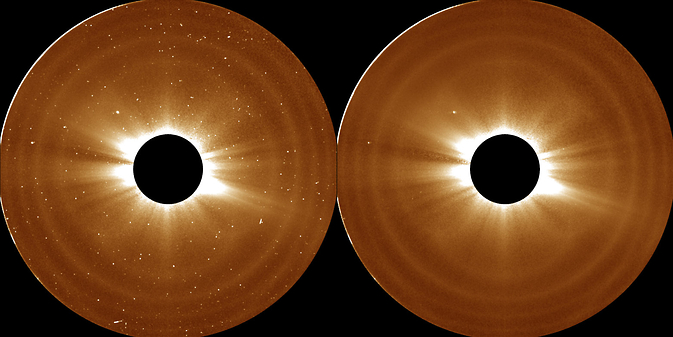
Scientists used these observations of the sun’s atmosphere (the bright light of the sun itself is blocked by the black circle at the middle) from NASA’s Solar Terrestrial Relations Observatory on Aug. 5, 2007, to define the outer limits of the solar atmosphere, the corona. (Credit: NASA/STEREO)
via NASA
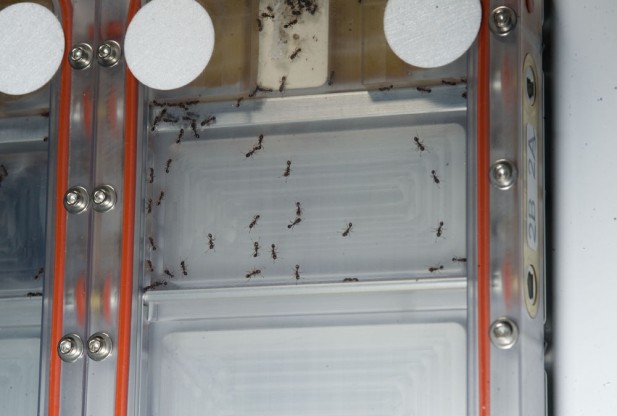
The Ants In Space CSI-06 investigation looks at how an ant colony responds to the extreme environment of microgravity aboard the International Space Station to solve their collective need for resources. Data gathered from this study may help with algorithms for robotics on Earth. (Credit: NASA)
via NASA
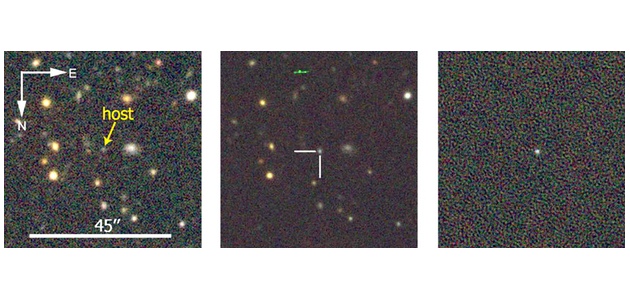
Before (left) and after (center) images of the region where DES13S2cmm was discovered. On the right is the supernova. (Credit: Dark Energy Survey)
via motherboard.vice.com
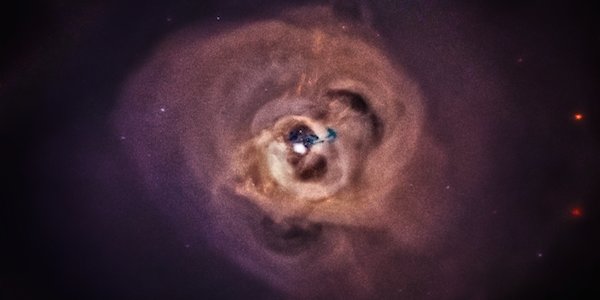
This composite image of the Perseus Cluster combines data equivalent to more than 17 days of observation time over a decade. (Credit: X-ray: NASA, CXC, SAO, E.Bulbul, et al.)
via NASA
The visible galaxies in the Local Group simulation, shown in the lower right, only trace a tiny fraction of the vast number of dark matter halos, revealed in the upper left. (Credit: John Helly, Till Sawala, James Trayford, Durham University)
via phys.org



![Top: A typical set-up for squeezing injection in the first demonstrations of squeezing at GEO600 and LIGO, both using DC readout [36,37]. Proposed design for future detectors. This design features an in-vacuum OPO. The remainder of the squeezed light source remains outside of vacuum. (Credit: E. Oelker, L. Barsotti, S. Dwyer, D. Sigg, and N. Mavalvala)](https://timeincosmology.org/wp-content/uploads/2014/08/screen-shot-2014-08-24-at-10-39-30-am.png)