Image Release

GBTAsteroidGif
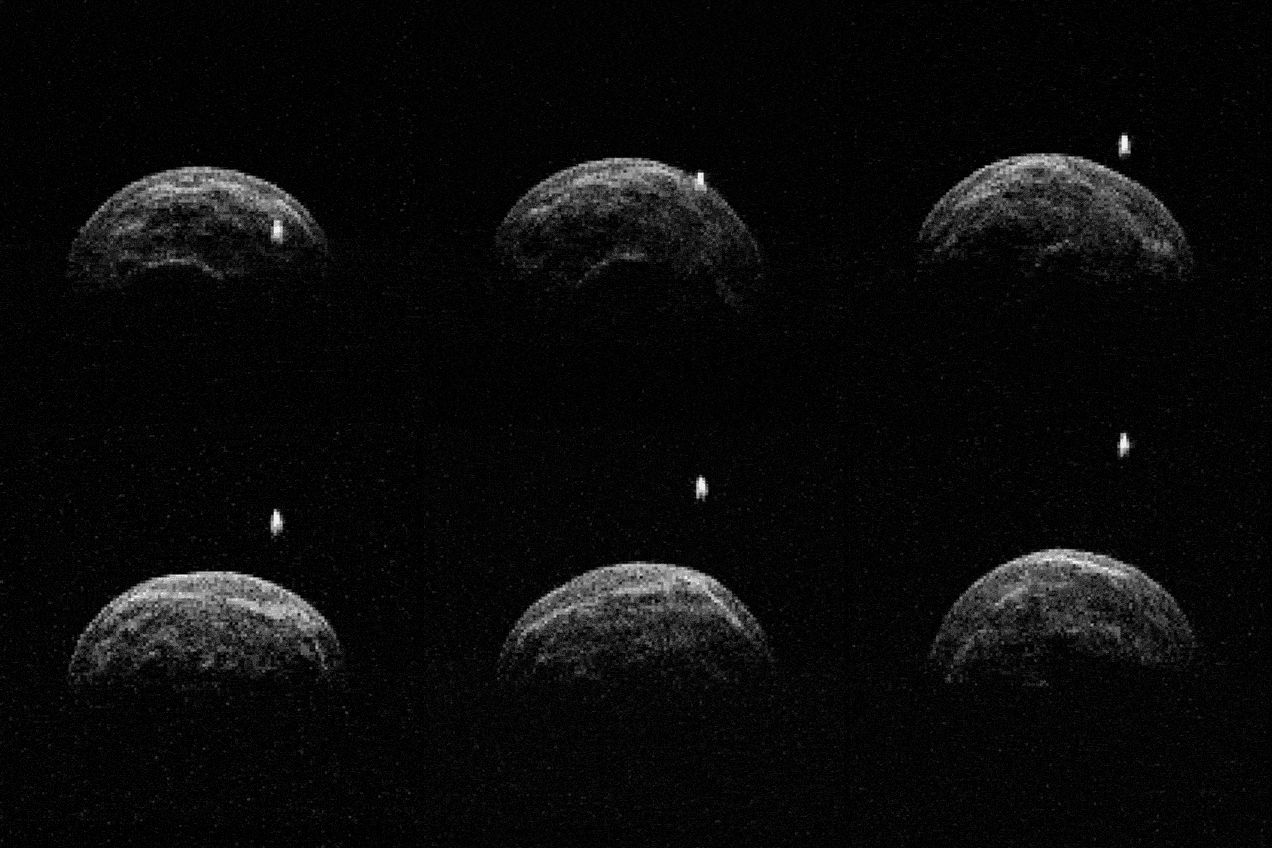
Animation of asteroid 2004 BL86 constructed from radar images made by the Green Bank Telescope from radar transmitted from NASA’s Goldstone Deep Space Network antenna. It reveals clear surface features and the motion of a companion moon-like body. (Credit:NASA/JPL-Caltech; NRAO/AUI/NSF)

A team of astronomers using the National Science Foundation’s Green Bank Telescope (GBT) in West Virginia and NASA’s Deep Space Network radar transmitter at Goldstone, California, has made the most detailed radar images yet of asteroid 2004 BL86.

The images, which were taken early in the morning on Jan. 27, 2015, reveal the asteroid’s surface features in unprecedented clarity. At the time of the observations, the asteroid was traveling away from the Earth, so its distance varied from 1.3 million to 1.6 million kilometers, or about three-and-a-half to four times the distance from the Earth to the Moon.

To make these images, a continuous radar signal was sent from the transmitter at Goldstone to the asteroid. The reflected signal was then received by the 100-meter diameter dish of the GBT in a process known as bistatic radar imaging.

The GBT images also confirmed the presence of a small moon-like companion zipping around the asteroid, which was previously detected with ground-based optical telescopes by Joe Pollock of Appalachian State University in Boone, North Carolina, and Petr Pravec of Ondrejov Observatory in the Czech Republic.
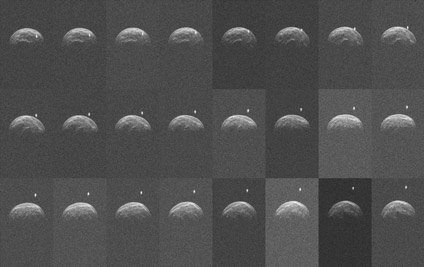
Collage of radar images of asteroid 2004 BL86 made by the Green Bank Telescope from radar transmitted from NASA's Goldstone Deep Space Network antenna. (Credit: NASA/JPL-Caltech; NRAO/AUI/NSF)
Collage of radar images of asteroid 2004 BL86 made by the Green Bank Telescope from radar transmitted from NASA’s Goldstone Deep Space Network antenna. (Credit: NASA/JPL-Caltech; NRAO/AUI/NSF)

Radar Enables Better Resolution

Radar images are particularly valuable in studying asteroids because they enable very high-resolution imaging. At the distance of the GBT observations, ground-based optical telescopes would produce images with a resolution of about 100 meters per pixel, so the asteroid would appear as a smudgy blob. The resolution of radar images, however, depends on how the signal is coded and the strength of the return signal, not the size of a telescope lens or mirror. With the GBT’s newly installed data acquisition equipment, the astronomers were able to create images with a resolution as fine as a few (3.75) meters, revealing distinct surface features.

“There are a lot of fascinating features in these images, including possible evidence for several ridges at different latitudes,” said Lance Benner, a scientist with NASA’s Jet Propulsion Laboratory in Pasadena, California, and a member of the observing team.

The images also clearly establish that 2004 BL86 is a rounded object with an apparent equatorial bulge, which was also seen in the earlier Goldstone observations. In the latest images, the orientation reveal more of the asteroid’s equator, providing a clearer picture of that region. The collage of images also shows the rapid motion of the asteroid’s moon relative to its companion.

Further analysis of the images could provide important insights into the formation and evolution of this object.

“Capturing an object this small, about half a kilometer across, at such a tremendous distance with this clarity is truly amazing,” said Michael Busch, a research scientist at the SETI Institute in Mountain View, California, and a member of the observing team. “This level of detail is similar to fly-by observations obtained by spacecraft,” he noted.

Radar Speckles Unlock Other Details

Concurrently with the radar imaging, the scientists also used the radar transmitter at the Arecibo Observatory in Puerto Rico and a portion of the antennas that are part of the National Radio Astronomy Observatory’s (NRAO) Very Long Baseline Array (VLBA) to perform an observation known as radar speckle tracking. This technique uses the seemingly chaotic radar pattern reflected by the uneven surface of an asteroid as it sweeps across the surface of the Earth to determine how fast and in what direction it’s tumbling. Once analyzed, these data will also reveal important details about its internal physical properties and future trajectory.

The asteroid 2004 BL86 is approximately 300 meters across and its moon is a mere 70 meters across. This size comparison is not evident in the radar images because of the way they were processed. Approximately one-sixth of asteroids in this size range (200 meters or larger) sport at least one companion.

“It was enjoyable and a great privilege to participate in this experiment,” remarked NRAO astronomer Frank Ghigo who assisted with the GBT portion of the observations.

The 100-meter Green Bank Telescope is the world’s largest fully steerable radio telescope. Its location in the National Radio Quiet Zone and the West Virginia Radio Astronomy Zone protects the incredibly sensitive telescope from unwanted radio interference, enabling it to perform unique observations.
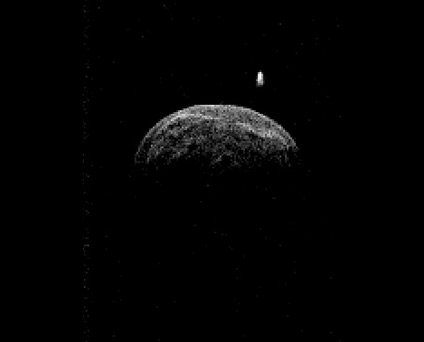
Radar image of asteroid 2004 BL86 made by the Green Bank Telescope from radar transmitted from NASA's Goldstone Deep Space Network antenna. It reveals clear surface features and a companion moon-like body. (Credit: NASA/JPL-Caltech; NRAO/AUI/NSF)
Radar image of asteroid 2004 BL86 made by the Green Bank Telescope from radar transmitted from NASA’s Goldstone Deep Space Network antenna. It reveals clear surface features and a companion moon-like body. (Credit: NASA/JPL-Caltech; NRAO/AUI/NSF)

The National Radio Astronomy Observatory is a facility of the National Science Foundation, operated under cooperative agreement by Associated Universities, Inc.

(Credit: Charles Blue, NRAO Public Information Officer)

Astronomy Magazine Tucson Star Party

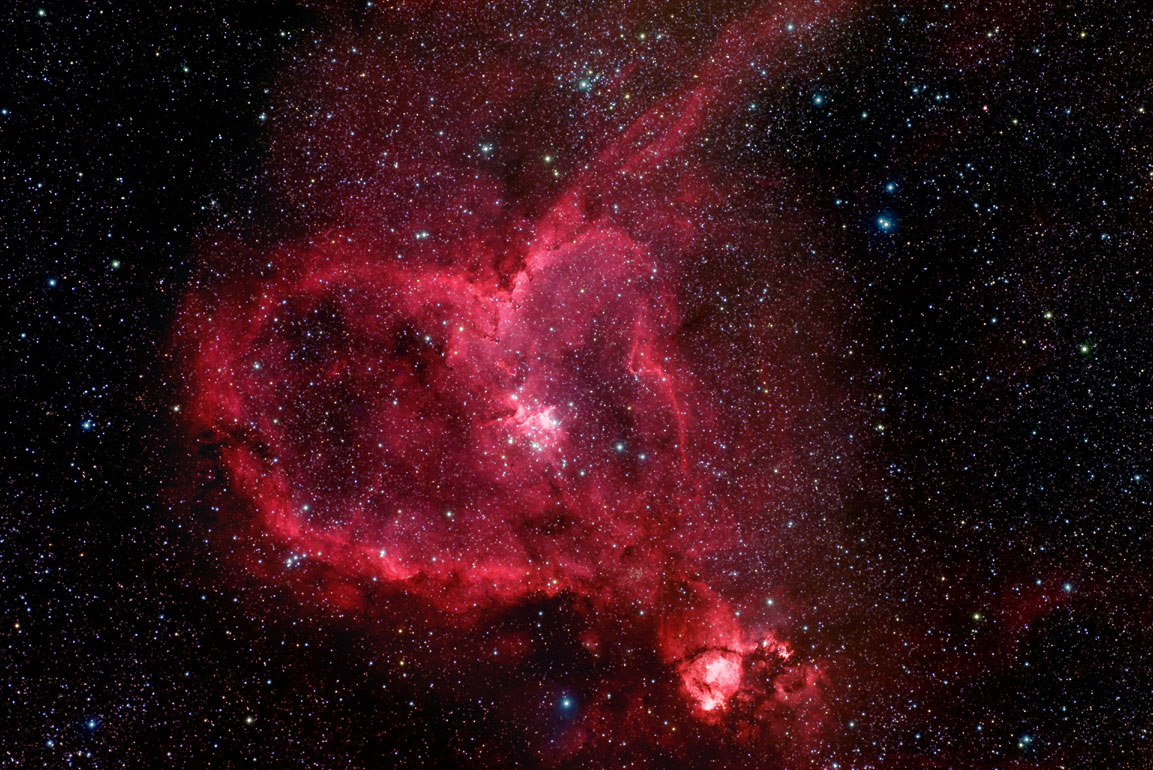
Bring your Sweet Heart out on Valentine’s Day

Astronomy Magazine Tucson Star Party

Astronomy magazine, along with volunteer amateur astronomers from the Tucson Amateur Astronomy Association (TAAA) and Pima Community College, will host the third annual all-day observing Solar and Dark Skies Star Parties.

In addition to the TAAA scopes for solar and night observing, the Pima Community College Observatory will be open with daytime solar observing, and night use of its 14″ telescope.

Also featured will be Hands-On Activities for all ages, presented by TAAA volunteers trained in Night Sky Network activities and NOAO Project ASTRO activities. Come and try out the different activities and see pictures of the Heart Shaped Nebula. Stop at Gramma’s Table out with the telescopes for your Valentine’s Card.

Feature Speaker: Astronomy Editor David J. Eicher. His talk, Does the Universe Really Care About Itself? Communicating Astronomy in the 21st Century, surveys the media world we now live in. With pseudoscience and inaccuracy dominating TV, blogs, and the Internet, Eicher asks whether we will ever get back to a realistic view of astronomy and science as they really are.

Special Presentation: Dolores Hill, co-lead of the OSIRIS-Rex “Target Asteroids!” program, will present OSIRIS-REx Asteroid Sample Return Mission to Bennu: Approaching New Frontiers. The Origins Spectral Interpretation Resource Identification and Security – Regolith Explorer (OSIRIS-REx) is a NASA New Frontiers spacecraft mission to be launched in 2016. Its prime objective is to return and analyze a pristine sample from the surface of the carbon-rich near-Earth asteroid Bennu in 2023.

Presentation: Scott Kardel, president of the International Dark-Sky Association, will give a talk titled “Going Dark”, the growing interest in astro tourism.  He’ll explain the ins and outs of Dark Sky Places and how they can help us all solve the problems of light pollution.

Presentation: Jim O’Connor: presenting What’s Up There? a basic exposure to the fundamentals of the night sky, (how constellations came to be, the nature of our solar system, star clusters, galaxies, nebulae, and comets, and an overview of stellar evolution).

Where: Pima Community College East Campus Observatory, 8181 East Irvington Road, Tucson, AZ, 85730.
When: Saturday, February 14, 2015

Credit: TAAA

What happens when you point a telescope designed to investigate black holes at the sun?

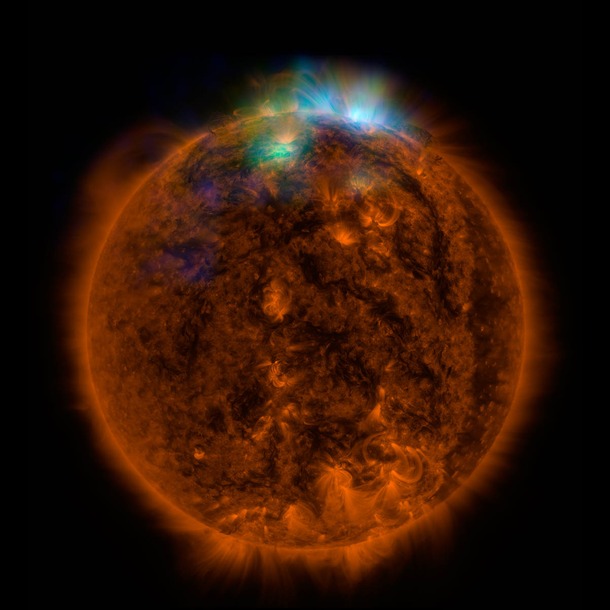
An image captured by NASA’s NuSTAR telescope, designed to investigate black holes, is the best-ever view of the sun in high-energy X-ray light.

X-rays stream off the sun in this image showing observations from by NASA's Nuclear Spectroscopic Telescope Array, or NuSTAR, overlaid on a picture taken by NASA's Solar Dynamics Observatory (SDO).This image shows that some of the hotter emission tracked by NuSTAR is coming from different locations in the active regions and the coronal loops than the cooler emission shown in the SDO image.  (Credit: NASA/JPL-Caltech )
This image shows that some of the hotter emission tracked by NuSTAR is coming from different locations in the active regions and the coronal loops than the cooler emission shown in the SDO image. (Credit: NASA/JPL-Caltech

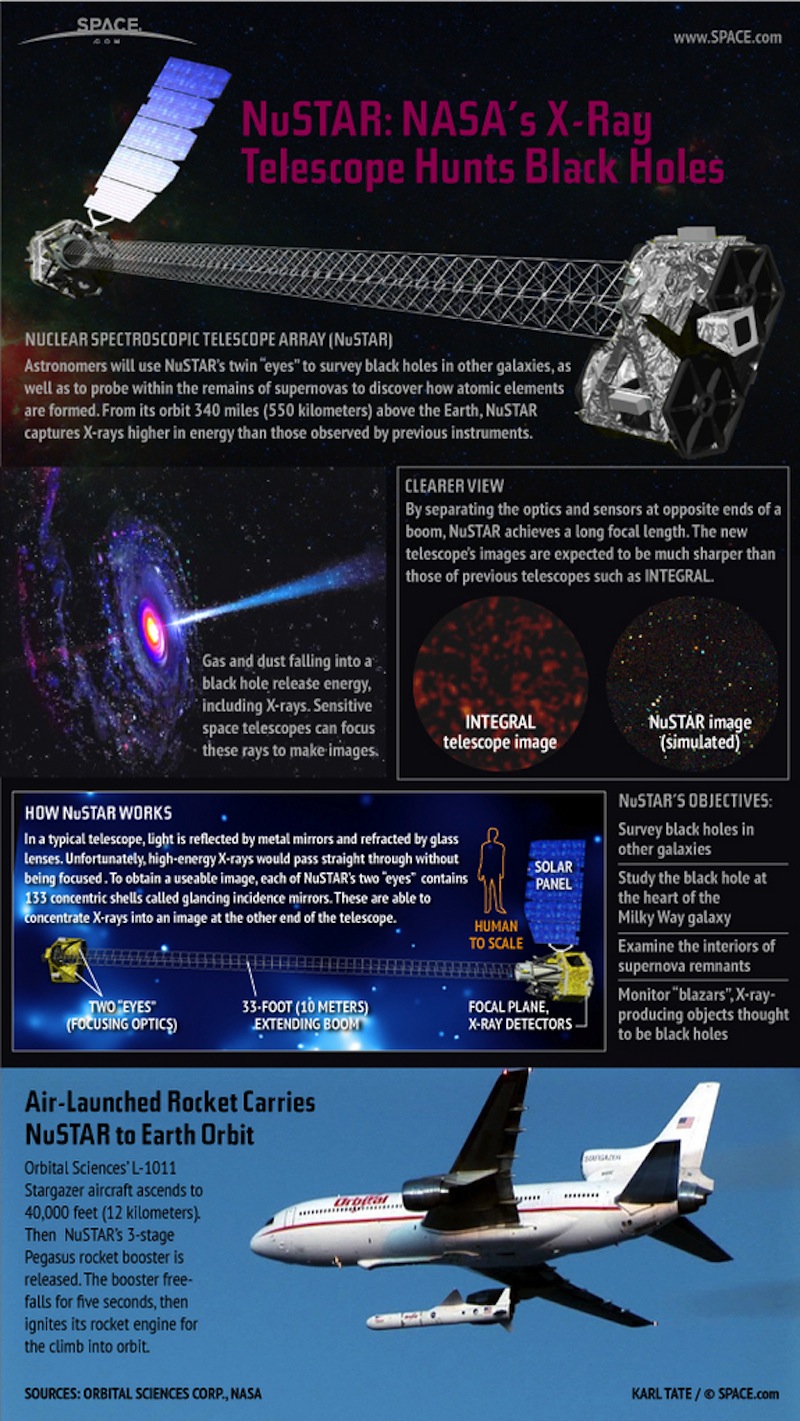
For the first time, a mission designed to set its eyes on black holes and other objects far from our solar system has turned its gaze back closer to home, capturing images of our sun. NASA’s Nuclear Spectroscopic Telescope Array, or NuSTAR, has taken its first picture of the sun, producing the most sensitive solar portrait ever taken in high-energy X-rays.

“NuSTAR will give us a unique look at the sun, from the deepest to the highest parts of its atmosphere,” said David Smith, a solar physicist and member of the NuSTAR team at University of California, Santa Cruz.

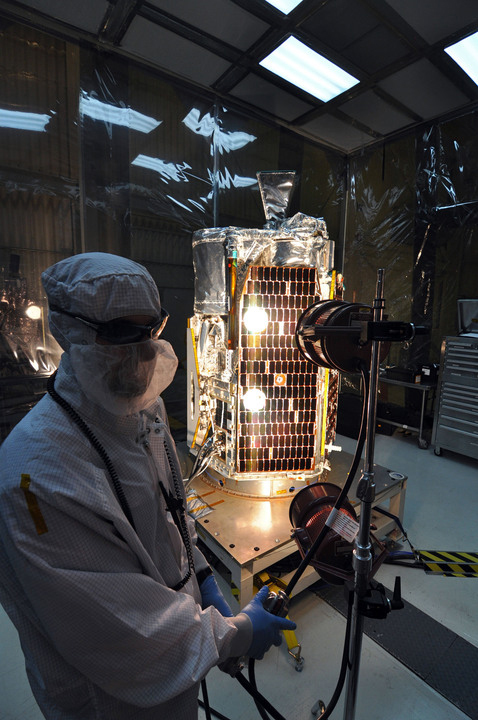
NuSTAR spacecraft will allow astronomers to study the universe in high energy X-rays. Here it undergoes a solar array illumination test. Image tweeted Feb. 3, 2012. (Credit: NASA/NuStar)
NuSTAR spacecraft undergoes a solar array illumination test. Image tweeted Feb. 3, 2012. (Credit: NASA/NuStar)

Solar scientists first thought of using NuSTAR to study the sun about seven years ago, after the space telescope’s design and construction was already underway (the telescope launched into space in 2012). Smith had contacted the principal investigator, Fiona Harrison of the California Institute of Technology in Pasadena, who mulled it over and became excited by the idea.

“At first I thought the whole idea was crazy,” says Harrison. “Why would we have the most sensitive high energy X-ray telescope ever built, designed to peer deep into the universe, look at something in our own back yard?” Smith eventually convinced Harrison, explaining that faint X-ray flashes predicted by theorists could only be seen by NuSTAR.

nustar20120613-640
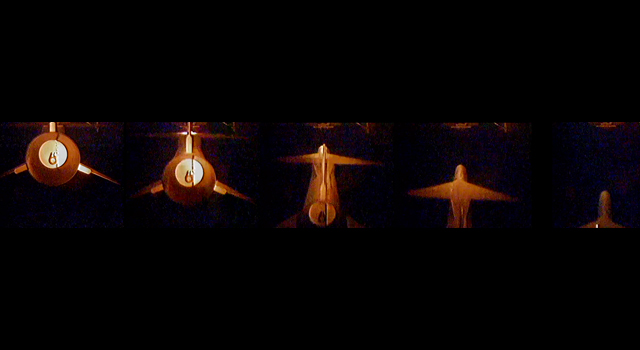
NASA’s NuSTAR and its rocket drop from the carrier “Stargazer” plane. (Credit: Orbital Sciences Corporation)

While the sun is too bright for other telescopes such as NASA’s Chandra X-ray Observatory, NuSTAR can safely look at it without the risk of damaging its detectors. The sun is not as bright in the higher-energy X-rays detected by NuSTAR, a factor that depends on the temperature of the sun’s atmosphere.

This first solar image from NuSTAR demonstrates that the telescope can in fact gather data about sun. And it gives insight into questions about the remarkably high temperatures that are found above sunspots — cool, dark patches on the sun. Future images will provide even better data as the sun winds down in its solar cycle.

“We will come into our own when the sun gets quiet,” said Smith, explaining that the sun’s activity will dwindle over the next few years.

With NuSTAR’s high-energy views, it has the potential to capture hypothesized nanoflares — smaller versions of the sun’s giant flares that erupt with charged particles and high-energy radiation. Nanoflares, should they exist, may explain why the sun’s outer atmosphere, called the corona, is sizzling hot, a mystery called the “coronal heating problem.” The corona is, on average, 1.8 million degrees Fahrenheit (1 million degrees Celsius), while the surface of the sun is relatively cooler at 10,800 Fahrenheit (6,000 degrees Celsius). It is like a flame coming out of an ice cube. Nanoflares, in combination with flares, may be sources of the intense heat.

If NuSTAR can catch nanoflares in action, it may help solve this decades-old puzzle.

“NuSTAR will be exquisitely sensitive to the faintest X-ray activity happening in the solar atmosphere, and that includes possible nanoflares,” said Smith.

What’s more, the X-ray observatory can search for hypothesized dark matter particles called axions. Dark matter is five times more abundant than regular matter in the universe. Everyday matter familiar to us, for example in tables and chairs, planets and stars, is only a sliver of what’s out there. While dark matter has been indirectly detected through its gravitational pull, its composition remains unknown.

In 1977, Frank Wilczek proposed the existence of a new type of elementary particle. He named it an “axion”, after a brand of detergent, because it cleaned up a profound physical problem. (Credit: indico.cern.ch)

It’s a long shot, say scientists, but NuSTAR may be able spot axions, one of the leading candidates for dark matter, should they exist. The axions would appear as a spot of X-rays in the center of the sun.

Meanwhile, as the sun awaits future NuSTAR observations, the telescope is continuing with its galactic pursuits, probing black holes, supernova remnants and other extreme objects beyond our solar system.

NASA's Nuclear Spectroscopic Telescope Array (NuSTAR) space telescope will launch in 2012 on a mission to seek out distant black holes like never before. Take a look at how the $165 million space telescope will launch and perform its mission (Credit:  in the SPACE.com)
NASA’s Nuclear Spectroscopic Telescope Array (NuSTAR) space telescope launched in 2012 on a mission to seek out distant black holes like never before.  (Credit: in the SPACE.com)
Credit: NuStar News at Caltech

Is time really passing?

What Does “Happy New Year” Even Really Mean?

ein

When Albert Einstein’s good friend Michele Besso died in 1955, just a few weeks before Einstein’s own death, Einstein wrote a letter to Besso’s family in which he put forward a scientist’s consolation: “This is not important. For us who are convinced physicists, the distinction between past, present, and future is only an illusion, however persistent.”

The idea that time is an illusion is an old one, predating any Times Square ball drop or champagne celebrations. It reaches back to the days of Heraclitus and Parmenides, pre-Socratic thinkers who are staples of introductory philosophy courses. Heraclitus argued that the primary feature of the universe is that it is always changing. Parmenides, foreshadowing Einstein, countered by suggesting that there was no such thing as change. Put into modern language, Parmenides believed the universe is the set of all moments at once. The entire history of the universe simply is.

adversusapologetica

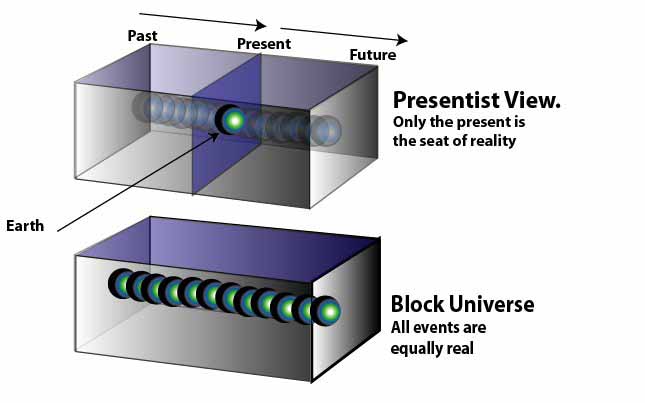
Today we would call this the “eternalist” or “block universe” view—thinking of space and time together as a single four-dimensional collection of events, rather than a three-dimensional world that evolves over time. Besides Parmenides and Einstein, this picture is shared by the Tralfamadorians, an alien race who appear in Kurt Vonnegut’s novel Slaughterhouse-Five. To a being from Tralfamadore, visiting the past is no harder than walking down the street.

This “timeless” view of the universe goes against our usual thinking. We perceive our lives as unfolding. But it has adherents even in contemporary physics. The laws of nature, as we currently understand them, treat all moments as equally real. No one is picked out as special; the laws simply say how any moment relates to the previous one and to the next.

Perhaps the most energetic and persistent advocate of the claim that time is illusory is the British physicist Julian Barbour.

Impressively, Barbour has managed to do interesting research in physics for decades now without any academic position, publishing dozens of papers in respected journals. He has supported himself in part by translating technical papers from Russian to English—in his spare time, tirelessly investigating the idea that time does not exist, constructing theoretical models of classical and quantum gravity in which time plays no fundamental role.

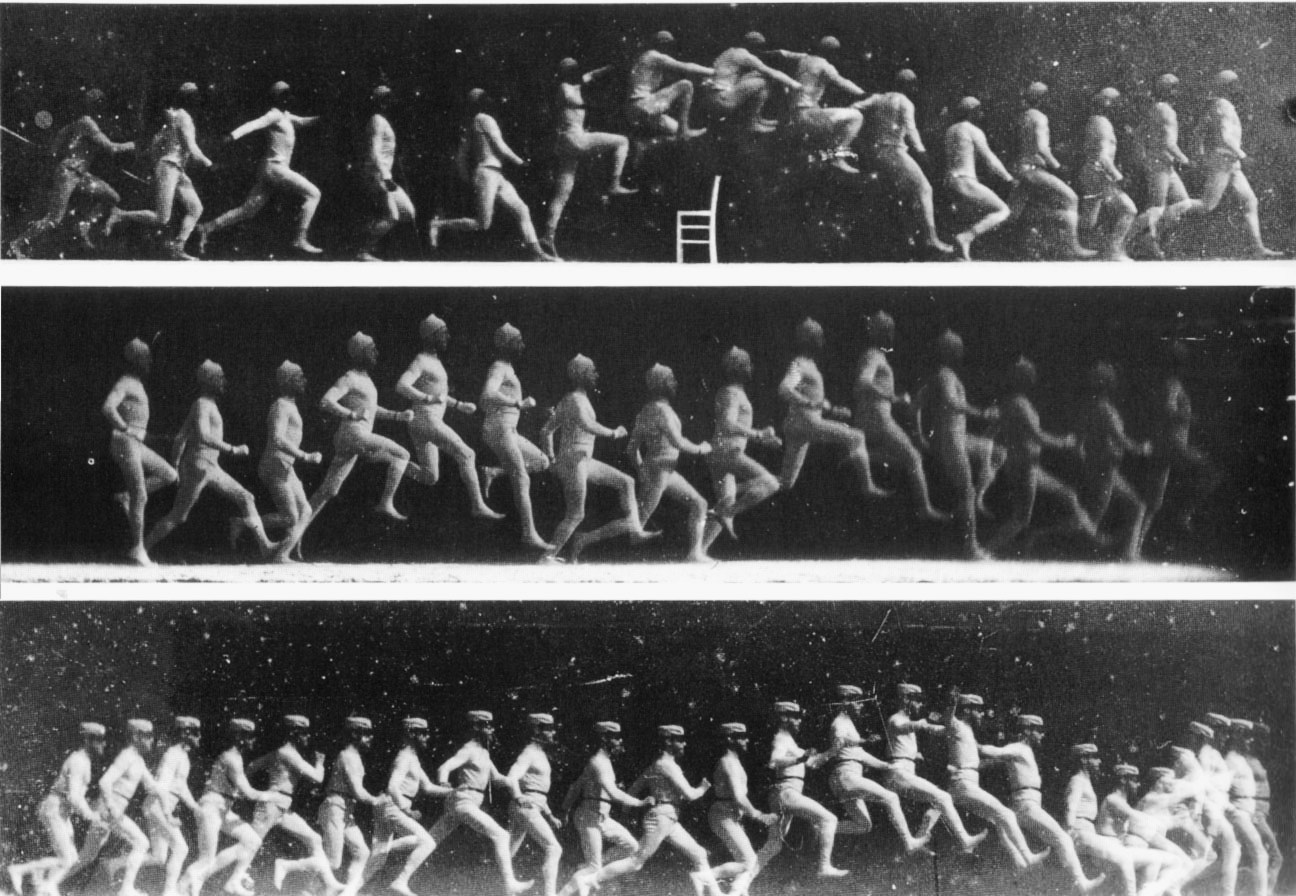
We have to be a little careful about what we mean by “time does not exist.” Even Parmenides or Barbour would acknowledge the existence of clocks, or of the concept of being late. At issue is whether each subsequent moment is brought into existence from the previous moment by the passage of time. Think of a movie, back in the days when most movies were projected from actual reels of film. You could watch the movie, see what happened and talk sensibly about how long the whole thing lasted. But you could also sneak into the projection room, assemble the reels of the film, and look at them all at once.

Etienne_Jules_Marey

The anti-time perspective says that the best way to think about the universe is, similarly, as a collection of the frames.

There has, predictably, been some push back. Tim Maudlin, a philosopher, and Lee Smolin, a physicist, have argued vociferously that time is real, and that the passage of time plays what we might call a generative role: It indeed brings the future into existence. They think of time as an active player rather than a mere bookkeeping device.

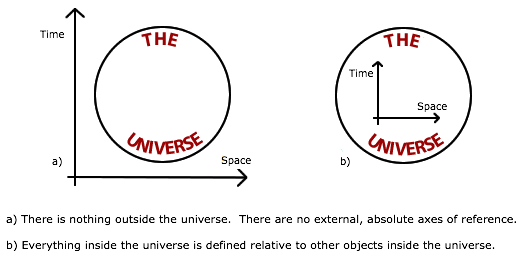
Lee Smolin’s simple maxim: “There is nothing outside the universe” which he described as the “first principle of cosmology”. This means there can be no absolute coordinate system for space or time outside the universe by which object positions and times can be defined. Instead, the position of every object in the universe must be defined solely in terms of the position of other objects in the universe

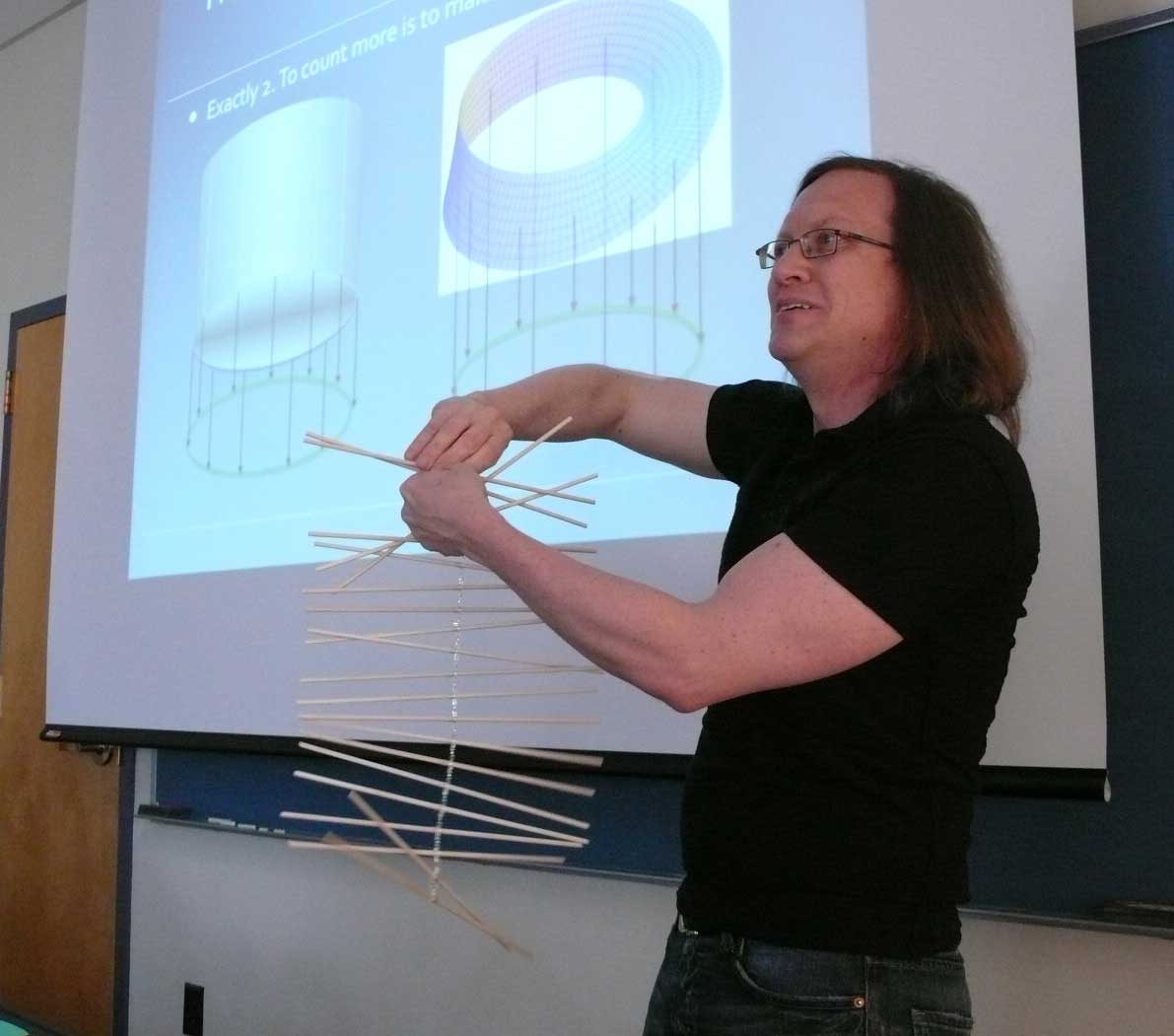
Whereas traditional topology uses regions of space as fundamental building blocks, Maudlin takes worldlines (paths of particles through time) as the most basic object. From there, time evolution seems like a central feature of physics.

Both researchers have been developing new mathematical tools and physical models to buttress their views. Maudlin’s novel approach focuses on the topology of spacetime itself—how different points in the universe are sewn together.

(Credit: John D. Norton Gauge Workshop, University of Pittsburgh)
“Still, going from Mars to Earth is not the same as going from Earth to Mars. The difference, if you will, is how these sequences of states are oriented with respect to the passage of time.” Maudlin (Credit: J. D. Norton, University of Pittsburgh, Wikipedia)

Whereas traditional topology uses regions of space as fundamental building blocks, Maudlin takes worldlines (paths of particles through time) as the most basic object. From there, time evolution seems like a central feature of physics.

Smolin, in contrast, has suggested that the laws of physics themselves are evolving with time. We wouldn’t notice this from moment to moment, but over cosmological time scales, the parameters we think of as fixed may eventually take on very different values.

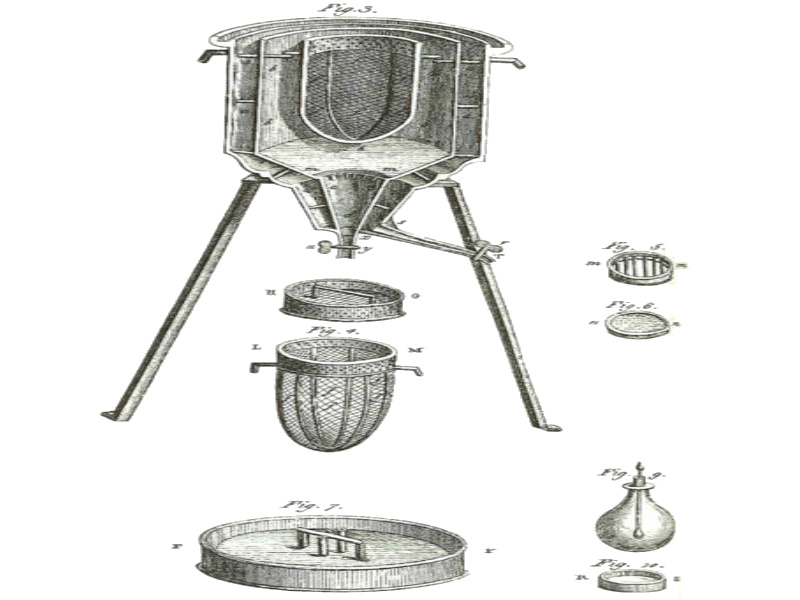
There is, perhaps, a judicious middle position between insisting on the centrality of time and denying its existence. Something can be real—actually existing, not merely illusory—and yet not be fundamental. Scientists used to think that heat, for example, was a fluid like substance, called “caloric,” that flowed from hot objects to colder ones.

The world’s first ice-calorimeter, used in the winter of 1782-83, by Antoine Lavoisier and Pierre-Simon Laplace, to determine the heat involved in various chemical changes. (Credit: Wikipedia)

These days we know better: Heat is simply the random motions of the atoms and molecules out of which objects are made. Heat is still real, but it’s been explained at a deeper level. It emerges out of a more comprehensive understanding.

Perhaps time is like that. Someday, when the ultimate laws of physics are in our grasp, we may discover that the notion of time isn’t actually essential. Time might instead emerge to play an important role in the macroscopic world of our experience, even if it is nowhere to be found in the final Theory of Everything.

In that case, I would have no trouble saying that time is “real.” I know what it means to grow older or to celebrate an anniversary whether or not time is “fundamental.” And either way, I can still wish people a Happy New Year in good conscience.

hny

By Sean M. Carroll for Smithsonian Magazine

Sean M. Carroll is a research professor in physics at the California Institute of Technology. He is the author of From Eternity to Here, Spacetime and Geometry and The Particle at the End of the Universe, which won the Winton Prize from the Royal Society.

Credit: Smithsonian Magazine

Starburst Galaxies emit more radiation than a million suns emit at all wavelengths

Ultra-luminous X-Ray Sources in Starburst Galaxies

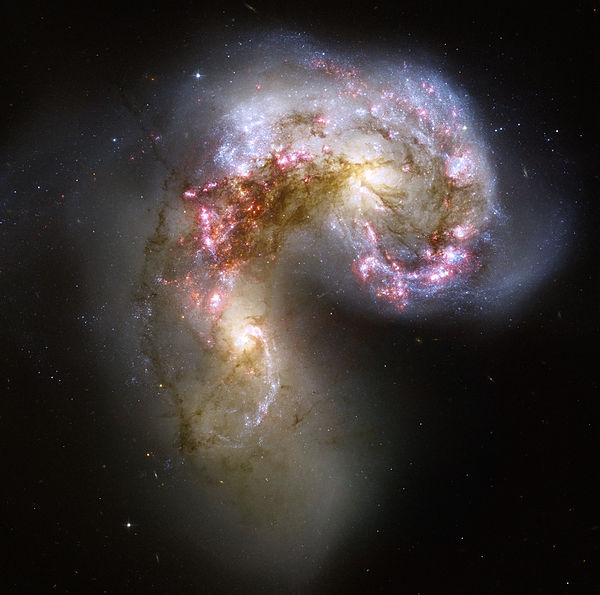
The Antennae Galaxies are an example of a starburst galaxy occurring from the collision of NGC 4038/NGC 4039. (Credit: NASA/ESA)

Ultra-luminous X-ray sources (ULXs) are point sources in the sky that are so bright in X-rays that each emits more radiation than a million suns emit at all wavelengths. ULXs are rare. Most galaxies (including our own Milky Way) have none, and those galaxies that do host a ULX usually contain only one. ULXs are also mysterious objects. They can’t be normal stars because their huge luminosities should then tear them apart.

Most astronomers think that ULXs are black holes more than about ten solar masses in size (so-called intermediate mass black holes) that are accreting matter onto a surrounding disk and emitting X-rays. Bright X-ray emission is not unusual – the nuclei of galaxies also are bright X-ray emitters – but they are super-massive black holes, while ULXs are neither super-massive nor located in galactic nuclei.

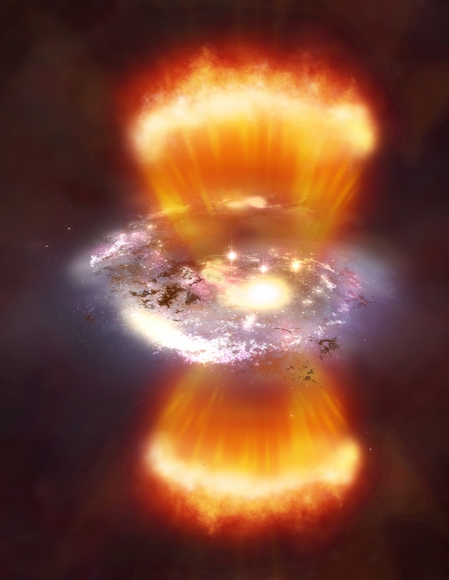
An artist's rendition of one of the newly discovered SPIRE 'hot starburst' galaxies (credit: NASA/CXC/M.Weiss)
An artist’s rendition of one of the newly discovered SPIRE ‘hot starburst’ galaxies (credit: NASA/CXC/M.Weiss)

CFA astronomers Stefano Mineo and Andy Goulding and their colleagues used the Chandra X-ray Observatory to search for ULXs in a sample of seventeen luminous infrared galaxies that are exceptionally bright because of their extreme star formation activity. If star formation does signal the presence of ULXs, or even produce them, then these objects should have many. The team discovered fifty-three ULXs (with an uncertainty of about 30% ) among the 139 X-ray sources present in this sample.

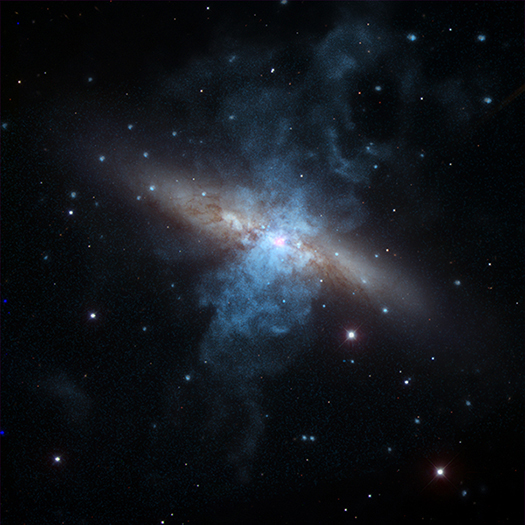
An Ultraluminous X-ray Source (ULX) in the center of galaxy M82 that astronomers had thought was a black hole is really the brightest pulsar ever recorded. (Credit:  X-ray: NASA/CXC/Univ. of Toulouse/M. Bachetti; Optical: NOAO)
An Ultraluminous X-ray Source (ULX) in the center of galaxy M82 that astronomers had thought was a black hole is really the brightest pulsar ever recorded. (Credit:
X-ray: NASA/CXC/Univ. of Toulouse/M. Bachetti; Optical: NOAO)

They report, however, that this ULX figure is actually ten times smaller than would be expected if ULXs correlated with simple star formation activity. They offer several possible explanations for this deficiency, including a surfeit of elements heavier than helium in these galaxies (these elements can suppress the birth of black holes).

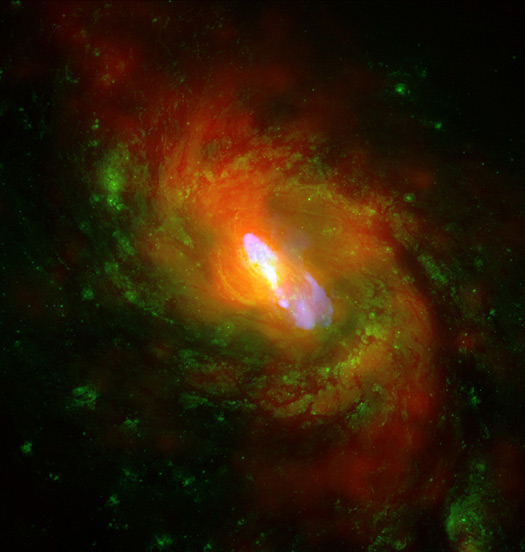
The galaxy NGC 1068, seen here in X-ray (red), optical (green) and radio (blue), is actively forming stars and contains three ultra-luminous X-ray sources ULXs. Astronomers investigating the connections between young stars and ULXs have completed a study of active star-forming galaxies and were surprised to find they are deficient in ULXs. (Credit: NASA/CXC/MIT/C.Canizares, D.Evans, Optical NASA/STScI, Radio NSF/NRAO/VLA)

But the most likely scenario, they argue, is that large amounts of gas in these galaxies are present and absorbing X-rays, with the result that many of the ULXs present are not detected. Their conclusion implies that deep X-ray surveys of galaxies must take absorbing gas into account when estimating their internal X-ray properties and how this radiation affects the galaxies’ properties and evolution.


Reference(s):

“A Deficit of Ultraluminous X-ray Sources in Luminous Infrared Galaxies,” W. Luangtip, T. P. Roberts, S. Mineo, B. D. Lehmer, D. M. Alexander, F. E. Jackson, A. D. Goulding and J. L. Fischer, MNRAS 446, 470, 2015

Credit: Smithsonian Astrophysical Observatory