Welcome to Time in Cosmology!

Recently, there have been a growing number of scientists, theorists, journalists, and others who have expressed and exposed the rather high degree of frustration within the scientific community. This frustration extends broadly from String Theory to the Standard Cosmology, and to related areas. Although there have been recent encouraging experimental results, the many scientific controversies that exist have not been diminished, in fact, many have been intensified.

Because of this, we have established this Time in Cosmology (Scientific Association for the Study of Cosmology and Time) website as a vehicle for exploring interesting ideas and credible alternatives to posit a more universal review to a wider audience. To this end, we would like to offer Dr. William Tifft’s blog to introduce the philosophy and physical foundations of time.  Although some of the posts are open for review by a general audience, the majority is academic and involves real science, not science fiction or unfounded speculation.  Join the discussion on Facebook for daily news posts, or follow us on Twitter.

The William Tifft Blog

SASTPC is a 501(c)(3) nonprofit organization funded solely by contributions and grants.

Physics in the News

Friday, September 26, 2014

New molecule found in space connotes life origins

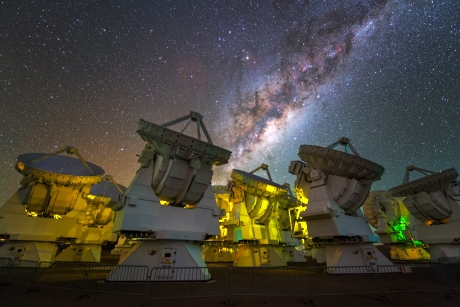
The vibrant, starry stream of the Milky Way frames radio telescopes of the Atacama Large Millimeter/submillimeter Array - known as the ALMA Observatory - in Chile’s Atacama Desert. (Credit: Y. Beletsky/ESO)
The vibrant, starry stream of the Milky Way frames radio telescopes of the Atacama Large Millimeter/submillimeter Array – known as the ALMA Observatory – in Chile’s Atacama Desert. (Credit: Y. Beletsky/ESO)
via cornell

Black holes declared non-existent again.

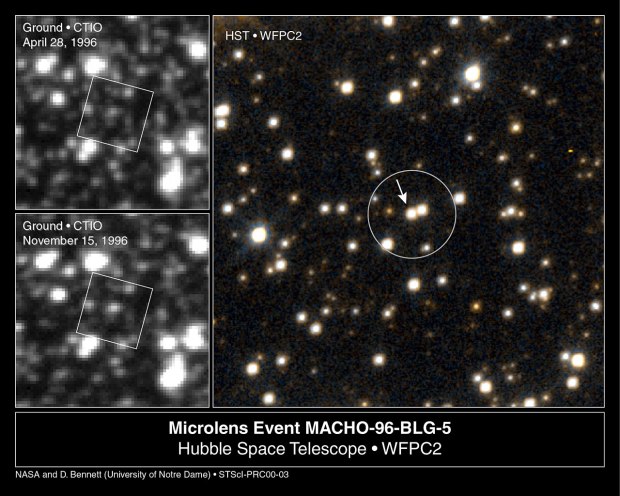
Two international teams of astronomers using the Hubble Space Telescope and ground-based telescopes in Australia and Chile have discovered the first examples of isolated stellar-mass black holes adrift among the stars in our galaxy. (Credit: NASA/ESA, D. Bennett)
via backreaction

First Quantum Logic Operation For An Integrated Photonic Chip

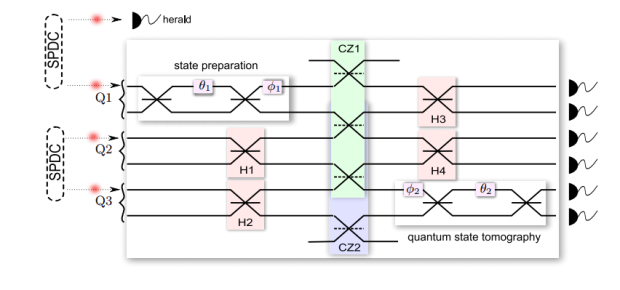
The first teleportation of a photon inside a photonic chip illustrates both the potential for quantum computation and the significant challenges that lay ahead.
via technologyreview

Cold Atom Laboratory Chills Atoms to New Lows

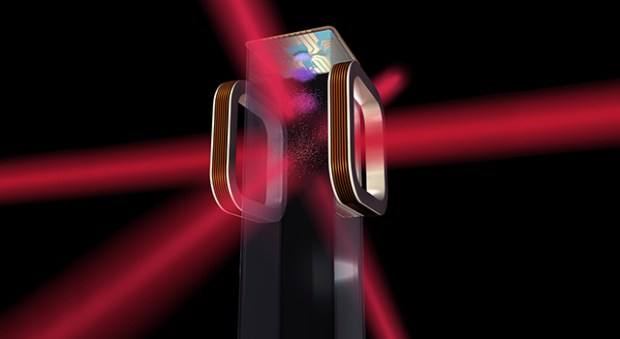
rtist's concept of an atom chip for use by NASA's Cold Atom Laboratory (CAL) aboard the International Space Station. CAL will use lasers to cool atoms to ultracold temperatures. (Credit: NASA)
rtist’s concept of an atom chip for use by NASA’s Cold Atom Laboratory (CAL) aboard the International Space Station. CAL will use lasers to cool atoms to ultracold temperatures. (Credit: NASA)
via jpl

A dramatic recent “discovery” in physics is looking rather dodgy

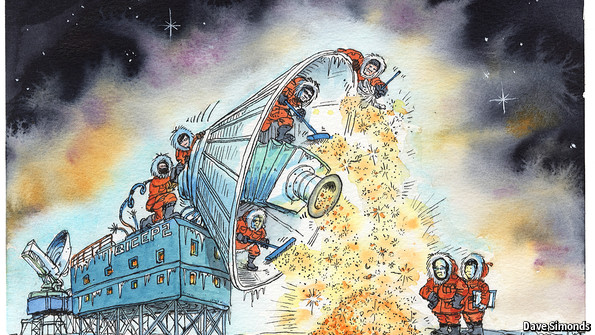
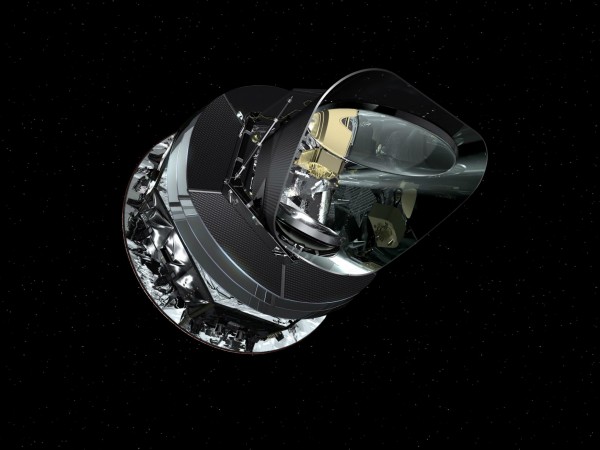
 A paper just released by the team behind Planck, a European space telescope, casts serious doubt on the BICEP-2 result. (Credit: D. Simonds)
A paper just released by the team behind Planck, a European space telescope, casts serious doubt on the BICEP-2 result. (Credit: D. Simonds)
via economist

Craig Nelson claims that the atomic era is in its twilight years

"The atomic age is an incredible epoch, filled with people we think we know already—from Marie Curie and Albert Einstein to Ronald Reagan and the plant workers of Fukushima—but they all turn out to be a lot more complicated and interesting than any of us could’ve imagined," says Nelson.(Credit: Helvio Faria)
“The atomic age is an incredible epoch, filled with people we think we know already—from Marie Curie and Albert Einstein to Ronald Reagan and the plant workers of Fukushima—but they all turn out to be a lot more complicated and interesting than any of us could’ve imagined,” says Nelson. (Credit: Helvio Faria)
via scitation

Physics in the News

Thursday, September 25, 2014

Much of Earth’s Water Is Older Than the Sun

Planets form in the presence of abundant interstellar water inherited as ices from the parent molecular cloud. (Credit: NASA/JPL-Caltech/R. Hurt (SSC-Caltech)/ESO/J. Emerson/VISTA/Cambridge Astronomical Survey Unit)
Planets form in the presence of abundant interstellar water inherited as ices from the parent molecular cloud.(Credit: NASA/JPL-Caltech/R. Hurt (SSC-Caltech)/ESO/J. Emerson/VISTA/Cambridge Astronomical Survey Unit)
via space

Dark Matter Looks WIMPy

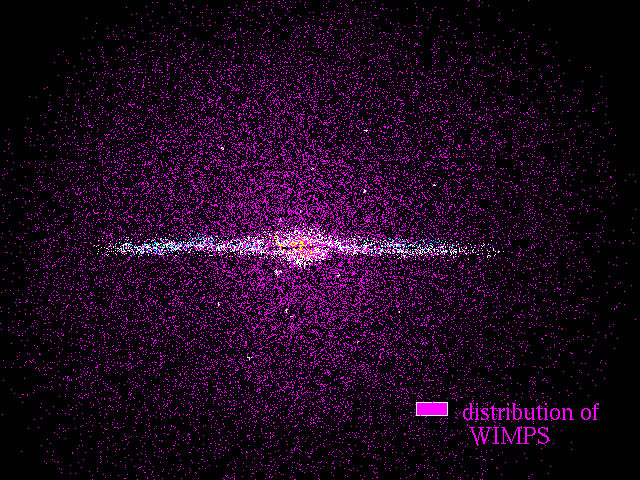
In astronomy, WIMPs, or weakly interacting massive particles, figure into one explanation of the dark matter problem. The particles are called “weakly interacting” because they seem not to have much interaction with normal matter (electrons, protons, and neutrons) other than gravitational attraction (thus “massive”). (Credit: NASA, ESA. Hubble)
In astronomy, WIMPs, or weakly interacting massive particles, figure into one explanation of the dark matter problem.The particles are called “weakly interacting” because they seem not to have much interaction with normal matter (electrons, protons, and neutrons) other than gravitational attraction (thus “massive”). (Credit: NASA, ESA. Hubble)
via scientificamerican

A Numerical Calculation of the Electric Field Due to a Charge Distribution

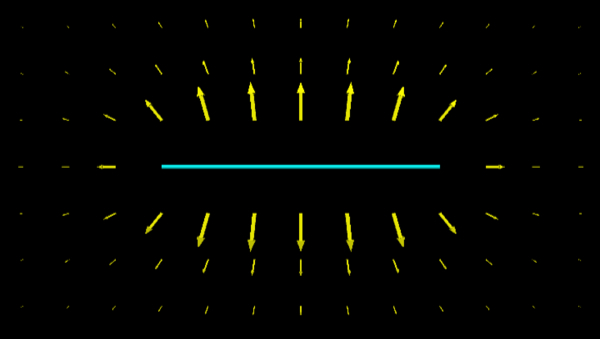
It’s difficult to create a uniformly charged electric rod and even harder to measure the electric field at different points in space. (Credit: Rhett Allain)
via wired

CubeSat craze could create space debris catastrophe

via newscientist

The Coolest Star

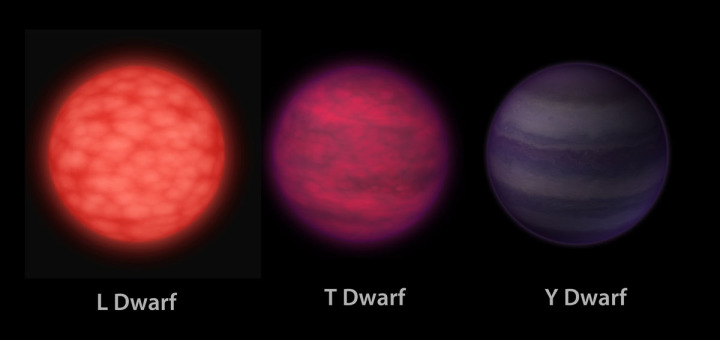
One way that stars are categorized is by temperature. Since the temperature of a star can determine its visual color, this category scheme is known as spectral type. The main categories of spectral type are M, K, G, F, A, B, and O. The coolest stars (red dwarfs) being M, and the hottest stars being O. Our own Sun is a G star. (Credit: B Koberlein, NASA/JPL-Caltech)
via briankoberlein

Force of nature gave life its asymmetry

Life is made largely of molecules that are different than their mirror images. (Credit: Notjustnut/Getty)
via nature

Physics in the News

Wednesday, September 24, 2014

New Results from Planck: It Doesn’t Look Good For BICEP2

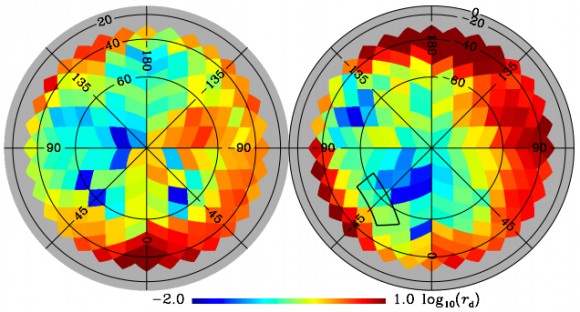
Dust map of the Universe. The region studied by BICEP2 is indicated by the rectangle in the right circle. (Credit: Planck Collaboration)
via universetoday

Artificial Atoms Talk … and Scientists Listen

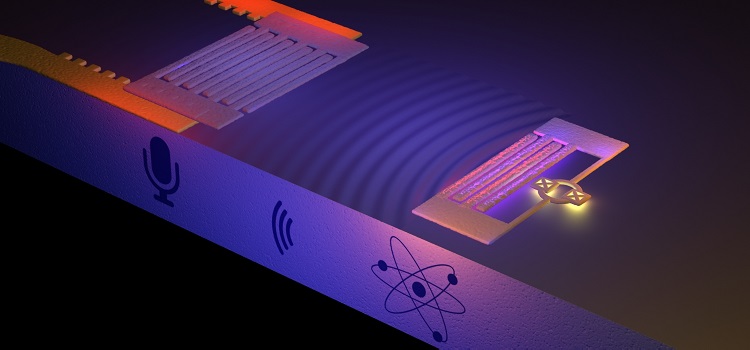
n this illustration, the artificial atom on the right side of the image sends out sound waves that are picked up by the microphone on the left. (Credit: Philip Krantz)
via livescience

What’s Next for Inflation Cosmology – New Updates

(Credit: Andrei Linde)
A serious challenge to the discovery of gravity waves by the BICEP2 2014 results has appeared: the researchers had underestimated the amount of interstellar dust that could be contaminating their data. (Credit: MacRobert, Andrei Linde)
via skyandtelescope

Clear skies reveal water on distant Neptune-sized planet

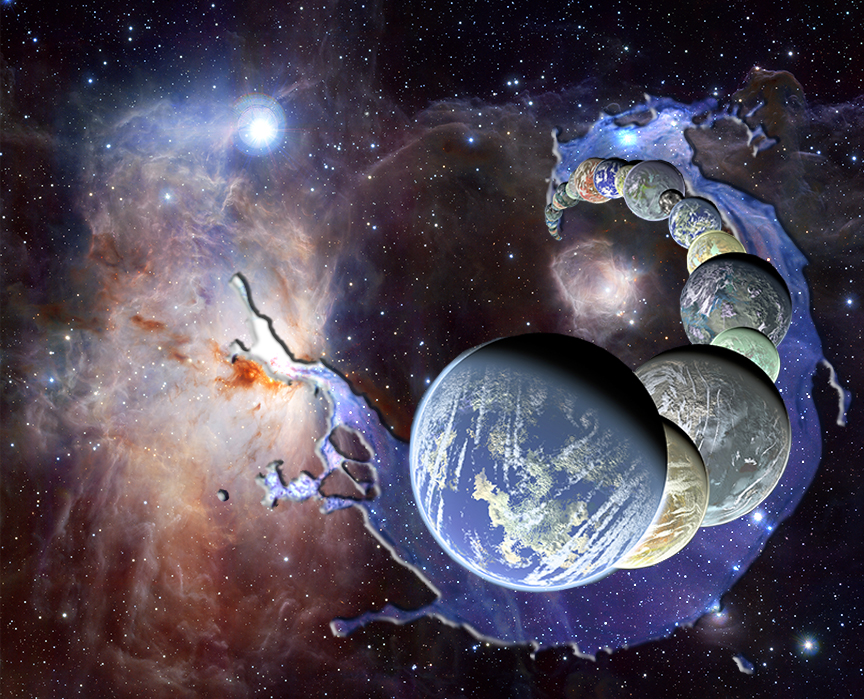
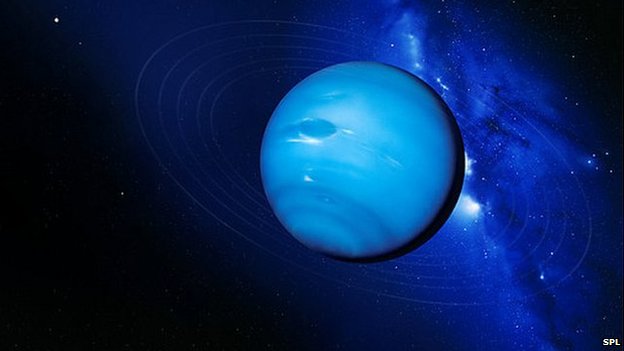
Scientists have found definitive traces of water on a relatively small exoplanet. HAT-P-11b is the size of Neptune and has copious amounts of both water vapor and hydrogen in its atmosphere. (Credit: NASA)
Scientists have found definitive traces of water on a relatively small exoplanet. HAT-P-11b is the size of Neptune and four times the size of Earth. The exoplanet has copious amounts of both water vapor and hydrogen in its atmosphere. (Credit: NASA)
via bbc

Hugh Everett: The man who gave us the multiverse

via newscientist

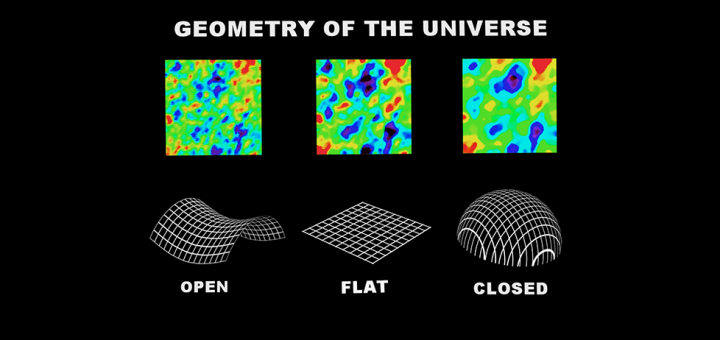
What is the geometry of the universe?

Our current model of the early inflationary period predicts that the universe should be flat, and so far that has held up. If the universe actually is curved, then the inflationary period must have been more complex than we have thought. (Credit: Koberlien)
via phys.org

Robot Octopus Takes to the Sea

via spectrum

Physics in the News

Tuesday, September 23, 2014

Brian Cox: ‘Multiverse’ makes sense

via bbc.com

UNC professor says black holes can’t exist (PDF)

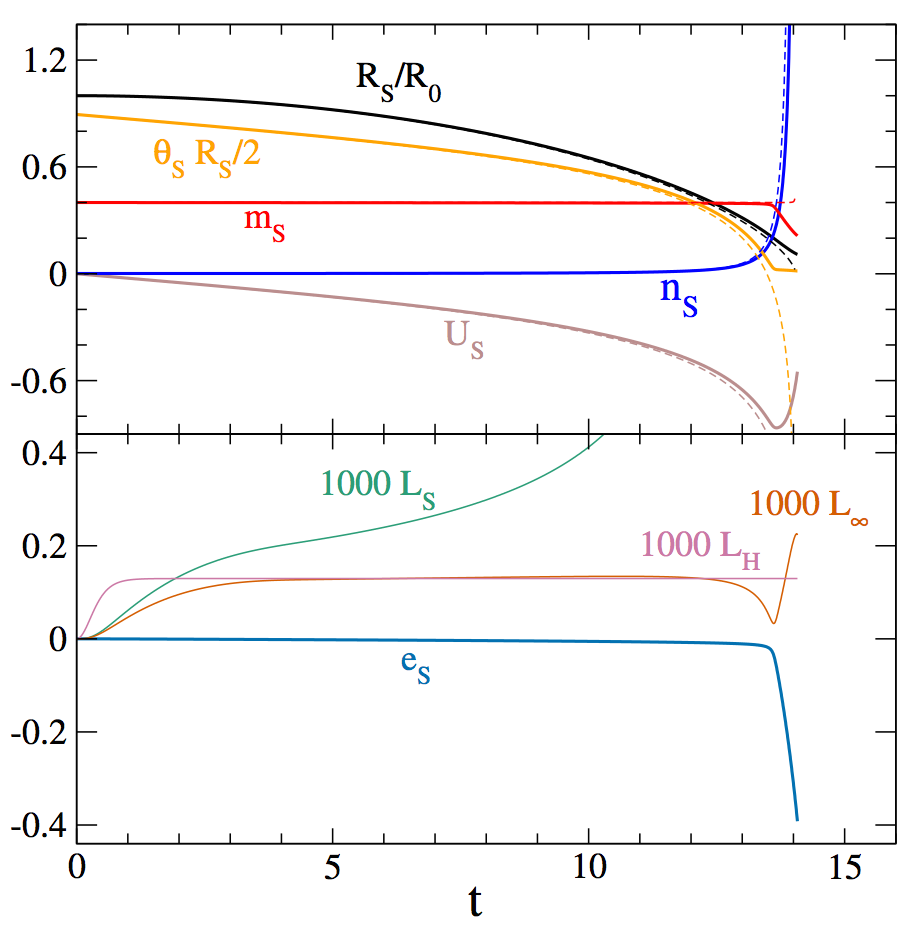
Evolution of pressure-free collapse with Hawking radiation. For easy of plotting, the luminosities are scaled by a factor of 1000. The thin dashed lines in the upper panel represent the respective quantities in a pure Oppenheimer-Snyder collapse of the same initial conditions.
Evolution of pressure-free collapse with Hawking radiation. For easy of plotting, the luminosities are scaled by a factor of 1000. The thin dashed lines in the upper panel represent the respective quantities in a pure Oppenheimer-Snyder collapse of the same initial conditions. (Credit: Mersini-Houghton, Pfeier)
via uncnews

Einstein’s Greatest Legacy

Einstein, like no other physicist before or after him, demonstrated how the power of human thought alone, used skillfully, can allow us to consider experiments that could never be practically performed. This line of thinking, these experiments performed only in our imaginations, showed we little humans often have the power to deduce equations that govern the natural world by logical deduction alone.(Credit: Siegel, Luis Royo Fantasy Art, via Photobucket user mikenolan78)
Einstein, like no other physicist before or after him, demonstrated how the power of human thought alone, used skillfully, can allow us to consider experiments that could never be practically performed. This line of thinking, these experiments performed only in our imaginations, showed we little humans often have the power to deduce equations that govern the natural world by logical deduction alone. (Credit:E. Siegel, Luis Royo Fantasy Art, via Photobucket user mikenolan78)
via medium

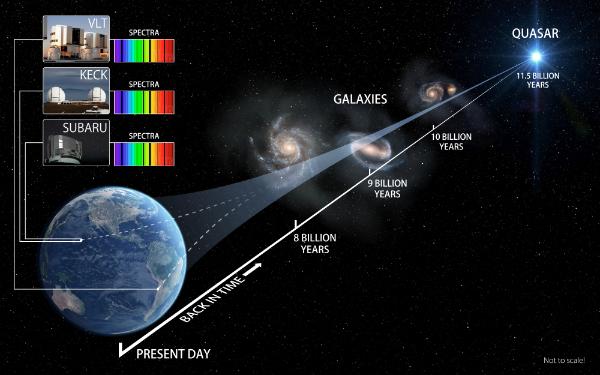
It’s okay: electromagnetic force hasn’t changed in 10 billion years

Astronomers find the strength of the electromagnetic force hasn’t changed in ten billion years. “We didn’t see any difference between electromagnetism in these three distant galaxies and here on Earth, so we don’t support that previous finding,” says Associate Professor Michael Murphy of Swinburne University. (S. Garry, Michael Murphy/Swinburne )
via abc

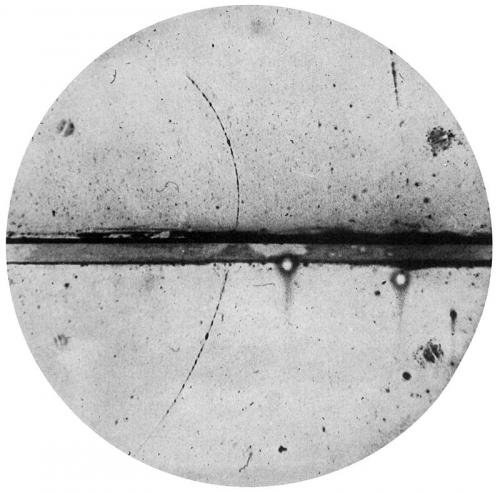
How cloud chambers revealed subatomic particles

Photograph of a cloud chamber showing the first discovered positron. (Credit: Carl D. Anderson)
via phys.org

Evidence for cosmic inflation wanes

Planck’s new microwave maps cast doubt on earlier results. (Credit: ESA/NASA/JPL-Caltech)
via sciencemag

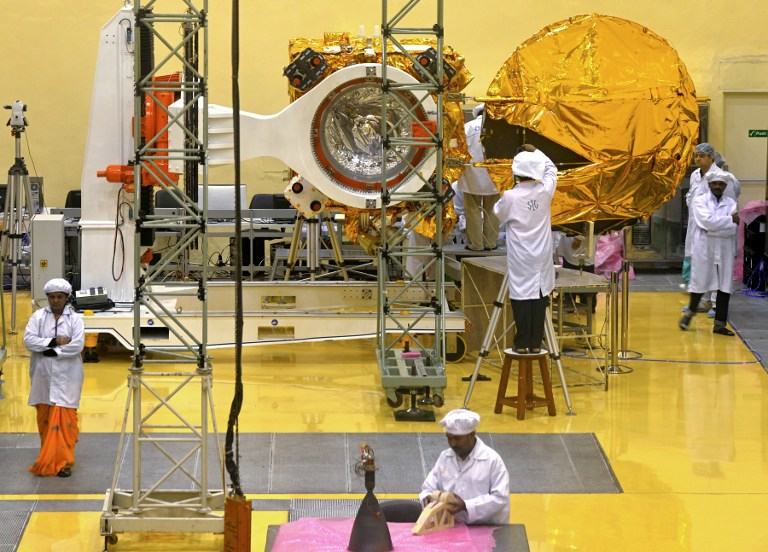
India’s Mars Orbiter Mission could make history tomorrow

On Wednesday, Sept. 24, India could join the ranks of NASA, the European Space Agency and Russian Federal Space Agency having a successful mission to Mars. (Credit: AFP / Files / Manjunath Kiran)
via salon

When research worlds collide

via symmetrymagazine