Physics in the News

Wednesday, August 13, 2014

First robotic telescope captures clear images of exoplanet stars

via spectrum

What?! The universe appears to be missing some light
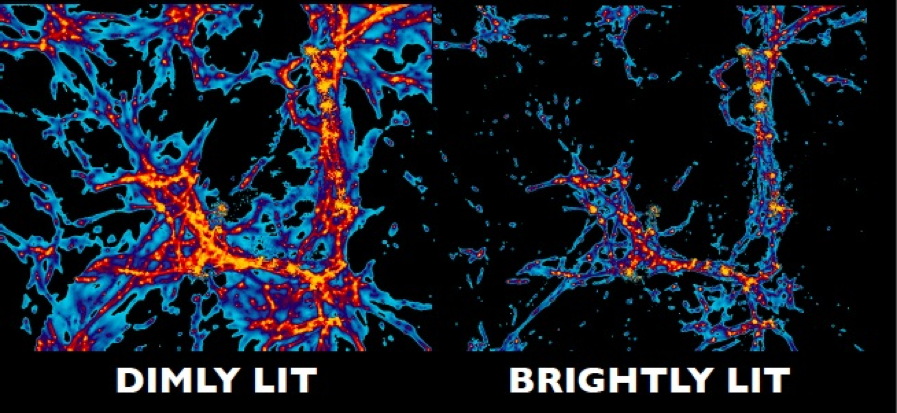
New data from the Hubble Space Telescope and computer simulations have revealed that the universe has much less ultraviolet light than previously thought. (Credit: Ben Oppenheimer and Juna Kollmeie)
New data from the Hubble Space Telescope and computer simulations have revealed that the universe has much less ultraviolet light than previously thought.
(Credit: Ben Oppenheimer and Juna Kollmeie)
via space

Here’s the world’s first robotics company to pledge not to make ‘killer robots’
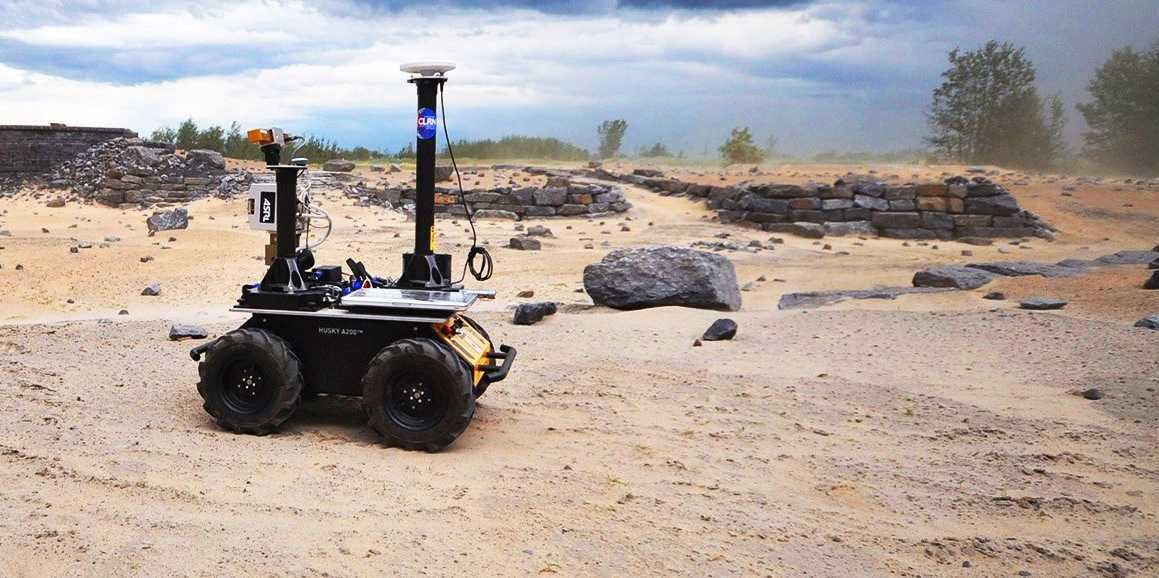
Clearpath Robotics "Husky," an autonomous vehicle. (Credit: Clearpath Robotics)
“Husky,” an autonomous vehicle. (Credit: Clearpath Robotics)

via businessinsider

Planck’s mystery cosmic ‘cold spot’ may be an error
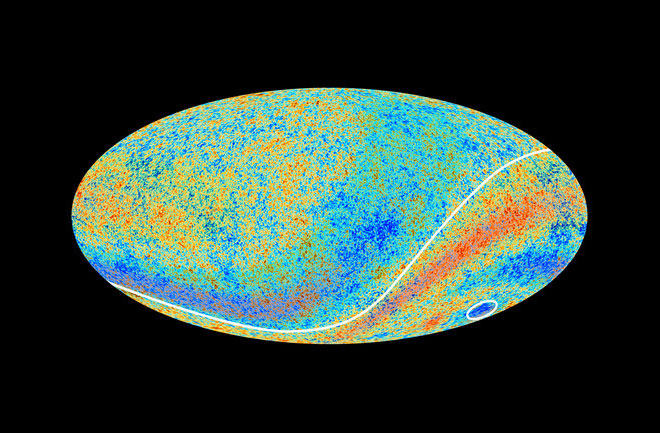
The European Space Agency's Planck space telescope mapped the cosmic microwave background. (Credit: ESA and the Planck Collaboration)
The European Space Agency’s Planck space telescope mapped the cosmic microwave background. (Credit: ESA and the Planck Collaboration)
via space

Proof confirmed of 400-year-old fruit-stacking problem
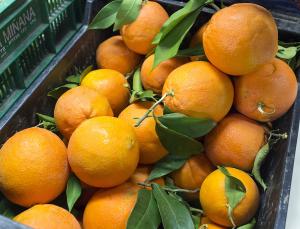
Now, a mathematician has announced the completion of an epic quest to formally prove the so-called Kepler conjecture. “An enormous burden has been lifted from my shoulders,” says Thomas Hales of the University of Pittsburgh, Pennsylvania, who led the work. “I suddenly feel ten years younger!” (Credit: Ray Tang/Rex)
via newscientist

Introducing this year’s underground astronauts
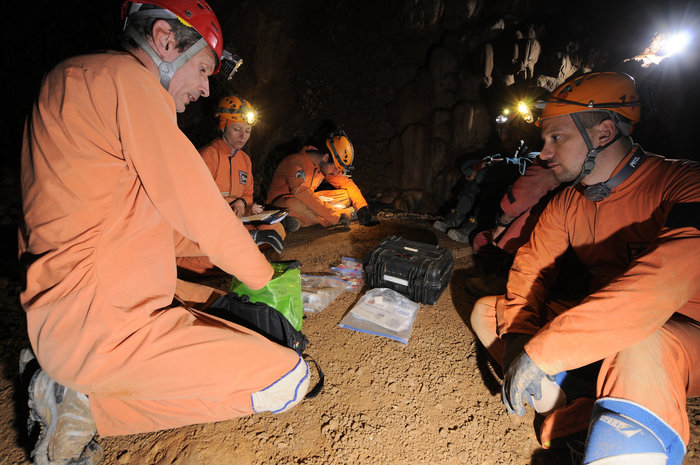
Astronauts will be working together, deep underground. (Credit: ESA—A. Romeo)
via phys

How to build a supermassive black hole in less than a billion years
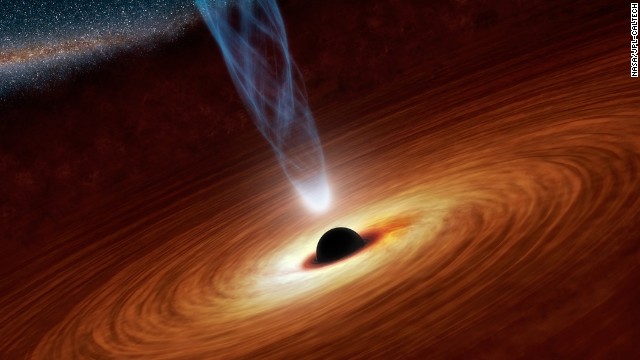
This artist's rendering shows one possible configuration for a corona, but that its true shape is unknown. (Credit: NASA/JPL-Caltech)

via arstechnica

Physics in the News

Tuesday, August 12, 2014

The smallest possible scale in the universe

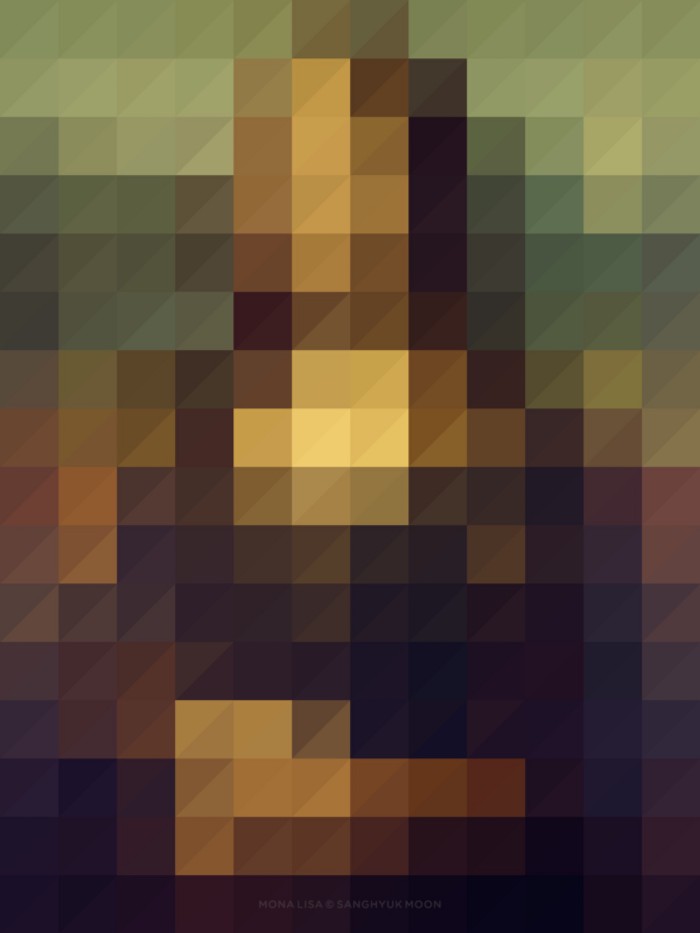
Every once in a while I think that there maybe is no fundamentally smallest unit of length; that all these arguments for its existence are wrong. I like to think that we can look infinitely close into structures and will never find a final theory, turtles upon turtles, or that structures are ultimately self-similar and repeat.(Credit: Sabine Hossenfelder)
Every once in a while I think that there maybe is no fundamentally smallest unit of length; that all these arguments for its existence are wrong. I like to think that we can look infinitely close into structures and will never find a final theory, turtles upon turtles, or that structures are ultimately self-similar and repeat.(Credit: Sabine Hossenfelder, Sanghyuk Moon)
via medium

Cosmologist Laura Mersini-Houghton claims black holes do not exist(VIDEO)

via thewatchers

Europe’s last cargo ship reaches space station

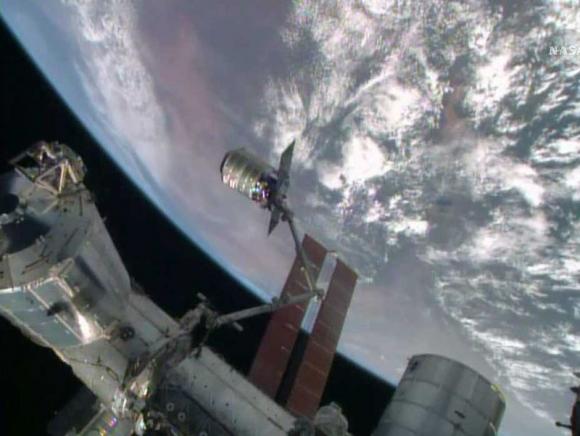
The International Space Station's robotic arm, Canadarm2, grapples the Orbital Sciences' Cygnus cargo craft, as seen in this still image taken from NASA TV July 16, 2014.  (Credit: Reuters/NASA TV/Handout via Reuters)
The International Space Station’s robotic arm, Canadarm2, grapples the Orbital Sciences’ Cygnus cargo craft, as seen in this still image taken from NASA TV July 16, 2014. (Credit: Reuters/NASA TV/Handout via Reuters)

via reuters

Follow the radio waves to exomoons, astrophysicists say

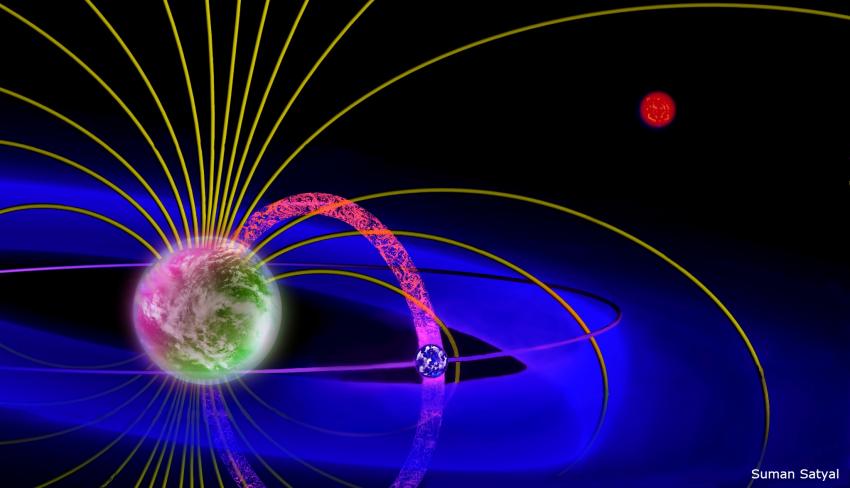
This is a schematic of a plasma torus around an exoplanet, which is created by the ions injected from an exomoon's ionosphere into the planet's magnetosphere. (Credit: UT Arlington)
This is a schematic of a plasma torus around an exoplanet, which is created by the ions injected from an exomoon’s ionosphere into the planet’s magnetosphere. (Credit: UT Arlington)

via phys

NASA is contest-sourcing solutions to its deepest problems

(Credit: NASA/Don Davis)
“As NASA continues to push the boundaries of human imagination and innovation, we have seen the value in utilizing a citizen-based professional crowd to complement our internal efforts and solve complex real-world challenges,” Jason Crusan, director of NASA’s Tournament Lab. (Credit: NASA/Don Davis)
via motherboard

Schrödinger’s cat explained on physicist’s 127th birthday(VIDEO)

via cbc

Beyond six nines: Ultra-enriched silicon paves the road to quantum computing

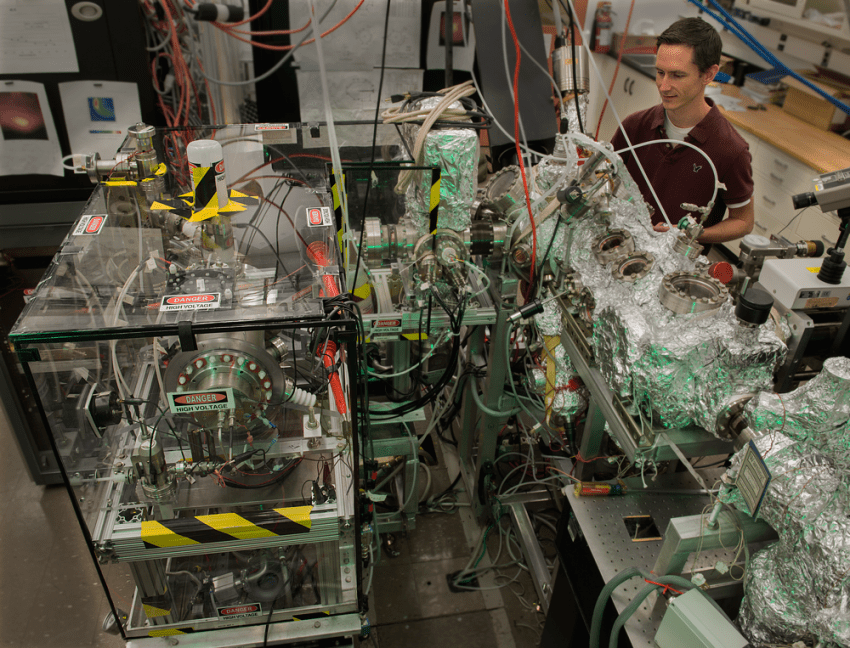
NIST researcher Kevin Dwyer with the silicon enrichment apparatus. The process begins at the left, where natural-abundance silicon in the form of silane gas (SiH4) is ionized. The ions pass through a magnetic field (top left), which causes their paths to curve to different degrees based on their mass. The silicon-28 ions, now separated from the other silicon isotopes, are decelerated through an ultra-high vacuum chamber (top center) and into the deposition chamber (top right) (Credit: Pomeroy, NIST, Dwyer)
via phys

NASA’s NuSTAR sees rare blurring of black hole light

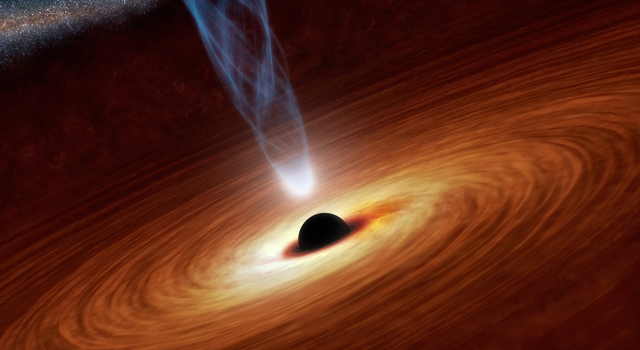
This artist’s concept illustrates a supermassive black hole with millions to billions times the mass of our sun. Supermassive black holes are enormously dense objects buried at the hearts of galaxies. (Credit: NASA/JPL-Caltech)
via pasadenanow

 From eons to seconds, proteins exploit the same forces

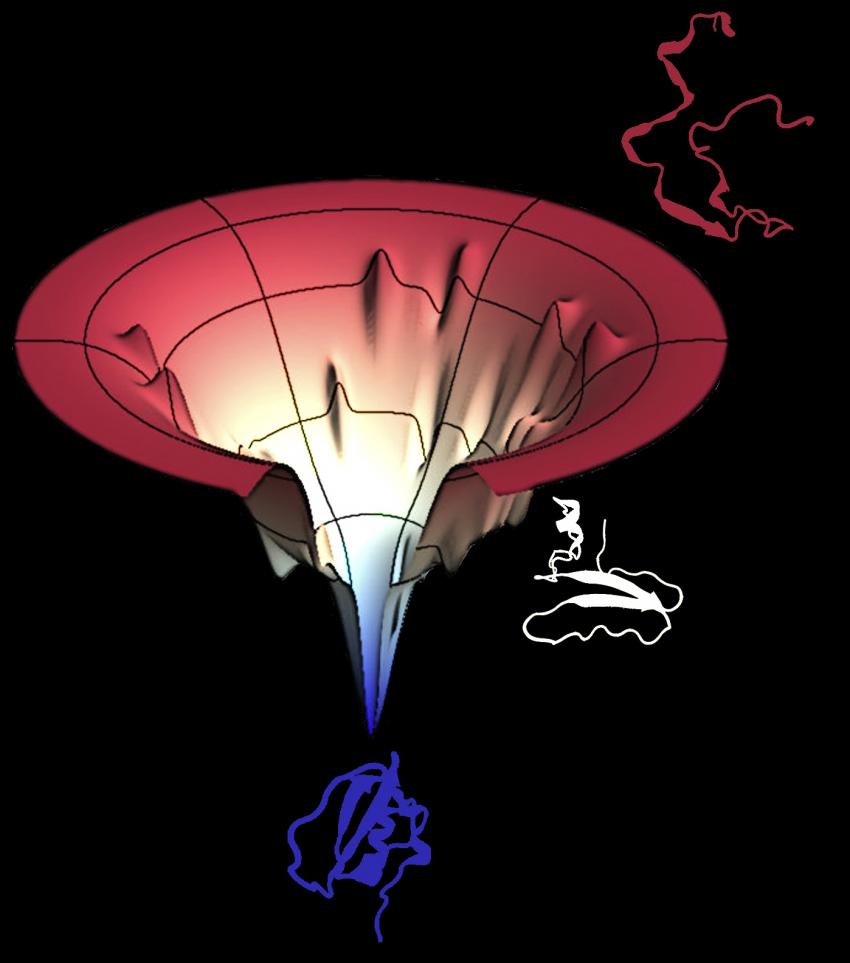
A protein folding funnel, the product of algorithms created by Rice’s Center for Theoretical Biological Physics, is a graphic representation of the energy landscape a protein navigates as it goes from its initial floppy state to a folded, functional unit. The funnel shows smooth slopes as well as outcroppings where parts of a protein may pause while others catch up, and also traps that could cause a protein to misfold. New Rice research shows how the interplay between evolution and physics developed the skills necessary to conserve useful proteins. (Credit: Center for Theoretical Biological Physics/Rice University)
via phys

Physics in the News

Saturday, August 9, 2014

High-energy particle collisions reveal the unexpected

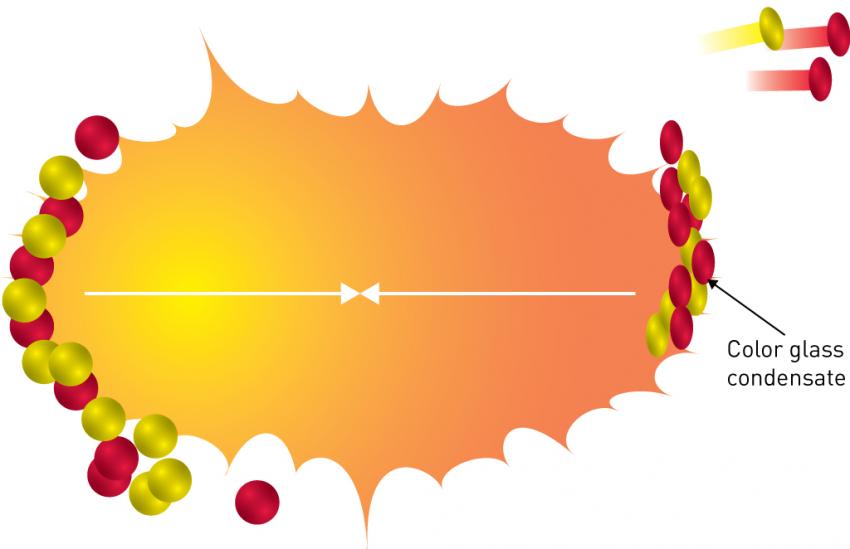
High-energy collisions between nuclei (white arrows) produce a cloud of elementary particles including quarks (red) and gluons (yellow). When gluons form an expansion front, they can produce a wall of matter called a color glass condensate, which eventually dissipates as the expansion continues. (Credit: © 2014 Larry McLerran, RIKEN–BNL Research Center)
via phys

Watch water run UP a wall: Material that allows liquid to defy gravity could spell the end of windscreen wipers(VIDEO)

via cnet

Lonely supernovae may have been kicked out of their galaxies

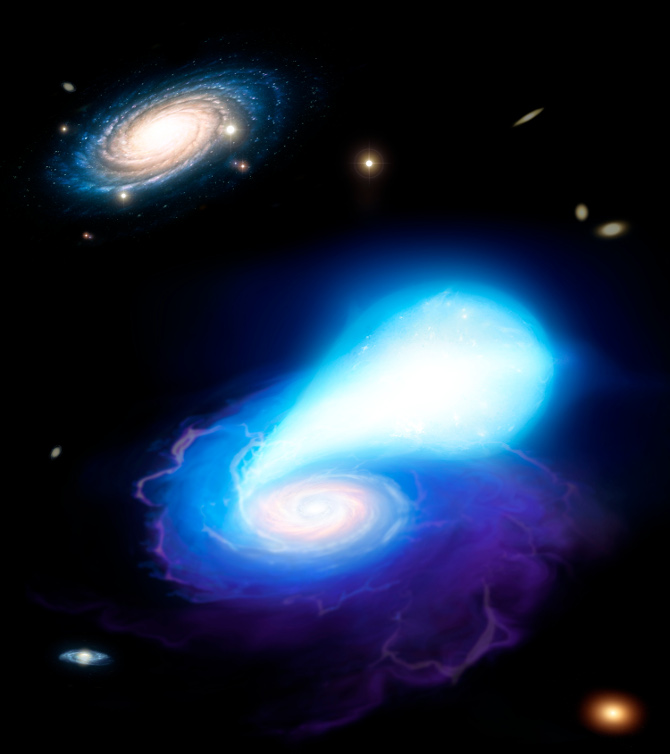
University of Warwick researchers explain mystery of the loneliest supernovas. Compact binary star systems that have been thrown far from their host galaxy when one star of that pair became a neutron star, go through a second trauma when the remaining white dwarf star is eventually pulled onto the neutron star. (Credit: Mark A. Garlick / space-art.co.uk / University of Warwick)
via forbes

Whovian physicists claim TARDIS time travel is possible

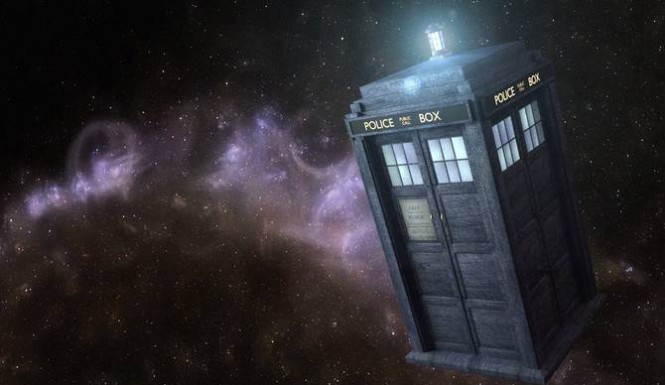
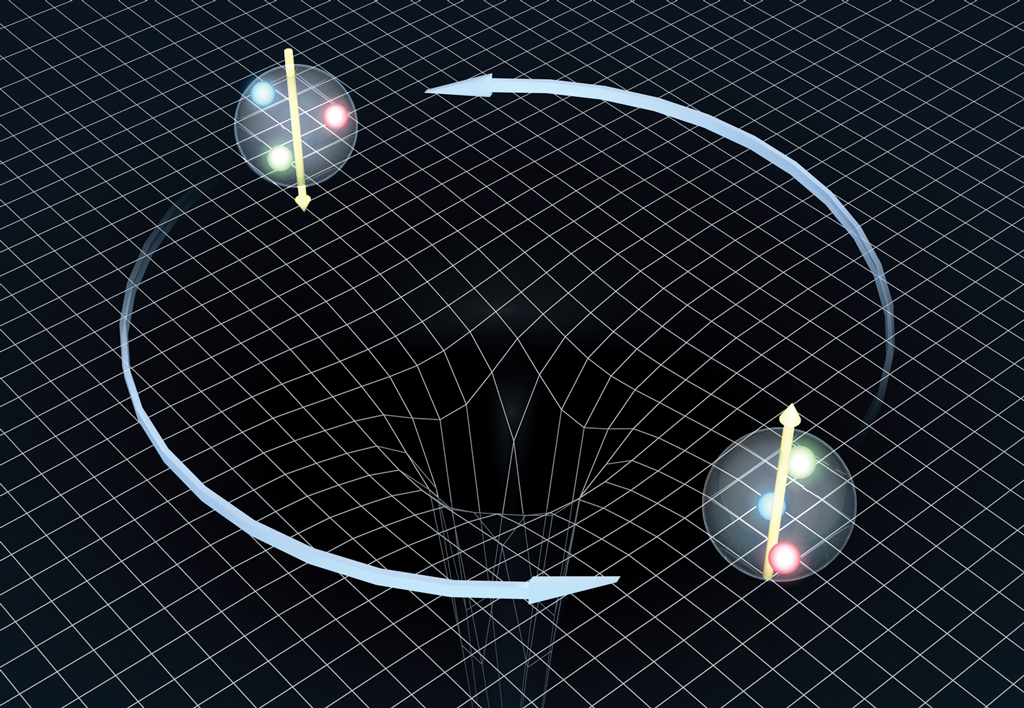
While time travel may be theoretically possible, there are unfortunately several drawbacks to the researchers’ TARDIS concept. In order to function, it requires the use of exotic matter, which has yet to be shown to exist in our universe. Time travel would also have to violate classical mechanics, and in order to move in anything other than a circular direction in both time and space, more than one TARDIS curve would need to be constructed, raising the possibility of exiting the time vortex into a universe of anti-matter. (Credit: Bitbillions)
While time travel may be theoretically possible, there are unfortunately several drawbacks to the researchers’ TARDIS concept. In order to function, it requires the use of exotic matter, which has yet to be shown to exist in our universe. Time travel would also have to violate classical mechanics, and in order to move in anything other than a circular direction in both time and space, more than one TARDIS curve would need to be constructed, raising the possibility of exiting the time vortex into a universe of anti-matter.
(Credit: Bitbillions)
via inquisitr

String theory coming unstrung even among science writers?

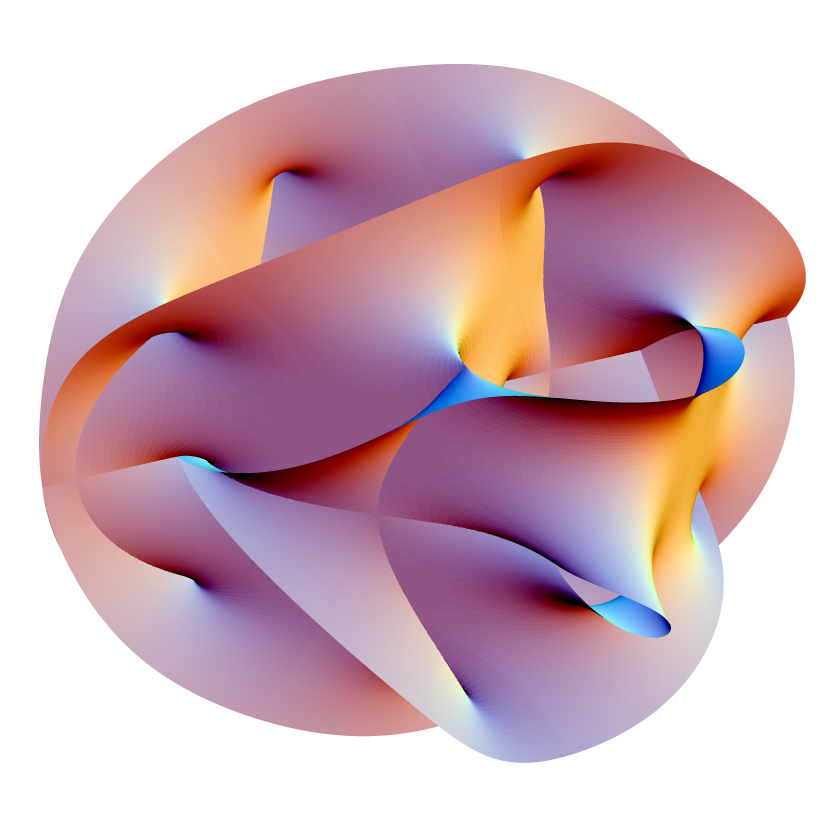
A construction for computer visualization of certain complex curves" (Credit: CC BY-SA 2.5)
A construction for computer visualization of certain complex curves. Science journalist, Tom Siegfried, has been one of the most vociferous proponents of string theory for many, many years, but even his faith seems like it might be failing as the decades roll on. (Credit: CC BY-SA 2.5)
via columbia

Watch Pluto and Charon engage in their orbital dance

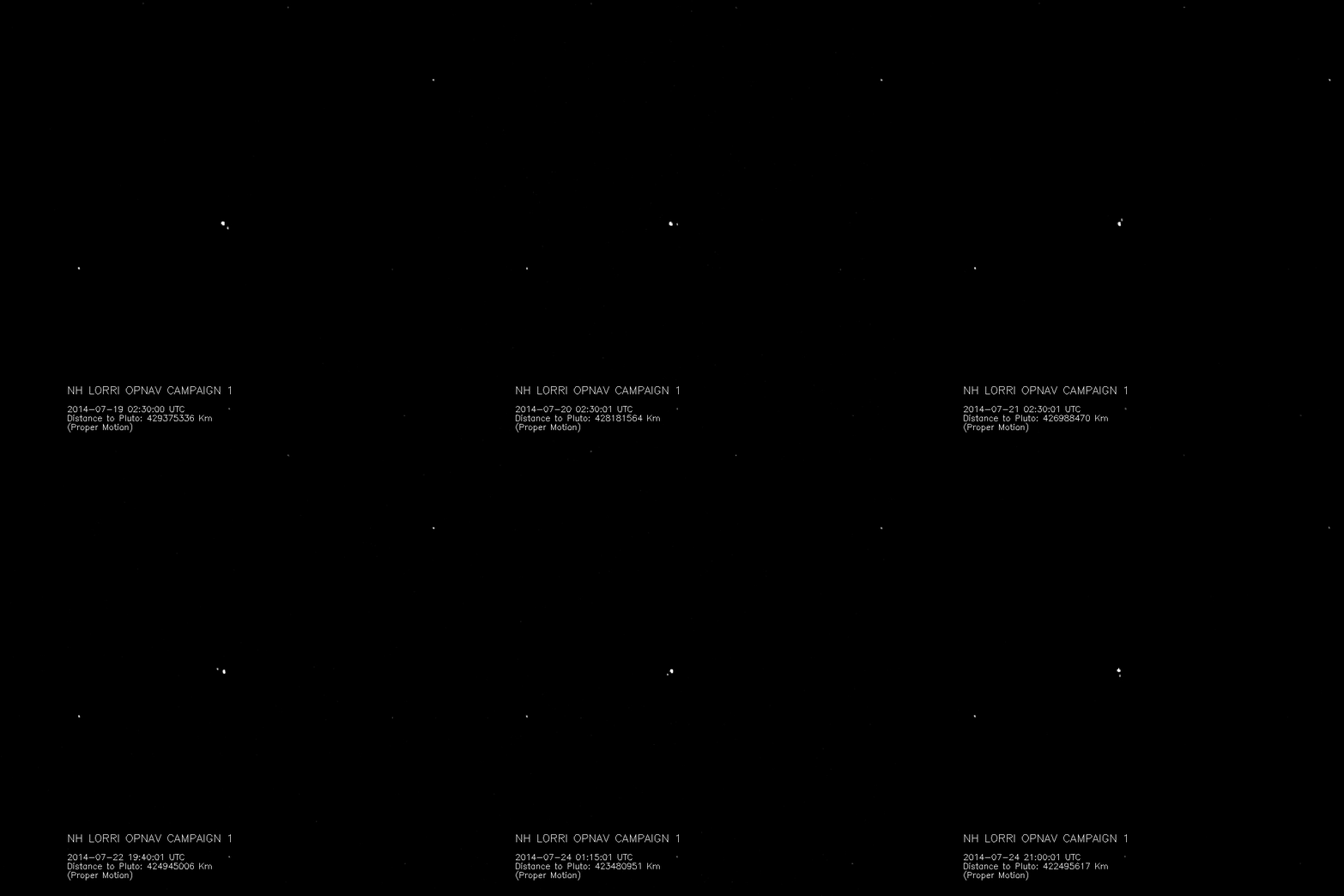
Animation of Pluto and Charon showing nearly a full rotation (Credit: NASA/Johns Hopkins University Applied Physics Laboratory/Southwest Research Institute)
via universetoday

Rosetta will teach us more about comets than we have learned in 50 years
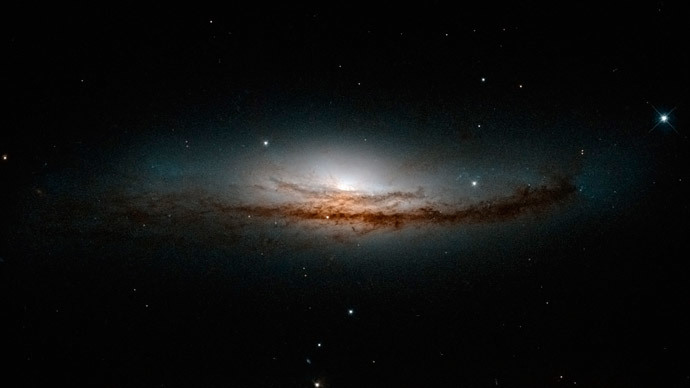
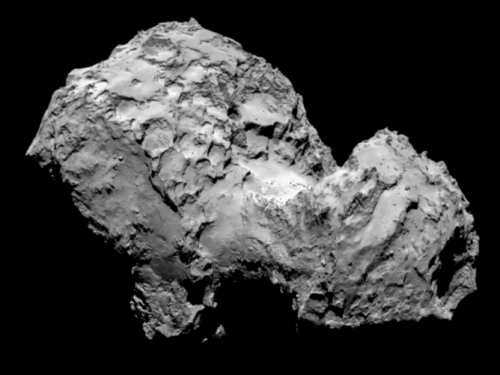
Do you see a duck?  On August 6, millions of miles away from Earth, the firing of a rocket thruster signalled the end of a decade-long journey by a European spacecraft to reach its ultimate target – the 'duck' comet. (Credit: ESA/Rosetta/MPS)
Do you see a duck? On August 6, millions of miles away from Earth, the firing of a rocket thruster signalled the end of a decade-long journey by a European spacecraft to reach its ultimate target – the ‘duck’ comet. (Credit: ESA/Rosetta/MPS)
via phys

Nature’s magnifying glass: Gravitational lensing

A typical magnifying glass works by bending light (i.e. refraction) to a focus point, in this case your eye. In a similar way, gravitational lensing also works by bending light, but in this case it is mass from another galaxy bending the light. This galaxy that extends far into space causes light rays passing near and through its gravitational field to bend and again refocus onto a particular location. The more massive and dense the matter, the more bending and refracting. (Credit: Flickr, Hubble Heritage)
via united-academics

Cassini prepares for its biggest remaining burn

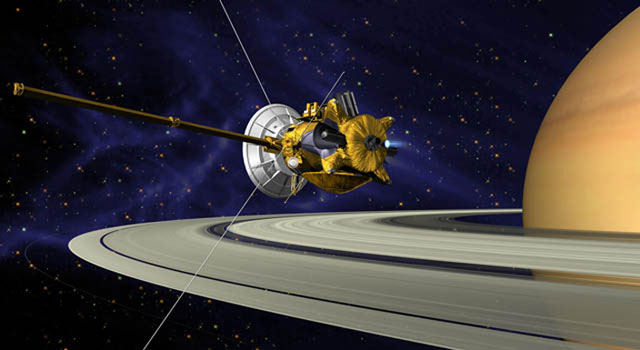
This is an artists concept of Cassini during the Saturn Orbit Insertion (SOI) maneuver, just after the main engine has begun firing. (Credit: NASA/JPL)
via phys

Physics in the News

Sunday, July 27, 2014

A cosmic two-step: The universal dance of the Dwarf Galaxies

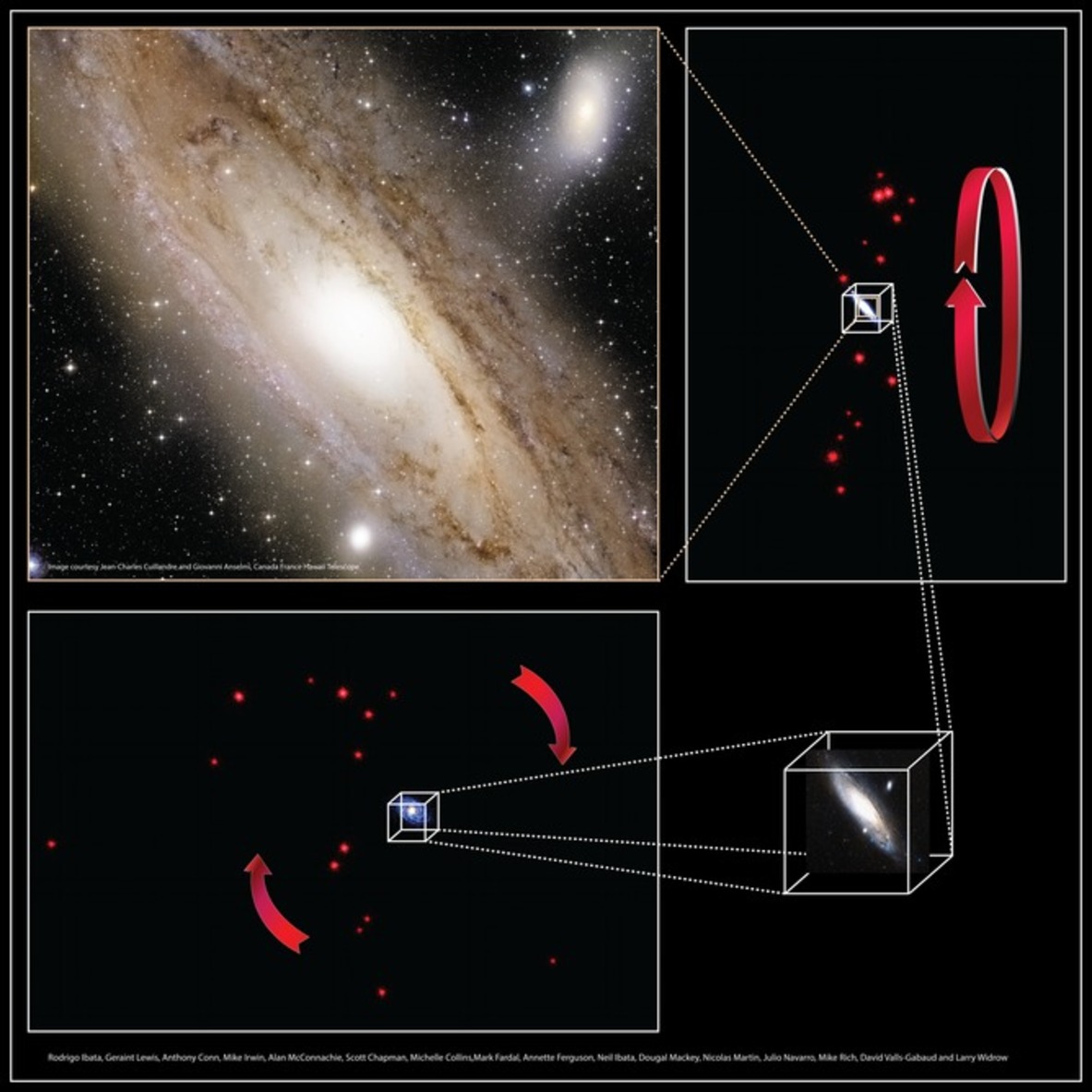
The coherent dance of dwarf orbits around the Andromeda Galaxy. (Credit: R. Ibata/Nature)
via theepochtimes

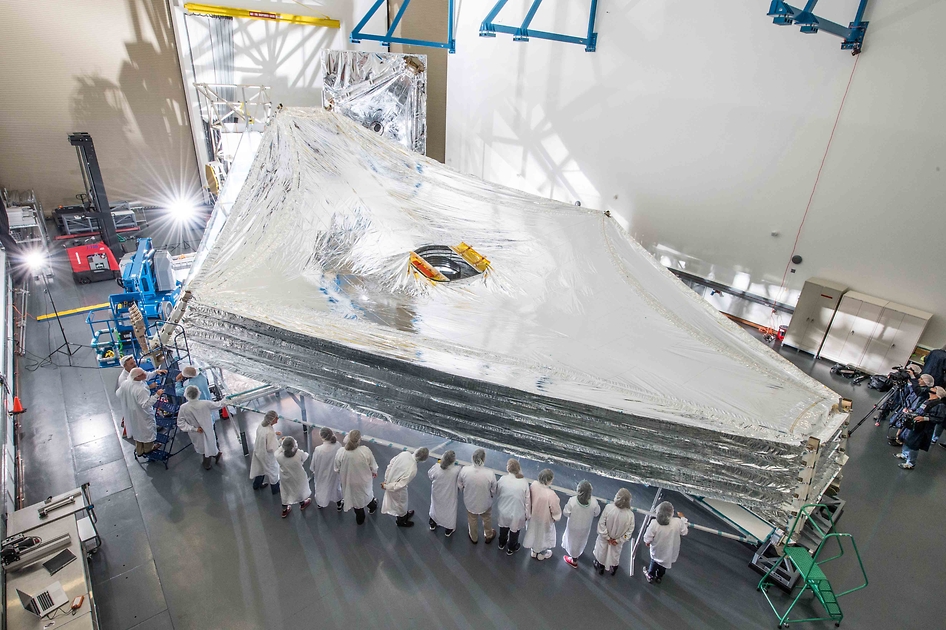
Webb Sunshield Stacks Up to Test!

The James Webb Space Telescope (sometimes called JWST) is an orbiting infrared observatory that will complement and extend the discoveries of the Hubble Space Telescope, with longer wavelength coverage and greatly improved sensitivity.(Credit: NASA/Chris Gunn)
via nasa

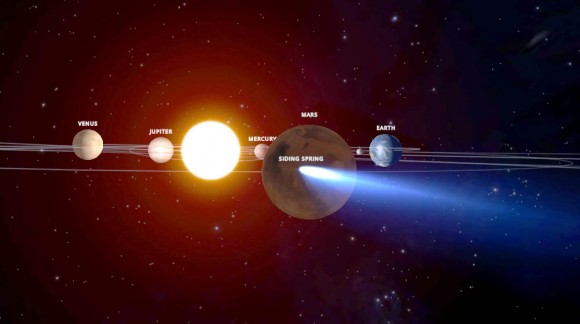
NASA Preps for nail-biting comet flyby of Mars

Simulation depicts comet C/2013 A1 Siding Spring during its close Mars flyby on Oct. 19. Its nucleus will miss Mars by about 82,000 miles (132,000 kilometers). The comet’s trail of dust particles shed by the nucleus might be wide enough to reach the planet. Click to see the interactive, animated view. (Credit: Solarsystemscope.com)
via universetoday

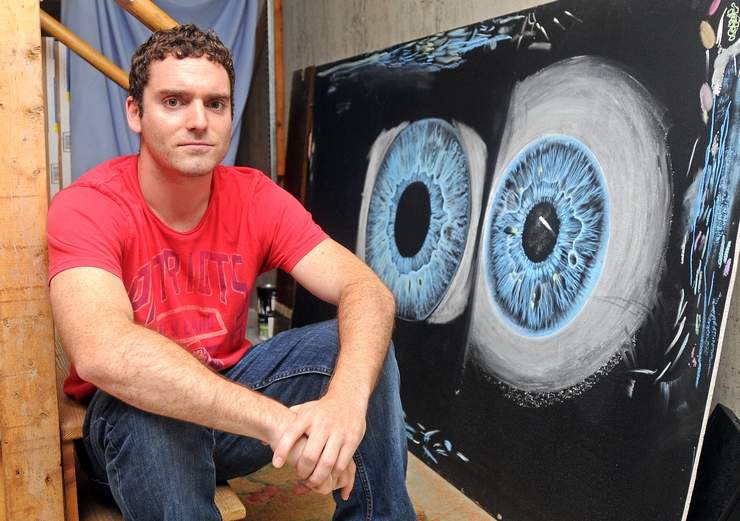
Princeton man drawing attention to outer space

Justin Dowd, a Princeton man who won a contest and will be traveling into outer space next year, sits next to an illustration used in the opening scene of his educational video. (Credit: T&G Staff/STEVE LANAVA)

via telegram

Sometimes a typo means you need to blow up your own spacecraft

via vice

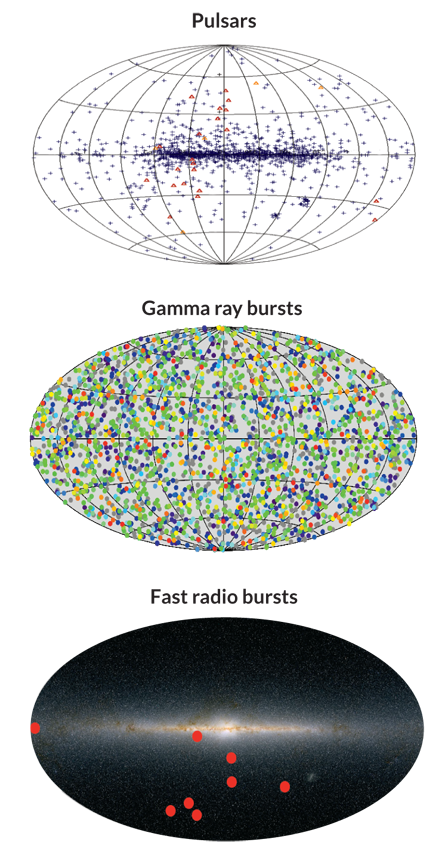
Listening in on cosmic messages

Mapping signals on the sky can offer clues about where the signals originate. Pulsars (top) concentrate in the Milky Way, because most of the ones we see sit in our galaxy. Gamma bursts (middle) come from everywhere, which means they’re parked in other galaxies. Fast radio bursts (bottom) seem to mostly avoid our galgaxy, a hint that they may come from very far away.(Credits: Green Bank Telescope, West Virginia Univ; G. Fishman et al/BATSE, CGRO, NASA.; J. Carpenter, T.H. Jarrett/2MASS, R. Hurt, C. Crockett)
via sciencenews

Physicist thinks lack of evidence for inflation, multiverse a cosmic “deal-breaker”

Evidence of gravitational waves in the infant universe may have been uncovered by the BICEP2 radio telescope. (Credit: NASA/JPL-Caltech)
via uncommondescent

Mars Mission advocated to a packed room at Comic-Con

The first Giant Leap was Apollo 11 landing astronauts on the moon. The next Giant Leap could be Apollo 45 landing humans on Mars. (Credit: NASA)
via io9

Physics in the News

Friday, July 25, 2014

Lust in space: Russians lose control of gecko sex satellite

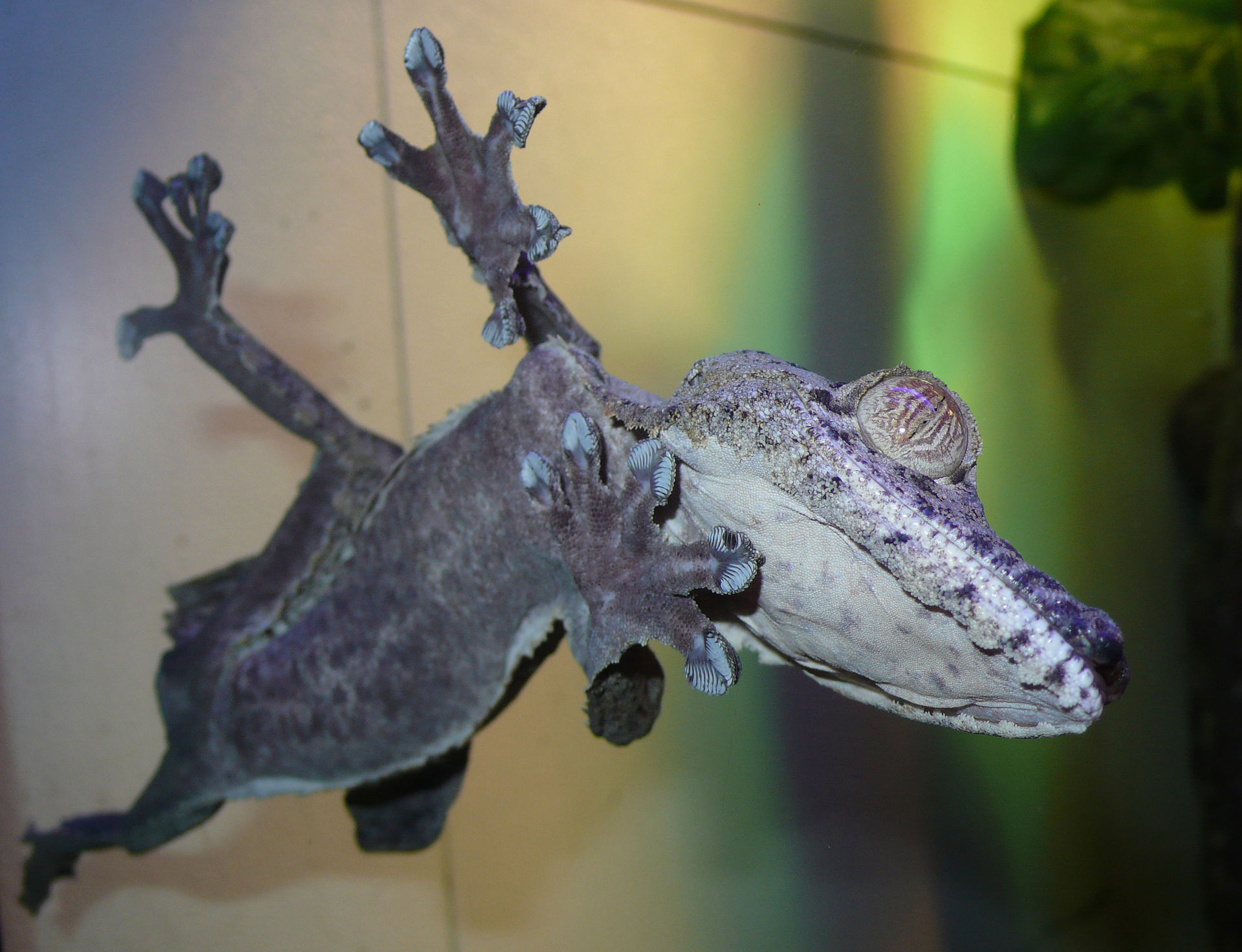
Progress is busily working to re-establish a connection with the operating system — currently on autopilot — before all hope is lost. (Credit: Tim Vickers )
via aljazeera

Hot Jupiter measurements throw water on planet formation theory

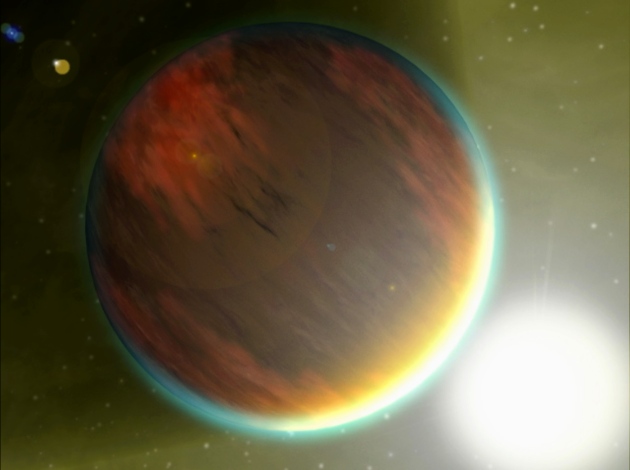
The exoplanet 209458b, a gas giant, is located 150 light-years from Earth.  Dry atmospheres of three exoplanets challenge ideas of how planets form. (Credit: NASA/JPL-Caltech)
The exoplanet 209458b, a gas giant, is located 150 light-years from Earth. Dry atmospheres of three exoplanets challenge ideas of how planets form. (Credit: NASA/JPL-Caltech)
via nature

Mysterious black holes may be exploding into ‘white holes’

A new scientific theory suggests that when black holes reach the end of their lifespan, they explode into “white holes” and release all of their matter into space. (Credit: Reuters / NASA)
via rt

CERN accelerators come alive for LHC restart

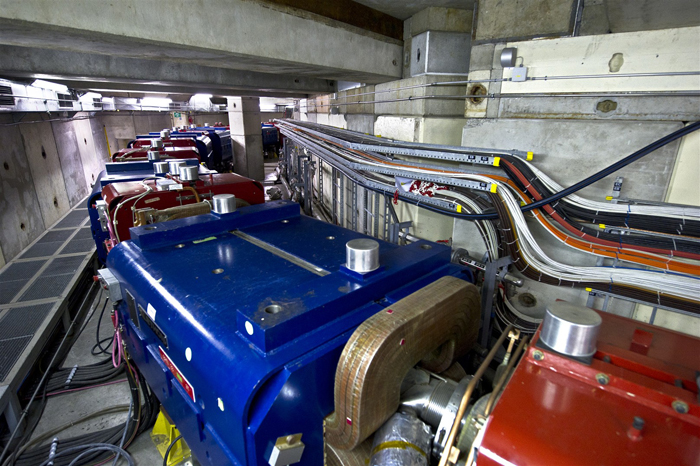
Powering up: CERN's Antiproton Decelerator will be running next week (Credit: CERN/Maximilien Brice)
Powering up: CERN’s Antiproton Decelerator will be running next week (Credit: CERN/Maximilien Brice)
via physicsworld

Breakthrough laser experiment reveals liquid-like motion of atoms in an ultra-cold cluster

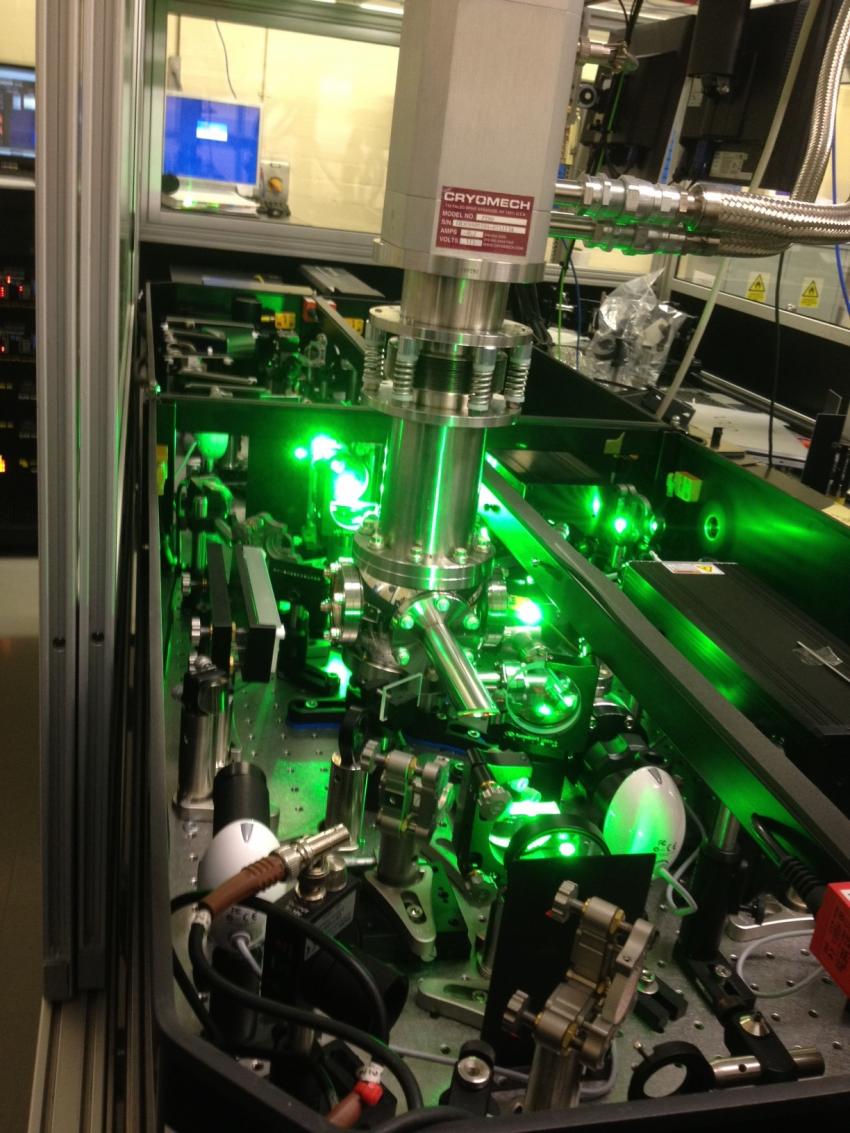
he experiment was undertaken at Rutherford Appleton Laboratories in the Artemis laser facility using an advanced femtosecond laser system to resolve rotations of complexes. The picture shows a section of the laser system used during the experiments. (Credit: Gediminas Galinis, University of Leicester.)
The experiment was undertaken at Rutherford Appleton Laboratories in the Artemis laser facility using an advanced femtosecond laser system to resolve rotations of complexes. The picture shows a section of the laser system used during the experiments. (Credit: Gediminas Galinis, University of Leicester.)
via phys

The first supercomputer simulations of ‘spin–orbit’ forces between neutrons and protons in an atomic nucleus

Figure 1: Nucleons (protons and neutrons) are made up of quarks (colored spheres) and have an orientation called spin (indicated by up and down arrows). The spin–orbit force is the interaction between two orbiting nucleons, resulting in a potential well (center) that holds them together. (Credit: Keiko Murano, RIKEN Nishina Center for Accelerator-Based Science)
via phys.org

Watch the Falcon 9 rocket booster descend into the ocean for its “soft” landing(VIDEO)

via extremetech

NASA says it’s too poor to fly

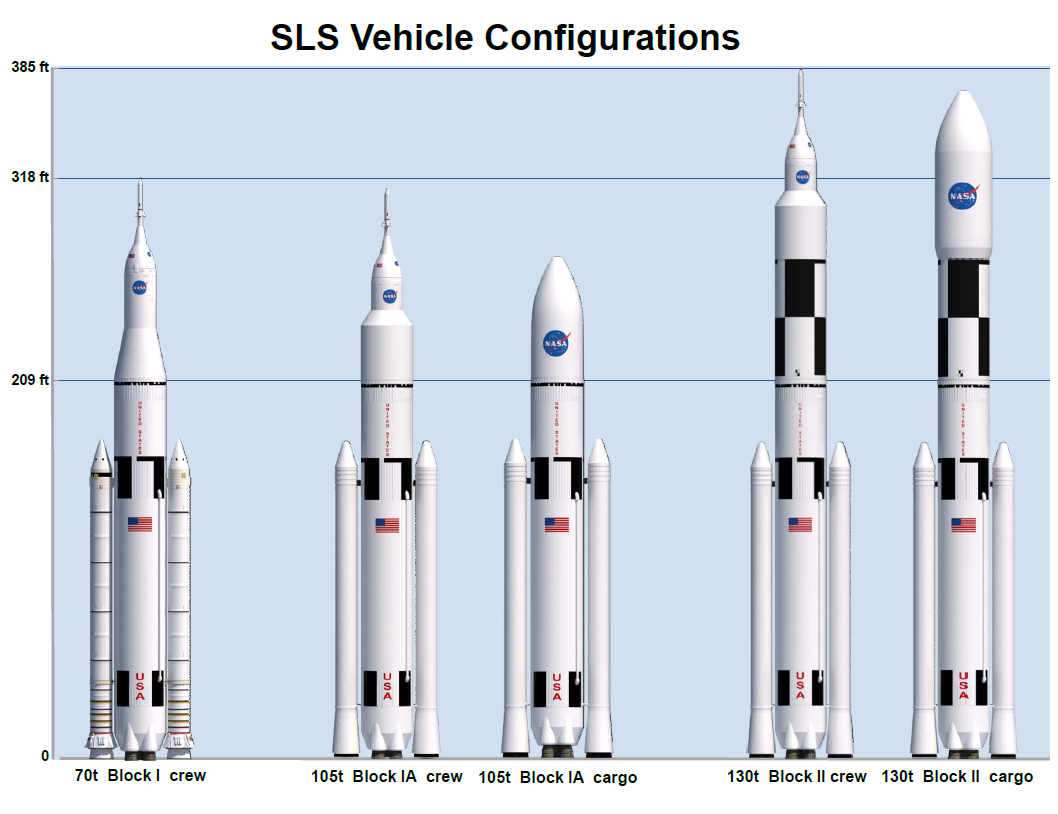
Space Launch System's planned variant vehicle configurations. (Credit: NASA)
Space Launch System’s planned variant vehicle configurations. The agency’s current funding plan for SLS may be $US400 million short of what the program needs to launch by 2017 (Credit: NASA)
via theregister