Physics in the News

Tuesday, July 15, 2014

New qubit design provides parity bit for Schrödinger cat states
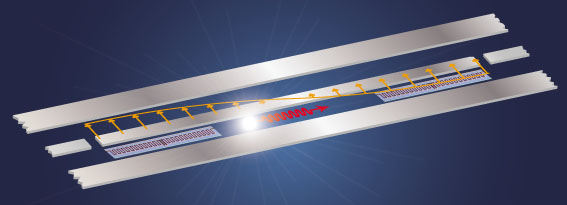
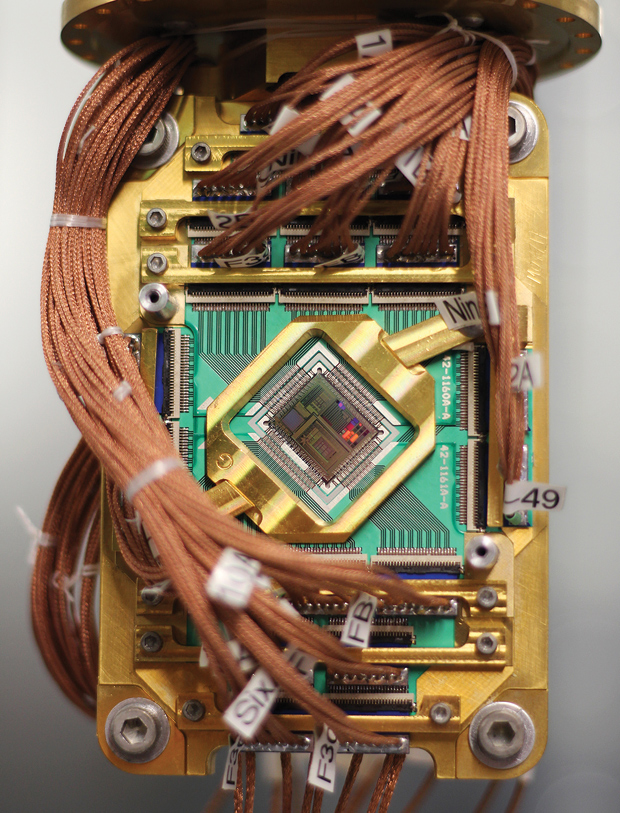
The device combines a superconducting microwave resonator to trap the photons and a circuit quantum electrodynamic qubit that's linked to the resonator.(Credit: Schoelkopf Lab, Yale)
The device combines a superconducting microwave resonator to trap the photons and a circuit quantum electrodynamic qubit that’s linked to the resonator.(Credit: Schoelkopf Lab, Yale)
via arstechnica

The world’s first photonic router

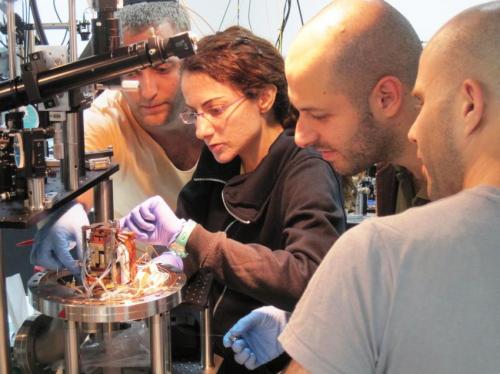
 This image depicts from left to right Serge Rosenblum, Yulia Lovsky, Orel Bechler and Itay Shomroni.  At the center of the photonic router is a single atom that routes photons  in different directions. (Credit: Weizmann Institute of Science)
This image depicts from left to right Serge Rosenblum, Yulia Lovsky, Orel Bechler and Itay Shomroni. At the center of the photonic router is a single atom that routes photons in different directions. (Credit: Weizmann Institute of Science)
via phys.org

Two anomalies worth noticing

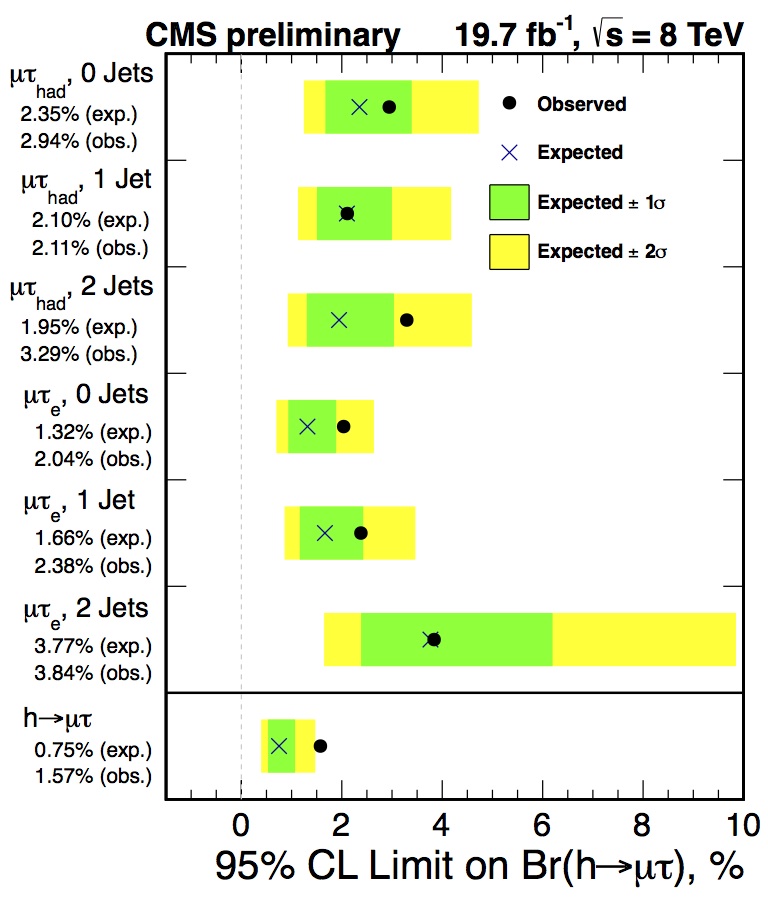
The results obtained by the CMS Collaboration showing that six different channels all give a non-zero value for the decay rate of Higgs boson into pairs of tau and muon. (Credit: Pauline Gagnon)
The results obtained by the CMS Collaboration showing that six different channels all give a non-zero value for the decay rate of Higgs boson into pairs of tau and muon.
(Credit: Pauline Gagnon)
via quantumdiaries

Ukraine to turn Chernobyl into ‘biosphere radiologic reserve’
The damaged 4th unit of the Chernobyl Nuclear Power Plant and a memorial sign “Heroes, Professionals – those who protected the world from nuclear disaster” in the Chernobyl Exclusion Zone (Credit: RIA Novosti)
via rt.com

Smallest Swiss cross—made of 20 single atoms
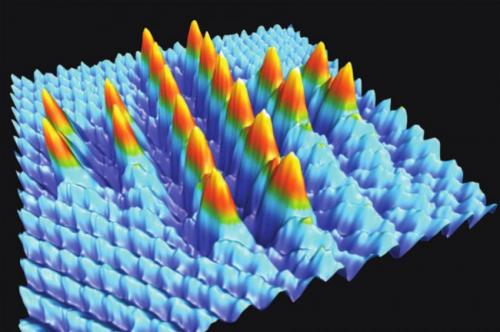
20 bromine atoms positioned on a sodium chloride surface using the tip of an atomic force microscope at room temperature, creating a Swiss cross with the size of 5.6nm. The structure is stable at room temperature and was achieved by exchanging chlorine with bromine atoms. (Credit: Department of Physics, University of Basel)
via phys.org

Consider the ‘Anticrystal’

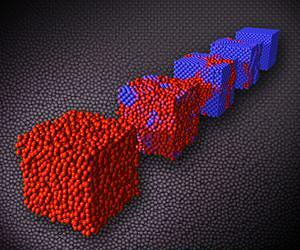
Materials can be described as being on a spectrum from a perfectly ordered crystal to a perfectly disordered anticrystal. (Credit: Liu, Goodrich, Nagel)
via spacemart

A Critical Test of Quantum Criticality
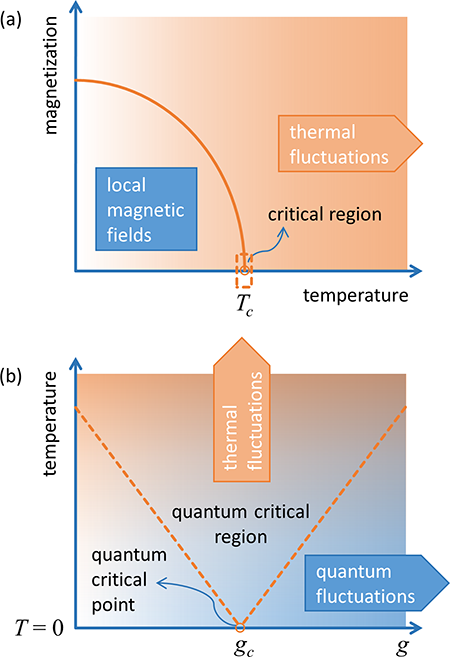
a) An example of the classical phase transition in a ferromagnet. Thermal fluctuations causing the random reorientation of the constituent spins grow with temperature. They compete with the tendency of the local magnetic fields to align the spins. As a result, the net magnetization in the ordered state continuously decreases with temperature (orange line) and drops to zero at a critical temperature Tc, surrounded by a narrow critical region (dashed rectangle). (b) A generic example of the quantum phase transition. Quantum fluctuations controlled by the nonthermal parameter g lead to a similar phase transition at a critical value gc, the so called quantum critical point, already at zero temperature, T=0. Their interplay with thermal fluctuations opens up a progressively broader, V-shaped quantum critical region extending much above the zero temperature (dashed lines).
via physics.aps

Online Isaac Newton manuscripts workshop
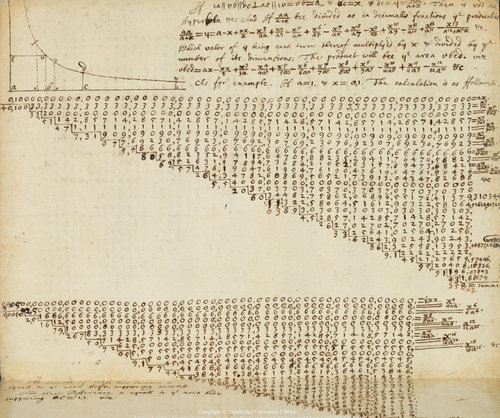
India's Zetatrek citizen science initiative is online workshop starting on 19th July, where science and math hobbyists from all over the world are invited to study the original manuscripts of Sir Isaac Newton.
India’s Zetatrek citizen science initiative is online workshop starting on 19th July, where science and math hobbyists from all over the world are invited to study the original manuscripts of Sir Isaac Newton.
via boingboing

Physics in the News

Monday, July 14, 2014

Confirmed: Magnetic waves cannot accelerate solar wind(VIDEO)

via thewatchers

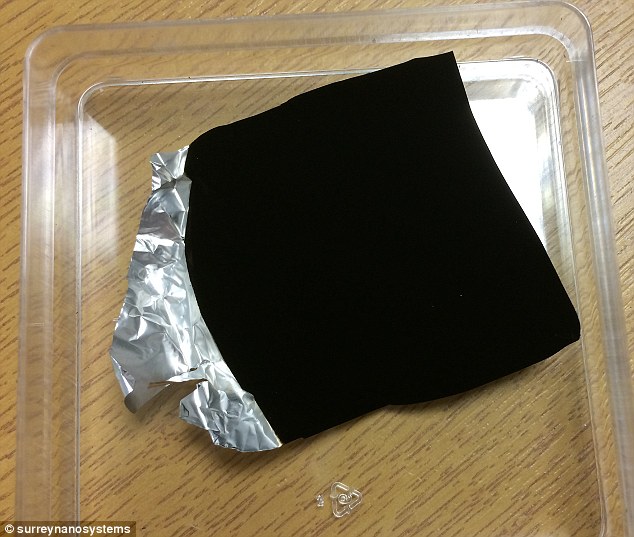
British researchers devise material so dark it looks like a black hole

British scientists have created a material which absorbs all but 0.035 per cent of light, a new world record, and is so dark the human eye struggles to discern what it is that it is seeing, giving the appearance of a black hole. (Credit: Surrey Nano Systems)
via independent

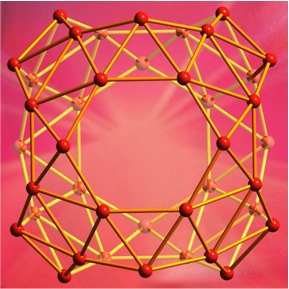
Boron ‘buckyball’ discovered

Researchers have shown that clusters of 40 boron atoms form a molecular cage similar to the carbon buckyball. This is the first experimental evidence that such a boron cage structure exists. (Credit: Wang lab / Brown University)
via .phys.org

How To Measure A Sun-Like Star’s Age

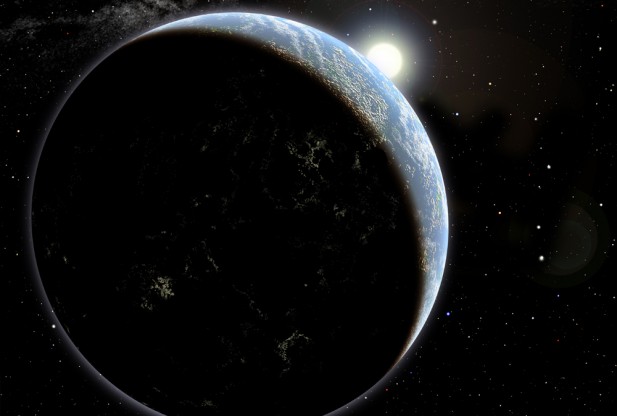
Image Caption: Artist's conception of a hypothetical exoplanet orbiting a yellow, Sun-like star. Astronomers have measured the ages of 22 Sun-like stars using their spins, in a method called gyrochronology. Before now, only two Sun-like stars had measured spins and ages. (Credit: David A. Aguilar (CfA))
Artist’s conception of a hypothetical exoplanet orbiting a yellow, Sun-like star. Astronomers have measured the ages of 22 Sun-like stars using their spins, in a method called gyrochronology. Before now, only two Sun-like stars had measured spins and ages. (Credit: David A. Aguilar (CfA))
via redorbit

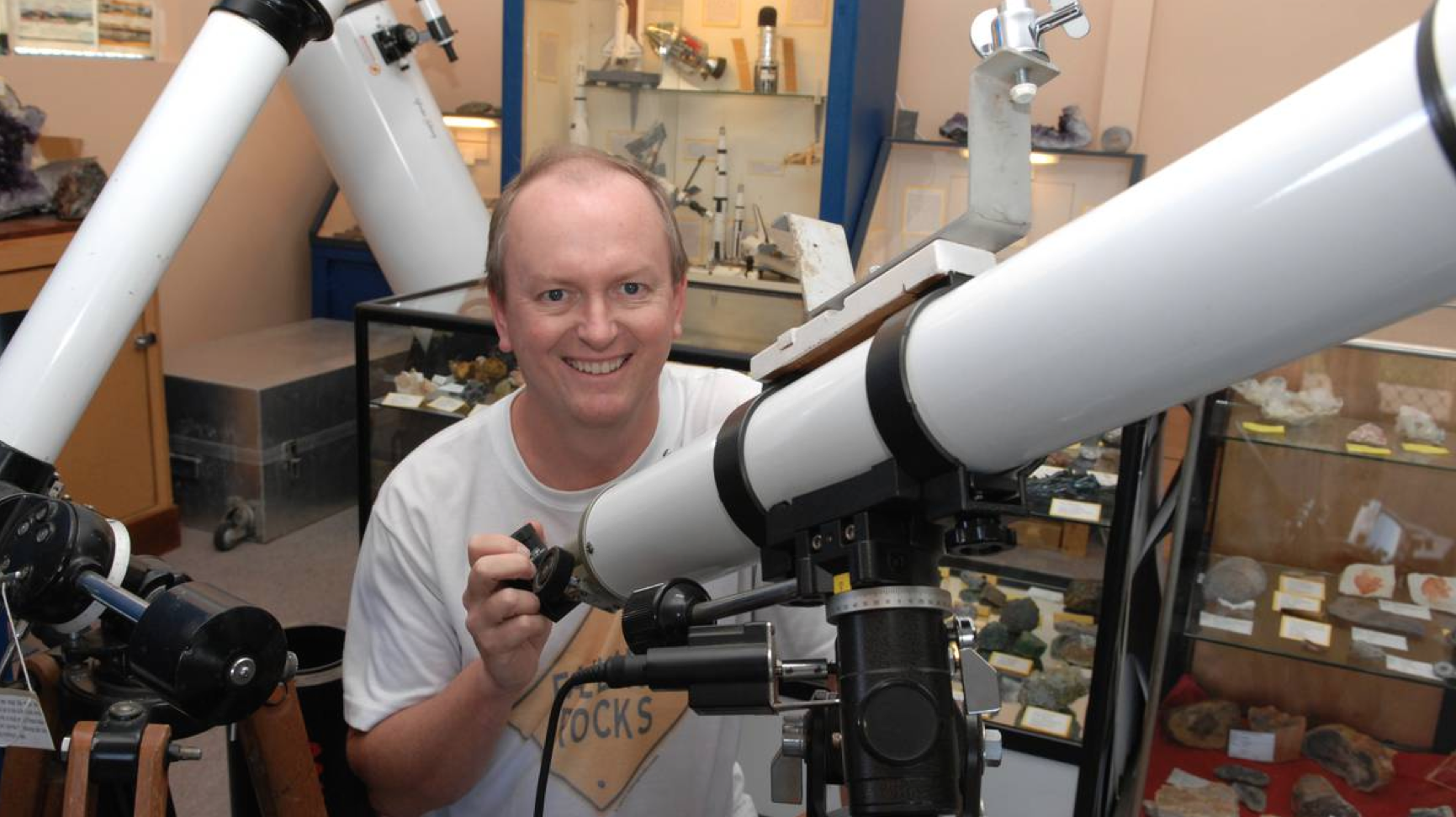
Keeping an eye on passing asteroids

Bathurst Observatory Research Facility manager Ray Pickard said work will begin on the Bathurst Asteroid Research Telescope next week. (Credit: ZENIO LAPKA)
via westernadvocate

D-Wave Systems Secures $30M (CAD) Funding to Accelerate Quantum Computing

What’s going on inside the D-Wave Two is still a matter of debate. (Credit D-Wave Systems)
via marketwatch

A light bending exercise… in space!

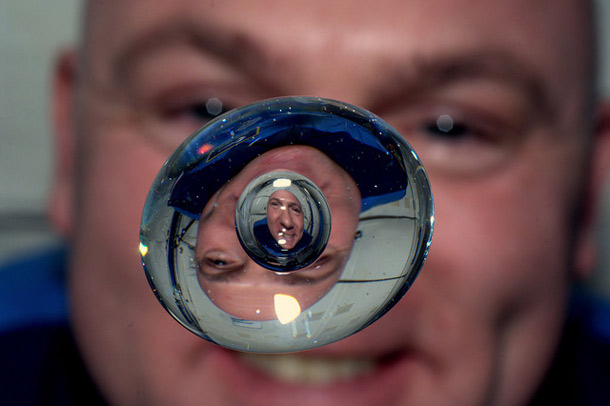
An air bubble was blown into the water droplet to create this effect. (Credit: Imgur)
On Board the International Space Station, ESA astronaut Andre Kuipers blows an air bubble into a water droplet to create this effect. (Credit: ESA/NASA)
via discover

Physics in the News

Thursday, July 10, 2014

Comet Pan-STARRS Makes Stunning ‘Galactic Flyby'(VIDEO)

via discovery

NASA 3D prints a model of light-year-long Eta Carinae nebula

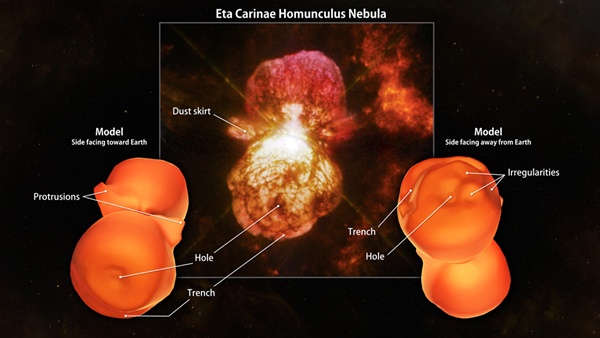
A new shape model of the Homunculus Nebula reveals protrusions, trenches, holes and irregularities in its molecular hydrogen emission. The protrusions appear near a dust skirt seen at the nebula's center in visible light (inset) but not found in this study, so they constitute different structures. (Credit: NASA Goddard, ESA, Hubble SM4 ERO Team)
A new shape model of the Homunculus Nebula reveals protrusions, trenches, holes and irregularities in its molecular hydrogen emission. The protrusions appear near a dust skirt seen at the nebula’s center in visible light (inset) but not found in this study, so they constitute different structures. (Credit: NASA Goddard, ESA, Hubble SM4 ERO Team)
via astronomy.com

Bid to ‘reboot’ aging NASA satellite is scuttled as fuel system fails

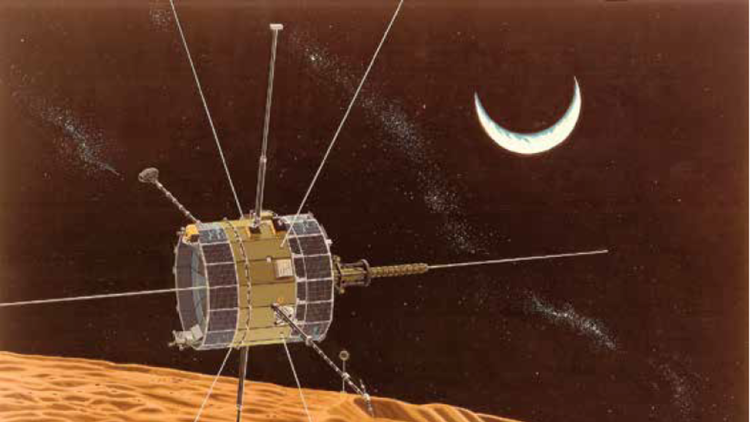
Engineers failed to resolve fuel system problems on NASA's retired ISEE-3 satellite Wednesday. An artist's rendition shows the spacecraft during a close lunar pass. (Credit: NASA)
Engineers failed to resolve fuel system problems on NASA’s retired ISEE-3 satellite Wednesday. An artist’s rendition shows the spacecraft during a close lunar pass. (Credit: NASA)

via latimes

MESSENGER and STEREO measurements open window into high-energy processes on the Sun

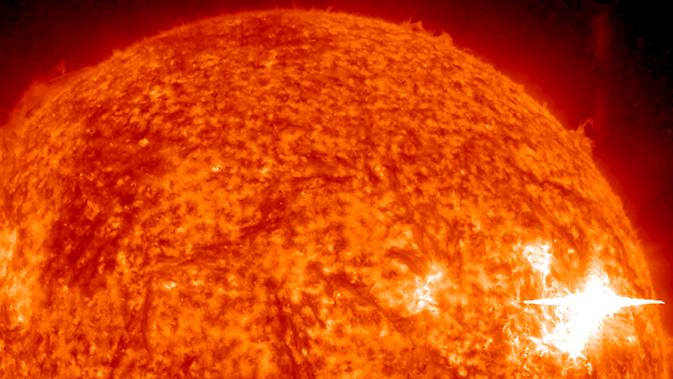
A solar flare erupted on the far side of the sun on June 4, 2011, and sent solar neutrons out into space. Solar neutrons don't make it to all the way to Earth, but NASA's MESSENGER, orbiting Mercury, found strong evidence for the neutrons, offering a new technique to study these giant explosions. (Credit: NASA/STEREO/Helioviewer)
A solar flare erupted on the far side of the sun on June 4, 2011, and sent solar neutrons out into space. Solar neutrons don’t make it to all the way to Earth, but NASA’s MESSENGER, orbiting Mercury, found strong evidence for the neutrons, offering a new technique to study these giant explosions. (Credit: NASA/STEREO/Helioviewer)
via nasa

Space Probe Might Lack Nitrogen to Push It Home

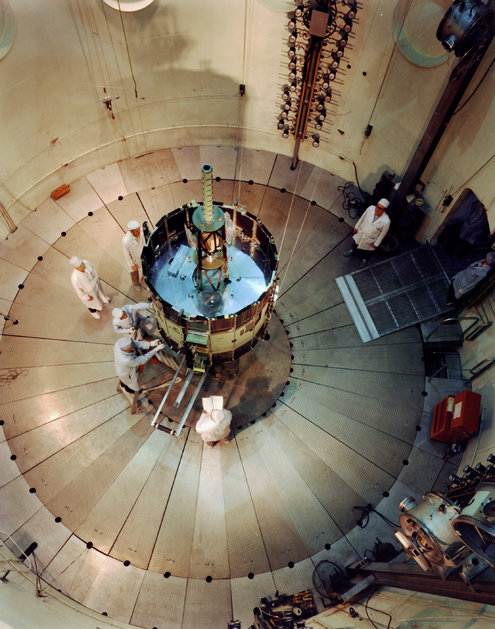
 The International Sun-Earth Explorer-3 at NASA’s Goddard Space Flight Center before its launch. (Credit NASA)
The International Sun-Earth Explorer-3 at NASA’s Goddard Space Flight Center before its launch. (Credit NASA)
via nytimes

Saturn Probe Ready for Its “Grand Finale”

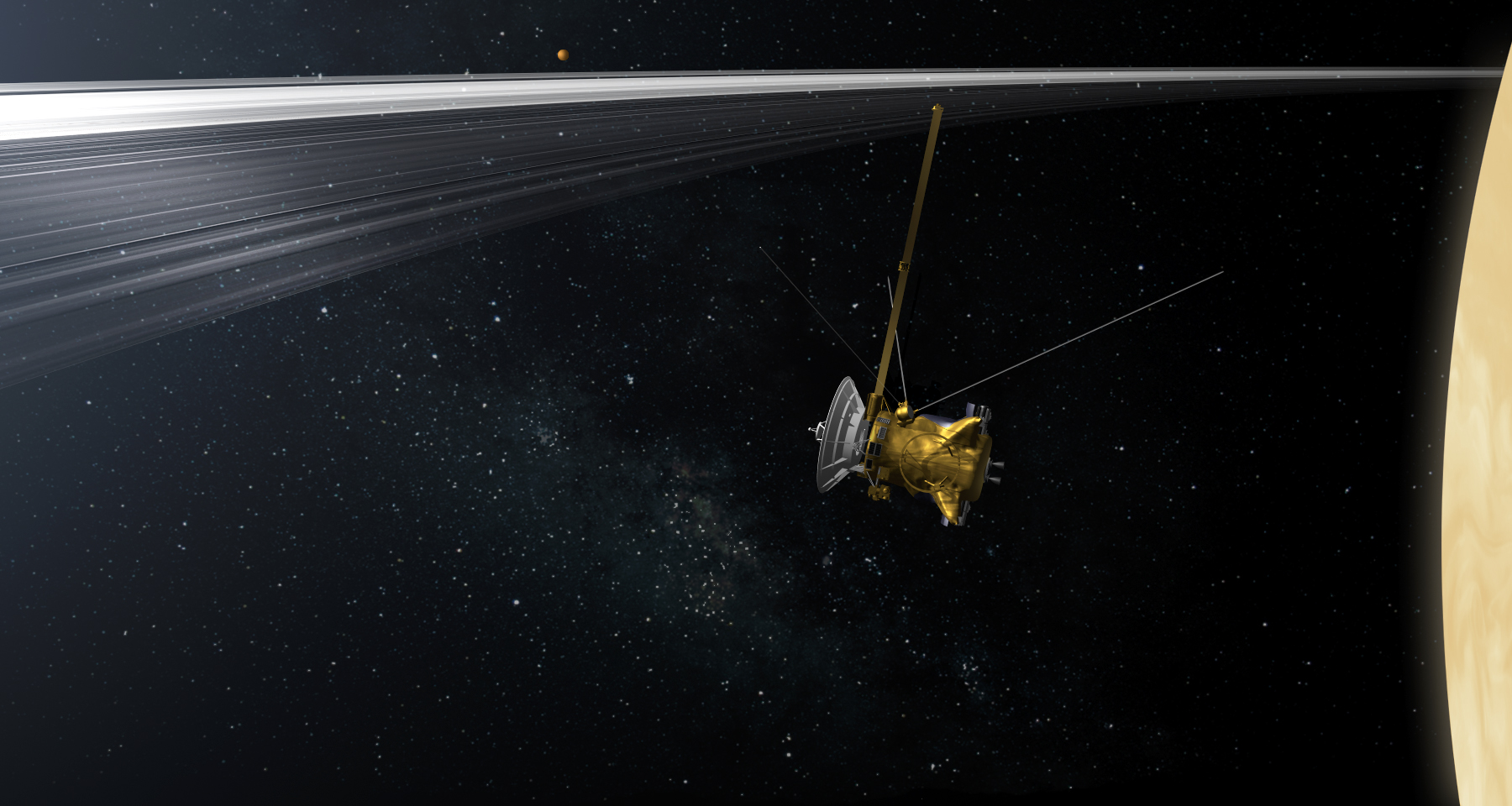
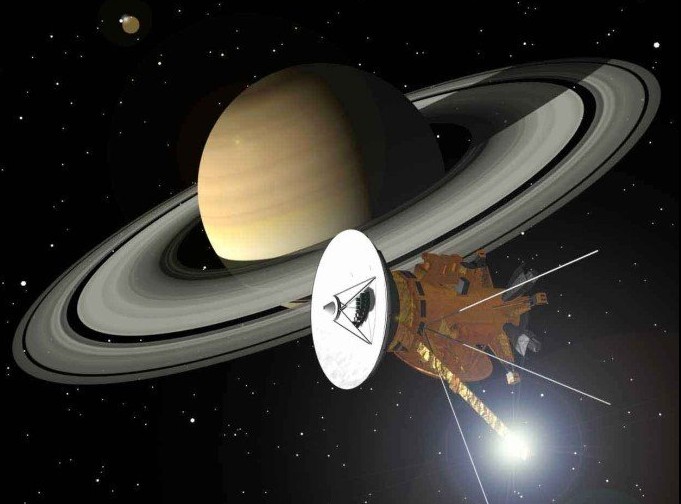
Cassini will end its historic mission with 22 breathtaking loops passing through the gap between Saturn and its innermost ring. (Credit: NASA)
via scientificamerican

Singing Solar Shockwave Confirms Voyager Is In Interstellar Space

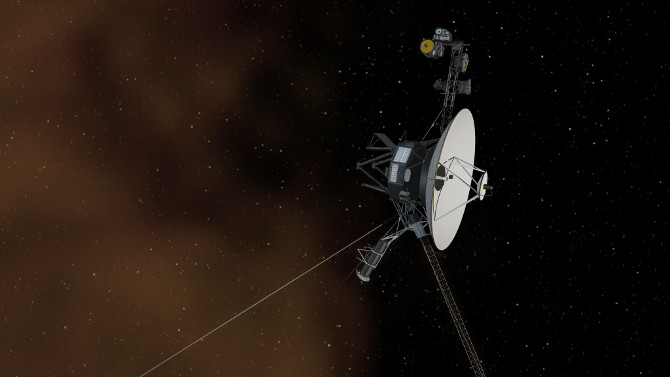
This artist’s concept shows the Voyager 1 spacecraft entering the space between stars. Interstellar space is dominated by plasma, ionized gas (illustrated here as brownish haze), that was thrown off by giant stars millions of years ago. (Credit: NASA/JPL-Caltech)
via forbes

Astronomers invite worldwide public to help name exoplanets and their stars

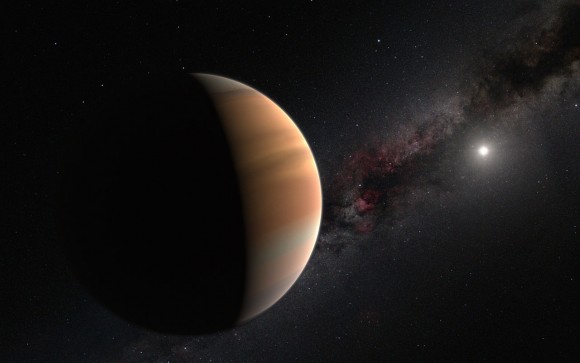
Artist’s impression of a distant exoplanet – planet beyond our solar system – orbiting its star. (Credit: IAU)
via earthsky

Universe’s missing photons baffle scientists

There's just not enough of them to account for interstellar light, say researchers. (Credit: NASA/ESA
There’s just not enough of them to account for interstellar light, say researchers. (Credit: NASA/ESA)
via cnet

Physics in the News

Tuesday, July 7, 2014

Europe targets black holes with next big space mission

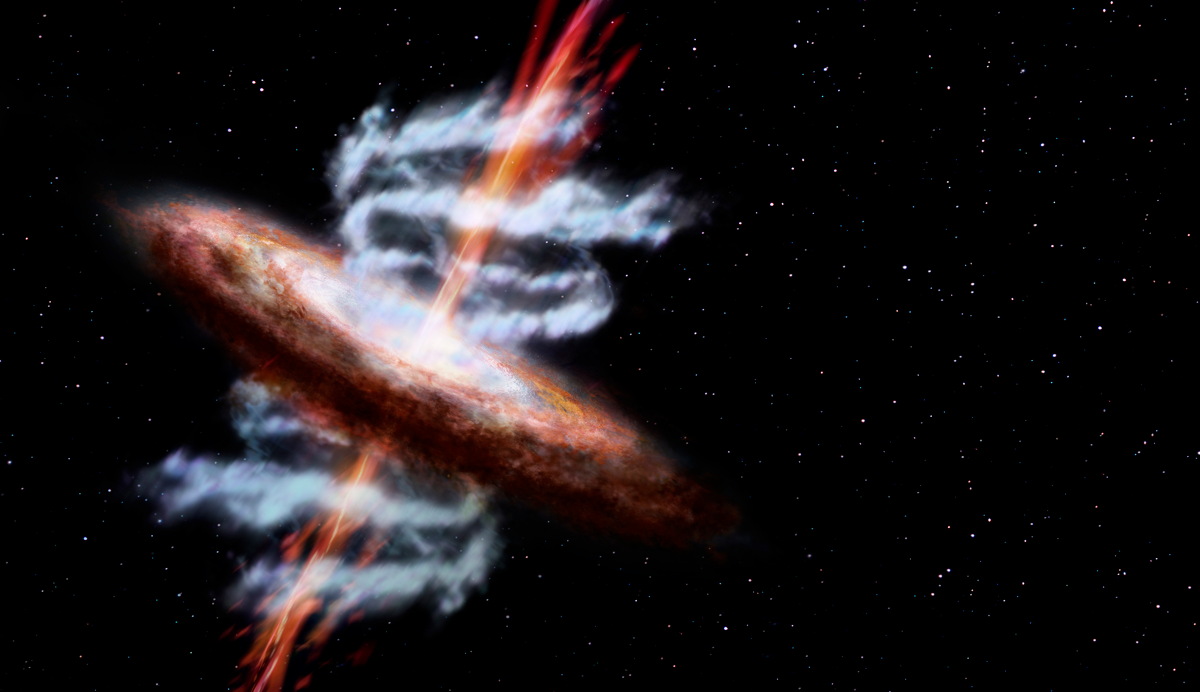
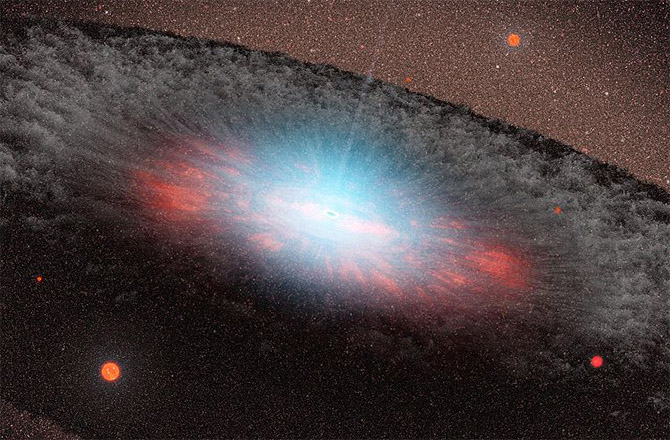
This artist’s impression shows a galaxy releasing material via two strong jets (shown here in red/orange), as well as through wide-angle outflows (shown in gray/blue). The black hole at the galaxy’s center drives both jets and outflows. (Credit: ESA/AOES Medialab)
via space.com

Era of astronomical discovery: MIT professor helps detect gravitational waves

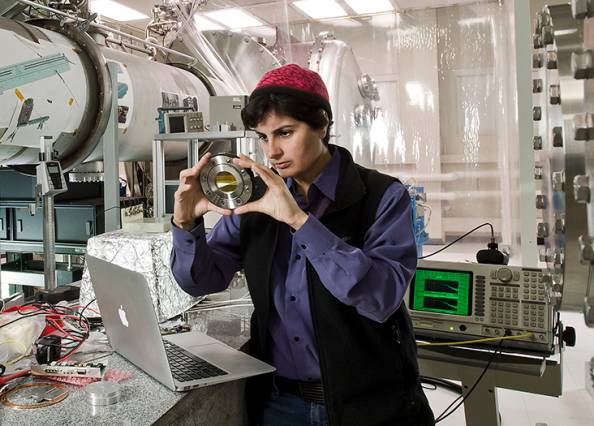
Nergis Mavalvala (pictured) aims to detect elusive gravitational waves. (Credit: Len Rubenstein)
via MIT

Reinterpreting dark matter

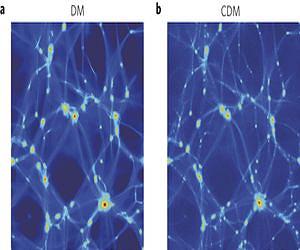
This figure shows that a comparison of the distribution of matter is very similar on a large scale between wave dark matter, the focus of this research, and the usual dark matter particle. (Credit: UPV/EHU)
via spacedaily

Droplets and pilot waves vs quantum mechanics

The story is that Bush et al. at MIT did some playful experiments with droplets and the conclusion is supposed to be that this strengthens the case for de Broglie’s pilot wave theory. (Credit: Motl)

via motls

Don’t Blame Einstein!

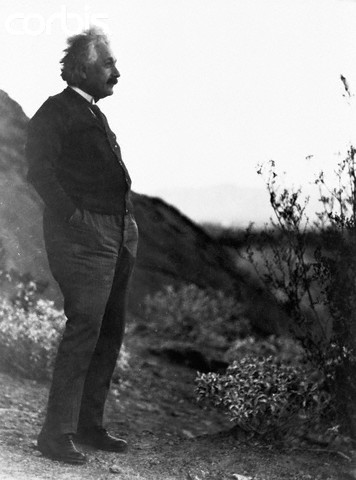
Albert Einstein Standing Alone in Palm Springs Desert
via mysteriousuniverse

How NASA reinvented the tortilla, and other tales of food in space

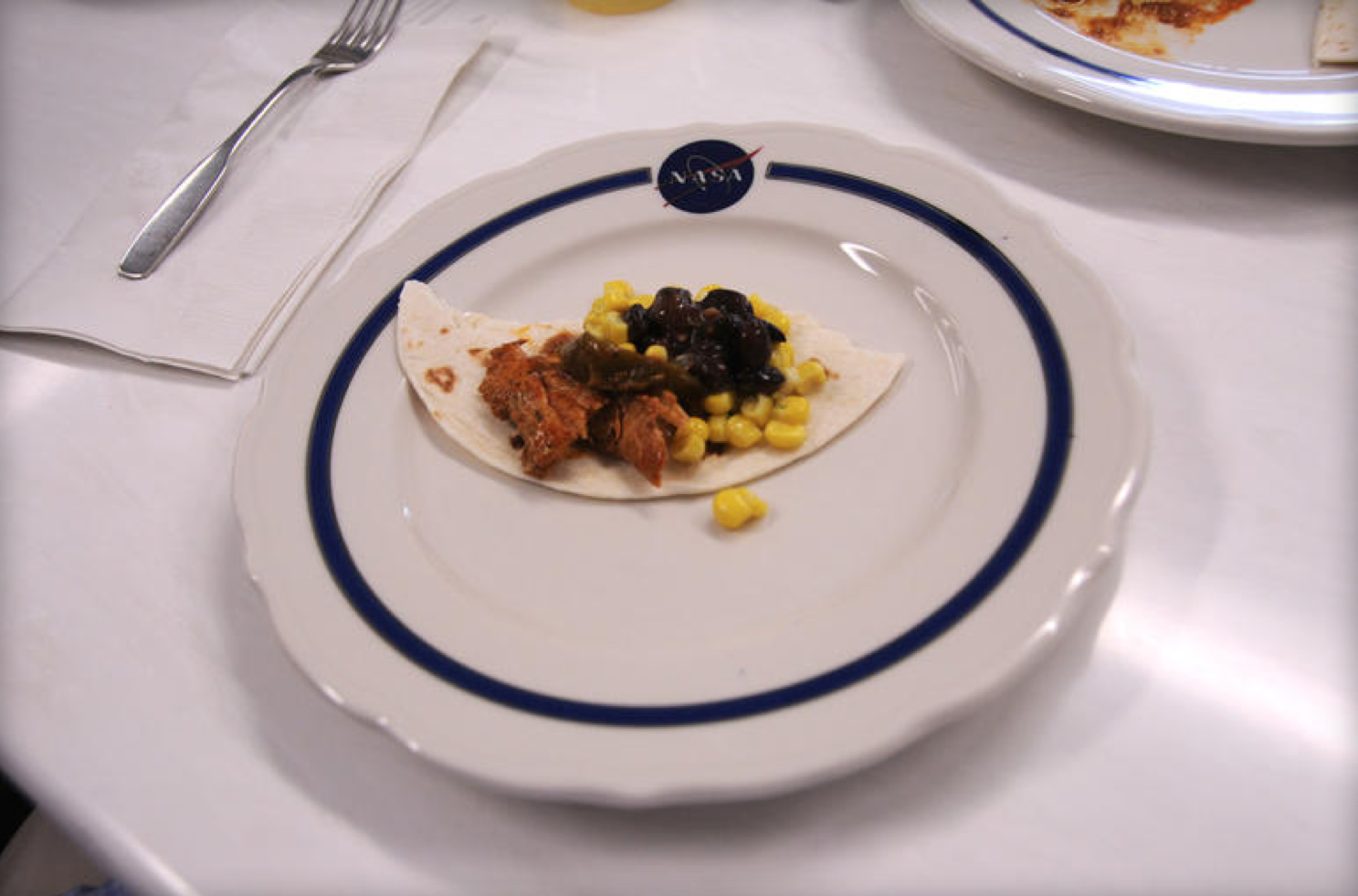
A sample meal demonstrates what NASA astronauts might eat aboard the International Space Station. (Credit: Daniel Terdiman/CNET)


via cnet.com

Supermassive Black Hole Jet Mystery Solved

One of the most enduring mysteries behind the dynamics of supermassive black holes, and their impacts on galactic evolution, has been uncovered by an international team of astrophysicists. (Credit: NASA)


via discovery

Physics in the News

Saturday, July 5, 2014

Searching for Earth-like planets: Newly spotted frozen world orbits in a binary star system

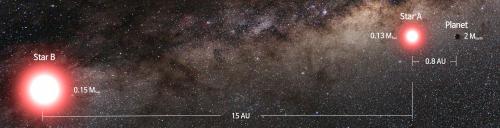
This artist's rendering shows a newly discovered planet (far right) orbiting one star (right) of a binary star system. The discovery, made by a collaboration of international research teams and led by researchers at The Ohio State University, expands astronomers' notions of where to look for planets in our galaxy. (Credit: Cheongho Han, Chungbuk National University, Republic of Korea.)
This artist’s rendering shows a newly discovered planet (far right) orbiting one star (right) of a binary star system. The discovery, made by a collaboration of international research teams and led by researchers at The Ohio State University, expands astronomers’ notions of where to look for planets in our galaxy. (Credit: Cheongho Han, Chungbuk National University, Republic of Korea.)
via phys.org

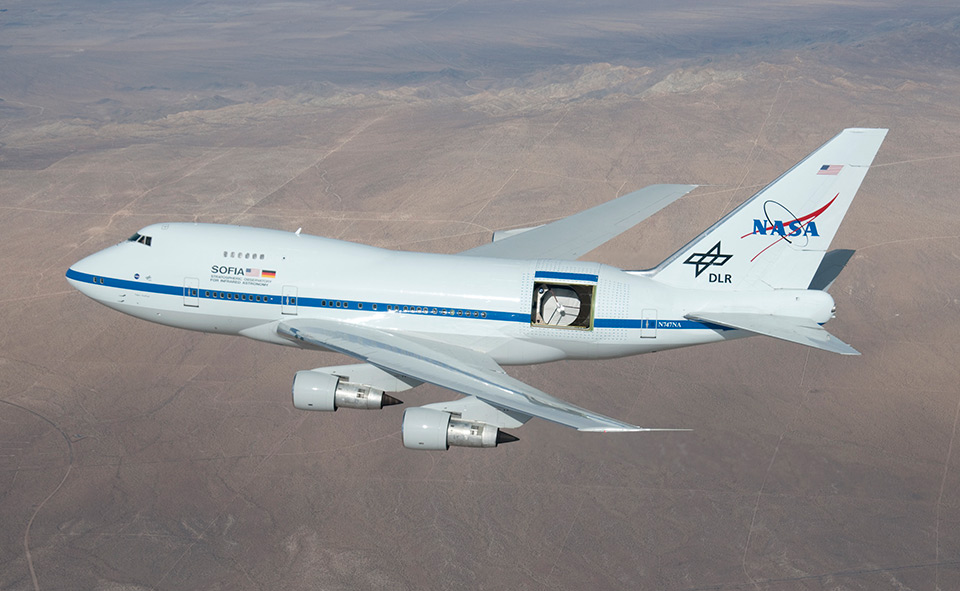
The Big Picture: NASA flies massive SOFIA telescope to the stratosphere

By sticking a 17-ton telescope into a Boeing 747, you can launch it up to 45,000 feet and get past 99 percent of our atmosphere's water vapor
By sticking a 17-ton telescope into a Boeing 747, you can launch it up to 45,000 feet and get past 99 percent of our atmosphere’s water vapor. (Credit: NASA)

via engadget

NASA’s Cassini Spacecraft To Go Out With A Bang

Cassini has uncovered a trove of exciting scientific information by discovering new moons of Saturn, exploring the jetting geysers of Enceladus, and studying the bizarre polar hexagon at Saturn’s north pole. (Credit: NASA)

via davidreneke


Saturday Space Sight: Inside the ISS Destiny Laboratory

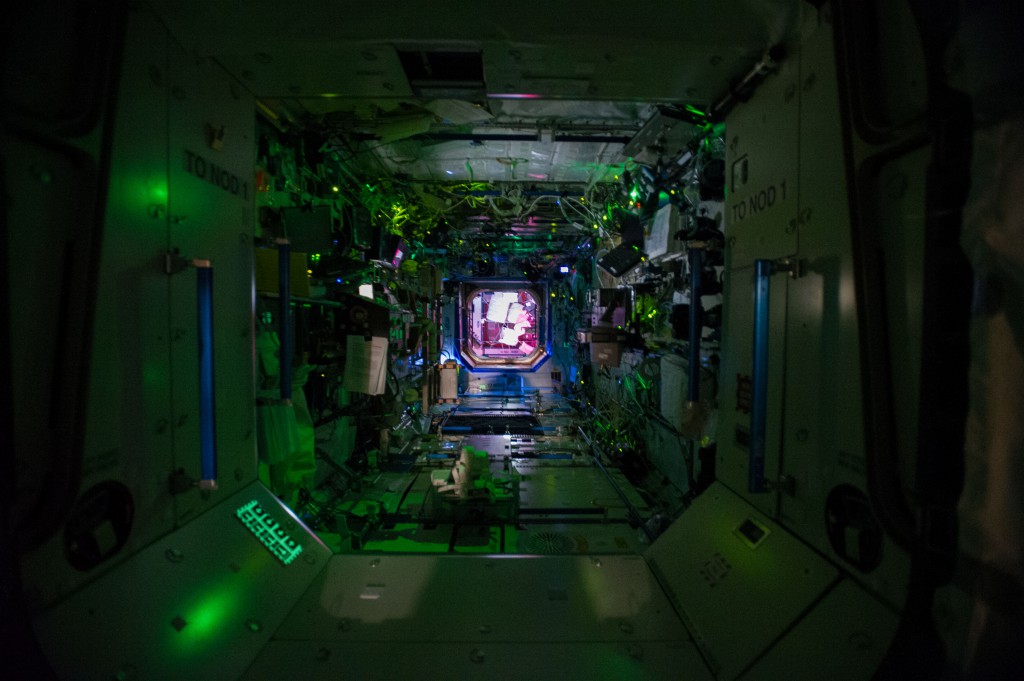
This view is looking into the Destiny Laboratory from Node 1 (Unity) with Node 2 (Harmony) in the background. Destiny is the primary research laboratory for U.S. payloads, supporting a wide range of experiments and studies. (Credit NASA)

via science.dodlive

New satellite data like an ultrasound for baby stars(VIDEO)

via phys.org

Fantastically Wrong: The Legendary Scientist Who Swore Our Planet Is Hollow

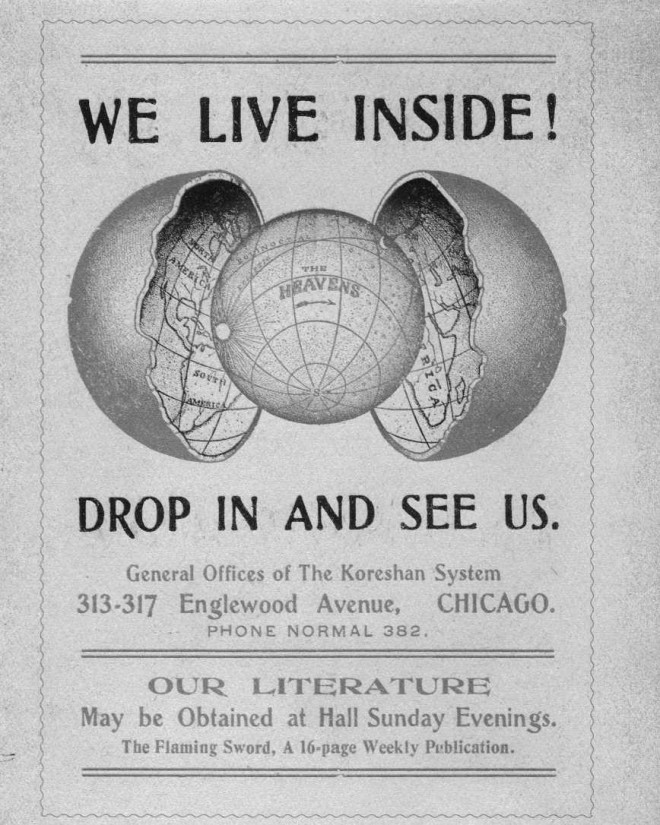
This ad should have a huge asterisk somewhere explaining that Koreshanity was a cult started by a guy who shocked himself and woke up thinking he was Jesus.
This ad should have a huge asterisk somewhere explaining that Koreshanity was a cult started by a guy who shocked himself and woke up thinking he was Jesus.(Credit: Wired)
via wired

NJ Night Sky: Moon cruises past Mars and Saturn; plus a new Super-Earth?

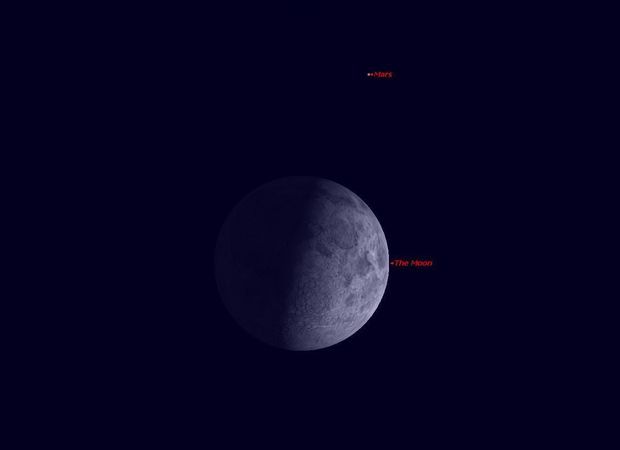
The Moon is near Mars tonight. (Credit:Starrynight.com)
via nj.com