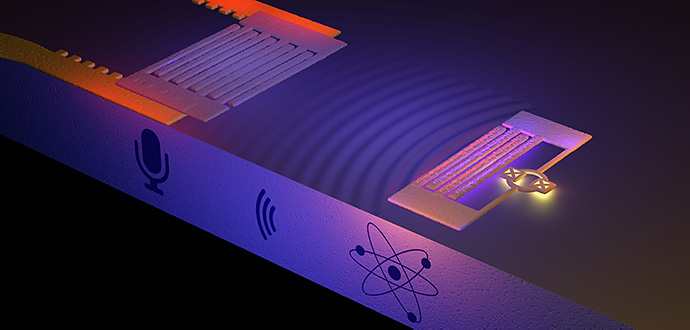
On the right, an artificial atom generates sound waves consisting of ripples on the surface of a solid. The sound, known as a surface acoustic wave (SAW) is picked up on the left by a “microphone” composed of interlaced metal fingers. According to theory, the sound consists of a stream of quantum particles, the weakest whisper physically possible. The illustration is not to scale. (Credit: Philip Krantz, Krantz NanoArt)
via chalmers
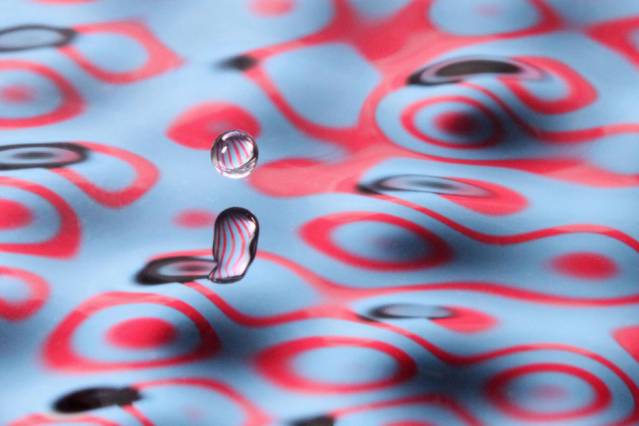
Close-ups of an experiment conducted by John Bush and his student Daniel Harris, in which a bouncing droplet of fluid was propelled across a fluid bath by waves it generated. (Credit: Dan Harris)
via phys
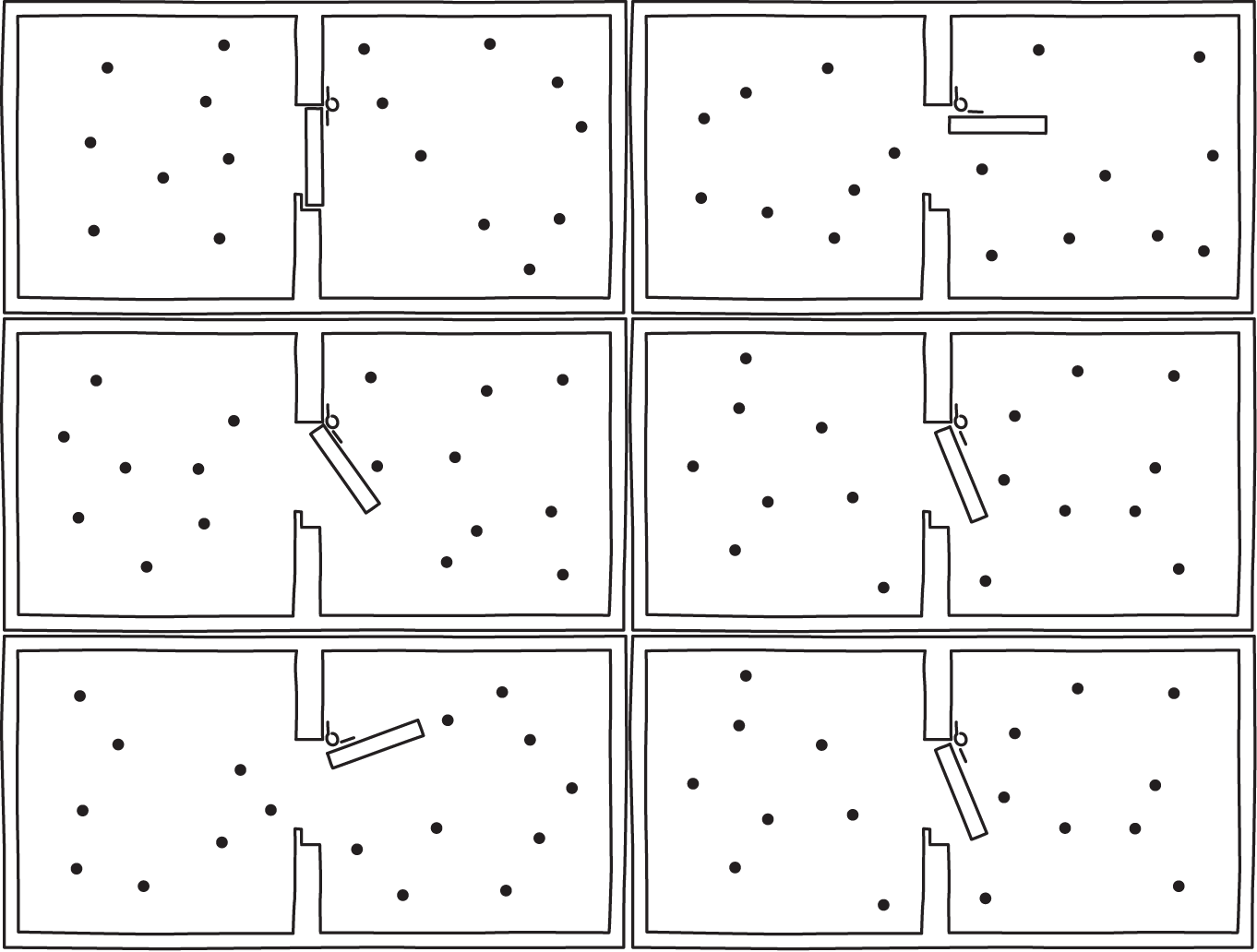
The Smoluchowsi trapdoor is a simple test for any proposed exorcism of Maxwell’s demon. It is immediately obvious that an information based exorcism is of no use. The are no sensors in this simple device that collect information; and there are memory devices that would need erasure if the demon is to return to its original state. (Credit: Hemmo, M.; Shenker)
via aip
Gravity Probe B (GP-B) has measured spacetime curvature near Earth to test related models in application of Einstein’s general theory of relativity. (Credit: S. Hossenfelder, Wiki Commons)
via backreaction
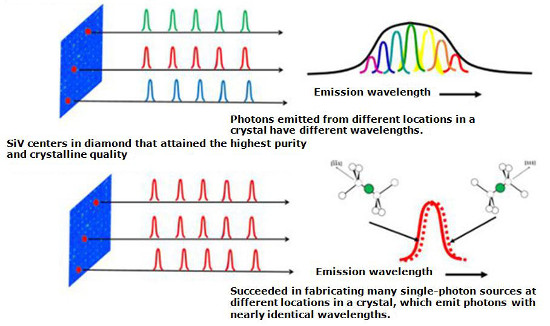
The research group resolved the challenging issue attributed to solid crystals, namely widely spread emission wavelengths, and succeeded in fabricating many single-photon sources that emit photons with nearly identical emission wavelengths. (Credit: National Institute for Materials Science (NIMS))
via innovations-report
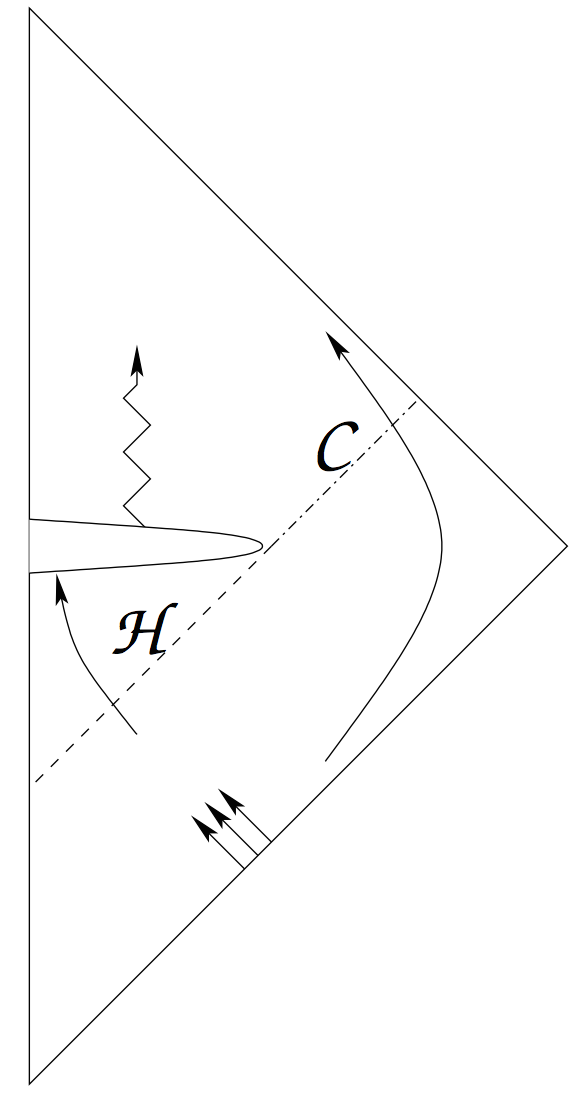
C H Figure 1: Acausality: Penrose diagram of a black hole with signature c hange at high curvature (hashed region). In contrast to traditional non-sing ular models, there is an event horizon (dashed line H , the boundary of the region that is determined by backward evolution from future infinity) and a Chauchy horizon (dash-dotte d line C , the boundary of the region obtained by forward evolution of the high-curvature re gion) (Credit: Martin Bojowald)
via arXiv
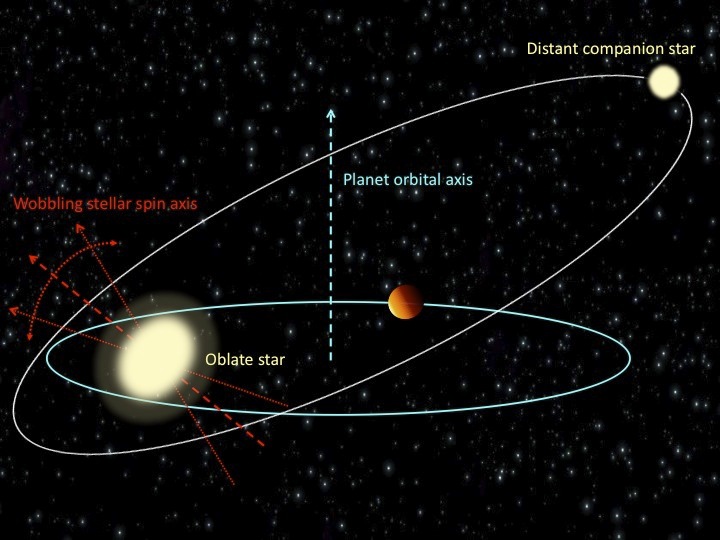
Giant alien planets known as “hot Jupiters” can induce wobbles in their parent stars that may lead to the wild, close orbits seen by astronomers. This diagram shows the relationship between wobbling stars and the orbital tilt of hot Jupiter planets. (Credit: Cornell University/N.Storch, K.Anderson, D.Lai)
via space
If a particle and its antiparticle pop into being on the event horizon, one gets sucked in. The other gets away. If the antiparticle gets sucked into the black hole, and the particle breaks free, the particle no longer has a chance to annihilate. It is now real, and not virtual. Its presence and energy count in the universe. And real radiation leaking from a black hole means that the black hole itself is slowly shrinking. (Credit: Chandra Observatory, NASA, Inglis-Arkell)
via io9
The U.S. Defense Department has highlighted China’s increasing space capabilities, however, saying China was pursuing activities aimed at preventing its adversaries from using space-based assets during a crisis.(Credit: Jaime FlorCruz – CNN Beijing Bureau Chief)
via reuters
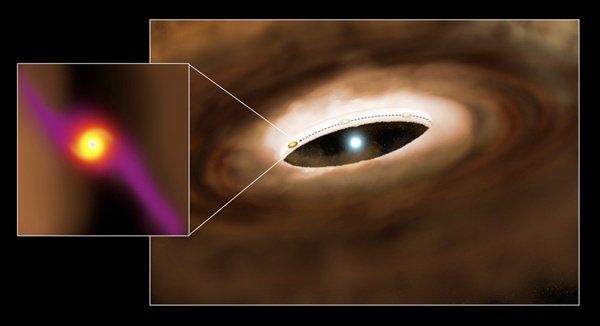
The new planet would be an uninhabitable gas giant at least three times the size of Jupiter, and the distance from the star would be about the same distance that Saturn is from the Sun. This graphic is an artist’s conception of the young massive star HD100546 and its surrounding disk. (Credit: VP. Marenfeld & NOAO/AURA/NSF)
via astronomy
If our understanding is correct, then the universe as a whole could be in a locally stable configuration, but it could also jump to a lower energy state through a process of quantum tunneling. If that happened, the universe would collapse and we’d all go bye bye. So to our best understanding, it is possible for the universe to collapse. (Credit: )
via phys.org
Quarks have one of three “color charges,” which are analogous to the primary colors red, green and blue. Just as an atom strikes a balance between positive and negative electrical charges, particles made of quarks balance colors to reach a neutral state. In the color analogy, that means combining colors to make white. (Credit: Quanta Magazine)
via wired
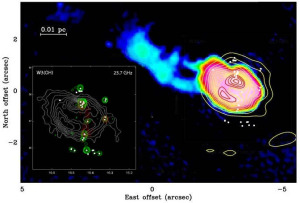
There is a giant cloud of alcohol in outer space. It’s in a region known as W3(OH), only about 6500 light years away. Unfortunately it is methyl alcohol (commonly known as wood alcohol, though this stuff is not derived from wood), so it isn’t suitable for drinking. There is some ethyl alcohol (the drinkable kind).(Credit: Hubble)
via phys.org
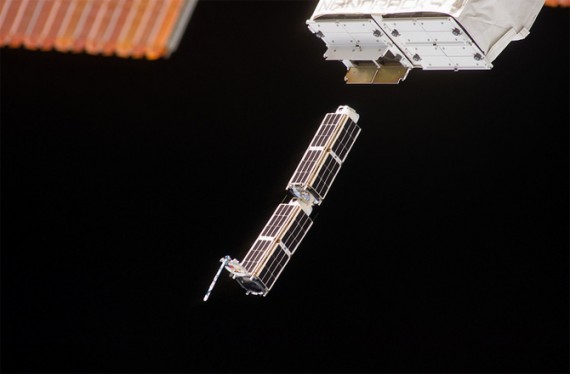
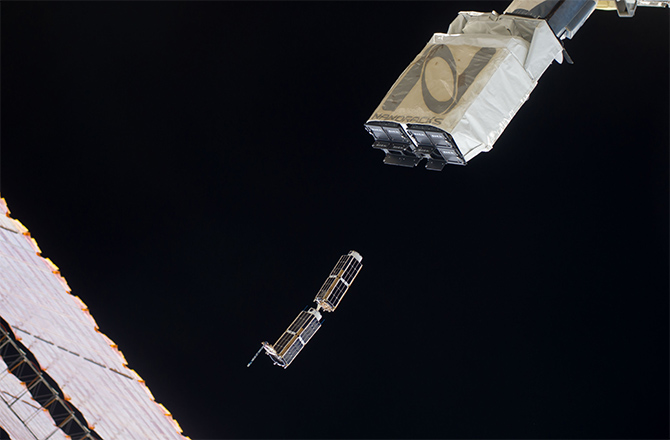
Two tiny satellites escaping on their own doesn’t sound too bad … except it’s not the first time this has happened. On August 23rd, NASA reports that two other CubeSats set themselves free. OK, 4 out of 100 doesn’t sound too bad either … except only 12 have been launched so far, which means a quarter of the CubeSats un-tethered themselves. (Credit: NASA)
via mysteriousuniverse
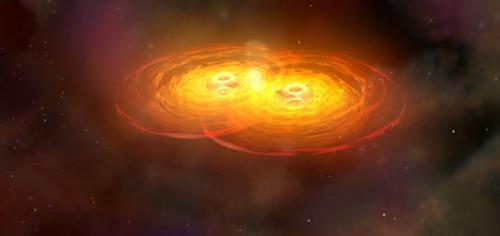
Classical black holes have “no hair”, meaning that they are simply described by their mass, charge and rotation. Because of this, you could toss an object (with a great deal of entropy) into a black hole, and the entropy would simply go away. (Credit: NASA/Chandra, B. Koberlein )
via phys.org
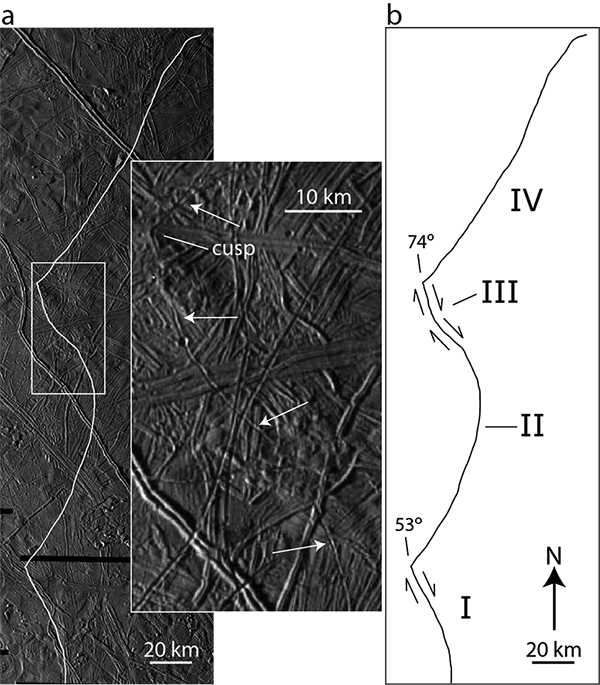
Schematic sketch of the growth mechanics of a cycloid Note that the reversal in curvature of the second segment above cannot be explained by the previous model of cycloid formation. (Credit: Marshall & Kattenhorn (2005))
via motherboard
“What Mark has done is put his finger on a key ingredient of how space-time is emerging: entanglement,” says Gary Horowitz, who studies quantum gravity at the University of California Santa Barbara. Horowitz says this idea has changed how people think about quantum gravity, though it hasn’t yet been universally accepted. “You don’t come across this idea by following other ideas. It requires a strange insight,” Horowitz adds. “He is one of the stars of the younger generation.”
via dailygalaxy
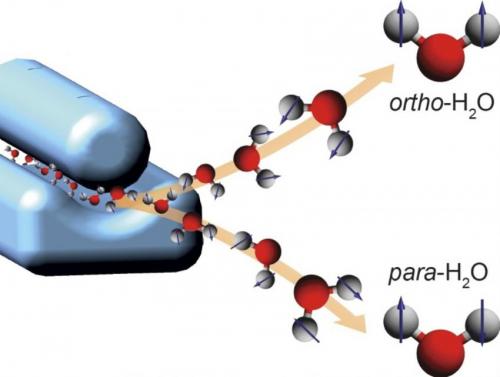
Researchers have separated the nuclear spin states of water. In para water, the spins (depicted as arrows) of water’s two hydrogen nuclei cancel out. They add up in ortho water. The scientists produced an ultracold, supersonic beam of water molecules — a mixture of para and ortho water — and sent it through an electric deflector (blue device on the left). The deflector acts as a prism for nuclear spin states, separating para and ortho water molecules in space (right). (Credit: Daniel A. Horke, CFEL/DESY)
via phys.org
In this Sunday Sept. 7, 2014, publicly distributed handout photo provided by the Nicaraguan Army shows an impact crater made by a small meteorite in a wooded area near Managua’s international airport and an air force base. Nicaraguan government spokeswoman Rosario Murillo said Sunday that a loud boom heard overnight by residents of the capital was a “relatively small” meteorite that “appears to have come off an asteroid that was passing close to Earth.” (Credit: Nicaraguan Army/AP)
via newsweek
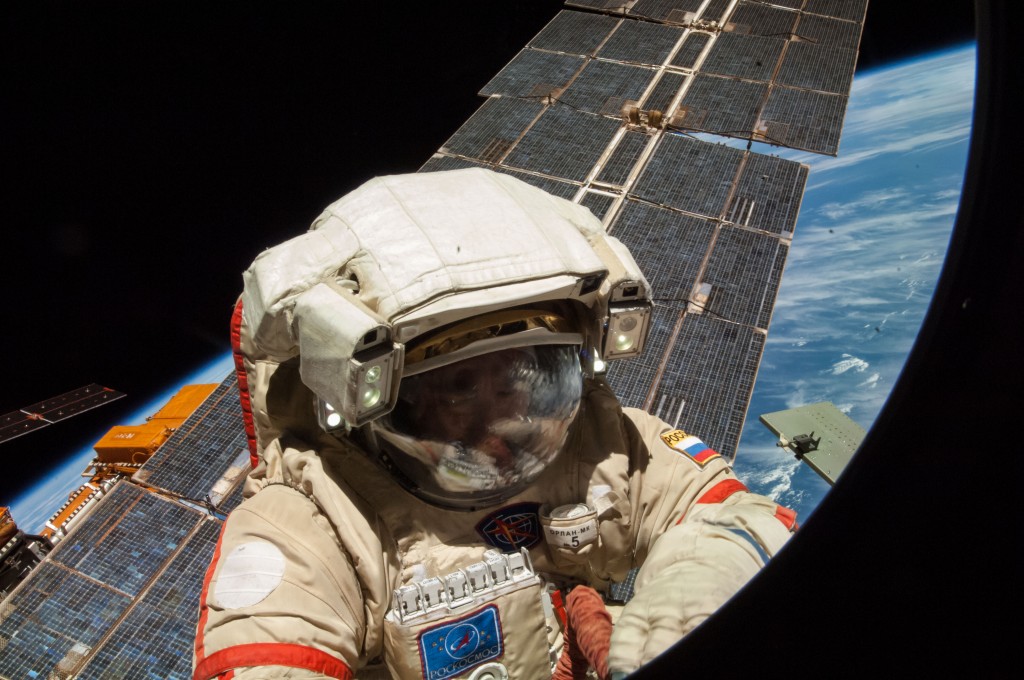
Russian cosmonaut Alexander Skvortsov, performs maintenance and retrieves science experiment packages during a spacewalk on Aug. 18. Skvortsov, along with two other astronauts return to Earth on Sept. 10. (Credit: NASA)
via pbs
As usual for this type of satellite, the Chinese media is referring to the new satellite as ‘a new remote sensing bird that will be used for scientific experiments, land survey, crop yield assessment, and disaster monitoring.’ (Credit: NASA)
via nasaspaceflight
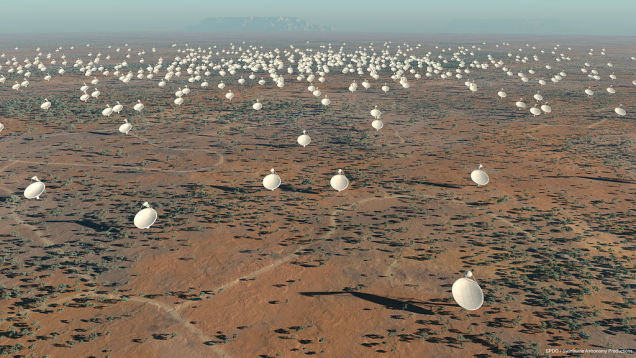
Artist impression of the Square Kilometer Array. If all goes according to plan in the next decade, we could see these small perturbations on the moon—and begin to solve some of the mysteries of space. (Credit: SKA)
via gizmodo
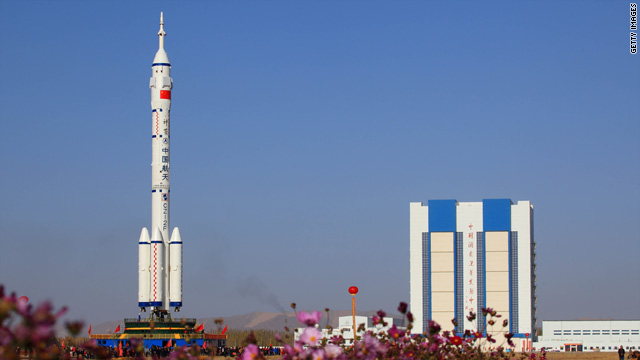
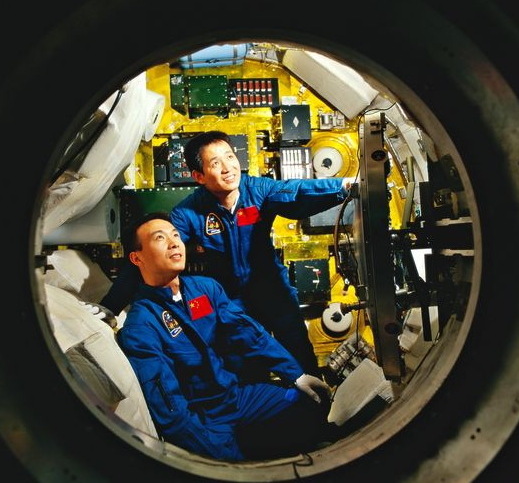
Space travelers from around the world are headed to China this month for an international Planetary Congress, which will explore the possibilities for expanding human spaceflight cooperation among different countries. Pictured above is China’s first astronaut, Yang Liwei, is now vice director of the China Manned Space Engineering Office. (Credit: CMS)
via space
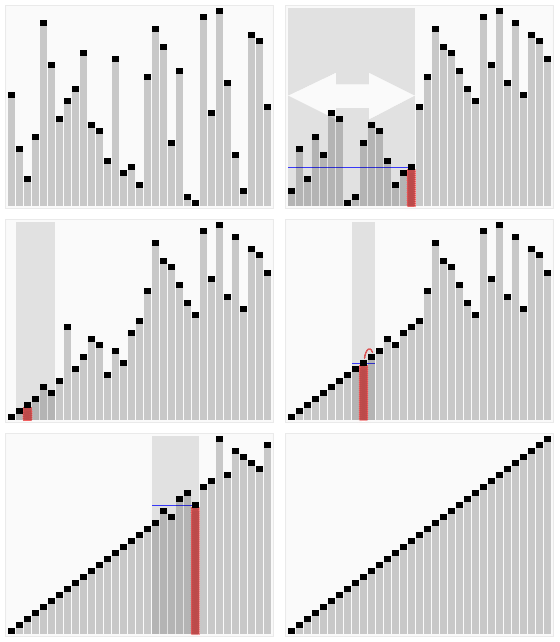
An animation of the quicksort algorithm sorting an array of randomized values. The red bars mark the pivot element; at the start of the animation, the element farthest to the right hand side is chosen as the pivot. (Credit: RonaldH)
via wired
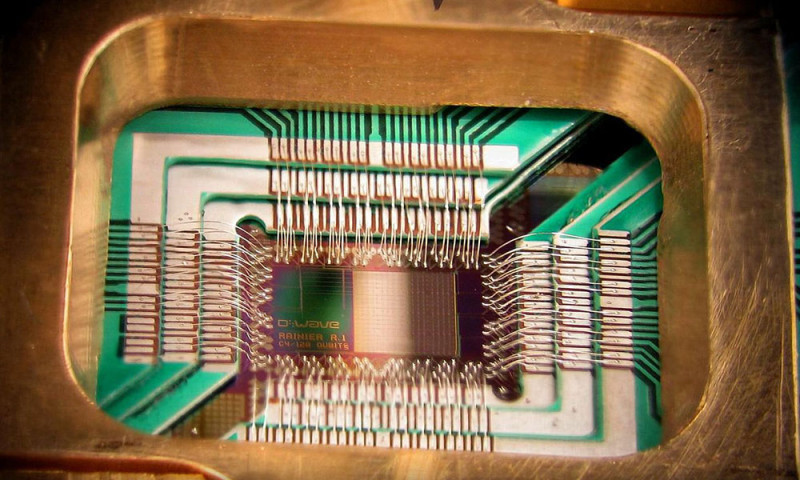
Rather than keeping all its eggs in D-Wave’s basket, Google’s “Quantum A.I. Lab” announced that it is starting a collaboration with an academic quantum computing researcher, John Martinis of the University of California-Santa Barbara. (Credit: Wiki, Timmer)
via arstechnica
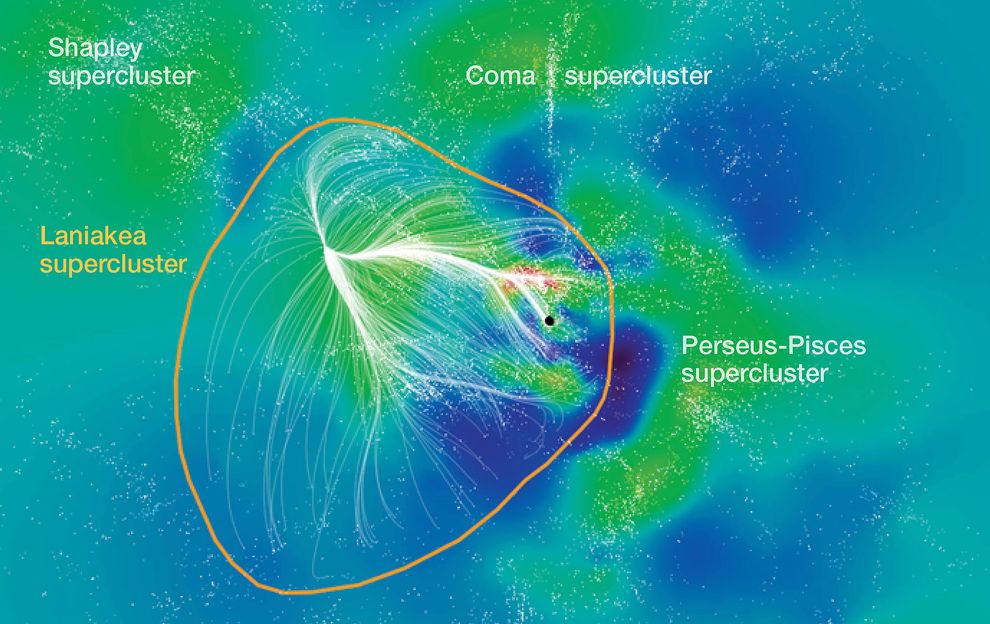
A new map places the Milky Way (black dot) within a large supercluster of galaxies (white dots) by tracing the gravitational pull of galaxies toward one another. White filaments reveal the paths of galaxies moving toward a gravitational center in the new supercluster, dubbed “Laniakea.” (Blue, low galaxy density; green, intermediate; red, high.) (Credit: DP at CEA/Saclay, France)
via nationalgeographic
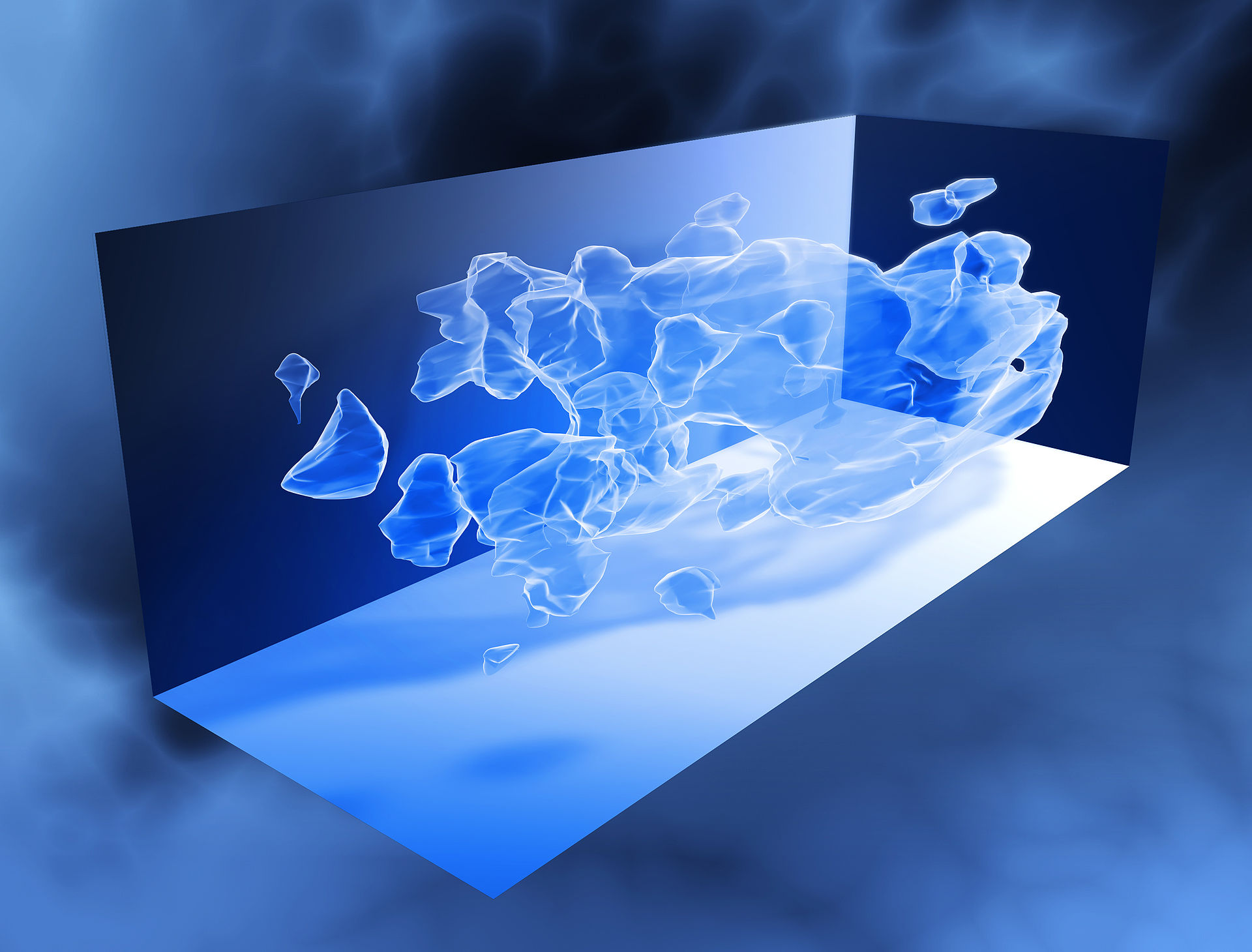
This three-dimensional map offers a first look at the web-like large-scale distribution of dark matter, an invisible form of matter that accounts for most of the Universe’s imaginary mass. The map reveals a loose network of dark matter filaments, gradually collapsing under the relentless pull of gravity, and growing clumpier over time. The three axes of the box correspond to sky position, and distance from the Earth increasing from left to right. Note how the clumping of the dark matter becomes more pronounced, moving right to left across the volume map, from the early Universe to the more recent Universe. (Credit: NASA/ESA/Richard Massey)
via ku.edu
Cosmologists have revealed intruiging new ways to probe the mystery of whether dark energy exists and how it might be accelerating the universe’s growth. (Credit: Picturegarden/Getty)
via newscientist
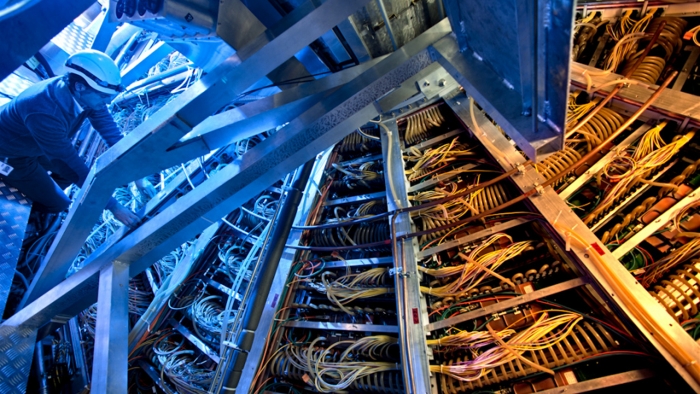
As time ticks down to the restart of the Large Hadron Collider, scientists are making sure their detectors run like clockwork. (Credit: Antonio Saba, CERN)
via symmetrymagazine
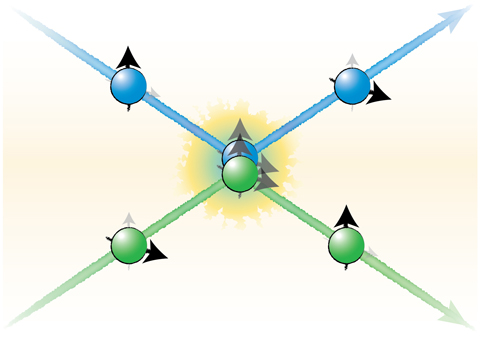
Schematic representation of a spin-exchanging collision. Two atoms in different orbitals (blue and green) and different spin orientations (black arrows) collide. The two atoms exiting the collision have swapped their spins after interacting. Crucially, the process is independent of the two specific initial spin states. (Credit: LMU-München / MPQ, Quantum Many Body Systems Division)
via phys.org
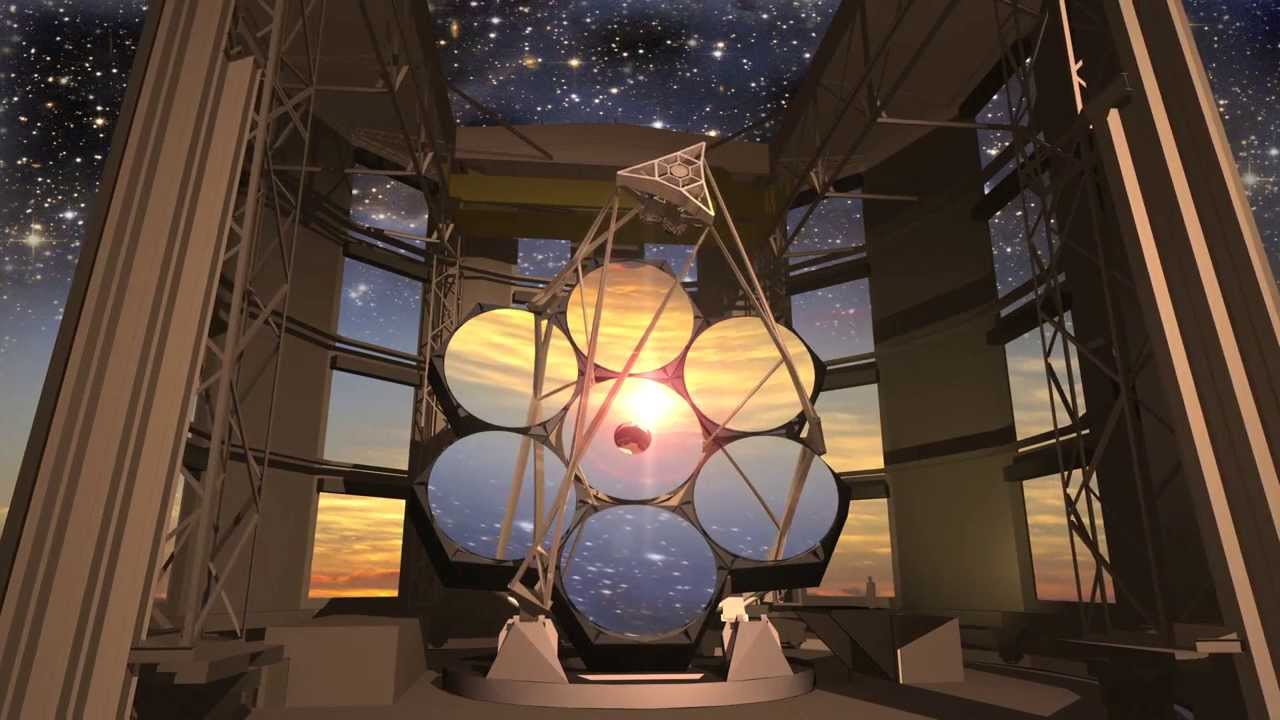
The Giant Magellan Telescope (GMT) is a ground-based extremely large telescope planned for completion in 2020.[5] It will consist of seven 8.4 m (27.6 ft) diameter primary segments,[6] with the resolving power of a 24.5 m (80.4 ft) primary mirror and collecting area equivalent to a 22.0 m (72.2 ft) one,[7] (which is about 368 square meters) (Credit: wiki, Tarantola)
via gizmodo
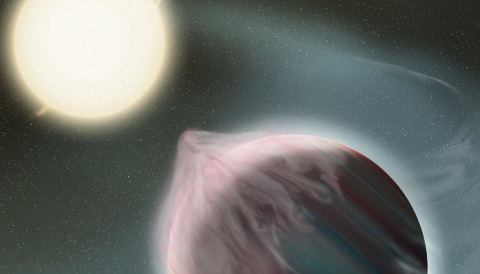
A new analysis suggests that hot super-Earths might be the skeletal remnants of hot Jupiters stripped of their atmospheres. The above image is an artist’s depiction of an early stage in the destruction of a hot Jupiter by its star. (Credit: NASA / GSFC / Reddy, S. Hall)
via skyandtelescope