Physics in the News

Tuesday, June 24, 2014

Science and spacewalks on Space Station
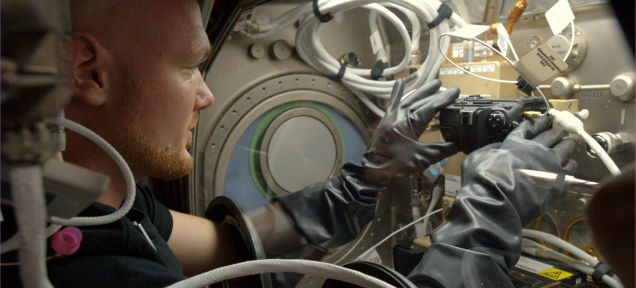
This might look like a routine scientific experiment, but you’re actually looking at European Space Agency astronaut Alexander Gerst as he sets fire to samples of various solids aboard the International Space Station to see how they burn. This man truly has a wonderful job. (Credit: ESA)

via phys.org


Universe Shouldn’t Be Here, According to Higgs Physics
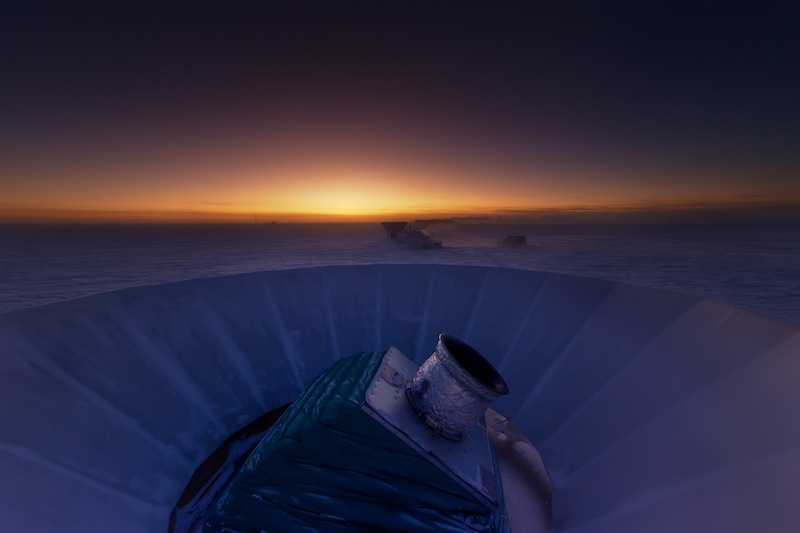
The BICEP2 telescope at twilight, which occurs only twice a year at the South Pole. The MAPO observatory (home of the Keck Array telescope) and the South Pole station can be seen in the background.
via livescience


SpaceX puts Falcon 9 rocket launch on hold until July
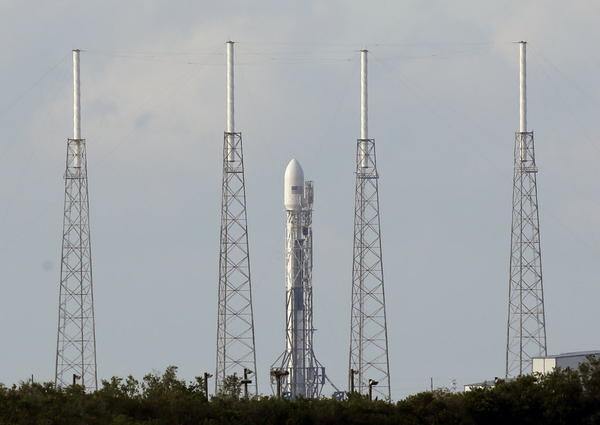
A SpaceX Falcon 9 rocket carrying a payload of Orbcomm communications satellites is seen at launch complex 40 after an attempted launch was scrubbed due to technical issues at the Cape Canaveral Air Force Station in Cape Canaveral, Fla.
via csmonitor


Satellite Swarm Spots North Pole Drift
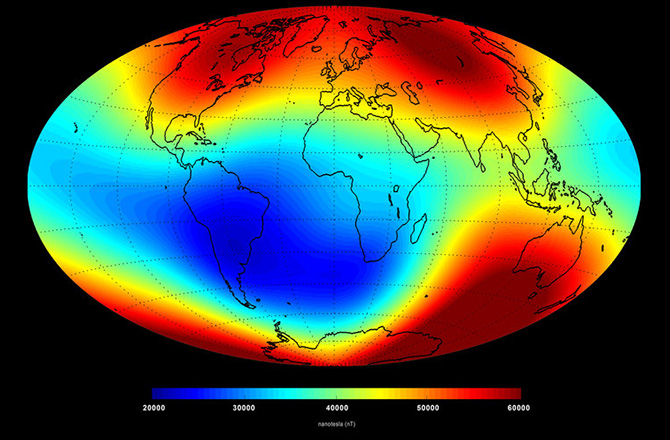
Swarm measurements of Earth’s magnetic field from June 2014. Blue areas show where it has weakened. (Credit ESA/DTU Space)
via discovery


Greetings from Earth! NASA Spacecraft to Carry Message for Aliens
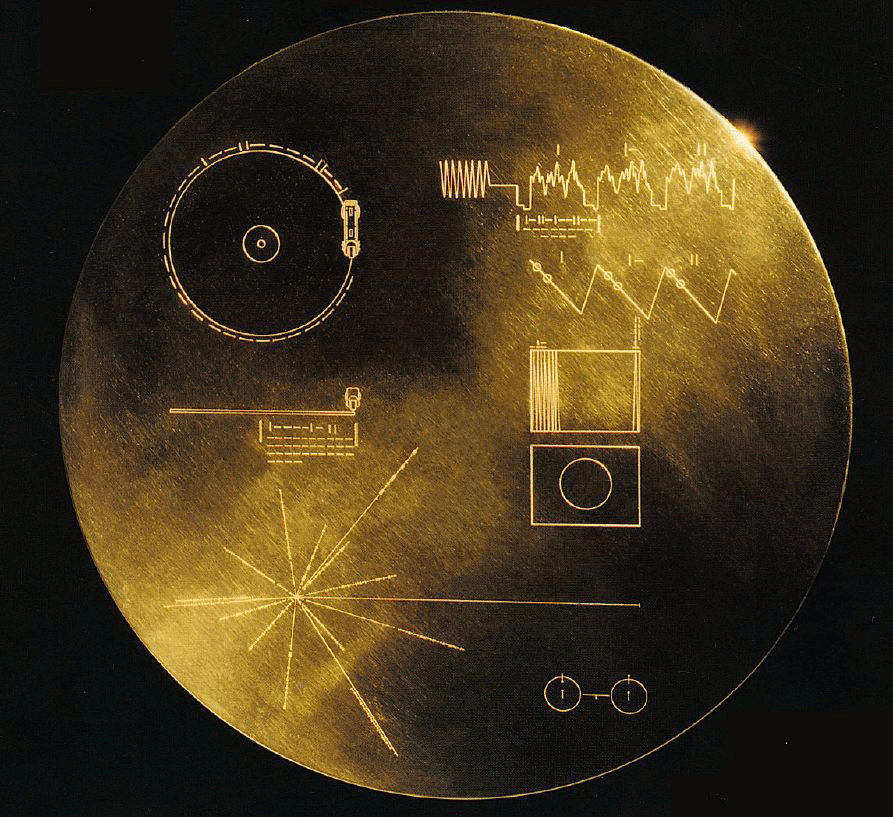
The Golden Record carried a message from Earth on board NASA's Voyager 1 and Voyager 2 missions. (Credit: NASA)
The Golden Record carried a message from Earth on board NASA’s Voyager 1 and Voyager 2 missions.
(Credit: NASA)

via SPACE.com
Physics in the News

Friday, June 20, 2014

Classic space science: UD physicist’s findings about space plasma become ‘classics’

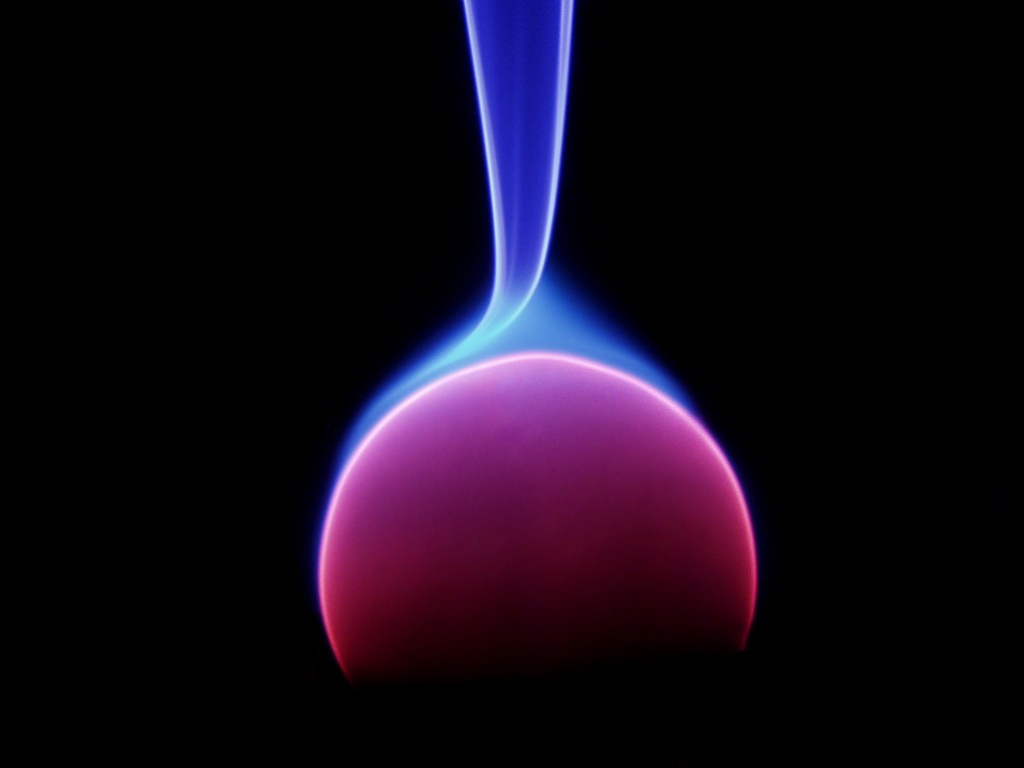
Energy Arc, central electrode of a Plasma Lamp.
via udel

New Observatory Takes Highest-Energy Particle Research to New Heights

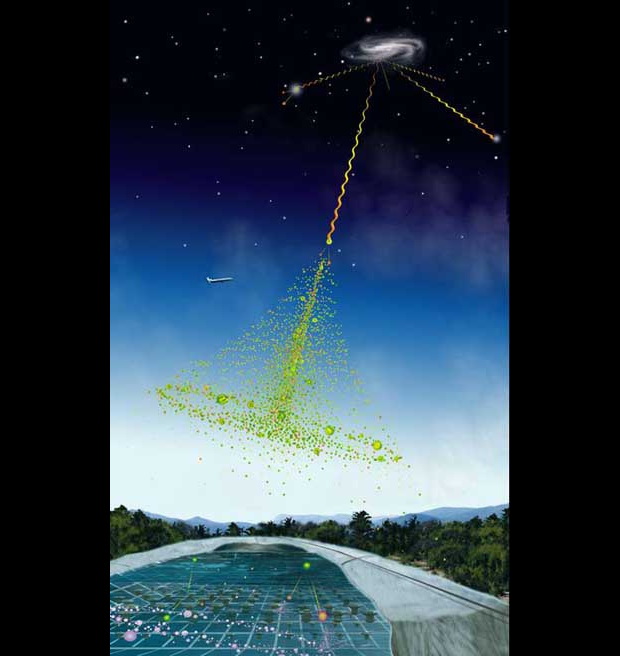
As cosmic-ray particles are accelerated by a black hole in this artist's interpretation, they stream toward Earth as very-high-energy gamma-rays. Upon hitting the atmosphere, they produce a shower of particles that rain down on Earth. Most of these particles run out of energy before they hit sea level. Credit: Aurore Simonnet, Sonoma State University
As cosmic-ray particles are accelerated by a black hole in this artist’s interpretation, they stream toward Earth as very-high-energy gamma-rays. Upon hitting the atmosphere, they produce a shower of particles that rain down on Earth. Most of these particles run out of energy before they hit sea level. (Credit: Aurore Simonnet, Sonoma State University)
via space.com

New test may provide ‘smoking gun’ for modified gravity

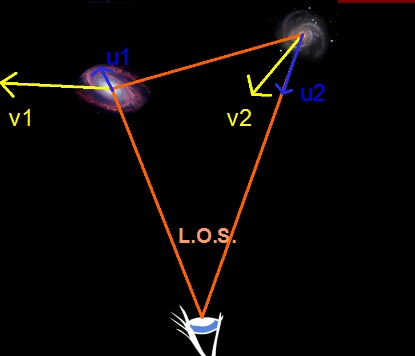
A schematic picture of how researchers can observe galaxy peculiar velocities, “a cosmic dance of galaxies.” (Credit: Wojciech A. Hellwing)
via phys.org

Supermassive Black Hole Shows Strange Gas Movements

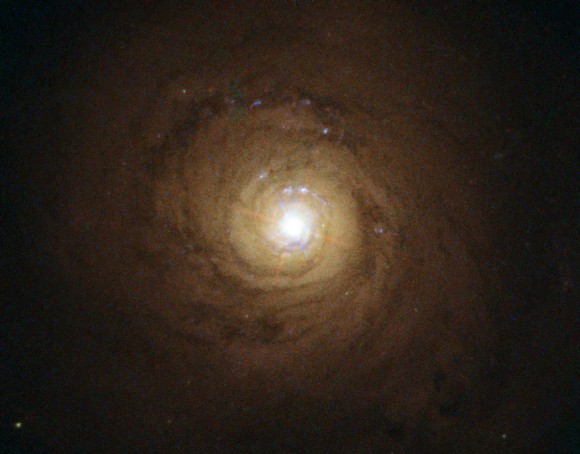
A Hubble Space Telescope image of NGC 5548. (Credit: ESA/Hubble and NASA. Davide de Martin)
via universetoday

Slowly rotating neutron star paired with a red-giant star reveals properties that conflict with existing theory

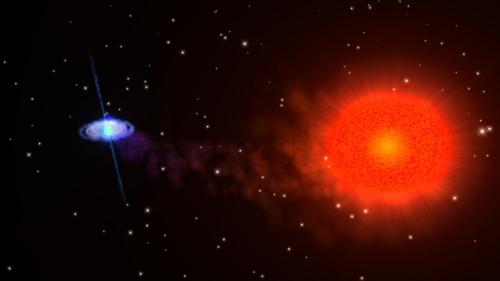
An artist’s impression of an x-ray binary system. The matter that a neutron star (blue) sucks from a regular star (red) leads to the emission of intense x-ray beams. (Credit: NASA)
via phys.org
Slowly rotating neutron star paired with a red-giant star reveals properties that conflict with existing theoryRead more at: http://phys.org/news/2014-06-slowly-rotating-neutron-star-paired.html#jCp

Physics in the News

Thursday, June 19, 2014

This Shape-Shifter Could Tell Us Why Matter Exists

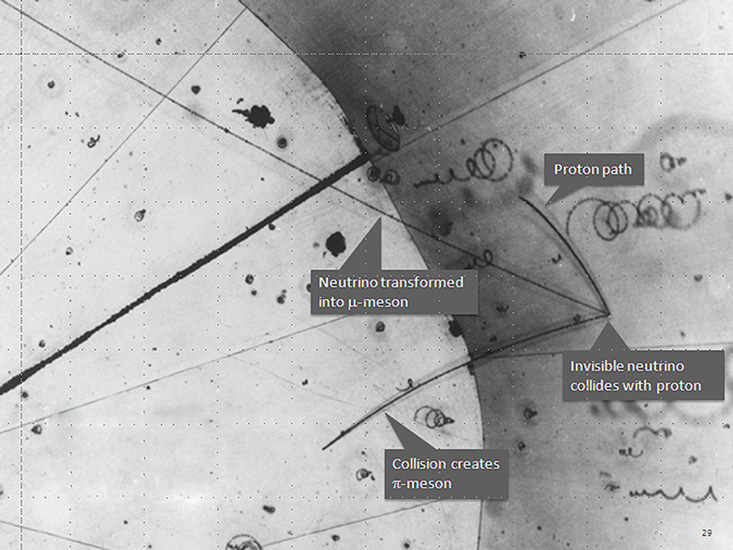
 An invisible neutrino entering a hydrogen bubble chamber from the right collides with a proton, leaving three visible particle pathways.
An invisible neutrino entering a hydrogen bubble chamber from the right collides with a proton, leaving three visible particle pathways.
via nautil.us


Gravity’s strength still an open question after latest measurement

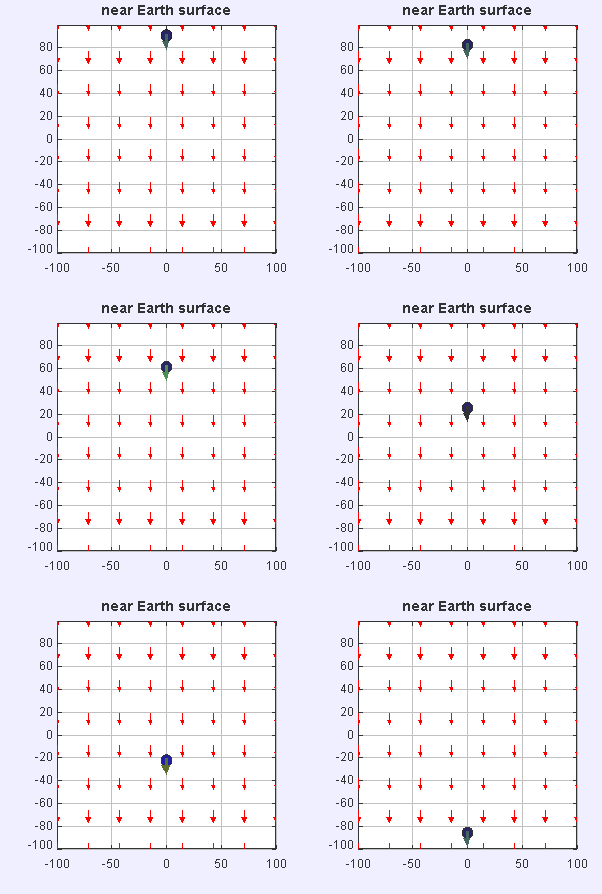
Gravity field near earth at 1,2 and A the curvature of the Earth is negligible at this scale, and the gravity force lines can be approximated as being parallel and pointing straight down to the center of the Earth. (Credit: SA 3.0)


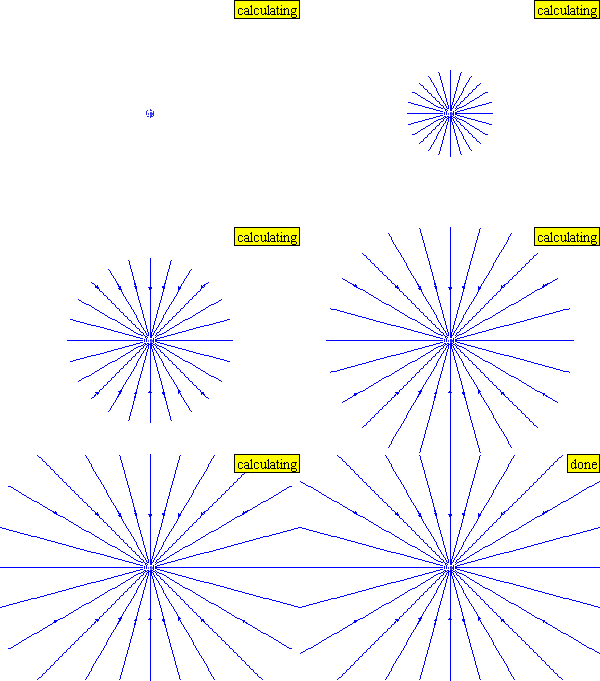
Field lines drawn for a point mass using 24 field lines The gravitational field can be represented using field lines. These run in the direction that a mass would be accelerated in initially. The object will not necessarily fall along the field lines, but the acceleration will always be in the direction of the field lines. The closer the field lines are together, the denser the gravitational field. (credit: CC BY-SA 3.0)
Field lines drawn for a point mass using 24 field lines. The gravitational field can be represented using field lines. These run in the direction that a mass would be accelerated in initially. The object will not necessarily fall along the field lines, but the acceleration will always be in the direction of the field lines. The closer the field lines are together, the denser the gravitational field.(credit: SA 3.0)


Will Venus Express Spacecraft Crash Or Keep Decoding Planet’s Secrets

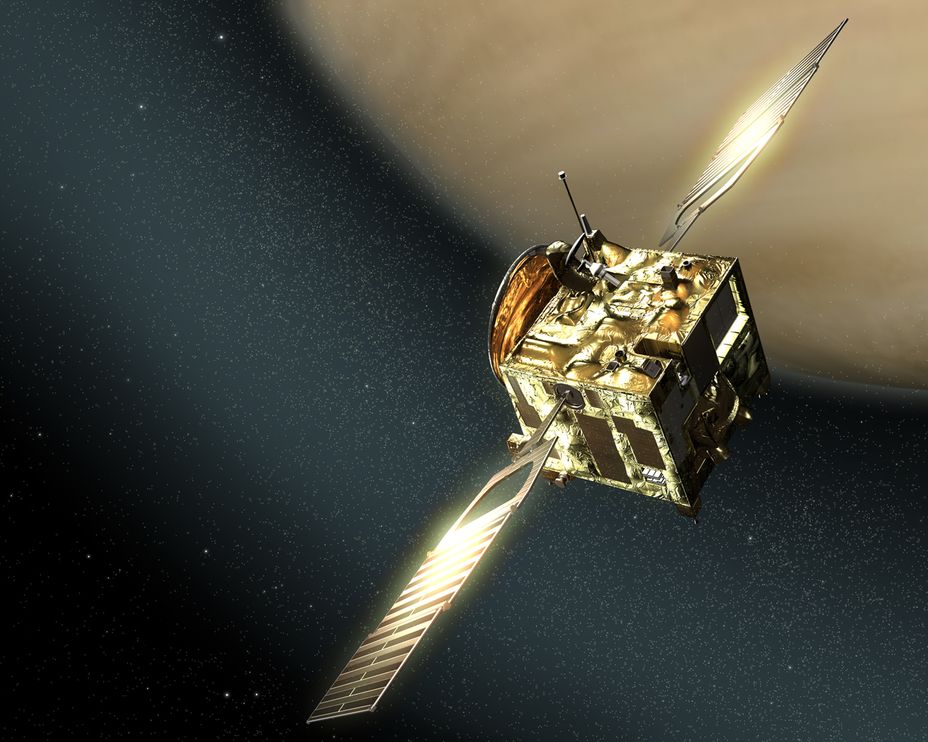
This illustration of Venus Express shows it amid charged particles of solar wind in the upper layers of the Venusian atmosphere. (credit: ESA, AOES Medialab)
This illustration of Venus Express shows it amid charged particles of solar wind in the upper layers of the Venusian atmosphere. (Credit: ESA, AOES Medialab)
via nationalgeographic
 

NASA Dark-Energy Mission Could Spot 3,000 New Alien Planets

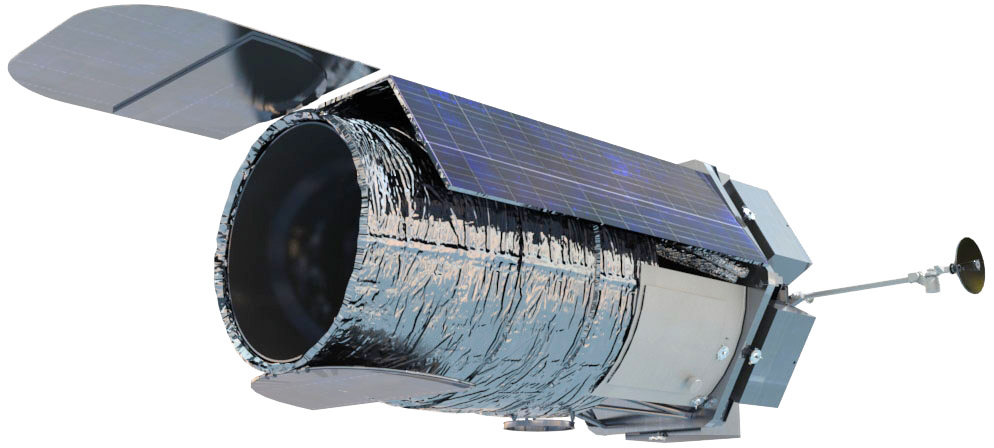
An artist's rendition of the proposed WFIRST-AFTA mission, which will study dark energy, extrasolar planets and objects in the near-infrared. (Credit: NASA)
An artist’s rendition of the proposed WFIRST-AFTA mission, which will study dark energy, extrasolar planets and objects in the near-infrared. (Credit: NASA)
via space.com


Universe’s Expansion Measured to Extreme Precision

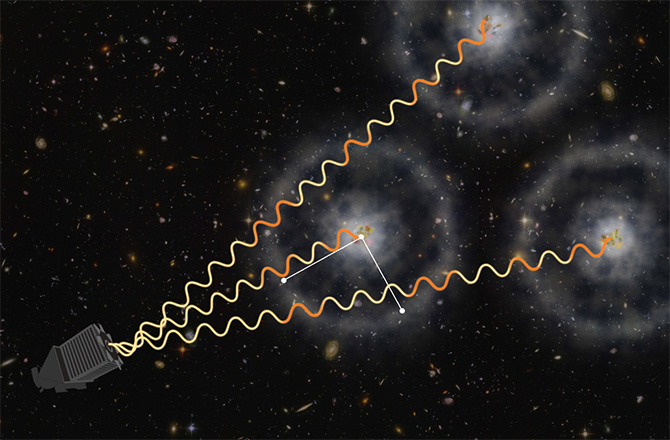
An artist's view of how quasars and BOAs work together to measure the expansion of the universe. Light from distant quasars is absorbed by gas, which is imprinted with a pattern of BOAs from the early universe. Zosia Rostomian, Lawrence Berkeley National Laboratory, and Andreu Font-Ribera, BOSS Lyman-alpha team, Berkeley Lab
An artist’s view of how quasars and BOAs work together to measure the expansion of the universe. Light from distant quasars is absorbed by gas, which is imprinted with a pattern of BOAs from the early universe. Zosia Rostomian, Lawrence Berkeley National Laboratory, and Andreu Font-Ribera, BOSS Lyman-alpha team, Berkeley Lab
via discovery.com


To test the effect of gravity on quantum entanglement, we need to go to space

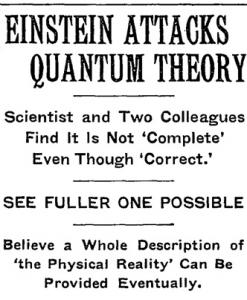
May 4, 1935 New York Times article headline regarding the imminent EPR paper.
via theconversation


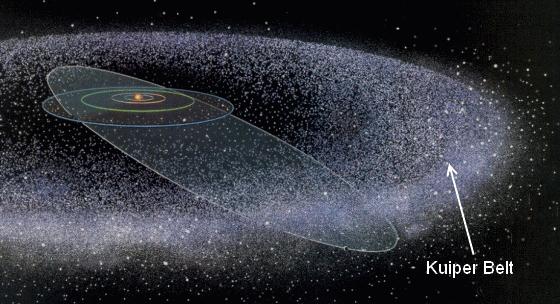
Hubble Telescope loosens Kuiper belt to reveal ICY BODY for NASA boffins’ PROBE

The Kuiper belt is a region beyond Neptune that is full of comets, asteroids and other debris. It circles the solar system and has always been a little bit of a mystery as it is so far away and hard to explore.(Credit: Chris Dann)
via theregister

Physics in the News

Friday, June 13, 2014

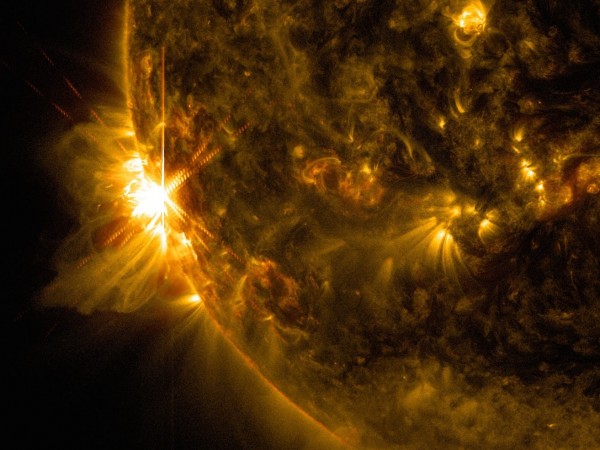
Solar Storm Heading Toward Earth

This image from NASA’s Solar Dynamic Observatory captures the first of three giant flares erupting from the sun’s surface on June 10, 2014. Credit: NASA/SDO/Goddard/Wiessinger
This image from NASA’s Solar Dynamic Observatory captures the first of three giant flares erupting from the sun’s surface on June 10, 2014. (Credit: NASA/SDO/Goddard/Wiessinger)
via newswatch

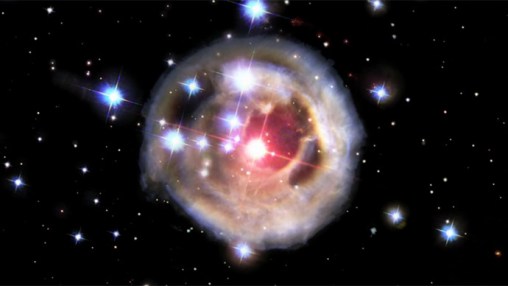
Stunning Hubble time-lapse of stellar explosion(VIDEO)

 V838 created an expanding light echo that illuminated the interstellar dust surrounding it and generated one of the most amazing scenes captured by Hubble.
V838 created an expanding light echo that illuminated the interstellar dust surrounding it and generated one of the most amazing scenes captured by Hubble. (Credit: NASA)
via rt.com

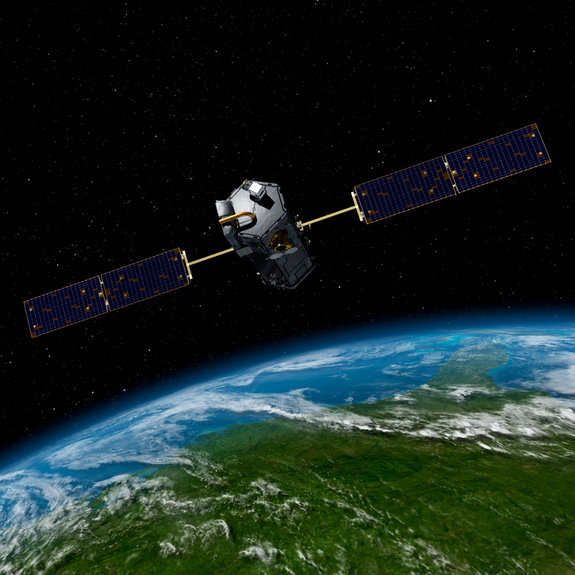
NASA to Launch Carbon Dioxide-Monitoring Spacecraft Next Month

Artist's rendition of the OCO-2 Observatory. Credit: JPL/NASA
Artist’s rendition of the OCO-2 Observatory. (Credit: JPL/NASA)
via space.com

The International Space Station Is About to Get Its First 3D Printer

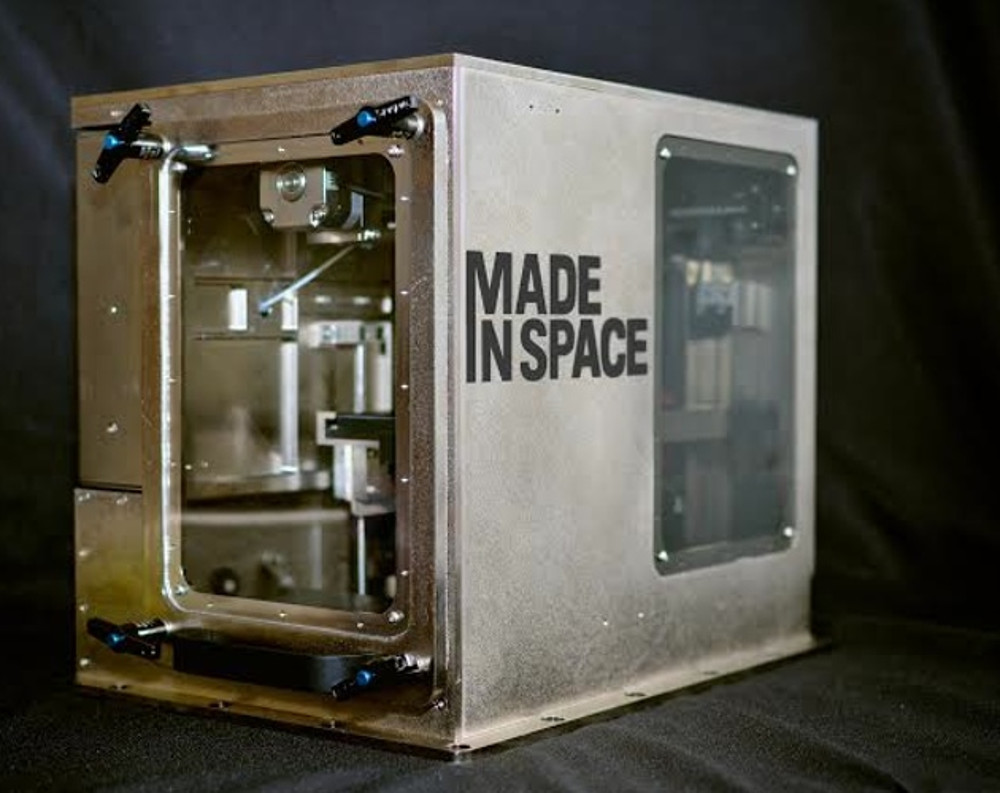
Made in Space's 3D Printer. Image: Made in Space
Made in Space’s 3D Printer. (Credit: Made in Space)
via motherboard.vice

Like Magic! Tiny Particles Can Pass Through Long-Distance Barriers

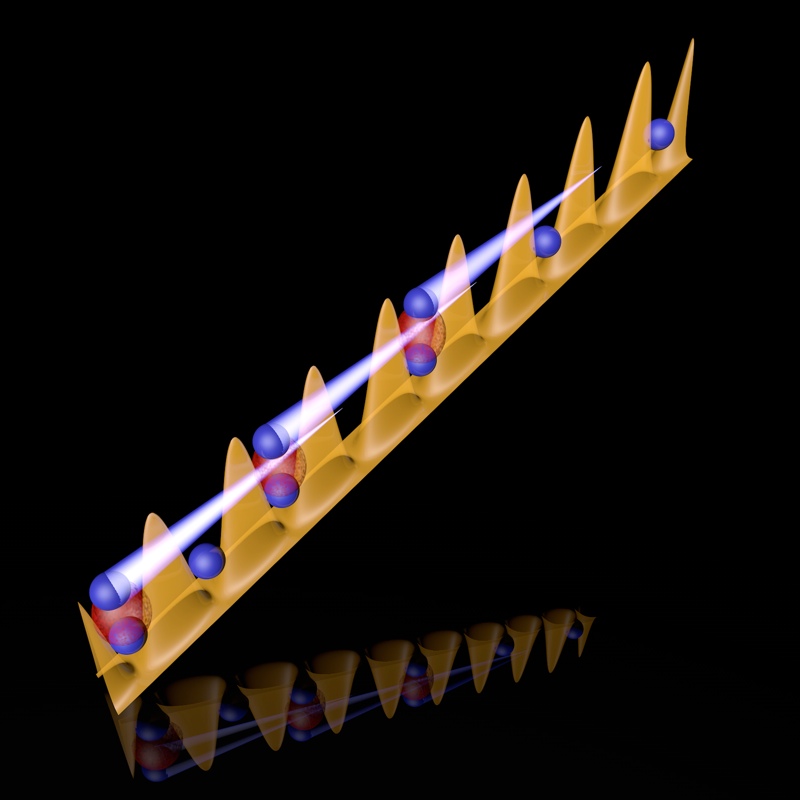
Quantum particles transmit through a whole series of barriers under conditions where a single particle could not do the move. Credit: University of Innsbruck
Quantum particles transmit through a whole series of barriers under conditions where a single particle could not do the move. (Credit: University of Innsbruck)
via livescience

Meet the Cosmic Tootsie Pop

red-giant
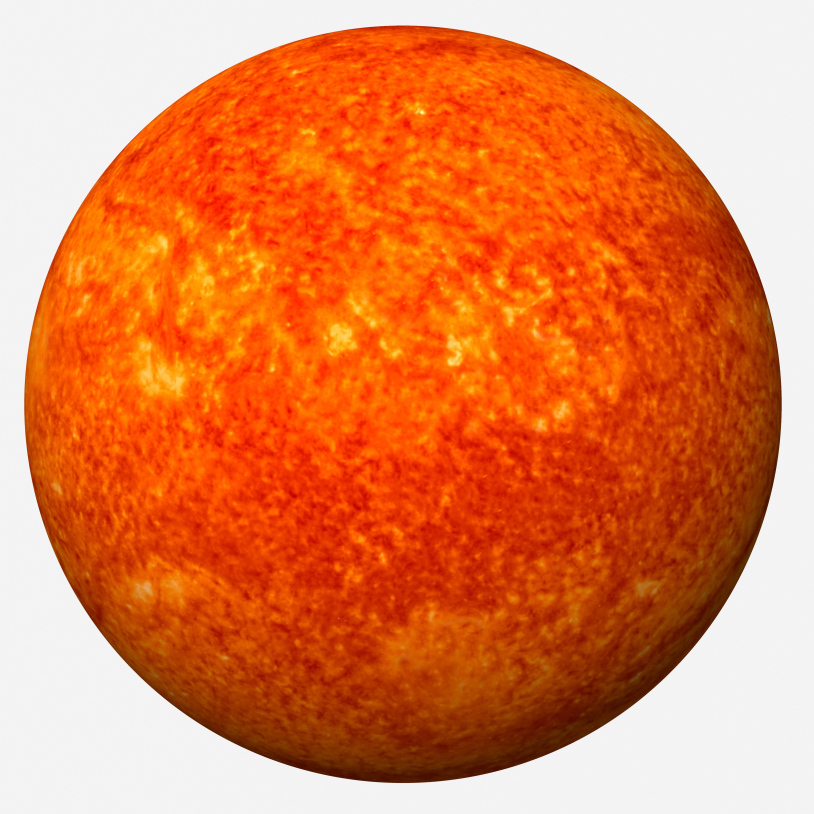
There’s a prize hidden inside this red giant. (Credit: Getty Images)
via time

Physics in the News

Updated Monday, June 9, 2014

The Very First Vine From Space Captures A Sun That Never Sets

via io9


Quarks in six-packs: Exotic Particle Confirmed

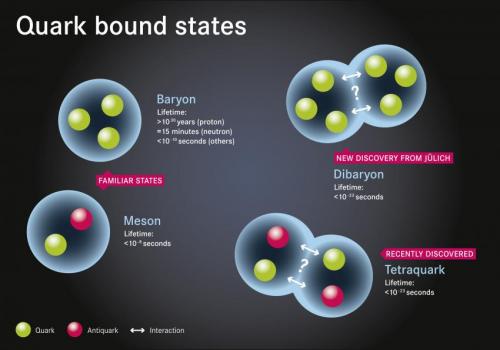
For a long time, physicists were only able to reliably verify two different classes of hadrons: baryons and mesons. Experiments performed at Jülich’s accelerator COSY have now shown that, in fact, another class of exotic particles made up of six quarks exists. Credit: Forschungszentrum Jülich/SeitenPlan CC BY 4.0 Read more at: http://phys.org/news/2014-06-quarks-six-packs-exotic-particle.html#jCp
For a long time, physicists were only able to reliably verify two different classes of hadrons: baryons and mesons. Experiments performed at Jülich’s accelerator COSY have now shown that, in fact, another class of exotic particles made up of six quarks exists. Credit: Forschungszentrum Jülich/SeitenPlan CC BY 4.0

via phys.org


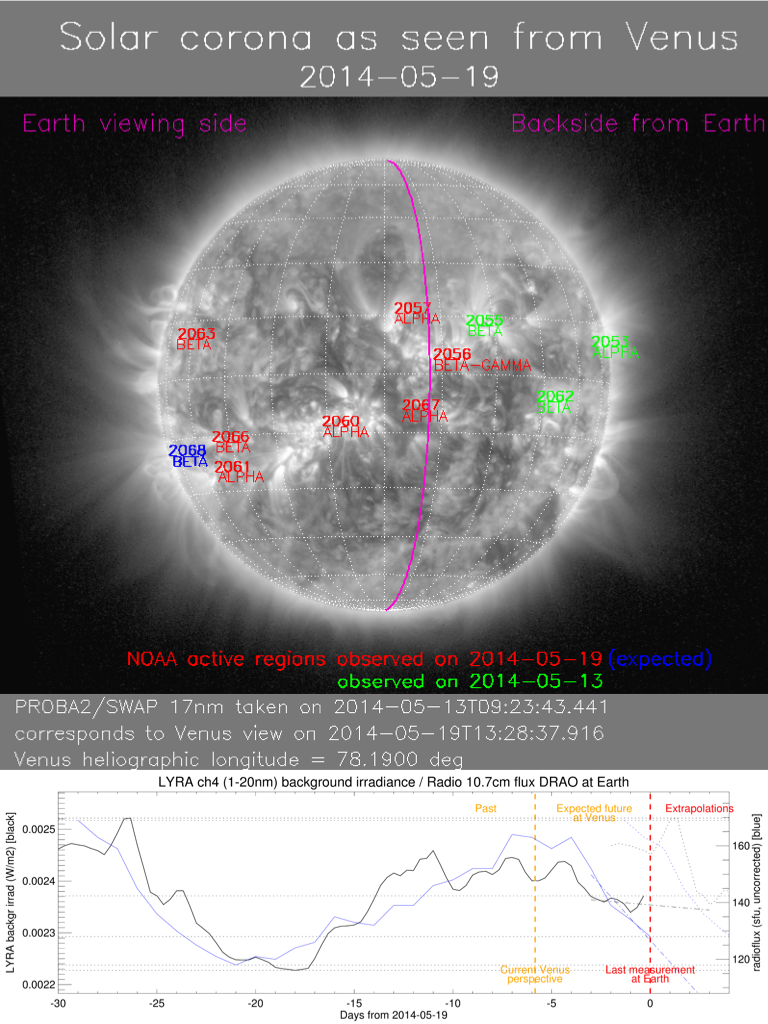
Space Weather Report for an Alien World

Space weather report for Venus
via esa.int


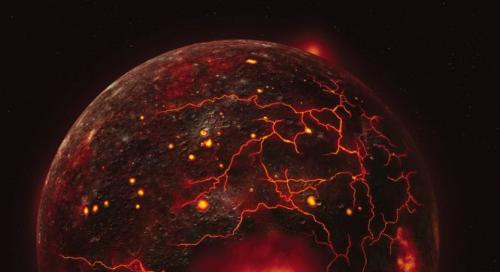
Researchers find evidence of speedy core formation in solar system planetesimals

Planetary core formation. Credit: Speed metal, Science 6 June 2014.
via phys.org


Quantum black holes at the LHC: production and decay mechanisms of non-thermal microscopic black holes in particle collisions

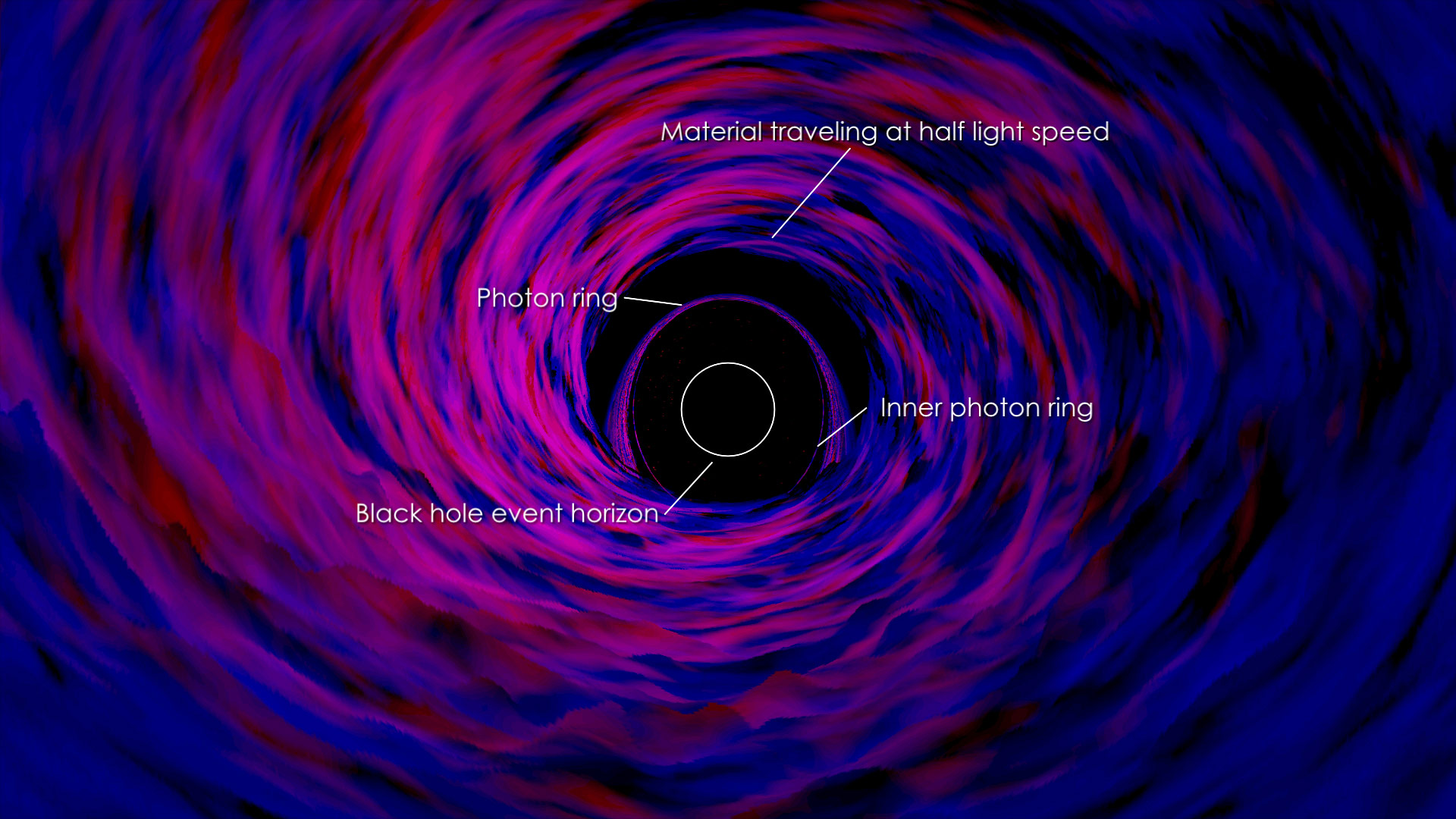
This annotated image labels several features in the simulation, including the event horizon of the black hole. NASA’s Goddard Space Flight Center
via sussex.ac.uk