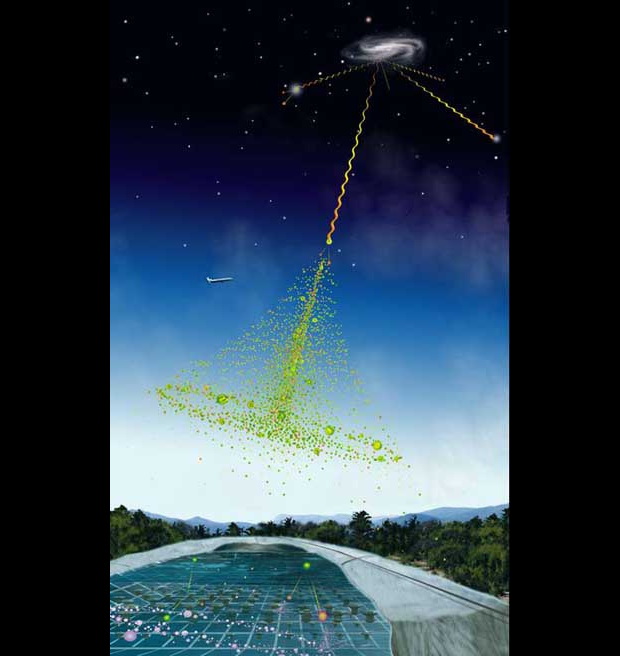
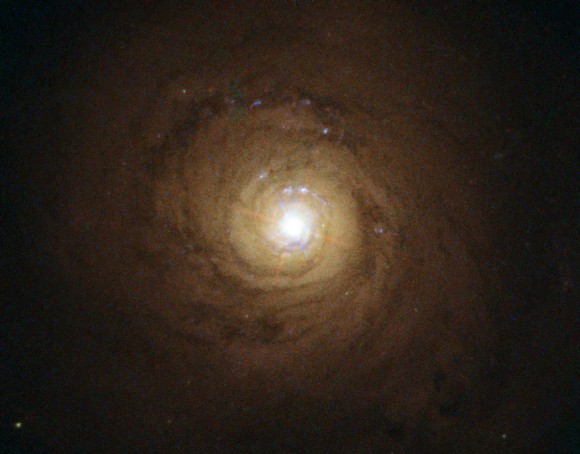
As cosmic-ray particles are accelerated by a black hole in this artist’s interpretation, they stream toward Earth as very-high-energy gamma-rays. Upon hitting the atmosphere, they produce a shower of particles that rain down on Earth. Most of these particles run out of energy before they hit sea level. (Credit: Aurore Simonnet, Sonoma State University)
via space.com
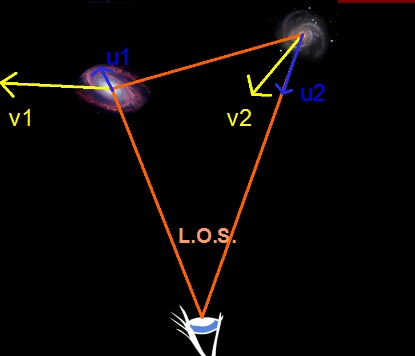
A schematic picture of how researchers can observe galaxy peculiar velocities, “a cosmic dance of galaxies.” (Credit: Wojciech A. Hellwing)
via phys.org
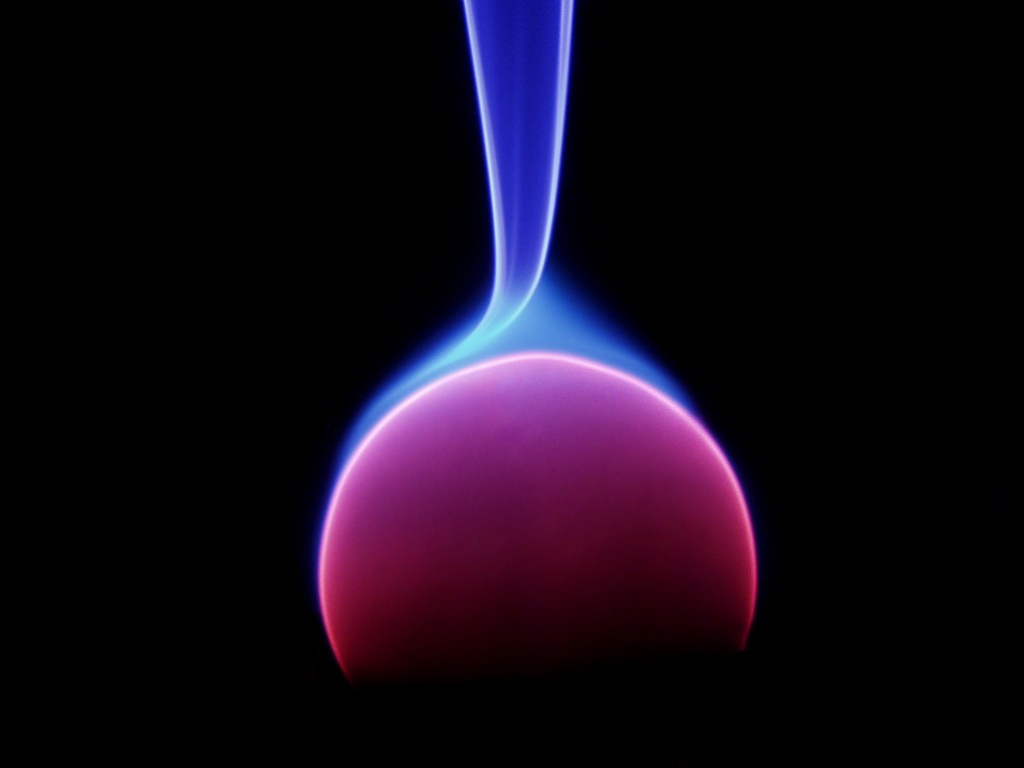
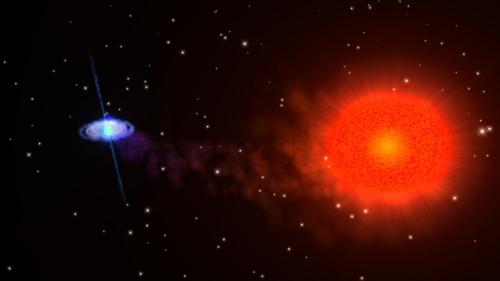
An artist’s impression of an x-ray binary system. The matter that a neutron star (blue) sucks from a regular star (red) leads to the emission of intense x-ray beams. (Credit: NASA)
via phys.org
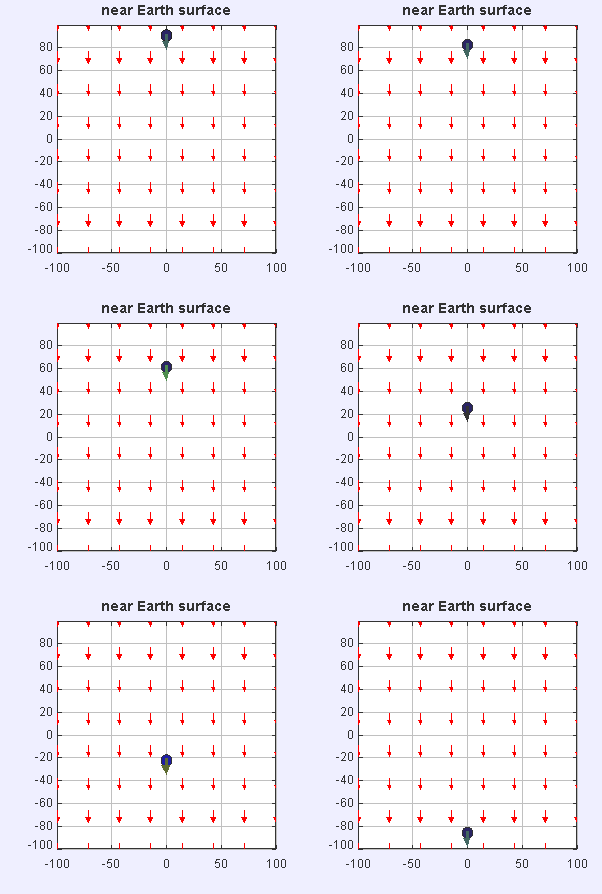
Gravity field near earth at 1,2 and A the curvature of the Earth is negligible at this scale, and the gravity force lines can be approximated as being parallel and pointing straight down to the center of the Earth. (Credit: SA 3.0)
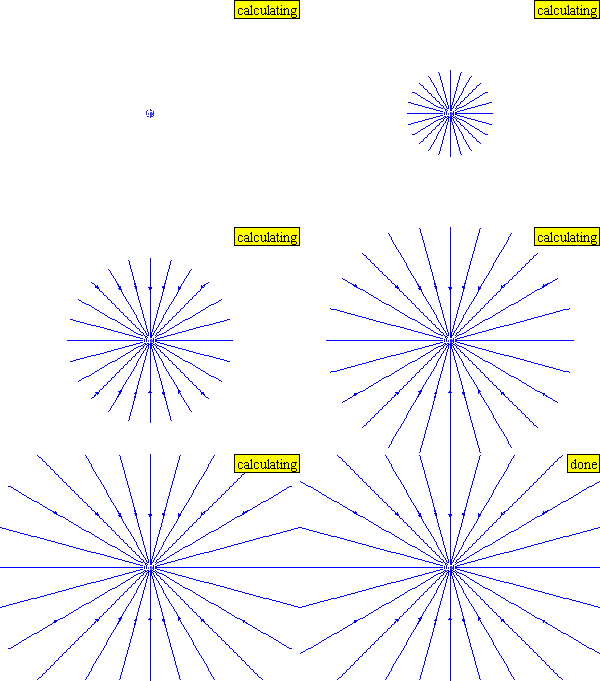
Field lines drawn for a point mass using 24 field lines. The gravitational field can be represented using field lines. These run in the direction that a mass would be accelerated in initially. The object will not necessarily fall along the field lines, but the acceleration will always be in the direction of the field lines. The closer the field lines are together, the denser the gravitational field.(credit: SA 3.0)
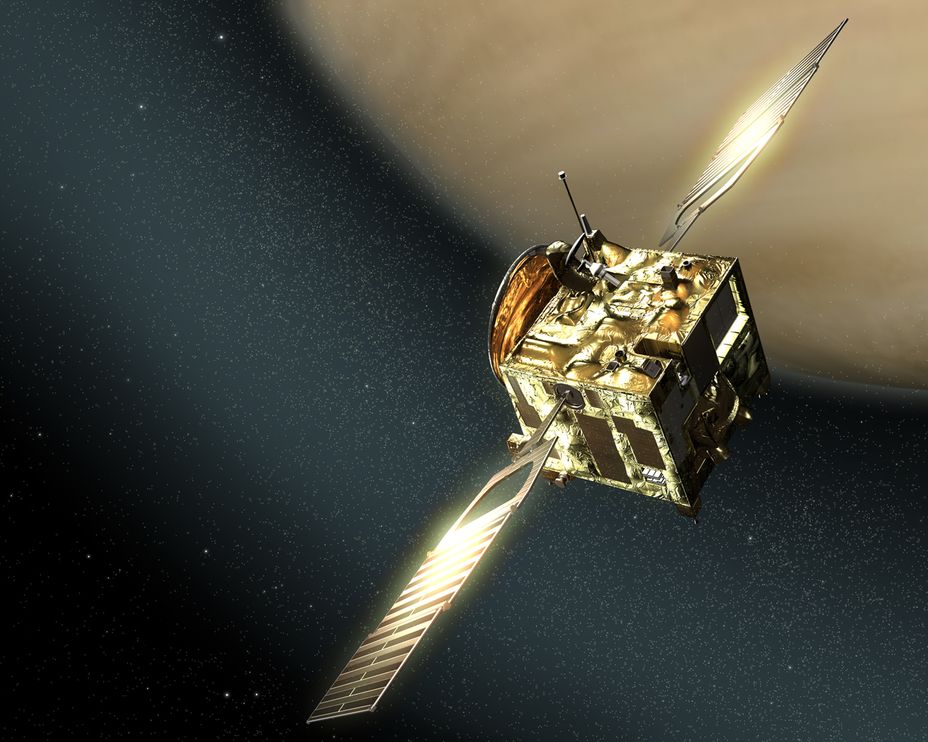
This illustration of Venus Express shows it amid charged particles of solar wind in the upper layers of the Venusian atmosphere. (Credit: ESA, AOES Medialab)
via nationalgeographic
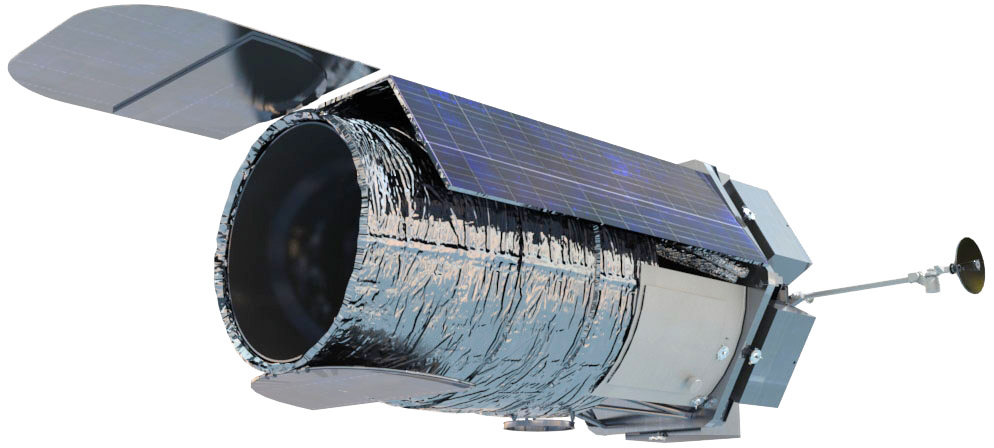
An artist’s rendition of the proposed WFIRST-AFTA mission, which will study dark energy, extrasolar planets and objects in the near-infrared. (Credit: NASA)
via space.com
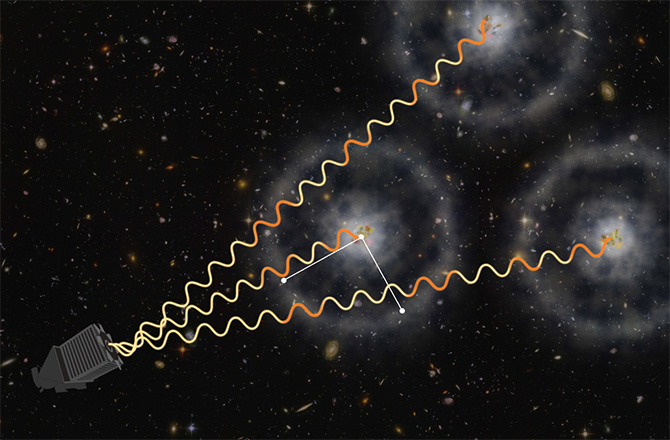
An artist’s view of how quasars and BOAs work together to measure the expansion of the universe. Light from distant quasars is absorbed by gas, which is imprinted with a pattern of BOAs from the early universe. Zosia Rostomian, Lawrence Berkeley National Laboratory, and Andreu Font-Ribera, BOSS Lyman-alpha team, Berkeley Lab
via discovery.com
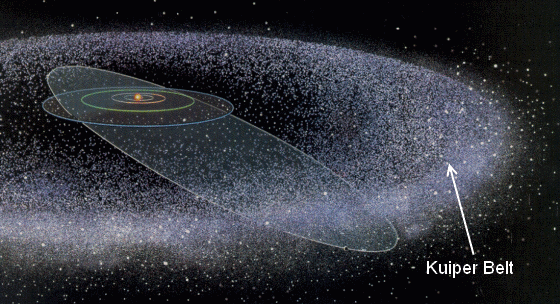
The Kuiper belt is a region beyond Neptune that is full of comets, asteroids and other debris. It circles the solar system and has always been a little bit of a mystery as it is so far away and hard to explore.(Credit: Chris Dann)
via theregister
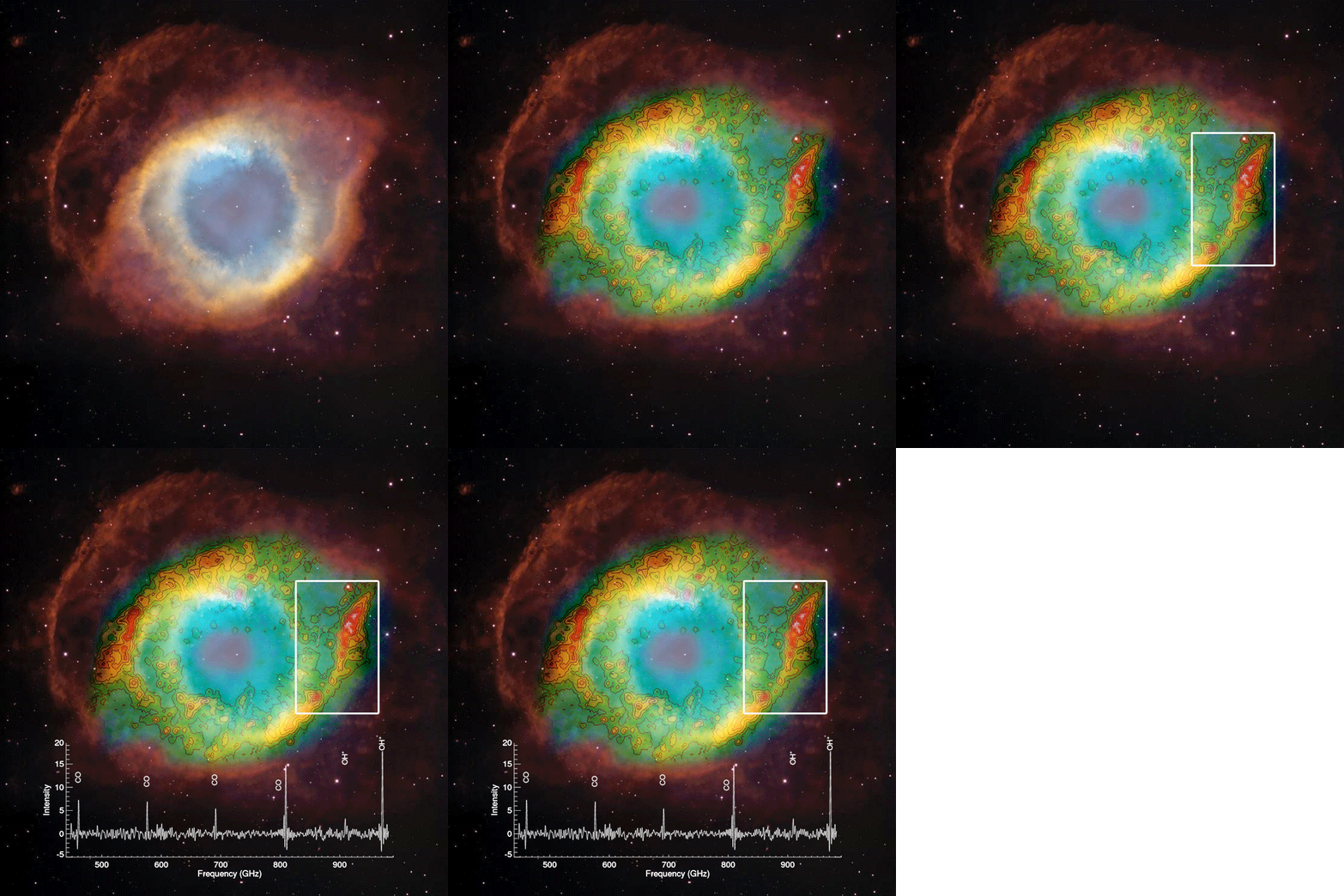
Herschel image of the Helix Nebula using the SPIRE instrument at wavelengths around 250 micrometres, superimposed on Hubble image of the nebula. The spectrum corresponds to the outer region of the Helix Nebula outlined on the SPIRE image. It identifies the OH+ molecular ion, which is needed for the formation of water. ESA’s Herschel space observatory is the first to detect this molecule in planetary nebulas – the product of dying Sun-like stars. Credit: Hubble image: NASA/ESA/C.R. O’Dell (Vanderbilt University), M. Meixner & P. McCullough (STScI); Herschel image: ESA/Herschel/SPIRE/MESS Consortium/M. Etxaluze et al.
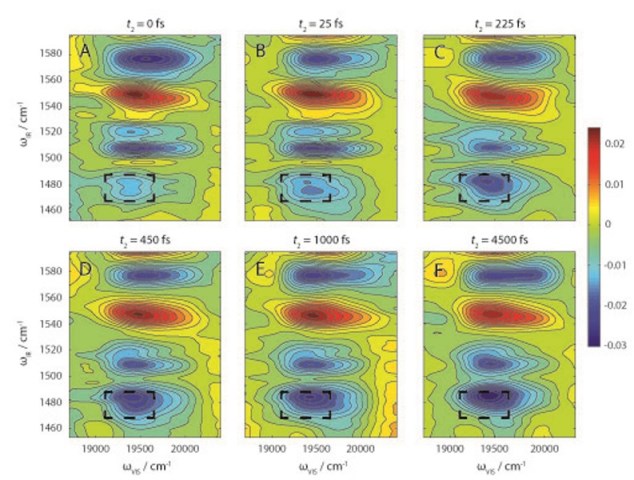
2-D-EV spectral data tells researchers how photoexcitation of a molecular system affects the coupling of electronic and vibrational degrees of freedom that is essential to understanding how all molecules, molecular systems and nanomaterials function. Credit: Fleming group
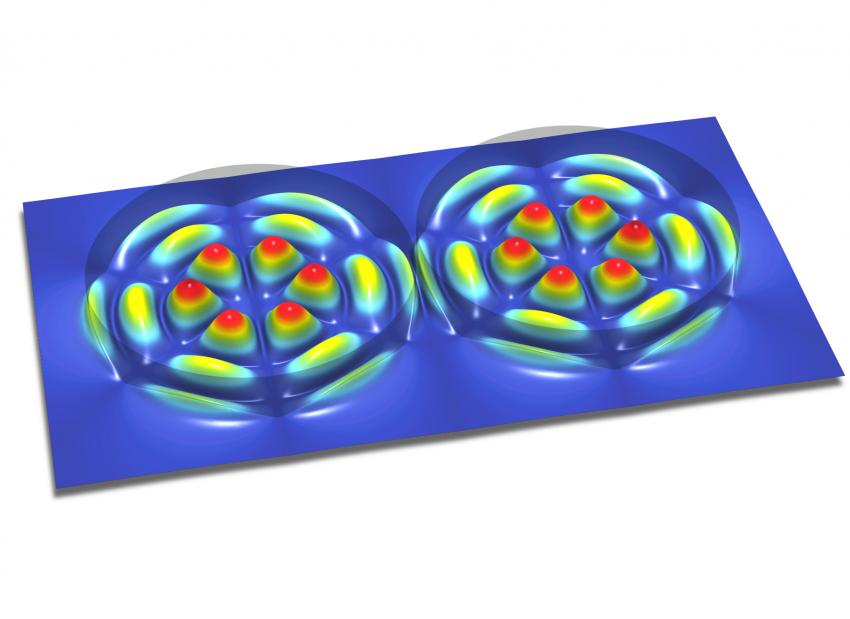
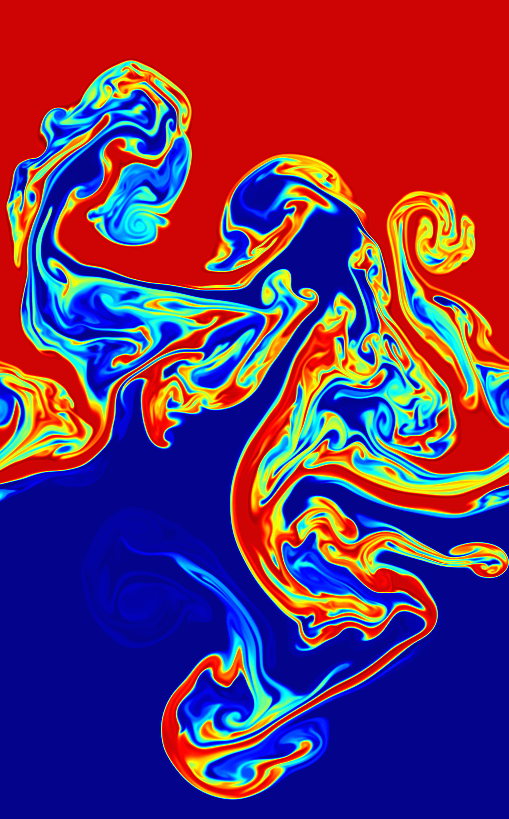
Manipulating minute areas of gain and loss within individual lasers (shown as peaks and valleys in the image), researchers were able to create paradoxical interactions between two nearby lasers. Credit: Vienna University of Technology
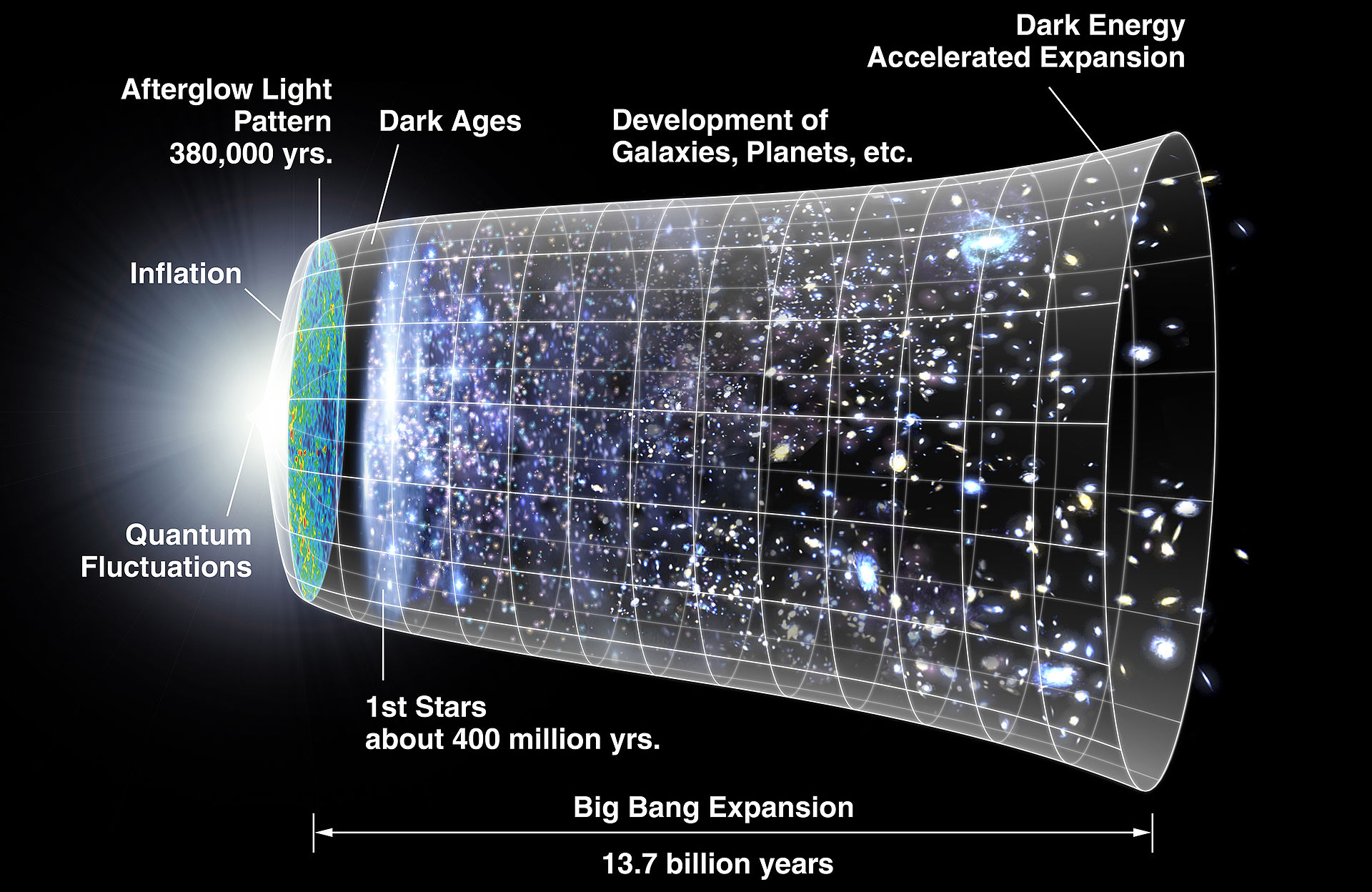
This is an artist’s concept of the metric expansion of space, where space (including hypothetical non-observable portions of the universe) is represented at each time by the circular sections. Note on the left the dramatic expansion (not to scale) occurring in the inflationary epoch, and at the center the expansion acceleration
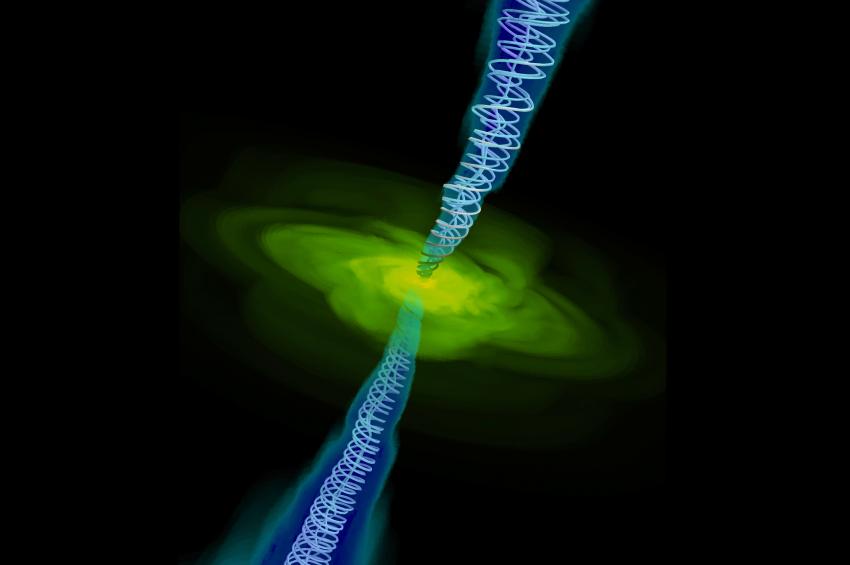
This is a computer simulation of gas (in yellow) falling into a black hole (too small to be seen). Twin jets are also shown with magnetic field lines. Credit: Alexander Tchekhovskoy, Berkeley Lab
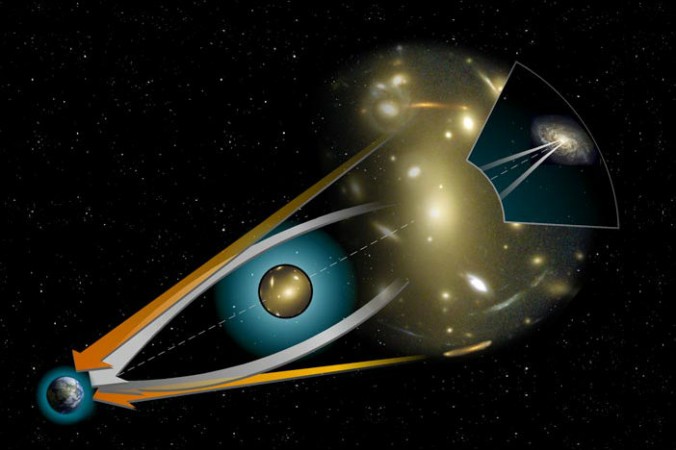
A diagram depicting gravitational lensing, a phenomenon by which light bends around some objects in space. (Credit: NASA, ESA; J. Richard, CRAL; and J.-P. Kneib, LAM)
via theepochtimes
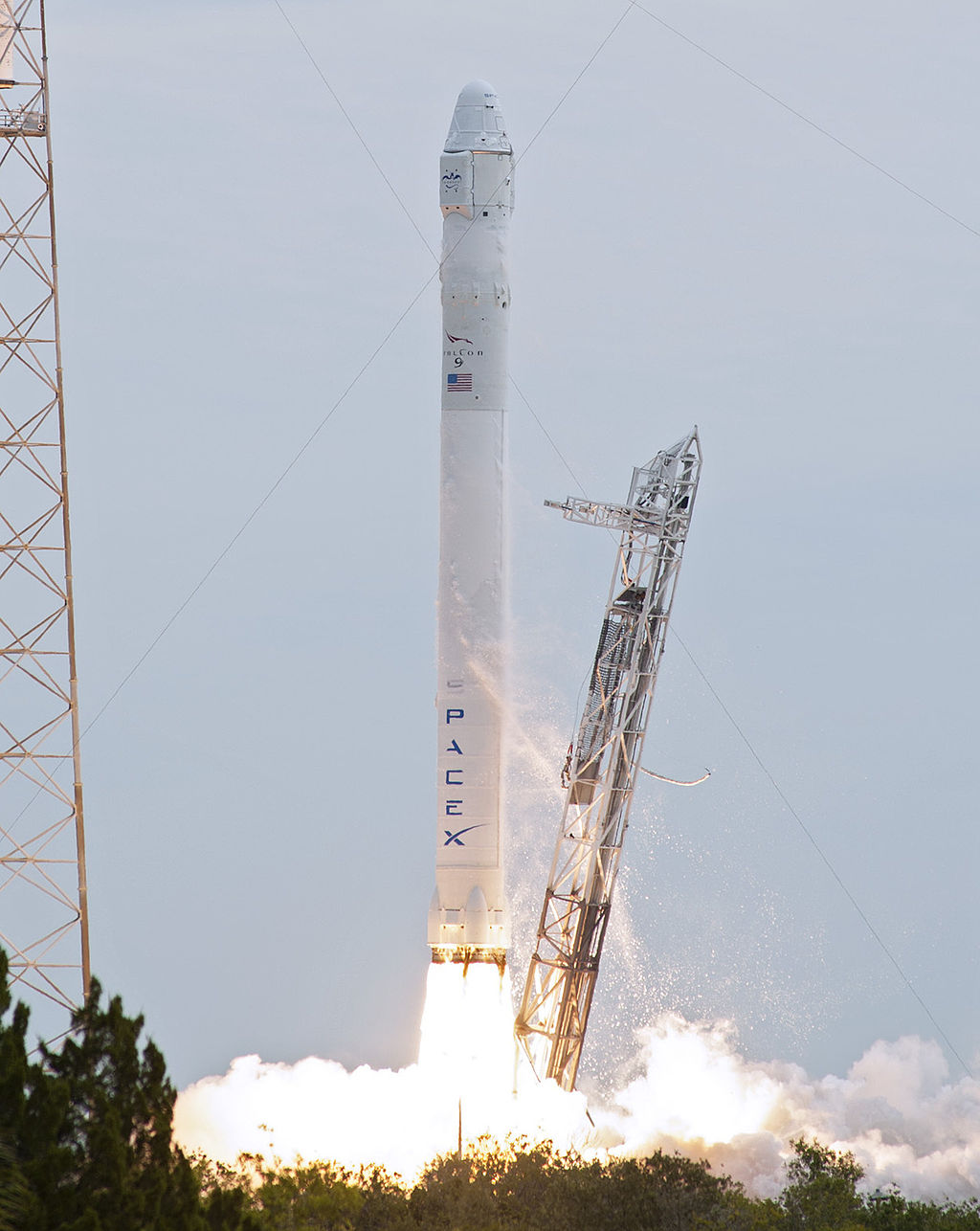
The SpaceX Dragon capsule is making its third trip to the International Space Station, following a demonstration flight in May 2012 and the first resupply mission in October 2012 (Credit: SpaceX)
via extremetech
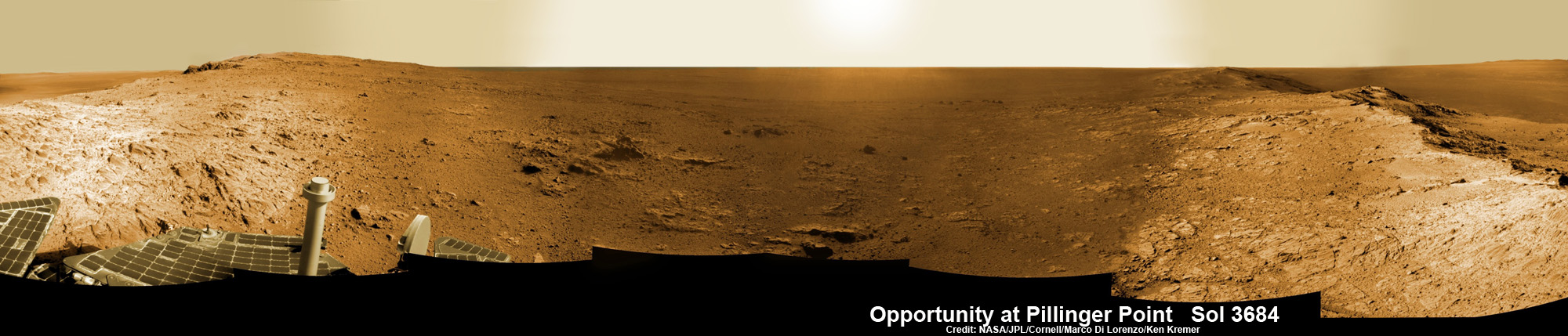
Opportunity Mars rover peers into vast Endeavour Crater from Pillinger Point mountain ridge named in honor of Colin Pillinger, the Principal Investigator for the British Beagle 2 lander built to search for life on Mars. Pillinger passed away from a brain hemorrhage on May 7, 2014. This navcam camera photo mosaic was assembled from images taken on June 5, 2014 (Credit: NASA/JPL/Cornell/Marco Di Lorenzo/Ken)
via universetoday
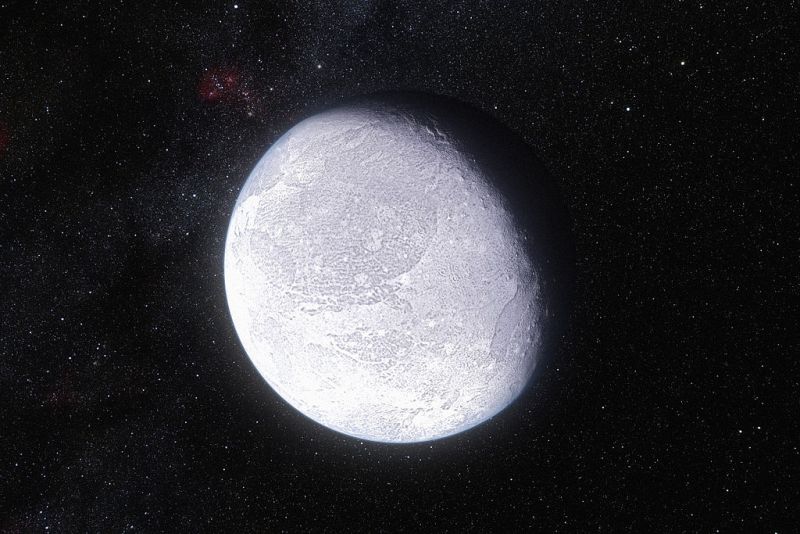
An artist’s impression of Eris, the most massive dwarf planet known to date, with an aphelion of 97 AU from the Sun. Could bigger Super-Earth-type planets be orbiting even farther out? (Credit: ESO/L. Calçada and Nick Risinger)
via americaspace
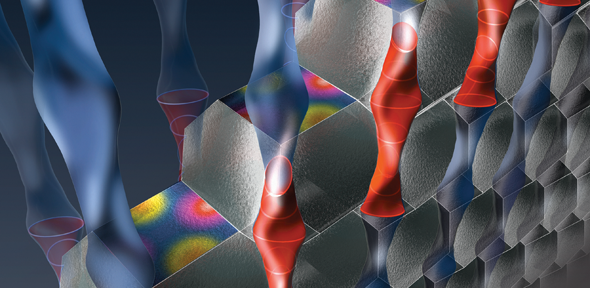
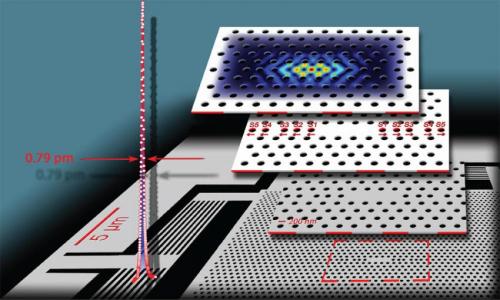
The top layer shows a simulation of the nanostructure confining the light in the tiny red regions. The second layer is the design generated by an approach that mimics evolutionary biology. The bottom two layers show electron micrographs of the realized nanostructure in silicon. The sharp peak on the left is the trace of the long trapping of light. (Credit: Fabio Badolato)
via phys.org
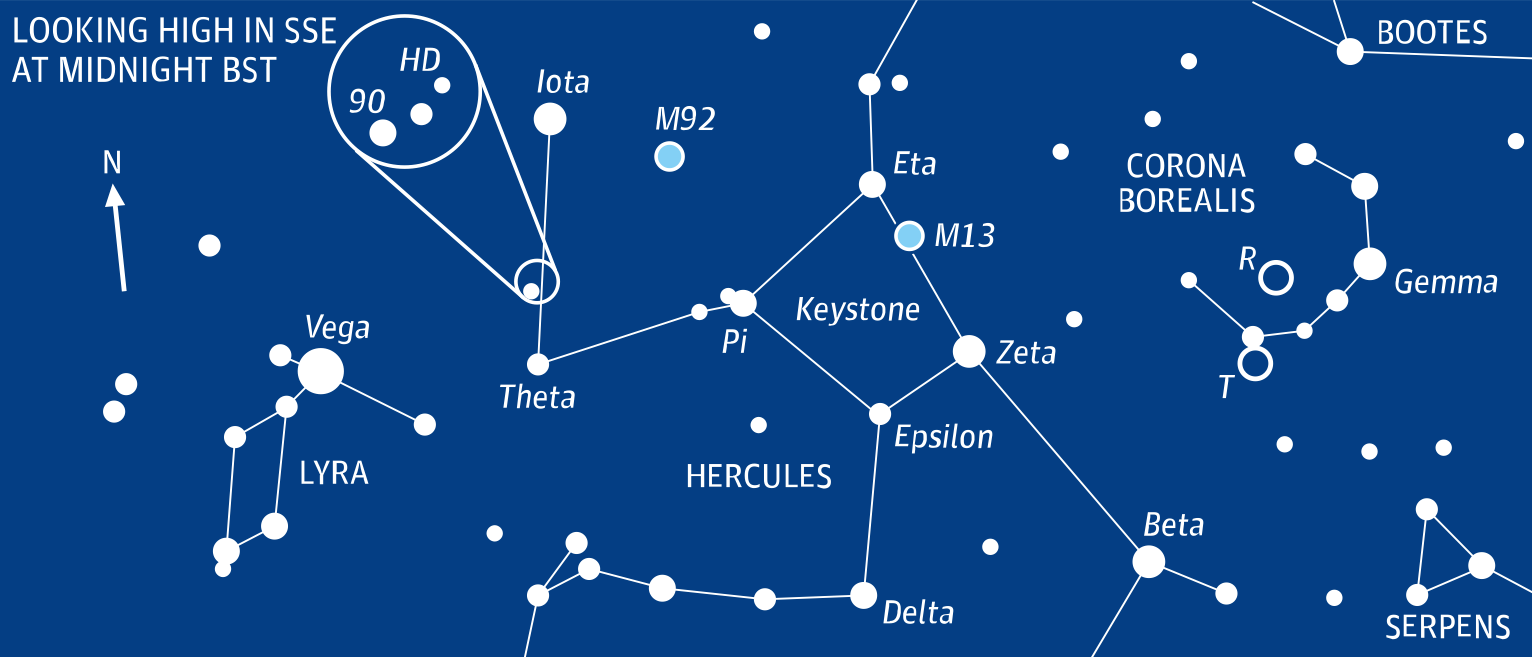
These clues have been used by a team of astronomers led by the University of Texas to identify the Sun’s potential sibling. Still unnamed but known as HD 162826 or by a number of other catalog designations, it is plainly visible through binoculars high in our summer night sky.
via theguardian
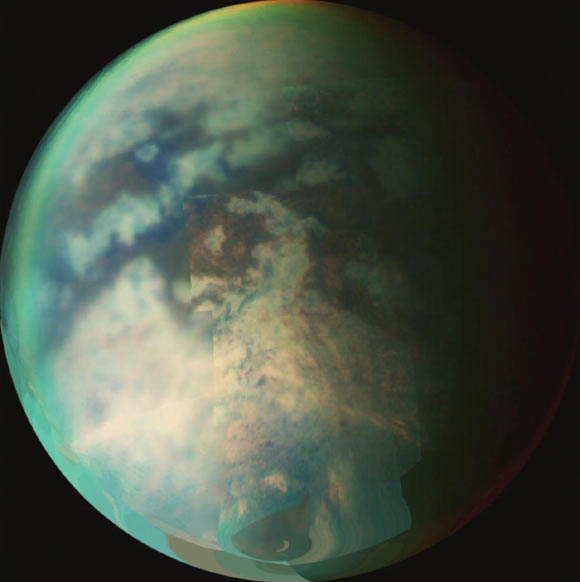
This image is a composite of several images taken during two separate Titan flybys in 2006. The large circular feature near the center of Titan’s disk may be the remnant of a very old impact basin. The mountain ranges to the southeast of the circular feature, and the long dark, linear feature to the northwest of the old impact scar may have resulted from tectonic activity on Titan caused by the energy released when the impact occurred. (Credit: NASA/JPL/University of Arizona)
via sci-news