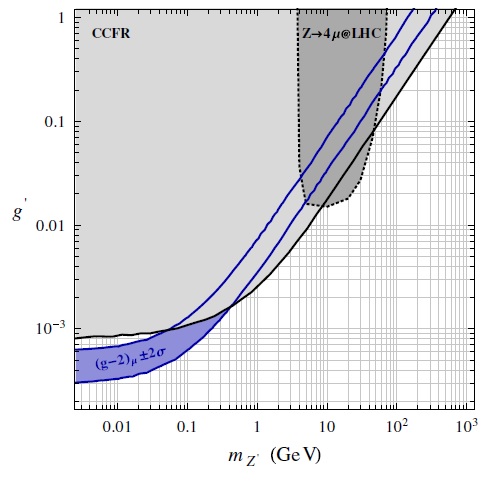
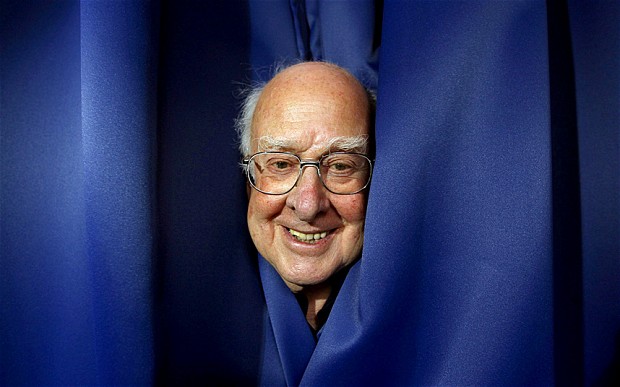
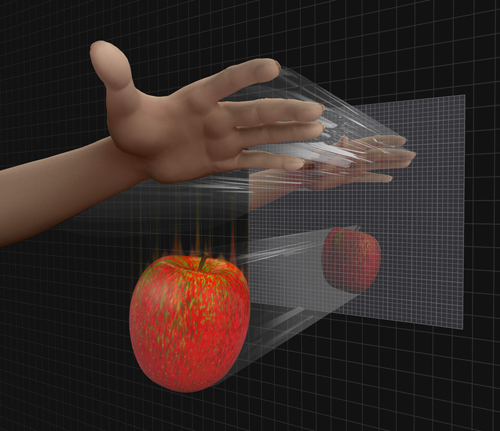
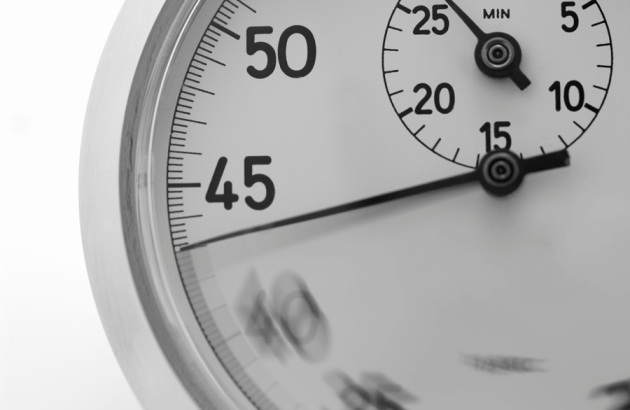
Few scientists doubt that Einstein was right. But the mathematics describing the time-dilation effect are “fundamental to all physical theories”, says Thomas Udem, a physicist at the Max Planck Institute for Quantum Optics in Garching, Germany, who was not involved in the research. “It is of utmost importance to verify it with the best possible accuracy.” (Credit: A. Witze, Martin Poole/Getty)
via nature
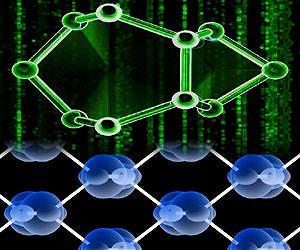
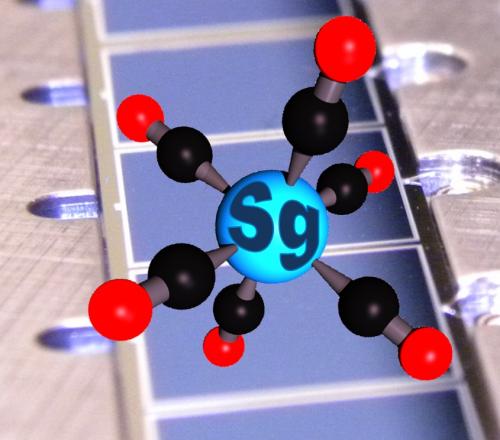
Graphic representation of a seaborgium hexacarbonyl molecule on the silicon dioxide covered detectors of a COMPACT detector array. (Credit: Alexander Yakushev (GSI) / Christoph E. Düllmann)
via newscientist
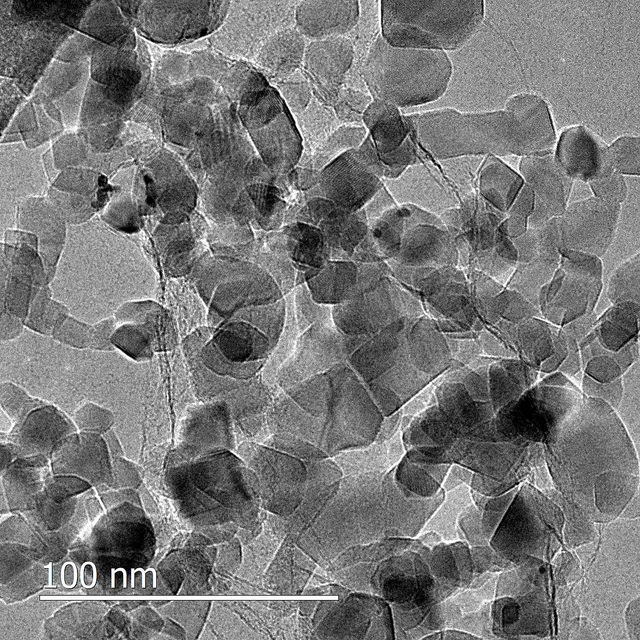
A transmission electron microscopic image of titanium dioxide plates resting on a near-invisible sheet of graphene. (Credit: Rozhkova et. al.)
via anl.gov
There have been recent near misses – an explosion over Russia, a mysterious crater in Nicaragua. But what would we do in the event of an actual meteor strike? A simulated meteor strike at a training facility in Texas. (Credit: Nick Ballon)
via theguardian
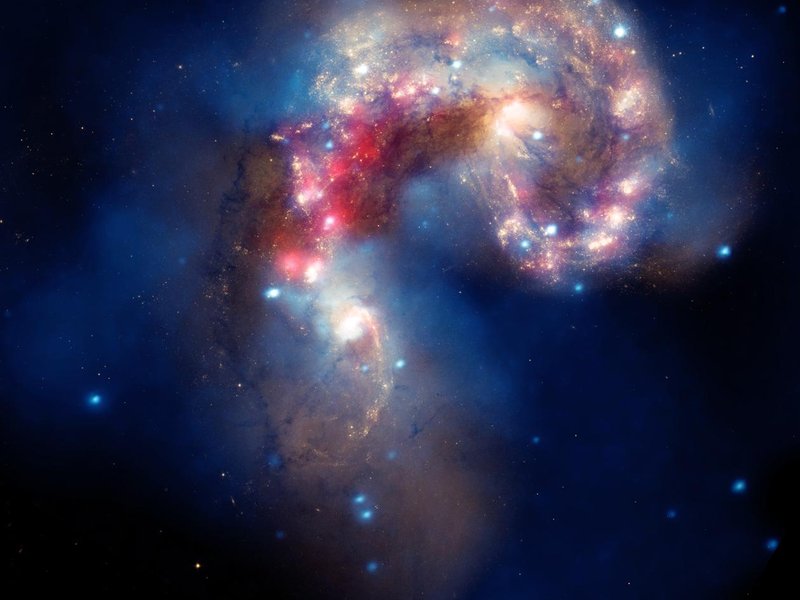
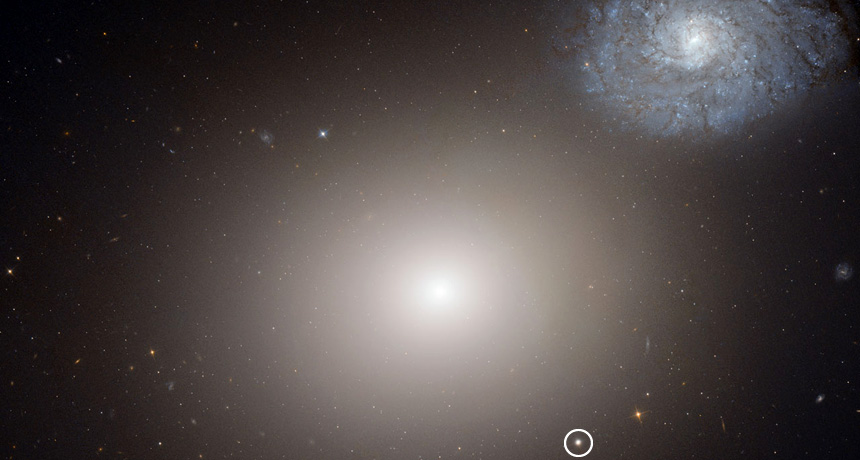
ITTY BITTY LIVING SPACE The tiny galaxy M60-UCD1 (circled in white) harbors a black hole with the mass of around 21 million suns. M60-UCD1 may be a remnant of a larger galaxy torn apart by the massive galaxy M60 (center), which is also pulling in a nearby spiral galaxy (upper right). (Credit: NASA, ESA)
via sciencenews
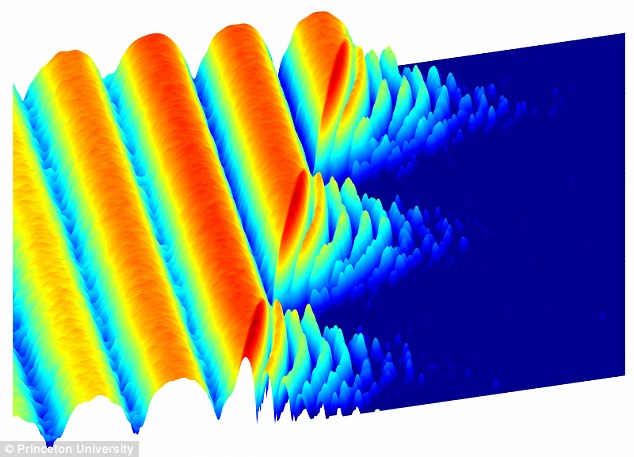
The illustration shows how oscillating photons create an image of frozen light. At first, photons in the experiment flow easily between two superconducting sites, producing the large waves shown at left. After a time, the scientists cause the light to ‘freeze,’ trapping the photons in place. Fast oscillations on the right of the image are evidence of the new trapped behavior. (Credit: James Raftery et al.)
via princeton
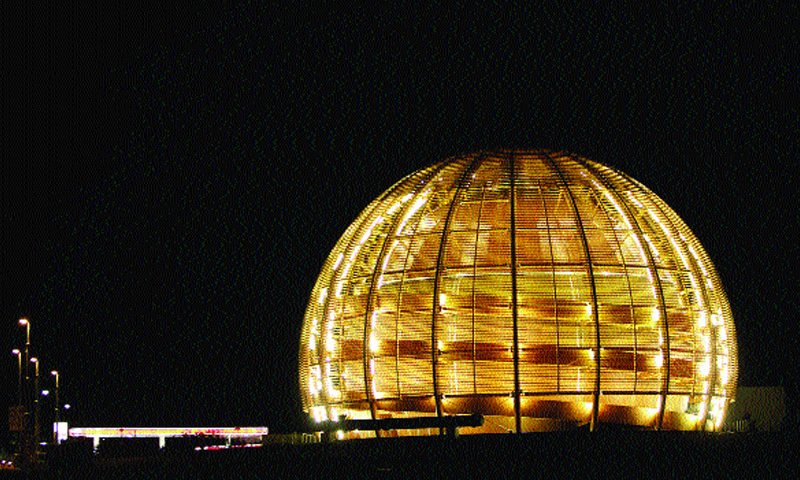
Pakistan is a signing ceremony away from becoming the associate member of the European Organisation for Nuclear Research. Above photo is CERN Labs on the Swiss-French border. (Credit: CERN)
via dawn
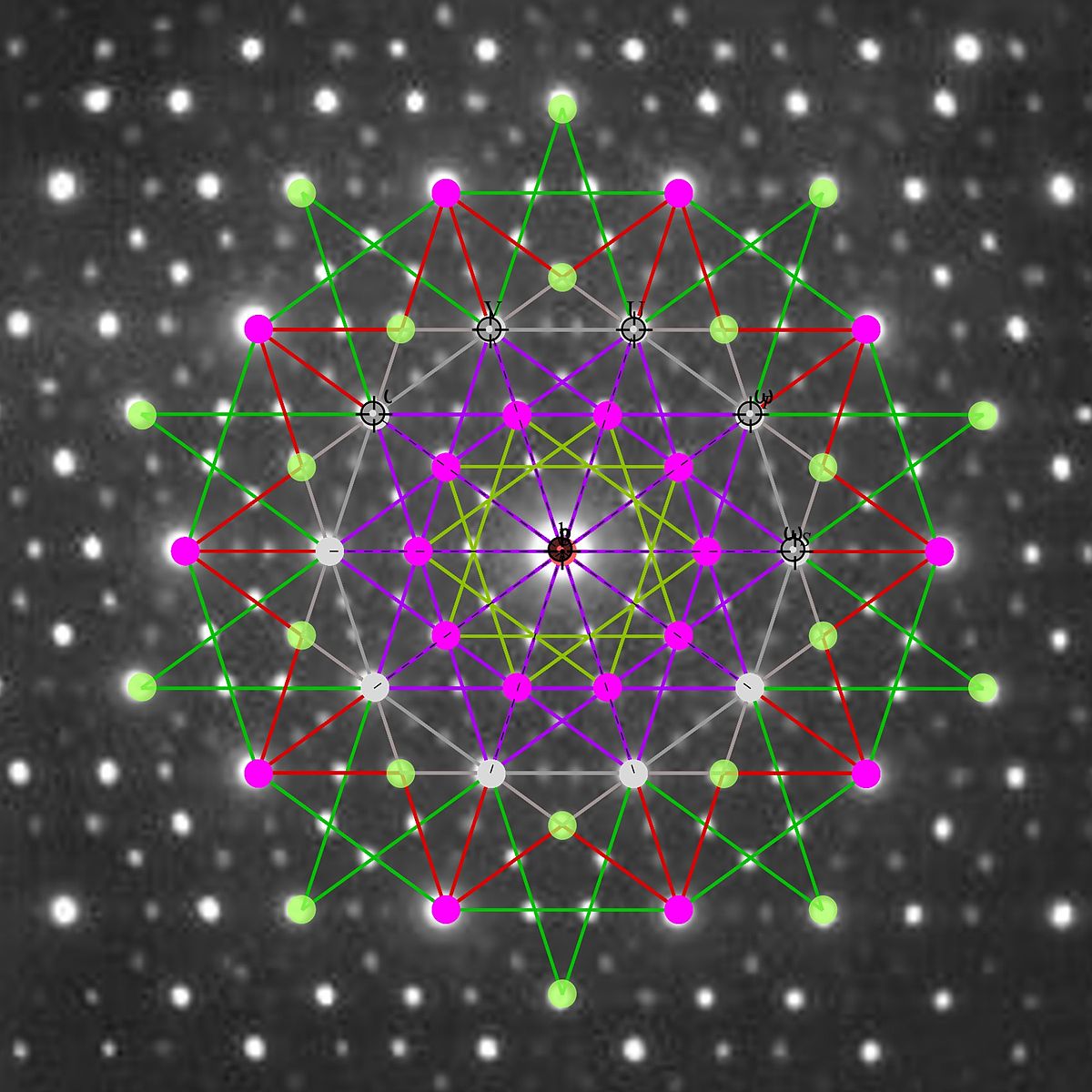
The quasicrystals formed 4.5 billion years ago in a violent collision between two rocks, among the asteroids that coalesced into planets. The rock with the quasicrystals landed in Chukotka as a meteorite. “They’re part of the primal stuff that formed our solar system,” Dr. Steinhardt said. The above is A penteract (5-cube) pattern using 5D orthographic projection to 2D using Petrie polygon basis vectors overlaid on the diffractogram from an Icosahedral Ho-Mg-Zn quasicrystal. (Credit: NYTimes)
via nytimes
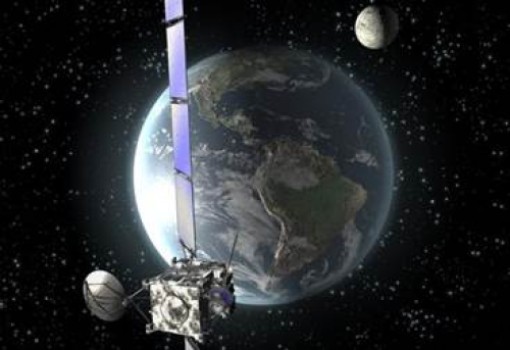
When space probes, such as Rosetta and Cassini, fly over certain planets and moons, in order to gain momentum and travel long distances, their speed changes slightly for an unknown reason. A researcher has now analyzed whether or not a hypothetical gravitomagnetic field could have an influence. However, other factors such as solar radiation, tides, or even relativistic effects or dark matter could be behind this mystery. An artist’s rendition of Rosetta probe during a flyby. (Credit: ESA/C.Carreau)
via sciencedaily
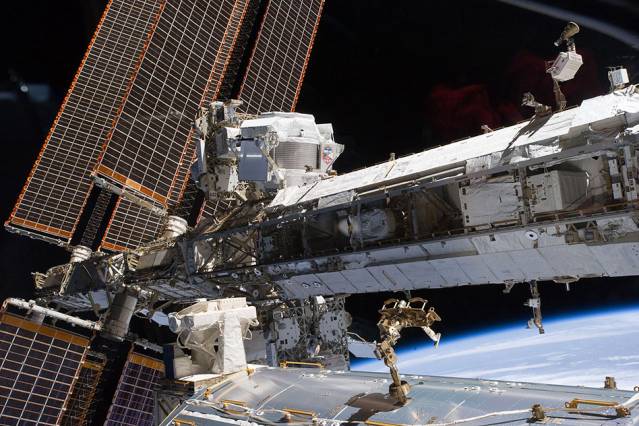
The starboard truss of the International Space Station while Space Shuttle Endeavour docked with the station. The newly installed Alpha Magnetic Spectrometer (AMS) is visible at center left. (Credit: NASA)
via mit
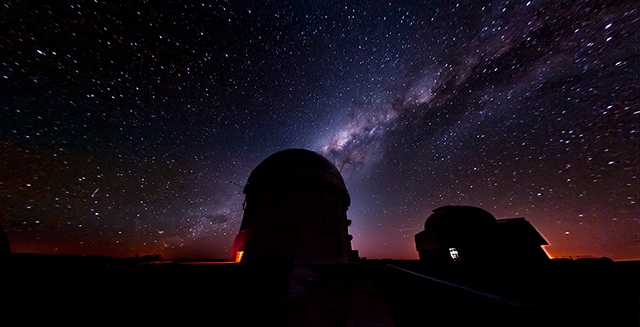
The dome of the Blanco Telescope, which houses DECam, the 570-megapixel CCD camera used for the Dark Energy Survey, at the Cerro Tololo Inter-American Observatory in Chile. (Credit: Reidar Hahn)
via simonsfoundation
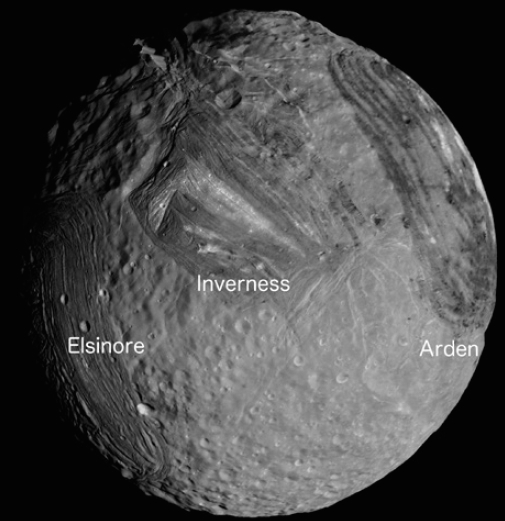
Mosaic of southern hemisphere of Miranda, the innermost regular satellite of Uranus, with radius of 236 km. Projection is orthographic, centered on the south pole. Visible from left to right are Elsinore, Inverness, and Arden coronae. (Credit: NASA/Jet Propulsion Laboratory/Ted Stryk)
via science2.0
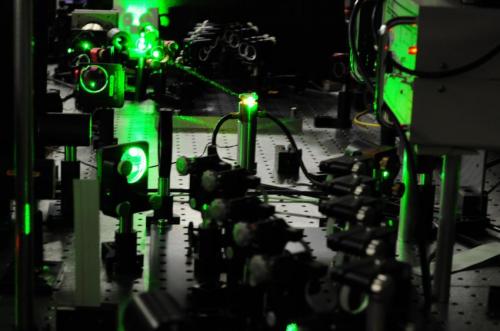
An international team of physicists has shown that the mass ratio between protons and electrons is the same in weak and in very strong gravitational fields. Pictured above is the laser system with which the hydrogen molecules were investigated on earth. (Credit: LaserLaB VU University Amsterdam/Wim Ubachs)
via phys.org
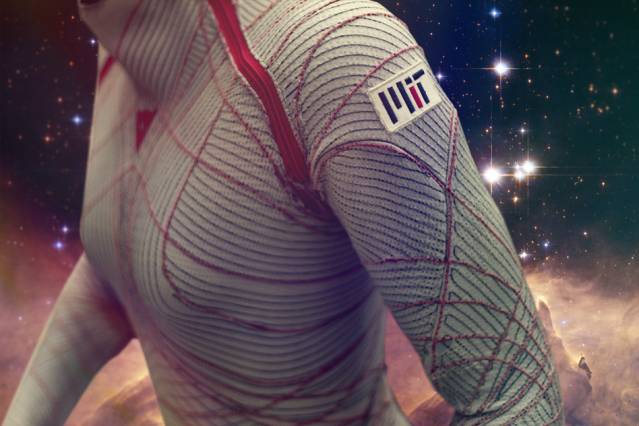
The MIT BioSuit, a skintight spacesuit that offers improved mobility and reduced mass compared to modern gas-pressurized spacesuits. (Credit: Jose-Luis Olivares/MIT)
via mit
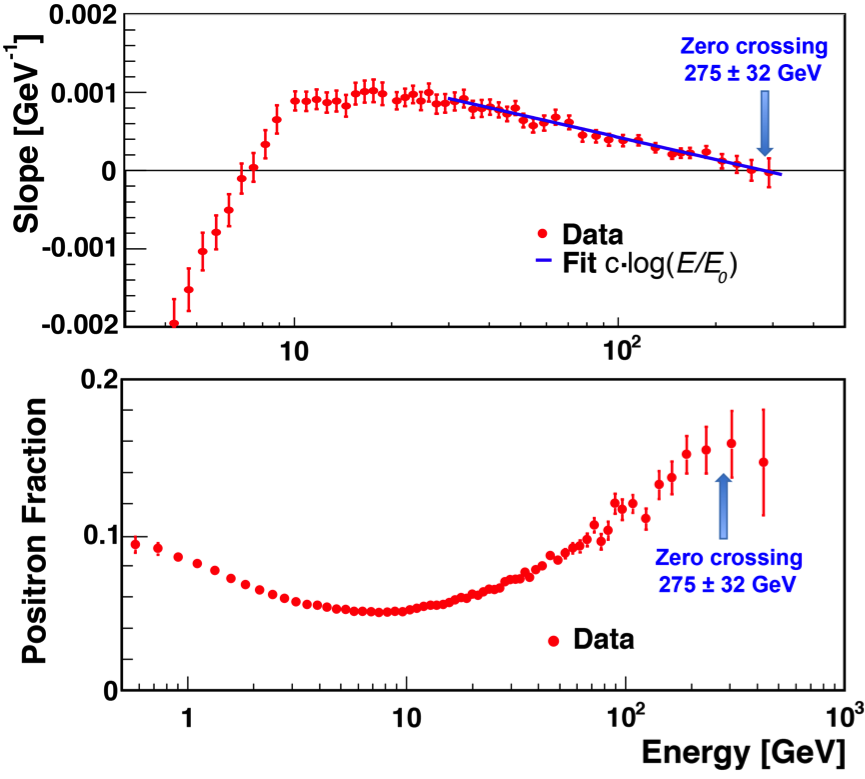
Upper plot shows the slope of positron fraction measured by AMS (red circles) and a straight line fit at the highest energies (blue line). The data show that at 275±32 GeV the slope crosses zero. Lower plot shows the measured positron fraction as function of energy as well as the location of the maximum. (Credit CERN)
via interactions
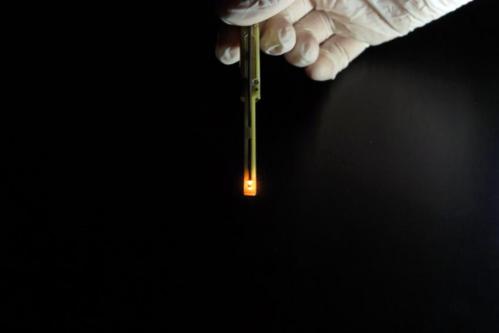
An organic light-emitting diode, or OLED, glows orange when electrical current flows through it. It is a step toward ‘spintronic’ devices such as faster computers, better data storage and more efficient OLEDs for TV, computer and cell phone displays. (Credit: Andy Brimhall, University of Utah)
via phys.org
This revolutionary work could open up new real estate in the phone by embedding the glass with layer upon layer of sensors, including ones that could take your temperature, assess your blood sugar levels if you’re diabetic or even analyze DNA. (Credit: Jerome Lapointe, Mathieu Gagné, Ming-Jun Li, and Raman Kashyap)
via mediacastermagazine
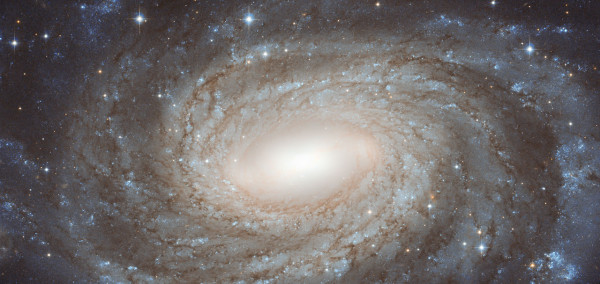
The NASA/ESA Hubble Space Telescope has produced this finely detailed image of the beautiful spiral galaxy NGC 6384. This galaxy lies in the constellation of Ophiuchus (The Serpent Bearer), not far from the centre of the Milky Way on the sky. The positioning of NGC 6384 means that we have to peer at it past many dazzling foreground Milky Way stars that are scattered across this image. (Credit NASA/ESA)
via nationalgeographic
he problem was first identified some time ago. Dubbed the “cosmological lithium discrepancy,” the issue is very simple: everything we know about the Big Bang, supernovae, and the dynamics of stars, tells us that we should find a very specific concentration of lithium in the universe at large — but the universe actually seems to contain far less than that amount. (Credit: NASA, HUbble)
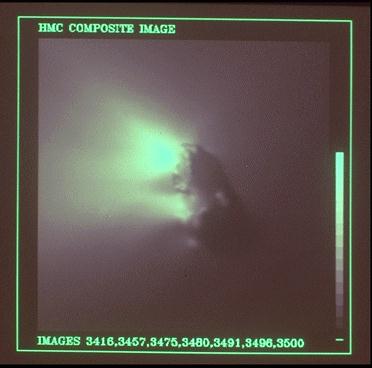
European Space Agency’s Giotto probe returned 2333 images during the Comet Halley encounter of March 13-14, 1986. All were recorded before the closest approach of 596 km at 00:03:02 UTC on 14 March 1986; the last from a distance of 1180 km, 15 seconds before closest approach. (Credit: MPAE, Dr H.U. Keller.
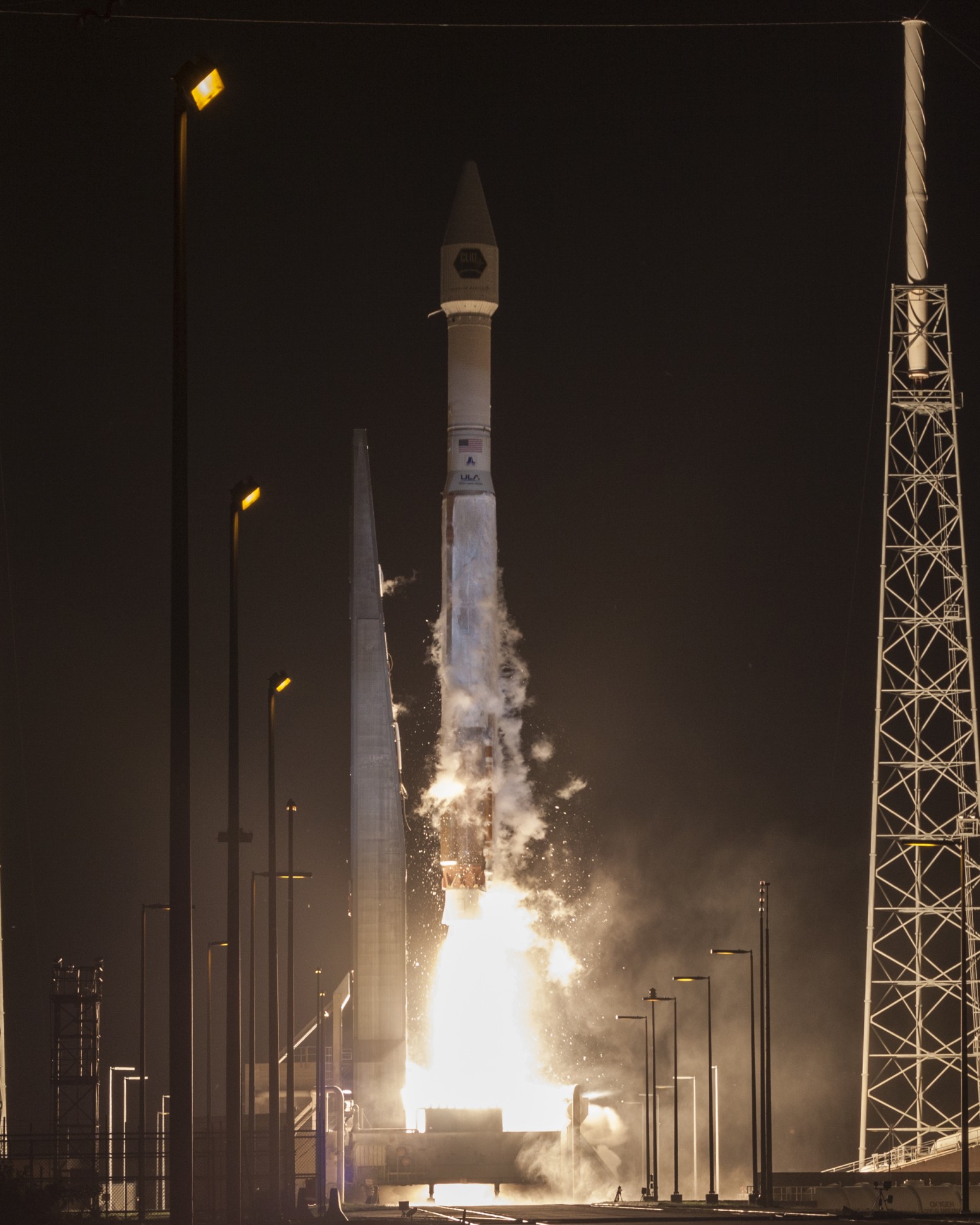
An Atlas V rocket lifts off with the mysterious CLIO satellite. The rocket was carrying a satellite known only as CLIO, which it delivered into an unidentified (though probably geosynchronous) orbit. (Credit: ULA)
via forbes
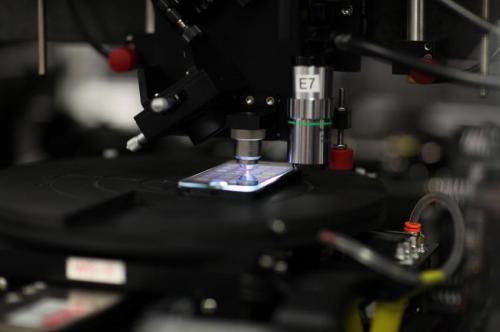
Random number generator setup: a camera is fully and homogeneously illuminated by a LED. The raw binary representation of pixel values are concatenated and passed through a randomness extractor. This extractor outputs quantum random numbers. (Credit: arXiv:1405.0435 [quant-ph])
Science says the universe could be a hologram, a computer program, a black hole or a bubble—and there are ways to check. (Credit: NASA, ESA, SAO, CXC, JPL-Caltech, and STScI)
via smithsonianmag
The Tevatron, the particle accelerator used to find the oscillating Bs meson, has huge detectors surrounded by a cylindrical ‘tracking chamber’, shown here. (Credit: Fermilab)
via cornell
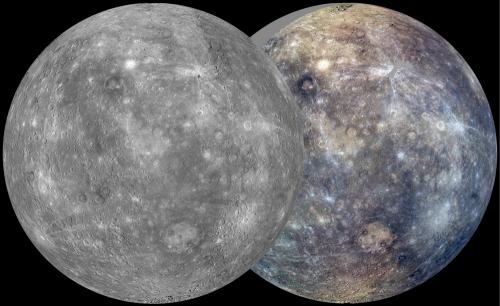
On Mercury a solar day is about 176 Earth days long. During its first Mercury solar day in orbit the MESSENGER spacecraft imaged nearly the entire surface of Mercury to generate a global monochrome map at 250 meters per pixel resolution and a 1 kilometer per pixel resolution color map. (Credit: NASA/JHU APL/CIW)
via phys.org
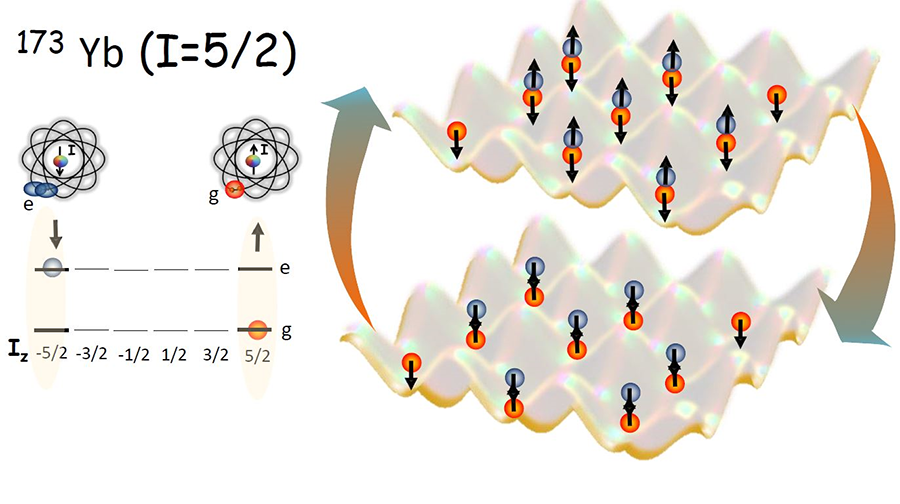
The researchers observed for the first time coherent oscillations between two spin states: |e↑,g↓〉⇔|e↓,g↑〉. From the oscillation frequency, they determine the spin-exchange interaction strength. (Credit: APS/Ana Maria Rey)
via physics.aps
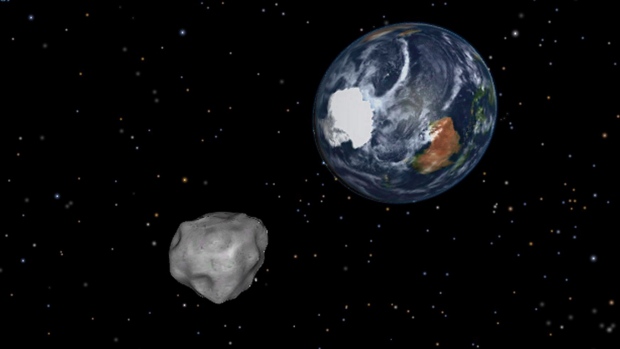
NASA has found about 95 per cent of the largest and potentially most destructive asteroids, those measuring about one kilometre or larger in diameter, but only 10 per cent of those 140 metres or larger in diameter. (NASA/JPL-Caltech/Canadian Press)
via cbslocal
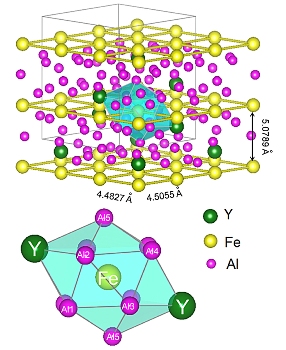
Rendering of the near–perfect crystal structure of the yttrium–iron–aluminum compound used in the study. The two–dimensional layers of the material allowed the scientists to isolate the magnetic ordering that emerged near absolute zero. (Credit:Brookhaven National Laboratory)
via azoquantum
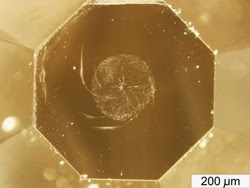
Diamond anvils malformed during synthesis of ultrahard fullerite. Note the dent in the center. (Credit: Moscow Institute of Physics and Technology)
via nextbigfuture
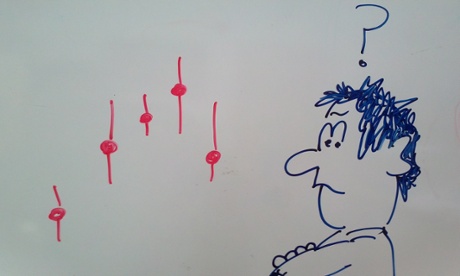
“I confess that in my early in my career as a physicist I was rather cynical about sophisticated statistical tools, being of the opinion that “if any of this makes a difference, just get more data”. That is, if you do enough experiments, the confidence level will be so high that the exact statistical treatment you use to evaluate it is irrelevant.” (Credit: Jon Butterworth)
via theguardian
It was the daytime soap opera of particle physics. But the final episode of the first season ends in an anticlimax. The Higgs boson’s decay into pairs of photons – the strongest yet most confusing clue to the particle’s existence – is looking utterly normal after all. (Credit: D. Moir/Reurters, M. Slezak)
via newscientist
NIST chip containing a single-photon detector was made of superconducting nanowires. Four chips like this were used in the experiment that entangled three photons. (Credit: Verma/NIST)
via extremetech
The new plan, proposed by researchers at the University of Southampton in England, is to eavesdrop on the faint nanosecond radio signals sent our way when cosmic rays hit edges of the Moon at a near-tangent. (Credit J. Hewitt, astrobiology.aob.rs)
via extremetech
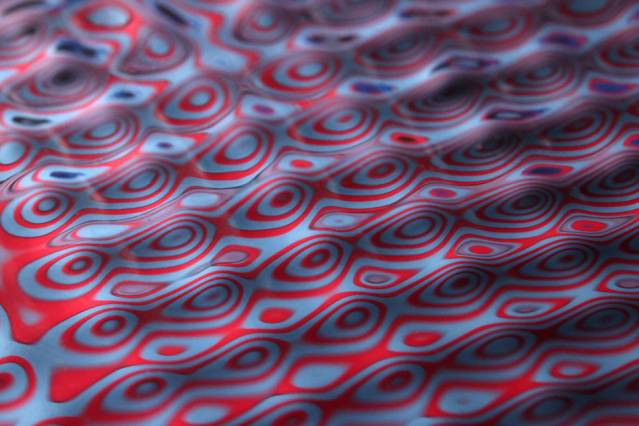
“The key question is whether a real quantum dynamics, of the general form suggested by de Broglie and the walking drops, might underlie quantum statistics,” Bush said. “While undoubtedly complex, it would replace the philosophical vagaries of quantum mechanics with a concrete dynamical theory,” said John Bush of MIT. (Credit: D. Harris/MIT, M. Byrne)
via motherboard
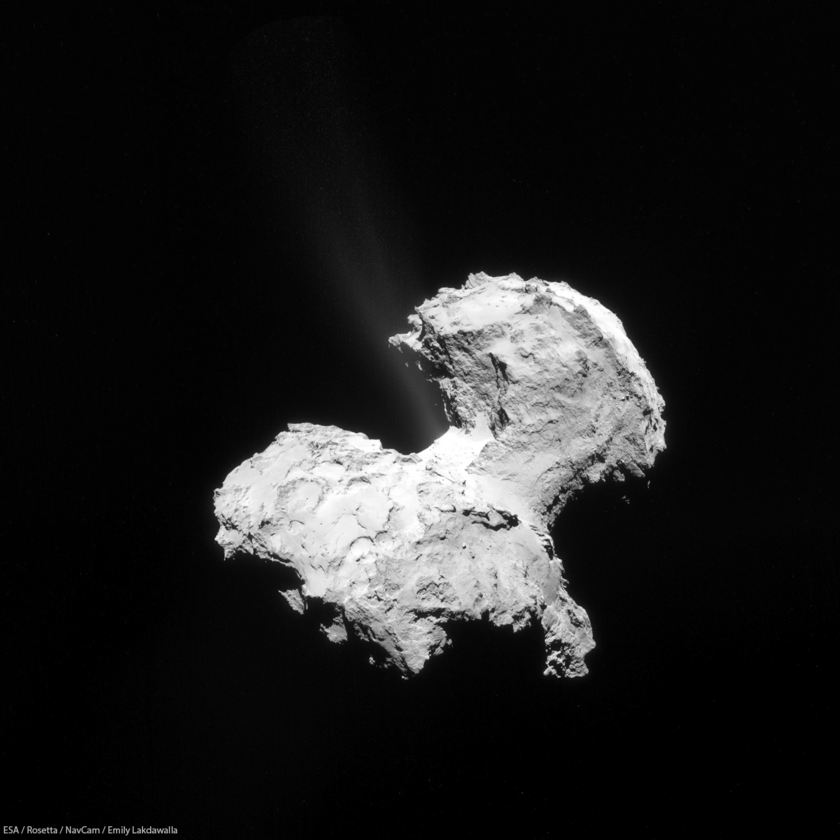
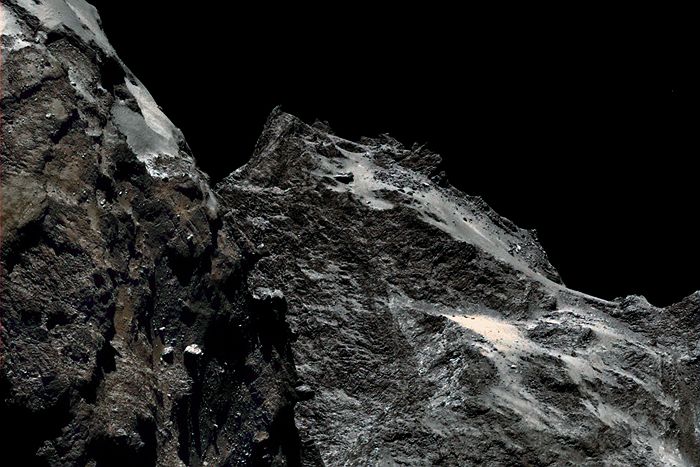
A composite photo of comet 67P/C-G showing gases escaping from the ‘neck’. The first jets of dust were detected spurting from the comet as Rosetta approached it in August but detailed photographs weren’t available until last week. (Credit: Emily Lakdawalla/ESA)
via forbes
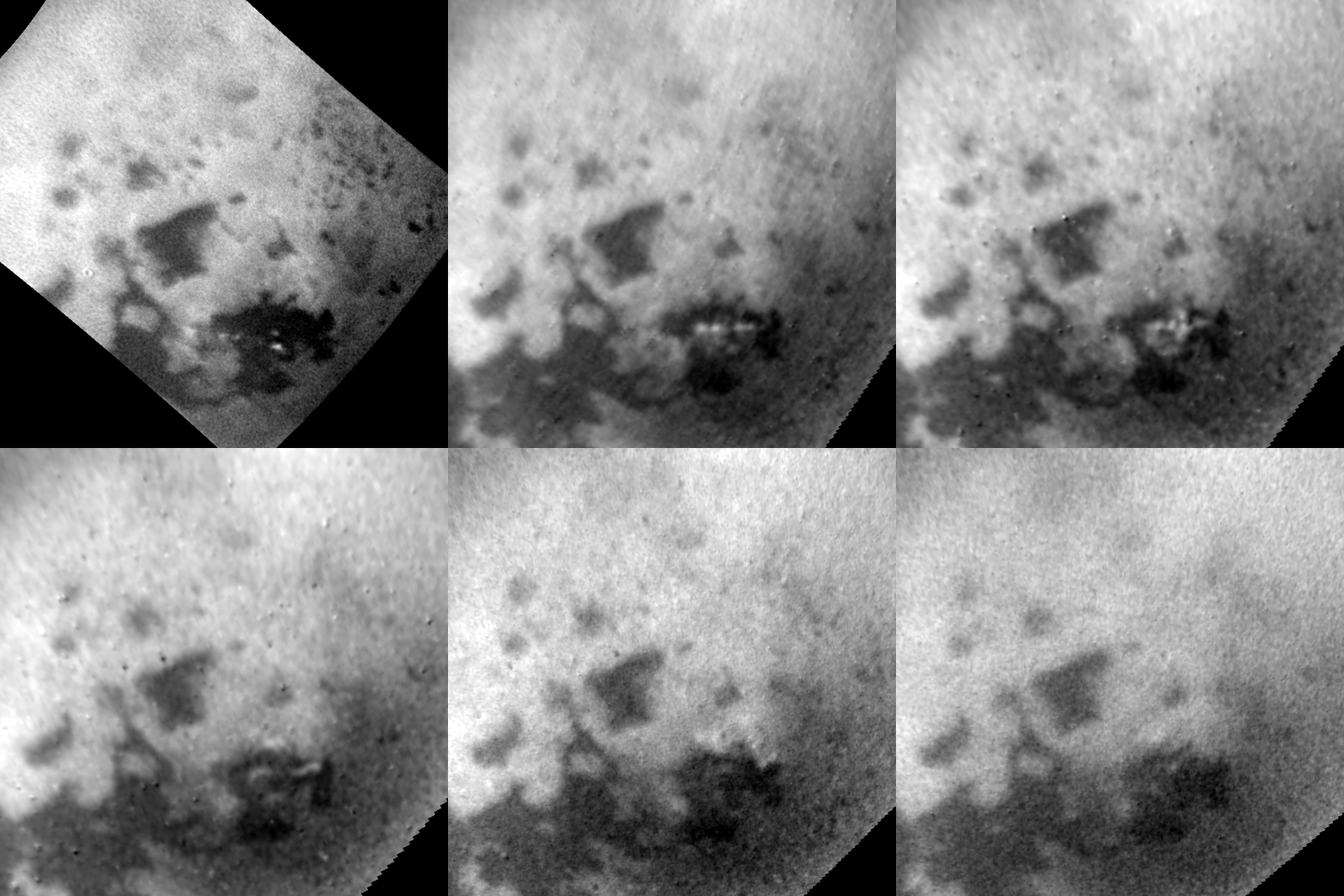
The spacecraft captured the views between July 20 and July 22, 2014, as it departed Titan following a flyby. Cassini tracked the system of clouds as it developed and dissipated over Ligeia Mare during this two-day period. Measurements of the cloud motions indicate wind speeds of around 7 to 10 miles per hour (3 to 4.5 meters per second). (Credit: NASA, Cassini)
via smithsonianmag
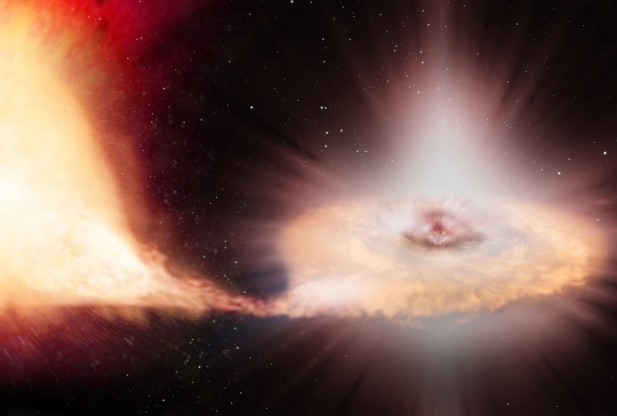
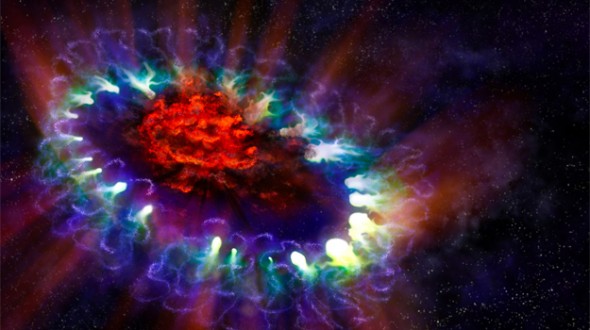
Less than two months after it first began repeatedly scanning the sky, the ESA’s Gaia space observatory has discovered its first supernova – a powerful stellar explosion that had occurred in a distant galaxy located some 500 million light-years from Earth, the agency announced on Friday. The above is an artist’s impression of a Type Ia supernova – the explosion of a white dwarf locked in a binary system with a companion star. (Credit: ESA/ATG medialab/C. Carreau, Bednar)
via redorbit
Grain boundaries are rows of defects that disrupt the electronic properties of two-dimensional materials, like graphene, but a new theory by scientists at Rice University shows no such effects in atomically flat phosphorus. That may make the material ideal for nano-electronic applications. (Credit: Evgeni Penev/Rice University)
via energy-daily
To find out if the universe is a hologram, scientists at the U.S. Department of Energy’s Fermi National Accelerator Laboratory have powered up their exotic holographic inferometer, or Holometer. The results of the Fermilab E-990 experiment could indeed indicate that the nature of the universe is holographic. (Credit: Baskin, M. Freiberger)
via guardianlv
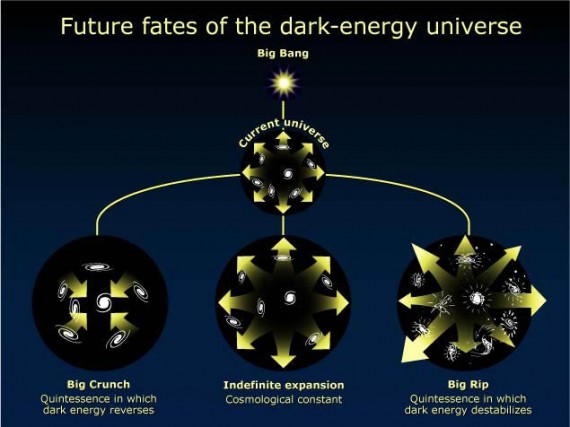
The ultimate fate of the universe depends on the nature of dark matter and dark energy, about which we know almost nothing. (Credit: NASA)
via mysteriousuniverse



![Random number generator setup: a camera is fully and homogeneously illuminated by a LED. The raw binary representation of pixel values are concatenated and passed through a randomness extractor. This extractor outputs quantum random numbers. (Credit: arXiv:1405.0435 [quant-ph])](https://timeincosmology.org/wp-content/uploads/2014/09/7i6tgkuyfk.jpg)