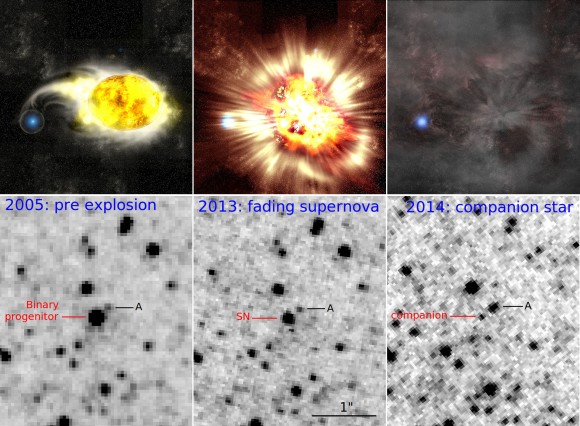
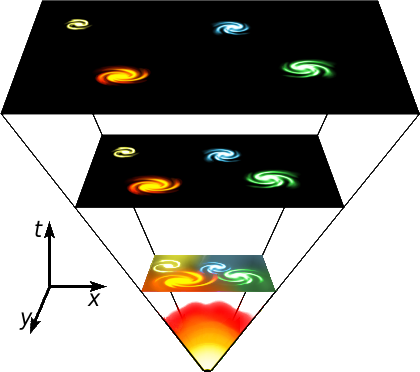
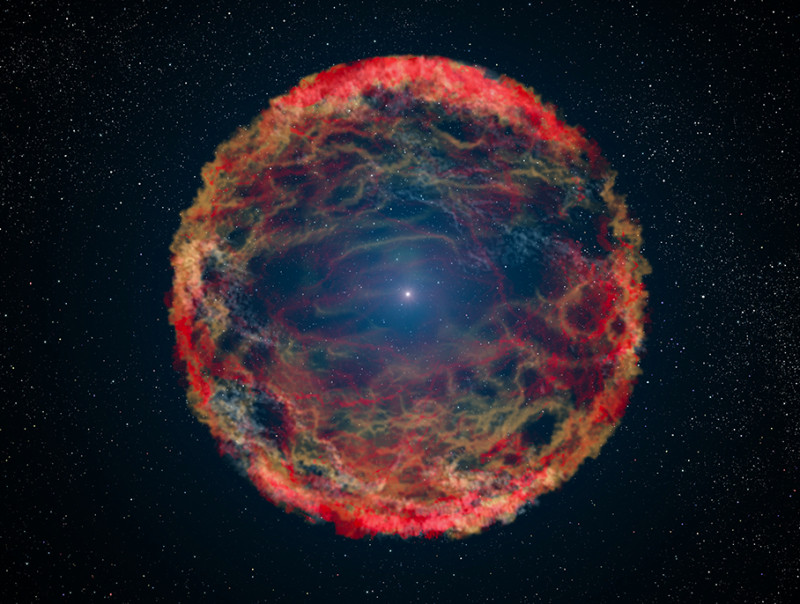
This is an artist’s impression of supernova 1993J, an exploding star in the galaxy M81 whose light reached us 21 years ago. The supernova originated in a double-star system where one member was a massive star that exploded after siphoning most of its hydrogen envelope to its companion star. After two decades, astronomers have at last identified the blue helium-burning companion star, seen at the center of the expanding nebula of debris from the supernova. The Hubble Space Telescope identified the ultraviolet glow of the surviving companion embedded in the fading glow of the supernova. (Credit: NASA)
via sciencedaily
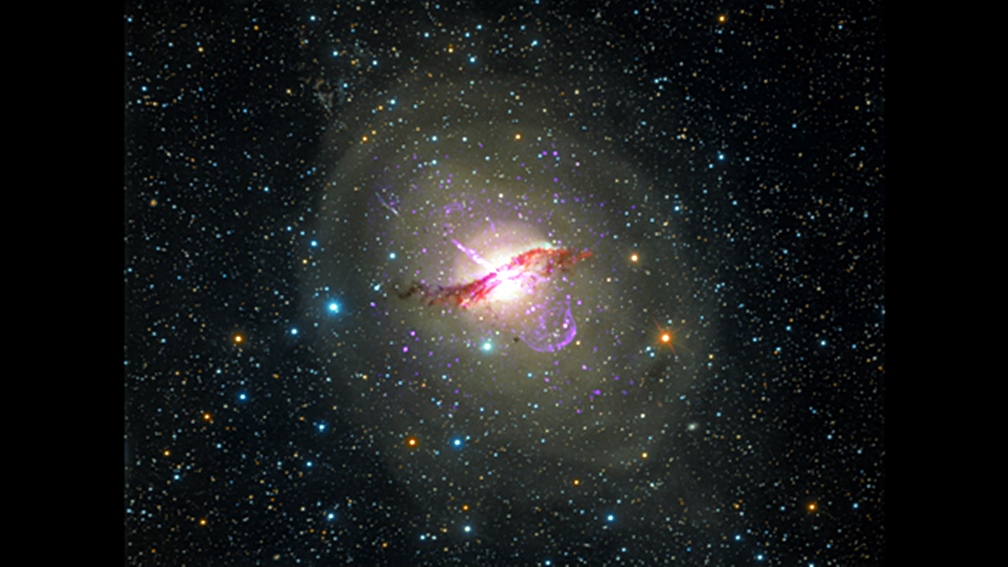
The nearby galaxy Centaurus A as viewed at X-ray, radio, and optical wavelengths, showing jets powered by a massive black hole at the center of the galaxy. (Credit: NASA)
via bigislandnow
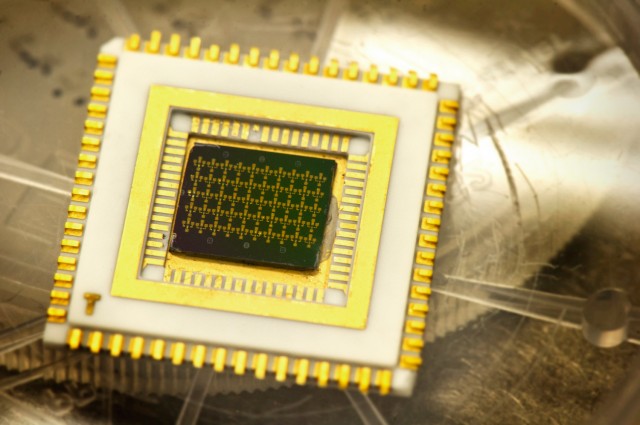
Researchers at UT Arlington have created the first electronic device that can cool electrons to -228 degrees Celsius (-375F), without any kind of external cooling. (Credit: S. Anthony)
via extremetech
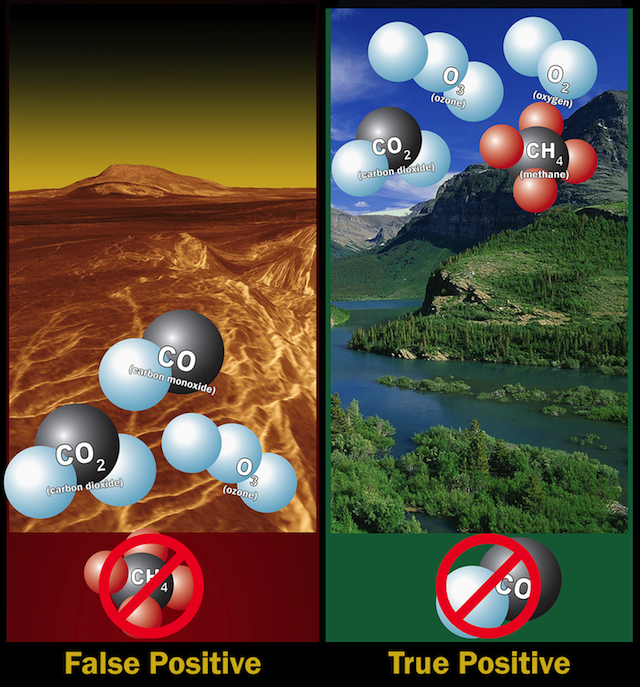
“Our research strengthens the argument that methane and oxygen together, or methane and ozone together, are still strong signatures of life. That’s because oxygen and methane abhor each other. An atmosphere heavy in one of these gases has to have its supplies of the other continually replenished, and the most reliable way that happens on Earth is through the mechanisms of life,” said Shawn Domagal-Goldman of NASA’s Goddard Space Flight Center. (Credit: NASA, B. Richmond)
via motherboard
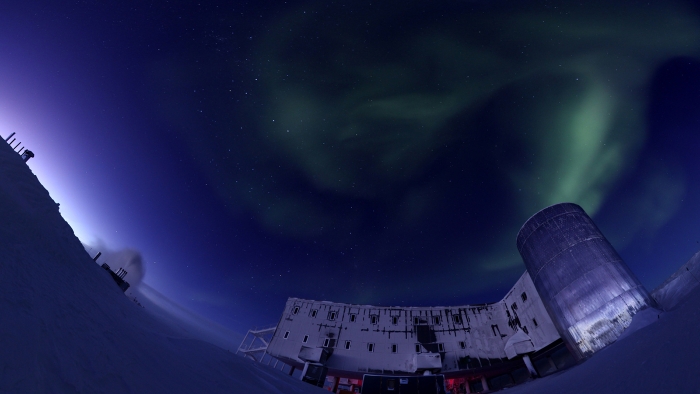
“When you get off the plane at the South Pole, there is a feeling like you’re out in the ocean,” says University of Chicago physicist John Carlstrom, the principal investigator for the South Pole Telescope team, who has logged 15 round trips to the South Pole over the past two decades. “It’s just a featureless horizon. The snow is so dry it feels like Styrofoam.” (Credit: J. Gallicchio, G. Roberts Jr.)
via symmetrymagazine
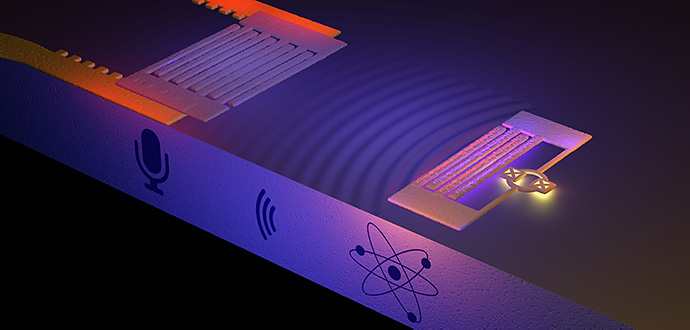
On the right, an artificial atom generates sound waves consisting of ripples on the surface of a solid. The sound, known as a surface acoustic wave (SAW) is picked up on the left by a “microphone” composed of interlaced metal fingers. According to theory, the sound consists of a stream of quantum particles, the weakest whisper physically possible. The illustration is not to scale. (Credit: Philip Krantz, Krantz NanoArt)
via chalmers
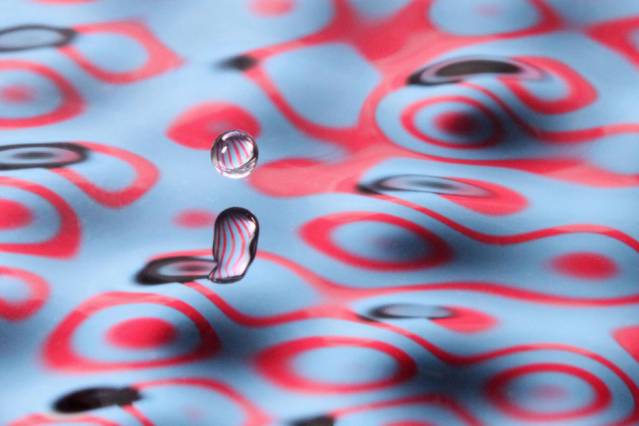
Close-ups of an experiment conducted by John Bush and his student Daniel Harris, in which a bouncing droplet of fluid was propelled across a fluid bath by waves it generated. (Credit: Dan Harris)
via phys
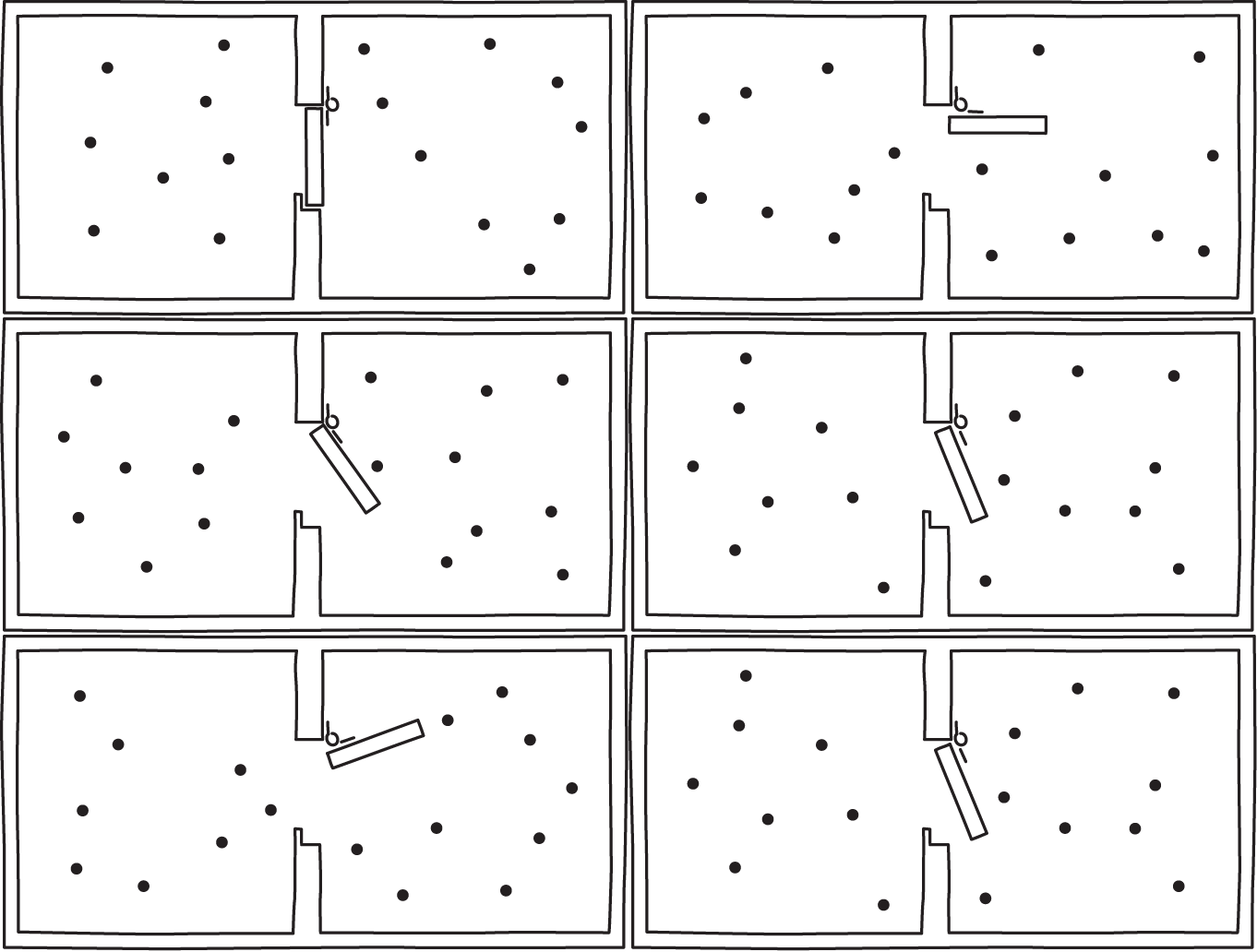
The Smoluchowsi trapdoor is a simple test for any proposed exorcism of Maxwell’s demon. It is immediately obvious that an information based exorcism is of no use. The are no sensors in this simple device that collect information; and there are memory devices that would need erasure if the demon is to return to its original state. (Credit: Hemmo, M.; Shenker)
via aip
Gravity Probe B (GP-B) has measured spacetime curvature near Earth to test related models in application of Einstein’s general theory of relativity. (Credit: S. Hossenfelder, Wiki Commons)
via backreaction
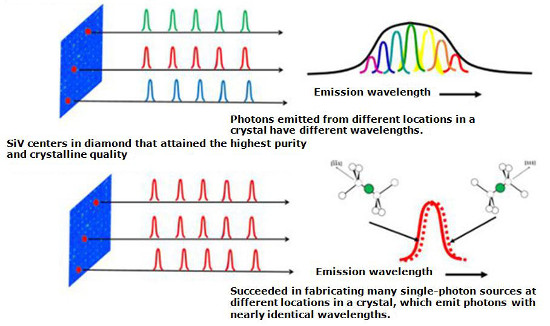
The research group resolved the challenging issue attributed to solid crystals, namely widely spread emission wavelengths, and succeeded in fabricating many single-photon sources that emit photons with nearly identical emission wavelengths. (Credit: National Institute for Materials Science (NIMS))
via innovations-report
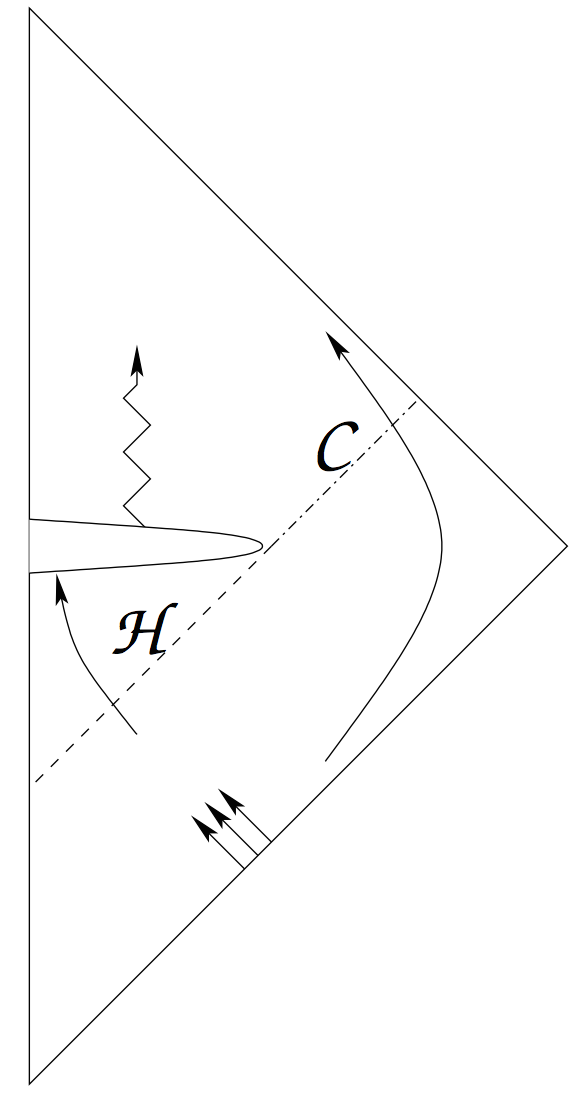
C H Figure 1: Acausality: Penrose diagram of a black hole with signature c hange at high curvature (hashed region). In contrast to traditional non-sing ular models, there is an event horizon (dashed line H , the boundary of the region that is determined by backward evolution from future infinity) and a Chauchy horizon (dash-dotte d line C , the boundary of the region obtained by forward evolution of the high-curvature re gion) (Credit: Martin Bojowald)
via arXiv
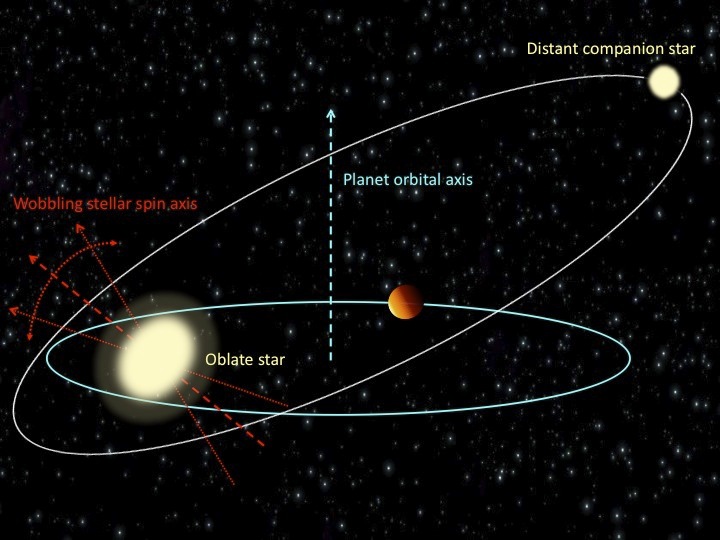
Giant alien planets known as “hot Jupiters” can induce wobbles in their parent stars that may lead to the wild, close orbits seen by astronomers. This diagram shows the relationship between wobbling stars and the orbital tilt of hot Jupiter planets. (Credit: Cornell University/N.Storch, K.Anderson, D.Lai)
via space
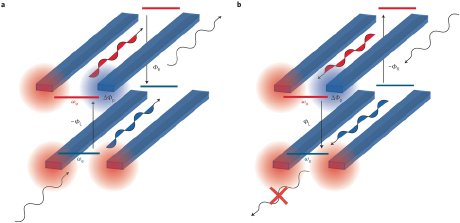
An illustration of the nonreciprocity of the dynamics of light propagating in the forward (a) and the backward (b) direction. (Credit: Nature Photonics)
via phys.org
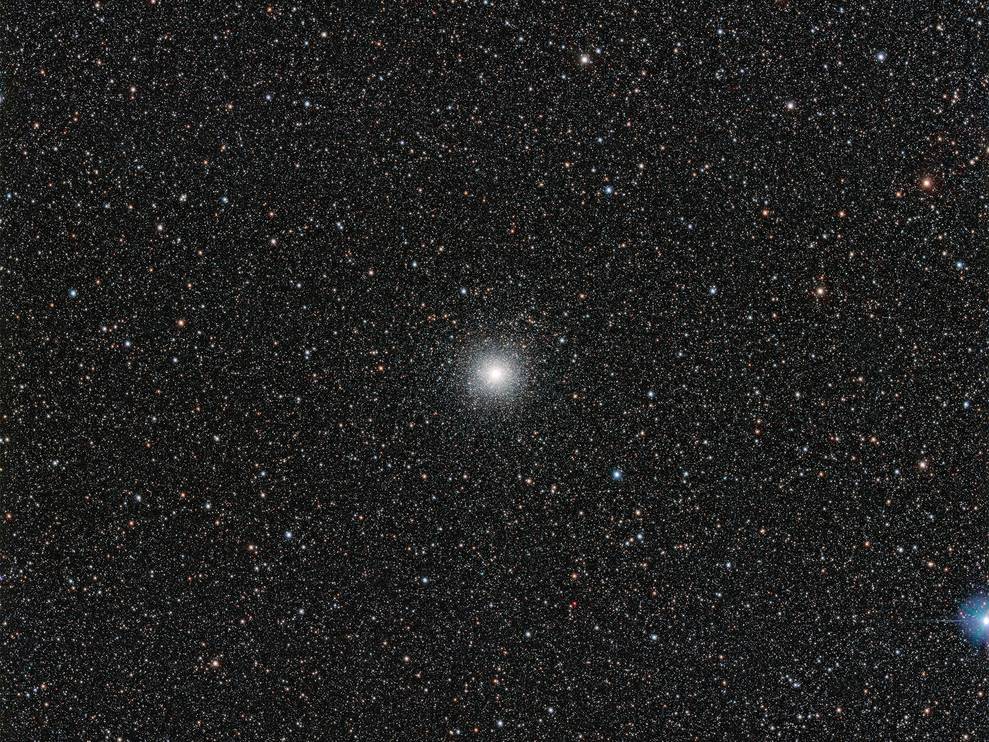
New observations of the star cluster Messier 54, shown above, reveal that it is just as strangely deficient in lithium as our own galaxy, deepening a mystery about the element’s big bang origins. (Credit: ESO)
via nationalgeographic
This graph shows the distribution of about 20,000 luminous Sloan Digital Sky Survey quasars in the two-dimensional space of broad line width versus FeII strength, color-coded by the strength of the narrow [OIII] line emission. The strong horizontal trend is the main sequence of quasars driven by the efficiency of the black hole accretion, while the vertical spread of broad line width is largely due to our viewing angle to the inner region of the quasar. (Credit: Y. Shen, L. Ho, KIAA)
via skyandtelescope
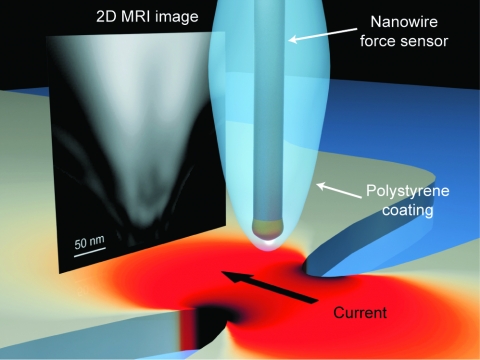
To see something new, inventor, Raffi Budakian, had to get small — really small. The instrument he uses is as long as a human hair is wide and has the circumference of a virus.(Credit: The Budakian Group)
via perimeterinstitute
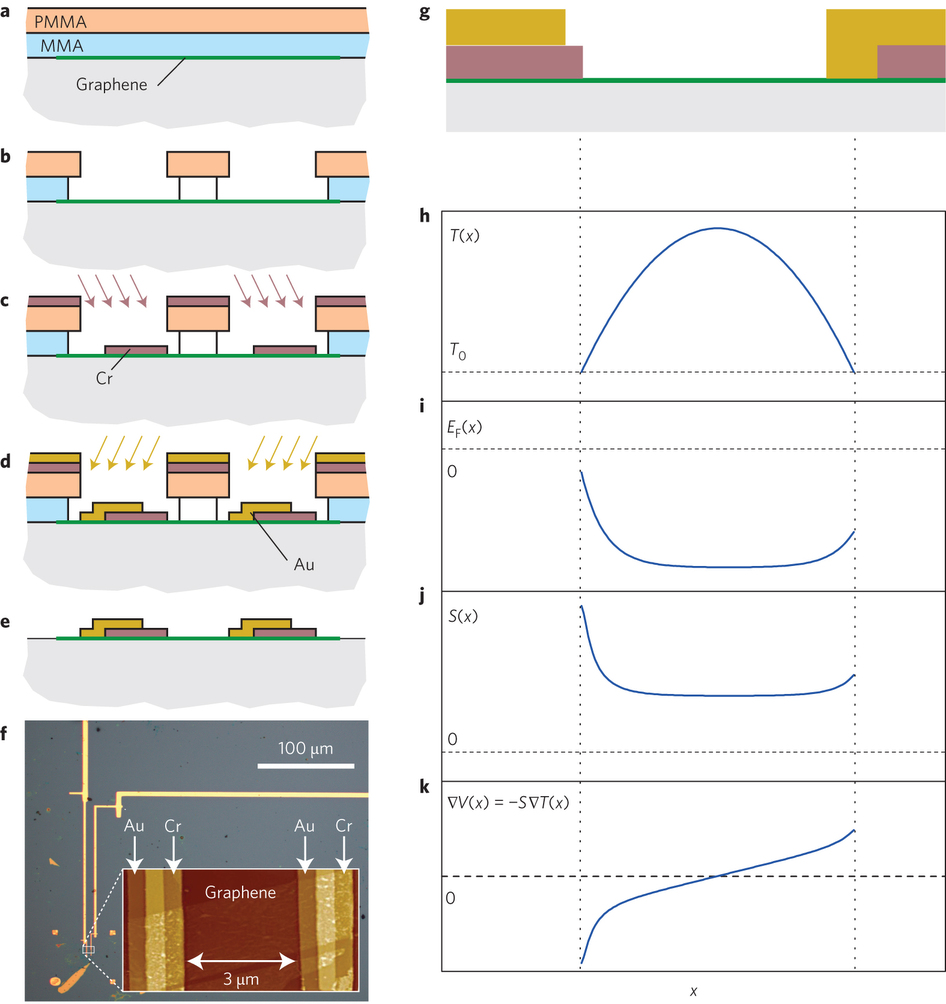
“Using a new operating principle called the “hot-electron photothermoelectric effect,” the research team created a device that is “as sensitive as any existing room temperature detector in the terahertz range and more than a million times faster,” says Michael Fuhrer, professor of physics at UMD and Monash University. The above image is a Graphene photothermoelectric detector device fabrication and principle of operation.” (Credit: Nature.com)
via spacedaily
The above sequence depicts a rare supernova explosion. Hubble images (bottom panel) correspond to an artist’s conception (top panel). (Credit: Kavli IPMU / NASA / Gastón Folatelli)
via universetoday
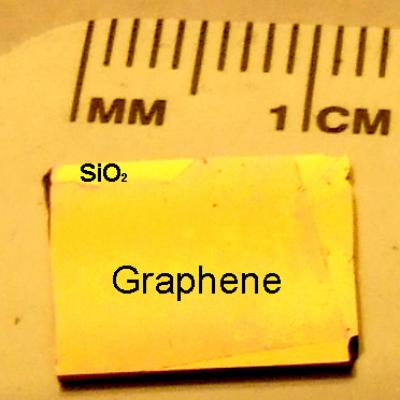
This is a one centimeter by one centimeter graphene film transfer to a silicon wafer with a silicon dioxide top layer. (Credit: Xuesong Li and Weiwei Cai)
via esciencenews
If a particle and its antiparticle pop into being on the event horizon, one gets sucked in. The other gets away. If the antiparticle gets sucked into the black hole, and the particle breaks free, the particle no longer has a chance to annihilate. It is now real, and not virtual. Its presence and energy count in the universe. And real radiation leaking from a black hole means that the black hole itself is slowly shrinking. (Credit: Chandra Observatory, NASA, Inglis-Arkell)
via io9
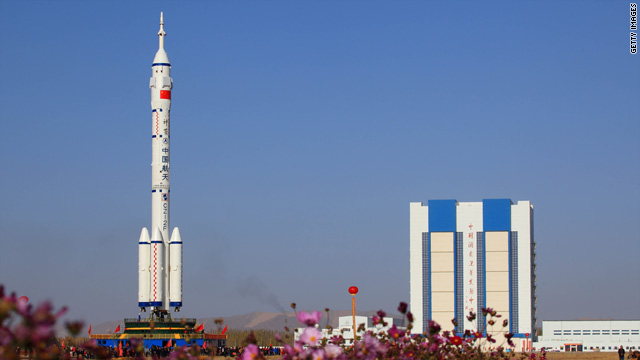
The U.S. Defense Department has highlighted China’s increasing space capabilities, however, saying China was pursuing activities aimed at preventing its adversaries from using space-based assets during a crisis.(Credit: Jaime FlorCruz – CNN Beijing Bureau Chief)
via reuters
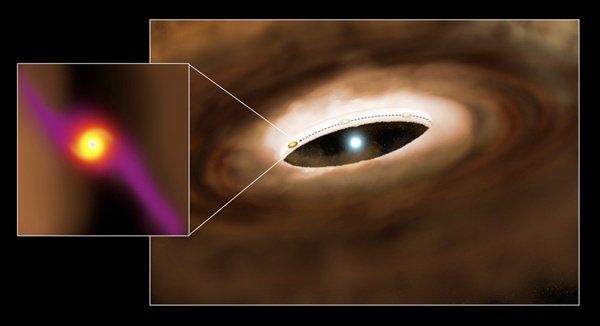
The new planet would be an uninhabitable gas giant at least three times the size of Jupiter, and the distance from the star would be about the same distance that Saturn is from the Sun. This graphic is an artist’s conception of the young massive star HD100546 and its surrounding disk. (Credit: VP. Marenfeld & NOAO/AURA/NSF)
via astronomy
If our understanding is correct, then the universe as a whole could be in a locally stable configuration, but it could also jump to a lower energy state through a process of quantum tunneling. If that happened, the universe would collapse and we’d all go bye bye. So to our best understanding, it is possible for the universe to collapse. (Credit: )
via phys.org
Quarks have one of three “color charges,” which are analogous to the primary colors red, green and blue. Just as an atom strikes a balance between positive and negative electrical charges, particles made of quarks balance colors to reach a neutral state. In the color analogy, that means combining colors to make white. (Credit: Quanta Magazine)
via wired
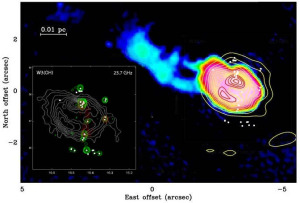
There is a giant cloud of alcohol in outer space. It’s in a region known as W3(OH), only about 6500 light years away. Unfortunately it is methyl alcohol (commonly known as wood alcohol, though this stuff is not derived from wood), so it isn’t suitable for drinking. There is some ethyl alcohol (the drinkable kind).(Credit: Hubble)
via phys.org
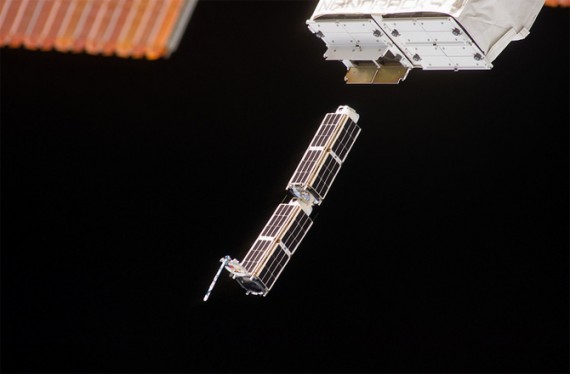
Two tiny satellites escaping on their own doesn’t sound too bad … except it’s not the first time this has happened. On August 23rd, NASA reports that two other CubeSats set themselves free. OK, 4 out of 100 doesn’t sound too bad either … except only 12 have been launched so far, which means a quarter of the CubeSats un-tethered themselves. (Credit: NASA)
via mysteriousuniverse
Classical black holes have “no hair”, meaning that they are simply described by their mass, charge and rotation. Because of this, you could toss an object (with a great deal of entropy) into a black hole, and the entropy would simply go away. (Credit: NASA/Chandra, B. Koberlein )
via phys.org
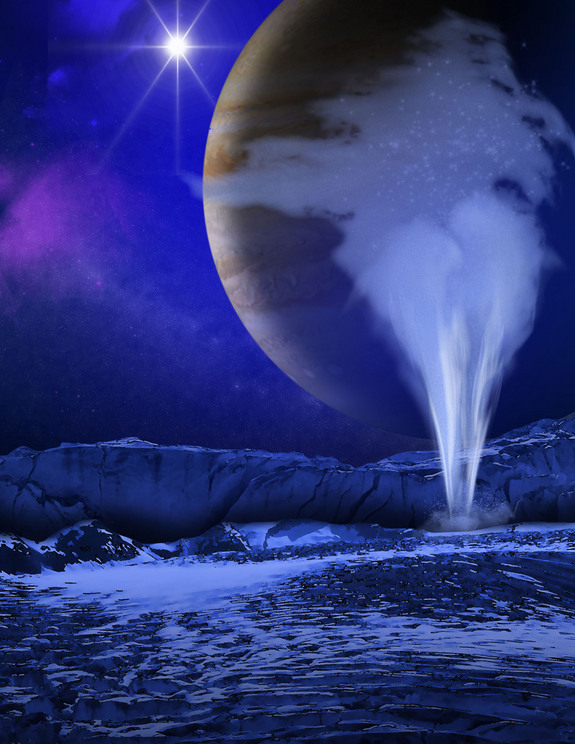
In 2013, huge active plumes containing water vapour being released from the surface of Jupiter’s moon Europa were discovered. This sensational find was made using the NASA/ESA Hubble Space Telescope. Europa has been a focus of extraterrestrial research for some time now, as there were clear indications that it harbors a liquid ocean beneath its icy crust. Now, it appears, the geysers have vanished. (Credit: K. Retherford, Southwest Research Institute, NASA/ESA/K.)
via dailygalaxy
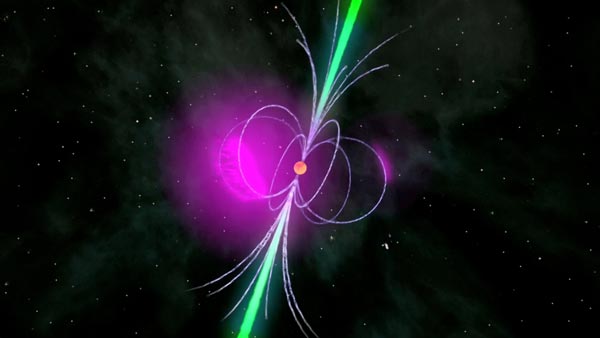
A pulsar is the rapidly spinning and highly magnetized core left behind when a massive star explodes. Because only rotation powers their intense gamma-ray, radio and particle emissions, pulsars gradually slow as they age, and eventually cease their characteristic emissions. (Credit: F. Reddy of Goddard Space Flight Center, NASA)
via onislam
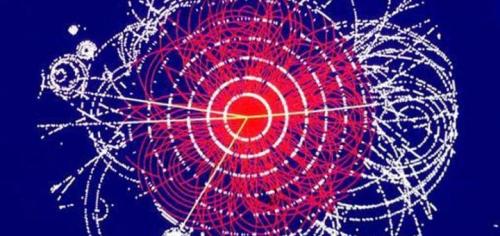
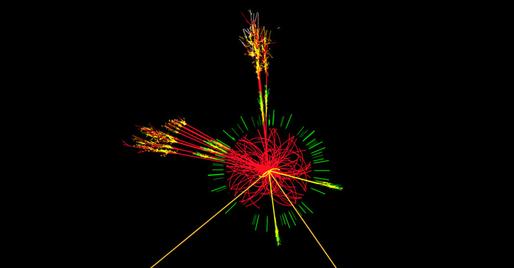
A weird theoretical cousin of the Higgs boson, one that inspired the decades-long hunt for the elusive particle, has been properly observed for the first time. The discovery bookends one of the most exciting eras in modern physics. The above is a simulation of the production and dec (Credit: Slezak)
via newscientist
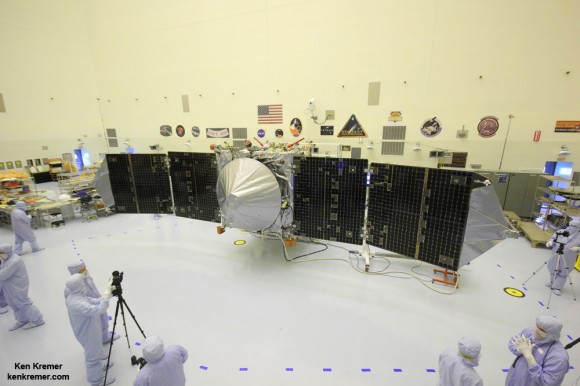
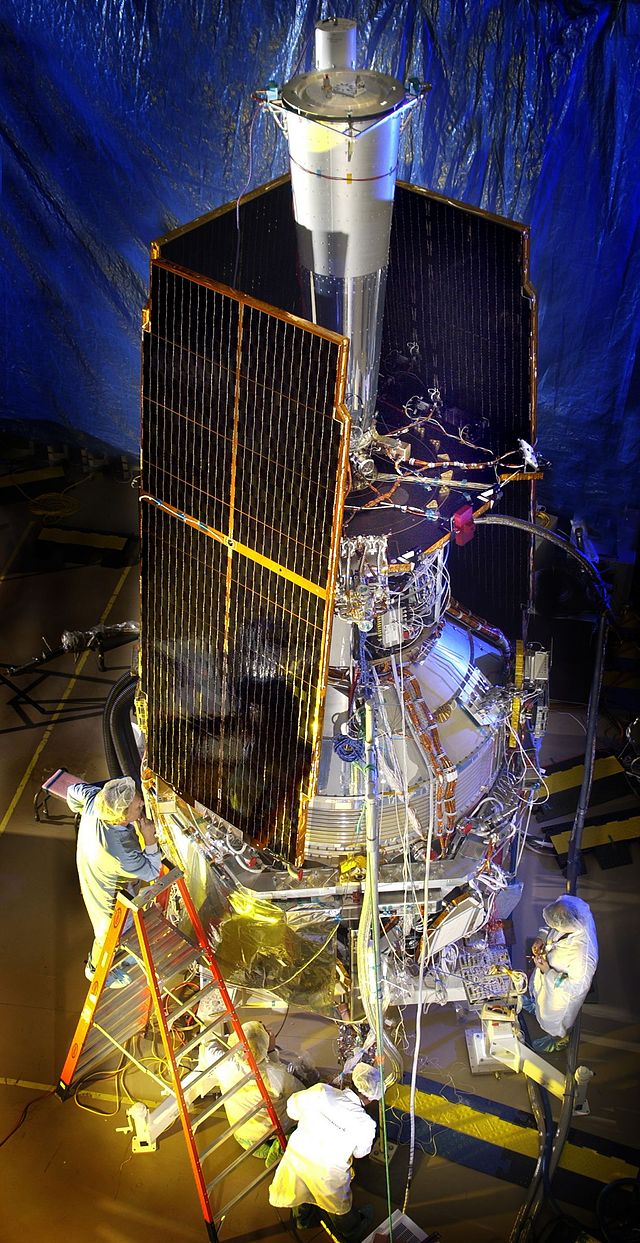
MAVEN is NASA’s next Mars orbiter and launched on Nov. 18, 2014 from Cape Canaveral, Florida. It will study the evolution of the Red Planet’s atmosphere and climate. Universe Today visited MAVEN inside the clean room at the Kennedy Space Center. With solar panels unfurled, this is exactly how MAVEN looks when flying through space and circling Mars and observing Comet Siding Spring. (Credit: Ken Kremer)
via universetoday
“This is a time of very rapid advances in the field. You don’t know on any given day what new discovery you’re going to see posted that night on arXiv,” said Liam McAllister, associate professor of physics and a specialist in string theory. (Credit: Glaser)
via cornell
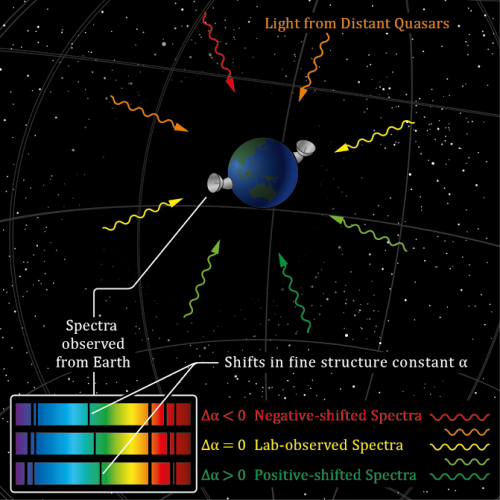
Diagram illustrating quasar observations. In 2010, a research team looked at light from distant quasars that had passed through large intergalactic clouds of gas. They found evidence of some slight variation of alpha depending on the direction we looked in the sky, which would imply a spatial variation of the physical constants. This made lots of news in the press, but the findings were not strong enough to be conclusive. (Credit: J. C. Berengut, Koberlein)
via phys
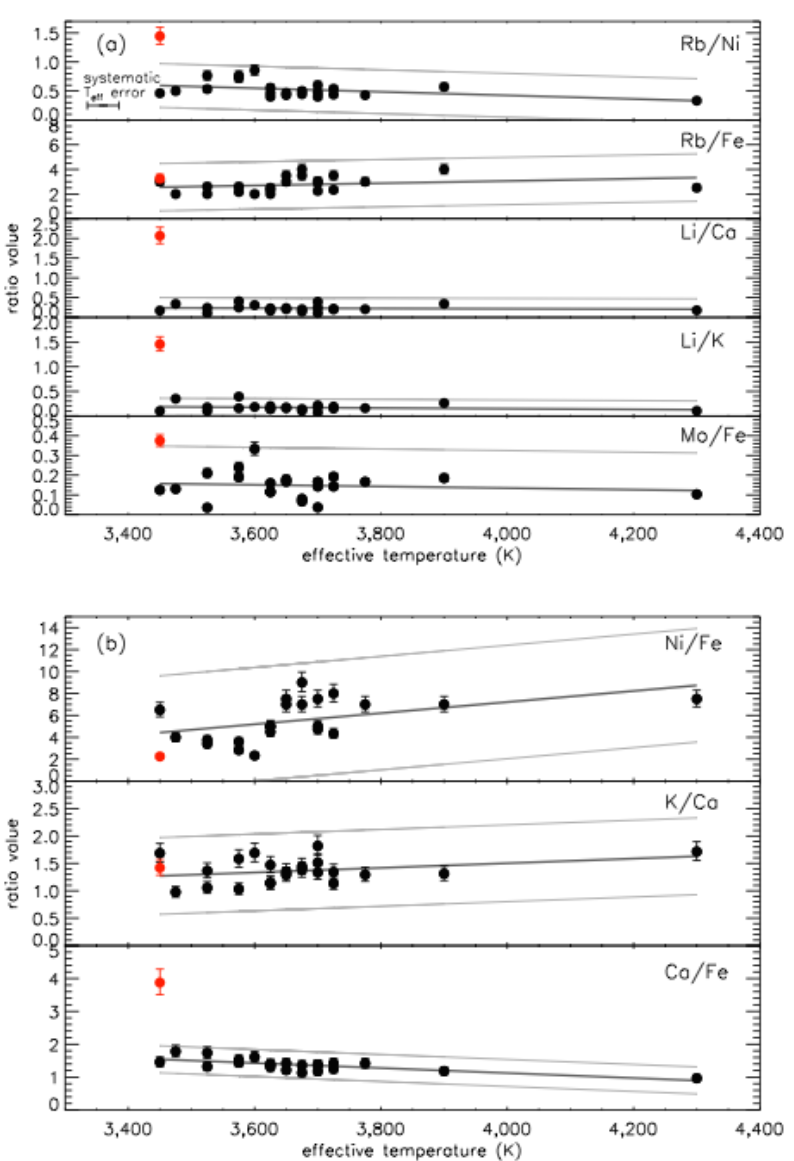
The ratios of various elements found in the sample of RSGs, where the dark gray line is the theoretical model for a RSG, the lighter grey shows a three sigma deviation from normal, and the black points show the observed ratios for the sampled stars. The red, however, are the ratios observed in the TZO candidate HV 2112- indicating some elements are present at ratios far from expected. (Credit: E.Levesque et al.)
via astrobites
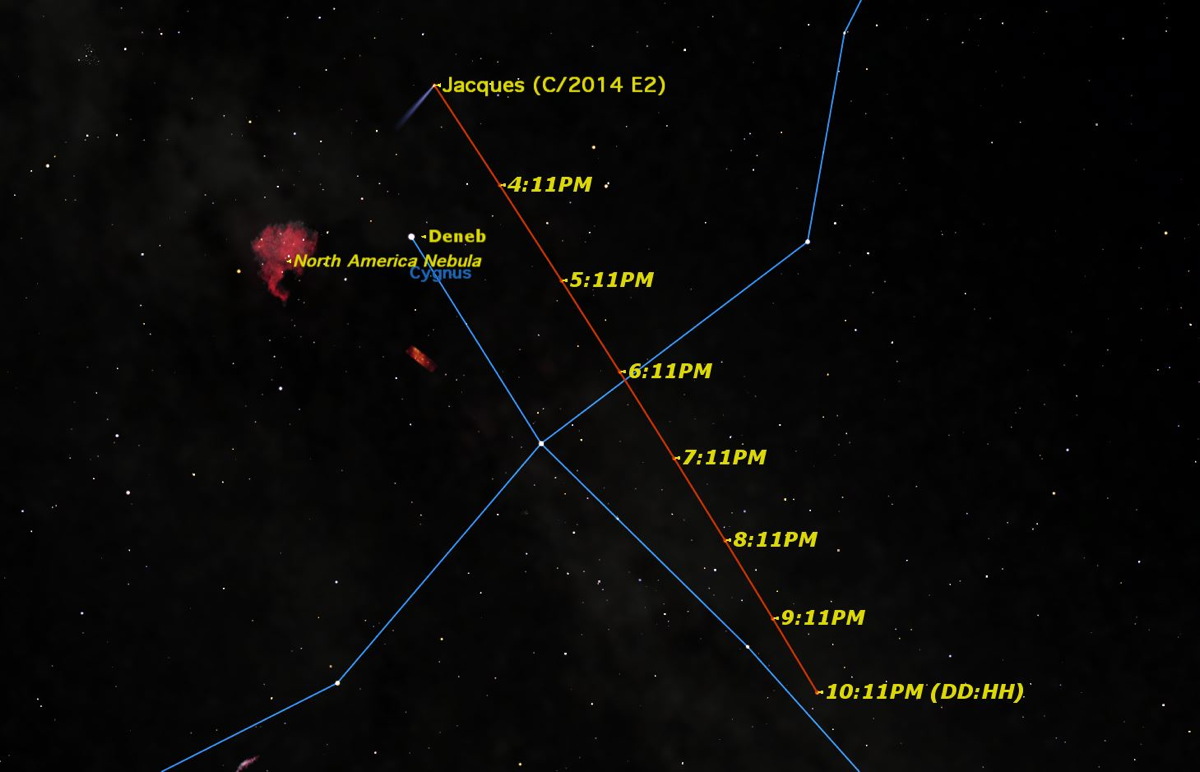
Once every year or two, a comet appears in the sky that is bright enough to be seen with a small telescope or binoculars. Right now, observers anywhere in the Northern Hemisphere can see such a comet. (Credit: Starry Night Software)
via space
Sofie Carsten Nielsen, Danish science minister, and Swedish education minister Jan Björklund break ground for the €1.84bn European Spallation Source in Lund, Sweden. (Credit: ESS)
via physicsworld





![This graph shows the distribution of about 20,000 luminous Sloan Digital Sky Survey quasars in the two-dimensional space of broad line width versus FeII strength, color-coded by the strength of the narrow [OIII] line emission. The strong horizontal trend is the main sequence of quasars driven by the efficiency of the black hole accretion, while the vertical spread of broad line width is largely due to our viewing angle to the inner region of the quasar. (Credit: Y. Shen, L. Ho, KIAA)](https://timeincosmology.org/wp-content/uploads/2014/09/prshenquasargraphicforweb-preview.jpg)