Physics in the News

Monday, July 21, 2014

Astronauts testing free-flying “housekeeper” robots
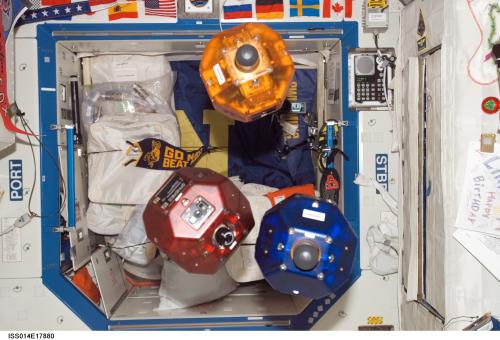
Three satellites fly in formation as part of the Synchronized Position Hold, Engage, Reorient, Experimental Satellites (SPHERES) investigation. This image was taken during Expedition 14 in the Destiny laboratory module. (Credit: NASA)
via phys.org

Rare photos reveal fascinating views of the Apollo 11 moon landing
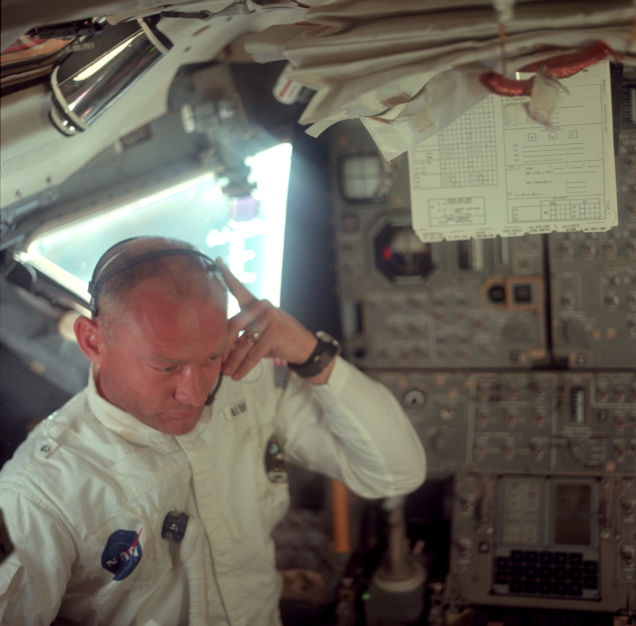
Buzz Aldrin listening to mission control transmission during translunar coast NASA/Project Apollo Archive
Buzz Aldrin listening to mission control transmission during translunar coast. (Credit: NASA/Project Apollo Archive)
via gizmodo

New noble gas cage for extracting radioactive elements from air and water
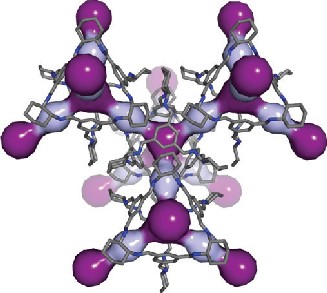
In this computer simulation, light and dark purple highlight the cavities within the 3D pore structure of CC3. (Credit: Nature Materials 2014)
via news.liv

Physicists succeed in revealing the scaling behaviour of exotic giant molecules
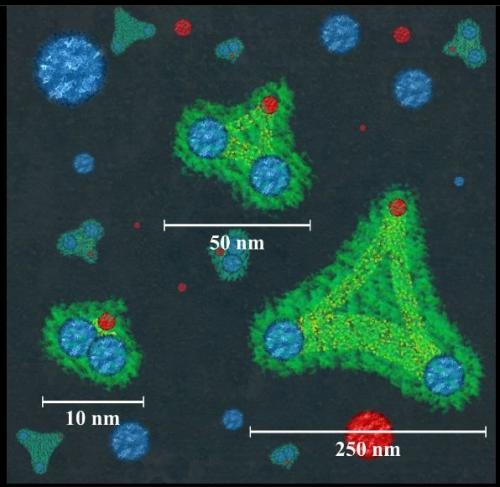
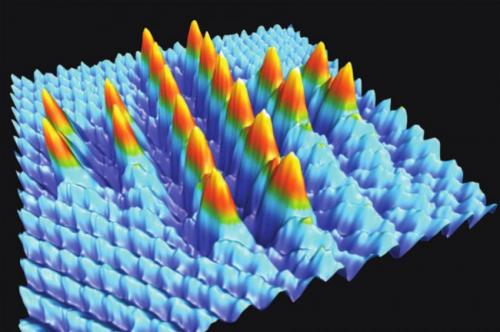
According to Efimov's prediction, bound states of three atoms can be universally described under certain conditions. The scientist found that infinitely many quantum mechanical bound states for the "ménage à trois" exist, even if two of the atoms cannot bind together. (Credit:  Heidelberg Uni.)
According to Efimov’s prediction, bound states of three atoms can be universally described under certain conditions. The scientist found that infinitely many quantum mechanical bound states for the “ménage à trois” exist, even if two of the atoms cannot bind together. (Credit: Heidelberg Uni.)
via phys.org

Vast rock arches sculpt themselves out of sand

Delicate Arch and many other gigantic arches in the US are made of the stuff. It is a "locked sand", whose angular grains can catch on each other.(Credit: Brad Goldpaint/Aurora Open/Corbis)
Delicate Arch and many other gigantic arches in the US are made of the stuff. It is a “locked sand”, whose angular grains can catch on each other.(Credit: Brad Goldpaint/Aurora Open/Corbis)
via newscientist

Researchers watched electrons jumping between fragments of exploding molecules
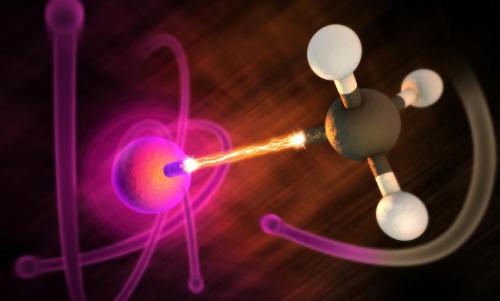
An artistic view of the electron transfer inside an iodomethane molecule. After the interaction with an ultrafast X-ray laser, the electrons from the methyl group, on the right, jump to the iodine atom, on the left. (Credit: SLAC National Accelerator Laboratory)
An artistic view of the electron transfer inside an iodomethane molecule. After the interaction with an ultra fast X-ray laser, the electrons from the methyl group, on the right, jump to the iodine atom, on the left. (Credit: SLAC National Accelerator Laboratory)
via azoquantum

Physics in the News

Thursday, July 17, 2014

Stalking the Shadow Universe(VIDEO)

via nytimes

The mathematics of quantum computing

(Credit: Ritvars Skuja)
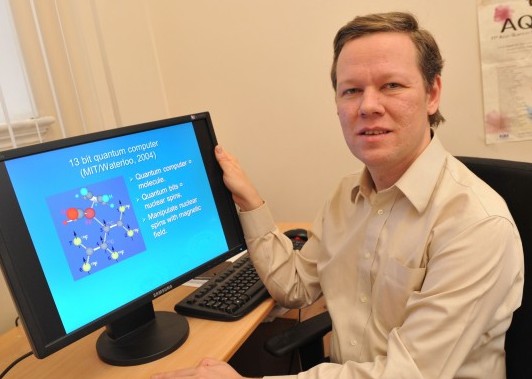
The Quantum Computer Science project was completed in August 2013. The project focused on the mathematical aspects of quantum computing. Andris Ambainis, a theoretical computer scientist at the University of Latvia in Riga, was the principal coordinator of the project. (Credit: Ritvars Skuja)
via youris

Perth’s planet hunter helps discover unusual exoplanet

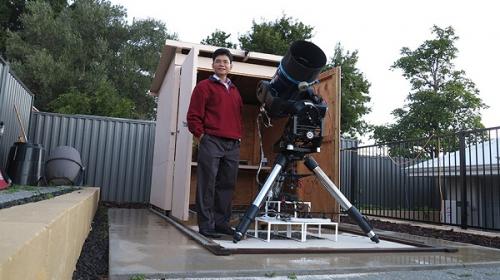
Perth engineer ‘TG’ Tan hunts planets with his backyard observatory in Mt Claremont. (Credit: TG Tan)
Perth engineer ‘TG’ Tan hunts planets with his backyard observatory in Mt Claremont.      (Credit: TG Tan)
via phys.org

Touchdown! Supply capsule arrives at International Space Station

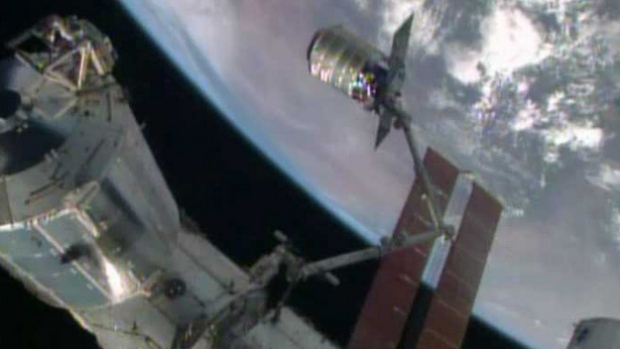
The International Space Station’s robotic arm, Canadarm2, grapples the Orbital Sciences’ Cygnus cargo craft. (Source: NASA TV)
The International Space Station’s robotic arm, Canadarm2, grapples the Orbital Sciences’ Cygnus cargo craft. (Credit NASA TV)
via cbs

The machine learning community contest to take on the Higgs

(Credit: Sandbox Studio, Chicago)
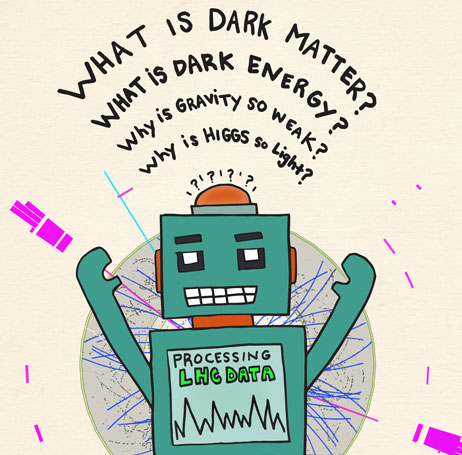
Kaggle is currently running about 20 contests on its site. Most of them will attract between 300 and 500 teams. But the Higgs contest, which does not end until September, has already drawn almost 970. Names appear and drop off of the leader board every day. (Credit: Sandbox Studio, Chicago)
via symmetrymagazine

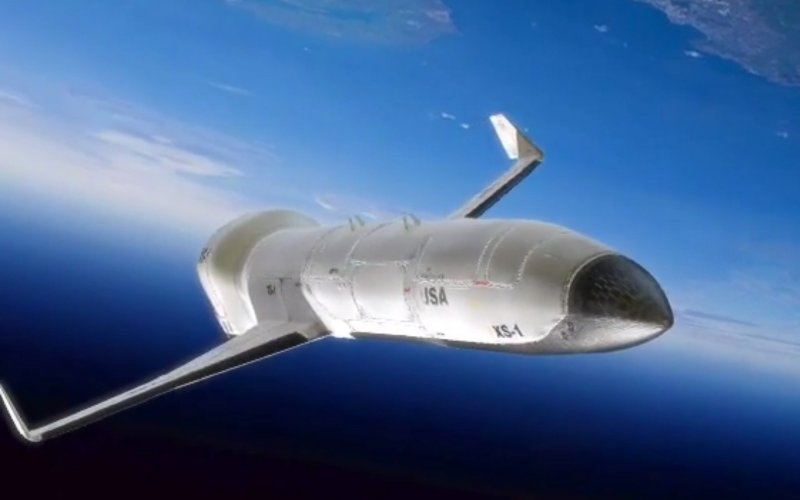
Pentagon enlists Jeff Bezos and Richard Branson to design a space plane

DARPA wants its new experimental spaceship to fly 10 times within in 10 days and it wants the contractor to show that the vessel can fly at 10 times the speed of sound or more. (Credit: DARPA)
via thedailybeast

Physicists propose molecular clock to expose new physics

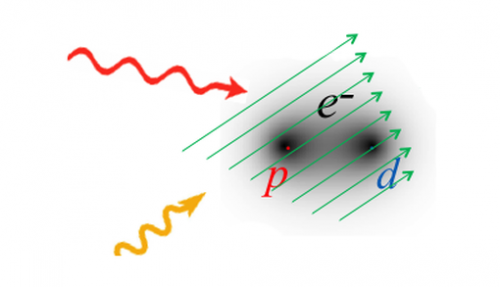
(Credit: S. Schiller et al., Phys. Rev. Lett (2014))
A lot of physics is based on the assumption that the mass of a proton remains constant over time—pretty much forever. But what if that’s not true? What if it grows or shrinks over time? That would mean that the ratio between them and electrons changes as well, and if that’s true, then physicists are going to have to come up with some new ideas to explain what that might mean. (Credit: S. Schiller et al., Phys. Rev. Lett (2014))
via phys.org

Holographic displays coming to smartphones

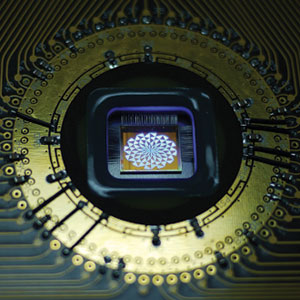
Quantum Photonic Imager: Ostendo’s light-field display produces 3-D images using light-emitting pixels and piles of pixel-level processing. (Credit: Ostendo Technologies)
Light-field displays for mobile devices might be only a year away. Ostendo’s light-field display produces 3-D images using light-emitting pixels and piles of pixel-level processing. (Credit: Ostendo Technologies)
via spectrum

Physics in the News

Tuesday, July 15, 2014

New qubit design provides parity bit for Schrödinger cat states

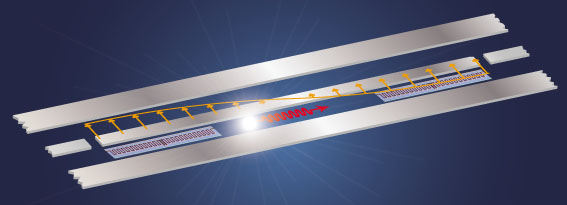
The device combines a superconducting microwave resonator to trap the photons and a circuit quantum electrodynamic qubit that's linked to the resonator.(Credit: Schoelkopf Lab, Yale)
The device combines a superconducting microwave resonator to trap the photons and a circuit quantum electrodynamic qubit that’s linked to the resonator.(Credit: Schoelkopf Lab, Yale)
via arstechnica

The world’s first photonic router

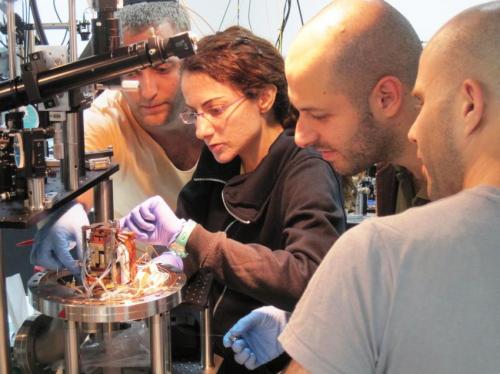
 This image depicts from left to right Serge Rosenblum, Yulia Lovsky, Orel Bechler and Itay Shomroni.  At the center of the photonic router is a single atom that routes photons  in different directions. (Credit: Weizmann Institute of Science)
This image depicts from left to right Serge Rosenblum, Yulia Lovsky, Orel Bechler and Itay Shomroni. At the center of the photonic router is a single atom that routes photons in different directions. (Credit: Weizmann Institute of Science)
via phys.org

Two anomalies worth noticing

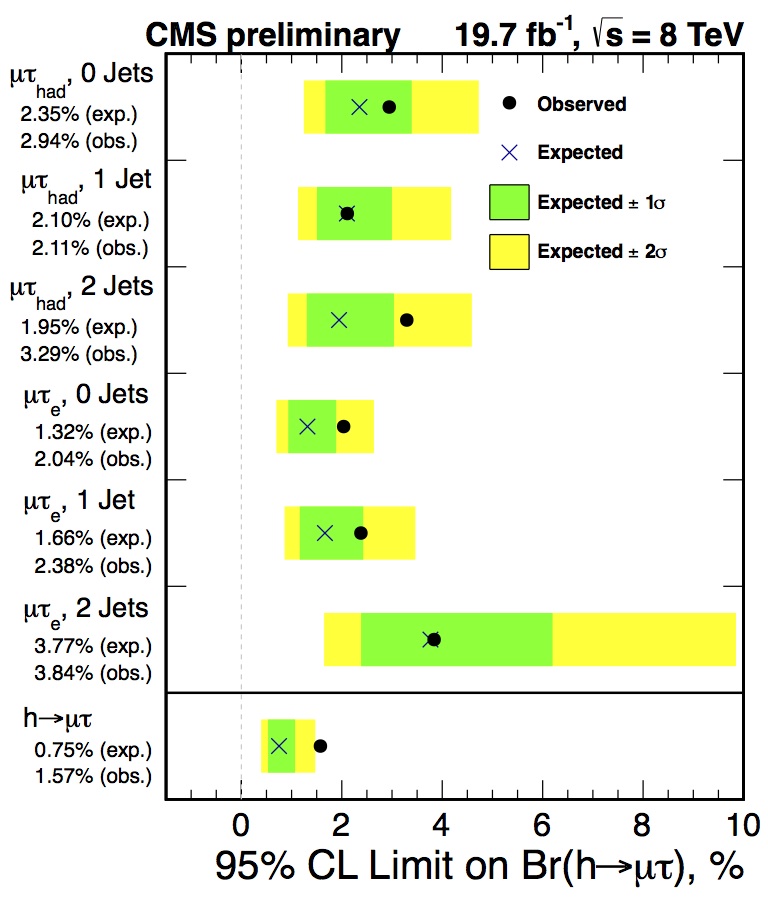
The results obtained by the CMS Collaboration showing that six different channels all give a non-zero value for the decay rate of Higgs boson into pairs of tau and muon. (Credit: Pauline Gagnon)
The results obtained by the CMS Collaboration showing that six different channels all give a non-zero value for the decay rate of Higgs boson into pairs of tau and muon.
(Credit: Pauline Gagnon)
via quantumdiaries

Ukraine to turn Chernobyl into ‘biosphere radiologic reserve’

The damaged 4th unit of the Chernobyl Nuclear Power Plant and a memorial sign “Heroes, Professionals – those who protected the world from nuclear disaster” in the Chernobyl Exclusion Zone (Credit: RIA Novosti)
via rt.com

Smallest Swiss cross—made of 20 single atoms

20 bromine atoms positioned on a sodium chloride surface using the tip of an atomic force microscope at room temperature, creating a Swiss cross with the size of 5.6nm. The structure is stable at room temperature and was achieved by exchanging chlorine with bromine atoms. (Credit: Department of Physics, University of Basel)
via phys.org

Consider the ‘Anticrystal’

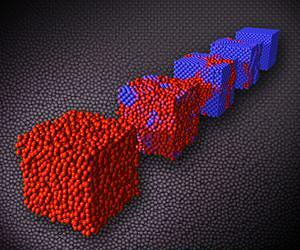
Materials can be described as being on a spectrum from a perfectly ordered crystal to a perfectly disordered anticrystal. (Credit: Liu, Goodrich, Nagel)
via spacemart

A Critical Test of Quantum Criticality

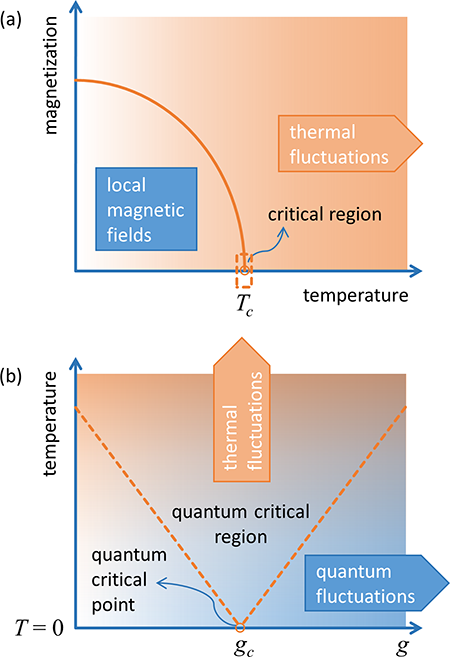
a) An example of the classical phase transition in a ferromagnet. Thermal fluctuations causing the random reorientation of the constituent spins grow with temperature. They compete with the tendency of the local magnetic fields to align the spins. As a result, the net magnetization in the ordered state continuously decreases with temperature (orange line) and drops to zero at a critical temperature Tc, surrounded by a narrow critical region (dashed rectangle). (b) A generic example of the quantum phase transition. Quantum fluctuations controlled by the nonthermal parameter g lead to a similar phase transition at a critical value gc, the so called quantum critical point, already at zero temperature, T=0. Their interplay with thermal fluctuations opens up a progressively broader, V-shaped quantum critical region extending much above the zero temperature (dashed lines).
via physics.aps

Online Isaac Newton manuscripts workshop

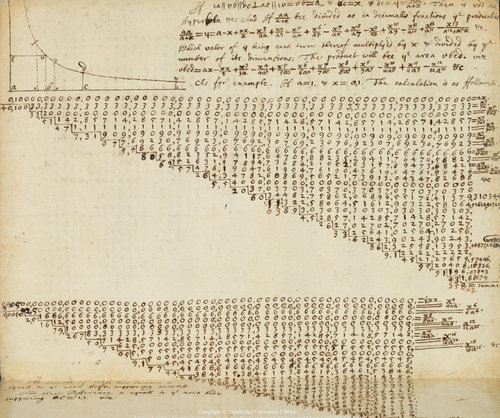
India's Zetatrek citizen science initiative is online workshop starting on 19th July, where science and math hobbyists from all over the world are invited to study the original manuscripts of Sir Isaac Newton.
India’s Zetatrek citizen science initiative is online workshop starting on 19th July, where science and math hobbyists from all over the world are invited to study the original manuscripts of Sir Isaac Newton.
via boingboing

Physics in the News

Saturday, July 12, 2014

NASA Curiosity Rover is starting to explore dangerous new territory

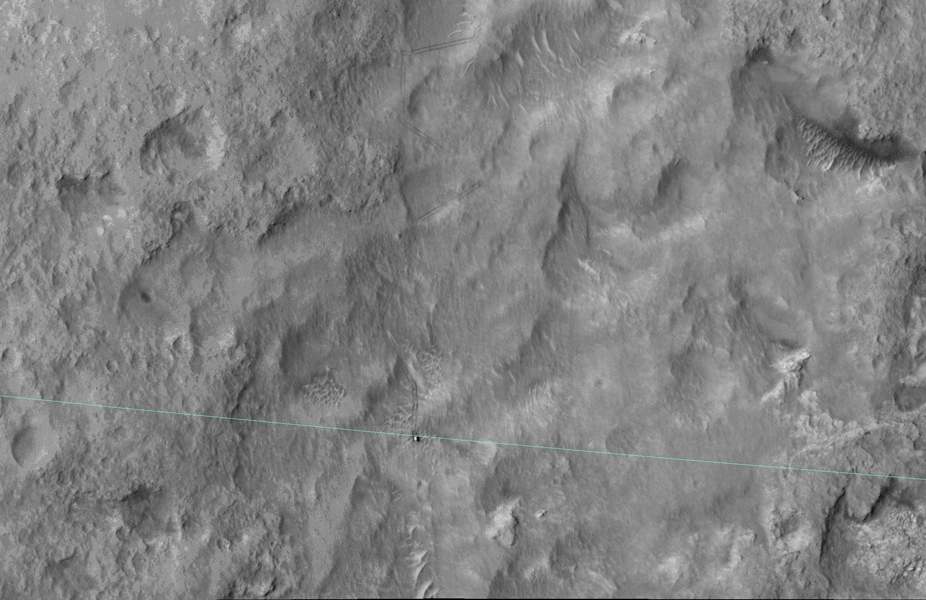
The blue line added to this June 27, 2014, image from the High Resolution Imaging Science Experiment (HiRISE) camera on NASA's Mars Reconnaissance Orbiter is the edge of the ellipse that was charted as safe terrain for the rover's August 2012 landing. Curiosity is visible right on the ellipse line in the lower center of the image. This 3-sigma landing ellipse is about 4 miles long and 12 miles wide (7 kilometers by 20 kilometers). Curiosity reached the edge of it for the first time with a drive of about 269 feet (82 meters) earlier that day. (Credit: NASA)
The blue line added to this June 27, 2014, image from the High Resolution Imaging Science Experiment (HiRISE) camera on NASA’s Mars Reconnaissance Orbiter is the edge of the ellipse that was charted as safe terrain for the rover’s August 2012 landing. Curiosity is visible right on the ellipse line in the lower center of the image. This 3-sigma landing ellipse is about 4 miles long and 12 miles wide (7 kilometers by 20 kilometers). Curiosity reached the edge of it for the first time with a drive of about 269 feet (82 meters) earlier that day. (Credit: NASA)
via technobuffalo

Space geeks’ resurrected NASA sun probe ISEE-3 now on collision course with the moon

An old McDonalds serves as ISEE-3 mission control (Credit: ISEE-3)
via theregister

Richard Feynman, sexism and changing perceptions of a scientific icon

via scientificamerican

Scientists ‘have no handle on’ radio bursts coming from deep space

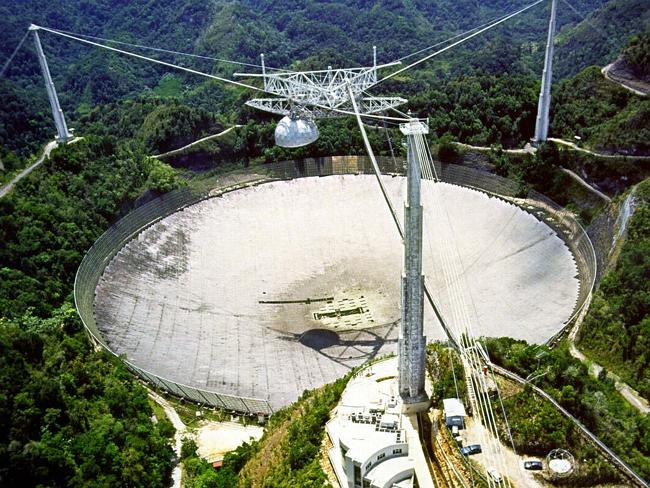
The Arecibo Observatory in Puerto Rico is the largest single-dish radio telescope in the world. (Credit: David Parker)
via news.com

NASA spacecraft observes more evidence of dry ice gullies on Mars

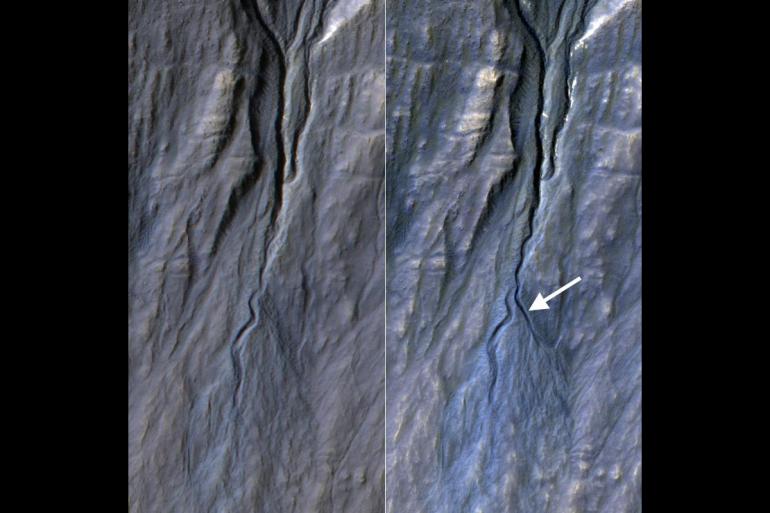
This pair of before (left) and after (right) images captured by the HiRise camera on NASA’s MRO documents the formation of a new channel on a Martian slope between 2010 and 2013. (Credit: NASA/JPL-Caltech/University of Arizona)
via ibtimes

Dragonfly telephoto array discovers seven dwarf galaxies around Messier 101

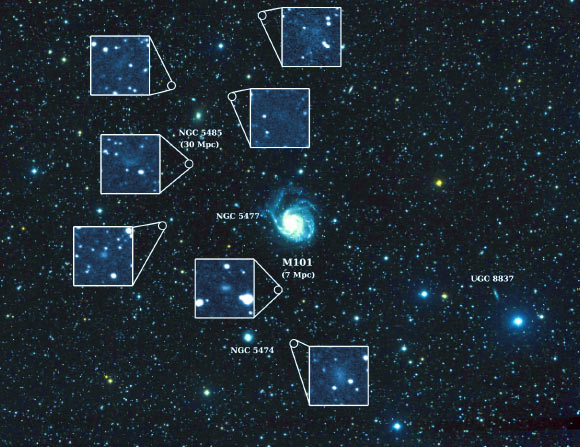
This image shows the nearby spiral galaxy Messier 101 and the seven newly discovered dwarf galaxies. (Credit: Allison Merritt et al.)
via sci-news

Microsoft and Niels Bohr Institute QDev partner to realize Quantum Information

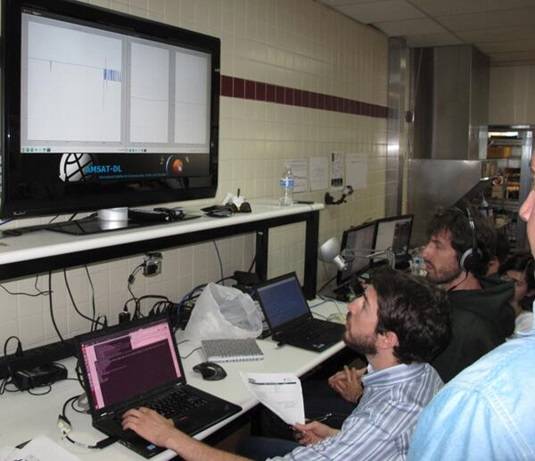
The base for the research collaboration between Microsoft and the Center for Quantum Devices, called Station Q–Copenhagen, aims to realise quantum information (Credit: ku.dk)
The base for the research collaboration between Microsoft and the Center for Quantum Devices, called Station Q–Copenhagen, aims to realise quantum information  (Credit: ku.dk)
via azoquantum

Physics in the News

Wednesday, July 9, 2014

The Theory of Supersymmetry, Visualized by CERN’s Artist-in-Residence(VIDEO)

via motherboard

NASA finds quietest place in the UK to test Mars mission equipment

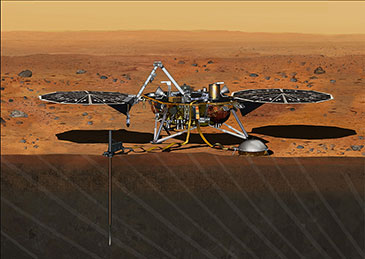
Artist’s impression of the InSight Mars lander. The SEIS will be deployed onto the surface using a robot arm, where it will then record signals from marsquakes and meteorite impacts in order to probe the planet’s interior. (Credit: NASA/JPL-Caltech)
via phys.org

In Less Than a Decade Your Computer Could Be Just One Atom Wide(VIDEO)

via motherboard

Upgrading the Large Hadron Collider

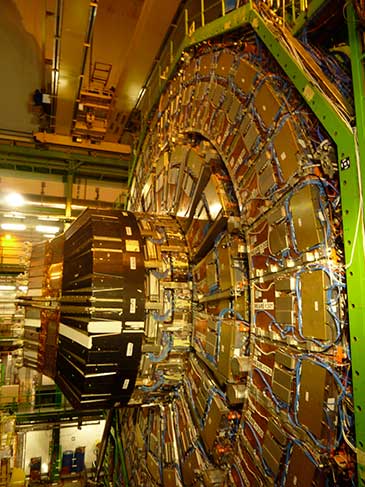
The CMS (Compact Muon Solenoid) experiment aims to discover new particles and study their properties. (Credit: NASA)
via phys.org