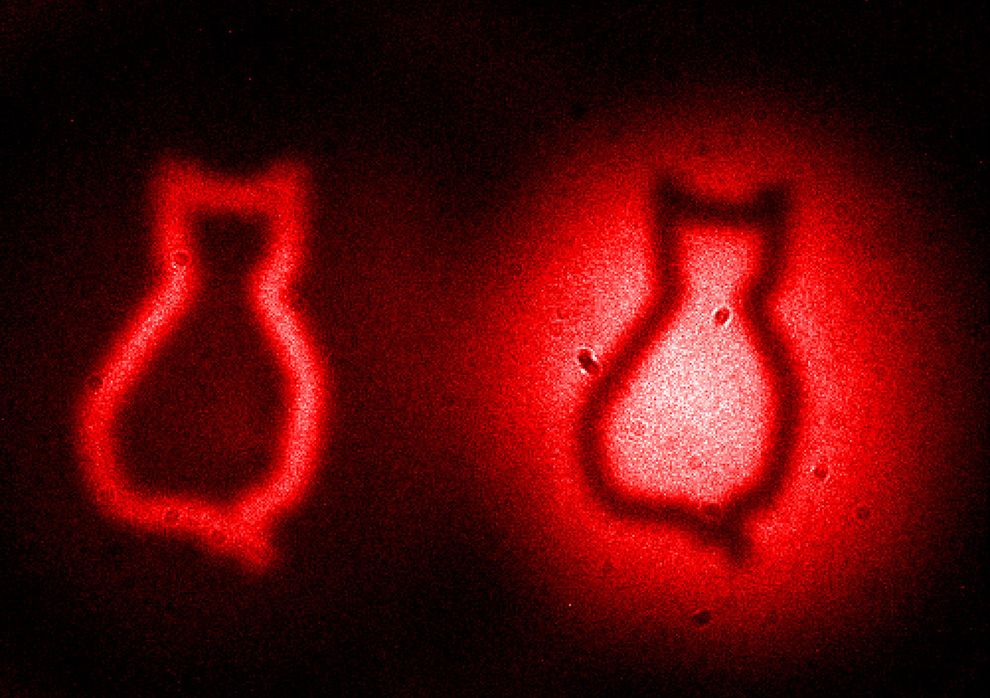
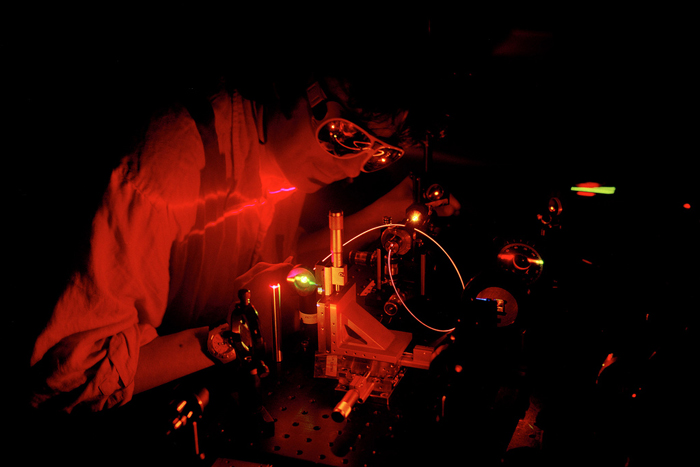
“This is a long-standing, really neat experimental idea,” says Paul Lett, of the National Institute of Standards and Technology in GaithersburgLett, “Now we have to see whether or not it will lead to something practical, or will remain just a clever demonstration of quantum mechanics.”(CreditBarreto-Lemos, Vergano)
via nationalgeographic
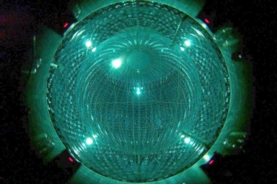
The Borexino neutrino detector uses a sphere filled with liquid scintillator that emits light when excited. This inner vessel is surrounded by layers of shielding and by about 2,000 photomultiplier tubes to detect the light flashes.(Credit: Borexino Collaboration)
via scientificamerican
MOLECULAR MODEL In the molecular model, quark-antiquark pairs form two color-neutral mesons that become weakly linked as a molecule.DIQUARK MODEL The particles form quark-quark and antiquark-antiquark pairs, which are forced to combine to balance their color charges.
via simonsfoundation
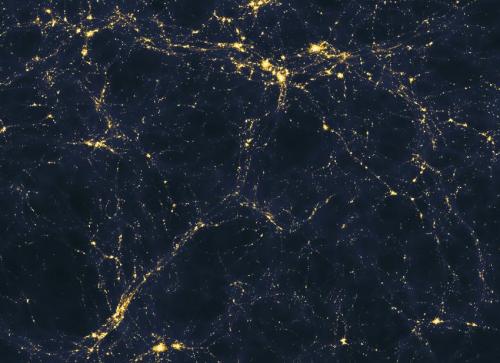
A computer model shows one scenario for how light is spread through the early universe on vast scales (more than 50 million light years across). Astronomers will soon know whether or not these kinds of computer models give an accurate portrayal of light in the real cosmos. (Credit: Andrew Pontzen/Fabio Governato)
via phys
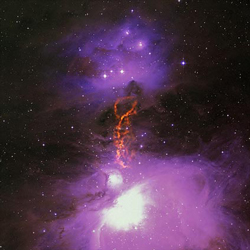
Radio/optical composite of the Orion Molecular Cloud Complex showing the OMC-2/3 star-forming filament. GBT data is shown in orange. Uncommonly large dust grains there may kick-start planet formation. (Credit: S. Schnee, et al.; B. Saxton, B. Kent (NRAO/AUI/NSF)
via rdmag
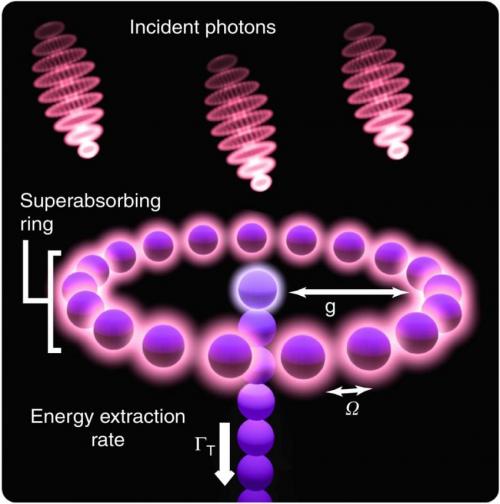
In one potential method to realize superabsorption, a superabsorbing ring absorbs incident photons, giving rise to excitons. (Credit: Higgins, et al.)
via phys.org
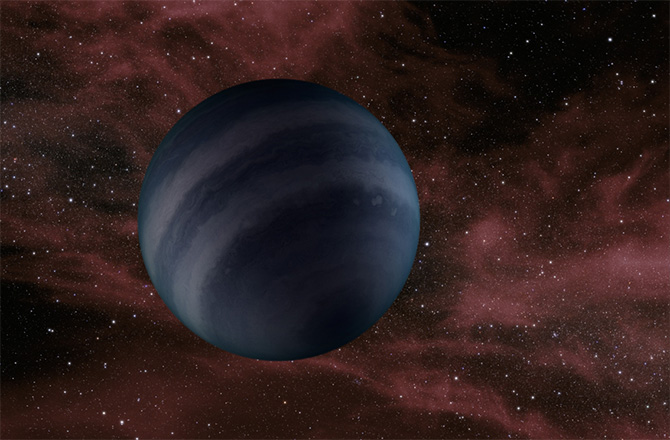
Finding clouds of water floating in the atmosphere of an alien world is a significant find. Now, astronomers have reported preliminary findings that water clouds have been detected in the atmosphere of a brown dwarf, a mere 7.3 light-years from Earth. (Credit: NASA, JPL-Caltech, O’neil)
via discovery
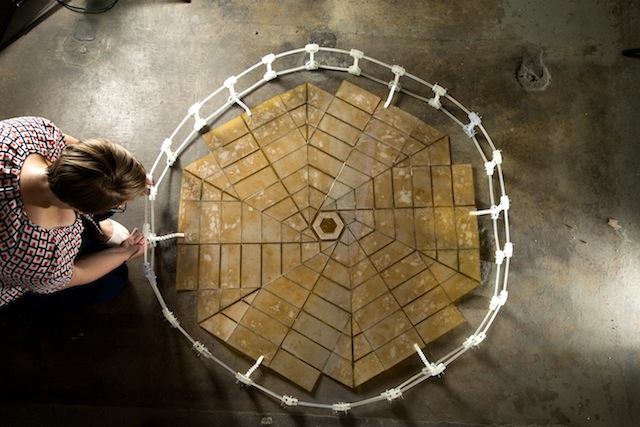
NASA mechanical engineer, Brian Trease, worked with Brigham Young University doctoral student Shannon Zirbel, and collaborated with origami expert Robert Lang, who has long been active in promoting it in science, and BYU professor Larry Howel, to combine different traditional folds for an 82-foot solar array that whirls down to 8.9 feet. (Credit: BYU, Meier)
via hyperallergic
“If we find a noise we can’t get rid of, we might be detecting something fundamental about nature – a noise that is intrinsic to space-time,” said Physicist Aaron Choi, the holometer project’s lead scientist. (Credit: NASA, ESA)
via interactions
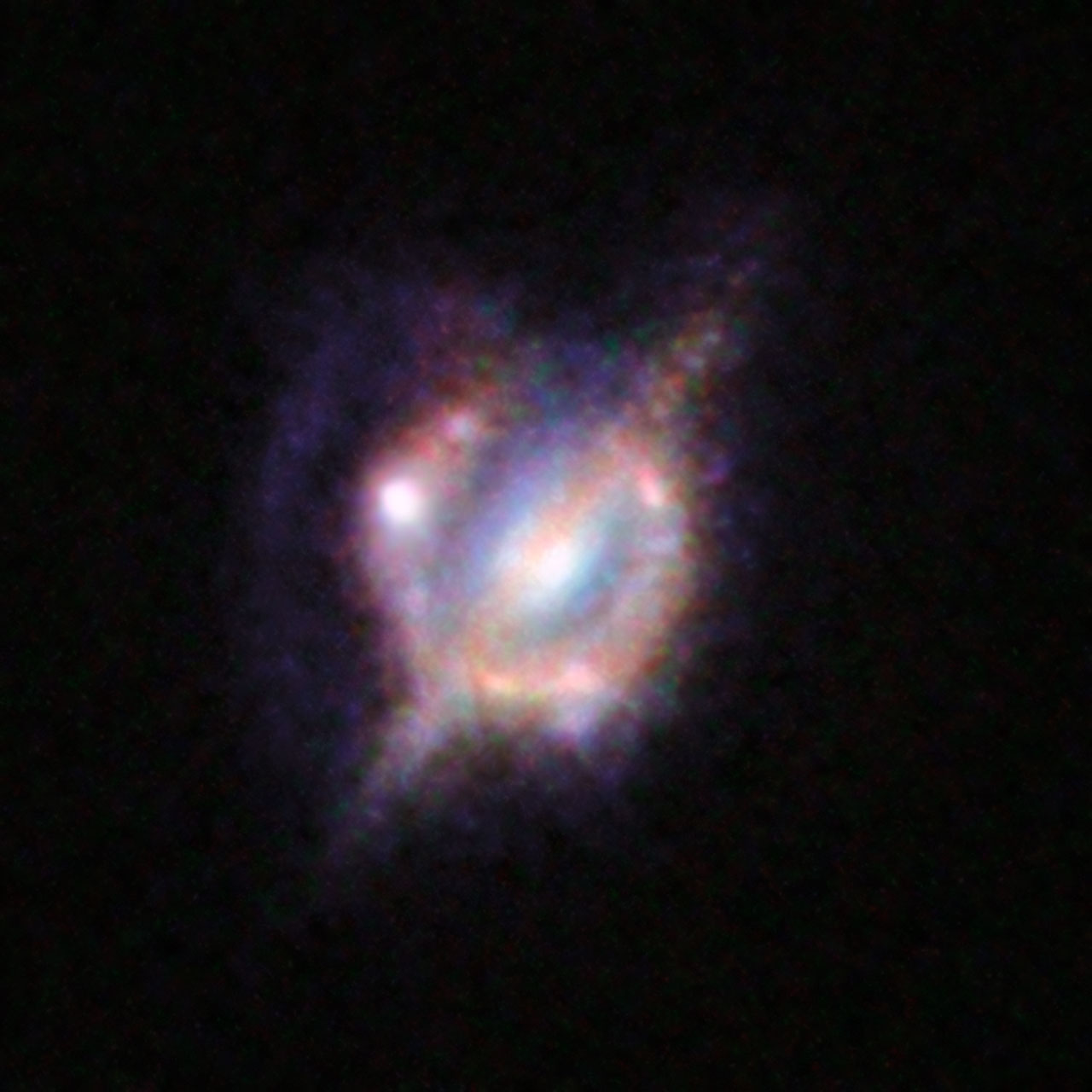
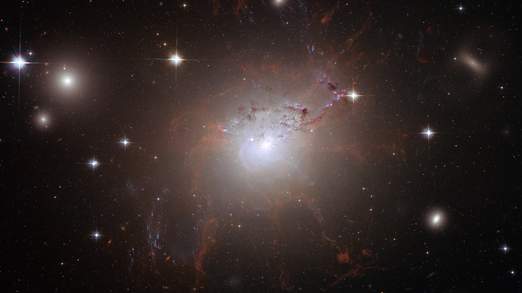
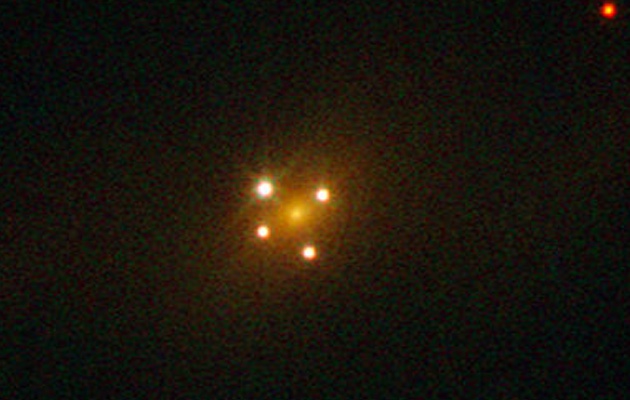
In this picture, which combines views from Hubble and the Keck-II telescope on Hawaii (using adaptive optics), you can see a foreground galaxy that is acting as the gravitational lens. The galaxy resembles how our home galaxy, the Milky Way, would appear if seen edge-on. But around this galaxy there is an almost complete ring — the smeared out image of a star-forming galaxy merger far beyond. (Credit: NASA, ESA)
via spacetelescope
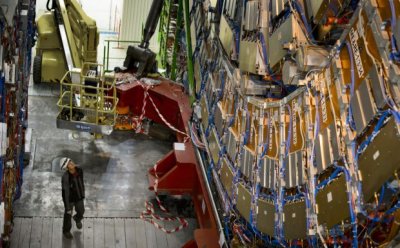
With a circumference of 52km, the “Higgs Factory” would be almost twice the size of Europe’s equivalent, and significantly more powerful. The Chinese said it is due to be completed by 2028. Image above is the Large Hadron Collider. (Credit: Getty)
via cityam
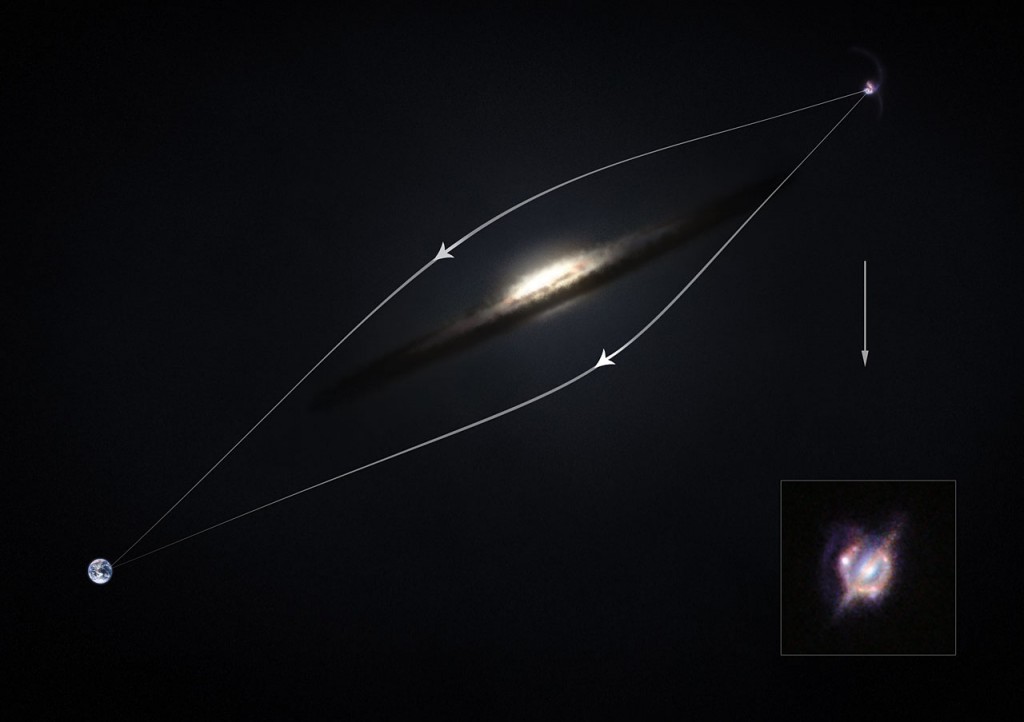
This diagram shows how the effect of gravitational lensing around a normal galaxy focuses the light coming from a very distant star-forming galaxy merger to created a distorted, but brighter view. (Credit: ESA/ESO/M. Kornmesser)
via washingtonpost
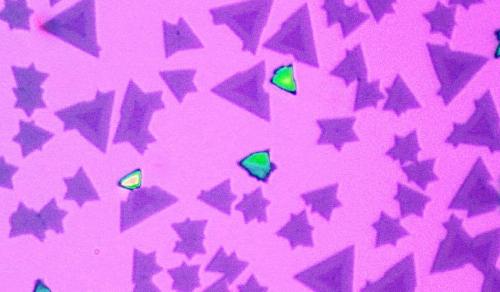
As seen under an optical microscope, the heterostructures have a triangular shape. The two different monolayer semiconductors can be recognized through their different colors. (Credit: U of Washington)
via phys.org
“It’s the most distant object for which the spin has been directly measured. The universe is about 13.7 billion years old, so this is going significantly back towards when the epoch of furious galaxy formation was happening,” says, Astrophysicist, Mark Reynolds.
via motherboard
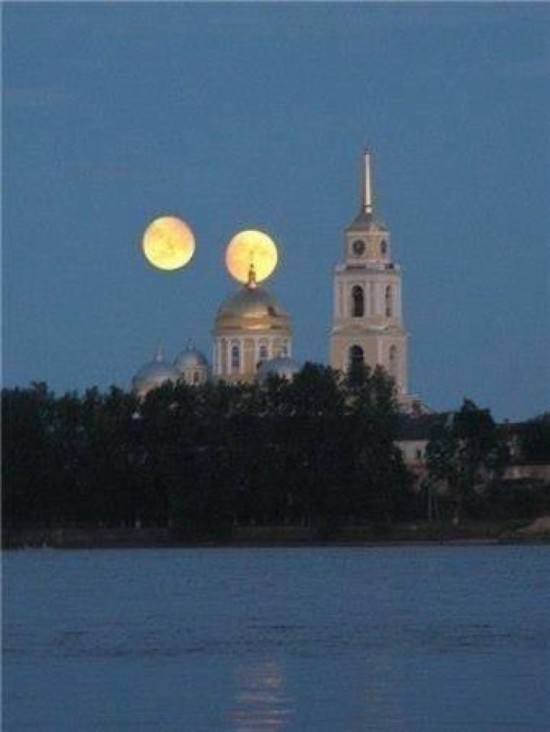
This image sometimes circulates on Facebook, with the claim that Mars will appear as big and bright as a full moon on August 27, 2014. It’s a hoax. Don’t believe it. Mars never appears as large as a full moon in Earth’s sky. (Credit: Unknown)
via bnlive
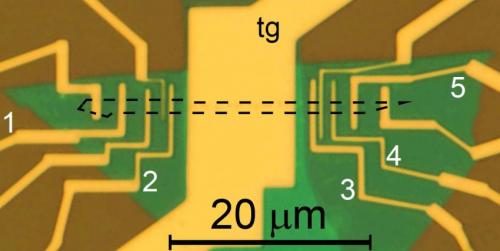
A optical microscope image of the spintronic device (top view). The top electrode (tg) and cobalt electrodes (1 to 5) are yellow. The boron nitride layers (in green) encapsulate the graphene flake, which is outlined by the dotted line. Credit: Fundamental Research on Matter (Credit: FOM)
via phys.org
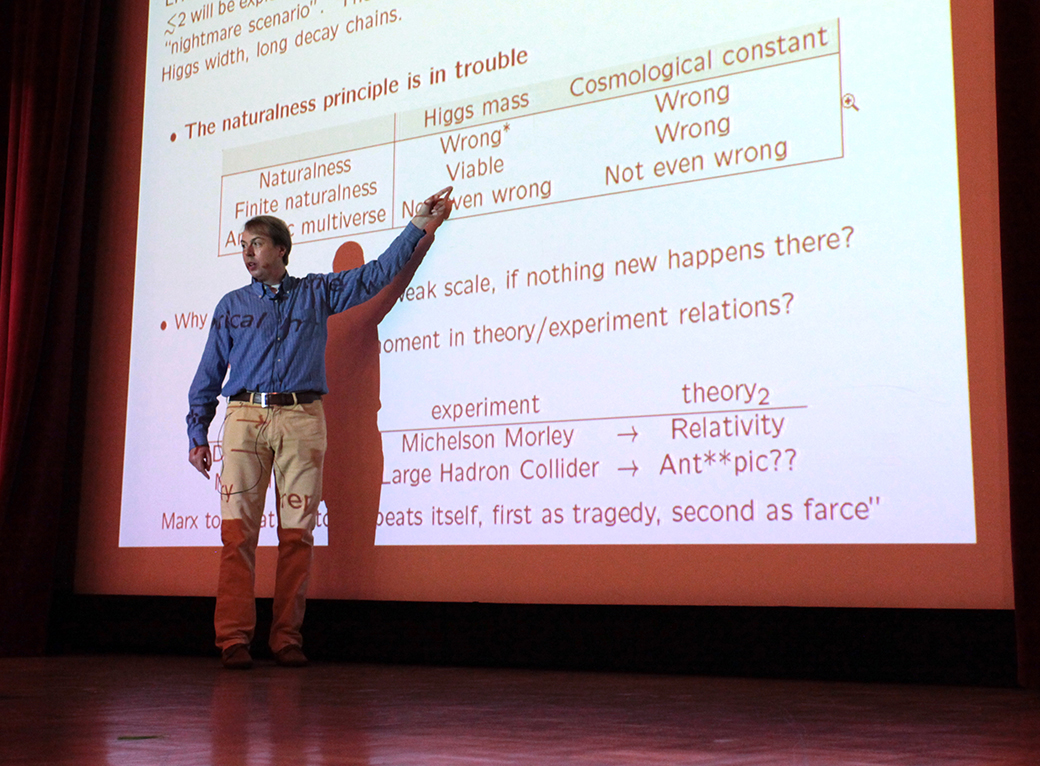
Alessandro Strumia of the University of Pisa, pictured speaking at a conference in 2013, has co-developed a scale-symmetric theory of particle physics called “agravity.” (Credit: Thomas Lin/Quanta Magazine)
via simonfoundation
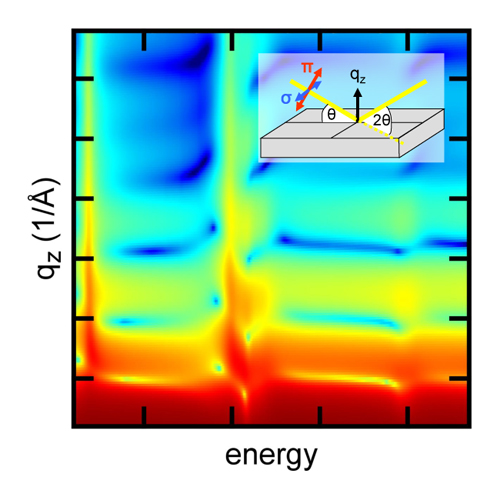
X-ray interference pattern measured while studying complex nano-layer structures. The sketch inserted illustrates the path of the x-ray beam relative to the surface of the sample. (Credit: Sebastian Macke)
via rdmag
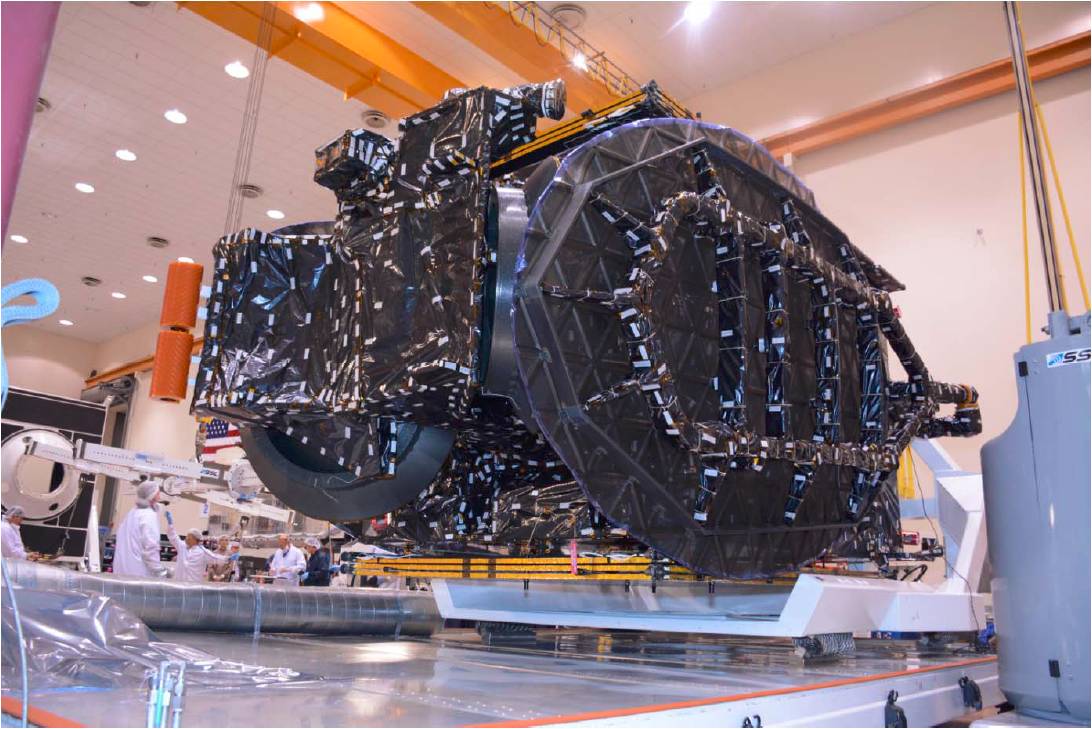
Three weeks after launching the AsiaSat-8 communications satellite, SpaceX is primed to deliver its sibling, AsiaSat-6, into geostationary transfer orbit at an altitude of 22,236 miles (35,786 km) on Wednesday, 27 August. (Credit: AsiaSat)
via americaspace
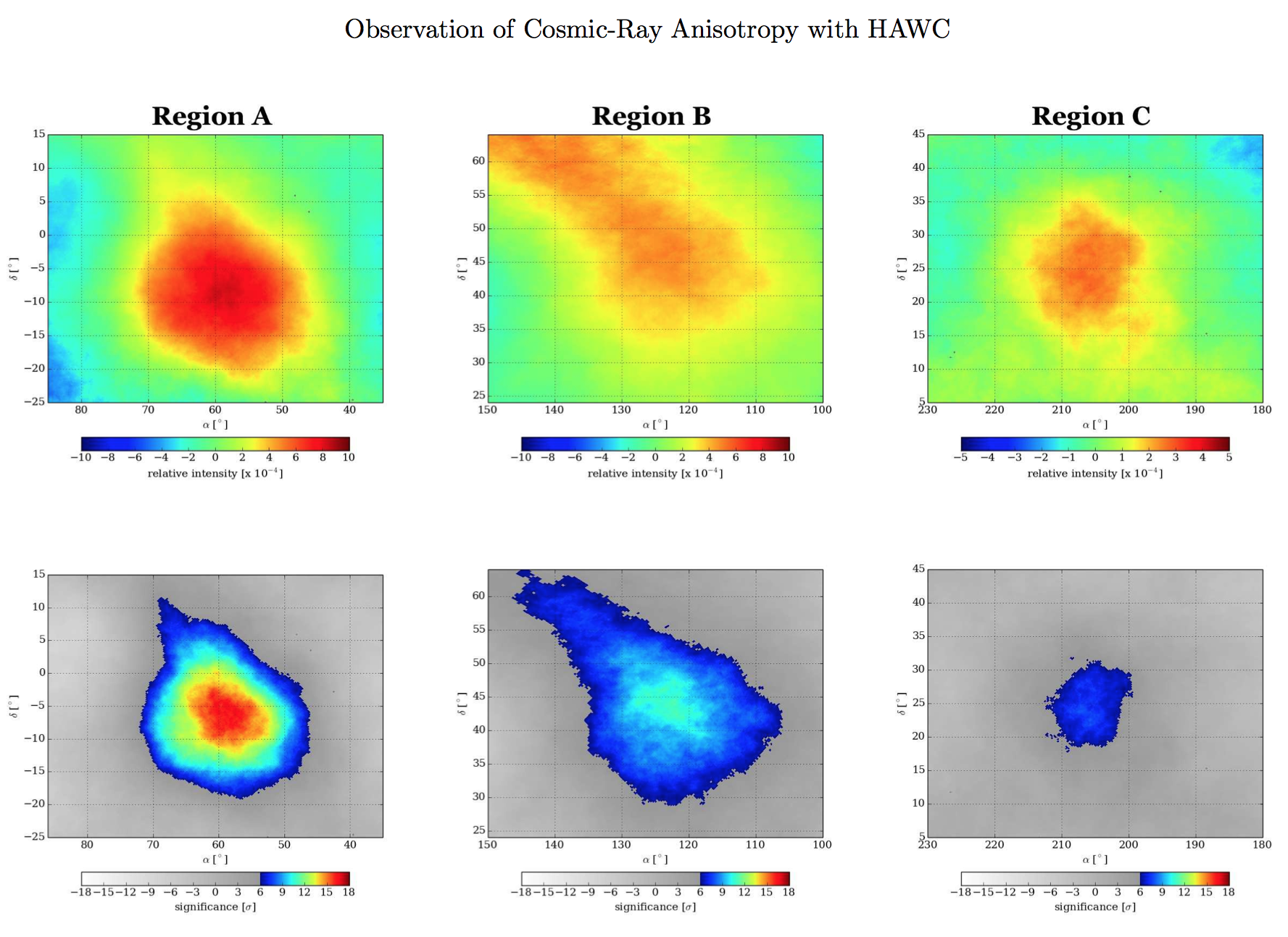
Relative intensity (top row) and pre-trial significance (bottom row) of the cosmic-ray flux in the vicinity of Region A (left), Region B (center), and Region C (right). (Credit: Abeysekara et al)
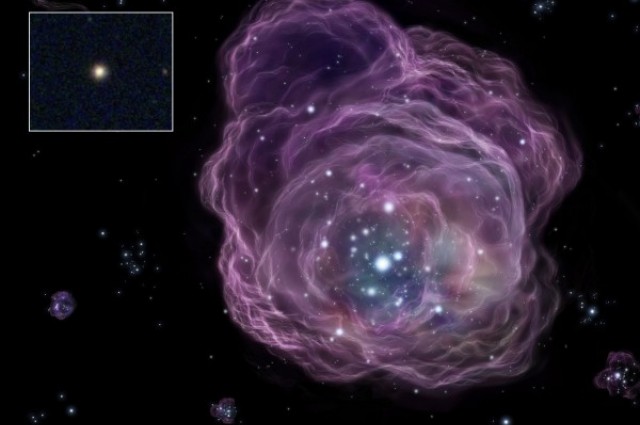
The very first stars in the Universe might have been hundreds of times more massive than the Sun. (Credit: National Astronomical Observatory of Japan)
via scientificamerican
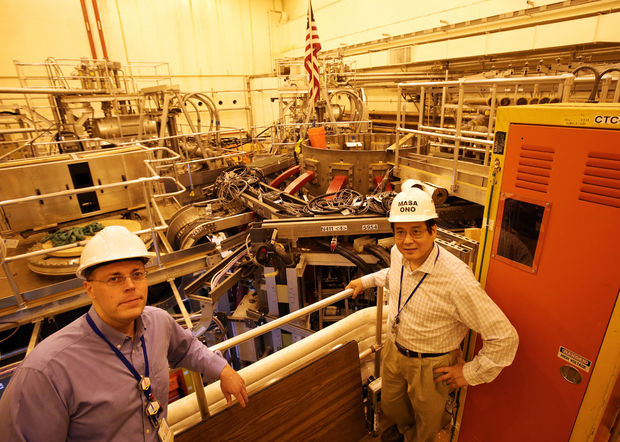
Jonathan Menard, a principal research physicist and program director for the National Spherical Torus Experiment (NSTX), and Masa Ono, a principal research physicist and project director of the NSTX, stand in front of the experiment during a tour of the facility. The device has been shut down since 2011 while it undergoes a $94 million upgrade that will make it the most powerful device of its kind in the world. (Credit NSTX)
via nj.com
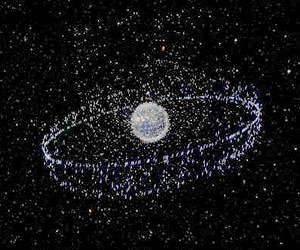
The agency intends to deploy the spacecraft, codename Liquidator, to clear up the geostationary orbit over the equator, which is 36 thousand kilometers above sea level. (Credit: Roscosmos)
via spacemart
“When you start to make electronics smaller and denser, not only are you making much more heat in the same amount of volume, but it’s much harder for the heat to flow outward,” says Peter Nalbach, a theoretical physicist at the University of Hamburg, Germany. (Credit: Mehau Kulyk/Getty)
via popularmechanics
Researchers hope to create a massive online “brain” that can help all robots navigate and even understand the world around them. “The purpose,” says Saxena, who dreamed it all up, “is to build a very good knowledge graph—or a knowledge base—for robots to use. (Credit: Thinkstock, Hernandez )
via wired
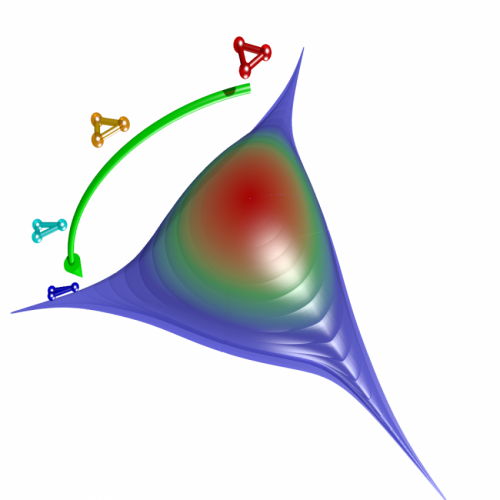
Probability density of an Efimov trimer state at different three-body geometries that are characterized by the polar angle — indicated by the trimer legends. The key feature in the probability density is that unlike ordinary molecular binding that mostly has a single geometry, the Efimov trimer covers have a broad range of geometries. The atoms in such states behave more like in a fluid drop. (Credit: Yujun Wang, Kansas State University)
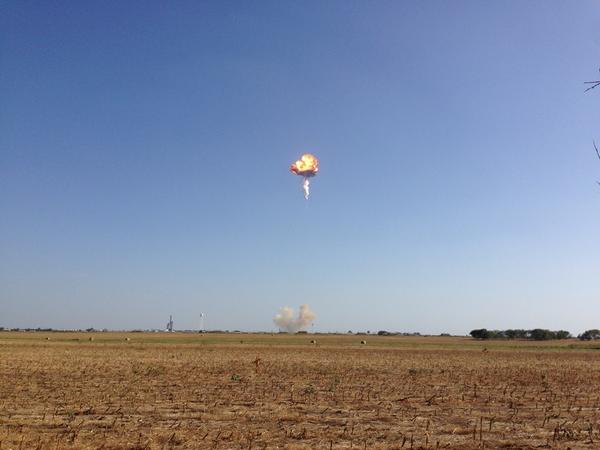
In a conversation with Mashable via Twitter, McGregor resident @EthansMommy17, who tweeted the above image of the explosion, claimed cows had been killed by debris from the explosion. She was unable to provide images or other confirmation of the affected livestock, however. (Credit: @EthansMommy17)
via mashable
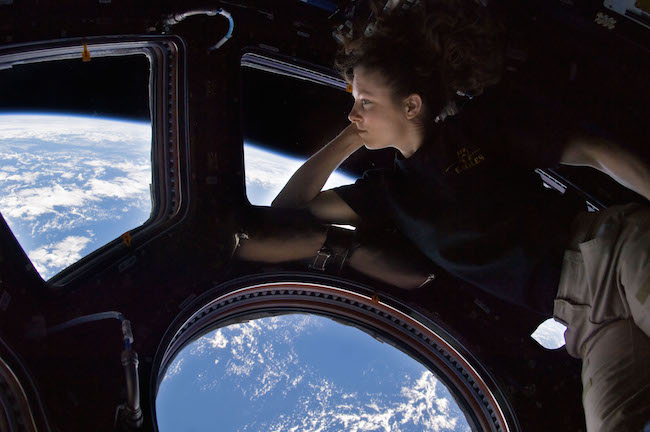
The space specialist said that the ISS surface was polluted very strongly due to operation of space engines and other factors. “We are conducting special works to polish somehow and put illuminators in order. This is particularly needed during long space flights,” Solovyev added. (Credit: Tracy Caldwell Dyson)
via forbes
Although they are gigantic, ranging from one to a few hundred lightyears in size, the physical process that causes these nebulae to emit their own light (rather than merely reflect light from nearby stars) occurs at the atomic level. It is the same process that makes familiar florescent lights shine here on Earth. (Credit: NASA, Prozesky)
via mg
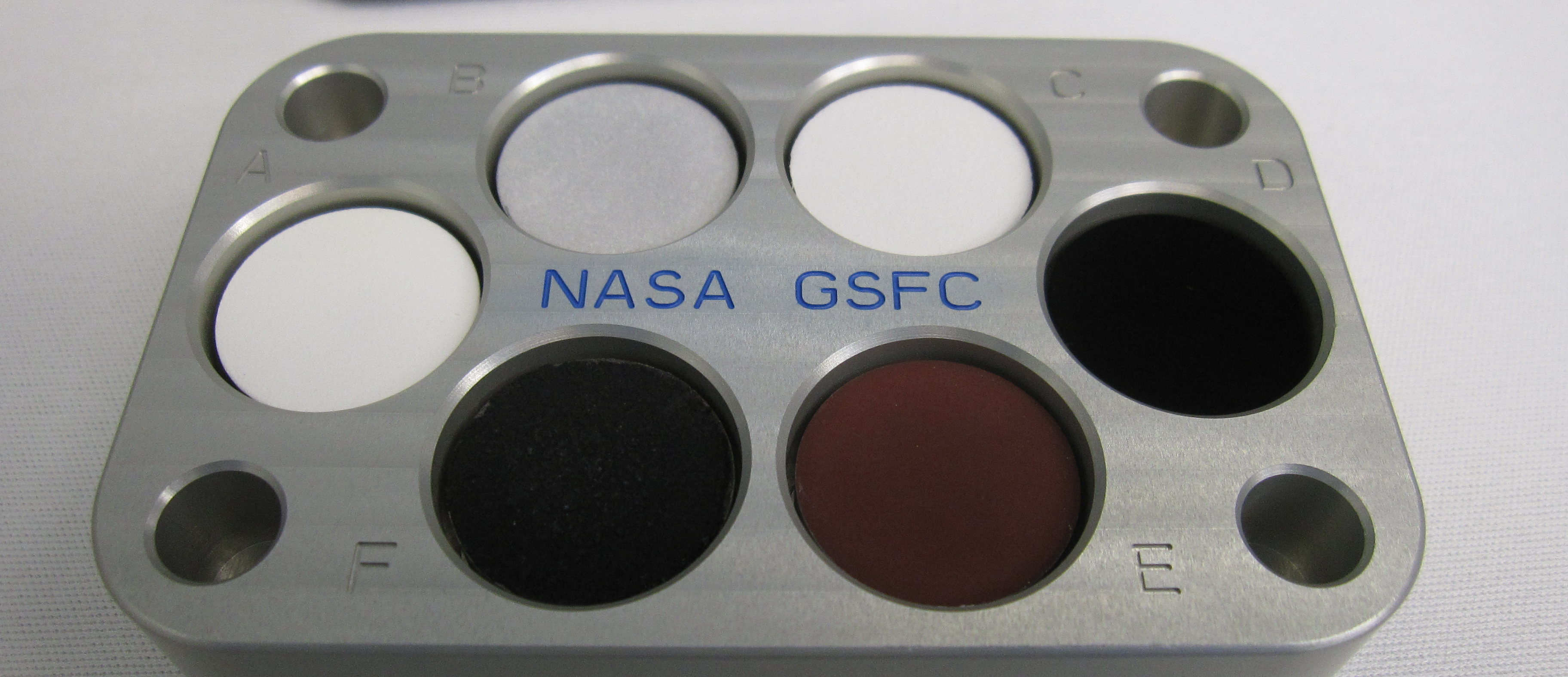
On July 29th, the the Automated Transfer Vehicle launched carrying samples of the stuff to the ISS, where it docked on August 12th. There, astronauts will conduct tests on the paint, which absorbs 99.5 percent of visible light (and 99.8 percent of longer wavelength light). (Credit: NASA, Campbell-Dollaghan)
via gizmodo
Google Inc. has conducted more than 300,000 miles of driverless car testing with vehicles. They navigate by collecting real-time sensor data and comparing it to pre-loaded maps that specify exact locations for roads and signs, while adapting to obstacles such as people and cars. (Credit: Justin Sullivan/Getty Images, Kearns)
via bloomberg
A patterned 3-D grid of tiny whirlpools, called quantum vortices, populate a nanoscale droplet of superfluid helium. Researchers found that in a micron-sized droplet, the density of vortices was 100,000 times greater than in any previous experiment on superfluids. An artistic rendering of a wheel-shaped droplet can be seen in the distance. (Credit: SLAC National Accelerator Laboratory)
via phys
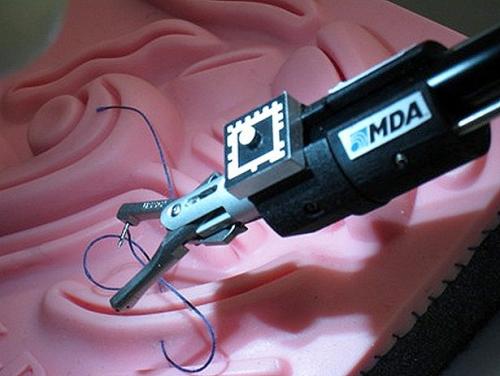
The suturing tool demonstrates image-guided anastomosis, which means the connecting of parts such as vessels. The target on the top of the tool is used to lead the tool’s tip. This is the same technology used to track the robotic systems on the space shuttle and the International Space Station. (Credit: MDA and CIGITI)
via phys
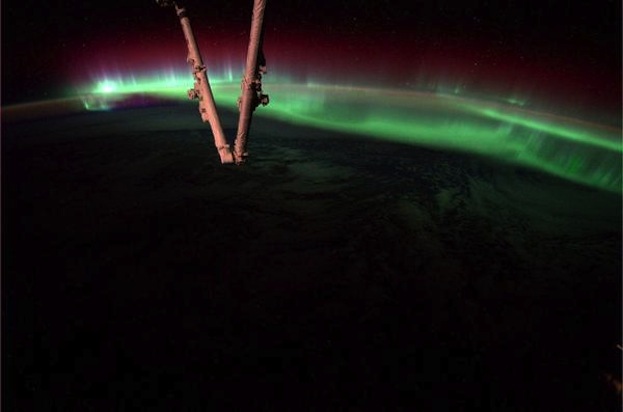
An aurora dances in the atmosphere on Aug. 20, 2014, as the International Space Station flew over North America. This image was captured by astronaut Reid Wiseman from his vantage point on the ISS. (Credit: NASA/Handout/QMI Agency)
via cbc
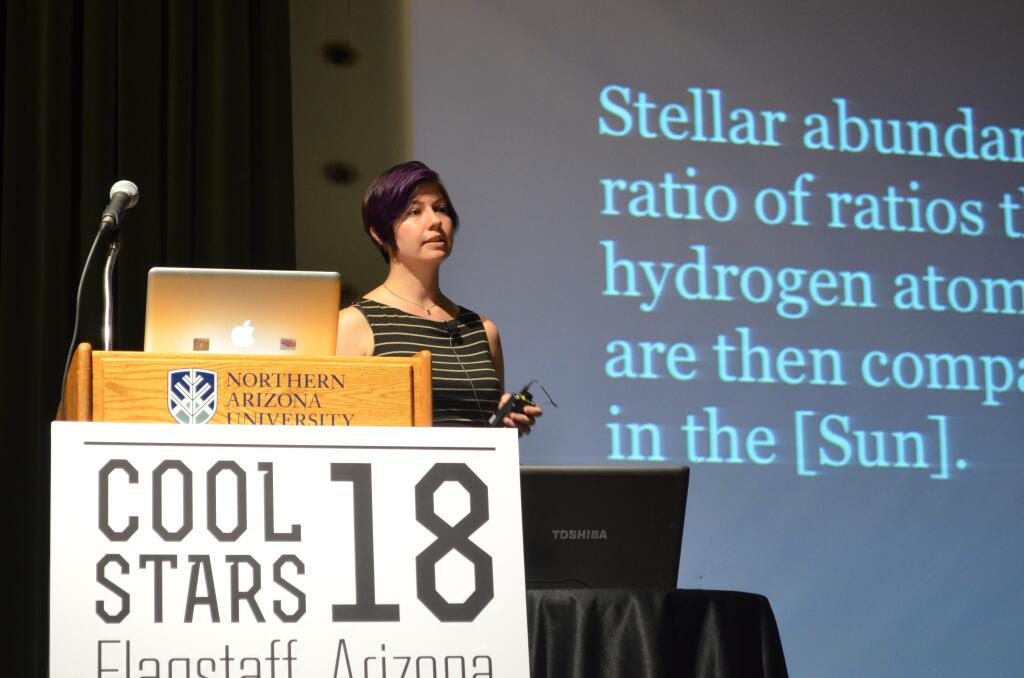
Natalie Hinkel gives a plenary talk at the Cool Stars 18 meeting in Flagstaff, Arizona, about her paper on the Hypatia Catalog. (Credit: Natalie Hinkel)
via asunews
The US Department of Energy has cancelled visits by Russian scientists to key US labs, including the Los Alamos National Laboratory. (Credit:NC-ND/Los Alamos National Laboratory)
via physicsworld
A star in a galaxy passes by a black hole closely enough to be destroyed once every 10,000 years. It is possible to detect the death of a star in a fairly distant galaxyas the destruction of a star generates a bright X-ray flare; it is only necessary to distinguish such a flare from other types of X-ray radiation. Because flares occur in a variety of astrophysical processes, the task of finding stars destroyed by black holes is quite complicated. (Credit: Sergei Sazonov)
via mipt
The recent finding of an intermediate-mass black hole provides evidence that could support some theories of how supermassive black holes form. (Credit: ESO/M. Kornmesser)
via discovery
Some of the best evidence for parallel worlds actually arrives courtesy of an enigmatic oddity within deep-space, careening toward the Milky Way at an incredible 200,000 miles per hour. Though it’s more than 2 million light years away, the Andromeda galaxy, appears to engage in anomalous behavior which suggests a strange gravitational phenomenon. Specifically, gravity that could be draining from another universe, as yet invisible to us, could be the impetus behind such anomalous phenomena. (Credit: Micah Hanks)
via mysteriousuniverse
Having a single point in contact with the ground lets a ballerina spin. In the same way, a quantum state is dynamic because it can turn about a point thanks to quantum uncertainty, say CQT and Oxford researchers. (Credit: Michael Garner, courtesy English National Ballet)
via quantumlah
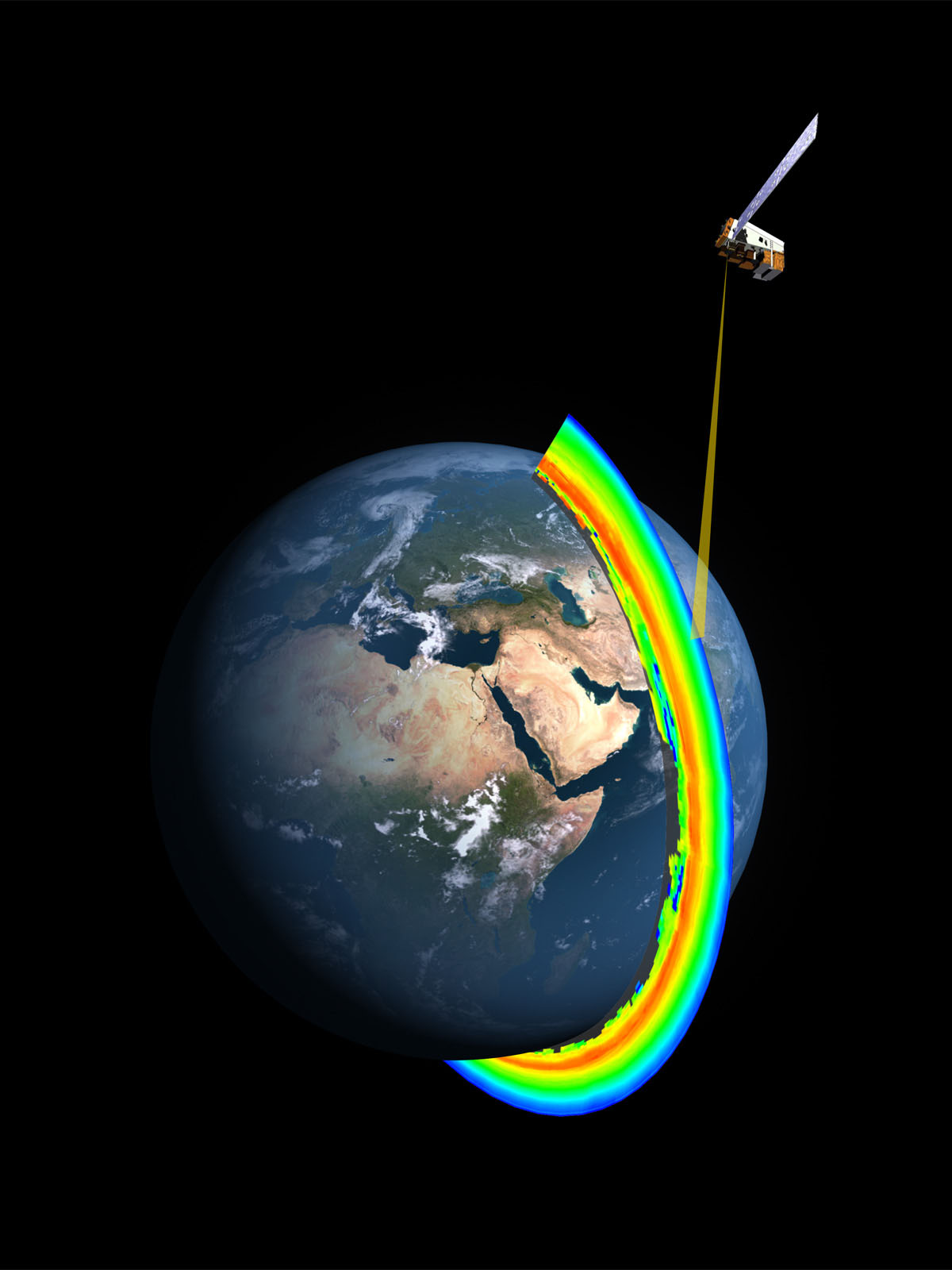
A cross-section of the Earth’s ozone layer as measured by the limb profiler, part of the Ozone Mapper Profiler Suite that’s aboard the Suomi NPP satellite. (Credit: NASA/NOAA)
via ZeeNews
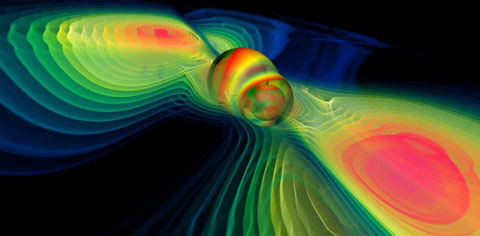
A simulation of two colliding black holes. Colors reflect the variation of gravitational waves. (Credit: Werner Benger/NASA Blueshift)
via physicscentral