————-
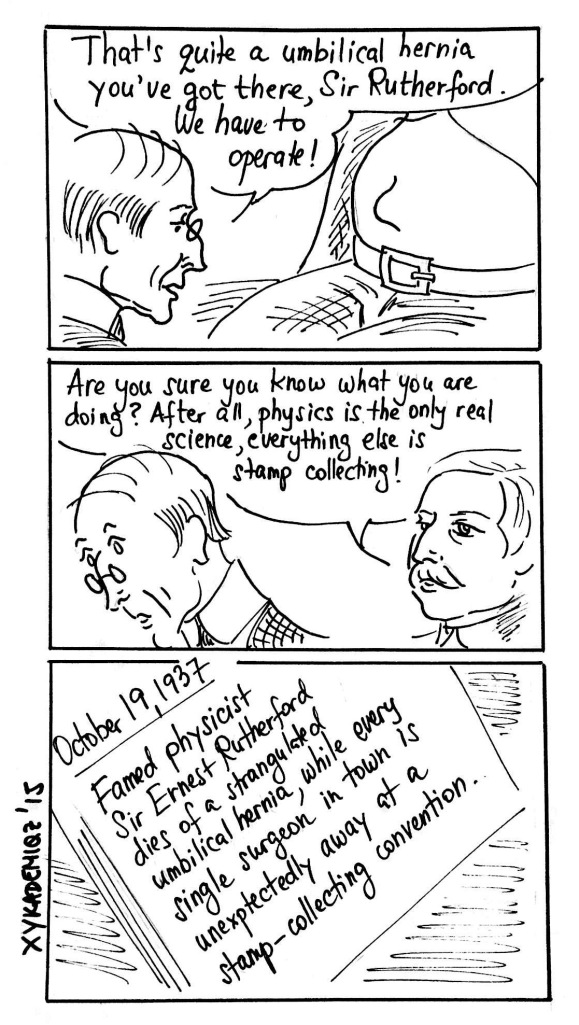
[1] The stamp-collecting snub is among Rutherford’s quotes
[2] Rutherford really did die of complications after a delayed umbilical hernia surgery.
Investigations related to time, the universe, and STEAM
————-
[1] The stamp-collecting snub is among Rutherford’s quotes
[2] Rutherford really did die of complications after a delayed umbilical hernia surgery.


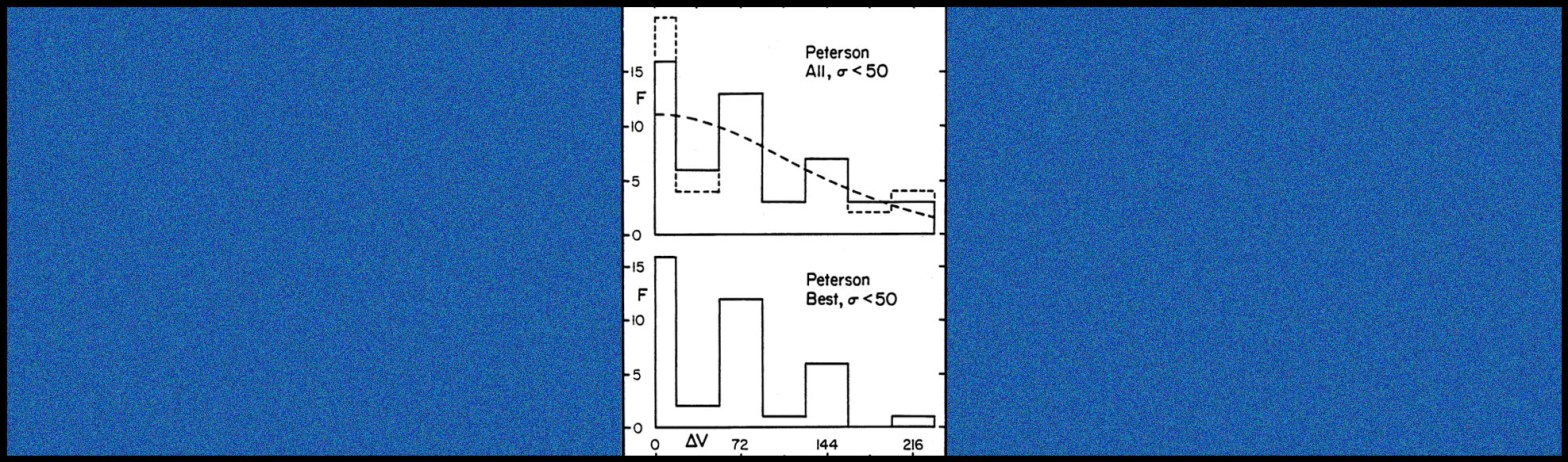
In the early 1970s I began three major observational programs utilizing the 90-inch Steward Observatory telescope and image tube spectrograph. The first program was the study of the redshift utilizing the Coma cluster and related galaxy clusters. This led into my third area involving large scale structure. The second program involved a comprehensive study of a new catalog of double galaxies published by Karachentsev. The timing of beginning this general study corresponded perfectly with my discovery of redshift quantization and provided a perfect sample to test quantization and examine its properties.
The Karachentsev catalog contains 603 northern hemisphere pairs brighter than magnitude 14.5, including 324 with separations less than 80 arc seconds which allowed both components to be observed together spectroscopically using an oriented slit. Differential redshifts are much more accurate than forming differences from individual values. I collected about 500 spectra for the close pairs and a few wider…
View original post 904 more words

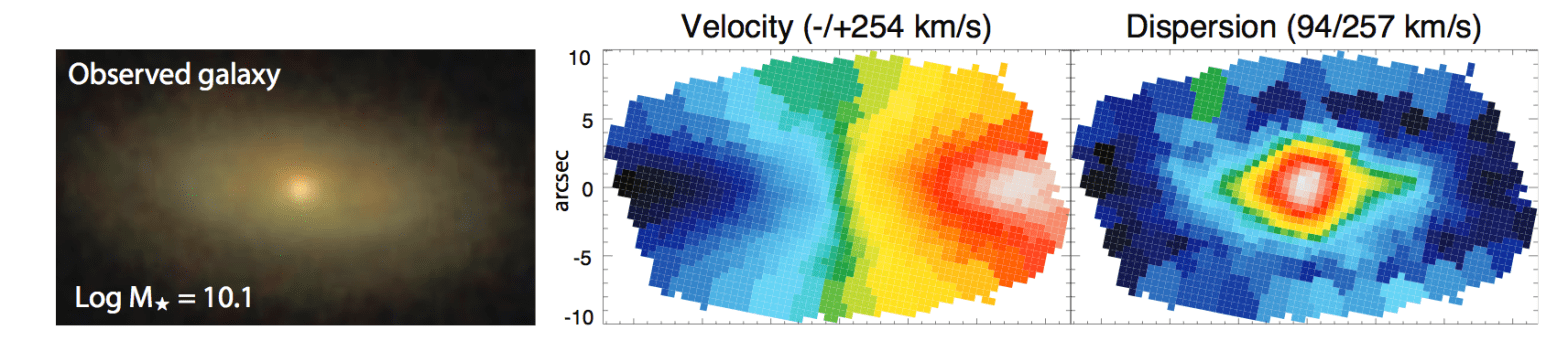
Some of the most beautiful pictures taken by telescopes are those of galaxies. Containing billions of stars, they come in many shapes and sizes. We can study the stellar structures in galaxies from telescope images to learn more about the ways that galaxies form and evolve. We also can look at gas and dust features in galaxies, and the role that these play in the formation of new stars.
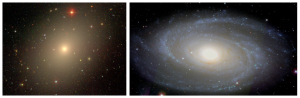 Elliptical galaxy NGC 4636 (left) and spiral galaxy M81 (right), as seen by the Sloan Telescope. The telescope captures the light of the stars, and in M81 we can also see some dust in the spiral arms. Both galaxies reside in large, invisible, dark matter haloes.
Yet, the largest and most massive component of a galaxy, the dark matter halo, is truly invisible. Dark matter is not made out of ‘normal material’ or baryons, which are the building blocks of stars…
View original post 732 more words

Have you ever wondered about quantum mechanics and spooky interaction at a distance? Can changing a particle in Tucson affect an entangled one on Mars?
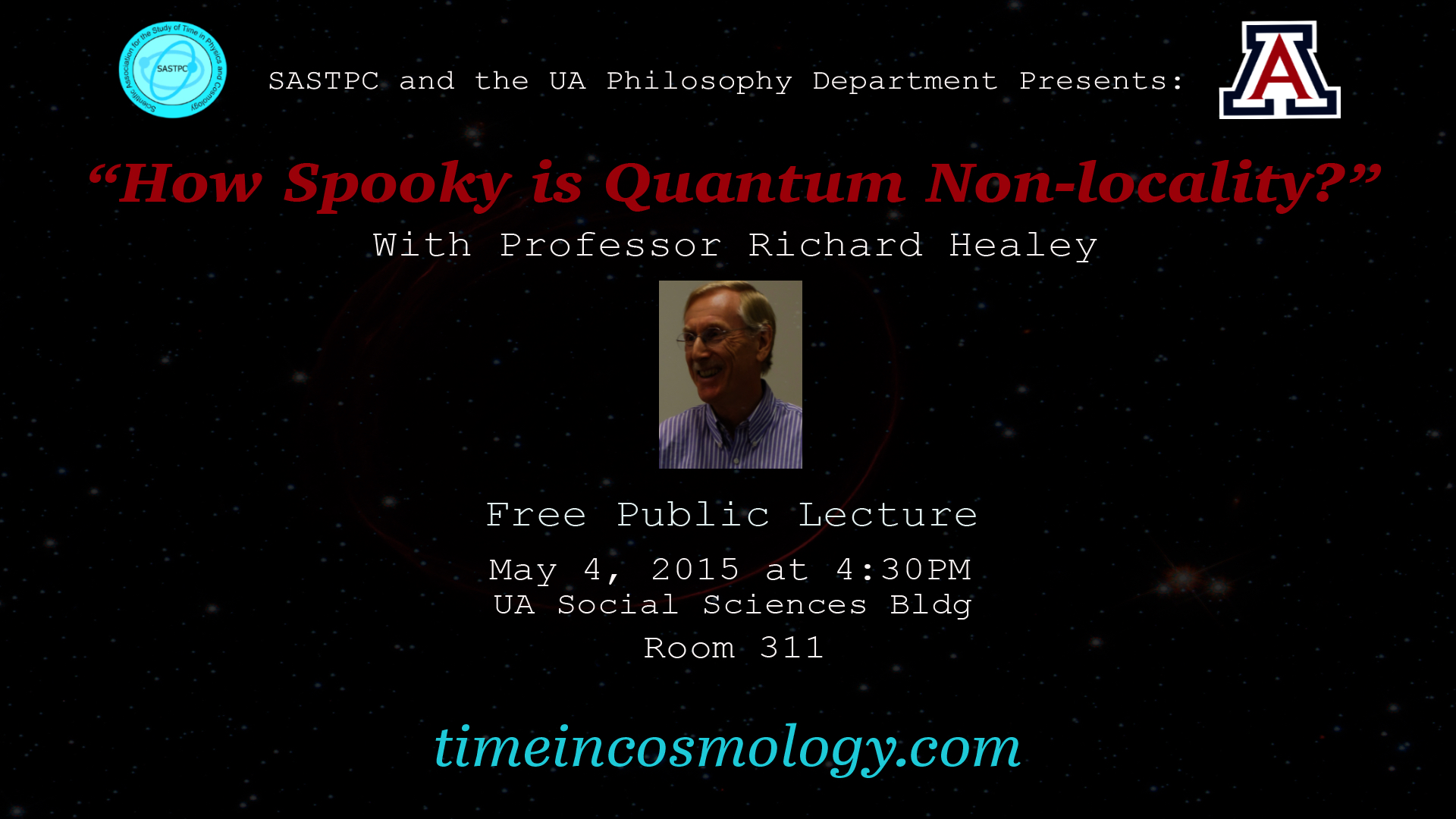
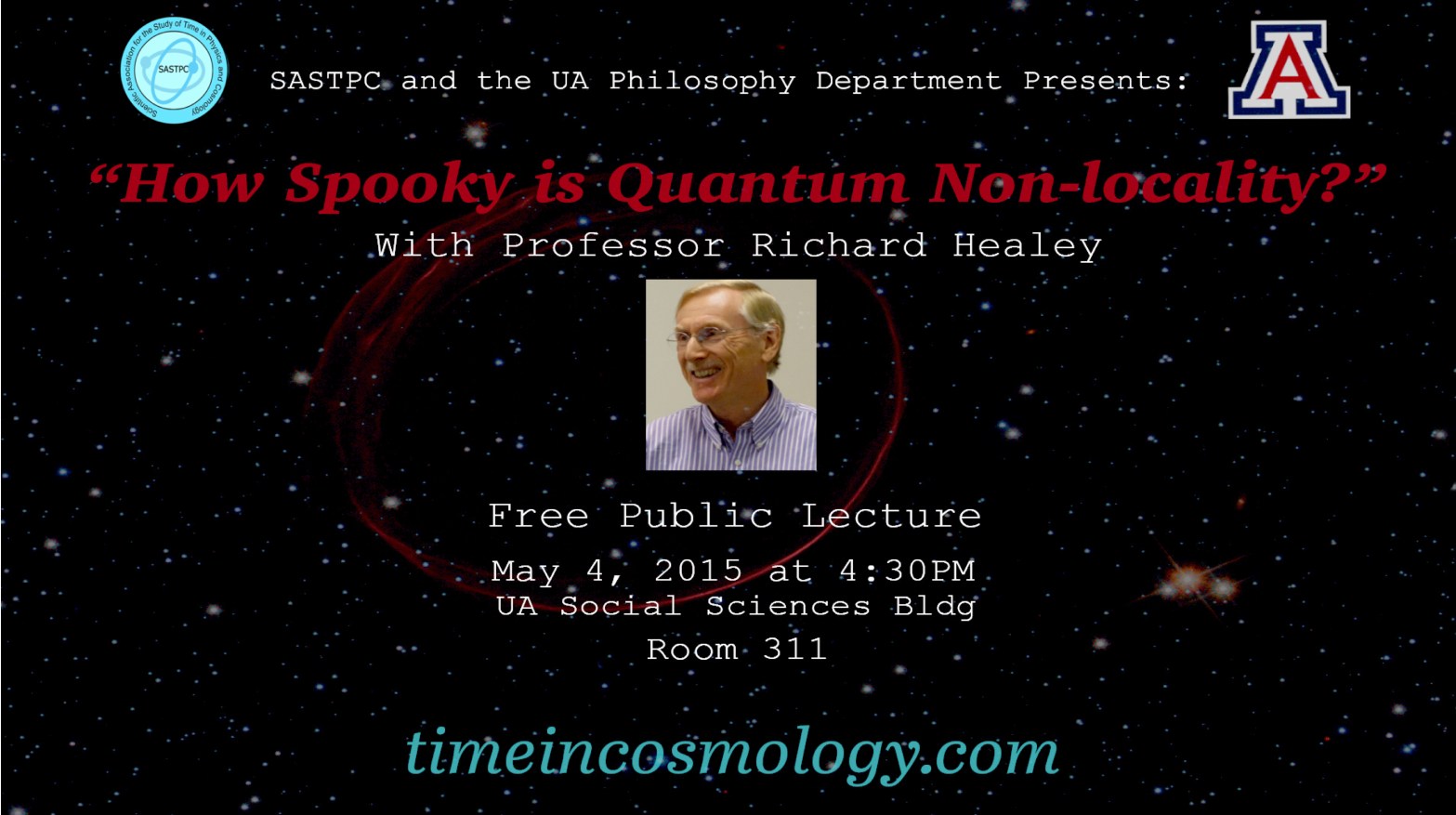
The Scientific Association for the Study of Time in Physics and Cosmology (SASTPC) in association with the University of Arizona Philosophy Department cordially invite you to attend our inaugural Time in Cosmology Speaker Series: “How spooky is quantum non-locality?” presented by Director of Graduate Studies, Philosophy Professor Richard Healey.
Date: May 4, 2015
Time: 4:30 PM
Location: University of Arizona, Social Sciences Building, Room 311
Recorded Live on Ustream and posted onto YouTube: https://youtu.be/sJe2eJrS0Dc
Abstract
Quantum entanglement is popularly believed to give rise to spooky action at a distance, refuting Einstein. I’ll say why I think this popular belief is false. But my main goal is to explain how the issue arises and why experts continue to disagree about it. Whoever turns out to be right, Einstein’s most cited paper provoked others to a deeper examination. This has revealed something surprising about the world. In a second quantum revolution we are beginning to reap the benefits of this discovery.

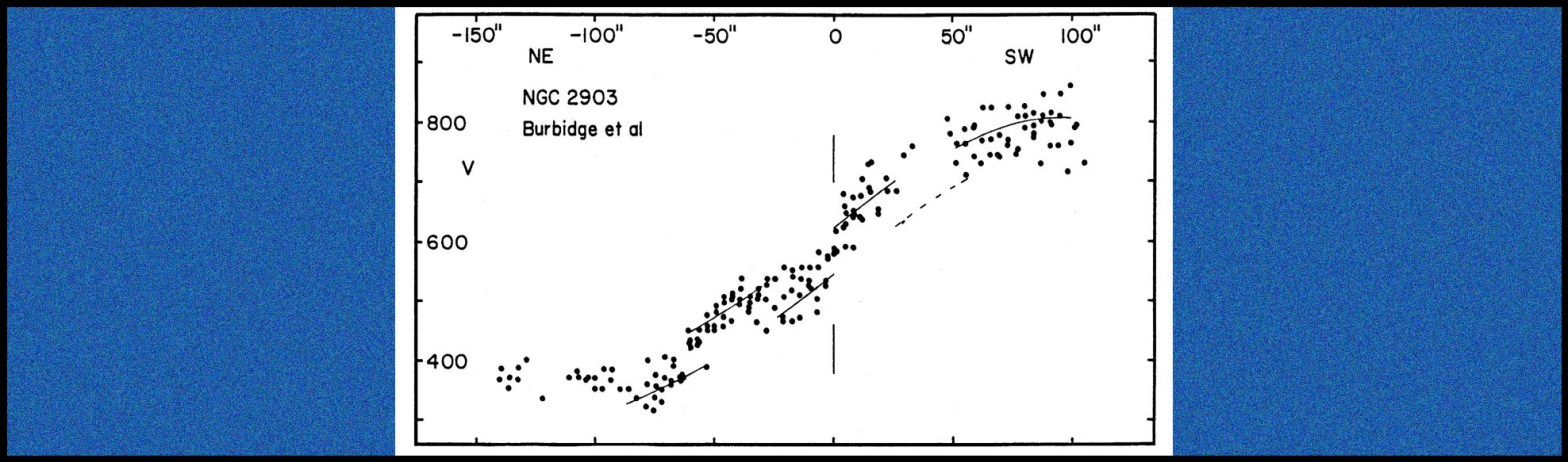
I have discussed the structure of redshift-magnitude bands and the substructure of crossband regions within the bands in prior topics. As redshift quality continued to improve a still finer structure emerged. The redshift itself appeared to assume a periodic quantized pattern. The discovery diagram in the upper left frame of figure 4 in the ASP paper (my book figure 1.41) shows that the upper Coma band breaks into apparently quantized steps. A further improved and extended sample in figure 2.1 of my book includes a power spectrum inset showing a quantized periodicity near 222 km/s at power 10. By 1975 a more fundamental period at 1/3 of the longer period (72.45 km/s) was shown to permeate the entire cluster. Section 2.2 of my book provides further details related to the discovery period. Before going further I should clarify what the periodic pattern seemed to imply. If the redshift of a…
View original post 915 more words