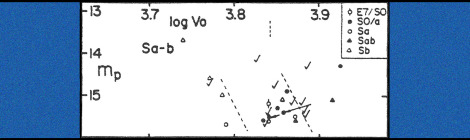
Topic001 indicated that galaxy morphology becomes progressively later in type down the redshift-magnitude band slope toward higher redshift. Topic002 introduced crossband structures within redshift-magnitude bands and indicated that such structures appear to grow or evolve toward lower redshift. The structures appear to be regions where morphological evolution in individual galaxies may actually be investigated. The subject is introduced in section 1.1.5 of my book but could not be included within the limited space of the ASP article available within this blog. Since my book is now available (see Post002) I will continue the ASP references, but refer to the book as required to describe and illustrate findings. I added a figure leading the topical introduction in the main blog but discussion and figures in the book are needed for many topics.
To simplify discussing the QTC concept of evolution I will state the concept before presenting the evidence, which is…
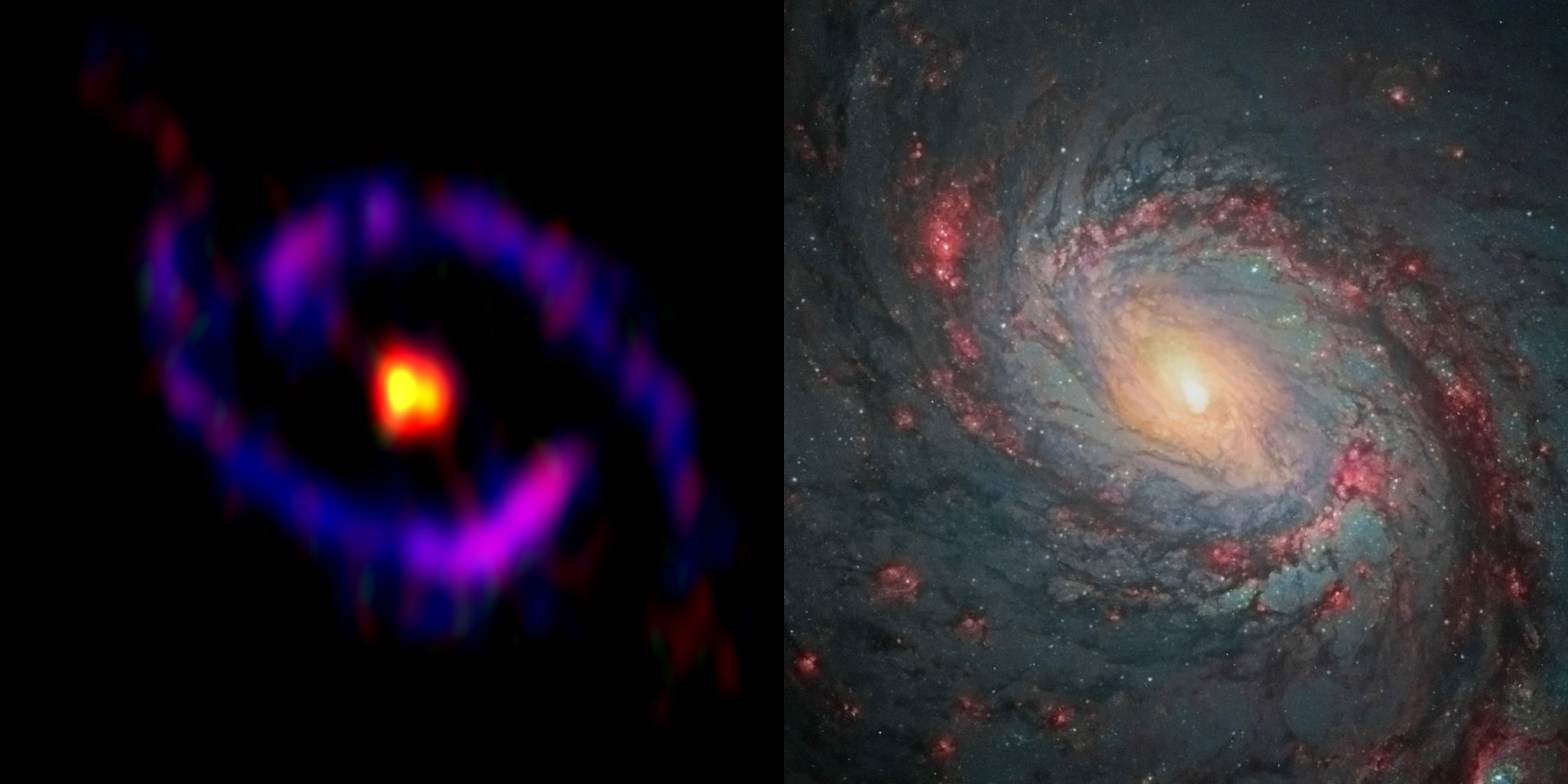
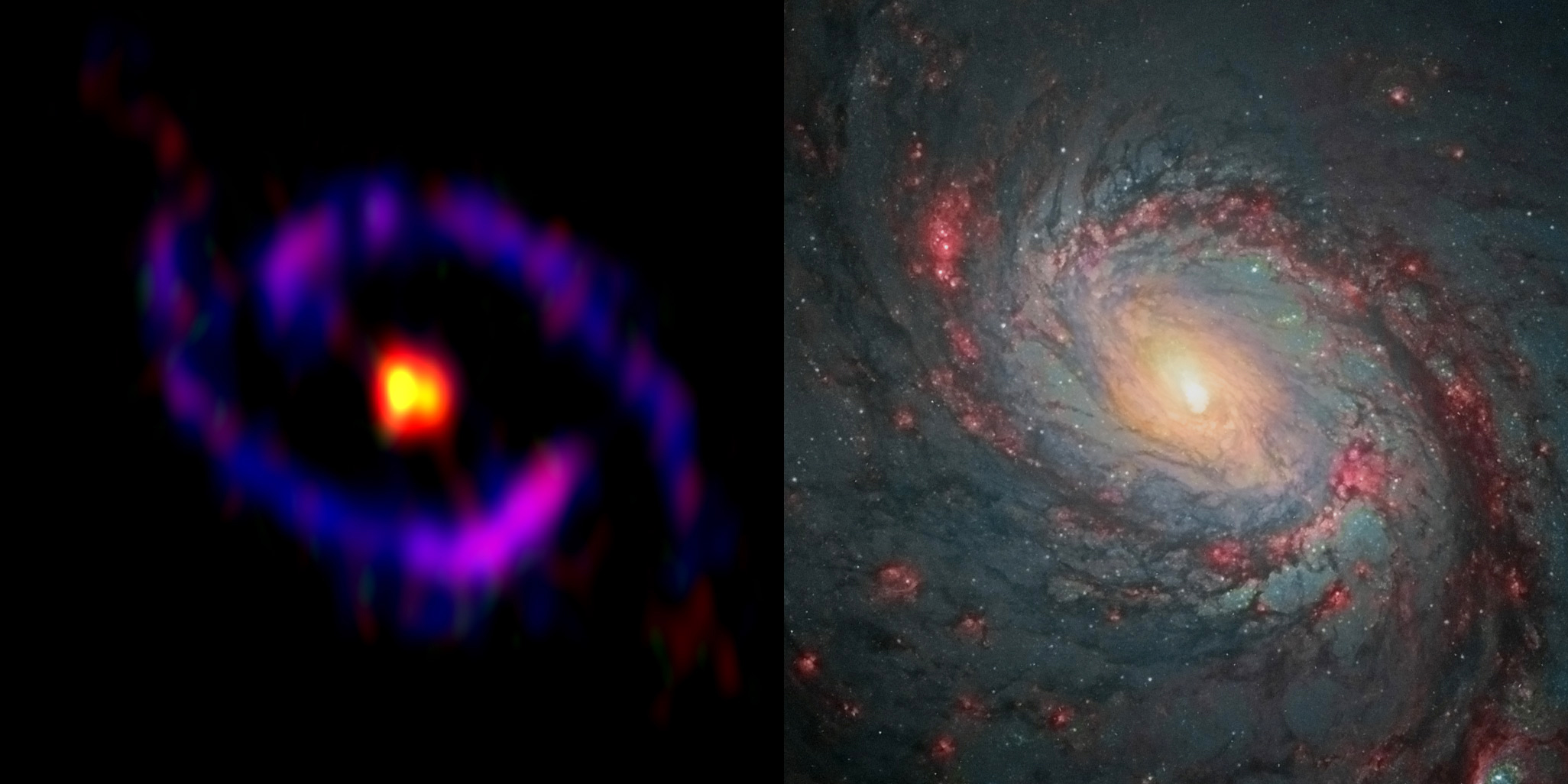
The central part of the galaxy M77, also known as NGC 1068. HC3N is abundant in the central part of the galaxy (CND), CO is mainly distributed in the starburst ring. CS is distributed both in the CND and the starburst ring. (Credit: ALMA (ESO/NAOJ/NRAO), S. Takano et al., NASA/ESA Hubble & A. van der Hoeven)
Researchers using the Atacama Large Millimeter/submillimeter Array (ALMA) have discovered regions where certain organic molecules somehow endure the intense radiation near the supermassive black hole at the center of galaxy NGC 1068, also known to amateur stargazers as M77.
Such complex carbon-based molecules are thought to be easily obliterated by the strong X-rays and ultraviolet (UV) photons that permeate the environment surrounding supermassive black holes. The new ALMA data indicate, however, that pockets of calm exist even in this tumultuous region, most likely due to dense areas of dust and gas that shield molecules from otherwise lethal radiation.
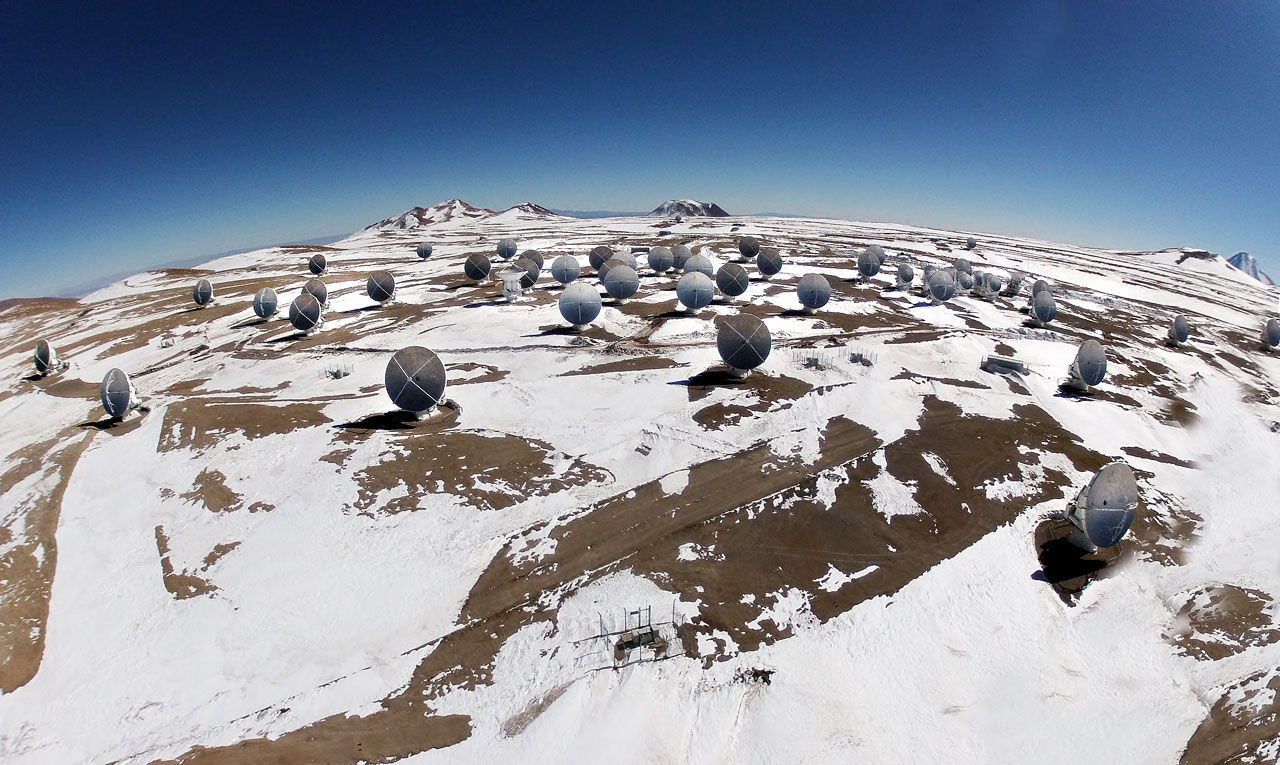
View of ALMA from a hexacopter. (Credit: EFE/Ariel Marinkovic)
ALMA Observations Trace Molecules
To better understand the complex and energetic environments around a supermassive black hole, the research team, led by Shuro Takano at the National Astronomical Observatory of Japan (NAOJ) and Taku Nakajima at Nagoya University, observed the spiral galaxy M77, which is located about 47 million light-years from Earth in the direction of the constellation Cetus the Whale.
This galaxy is known to have an actively feeding central black hole, which indicates it has a substantial circumnuclear disk. That disk, in turn, is surrounded by a 3,500 light-year wide starburst ring. To probe these areas, the research team added ALMA’s extreme sensitivity and high-fidelity imaging capabilities to earlier observations conducted by the 45-meter radio telescope at the National Astronomical Observatory of Japan.
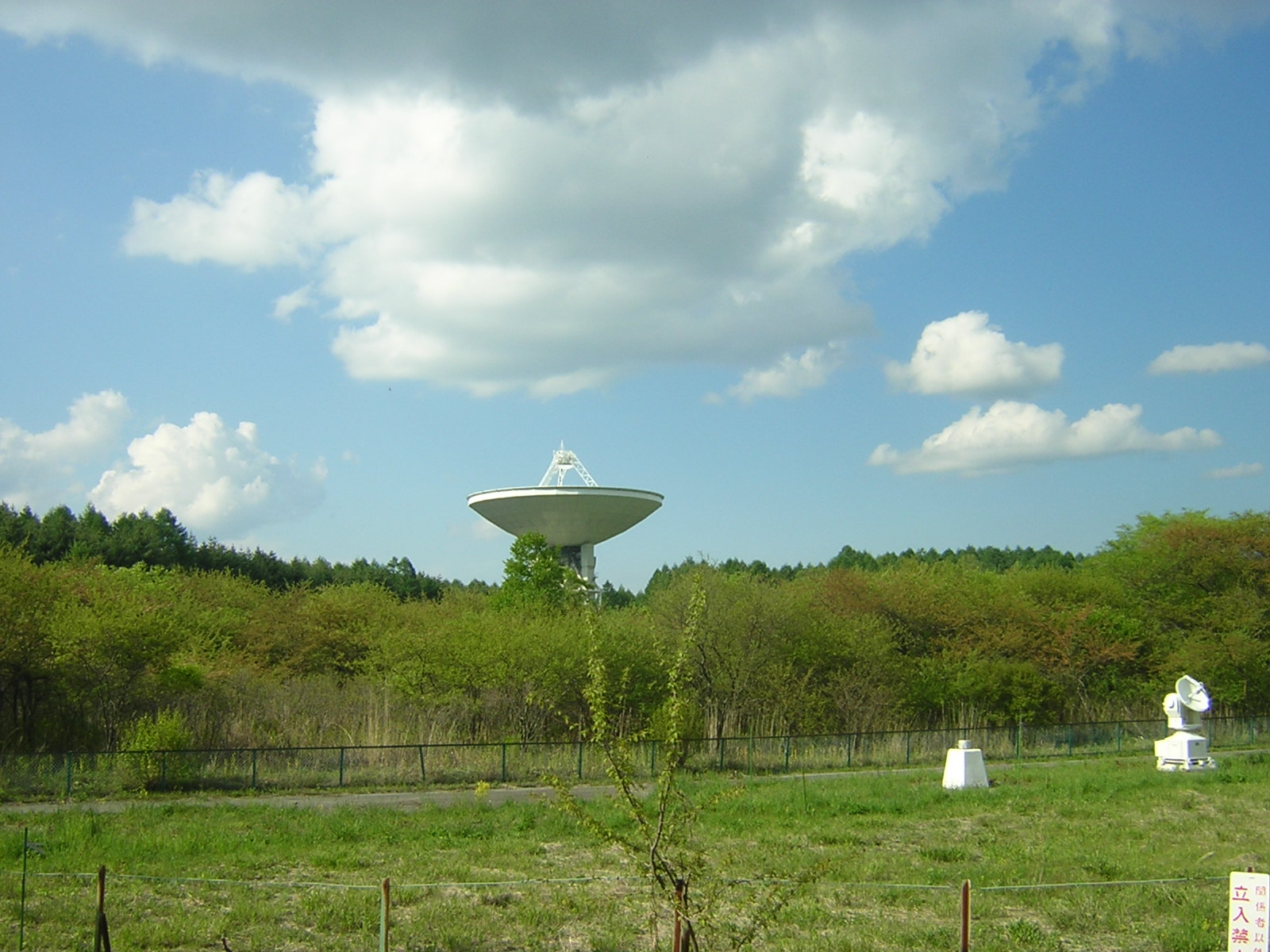
The 45-meter radio telescope’s capabilities at the Nobeyama Radio Observatory of the National Astronomical Observatory of Japan (NAOJ) were used by Dr. Shuro Takano et al. (Credit: Wiki Commons)
The new ALMA observations clearly reveal the distributions of nine types of molecules in the surrounding disk and starburst ring.
“In this observation, we used only 16 antennas, which are about one-fourth of the complete number of ALMA antennas, but it was really surprising that we could get so many molecular distribution maps in less than two hours. We have never obtained such a quantity of maps in one observation,” said Takano, the leader of the research team.
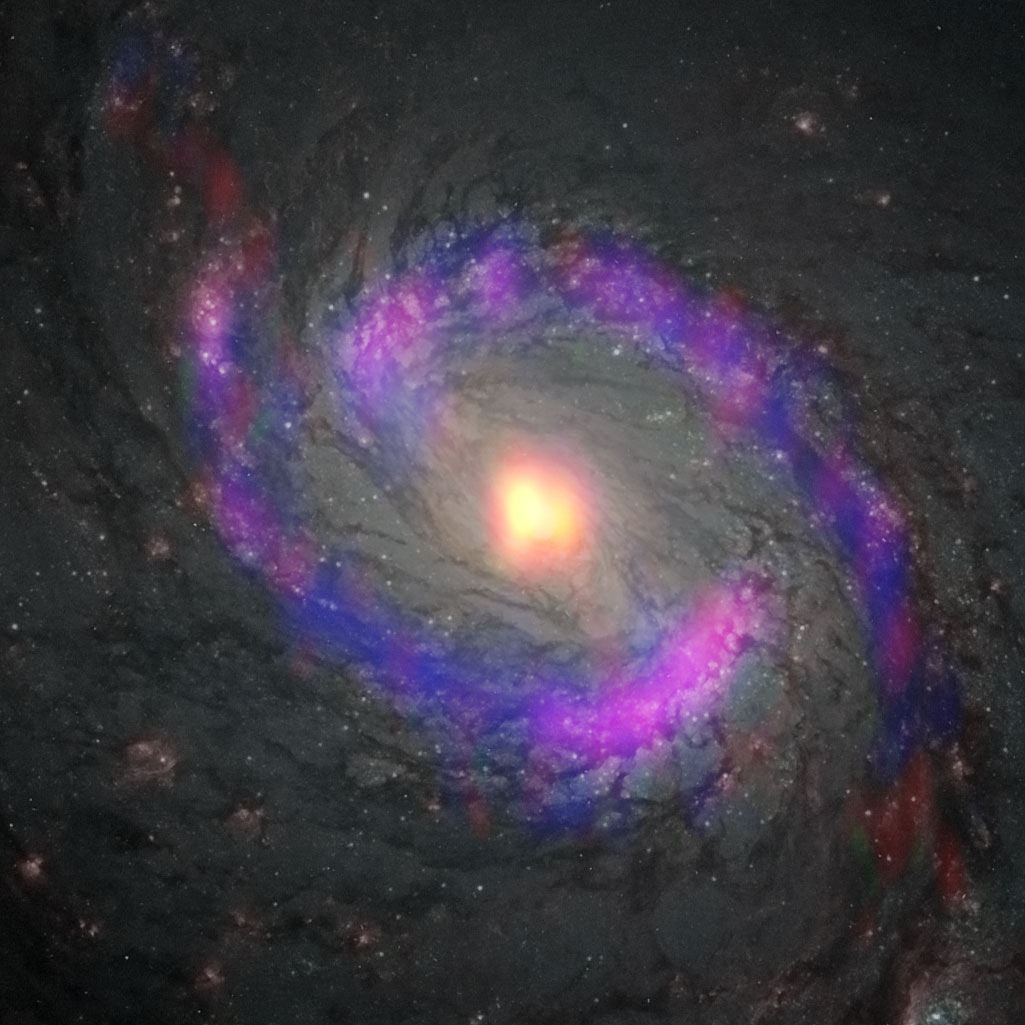
Galaxy M77, also known as NGC 1068. Yellow: cyanoacetylene (HC3N), Red: carbon monosulfide (CS), Blue: carbon monoxide (CO), which are observed with ALMA. (Credit: ALMA(ESO/NAOJ/NRAO), S. Takano et al., NASA/ESA Hubble Telescope)
The results clearly show that the molecular distribution varies according to the type of molecule. While carbon monoxide (CO) is distributed mainly in the starburst ring, five types of molecules, including complex organic molecules such as cyanoacetylene (HC3N) and acetonitrile (CH3CN), are concentrated primarily in the CND. In addition, carbon monosulfide (CS) and methanol (CH3OH) are distributed both in the starburst ring and the CND.
Shielding Complex Organics around a Black Hole
As the supermassive black hole devours the surrounding material, this disk is heated to such extreme temperatures that it emits intense X-rays and UV photons. When complex organic molecules are exposed to these photons, their atomic bonds are broken and the molecules are destroyed. Astronomers assumed that such regions would therefore be devoid of such complex organics.
The ALMA observations, however, proved the contrary: Complex organic molecules are abundant in the CND, though not so in the broader starburst region.
“It was quite unexpected that complex molecules with a large number of atoms like acetonitrile and cyanoacetylene are concentrated around the black hole’s disk,” said Nakajima.
Dr. Shuro Takano (Credit: Mr. Matsunaga, S. Takano)
The research team speculates that organic molecules remain intact in the CND due to the large amount of gas there, which acts as a barrier for the X-rays and UV photons, while organic molecules cannot survive the exposure to the strong UV photons in the starburst region where the gas density is comparatively lower.
The researchers point out that these results are a significant first step in understanding the structure, temperature, and density of gas surrounding the active black hole in M77. “We expect that future observations with wider bandwidth and higher resolution will show us the whole picture of this region,” said Takano.
“ALMA has launched an entirely new era in astrochemistry,” said Eric Herbst of the University of Virginia in Charlottesville and a member of the research team. “Detecting and tracing molecules throughout the cosmos enables us to learn so much more about otherwise hidden areas, like the regions surrounding the black hole in M77.”
Guest Bloggers: Jason Hair, Dennis Reuter, and Amy Simon
Building a mission or an instrument is not for the faint of heart. While engineering teams develop plans to avoid major mishaps, sometimes even the best laid plans aren’t enough. A case in point is a series of unfortunate events that happened to the OVIRS instrument in July 2014.
OVIRS is a spectrometer that will be searching for very small changes in the amount of light reflected from the surface of Bennu over a wide range of visible and infrared wavelengths. These changes may tell us a lot about the composition of the asteroid: What minerals are there? Are there organic molecules present? Has anything collided with Bennu? Because these changes in reflected light are small, we have to make sure that light scattering off surfaces inside the instrument isn’t fooling us. Therefore it is necessary to coat the bare aluminum…
Researchers have found that the rotation axes of super-massive black holes of some quasars are parallel to each other.
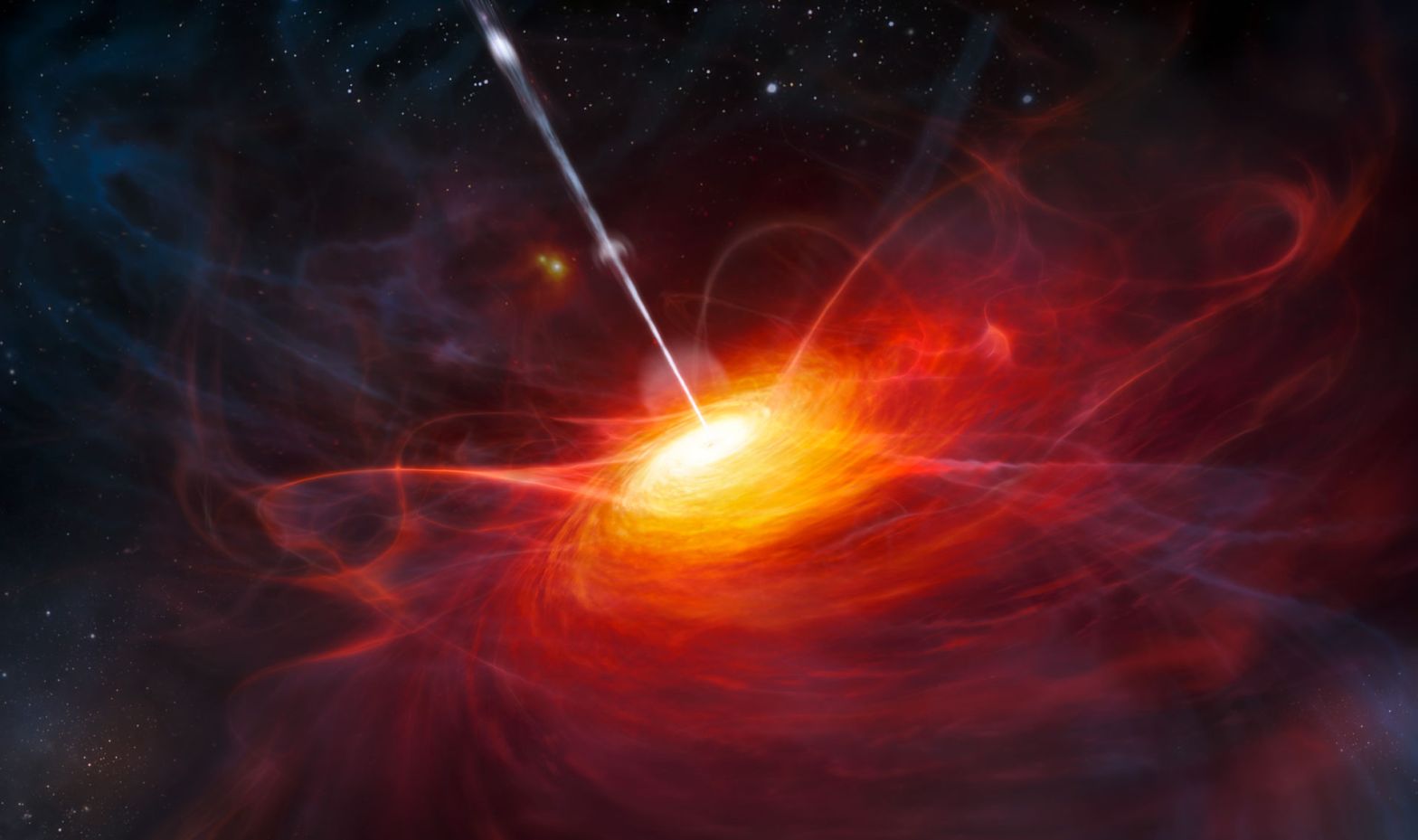
Artist’s impression of the mysterious alignments between the spin axes of quasars and the large-scale structures that they inhabit. These alignments are over billions of light-years and are the largest known in the universe. The large-scale structure is shown in blue and quasars are marked in white with the rotation axes of their black holes indicated with a line. (Credit: ESO/M. Kornmesser)
New observations with the European Southern Observatory’s Very Large Telescope (VLT) in Chile have revealed alignments of the largest structures ever discovered in the universe. A team led by Damien Hutsemékers from the University of Liège in Belgium has found that the rotation axes of the central super-massive black holes in a sample of quasars are parallel to each other over distances of billions of light-years. The team also has found that the rotation axes of these quasars tend to be aligned with the vast structures in the cosmic web in which they reside.
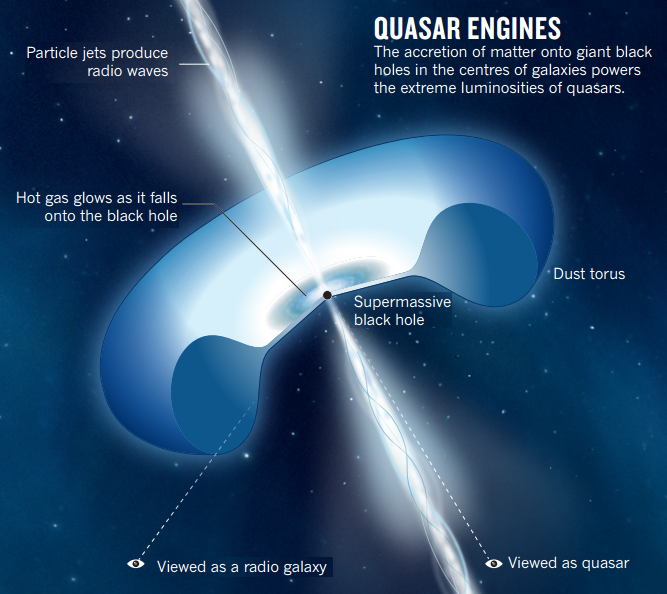
Quasars are very active super-massive black holes at the nuclei of galaxies. These black holes are surrounded by spinning disks of extremely hot material that is often spewed out in long jets along their axes of rotation. Quasars can shine more brightly than all the stars in the rest of their host galaxies put together.
How Quasars are Powered (Credit: Nature)
“The first odd thing we noticed was that some of the quasars’ rotation axes were aligned with each other, despite the fact that these quasars are separated by billions of light-years,” said Damien Hutsemékers from the University of Liège in Belgium. His team used the FORS instrument on the VLT to study 93 quasars that were known to form huge groupings spread over billions of light-years, seen at a time when the universe was about one-third of its current age.
Hutsemékers says, “Our data provide the first observational confirmation of this effect, on scales much larger that what had been observed to date for normal galaxies.”
The team then went further and looked to see if the rotation axes were linked, not just to each other, but also to the structure of the universe on large scales at that time.
When astronomers look at the distribution of galaxies on scales of billions of light-years, they find that they are not evenly distributed. They form a cosmic web of filaments and clumps around huge voids where galaxies are scarce. This intriguing and beautiful arrangement of material is known as large-scale structure.
Dr. Hutsemekers and his colleagues found that the spin axes of the quasars were linked not just to each other, but also tend to be parallel to their host large-scale structures. The new VLT results indicate that the rotation axes of the quasars tend to be parallel to the large-scale structures in which they find themselves.
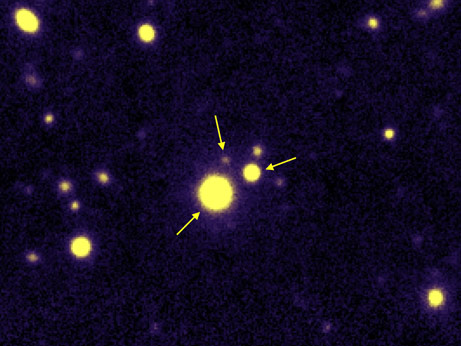
A false-color image of a trio of enormous, hyperactive black holes in close proximity to each other. The three quasars are 10.5 billion light-years away from Earth, thus the light being recorded is actually a glimpse into the early universe. (Credit: S. G. Djorgovski et al., Caltech, EPFL )
So, if the quasars are in a long filament, then the spins of the central black holes will point along the filament. The researchers estimate that the probability that these alignments are simply the result of chance is less than 1 percent.
“A correlation between the orientation of quasars and the structure they belong to is an important prediction of numerical models of evolution of our Universe. Our data provide the first observational confirmation of this effect, on scales much larger that what had been observed to date for normal galaxies,” said Dominique Sluse of the Argelander-Institut für Astronomie in Bonn, Germany.
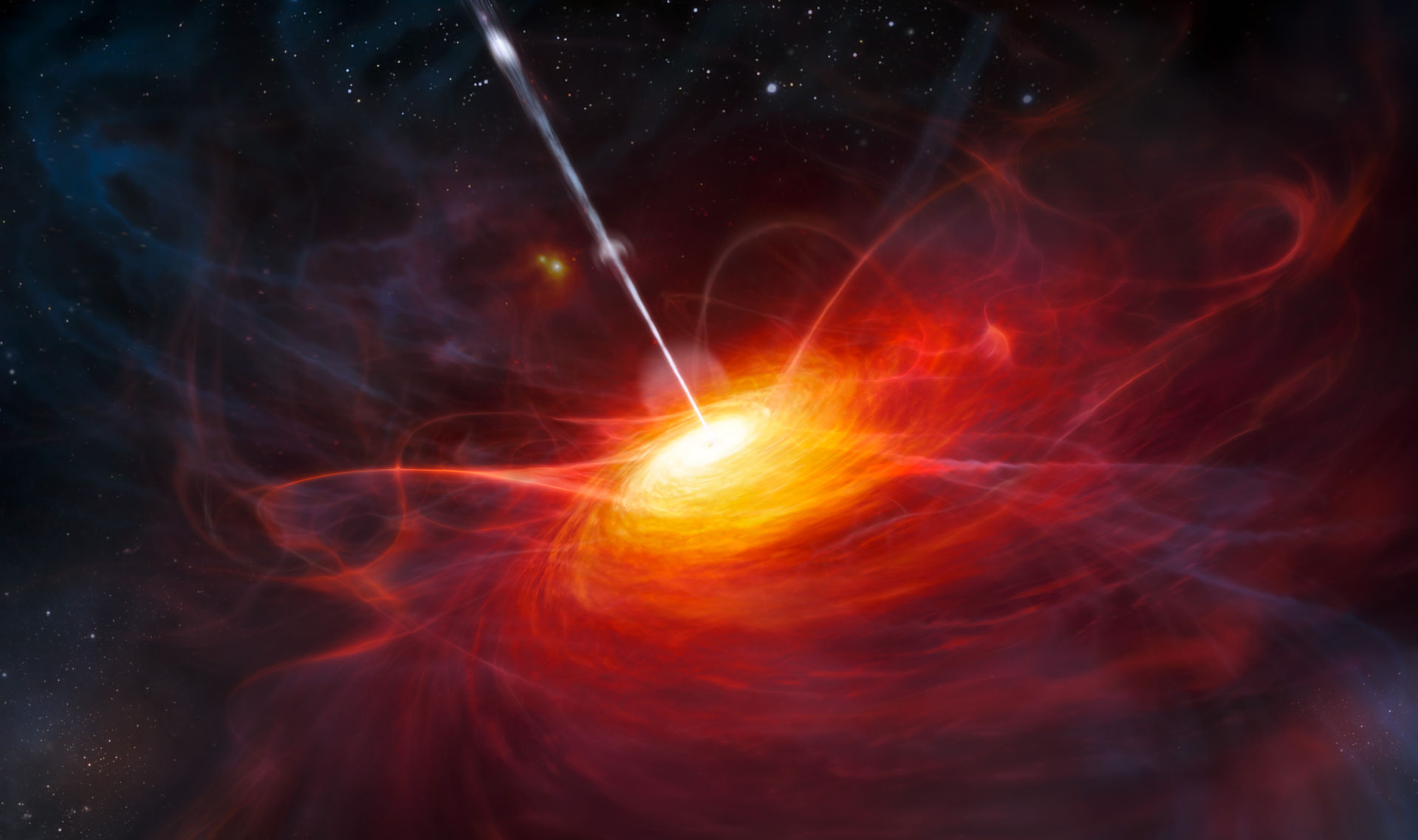
Artist’s impression of ULAS J1120+0641, a very distant quasar powered by a black hole with a mass two billion times that of the Sun. This quasar is the most distant yet found and is seen as it was just 770 million years after the Big Bang. This object is by far the brightest object yet discovered in the early Universe. (Credit: Wikipedia)
The team could not see the rotation axes or the jets of the quasars directly. Instead they measured the polarization of the light from each quasar and, for 19 of them, found a significantly polarized signal. The direction of this polarization, combined with other information, could be used to deduce the angle of the accretion disk and hence the direction of the spin axis of the quasar.
“The alignments in the new data, on scales even bigger than current predictions from simulations, may be a hint that there is a missing ingredient in our current models of the cosmos,” concludes Dominique Sluse.
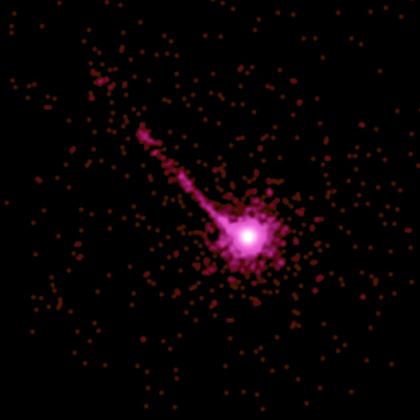
The Chandra X-ray image is of the quasar PKS 1127-145, a highly luminous source of X-rays and visible light about 10 billion light years from Earth. An enormous X-ray jet extends at least a million light years from the quasar. Image is 60 arcsec on a side. RA 11h 30m 7.10s Dec -14° 49′ 27″ in Crater. Observation date: May 28, 2000. Instrument: ACIS.
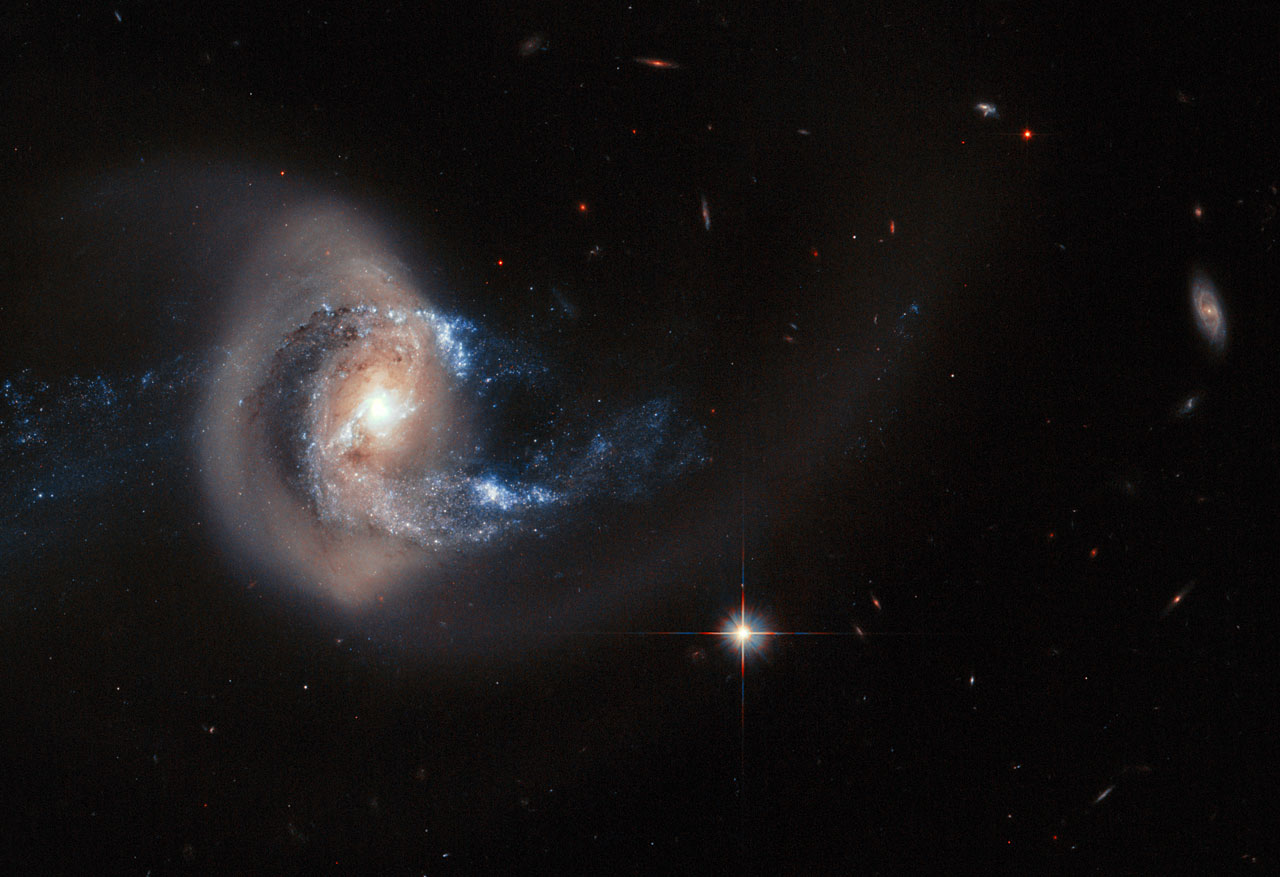
The NASA/ESA Hubble Space Telescope has captured this striking view of spiral galaxy NGC 7714. NGC 7714 is a spiral galaxy at 100 million light-years from Earth — a relatively close neighbor in cosmic terms. This galaxy has drifted too close to another nearby galaxy and the dramatic interaction has twisted its spiral arms out of shape, dragged streams of material out into space, and triggered bright bursts of star formation.
NGC 7714 has witnessed some violent and dramatic events in its recent past. Tell-tale signs of this brutality can be seen in the galaxy’s strangely shaped arms, and in the smoky golden haze that stretches out from the galactic center.
So what caused this disfigurement? The culprit is a smaller companion named NGC 7715, which lies just out of the frame of this image — but is visible in the wider-field DSS image, as seen below.
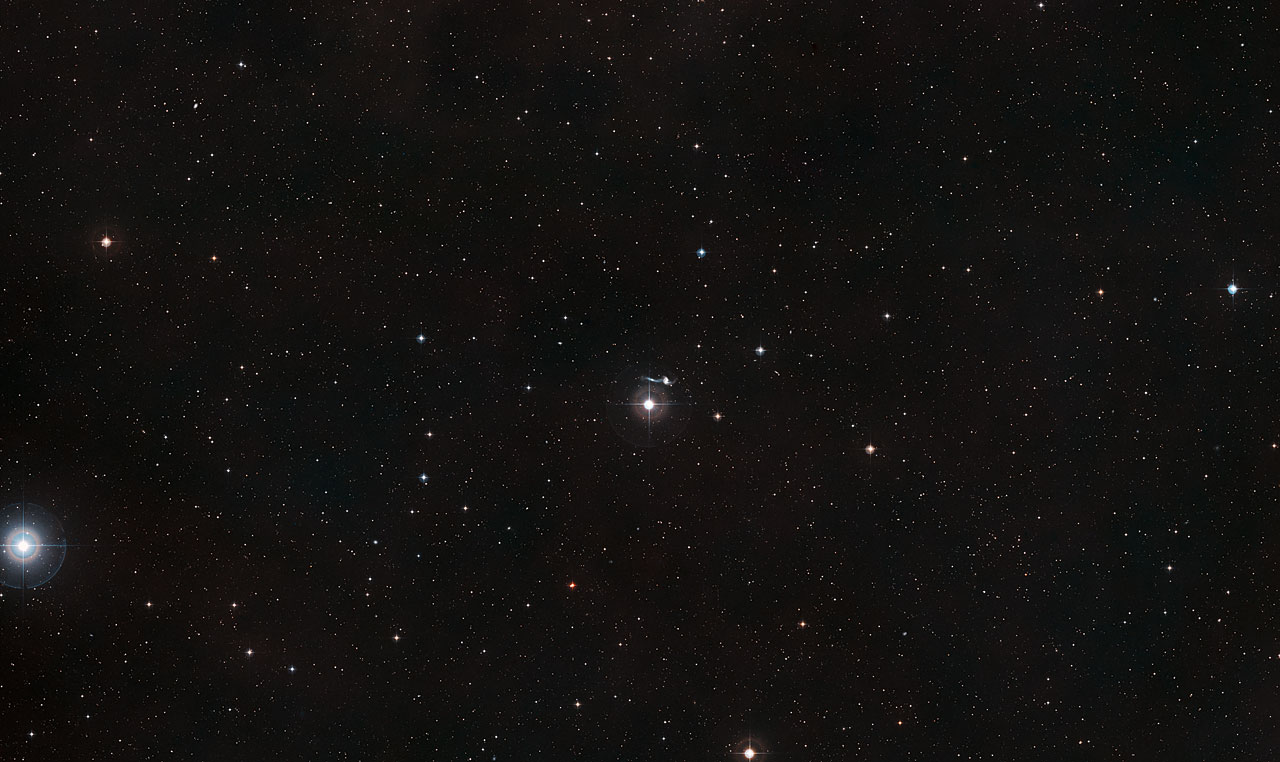
Wide-field image of NGC 7714 — In this image, the bright star you can see on the left is around a billion times closer than the galaxy.
The two galaxies drifted too close together between 100 and 200 million years ago, and began to drag at and disrupt each others structure and shape. The interacting pair formed by NGC 7714 and NGC 7715 is named Arp 284.
As a result, a ring and two long tails of stars have emerged from NGC 7714, creating a bridge between the two galaxies. This bridge acts as a pipeline, funneling material from NGC 7715 towards its larger companion and feeding bursts of star formation. Most of the star-forming activity is concentrated at the bright galactic center, although the whole galaxy is sparking new stars.
Astronomers characterize NGC 7714 as a typical Wolf-Rayet starburst galaxy. This is due to the stars within it; a large number of the new stars are of the Wolf-Rayet type — extremely hot and bright stars that begin their lives with dozens of times the mass of the Sun, but lose most of it very quickly via powerful winds.
This new picture not only reveals the intricate structure of NGC 7714, but also shows many other objects that are much further away. These background galaxies resemble faint smudges of light, some of them with spiral forms. This Hubble image is a composite of data capturing a broad range of wavelengths, revealing the correlation of the gas clouds and stars in the galaxy.