Physics in the News

Sunday, August 31, 2014

What time is it in the Universe? (VIDEO)

via universetoday

The limits of gravity, space and time… (VIDEO)

via astronomytoday

Robonaut 2 gets legs, New Horizons Pluto-bound (VIDEO)

via floridatoday

Our Sun’s power is stable and steadfast (VIDEO)

via techtimes

Latest theory of everything to hit the physics shelves

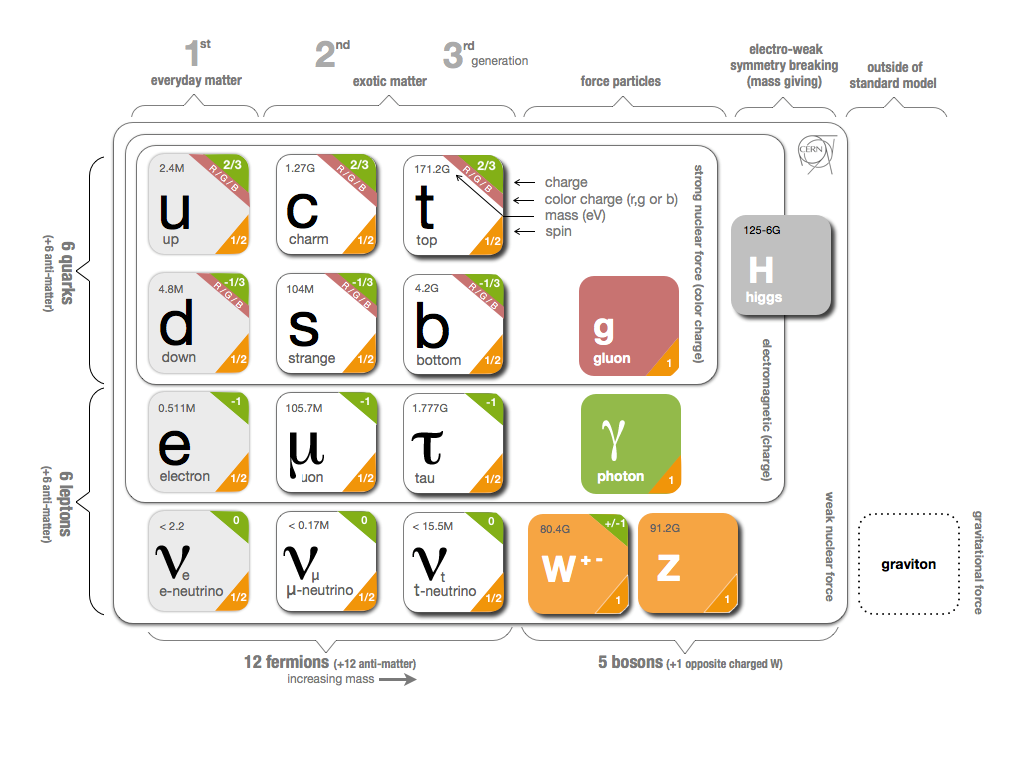
Agravity, short for ‘adimensional gravity’, is one of the most recent Theory of Everything (ToE) proposals in a long line of such proposals that have come about ever since the problem of reconciling Gravity with the Standard Model was realized by physicists. It attempts to merge gravity with the Higgs interaction (the thing that gives particles mass and electric charge) and thus the rest of the Standard Model by reconciling the huge difference between the Planck Scale (on the order of 1019 giga-electron-volts (GeV) = 1011 Joules (J)) and the relatively small masses of all the other particles
Agravity, short for ‘adimensional gravity’, is one of the most recent Theory of Everything proposals in a long line of such proposals that have come about ever since the problem of reconciling Gravity with the Standard Model was realized by physicists.  It attempts to merge gravity with the Higgs interaction, and thus the rest of the Standard Model, by reconciling the huge difference between the Planck Scale and the relatively small masses of all the other particles. (Credit: SGTW, Daniels)

via united-academics

Mars Rover Opportunity to have memory wiped

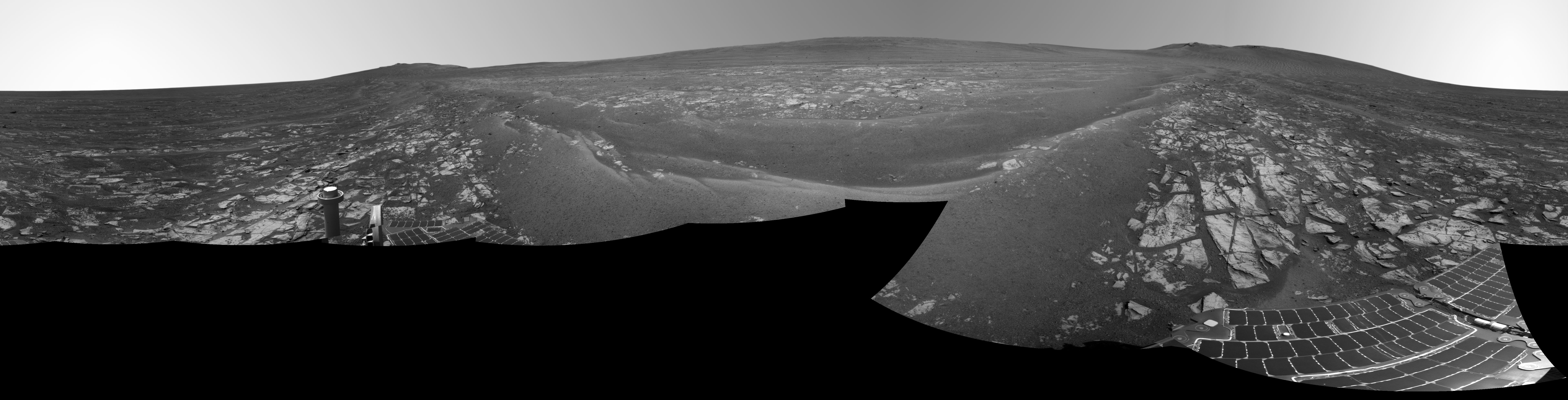
The decision to reformat Opportunity’s flash memory early next month is prompted by the multiple computer resets the rover has been experiencing. This month alone, Opportunity has had to be rebooted a dozen times, interrupting valuable time that should be taken up with carrying out science near the rim of Endeavour crater. (Credit: NASA, O'Neil)
The decision to reformat Opportunity’s flash memory early next month is prompted by the multiple computer resets the rover has been experiencing. This month alone, Opportunity has had to be rebooted a dozen times, interrupting valuable time that should be taken up with carrying out science near the rim of Endeavour crater. (Credit: NASA, O’Neil)

via discovery

Astronomers spot the birth of ‘Sparky,’ a massive star factory(PDF)

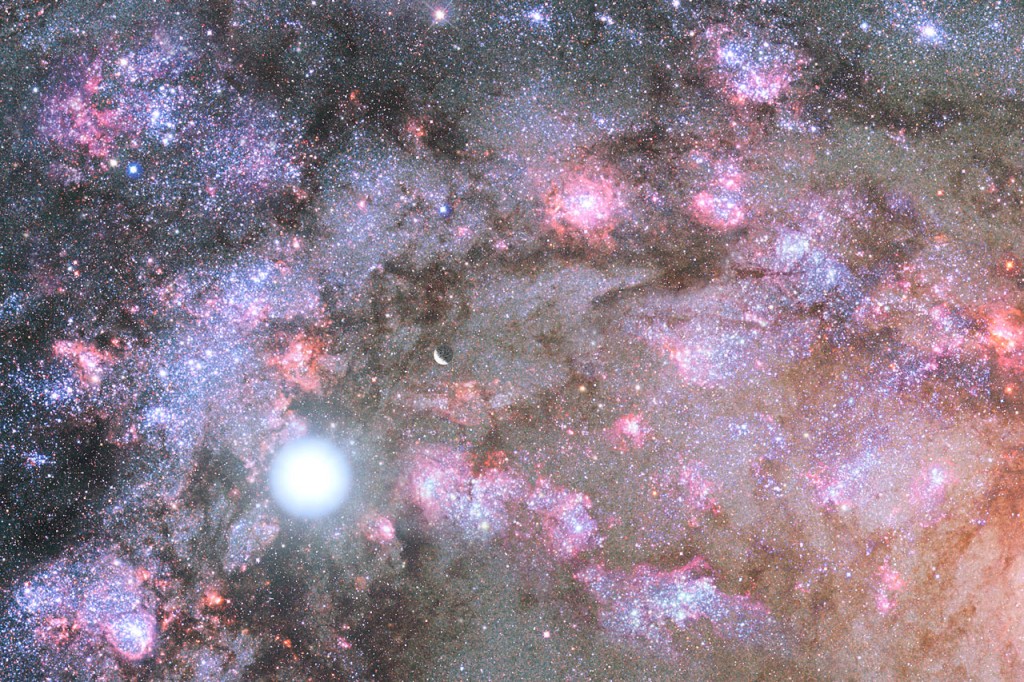
“It’s fascinating that the early universe could make galaxies in this way and the modern universe just can’t anymore, and we’re really beginning to understand in a profound way how different the early universe was than it is now,” said Erica Nelson of Yale University. (Credit: Neslson)
via washingtonpost

NASA probes studying Earth’s radiation belts to celebrate two year anniversary

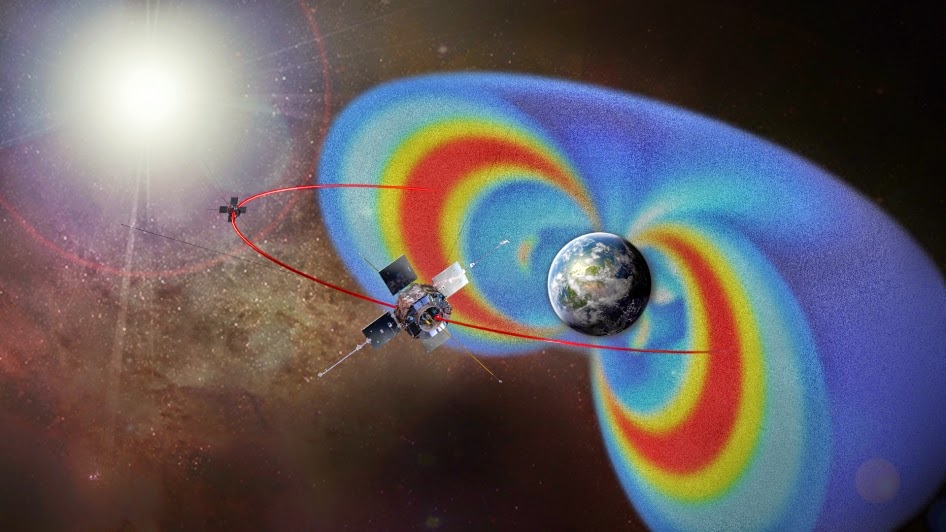
NASA’s Van Allen Probes orbit through two giant radiation belts surrounding Earth. Their observations help explain how particles in the belts can be sped up to nearly the speed of light. Image (Credit: NASA)

Mysteries of space dust revealed

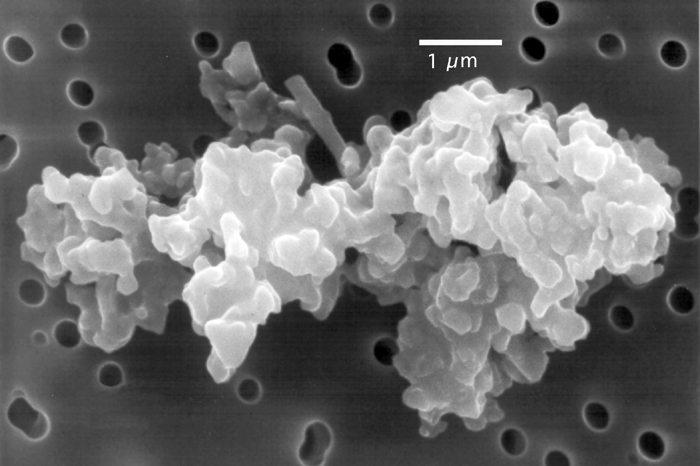
This is a scanning electron microscope image of an interplanetary dust particle that has roughly chondritic elemental composition and is highly rough (chondritic porous: "CP"). CP types are usually aggregates of large numbers of sub-micrometer grains, clustered in a random open order. (Credit: Donald E. Brownlee)
This is a scanning electron microscope image of an interplanetary dust particle that has roughly chondritic elemental composition and is highly rough (chondritic porous: “CP”). CP types are usually aggregates of large numbers of sub-micrometer grains, clustered in a random open order. (Credit: Donald E. Brownlee)
via phys.org

Are there evidences for cosmic inflation?

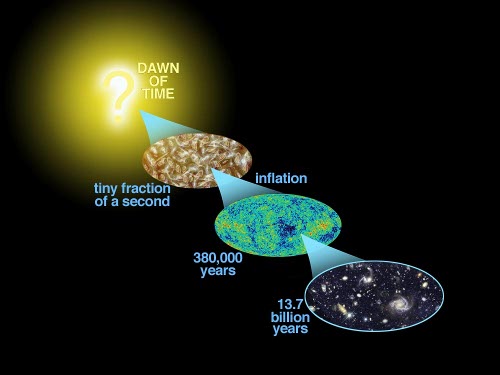
Inflation explains the origin of the large-scale structure of the cosmos. Many physicists believe that inflation explains why the Universe appears to be the same in all directions (isotropic), why the cosmic microwave background radiation is distributed evenly, why the universe is flat, and why no magnetic monopoles have been observed. (Credit: NASA)
via science20

Sparks fly as NASA pushes the limits of 3-D printing technology

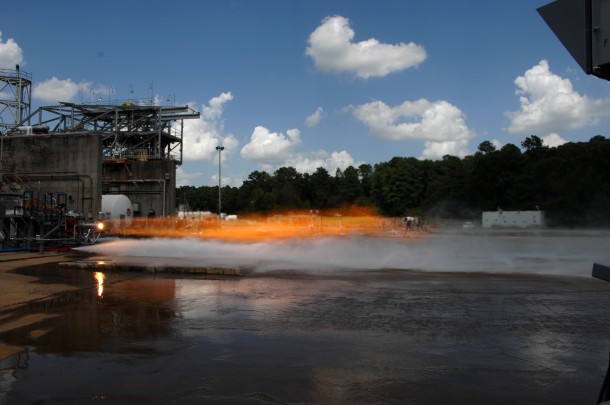
Engineers just completed hot-fire testing with two 3-D printed rocket injectors. Certain features of the rocket components were designed to increase rocket engine performance. The injector mixed liquid oxygen and gaseous hydrogen together, which combusted at temperatures over 6,000 degrees Fahrenheit, producing more than 20,000 pounds of thrust. (Credit: NASA photo/David Olive)
via spacefellowship

Physics in the News

Thursday, August 28, 2014

“Spooky” quantum entanglement reveals invisible objects

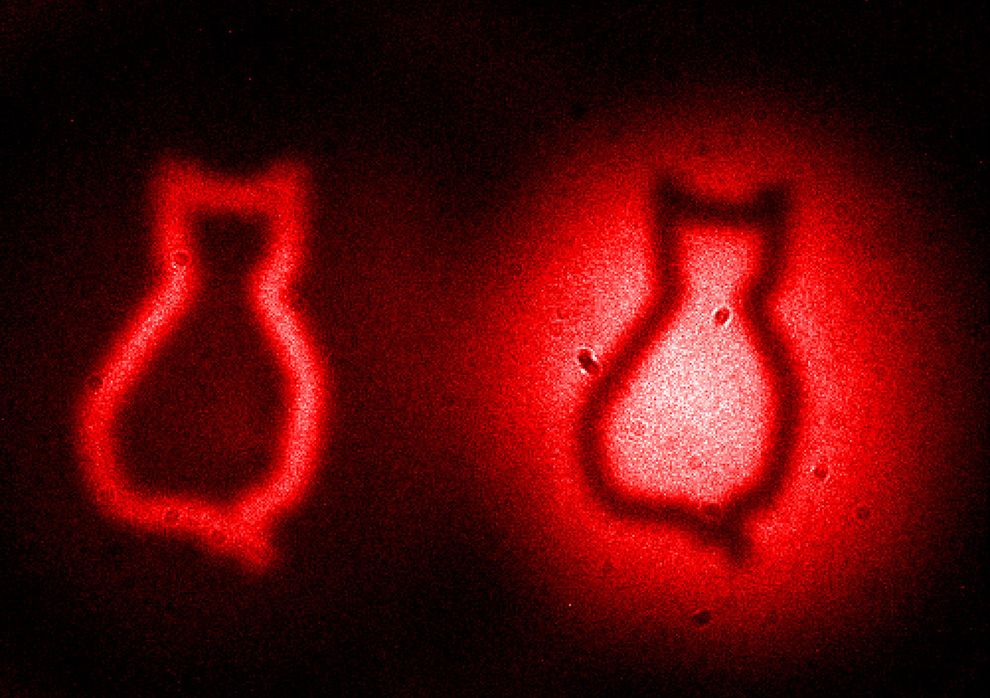
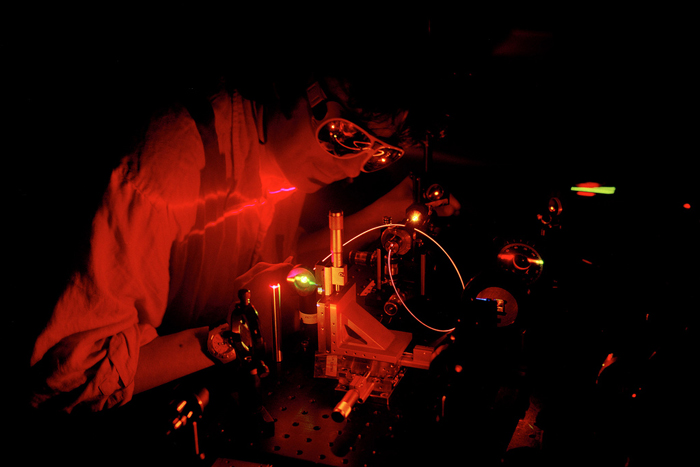
In the new experiment, the physicists entangled photons in two separate laser beams with different wavelengths, and hence color: one yellow and one red.
“This is a long-standing, really neat experimental idea,” says Paul Lett, of the National Institute of Standards and Technology in GaithersburgLett, “Now we have to see whether or not it will lead to something practical, or will remain just a clever demonstration of quantum mechanics.”(CreditBarreto-Lemos, Vergano)
via nationalgeographic

Strange neutrinos from the sun detected for the first time

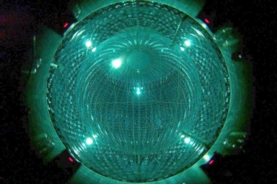
The Borexino neutrino detector uses a sphere filled with liquid scintillator that emits light when excited. This inner vessel is surrounded by layers of shielding and by about 2,000 photomultiplier tubes to detect the light flashes.(Credit: Borexino Collaboration)
via scientificamerican

Quark quartet fuels quantum feud

meson-molecule
MOLECULAR MODEL In the molecular model, quark-antiquark pairs form two color-neutral mesons that become weakly linked as a molecule.
DIQUARK MODEL In the diquark model, the particles form quark-quark and antiquark-antiquark pairs, which are forced to combine to balance their color charges.
DIQUARK MODEL The particles form quark-quark and antiquark-antiquark pairs, which are forced to combine to balance their color charges.
via simonsfoundation

What lit up the universe?

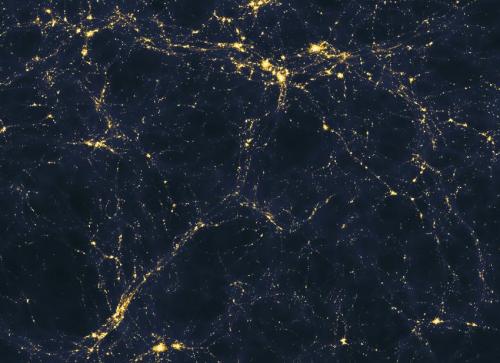
A computer model shows one scenario for how light is spread through the early universe on vast scales (more than 50 million light years across). Astronomers will soon know whether or not these kinds of computer models give an accurate portrayal of light in the real cosmos. (Credit: Andrew Pontzen/Fabio Governato)
via phys

What happened to NASA’s Valkyrie Robot at the DRC Trials, and what’s next

via spectrum

Pebble-sized particles may jump-start planet formation

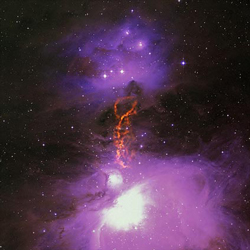
Radio/optical composite of the Orion Molecular Cloud Complex showing the OMC-2/3 star-forming filament. GBT data is shown in orange. Uncommonly large dust grains there may kick-start planet formation. (Credit: S. Schnee, et al.; B. Saxton, B. Kent (NRAO/AUI/NSF)
via rdmag

Physicists propose superabsorption of light beyond the limits of classical physics

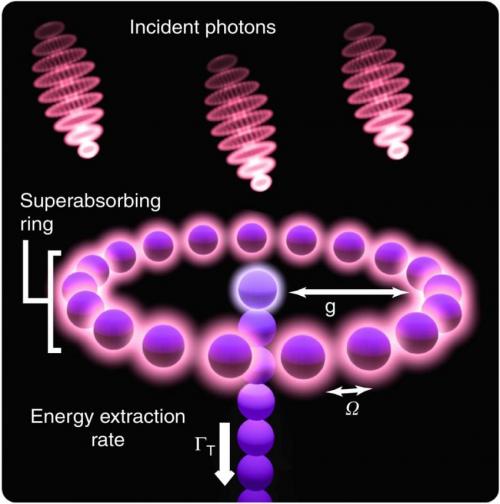
In one potential method to realize superabsorption, a superabsorbing ring absorbs incident photons, giving rise to excitons. (Credit: Higgins, et al.)
via phys.org

Physics in the News

Tuesday, August 26, 2014

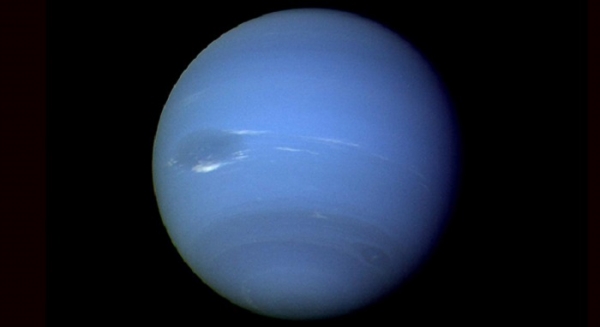
Pluto bound spacecraft crosses Neptune’s orbit(VIDEO)

via nasa

Mars, August 27, moon hoax is fake

This image sometimes circulates on Facebook, with the claim that Mars will appear as big and bright as a full moon on August 27, 2014. It’s a hoax. Don’t believe it. Mars never appears as large as a full moon in Earth’s sky. (Credit: Unknown)
via bnlive

Physicists ‘freeze time’ to manipulate spin information in graphene

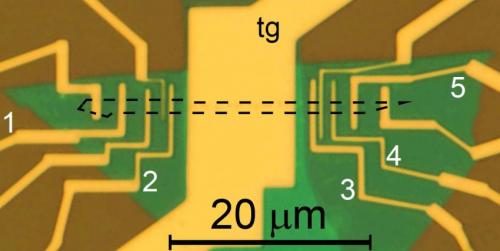
A optical microscope image of the spintronic device (top view). The top electrode (tg) and cobalt electrodes (1 to 5) are yellow. The boron nitride layers (in green) encapsulate the graphene flake, which is outlined by the dotted line. Credit: Fundamental Research on Matter (Credit: FOM)
via phys.org

Radical new theory could kill the multiverse hypothesis

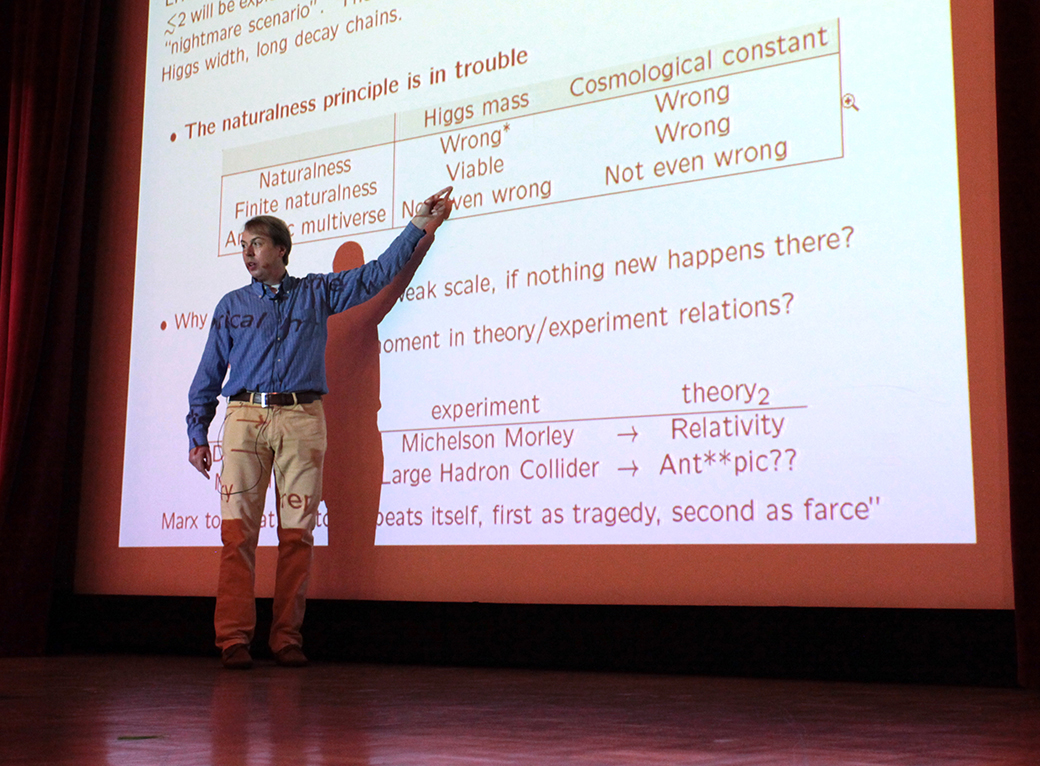
Alessandro Strumia of the University of Pisa, pictured speaking at a conference in 2013, has co-developed a scale-symmetric theory of particle physics called “agravity.” (Credit: Thomas Lin/Quanta Magazine)
via simonfoundation

New technique for measuring nanostructures

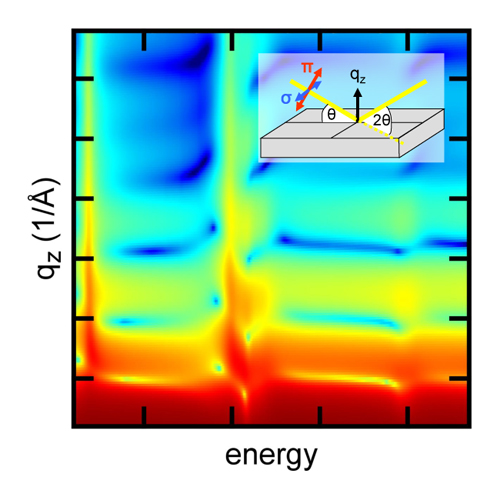
X-ray interference pattern measured while studying complex nano-layer structures. The sketch inserted illustrates the path of the x-ray beam relative to the surface of the sample. (Credit: Sebastian Macke)
via rdmag

SpaceX primed to launch second AsiaSat mission in three weeks

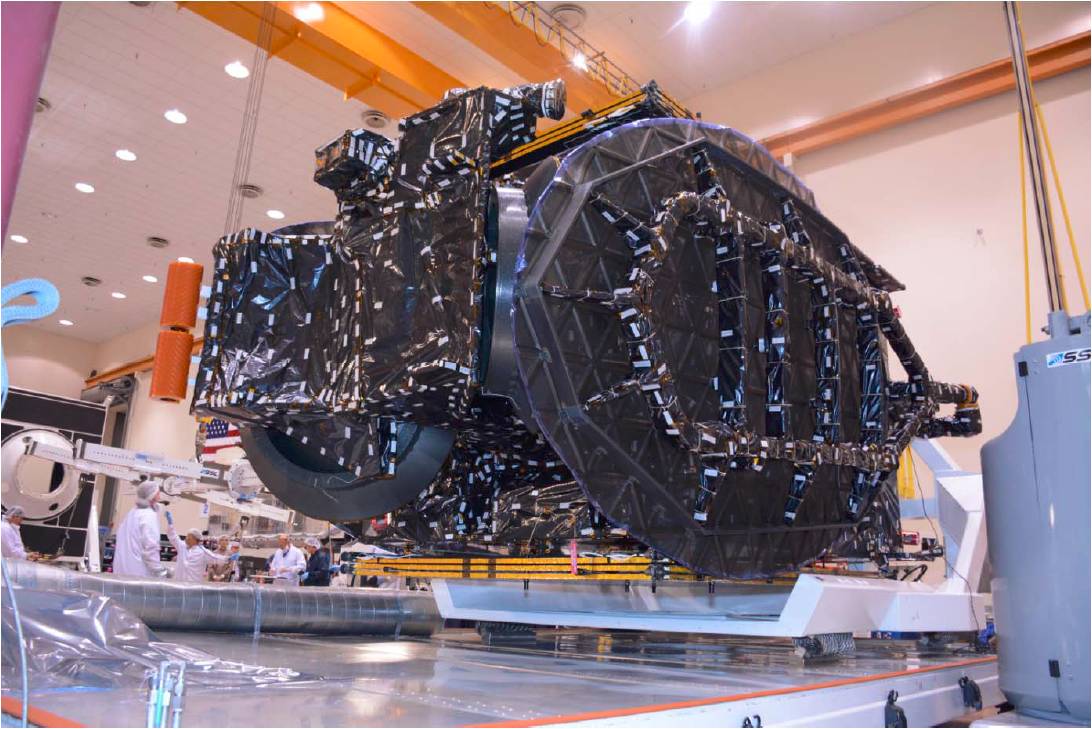
Three weeks after launching the AsiaSat-8 communications satellite, SpaceX is primed to deliver its sibling, AsiaSat-6, into geostationary transfer orbit at an altitude of 22,236 miles (35,786 km) on Wednesday, 27 August. (Credit: AsiaSat)
 
via americaspace

Cosmic rays on the sky – where do they come from?

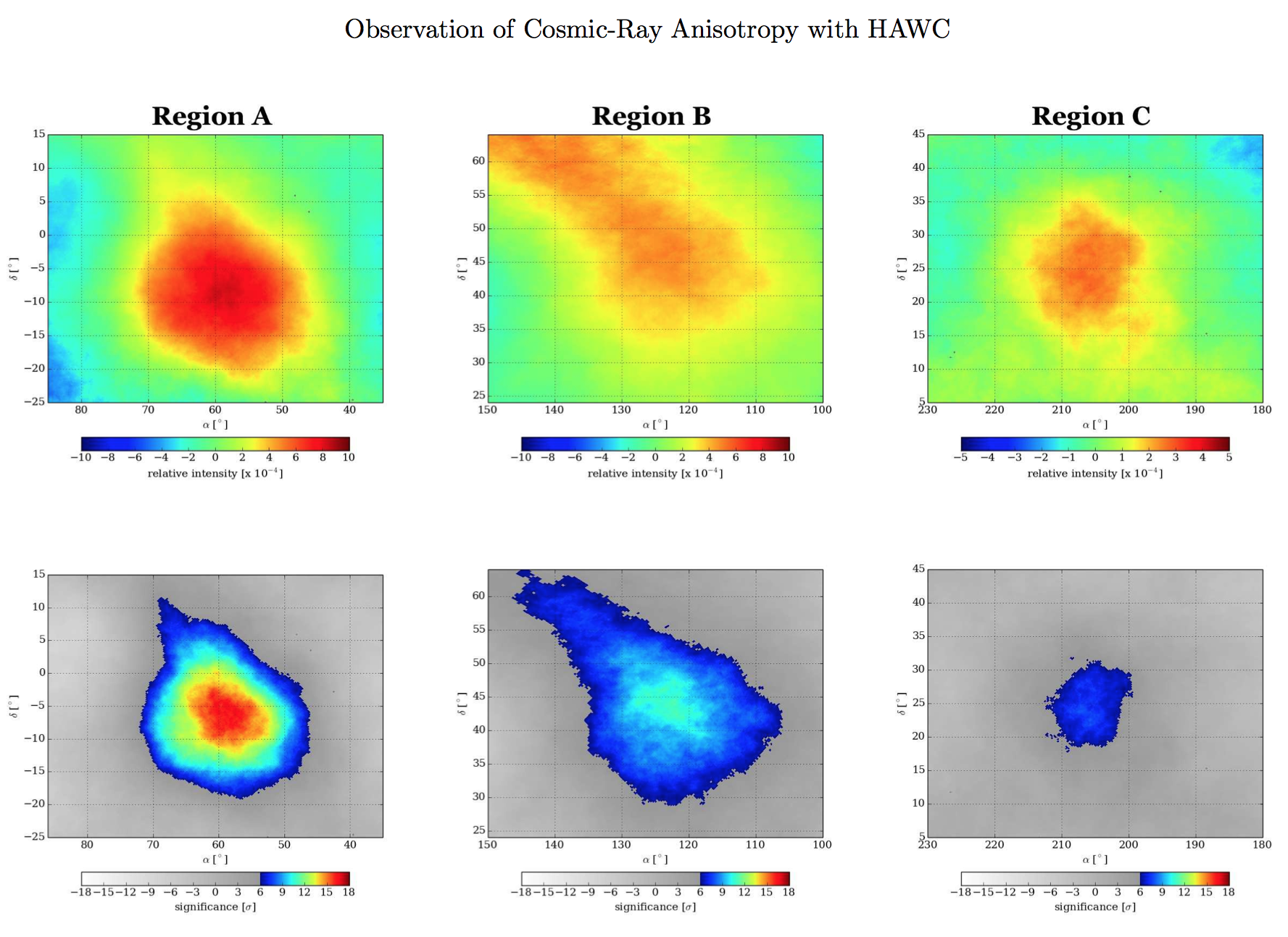
Relative intensity (top row) and pre-trial significance (bottom row) of the cosmic-ray flux in the vicinity of Region A (left), Region B (center), and Region C (right). (Credit: Abeysekara et al)

via astrobites

Imprint of primordial monster star found

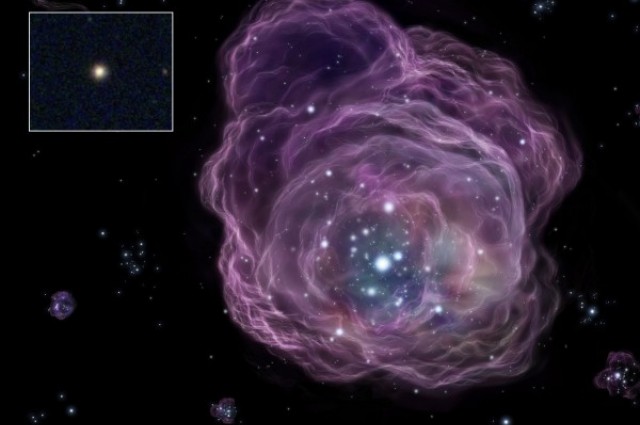
The very first stars in the Universe might have been hundreds of times more massive than the Sun. Credit: Artist's impression by National Astronomical Observatory of Japan
The very first stars in the Universe might have been hundreds of times more massive than the Sun. (Credit: National Astronomical Observatory of Japan)
via scientificamerican

Nuclear fusion reactor at the Princeton Plasma Physics Lab will be operational again after $94 M upgrade

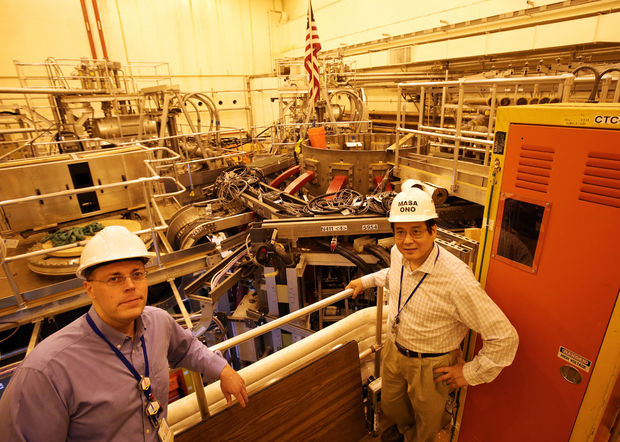
Jonathan Menard, a principal research physicist and program director for the National Spherical Torus Experiment (NSTX), and Masa Ono, a principal research physicist and project director of the NSTX, stand in front of the experiment during a tour of the facility. The device has been shut down since 2011 while it undergoes a $94 million upgrade that will make it the most powerful device of its kind in the world
Jonathan Menard, a principal research physicist and program director for the National Spherical Torus Experiment (NSTX), and Masa Ono, a principal research physicist and project director of the NSTX, stand in front of the experiment during a tour of the facility. The device has been shut down since 2011 while it undergoes a $94 million upgrade that will make it the most powerful device of its kind in the world. (Credit NSTX)
via nj.com

Roscosmos intends to spend about $298 million on removing orbital clutter

The agency intends to deploy the spacecraft, codename Liquidator, to clear up the geostationary orbit over the equator, which is 36 thousand kilometers above sea level
The agency intends to deploy the spacecraft, codename Liquidator, to clear up the geostationary orbit over the equator, which is 36 thousand kilometers above sea level. (Credit: Roscosmos)
via spacemart

How the computer of the future keeps its cool

"When you start to make electronics smaller and denser, not only are you making much more heat in the same amount of volume, but it's much harder for the heat to flow outward," says Peter Nalbach, a theoretical physicist at the University of Hamburg, Germany. (Credit: Mehau Kulyk/Getty)
“When you start to make electronics smaller and denser, not only are you making much more heat in the same amount of volume, but it’s much harder for the heat to flow outward,” says Peter Nalbach, a theoretical physicist at the University of Hamburg, Germany. (Credit: Mehau Kulyk/Getty)
via popularmechanics

The plan to build a massive online brain for all the world’s robots

hey hope to create a massive online “brain” that can help all robots navigate and even understand the world around them. “The purpose,” says Saxena, who dreamed it all up, “is to build a very good knowledge graph—or a knowledge base—for robots to use.Thinkstock
Researchers hope to create a massive online “brain” that can help all robots navigate and even understand the world around them. “The purpose,” says Saxena, who dreamed it all up, “is to build a very good knowledge graph—or a knowledge base—for robots to use. (Credit: Thinkstock, Hernandez )
via wired

Physics research removes outcome unpredictability of ultracold atomic reactions

Probability density  of an Efimov trimer state at different three-body geometries that are characterized by the polar angle -- indicated by the trimer legends.  The key feature in the probability density is that unlike ordinary molecular binding that mostly has a single geometry, the Efimov trimer covers have a broad range of geometries. The atoms in such states behave more like in a fluid drop. (Credit: Yujun Wang, Kansas State University)
Probability density of an Efimov trimer state at different three-body geometries that are characterized by the polar angle — indicated by the trimer legends. The key feature in the probability density is that unlike ordinary molecular binding that mostly has a single geometry, the Efimov trimer covers have a broad range of geometries. The atoms in such states behave more like in a fluid drop. (Credit: Yujun Wang, Kansas State University)

via phys.org

Physics in the News

Sunday, August 24, 2014

Atomic clocks on the International Space Station will study time and space

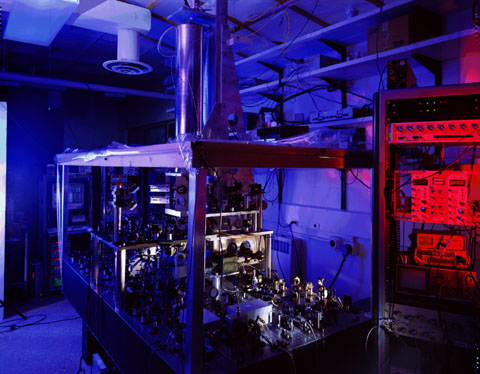
NIST-F1, the nation's primary time and frequency standard, is a cesium fountain atomic clock developed at the NIST laboratories in Boulder, Colorado. NIST-F1 contributes to the international group of atomic clocks that define Coordinated Universal Time (UTC), the official world time. Because NIST-F1 is among the most accurate clocks in the world, it makes UTC more accurate than ever before. (Credit: Time and Frequency Division of NIST's PML)
NIST-F1 contributes to the international group of atomic clocks that define Coordinated Universal Time (UTC), the official world time. Because NIST-F1 is among the most accurate clocks in the world, it makes UTC more accurate than ever before. (Credit: Time and Frequency Division of NIST’s PML)
via guardianlv

Powerful solar flare reaching M5.9 erupted from Region 2149

via thewatchers

Solving Stephen Hawking’s black hole paradox

via davidreneke

In search of alien life? Seek out the smog

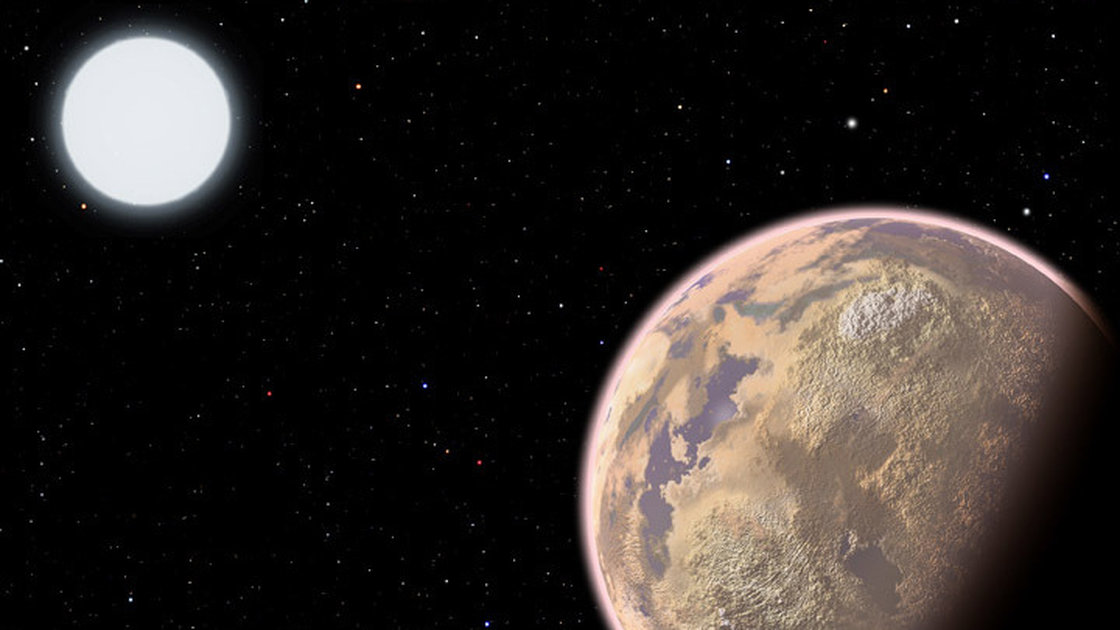
n this artist's conception, the atmosphere of an Earthlike planet displays a brownish haze — the result of widespread pollution. (Credit: Christine Pulliam/Harvard-Smithsonian Center for Astrophysics)
Artist’s conception of the atmosphere of an Earth-like planet displaying a brownish haze as the result of widespread pollution. (Credit: Christine Pulliam/Harvard-Smithsonian Center for Astrophysics)
via npr

Stellar snow globe mystery solved with Hubble’s help

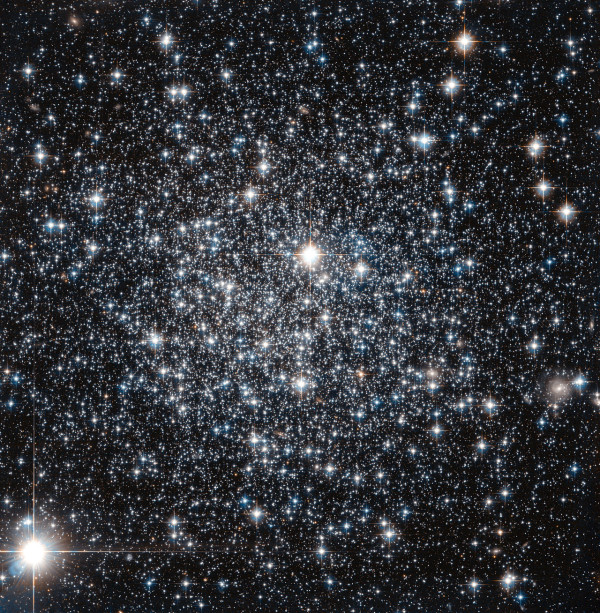
This new NASA/ESA Hubble Space Telescope image shows the globular cluster IC 4499. A cosmic archaeological dig has unfolded within a giant ball of stars some 55,000 light-years away. Credit: NASA)
This new NASA/ESA Hubble Space Telescope image shows the globular cluster IC 4499. A cosmic archaeological dig has unfolded within a giant ball of stars some 55,000 light-years away. (Credit: NASA)
via nationalgeographic

Squeezed light for advanced gravitational wave detectors and beyond(PDF)

Top: A typical set-up for squeezing injection in the first demonstrations of squeezing at GEO600 and LIGO, both using DC readout [36,37]. Proposed design for future detectors. This design features an in-vacuum OPO. The remainder of the squeezed light source remains outside of vacuum. (Credit: E. Oelker, L. Barsotti, S. Dwyer, D. Sigg, and N. Mavalvala)
Top: A typical set-up for squeezing injection in the first demonstrations of squeezing at
GEO600 and LIGO, both using DC readout [36,37]. Bottom: Proposed design for future detectors. This design features an in-vacuum OPO. The remainder of the squeezed light source remains outside of vacuum. (Credit: E. Oelker, L. Barsotti, S. Dwyer, D. Sigg, and N. Mavalvala)
via opticsinfobase

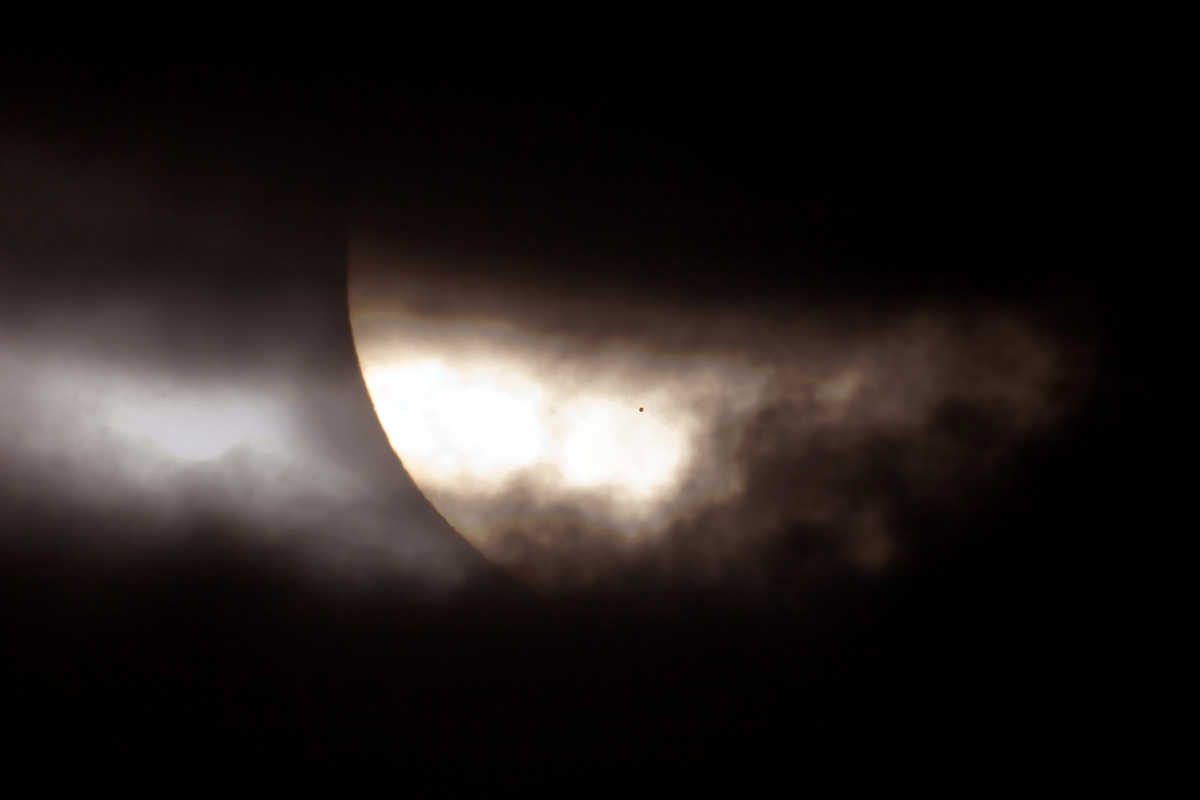
Mercury’s transit: An unusual spot on the sun

What’s that dot on the Sun? If you look closely, it is almost perfectly round. The dot is the result of an unusual type of solar eclipse that occurred in 2006. Usually it is the Earth’s Moon that eclipses the Sun. This time, the planet Mercury took a turn. (Credit: D. Cortner, NASA, K. Schmidt)
What’s that dot on the Sun? If you look closely, it is almost perfectly round. The dot is the result of an unusual type of solar eclipse that occurred in 2006. Usually it is the Earth’s Moon that eclipses the Sun. This time, the planet Mercury took a turn.
(Credit: D. Cortner, NASA, K. Schmidt)
 via spacefellowship

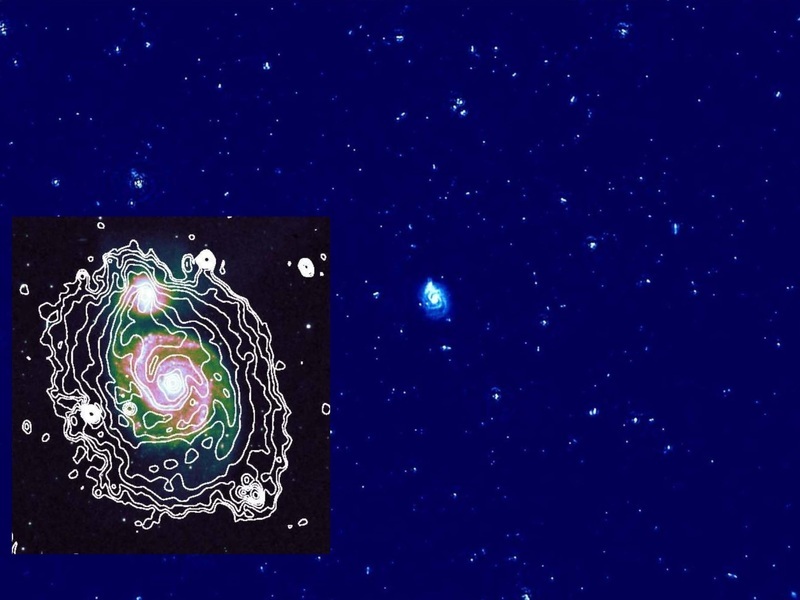
 The invisible galaxies: Radio images of the whirlpool galaxy and beyond

"Maybe we will see how galaxies are magnetically connected to intergalactic space. This is a key experiment in preparation for the planned Square Kilometre Array (SKA) that should tell us how cosmic magnetic fields are generated," says Rainer Beck, lead astronomer with the Max Planck Institute.
“Maybe we will see how galaxies are magnetically connected to intergalactic space. This is a key experiment in preparation for the planned Square Kilometre Array (SKA) that should tell us how cosmic magnetic fields are generated,” says Rainer Beck, lead astronomer with the Max Planck Institute.
via dailygalaxy
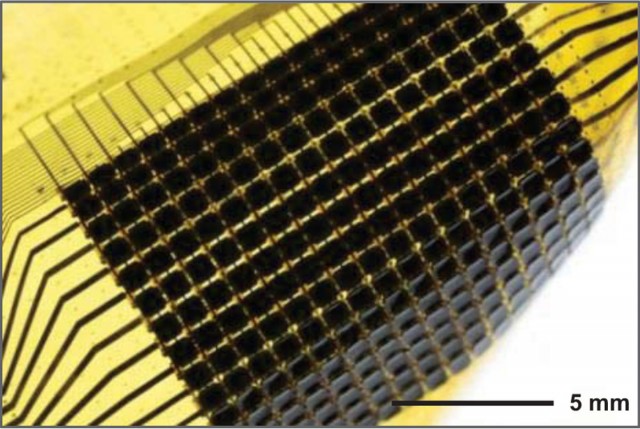
Researchers have developed a flexible structure that can sense ambient conditions and adjust its color to match them. At the moment, it only works in black and white. (Credit: PNAS, Timmer)
via arstechnica

Physics in the News

Thursday, August 21, 2014

Newly released Hypatia Catalog offers glimpse into the lives of stars

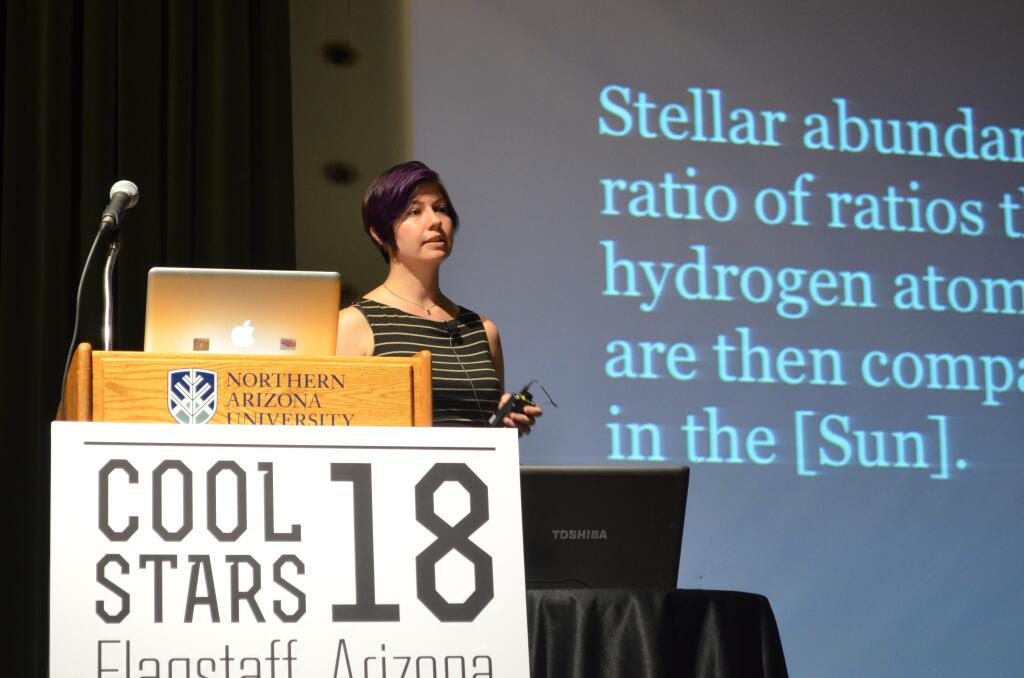
Natalie Hinkel gives a plenary talk at the Cool Stars 18 meeting in Flagstaff, Arizona, about her paper on the Hypatia Catalog. (Credit: Natalie Hinkel)
via asunews

US–Russia tensions hit scientists

The US Department of Energy has cancelled visits by Russian scientists to key US labs, including the Los Alamos National Laboratory. (Credit:NC-ND/Los Alamos National Laboratory)
via physicsworld

Unraveling new mysteries of cosmos next spring(VIDEO)

via onislam

Astrophysicists detect destruction of three stars by supermassive black holes

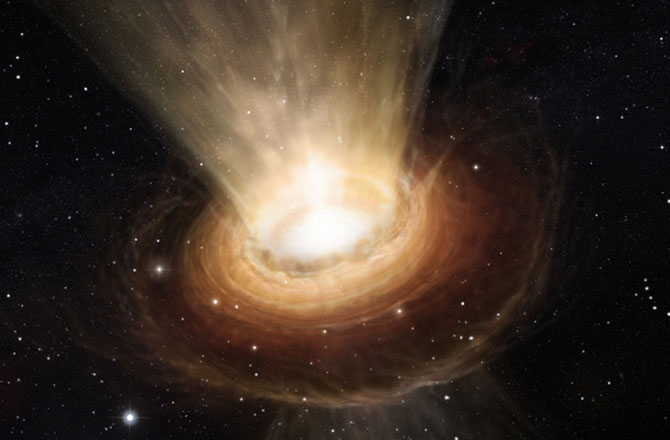
A star in a galaxy passes by a black hole closely enough to be destroyed once every 10,000 years. It is possible to detect the death of a star in a fairly distant galaxyas the destruction of a star generates a bright X-ray flare; it is only necessary to distinguish such a flare from other types of X-ray radiation. Because flares occur in a variety of astrophysical processes, the task of finding stars destroyed by black holes is quite complicated. (Credit: Sergei Sazonov)
via mipt

New clue on the formation of a black hole

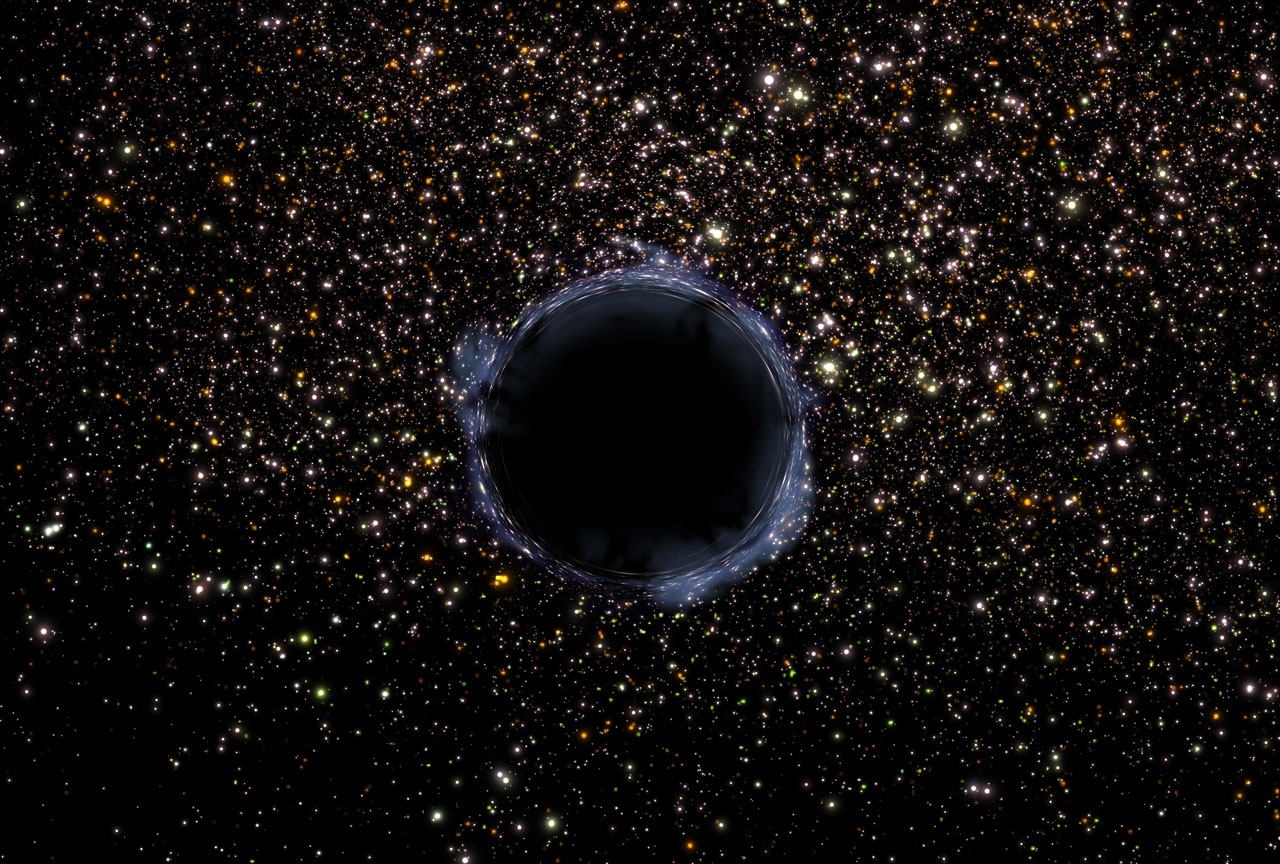
The recent finding of an intermediate-mass black hole provides evidence that could support some theories of how supermassive black holes form. (Credit: ESO/M. Kornmesser)
via discovery

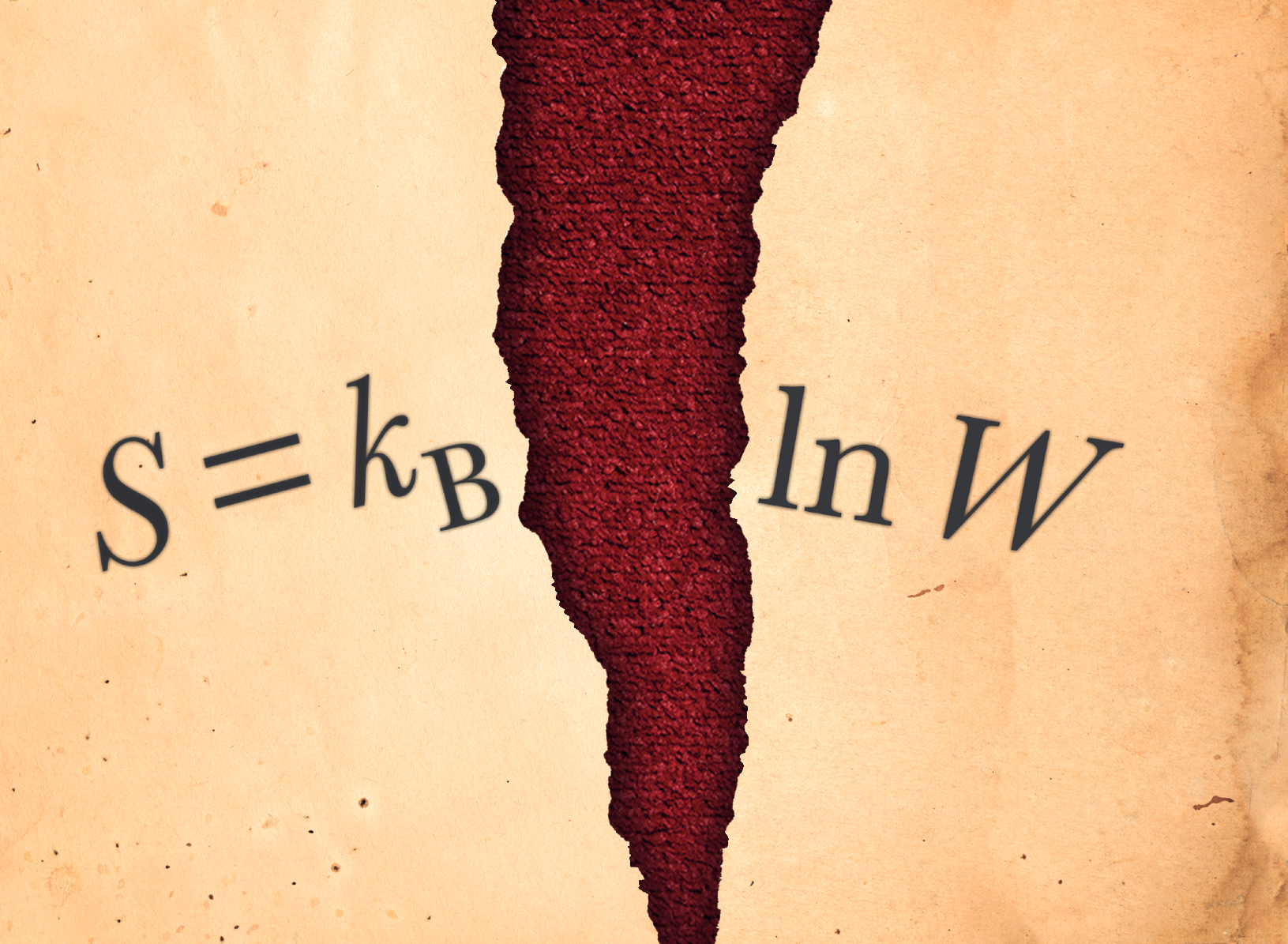
Roll over, Boltzmann

Screen Shot 2014-08-20 at 5.38.04 PM

 via cbpf

Where’s the Kaboom? Astronomers detect no x-ray emission from recent supernova explosion

via americaspace

Does gravity hold the key to proving existence of parallel worlds?

To date, perhaps some of the best evidence for parallel worlds actually arrives courtesy of an enigmatic oddity within deep-space, careening toward the Milky Way at an incredible 200,000 miles per hour. Though it’s more than 2 million light years away, the Andromeda galaxy, as observed by astronomers, appears to engage in anomalous behavior which, at times, suggests a strange gravitational phenomenon. Specifically, gravity that could be draining from another universe, as yet invisible to us, could be the impetus behind such anomalous phenomena in deep space. (Credit: Micah Hanks)
Some of the best evidence for parallel worlds actually arrives courtesy of an enigmatic oddity within deep-space, careening toward the Milky Way at an incredible 200,000 miles per hour. Though it’s more than 2 million light years away, the Andromeda galaxy, appears to engage in anomalous behavior which suggests a strange gravitational phenomenon. Specifically, gravity that could be draining from another universe, as yet invisible to us, could be the impetus behind such anomalous phenomena. (Credit: Micah Hanks)
via mysteriousuniverse

Quantum State Can Turn About a Point Like a Ballerina

Having a single point in contact with the ground lets a ballerina spin. In the same way, a quantum state is dynamic because it can turn about a point thanks to quantum uncertainty, say CQT and Oxford researchers. (Credit: Michael Garner, courtesy English National Ballet)
via quantumlah

NASA’s first green fuel spacecraft figures out eco-power

via networkworld

Mysterious source of ozone-depleting chemical baffles NASA

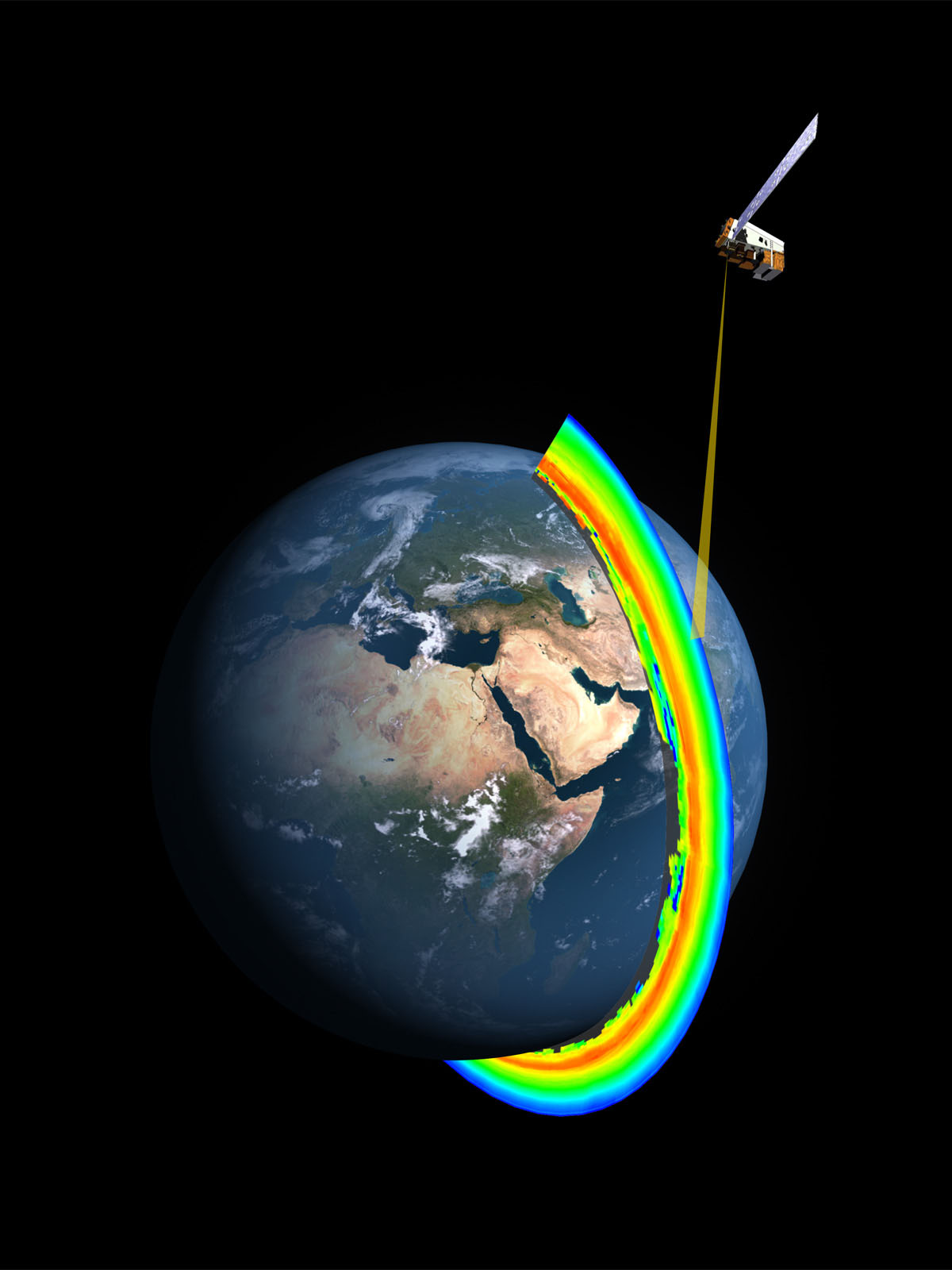
A cross-section of the Earth's ozone layer as measured by the limb profiler, part of the Ozone Mapper Profiler Suite that's aboard the Suomi NPP satellite. (Credit: NASA/NOAA)
A cross-section of the Earth’s ozone layer as measured by the limb profiler, part of the Ozone Mapper Profiler Suite that’s aboard the Suomi NPP satellite. (Credit: NASA/NOAA)
via ZeeNews

Can a plane bend upwards causing objects to be repelled?

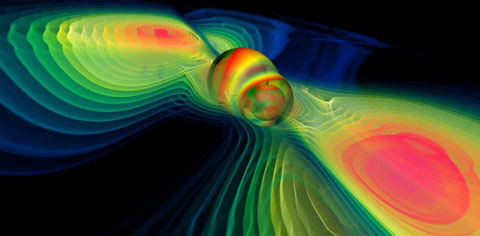
A simulation of two colliding black holes. Colors reflect the variation of gravitational waves. (Credit: Werner Benger/NASA Blueshift)
via physicscentral
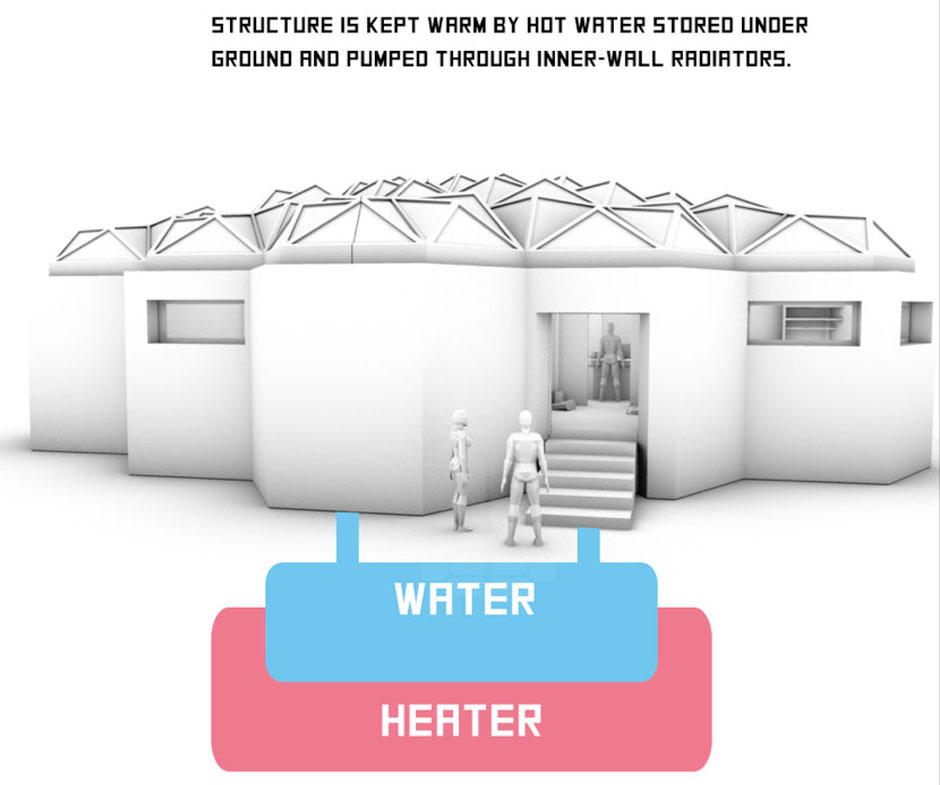
 NASA and markerbot reveal bioshielding dwelling for mars


via designboom