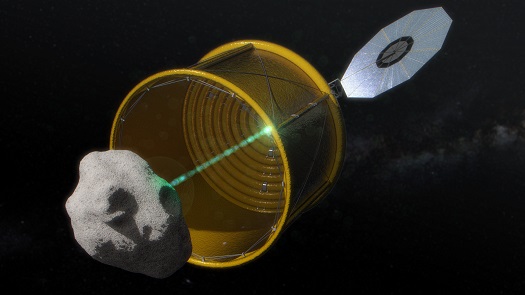
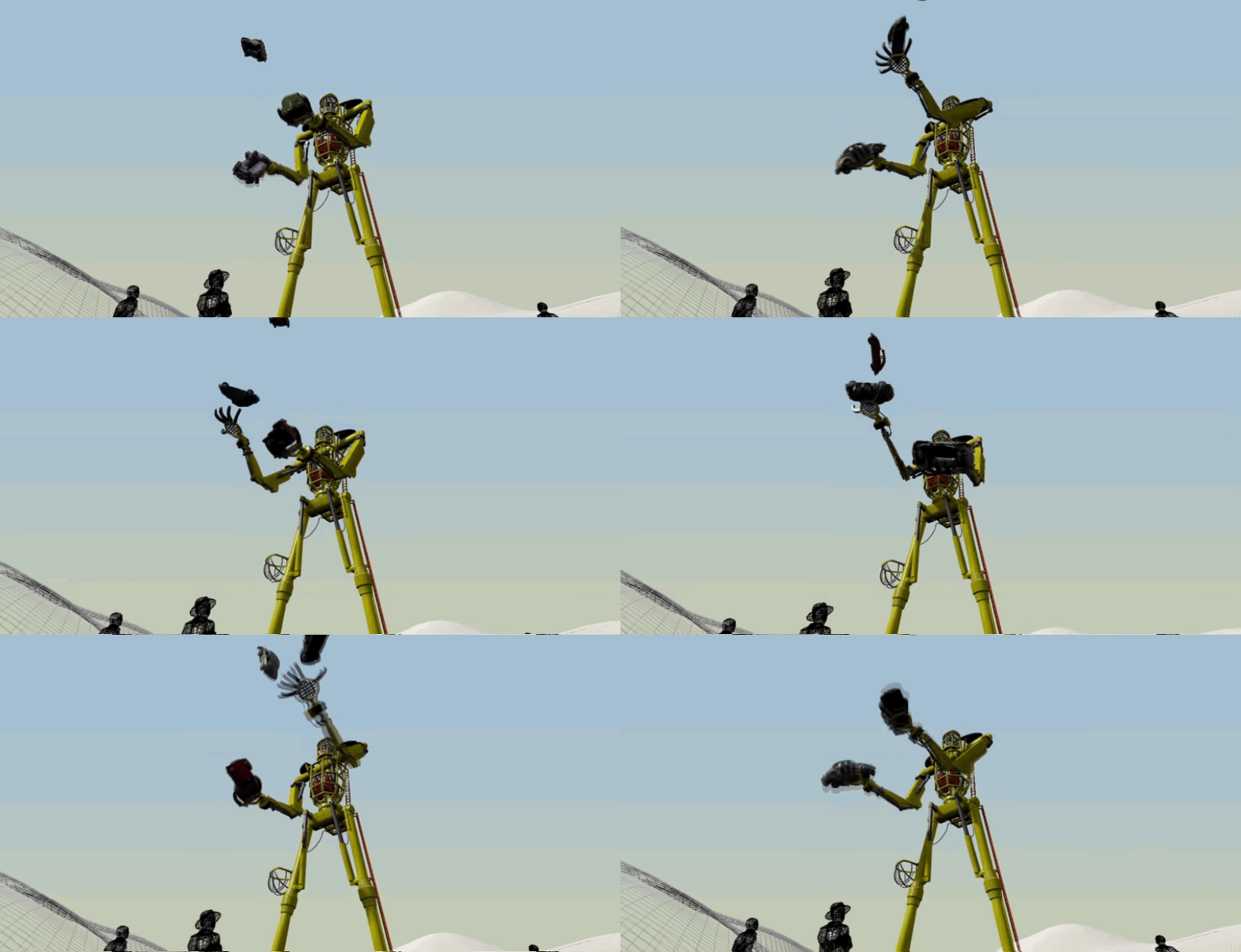
In this concept image, the robotic vehicle deploys an inflatable bag to envelop a free-flying small asteroid before redirecting it to a distant retrograde lunar orbit. (Credit: NASA)
via sciencenews
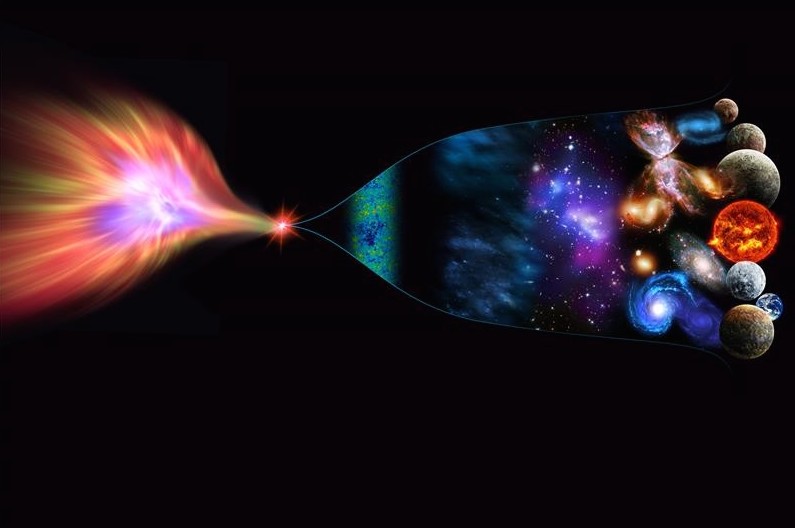
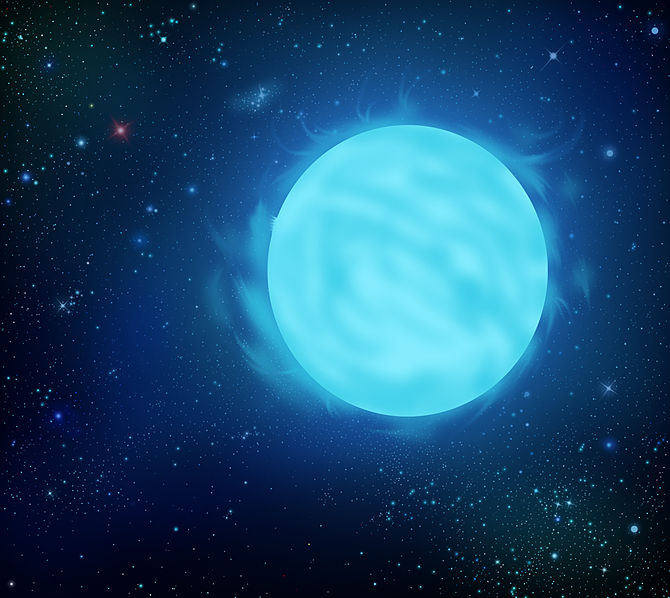
Researchers from Three Perimeter Institute have a new idea, and have claimed that what is perceived as the big bang, could be the three-dimensional ‘mirage’ of a collapsing star in a universe profoundly different than our own. (Credit: NASA, ANI)
via aninews
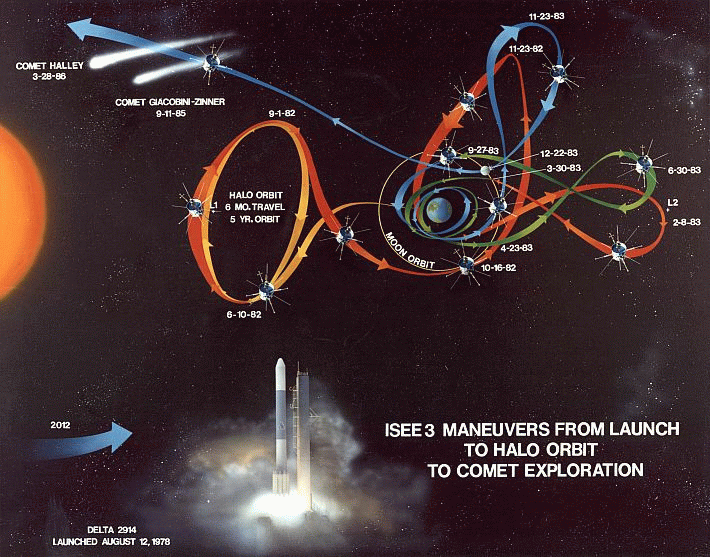
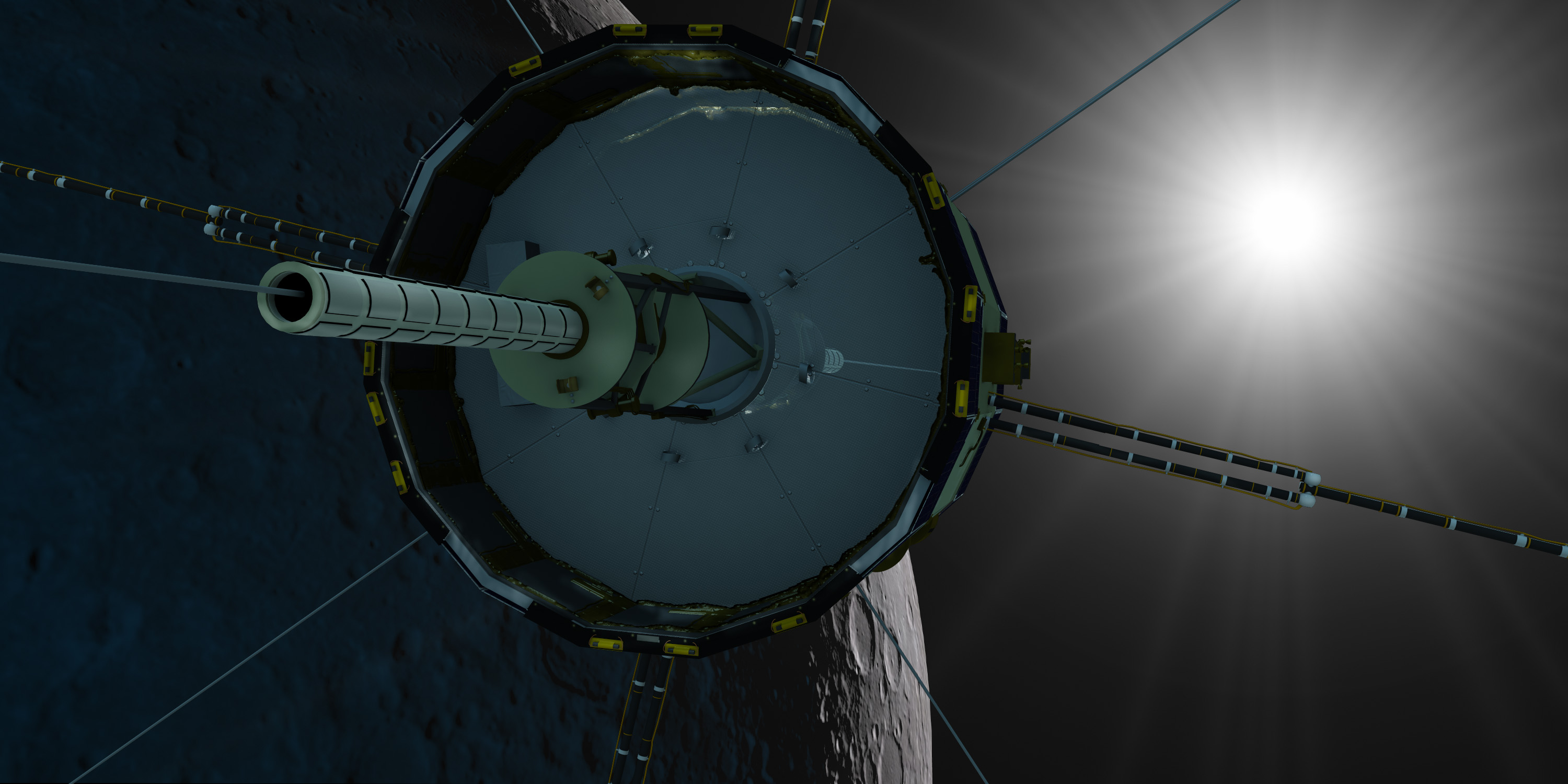
The International Sun-Earth Explorer 3 (ISEE-3) will have the closest view of the moon at 11:16 a.m. PDT. Members of the rebooted mission partnered with Google to create a website, where they will host a video hangout beginning at 10:30 a.m. PDT. (Credit: ISEE3, NASA)
via arstechnica
our known universe could be the three-dimensional “wrapping” around a four-dimensional black hole’s event horizon. In this scenario, our universe burst into being when a star in a four-dimensional universe collapsed into a black hole. (Credit: Perimeter Institute)
via dailygalaxy
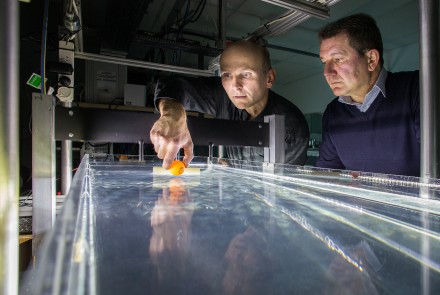
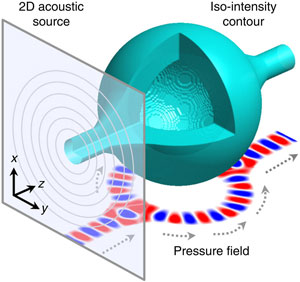
Scientists have developed a method to bend sound waves as they travel through open air, and can even create an acoustic “bottle” that can trap and hold tiny particles. (Credit: Xiang Zhang Group)
via spectrum
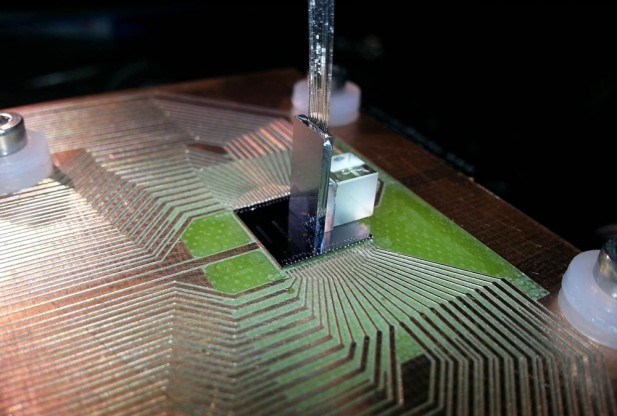
At the Vienna University of Technology (TU Wien), experiments with nitrogen atoms in diamonds are already being carried out. (Credit: TU Wien)
via redorbit
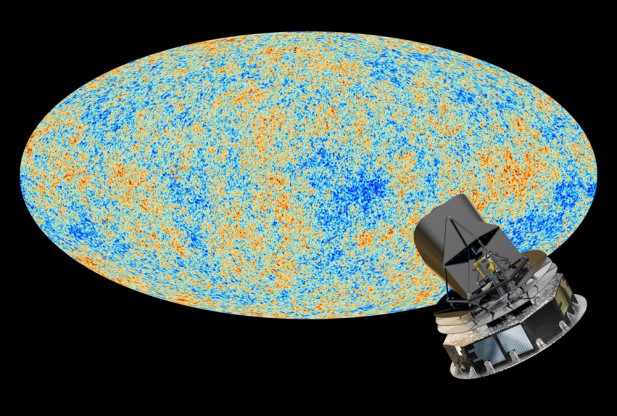
The anisotropies of the Cosmic microwave background (CMB) as observed by Planck. The CMB is a snapshot of the oldest light in our Universe, imprinted on the sky when the Universe was just 380 000 years old. It shows tiny temperature fluctuations that correspond to regions of slightly different densities, representing the seeds of all future structure: the stars and galaxies of today. (Credit: ESA and the Planck Collaboration – D. Ducros)
via redorbit
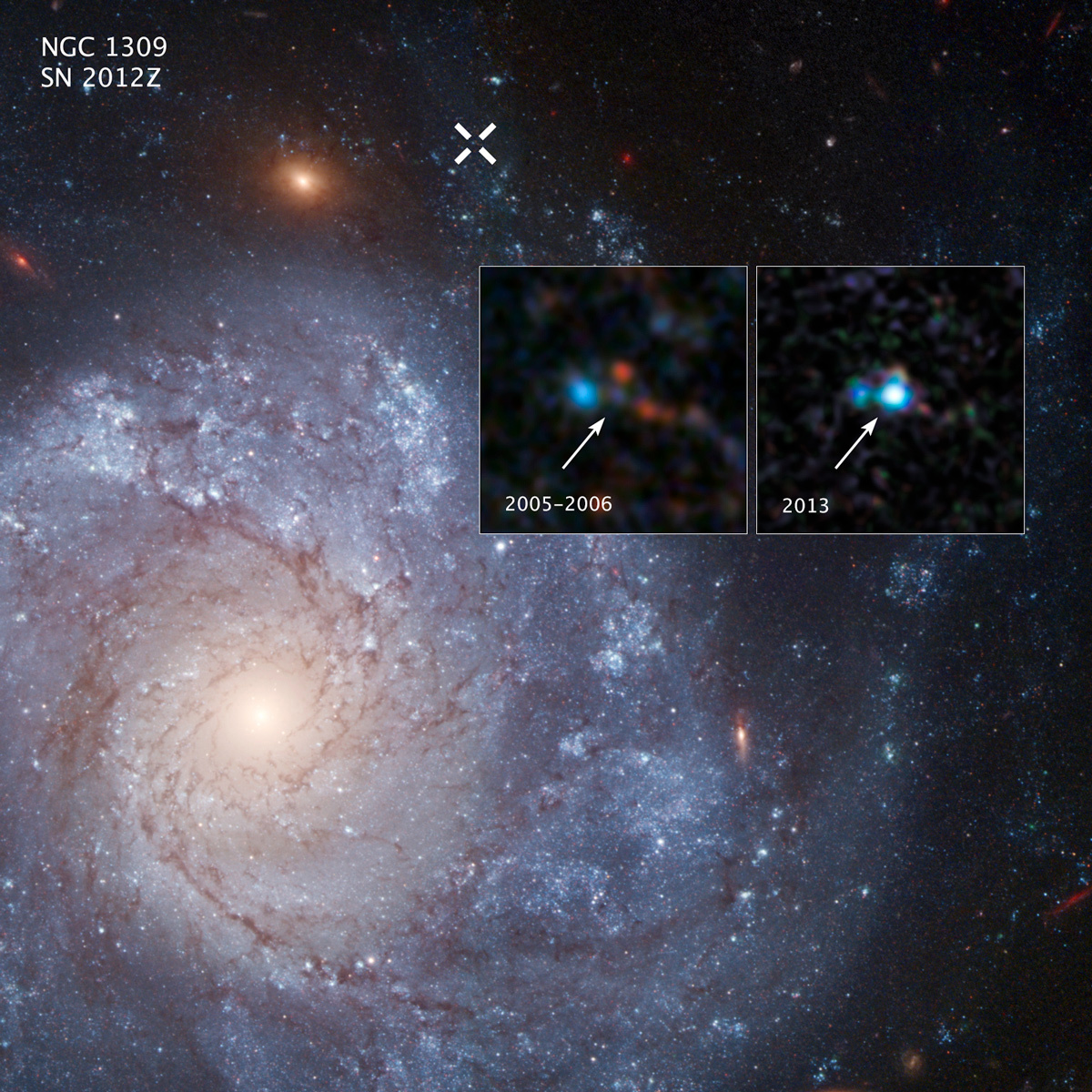
The two inset images show before-and-after images captured by NASA’s Hubble Space Telescope of Supernova 2012Z in the spiral galaxy NGC 1309. The white X at the top of the main image marks the location of the supernova in the galaxy. (Credit: NASA)
via time
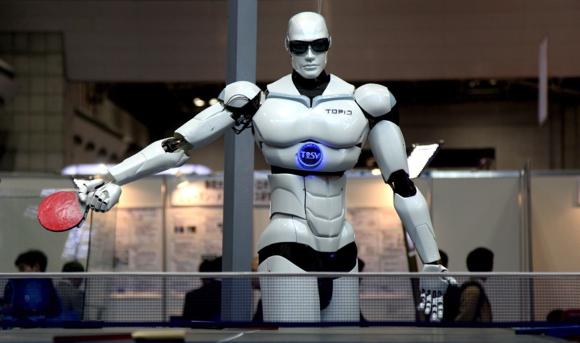
Nearly half of the respondents (48%) predicted that robots and AI will displace more jobs than they create over the coming decade. While that left a slim majority believing the impact of technology on employment will be neutral or positive. (Credit: Humanrobo/Wikimedia Commons)
via forbes
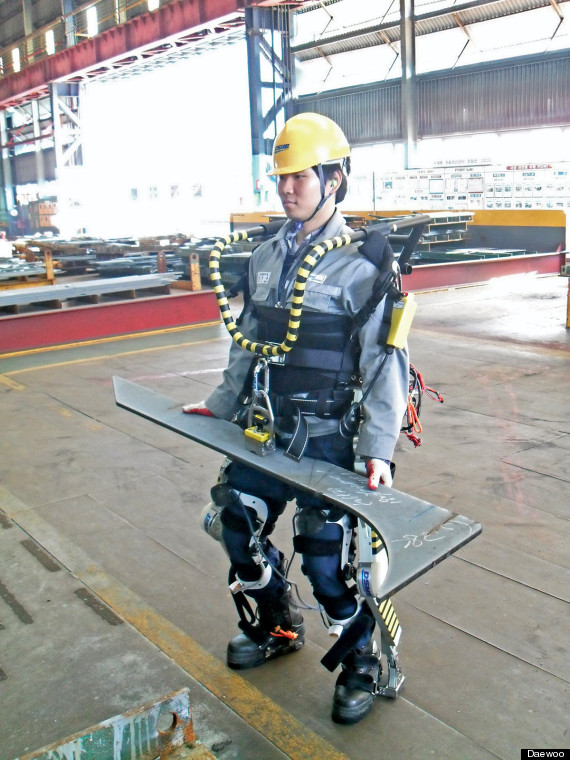
Chu says worker feedback from the trial has been mostly positive. Testers were pleased that the exoskeleton let them lift heavy objects repeatedly without strain, but everyone also wanted it to move faster and be able to cope with heavier loads. (Credit: Daewoo)
via cnet
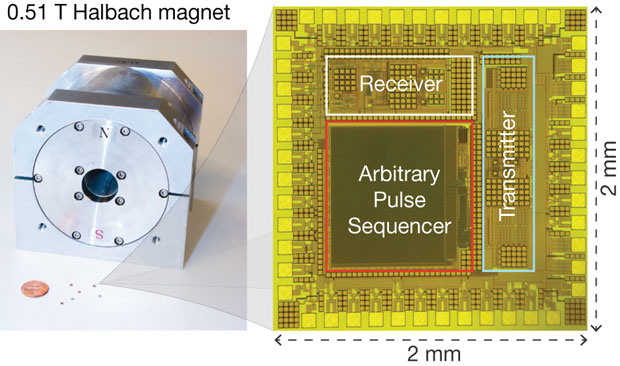
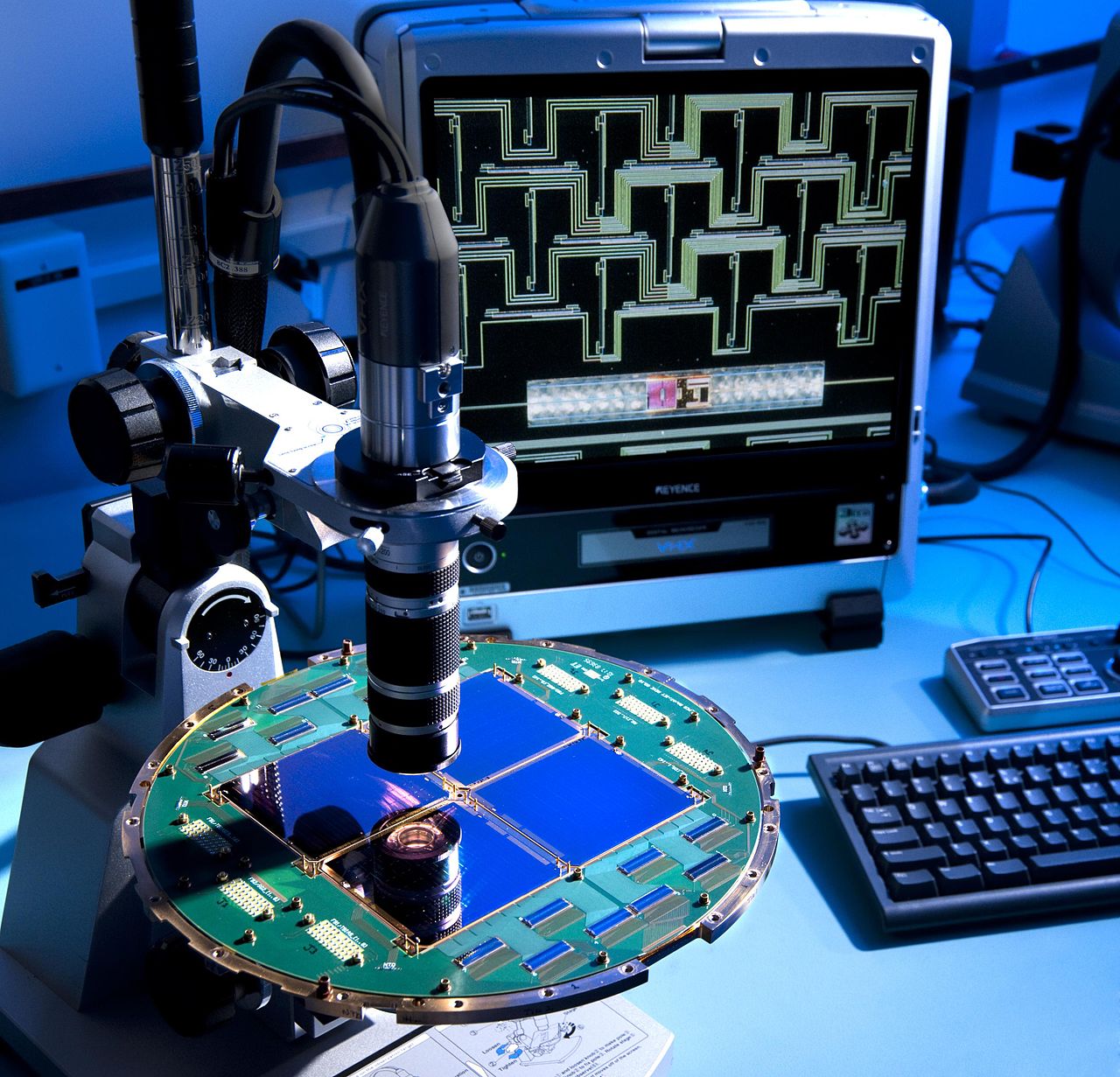
Harvard electrical engineering and applied physics professor Donhee Ham and his colleagues have drastically shrunk the size of the electronics even further, fitting the RF receiver, transmitter and other components on a tiny seed-sized chip. (Credit: Dongwan Ha/Harvard SEAS)
via ieee
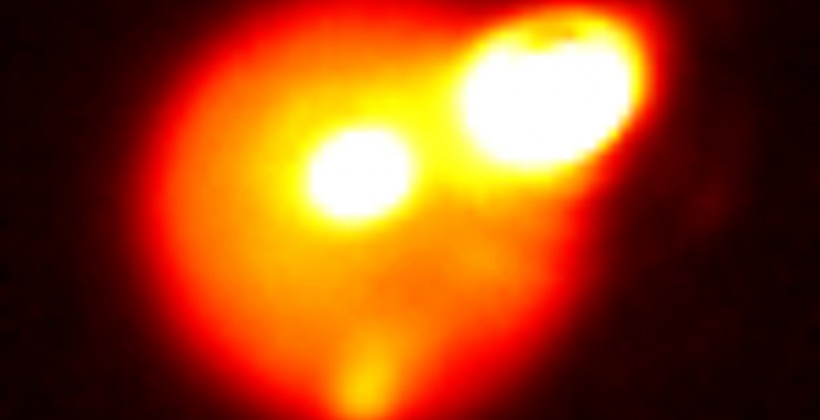
Footage from the Venus Express orbiter confirmed sightings of hot spots on the surface of the planet, in accordance with volcanoes still simmering. (Credit: NASA)
via slashgear
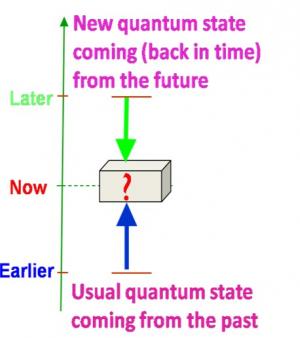
At the present moment another measurement is performed which is influenced both by what happened earlier and what happened later. (Credit: Jeff Tollaksen)
via phys
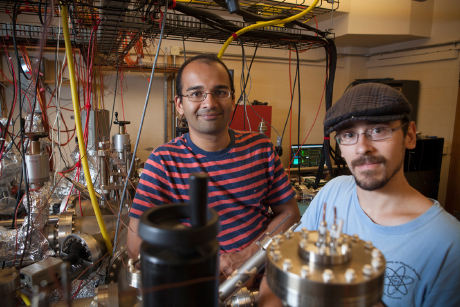
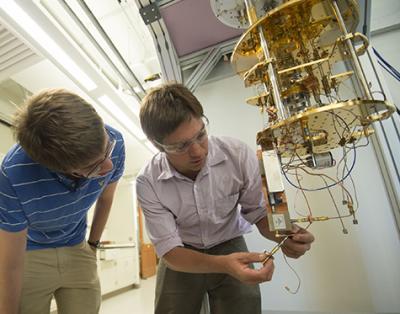
Kater Murch (right), assistant professor of physics at Washington University in St. Louis, and junior Chris Munley work with the equipment that can map a quantum device’s trajectory between two points in quantum state space, a feat until recently considered impossible. (Credit: Joe Angeles/WUSTL Photos)
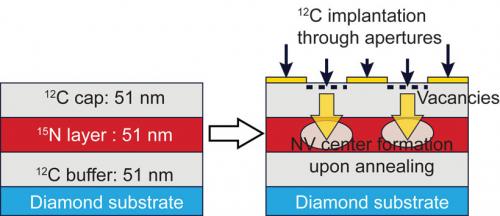
This is a schematic of the process to localize NV centers in 3-D. The researchers blasted carbon ions through holes to create vacancies and heated the diamond to make the vacancies mobile within the crystal. NV centers could form in the nitrogen-doped layer below where the holes were placed. (Credit: F.J. Heremans and D. Awschalom/U. Chicago and K. Ohno/UCSB)
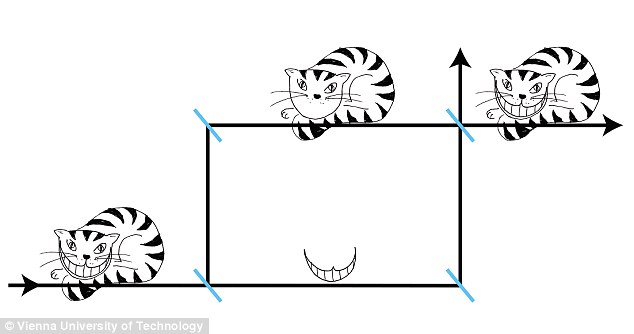
Scientists have observed for the first time a weird quantum phenomenon known as the ‘Cheshire Cat’ effect (illustration shown). The ‘cat’ in question was a subatomic neutron particle, and the ghostly ‘grin’ the particle’s magnetic moment, which describes the strength of its coupling to an external magnetic field. (Credit: Vienna U)
via livescience
NASA is studying the effects of radiation on sperm. Freeze-dried mouse sperm are spending one, 12, and 24 months on the ISS before being used to fertilize mouse eggs back home. (Credit: Wei Ming/Shutterstock)
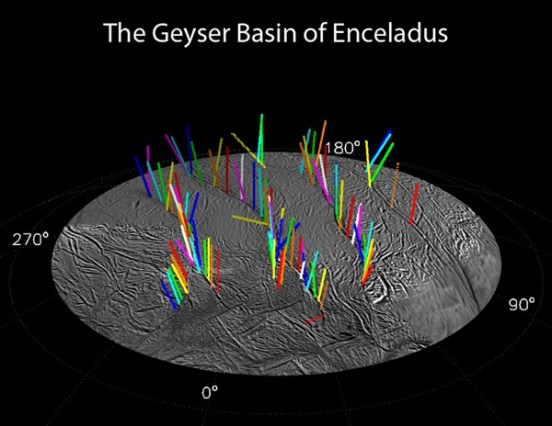
This graphic shows a 3-D model of 98 geysers whose source locations and tilts were found in a Cassini imaging survey of Enceladus’ south polar terrain by the method of triangulation. While some jets are strongly tilted, it is clear the jets on average lie in four distinct “planes” that are normal to the surface at their source location. (Credit: NASA)
via nasa
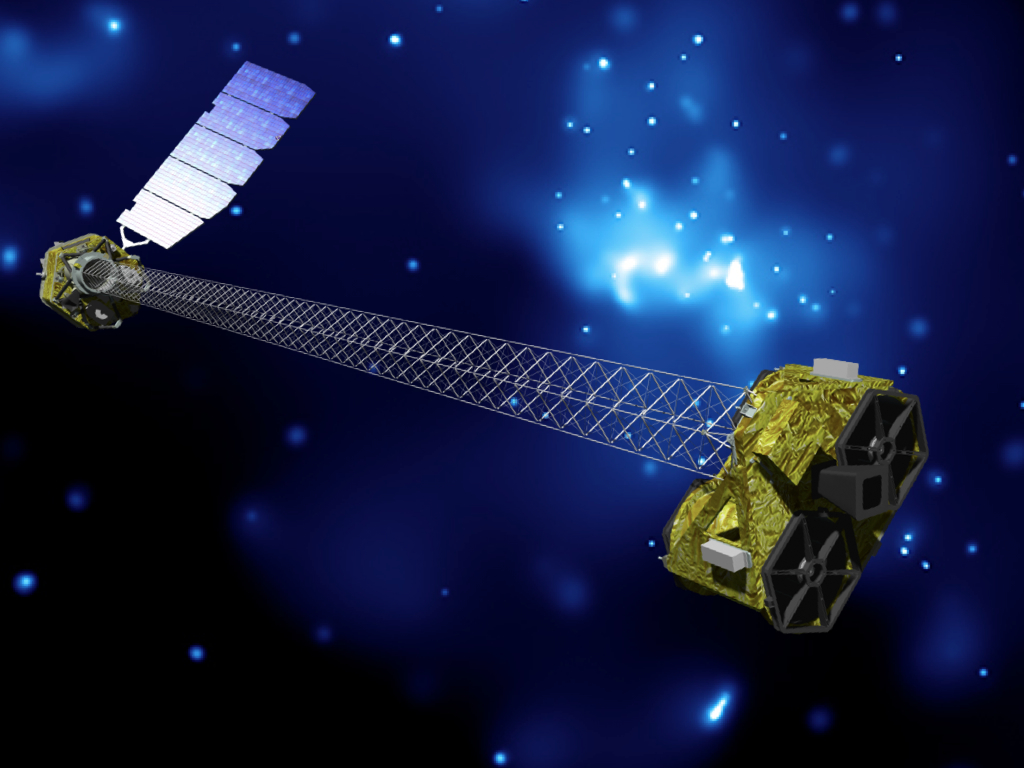
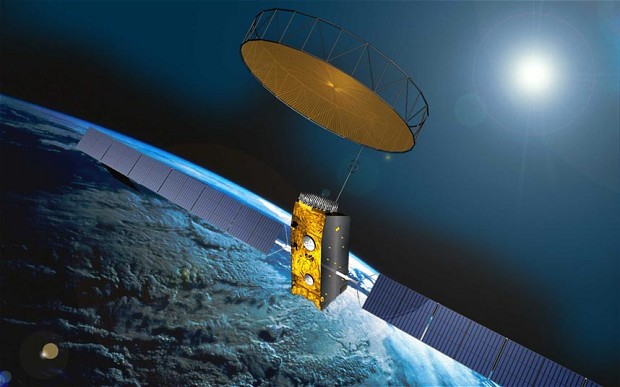
An artist’s depiction of NASA’s International Sun-Earth Explorer 3 spacecraft as it flies through space. The volunteer ISEE-3 Reboot Project, which hoped to move the probe closer to Earth, now says the spacecraft is out of gas. (Credit: NASA)
via space
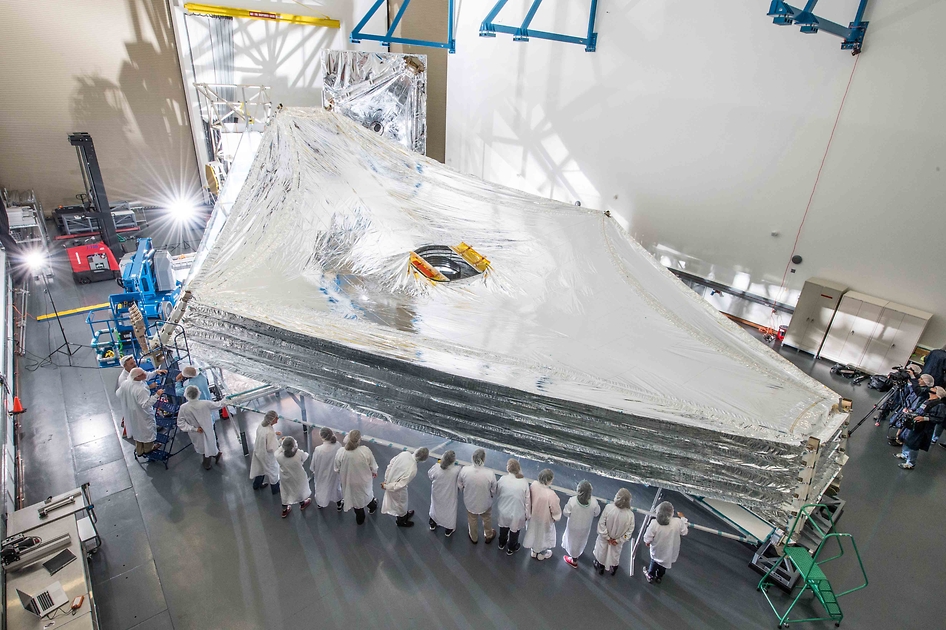
The James Webb Space Telescope (sometimes called JWST) is an orbiting infrared observatory that will complement and extend the discoveries of the Hubble Space Telescope, with longer wavelength coverage and greatly improved sensitivity.(Credit: NASA/Chris Gunn)
via nasa
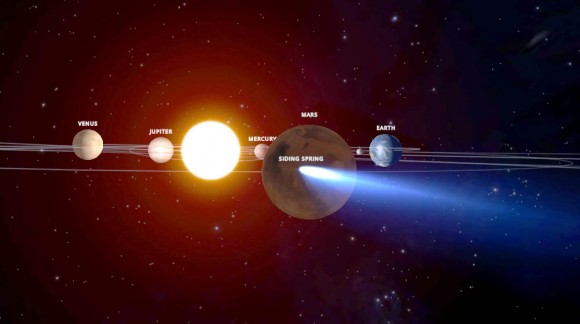
Simulation depicts comet C/2013 A1 Siding Spring during its close Mars flyby on Oct. 19. Its nucleus will miss Mars by about 82,000 miles (132,000 kilometers). The comet’s trail of dust particles shed by the nucleus might be wide enough to reach the planet. Click to see the interactive, animated view. (Credit: Solarsystemscope.com)
via universetoday
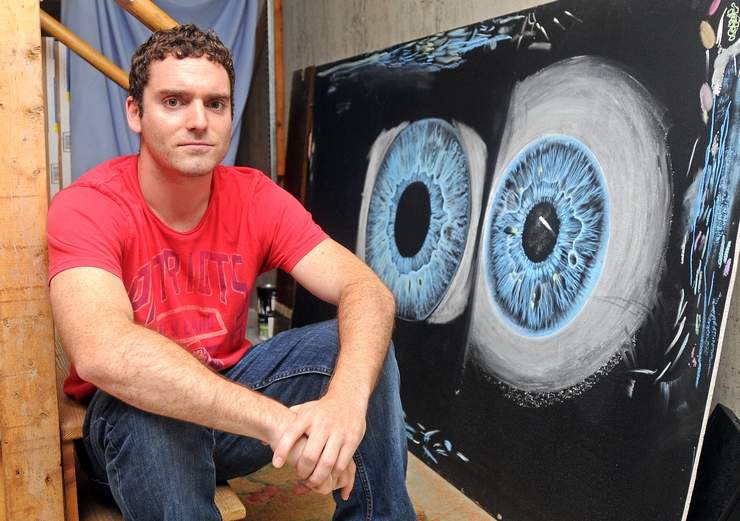
Justin Dowd, a Princeton man who won a contest and will be traveling into outer space next year, sits next to an illustration used in the opening scene of his educational video. (Credit: T&G Staff/STEVE LANAVA)
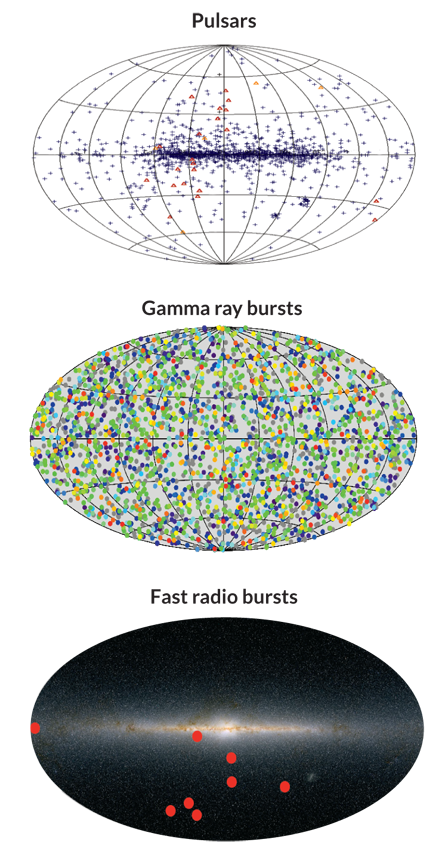
Mapping signals on the sky can offer clues about where the signals originate. Pulsars (top) concentrate in the Milky Way, because most of the ones we see sit in our galaxy. Gamma bursts (middle) come from everywhere, which means they’re parked in other galaxies. Fast radio bursts (bottom) seem to mostly avoid our galgaxy, a hint that they may come from very far away.(Credits: Green Bank Telescope, West Virginia Univ; G. Fishman et al/BATSE, CGRO, NASA.; J. Carpenter, T.H. Jarrett/2MASS, R. Hurt, C. Crockett)
via sciencenews
Evidence of gravitational waves in the infant universe may have been uncovered by the BICEP2 radio telescope. (Credit: NASA/JPL-Caltech)
via uncommondescent
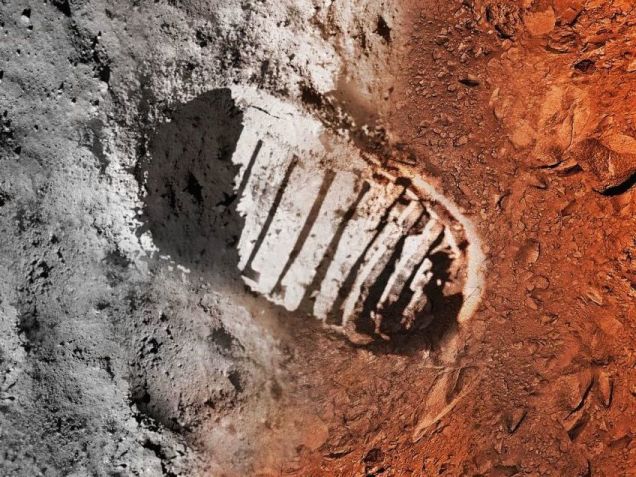
The first Giant Leap was Apollo 11 landing astronauts on the moon. The next Giant Leap could be Apollo 45 landing humans on Mars. (Credit: NASA)
via io9