Physics in the News

Tuesday, July 1, 2014

Welcome to the weird and wild west of private spaceflight

This is Spaceport America's Operations Center. The building, which Hendrickson notes is affectionately called "the sock," houses the facility's mission control center on its upper floor. (Credit: Dan Hendrickson)
This is Spaceport America’s Operations Center. The building, which Hendrickson notes is affectionately called “the sock,” houses the facility’s mission control center on its upper floor. (Credit: Dan Hendrickson)
via theverge

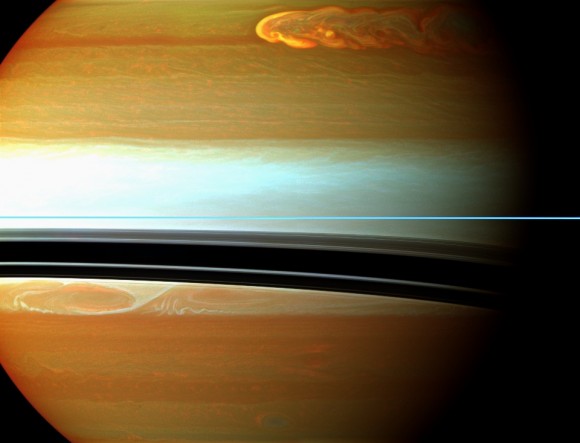
Happy 10th Birthday Cassini!

Saturn’s northern storm marches through the planet’s atmosphere in the top right of this false-color mosaic from NASA’s Cassini spacecraft. (Credit: NASA/JPL-Caltech/Space Science Institute)
via universetoday

Researchers create quantum dots with single-atom precision
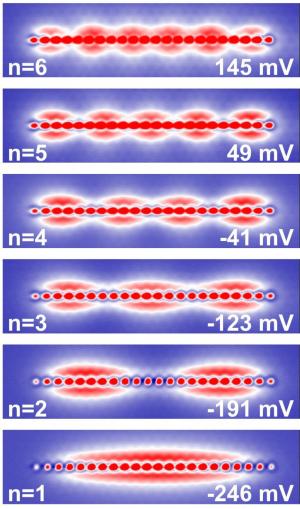
This image shows quantized electron states, for quantum numbers n = 1 to 6, of a linear quantum dot consisting of 22 indium atoms positioned on the surface of an InAs crystal. (Credit: Stefan Fölsch/PDI)
via phys.org

Reigning in chaos in particle colliders yields big results
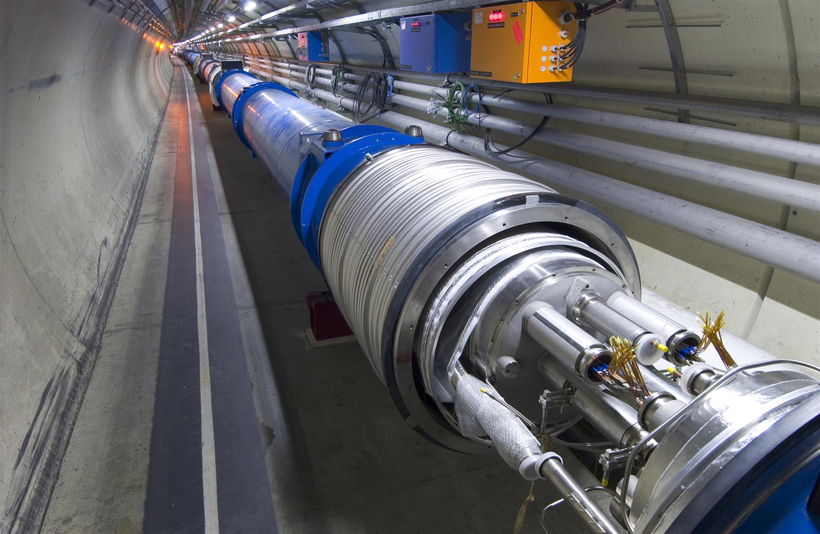
A method to correct tiny defects in the LHC’s superconducting magnets (example shown above) was crucial to the discovery of the Higgs boson, which was announced in 2012. (Credit: CERN)
A method to correct tiny defects in the LHC’s superconducting magnets (example shown above) was crucial to the discovery of the Higgs boson, which was announced in 2012.
(Credit: CERN)
via aip.org

Russia to Create Super-Heavy Rocket Carrier
(Credit) J.Gabás Esteban/cc-by-nc-sa 3.0
via voiceofrussia

Scientists develop force sensor from carbon nanotubes
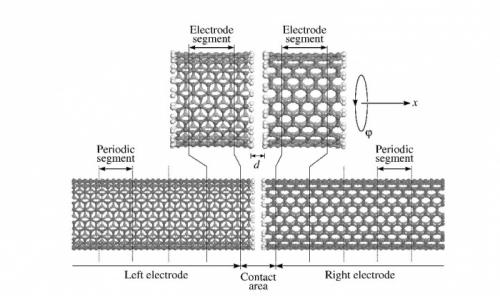
 A group of researchers from Russia, Belarus and Spain, including Moscow Institute of Physics and Technology professor Yury Lozovik, have developed a microscopic force sensor based on carbon nanotubes. (Credit: Computational Materials Science journal)
A group of researchers from Russia, Belarus and Spain, including Moscow Institute of Physics and Technology professor Yury Lozovik, have developed a microscopic force sensor based on carbon nanotubes. (Credit: Computational Materials Science journal)
via phys.org

India’s Mars mission ‘cost less than the film Gravity’
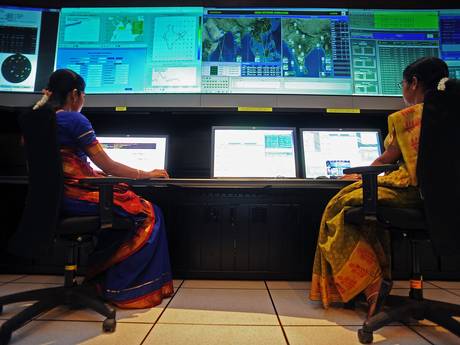
Scientists from the Indian Space Research Organisation work in the Indian Regional Navigational Satellite System control room at the Indian Deep Space Network (Credit: AP)
via the independent

Physics in the News

Sunday, June 29, 2014

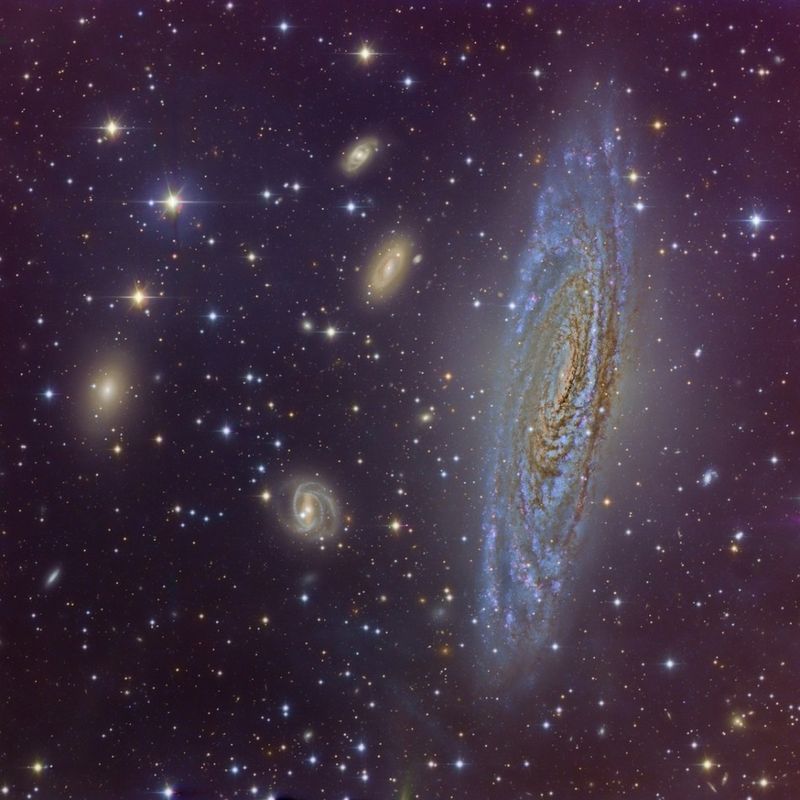
Gravity is Driving Growth of the Universe

Astronomers Confirm from 600,000 Galaxies

via dailygalaxy


The Grandfather Paradox

The "grandfather paradox": Time travel raises the spectrum of possibly changing life events. Photo: Universal Studios
The “grandfather paradox”: Time travel raises the spectrum of possibly changing life events. Photo: Universal Studios
via smh.com
 

NASA ‘flying saucer’ Success: A better way to land on Mars?

via theguardian


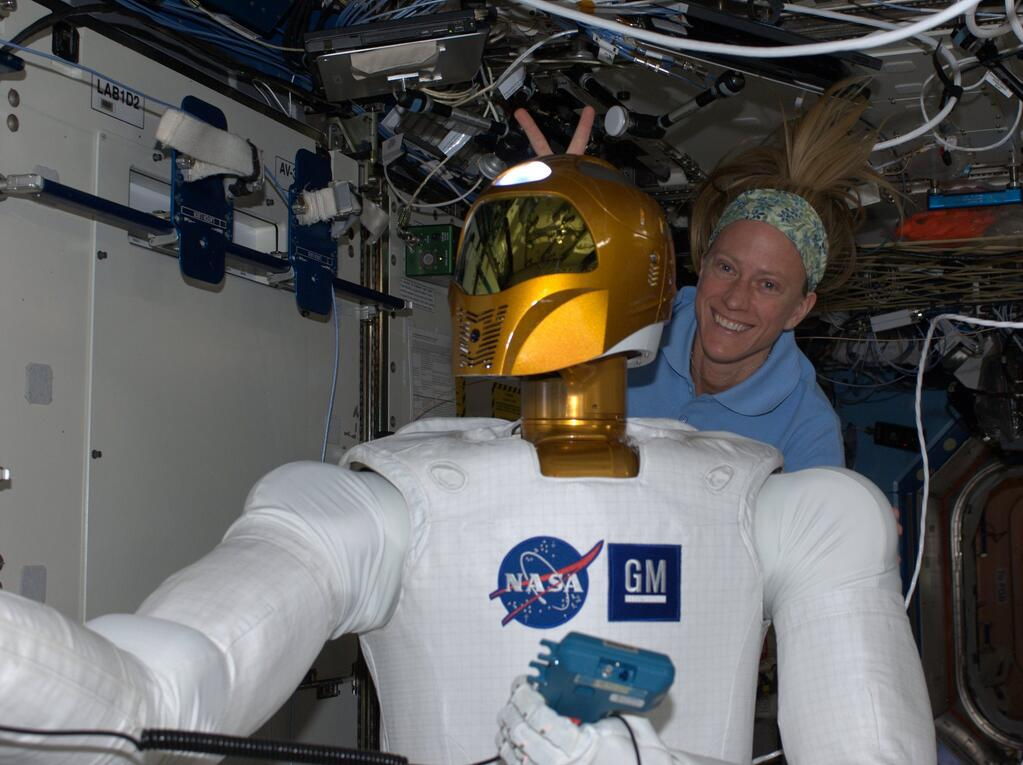
NASA’s Robot Astronaut Inspiring Tech Advances Here on Earth

Aboard the International Space Station, astronaut Karen Nyberg indulges in a moment of levity with Robonaut 2. Image tweeted on June 28, 2013.

via .space.com


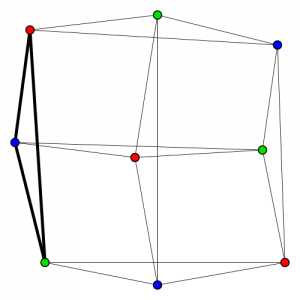
The Most Mathematically Perfect Day of the Year

The Paley graph of order 9 is a perfect graph, making it an appropriate object of veneration and study on June 28, a perfect day. Image: David Eppstein. (Credit: Wikimedia)
via scientificamerican
 

Delving into Dark Matter

Theory says there may be disk of it at center of galaxy. (Credit: Shutterstock)
Theory says there may be disk of it at center of galaxy.
via theepochtimes

Physics in the News

Saturday, June 28, 2014

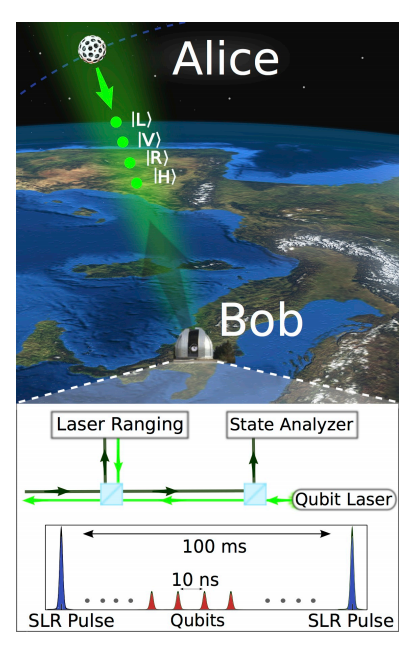
The Space-Based Quantum Cryptography Race

via technologyreview

Space football fever: NASA astronauts lose hair in World Cup bet (VIDEO)

via rt.com

STEREO probes operations will be curtailed for more than a year

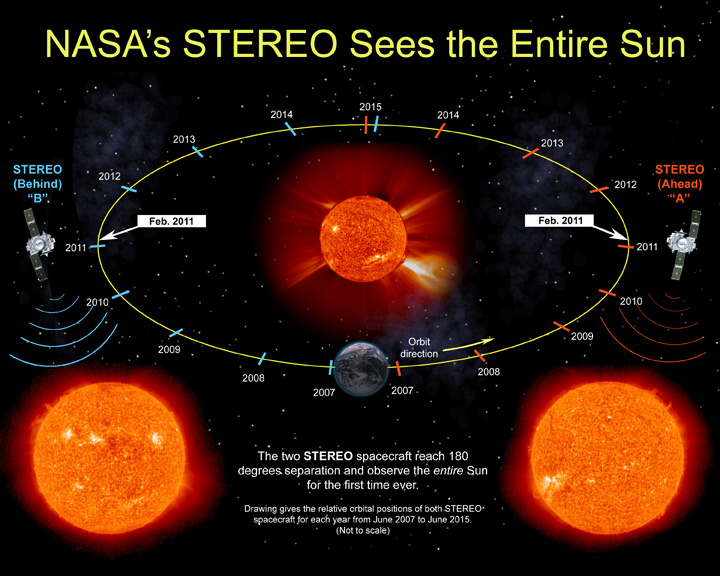
Illustration of the positions of the two STEREO spacecraft show that they attain 180 degrees of separation in Feb. 2011, thus allowing the world to see the entire Sun for the first time. (Credit: NASA/STEREO/SSC)
via thewatchers

Oppenheimer’s Folly: On black holes, fundamental laws and pure and applied science

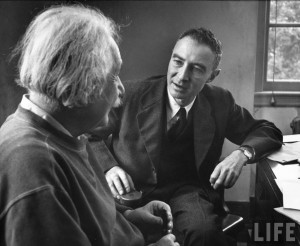
Einstein and Oppenheimer: Both men in their later years dismissed black holes as anomalies, unaware that they contained some of the deepest mysteries of physics (Image: Alfred Eisenstaedt, LIFE magazine)
via scientificamerican

Physicists Think They Can Solve the Mysteries of Quantum Mechanics, Cosmology, and Black Holes in One Go

Hubble Space Telescope image. (Credit: NASA, ESA, G. Illingworth, D. Magee, and P. Oesch (University of California, Santa Cruz), R. Bouwens (Leiden University), and the HUDF09 Team)
via scientificamerican

The Smallest Black Hole in the Universe (Synopsis)

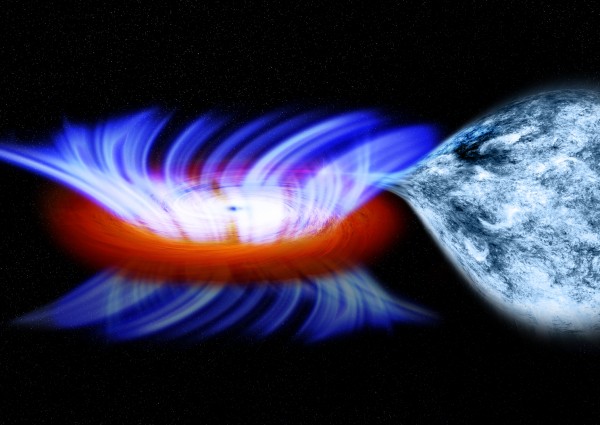
A binary system containing a stellar-mass black hole called IGR J17091. The strong gravity of the black hole, on the left, is pulling gas away from a companion star on the right. This gas forms a disk of hot gas around the black hole, and the wind is driven off this disk(Credit: NASA/CXC/M.Weiss)
via scienceblogs.com

Physicists’ findings improve advanced material

A new technique developed by a Binghamton University physicist and his colleagues will improve the quality of flexible, conductive, transparent glass.
A new technique developed by a Binghamton University physicist and his colleagues will improve the quality of flexible, conductive, transparent glass. (Credit: NASA)
via phys.org

Physics in the News

Wednesday June 25, 2014

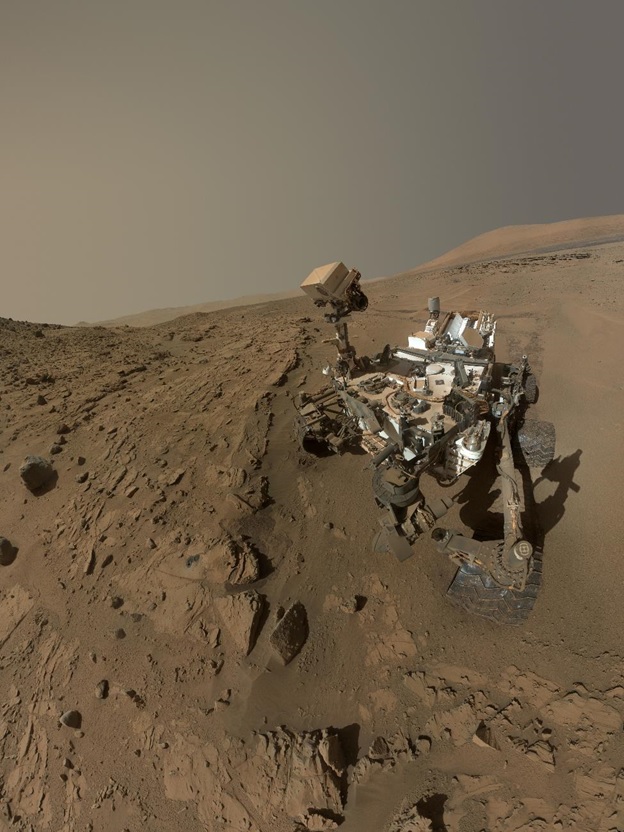
The Curiosity rover has been on Mars for one Martian year. It celebrated by taking a selfie.

NASA’s Mars Curiosity Rover captures a selfie to mark a full Martian year — 687 Earth days — spent exploring the Red Planet. (NASA/JPL-Caltech/MSSS)
NASA’s Mars Curiosity Rover captures a selfie to mark a full Martian year — 687 Earth days — spent exploring the Red Planet. (Credit: NASA/JPL-Caltech/MSSS)

via washingtonpost


Cold white dwarf star is ‘Earth-size diamond in space’

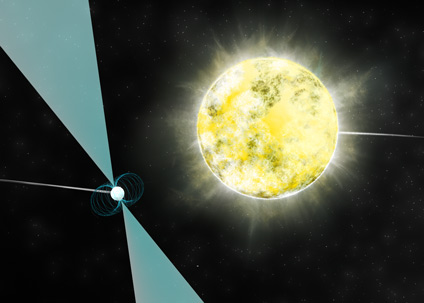
Artist impression of a white dwarf star in orbit with pulsar PSR J2222-0137. It may be the coolest and dimmest white dwarf ever identified. (Credit: B. Saxton NRAO/AUI/NSF)

via public.nrao.edu


LLNL researchers define boundaries for petawatt laser absorption

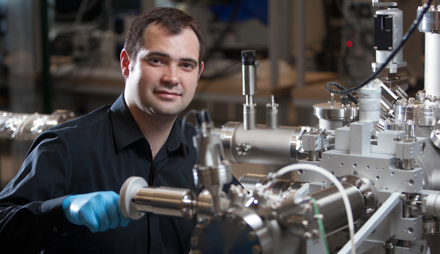
 Lawrence Livermore physicist Hui Chen sets up targets for an experiment using petawatt laser technology at the Jupiter Laser Facility.
Lawrence Livermore physicist Hui Chen sets up targets for an experiment using petawatt laser technology at the Jupiter Laser Facility.

via phys.org


How the Aged Vacuum Tube Could Save Moore’s Law

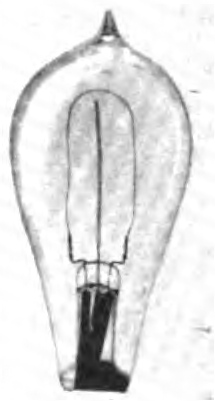
One of the bulbs Thomas Alva Edison used to discover thermionic emission (the Edison Effect) in 1884. Edison found when he connected an ammeter between the filament and the auxiliary electrode, a current would flow, passing through the evacuated space of the bulb from filament to electrode. This current was later found to consist of electrons.

via gizmodo


Measuring the mass of ‘massless’ electrons

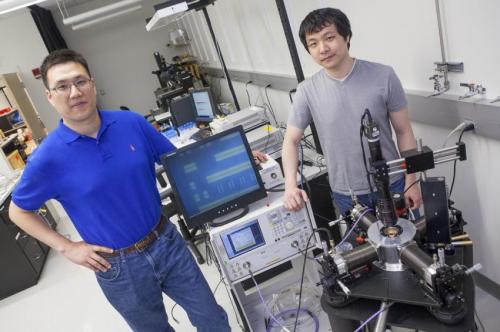
This image shows professor Donhee Ham and his student Hosang Yoon are in the laboratory at the Harvard School of Engineering and Applied Sciences. (Credit: Eliza Grinnell, Harvard SEAS.)

via phys.org


Philosophy begins where physics ends, and physics begins where philosophy ends

Richard Feynman - Philosopher (Image: Washington University)
Richard Feynman – Physicist, Philosopher (Image: Washington University)

via scientificamerican

Physics in the News

Friday, June 20, 2014

Classic space science: UD physicist’s findings about space plasma become ‘classics’

Energy Arc, central electrode of a Plasma Lamp.
via udel

New Observatory Takes Highest-Energy Particle Research to New Heights

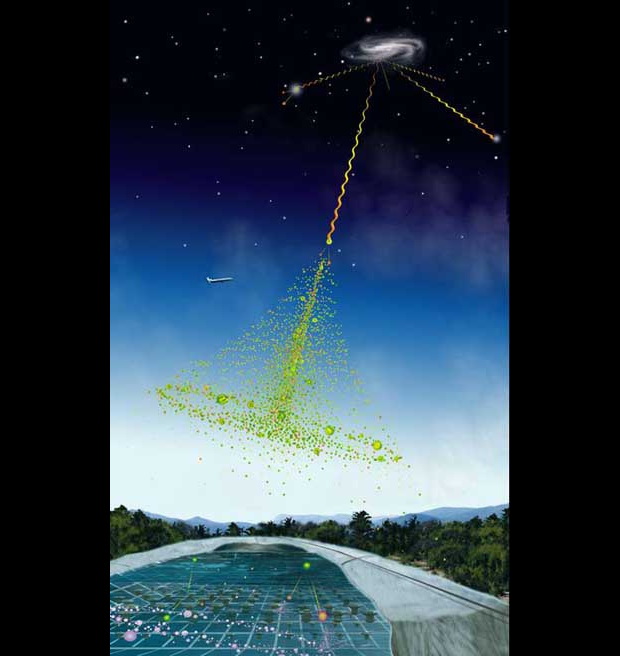
As cosmic-ray particles are accelerated by a black hole in this artist's interpretation, they stream toward Earth as very-high-energy gamma-rays. Upon hitting the atmosphere, they produce a shower of particles that rain down on Earth. Most of these particles run out of energy before they hit sea level. Credit: Aurore Simonnet, Sonoma State University
As cosmic-ray particles are accelerated by a black hole in this artist’s interpretation, they stream toward Earth as very-high-energy gamma-rays. Upon hitting the atmosphere, they produce a shower of particles that rain down on Earth. Most of these particles run out of energy before they hit sea level. (Credit: Aurore Simonnet, Sonoma State University)
via space.com

New test may provide ‘smoking gun’ for modified gravity

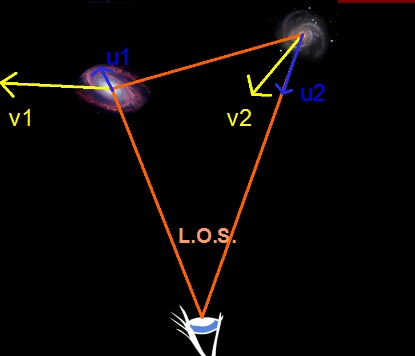
A schematic picture of how researchers can observe galaxy peculiar velocities, “a cosmic dance of galaxies.” (Credit: Wojciech A. Hellwing)
via phys.org

Supermassive Black Hole Shows Strange Gas Movements

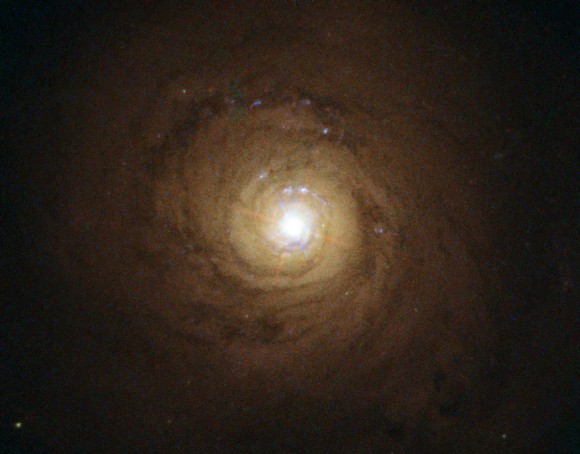
A Hubble Space Telescope image of NGC 5548. (Credit: ESA/Hubble and NASA. Davide de Martin)
via universetoday

Slowly rotating neutron star paired with a red-giant star reveals properties that conflict with existing theory

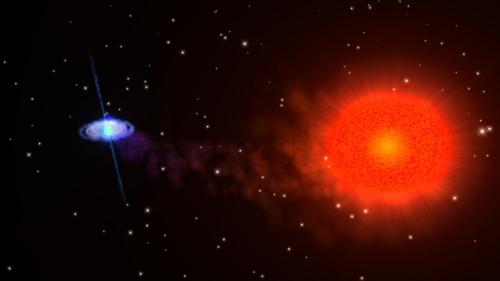
An artist’s impression of an x-ray binary system. The matter that a neutron star (blue) sucks from a regular star (red) leads to the emission of intense x-ray beams. (Credit: NASA)
via phys.org
Slowly rotating neutron star paired with a red-giant star reveals properties that conflict with existing theoryRead more at: http://phys.org/news/2014-06-slowly-rotating-neutron-star-paired.html#jCp