Physics in the News

Friday, June 13, 2014

Solar Storm Heading Toward Earth
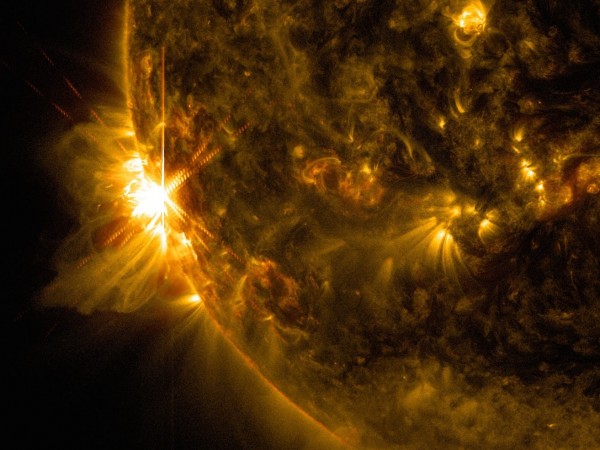
This image from NASA’s Solar Dynamic Observatory captures the first of three giant flares erupting from the sun’s surface on June 10, 2014. Credit: NASA/SDO/Goddard/Wiessinger
This image from NASA’s Solar Dynamic Observatory captures the first of three giant flares erupting from the sun’s surface on June 10, 2014. (Credit: NASA/SDO/Goddard/Wiessinger)
via newswatch

Stunning Hubble time-lapse of stellar explosion(VIDEO)
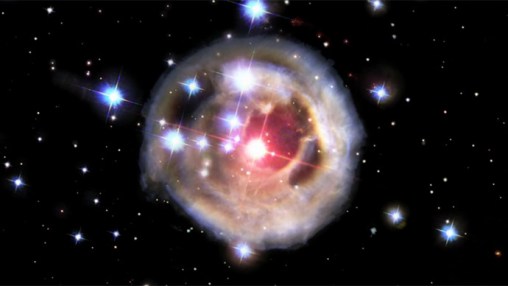
 V838 created an expanding light echo that illuminated the interstellar dust surrounding it and generated one of the most amazing scenes captured by Hubble.
V838 created an expanding light echo that illuminated the interstellar dust surrounding it and generated one of the most amazing scenes captured by Hubble. (Credit: NASA)
via rt.com

NASA to Launch Carbon Dioxide-Monitoring Spacecraft Next Month
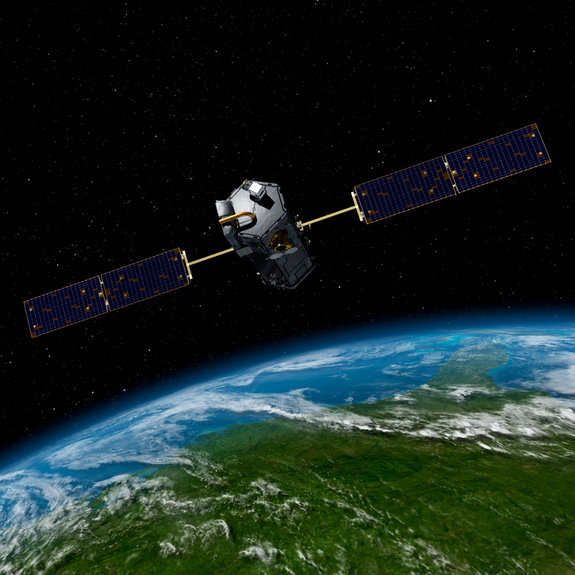
Artist's rendition of the OCO-2 Observatory. Credit: JPL/NASA
Artist’s rendition of the OCO-2 Observatory. (Credit: JPL/NASA)
via space.com

The International Space Station Is About to Get Its First 3D Printer
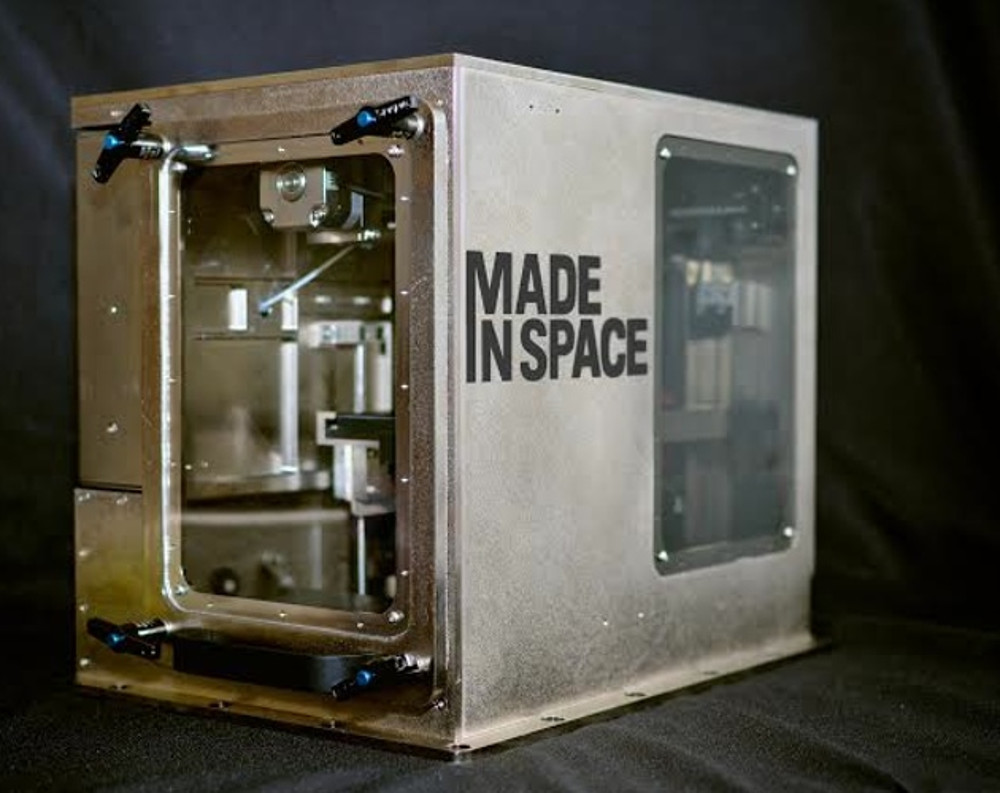
Made in Space's 3D Printer. Image: Made in Space
Made in Space’s 3D Printer. (Credit: Made in Space)
via motherboard.vice

Like Magic! Tiny Particles Can Pass Through Long-Distance Barriers
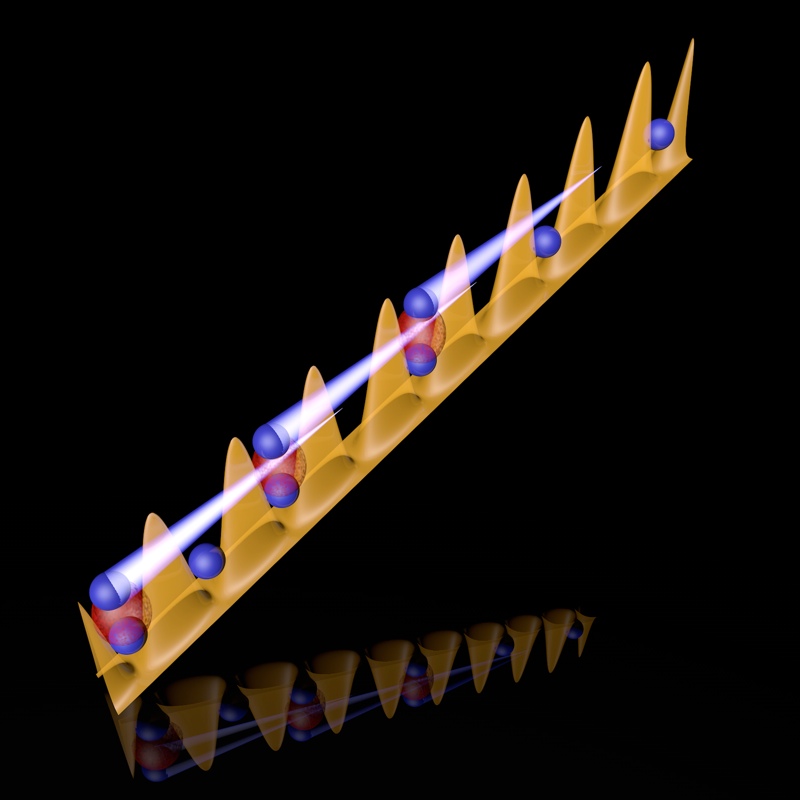
Quantum particles transmit through a whole series of barriers under conditions where a single particle could not do the move. Credit: University of Innsbruck
Quantum particles transmit through a whole series of barriers under conditions where a single particle could not do the move. (Credit: University of Innsbruck)
via livescience

Meet the Cosmic Tootsie Pop

red-giant
There’s a prize hidden inside this red giant. (Credit: Getty Images)
via time

Physics in the News

Wednesday, June 11, 2014

Sun Emits 3 X-class Flares in 2 Days

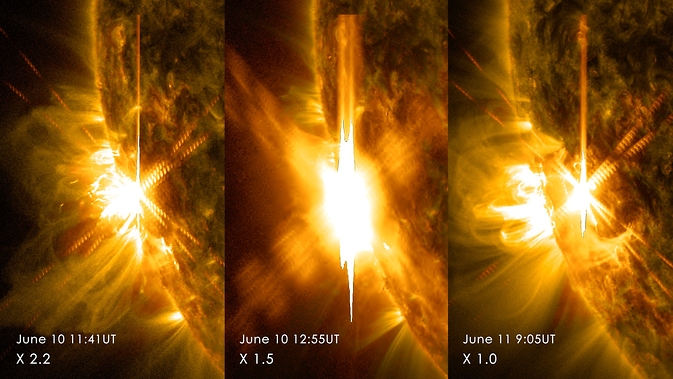
Three X-class flares erupted from the left side of the sun June 10-11, 2014. These images are from NASA's Solar Dynamics Observatory and show light in a blend of two ultraviolet wavelengths: 171 and 131 angstroms. The former is colorized in yellow; the latter, in red. Image Credit: NASA/SDO
Three X-class flares erupted from the left side of the sun June 10-11, 2014. These images are from NASA’s Solar Dynamics Observatory and show light in a blend of two ultraviolet wavelengths: 171 and 131 angstroms. The former is colorized in yellow; the latter, in red.
Image Credit: NASA/SDO
via nasa.gov


Earth & moon 60 million years older than previously thought

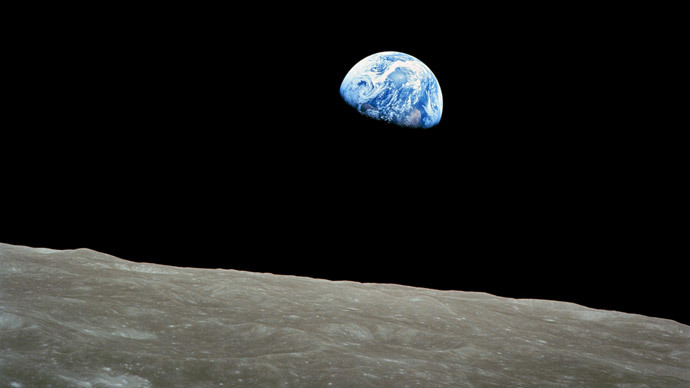
AFP Photo/NASA
AFP Photo/NASA
via rt.com


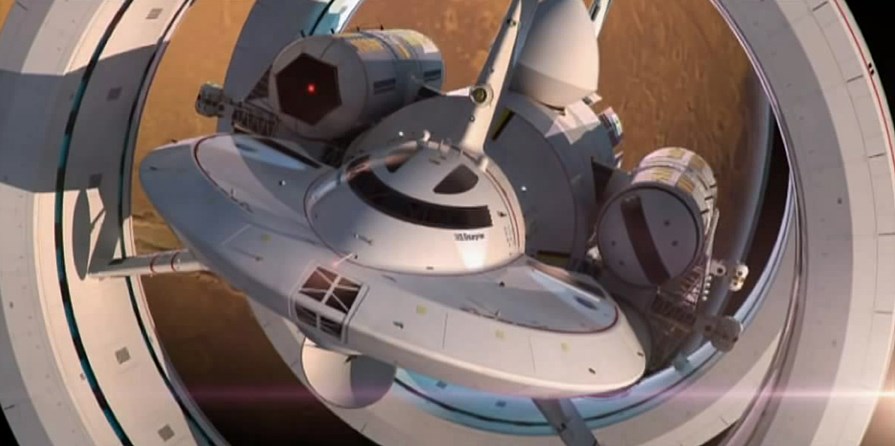
NASA unveils its futuristic warp drive starship – called Enterprise, of course

Image by Mark Rademaker
via extremetech
 

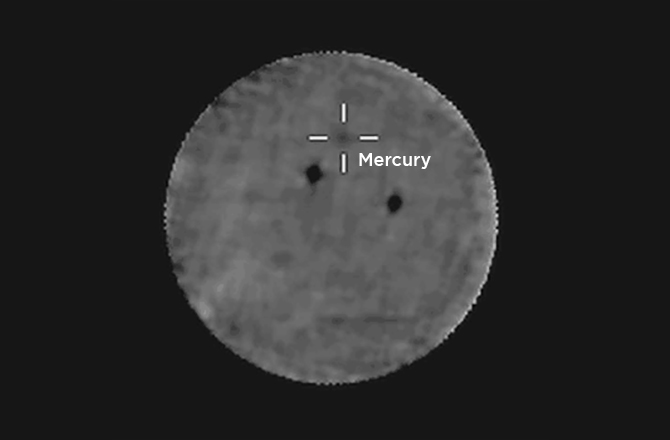
Mars Rover Curiosity Watches Mercury Transit the Sun

NASA/JPL-Caltech/MSSS/Texas A&M
via discovery.com
 

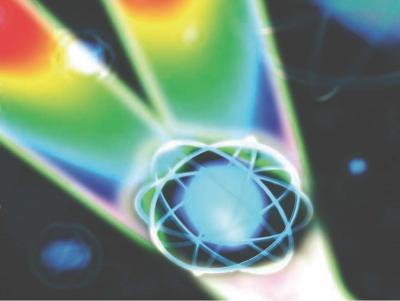
Viewing deeper into the quantum world

Photo Credit: ICFO
Photo Credit: ICFO
via sciencecodex
 

Astronauts’ well-kept secret: ‘Space has a smell’

Tweet from @NASA
Tweet from @NASA

via washingtonpost.com

Physics in the News

Tuesday, June 10, 2014

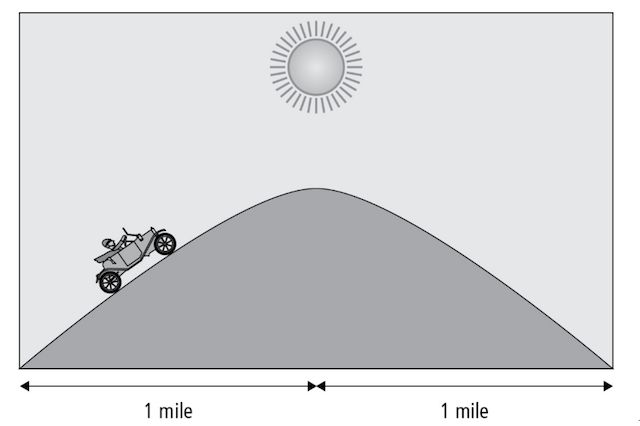
The Simple Problem Einstein Couldn’t Solve … At First

Einstein fell for this teaser
via farnamstreetblog
 

Black hole? Or wormhole in disguise?

Wormholes-infographic

via cosmonline
 

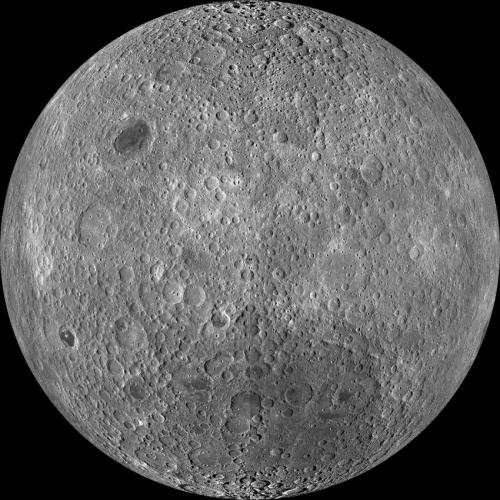
55-year old dark side of the Moon mystery solved

This is a composite image of the lunar farside taken by the Lunar Reconnaissance Orbiter in June 2009, note the absence of dark areas. Credit: NASA
via phys.org
 

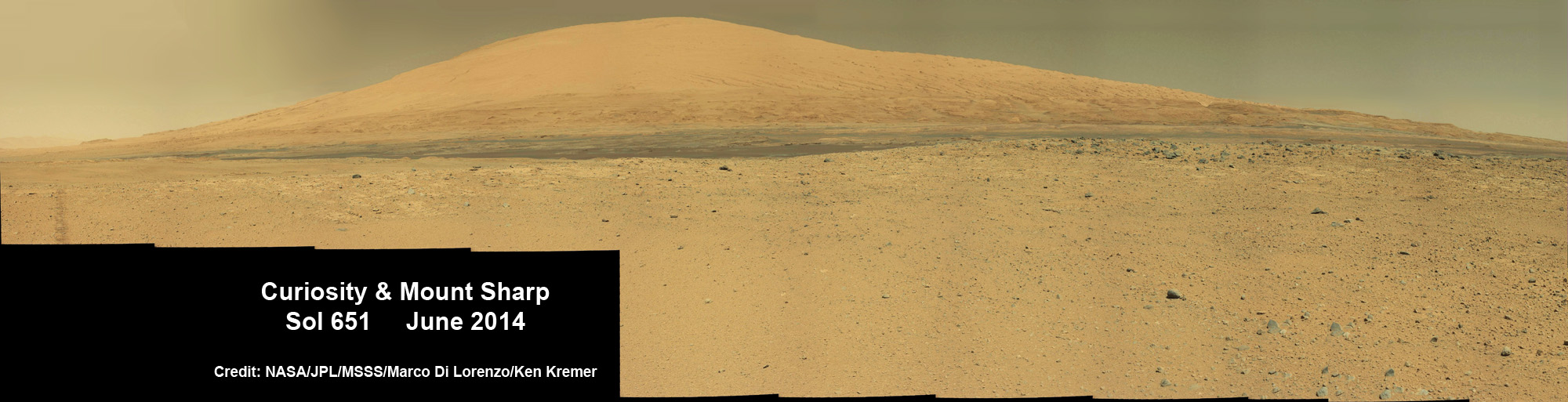
Curiosity captures stunning new Mount Sharp panorama ‘on the go’

Curiosity rover panorama of Mount Sharp captured on June 6, 2014 (Sol 651) during traverse inside Gale Crater. Note rover wheel tracks at left. She will eventually ascend the mountain at the ‘Murray Buttes’ at right later this year. Assembled from Mastcam color camera raw images and stitched by Marco Di Lorenzo and Ken Kremer. Credit: NASA/JPL/MSSS/Marco Di Lorenzo
via phys.org

Physics in the News

Updated Monday, June 9, 2014

The Very First Vine From Space Captures A Sun That Never Sets

via io9


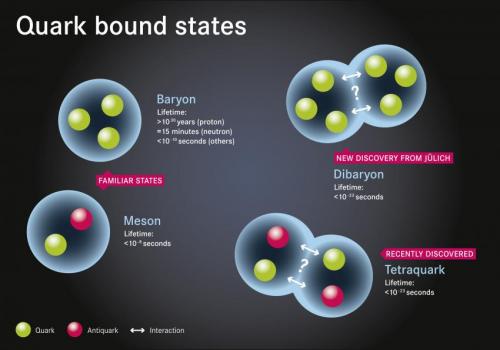
Quarks in six-packs: Exotic Particle Confirmed

For a long time, physicists were only able to reliably verify two different classes of hadrons: baryons and mesons. Experiments performed at Jülich’s accelerator COSY have now shown that, in fact, another class of exotic particles made up of six quarks exists. Credit: Forschungszentrum Jülich/SeitenPlan CC BY 4.0 Read more at: http://phys.org/news/2014-06-quarks-six-packs-exotic-particle.html#jCp
For a long time, physicists were only able to reliably verify two different classes of hadrons: baryons and mesons. Experiments performed at Jülich’s accelerator COSY have now shown that, in fact, another class of exotic particles made up of six quarks exists. Credit: Forschungszentrum Jülich/SeitenPlan CC BY 4.0

via phys.org


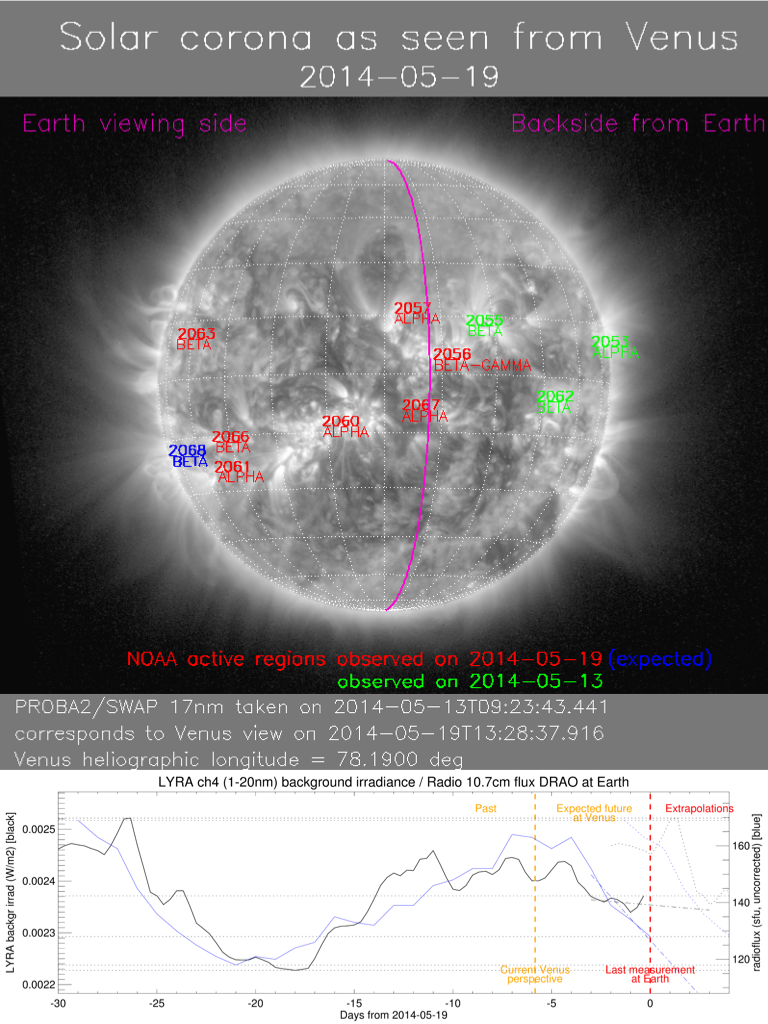
Space Weather Report for an Alien World

Space weather report for Venus
via esa.int


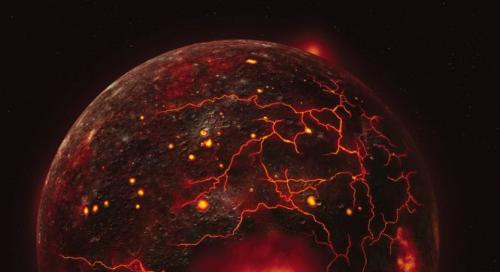
Researchers find evidence of speedy core formation in solar system planetesimals

Planetary core formation. Credit: Speed metal, Science 6 June 2014.
via phys.org


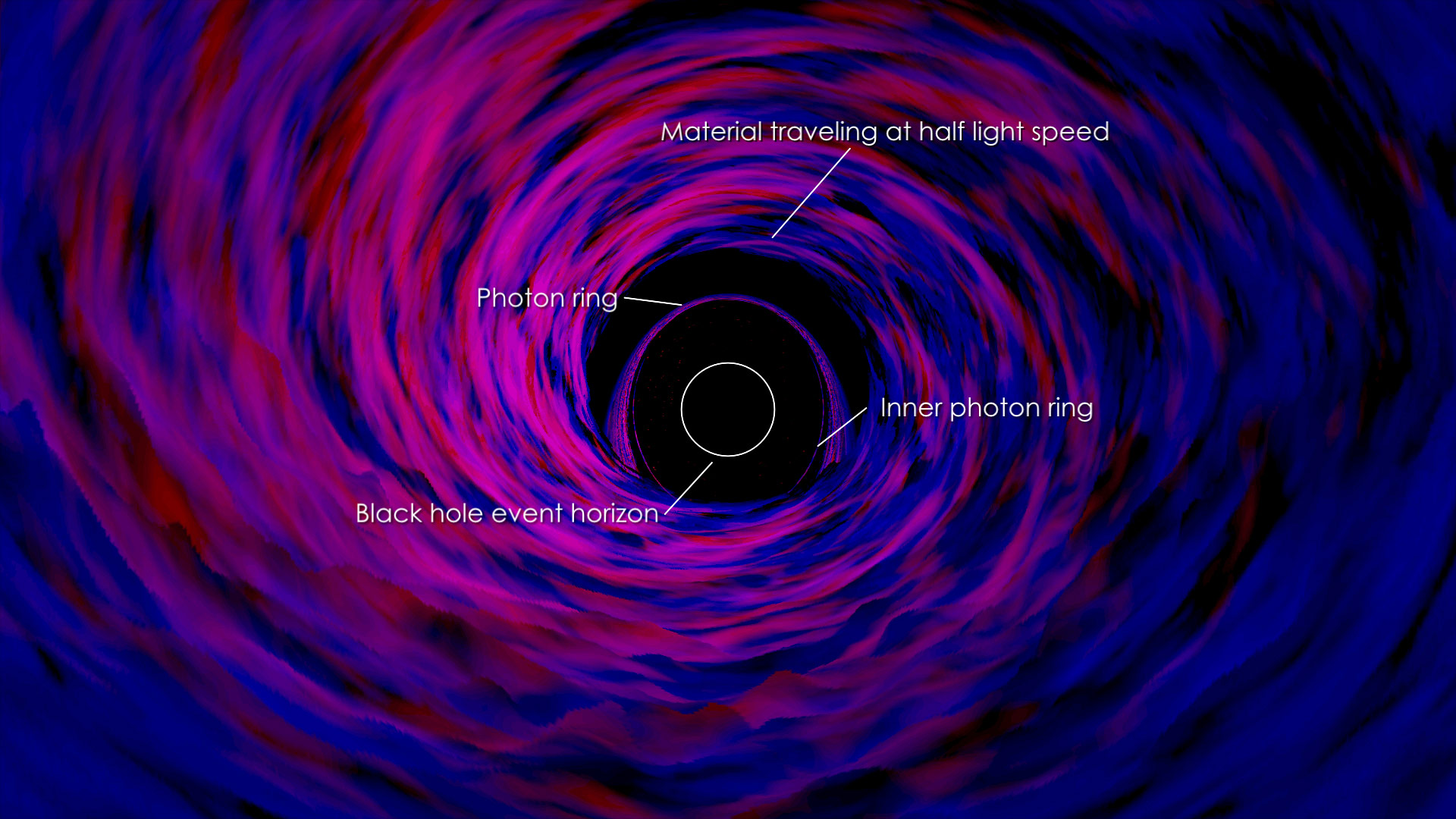
Quantum black holes at the LHC: production and decay mechanisms of non-thermal microscopic black holes in particle collisions

This annotated image labels several features in the simulation, including the event horizon of the black hole. NASA’s Goddard Space Flight Center
via sussex.ac.uk


Physics in the News

Updated Sunday, June 8, 2014

Scientists: The Universe’s Most Common Stars Could Make Alien Life Impossible

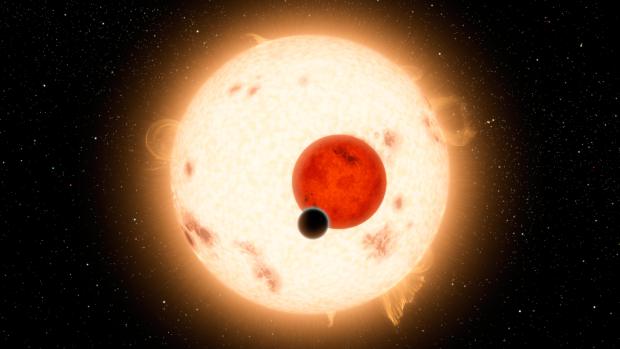
Artist conception of a rocky planet in a binary star-system, one of which is a red dwarf. (NASA/JPL-Caltech/R. Hurt via Getty Images)
via tampa.cbslocal.com


New Suspect Identified in Supernova Explosion

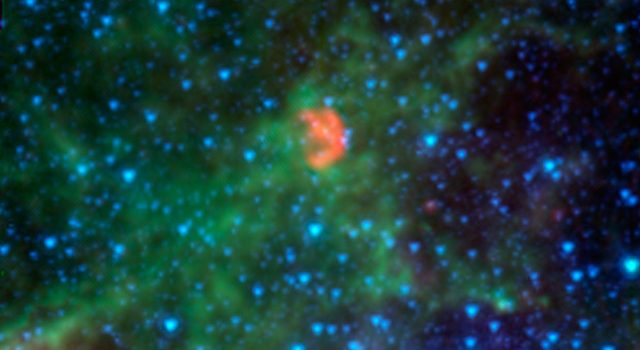
This infrared image from NASA's Spitzer Space Telescope shows N103B -- all that remains from a supernova that exploded a millennium ago in the Large Magellanic Cloud, a satellite galaxy 160,000 light-years away from our own Milky Way. Image credit: NASA/JPL-Caltech/Goddard
This infrared image from NASA’s Spitzer Space Telescope shows N103B — all that remains from a supernova that exploded a millennium ago in the Large Magellanic Cloud, a satellite galaxy 160,000 light-years away from our own Milky Way. Image credit: NASA/JPL-Caltech/Goddard
via nasa.gov
 

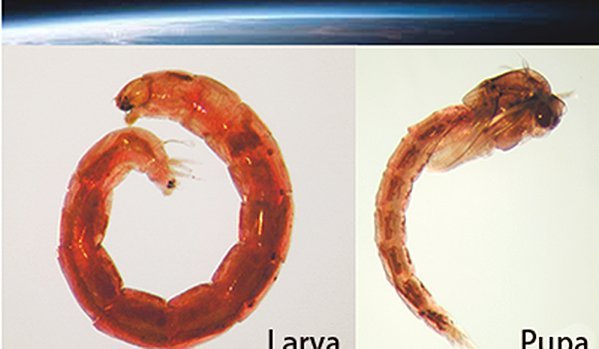
Astronauts aboard ISS breeding Japanese fish, growing mosquitoes

© Photo: nias.affrc.go.jp
via voiceofrussia
 

Space Oddity: Bizarre Hybrid Star Found After 40-Year Search

Credit: Phil Massey, Lowell Observatory
via space.com
 

Lasers ignite ‘supernova’ in the lab

This composite shows the Cassiopeia A supernova remnant that has magnetic fields that are approximately 100 times stronger than those in adjacent interstellar space. (NASA/DOE/Fermi LAT Collaboration, CXC/SAO/JPL-Caltech/Steward/O. Krause et al., and NRAO/AUI)
via theepochtimes.com