Physics in the News

Thursday, July 31, 2014

Weirdly wonky binary star system discovered
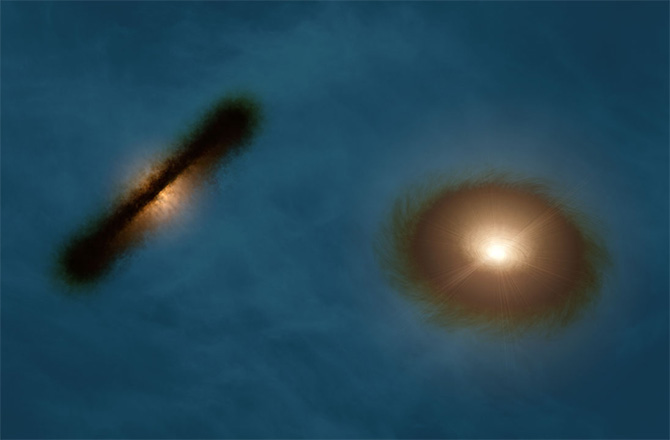
Artist’s impression of the discs around the young stars HK Tauri A and B (Credit: R. Hurt (NASA/JPL-Caltech/IPAC)
via discovery

NASA’s asteroid mission takes a beating
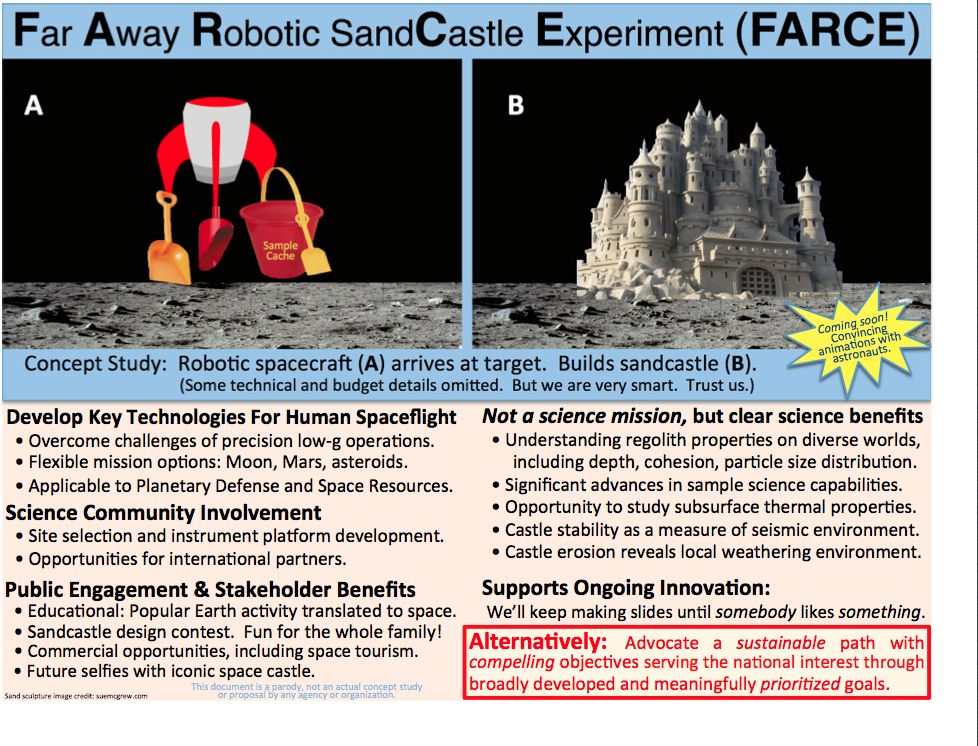
This Document is a Parody (Credit: Richard Binzel)
via chron

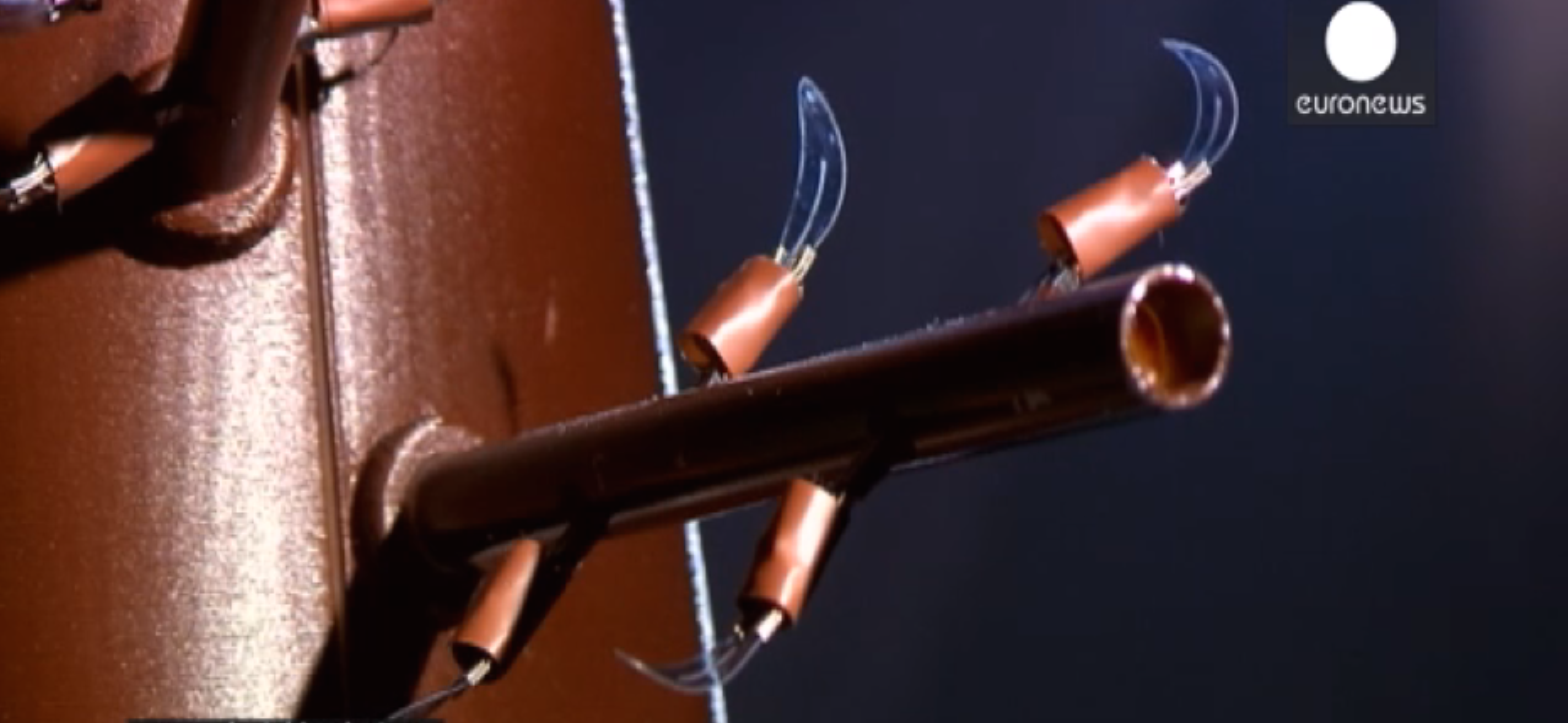
The tiniest propeller ever can sneak between cells
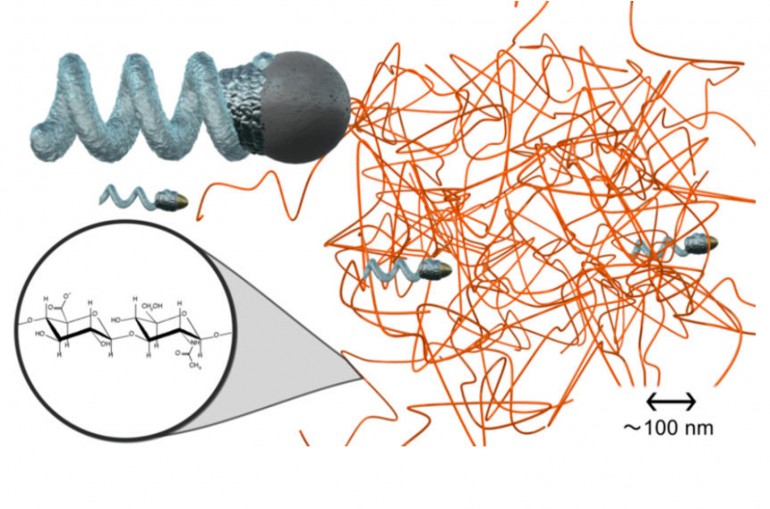
The nanoprop is able to easily pass between polymer chains, like those present in bodily fluids. (Credit:
via gizmag

Incredible GIF shows early Earth being pummeled by asteroids
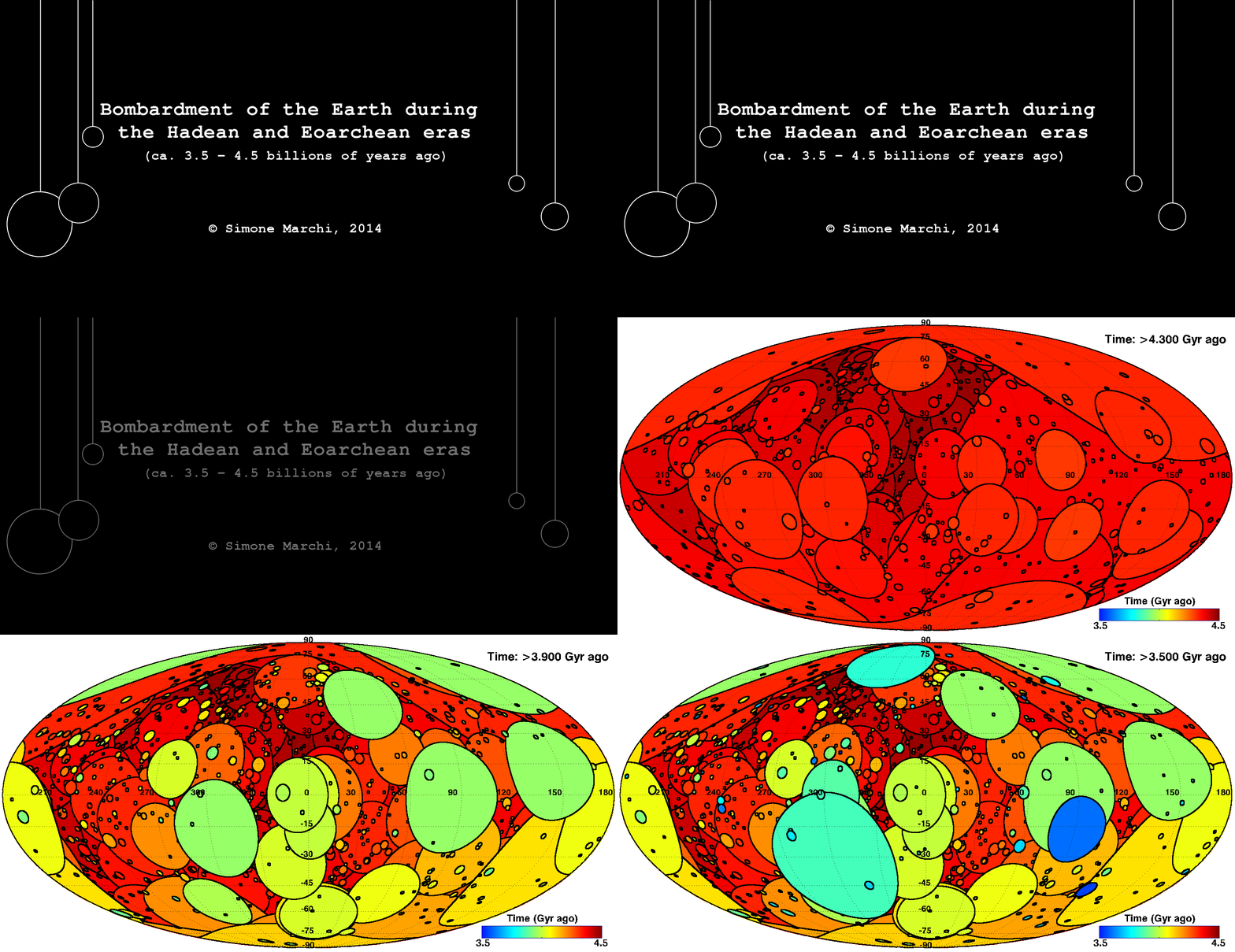
The GIF below shows the impacts the model suggests happened. They go forward in time from red to blue (4.5 billion years ago to 3.5 billion years ago). (Credit: Simone Marchi)
via businessinsider

Scientists have recreated the core of Jupiter on Earth
The GIF below shows the impacts the model suggests happened. They go forward in time from red to blue (4.5 billion years ago to 3.5 billion years ago). (Credit: Collins et al)
via businessinsider

50-foot-wide Muon g-2 electromagnet installed at Fermilab
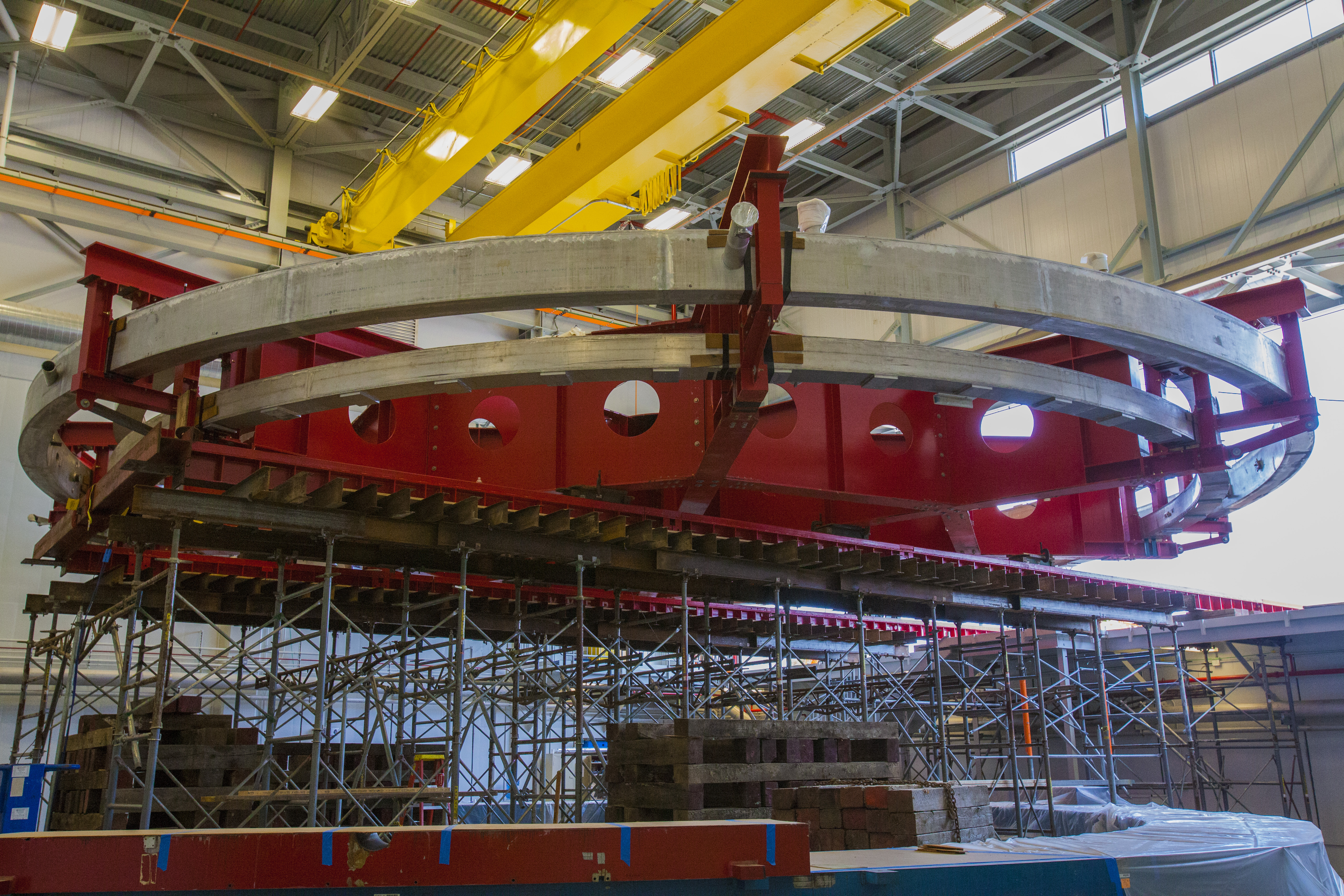
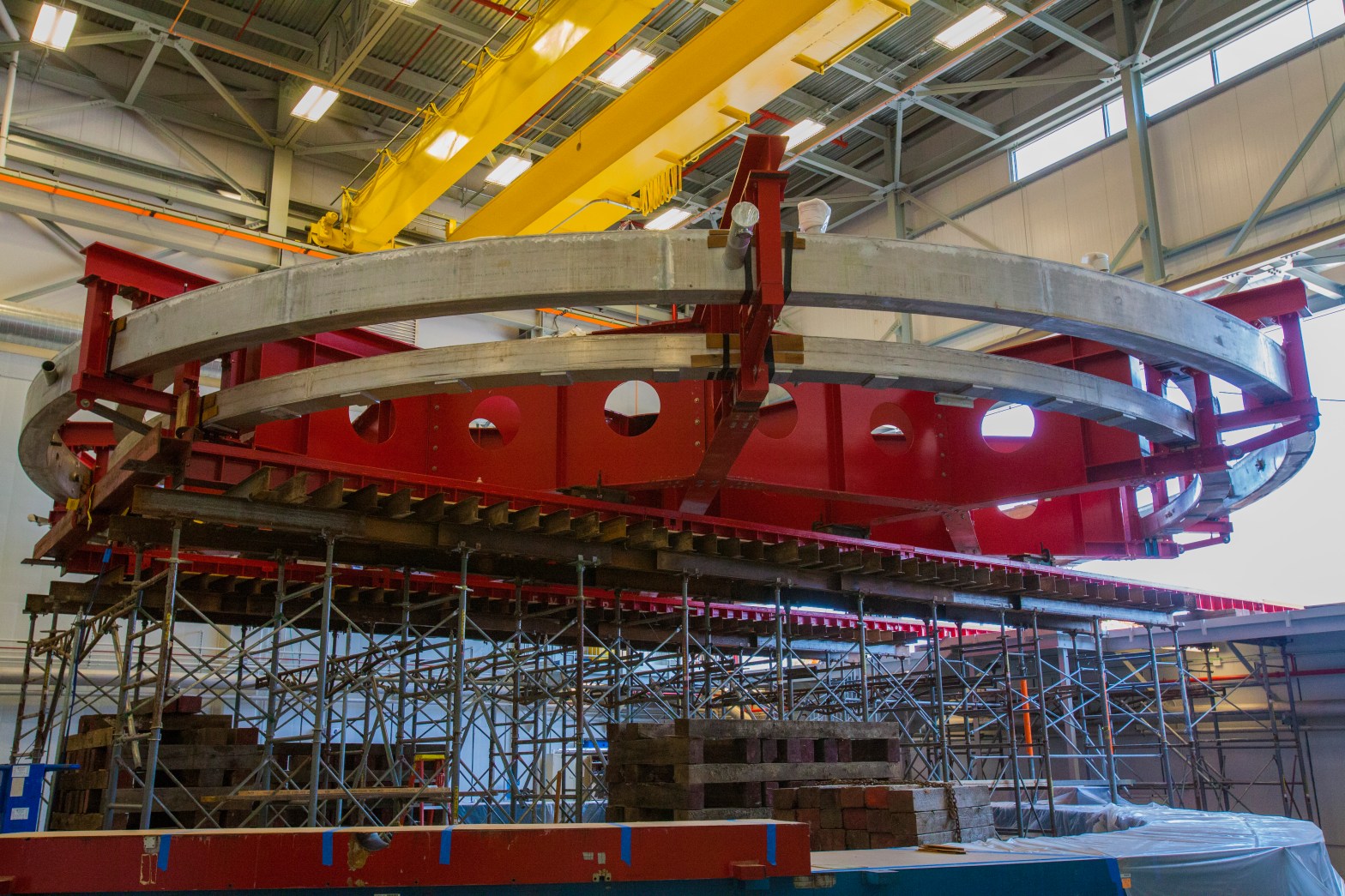
The 50-foot-wide Muon g-2 electromagnet at rest inside the Fermilab building that will house the experiment. The magnet was moved into the new building on Wednesday, July 30, 2014. The magnet will allow scientists to precisely probe the properties of subatomic particles called muons. (Credit: Fermilab.)
via phys.org

The Gaia Satellite will map one billion of the Milky Way’s stars (VIDEO)

via motherboard

Scientists explain mystery of our ‘lemon Moon’
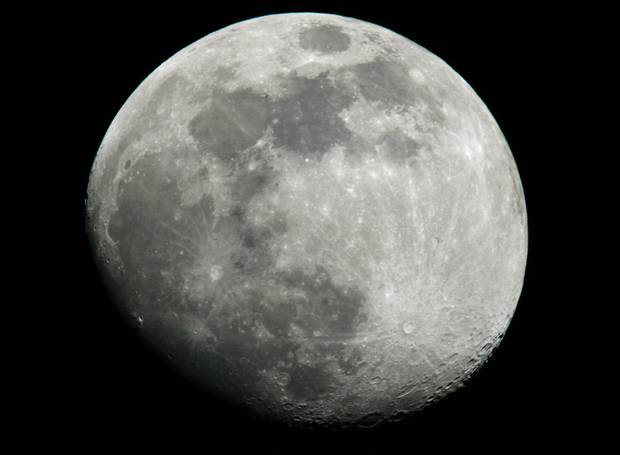
A new accurate map of the Moon has shown that it bulges slightly at one side and is flattened at the top and bottom - but how did it get this way? (Credit: NASA)
A new accurate map of the Moon has shown that it bulges slightly at one side and is flattened at the top and bottom – but how did it get this way? (Credit: NASA)

via independent

Physics in the News

Tuesday, July 29, 2014

First glimpse of Higgs Bosons at work revealed

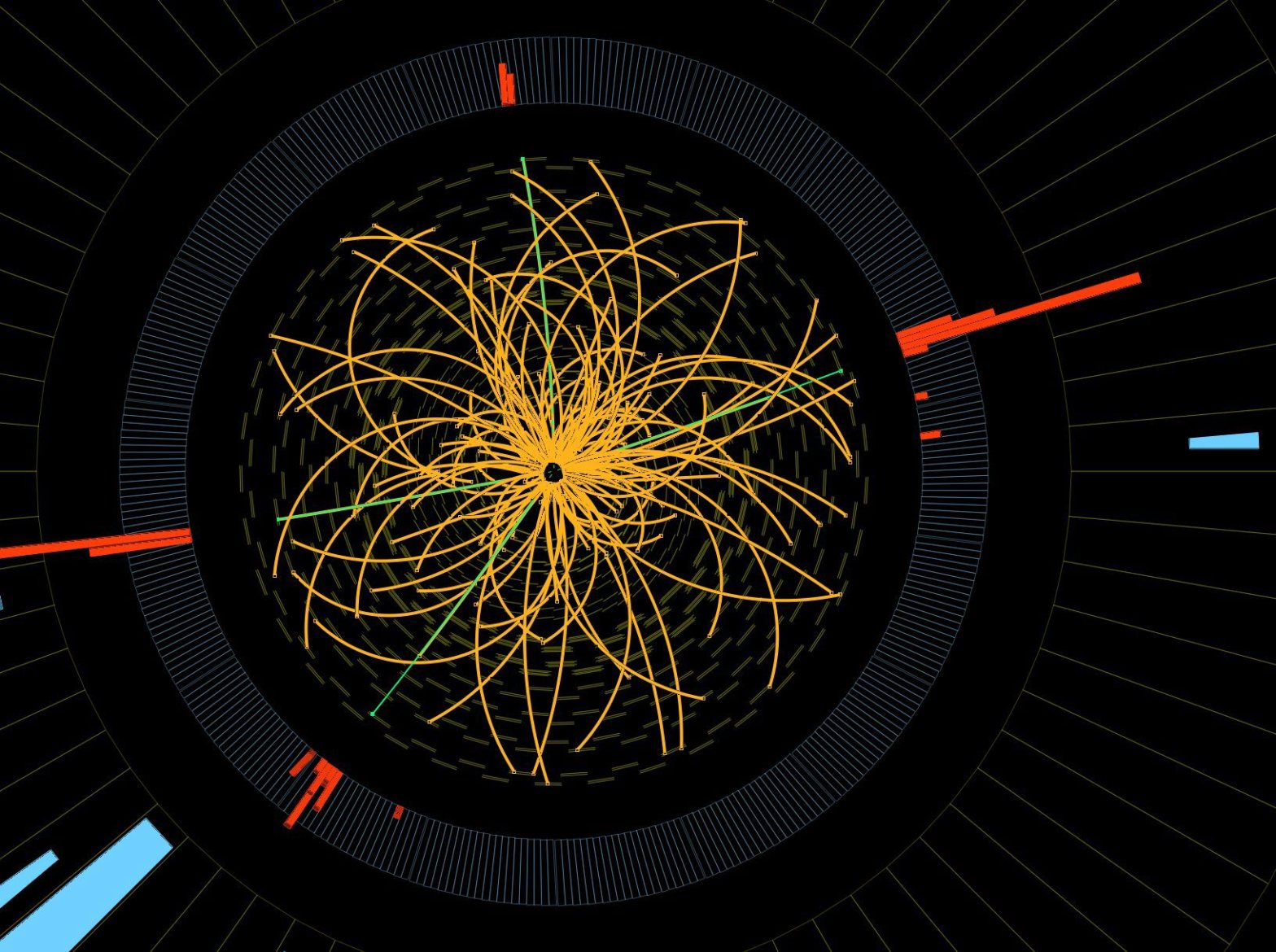
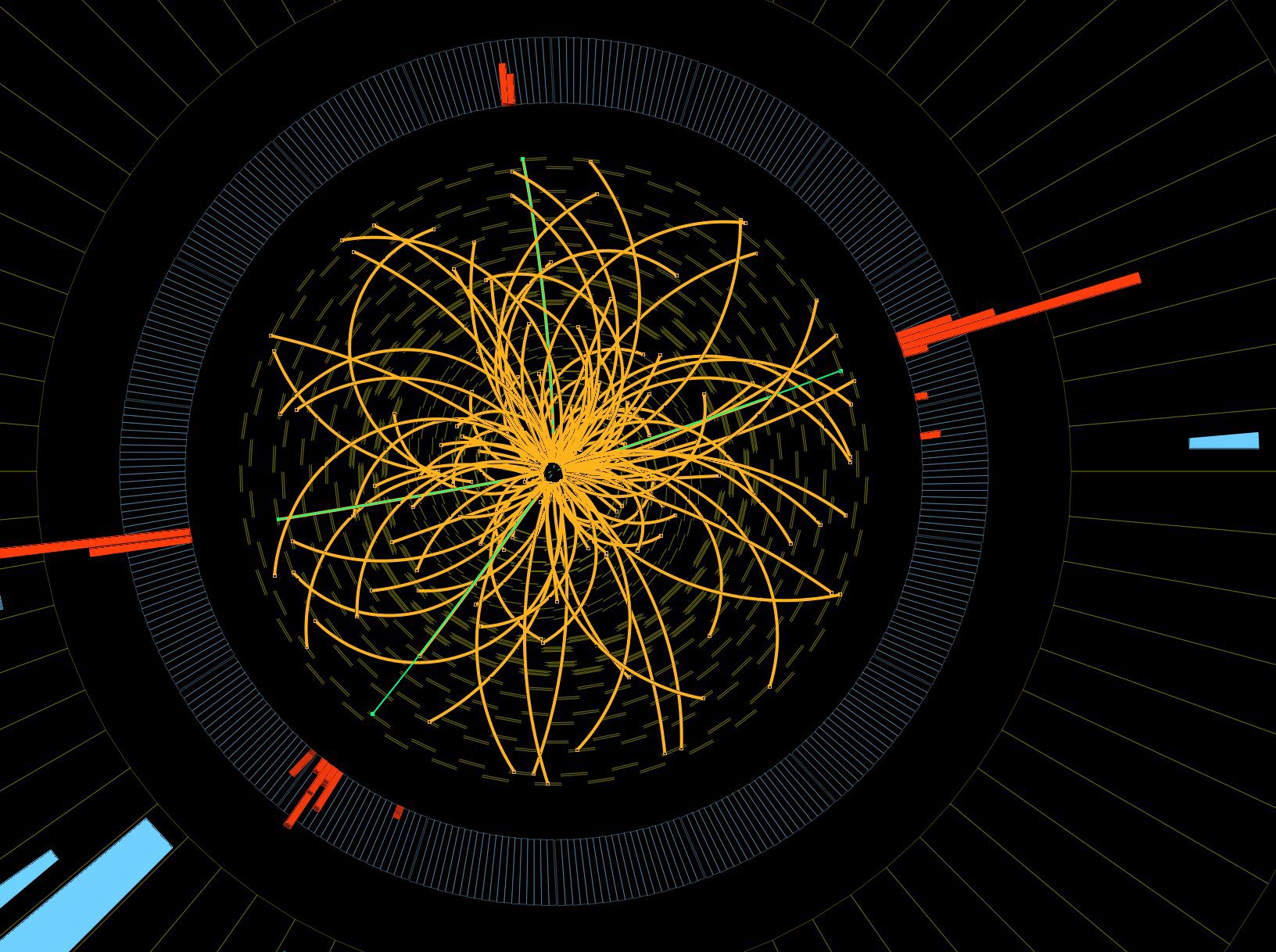
his 2011 image provide by CERN, shows a real CMS proton-proton collision in which 4 high energy electrons (green lines and red towers) are observed in a 2011 event. The event shows characteristics expected from the decay of a Higgs boson but is also consistent with background Standard Model physics processes.  To cheers and standing ovations, scientists at the world's biggest atom smasher claimed the discovery of a new subatomic particle Wednesday July 4, 2012, calling it "consistent" with the long-sought Higgs boson — popularly known as the "God particle" — that helps explain what gives all matter in the universe size and shape.  (Credit: AP Photo/CERN)
CMS proton-proton collision in which 4 high energy electrons (green lines and red towers) are observed in a 2011 event. The event shows characteristics expected from the decay of a Higgs boson but is also consistent with background Standard Model physics processes. (Credit: AP Photo/CERN)
via yahoo

Drone fly-by at Seattle’s Space Needle (VIDEO)

via adafruit

Opportunity Rover’s record-breaking Mars drive, mapped

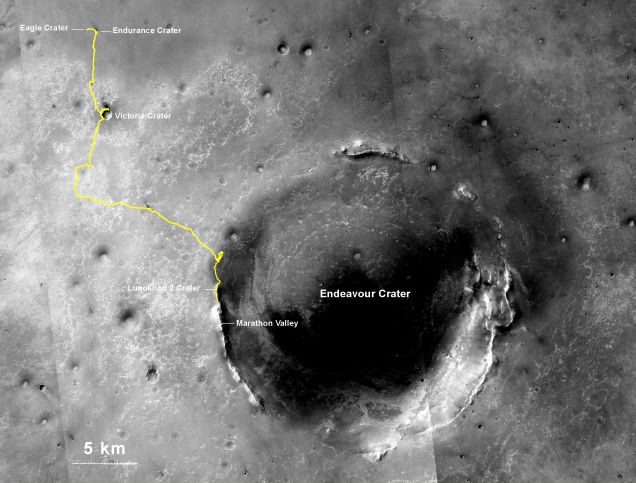
NASA reports that the Mars Rover has clocked up 25.01 miles of driving on the Red Planet—setting a record for the longest distance a vehicle has driven outside Earth. (Credit: NASA)
via gizmodo

New correction to speed of light could explain SN1987 neutrino burst

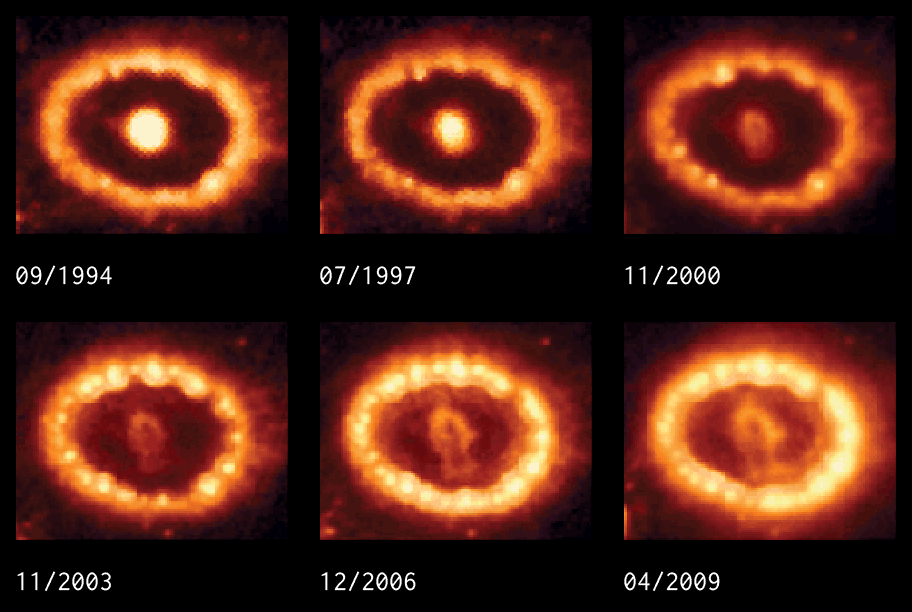
A time sequence of Hubble Space Telescope images, taken in the 15 years from 1994 to 2009, showing the collision of the expanding supernova remnant with a ring of dense material ejected by the progenitor star 20,000 years before the supernova
A time sequence of SN 1987A, taken in the 15 years from 1994 to 2009, showing the collision of the expanding supernova remnant with a ring of dense material ejected by the progenitor star 20,000 years before the supernova.
via physicsworld

A robot that grows

Scientists in Italy are working on creating robots that mimic the properties of plant roots, including the capacity for growth. (Credit: Euronews)
via euronews

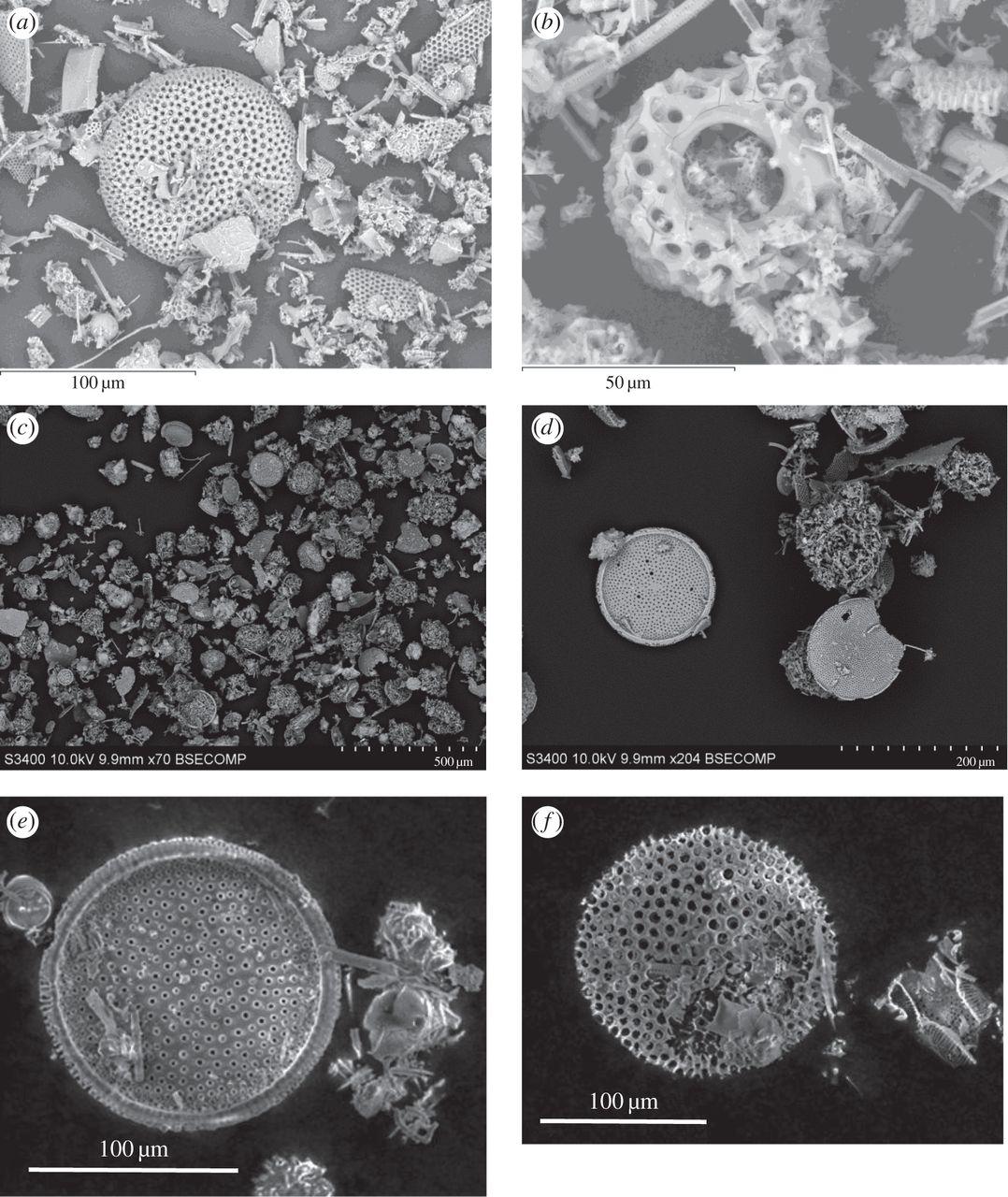
The Moon could be littered with fossils from Earth

 Diatoms. Images a and b are raw diatoms; c and d are fossilized, and e and f are fossilized diatoms that were frozen but not shot. (Credit: Mark Burchell et al., Philosophical Transactions of the Royal Society)
Images a and b are raw diatoms; c and d are fossilized, and e and f are fossilized diatoms that were frozen but not shot.
(Credit: Mark Burchell et al., Philosophical Transactions of the Royal Society)
via popsci

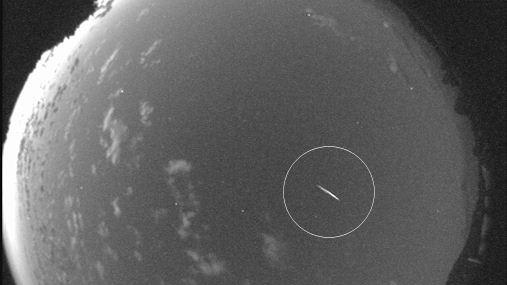
 Best time to see 2014 meteor showers? Right about … now!

Look up, sky watchers! NASA cameras caught this streak over the New Mexico skies on Sunday, as the Perseid meteor shower heats up. (Credit: NASA)
via latimes

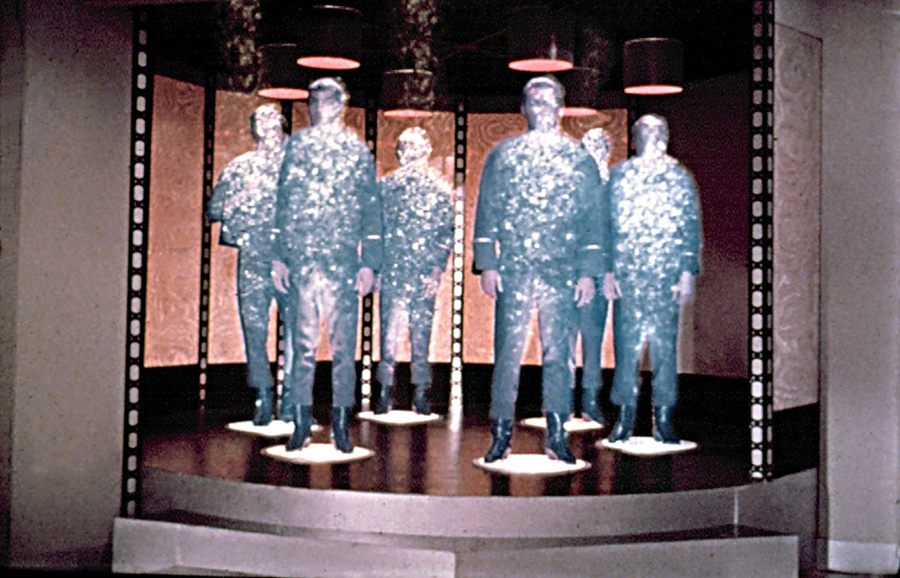
 Teleportation is closer than you think

Recent advances in theoretical physics are making Star Trek style transporters a reality. (Credit: Paramount/Everett Collection)
via mysteriousuniverse

Physics in the News

Monday July 28, 2014

Measuring gravitational waves with eLISA

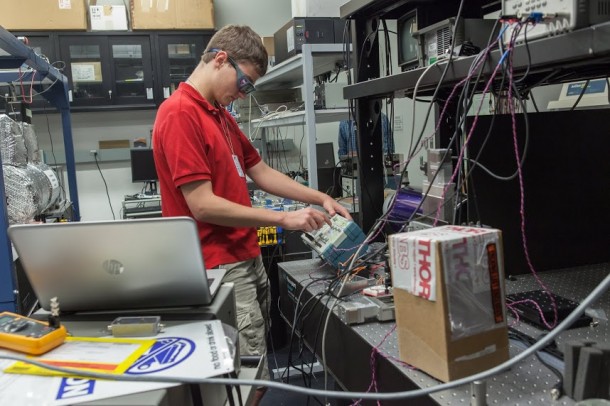
NASA Goddard intern Robert Buttles adjusts equipment used for the eLISA mission, which will test for vibrations that could reveal subtle changes in gravity. Image (Credit: NASA Goddard/Kristen Basham)
via spacefellowship

Computer model shows moon’s core surrounded by liquid and it’s caused by Earth’s gravity

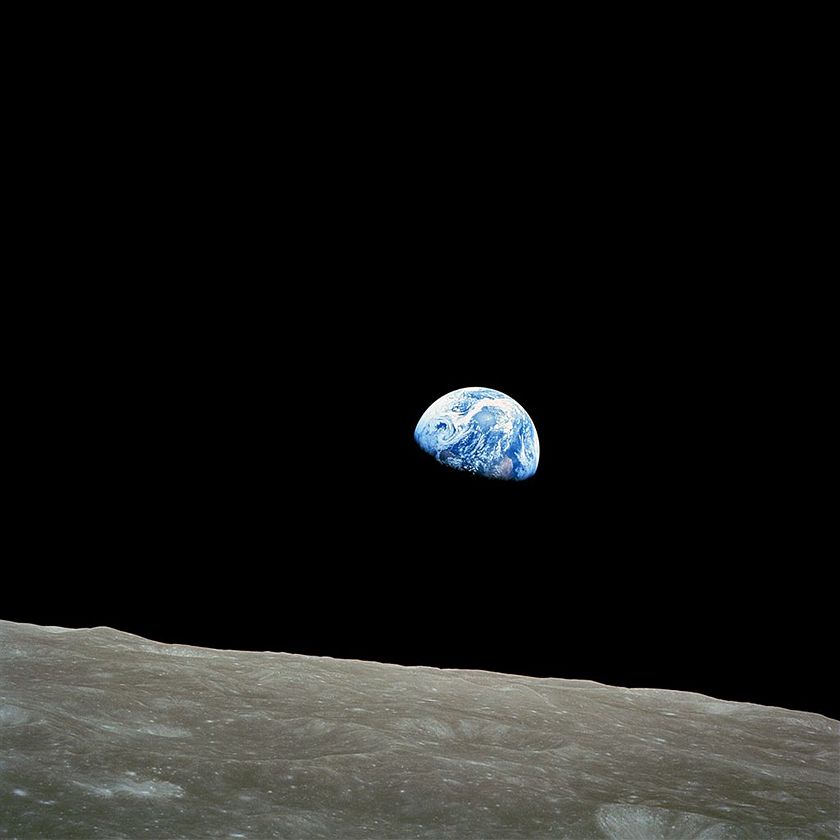
Gravitational tidal heating from the Earth acts on the lower mantle of the moon (Credit: NASA/Apollo 8)
via abc

Measuring the smallest magnets: Physicists measured magnetic interactions between single electrons

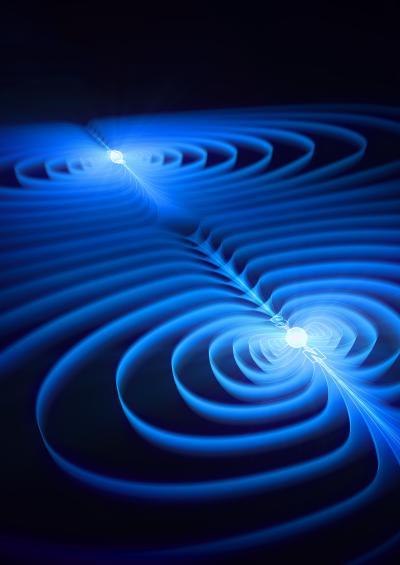
This is an illustration showing the magnetic field lines of two electrons, arranged so that their spins point in opposite directions. The image comes from the lab of Dr. Roee Ozeri. (Photo Credit: Weizmann Institute of Science)
via sciencecodex

NASA spacecraft is now buzzing Mercury 62 miles above the surface

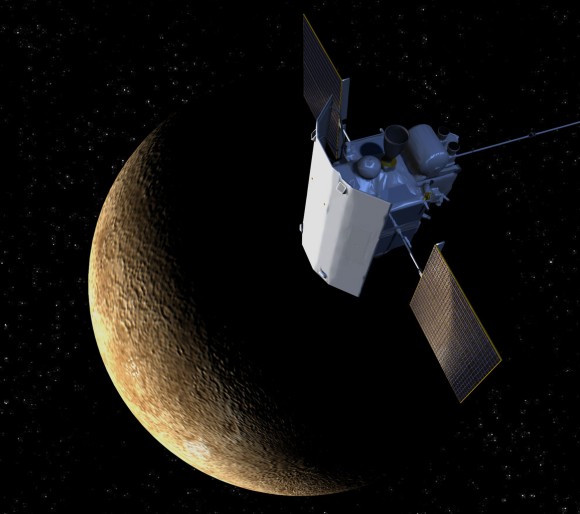
Artist’s conception of NASA’s MESSENGER spacecraft above Mercury. (Credit: JHUAPL)
via universetoday

NASA’s James Webb Space Telescope will use SPF 1,000,000 to stay protected

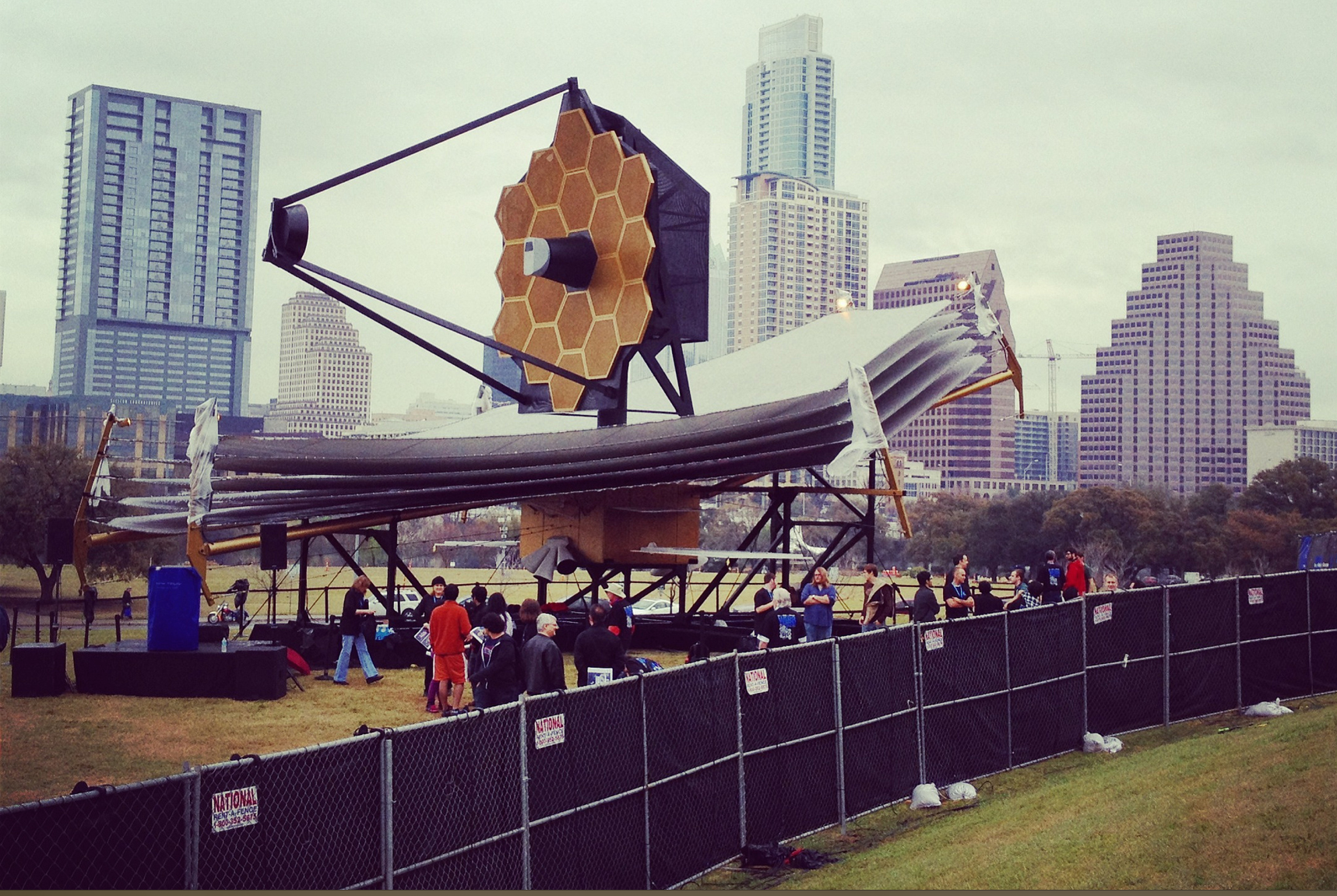
The full-scale James Webb Space Telescope model at South by Southwest in Austin. (Credit: NASA/Chris Gunn)
via adafruit

A nation duped? UK govt. paves way for GM babies

Britain’s government has allegedly misled the public with respect to a new IVF technique experts claim will herald an era of genetically modified babies.(Reuters / United Photos)

via rt

Physics in the News

Sunday, July 27, 2014

A cosmic two-step: The universal dance of the Dwarf Galaxies

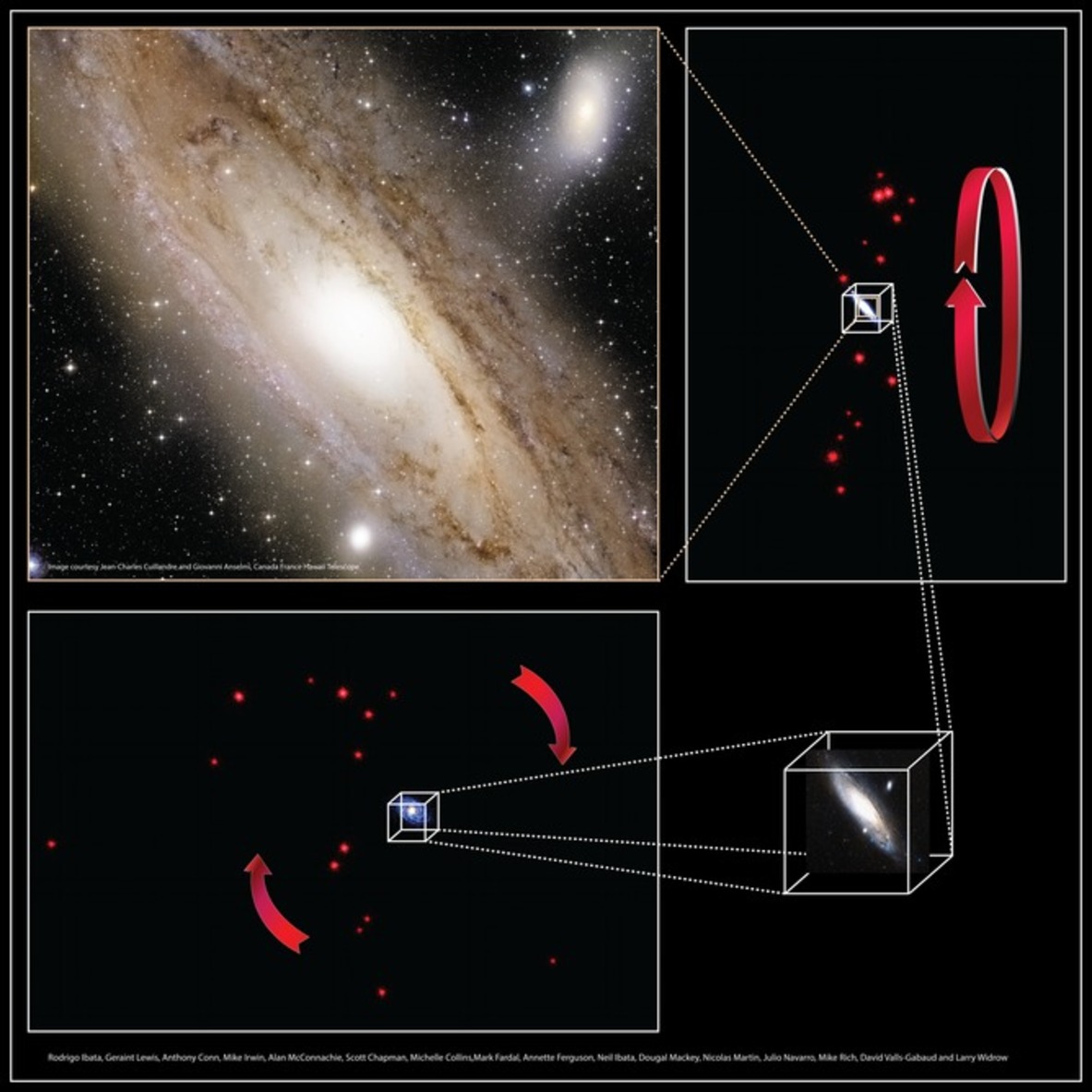
The coherent dance of dwarf orbits around the Andromeda Galaxy. (Credit: R. Ibata/Nature)
via theepochtimes

Webb Sunshield Stacks Up to Test!

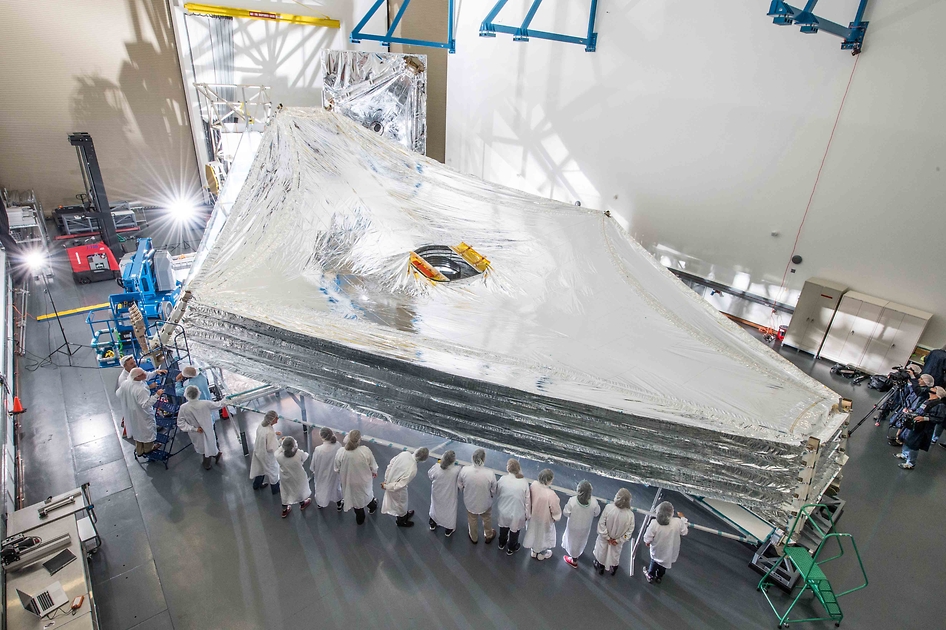
The James Webb Space Telescope (sometimes called JWST) is an orbiting infrared observatory that will complement and extend the discoveries of the Hubble Space Telescope, with longer wavelength coverage and greatly improved sensitivity.(Credit: NASA/Chris Gunn)
via nasa

NASA Preps for nail-biting comet flyby of Mars

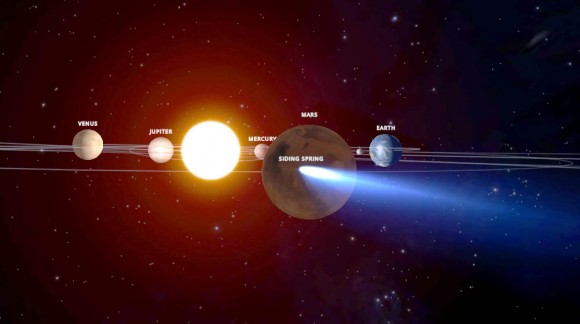
Simulation depicts comet C/2013 A1 Siding Spring during its close Mars flyby on Oct. 19. Its nucleus will miss Mars by about 82,000 miles (132,000 kilometers). The comet’s trail of dust particles shed by the nucleus might be wide enough to reach the planet. Click to see the interactive, animated view. (Credit: Solarsystemscope.com)
via universetoday

Princeton man drawing attention to outer space

Justin Dowd, a Princeton man who won a contest and will be traveling into outer space next year, sits next to an illustration used in the opening scene of his educational video. (Credit: T&G Staff/STEVE LANAVA)

via telegram

Sometimes a typo means you need to blow up your own spacecraft

via vice

Listening in on cosmic messages

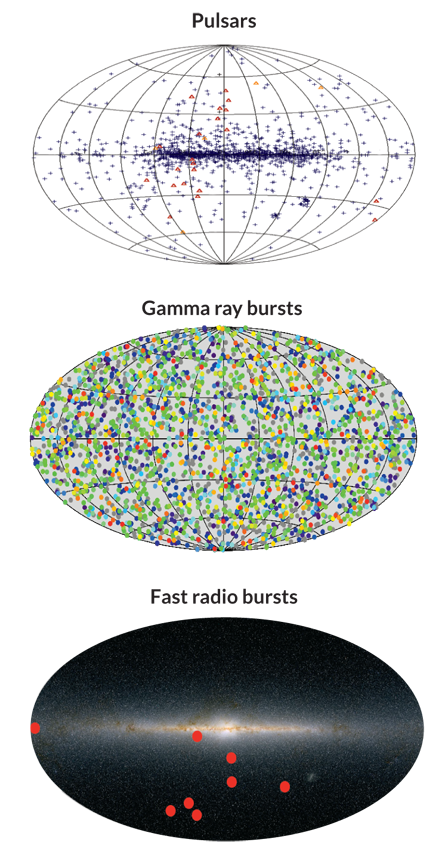
Mapping signals on the sky can offer clues about where the signals originate. Pulsars (top) concentrate in the Milky Way, because most of the ones we see sit in our galaxy. Gamma bursts (middle) come from everywhere, which means they’re parked in other galaxies. Fast radio bursts (bottom) seem to mostly avoid our galgaxy, a hint that they may come from very far away.(Credits: Green Bank Telescope, West Virginia Univ; G. Fishman et al/BATSE, CGRO, NASA.; J. Carpenter, T.H. Jarrett/2MASS, R. Hurt, C. Crockett)
via sciencenews

Physicist thinks lack of evidence for inflation, multiverse a cosmic “deal-breaker”

Evidence of gravitational waves in the infant universe may have been uncovered by the BICEP2 radio telescope. (Credit: NASA/JPL-Caltech)
via uncommondescent

Mars Mission advocated to a packed room at Comic-Con

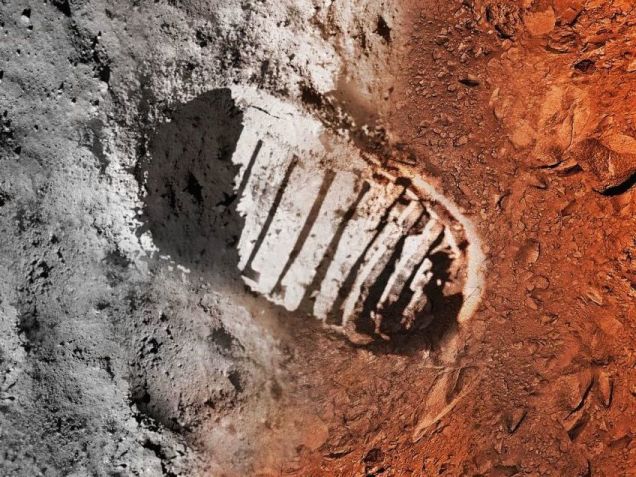
The first Giant Leap was Apollo 11 landing astronauts on the moon. The next Giant Leap could be Apollo 45 landing humans on Mars. (Credit: NASA)
via io9

Physics in the News

Wednesday, July 16, 2014

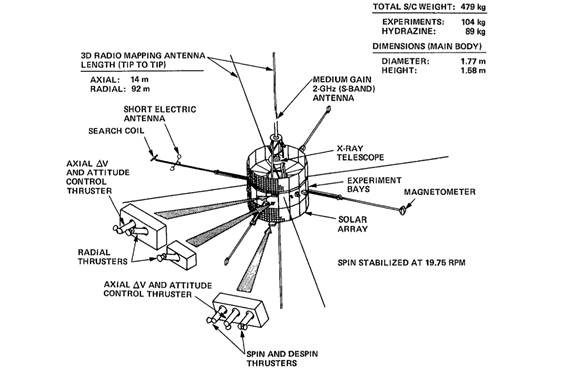
Breaking news on the ISEE-3 mission: It may not be lost – it’s those “O” rings again

High temperatures expanding the seal material could have either impeded the flow, or have precluded the latch valve from opening even with the microswitch indicated to telemetry that the valve was open.
High temperatures expanding the seal material could have either impeded the flow, or have precluded the latch valve from opening even with the microswitch indicated to telemetry that the valve was open. (Credit: Farquhar, R, Muhonen, D, Church, L, Curtis, M.S)
via wattsupwiththat

Deep-space radio waves ‘heard’ at opposite points on Earth(VIDEO)

via mcgill

New data shows Earth’s magnetic field is weakening fast(VIDEO)

via weather.com

Happy birthday, Matt Bunting!  Dmitri hexapod creator

via robotshop


Physicists detect process even rarer than the long-sought Higgs particle

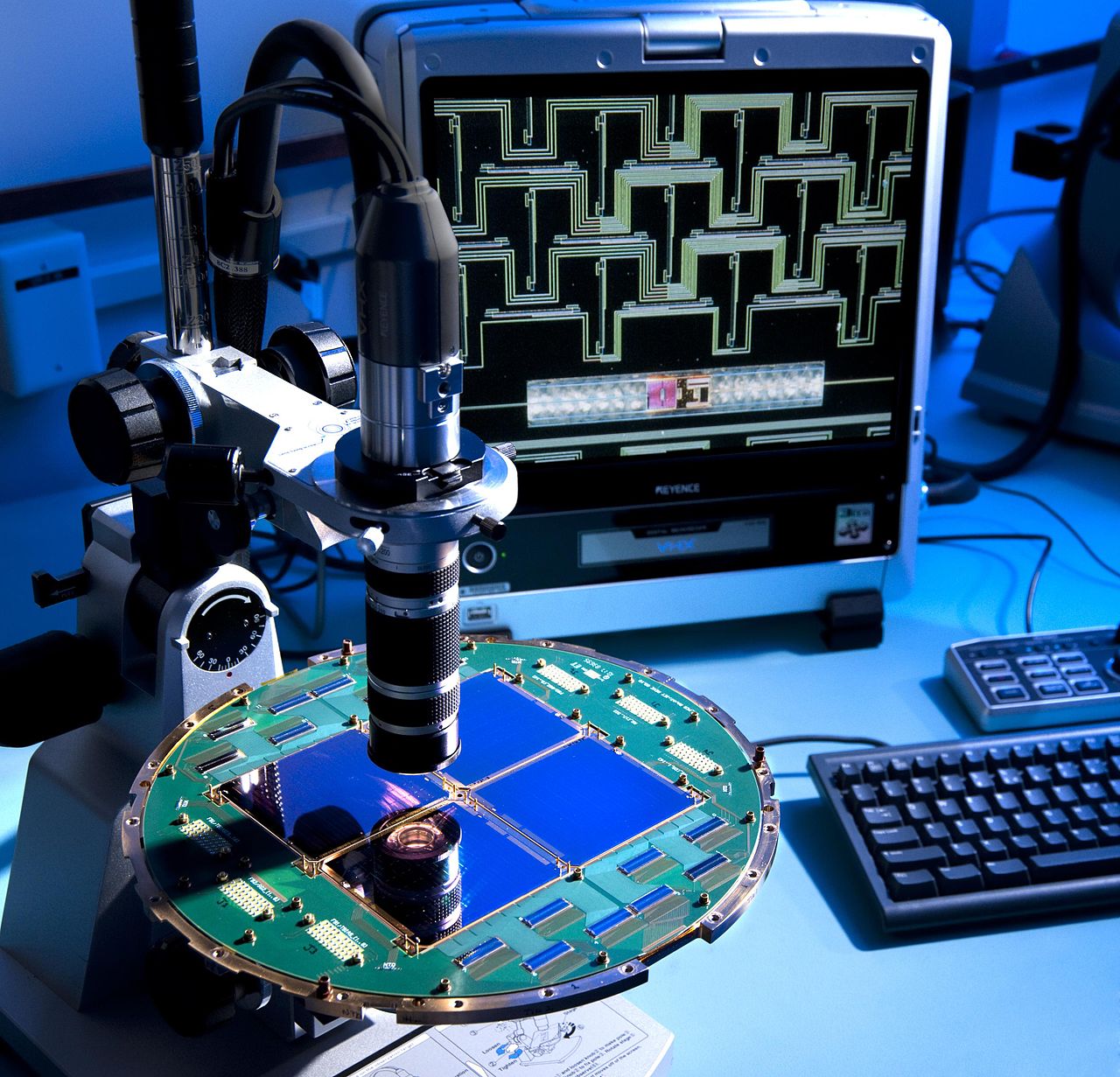
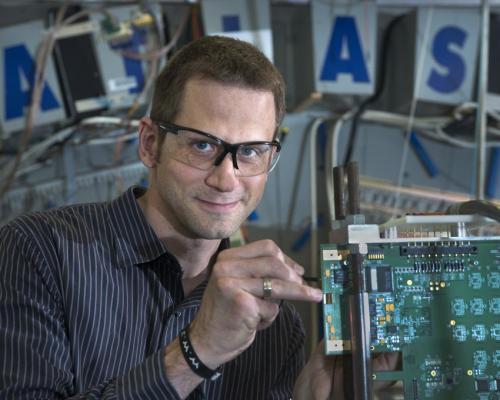
Brookhaven Lab/ATLAS physicist Marc-André Pleier adjusting detector components. (Credit: Brookhaven Lab/ATLAS)
Physicist Marc-André Pleier adjusting detector components. (Credit: Brookhaven Lab/ATLAS)
via bnl

Huge Meteorite on Mars Discovered by NASA’s Curiosity Rover

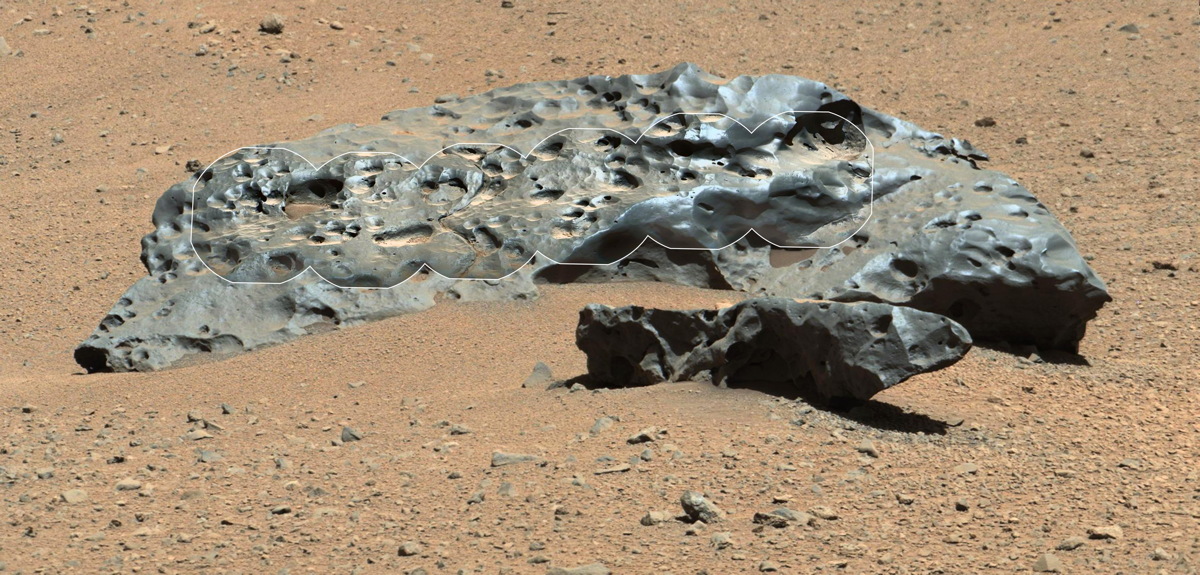
This photo by NASA's Curiosity Mars rover shows the huge iron meteorite "Lebanon" (7 feet wide) and its smaller companion "Lebanon B." The two meteorites were found by Curiosity on May 25, 2014. The circular insets are more detailed views by Curiosity's Chem-Cam instrument overlaid on an image by the rover's Remote Micro-Imager. (Credit: NASA/JPL-Caltech/LANL/CNES/IRAP/LPGNantes/CNRS/IAS/MSSS)
This photo by NASA’s Curiosity Mars rover shows the huge iron meteorite “Lebanon” (7 feet wide) and its smaller companion “Lebanon B.” The two meteorites were found by Curiosity on May 25, 2014. The circular insets are more detailed views by Curiosity’s Chem-Cam instrument overlaid on an image by the rover’s Remote Micro-Imager.
(Credit: NASA/JPL-Caltech/LANL/CNES/IRAP/LPGNantes/CNRS/IAS/MSSS)
via space.com

Single hotspot may be the source of many ultrahigh-energy cosmic rays

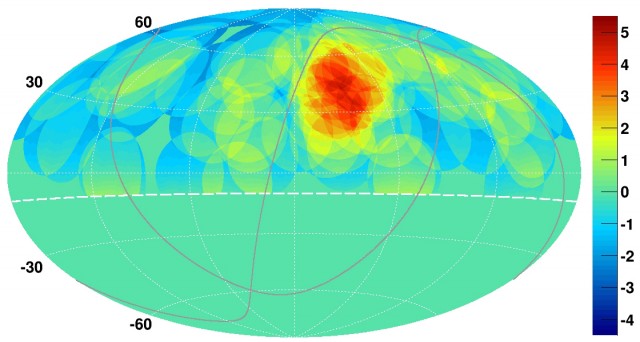
The hotspot map for ultrahigh-energy cosmic rays. (Credit: Telescope Array)
via arstechnica

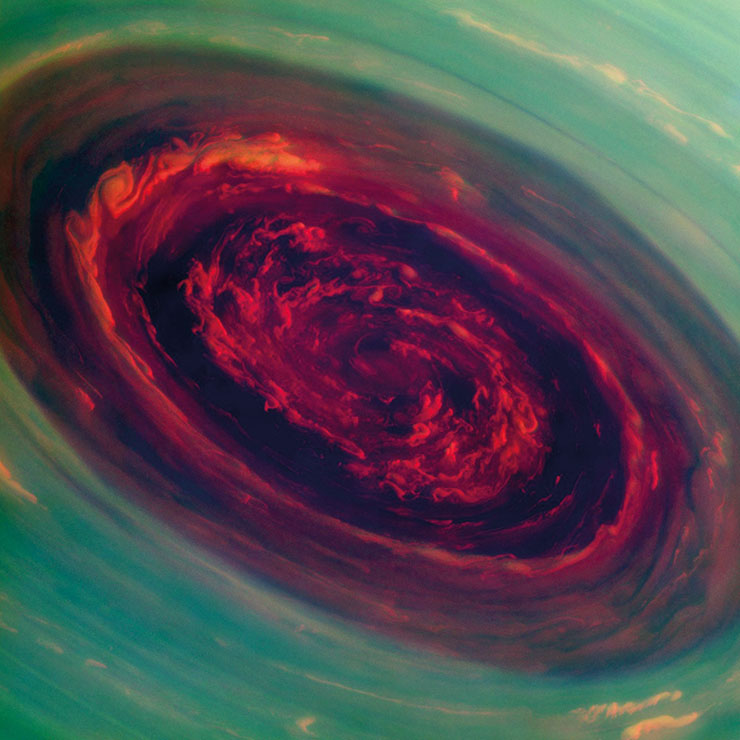
Cassini spacecraft’s new look at Saturn’s colossal hexagon storm

(Credit: NASA/JPL-Caltech/SSI)
The clear central eye of the storm is about 2000 km across – ten times the typical size on Earth – and clouds at the outer edge of the hurricane on Saturn are moving at more than 500 kph – rather faster than on Earth. (Credit: NASA/JPL-Caltech/SSI)
via dailygalaxy

Large number of dark matter peaks found using gravitational lensing

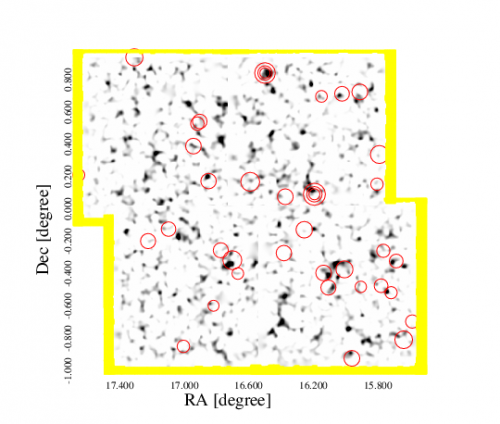
This map shows the distribution of dark matter (black) in the Universe, overlapping with optical measured clusters of galaxies (red circles). The mass peaks in the map contain significant cosmological information, will provide us with an improved understanding about the dark side of the Universe. The size of this map is about 4 square degrees corresponding to only 2.5% of the full CS82 survey footprint shown in the next figure. (Credit: CS82, SDSS)
via phys.org

Scientists Believe There May Be An Ancient Earth Older Than The Moon Inside Earth

(Credit: NASA)
(Credit: NASA)
via elitedaily