Physics in the News

Tuesday, October 7, 2014

Invention of blue LEDs receives physics Nobel

via bbc

Blood Moon total lunar eclipse coming up

via knoxnews

New mechanism of photoconduction could lead to next-generation excitonic devices

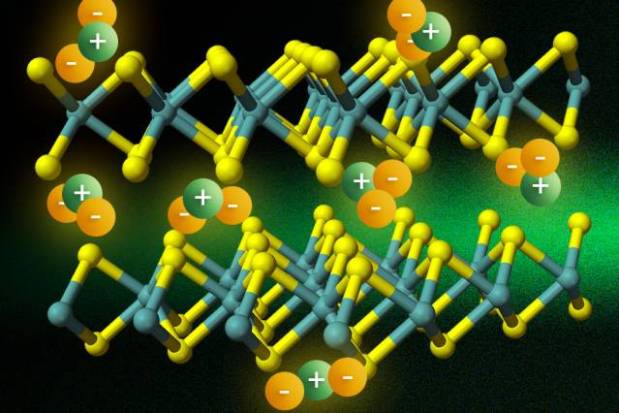
Shown here is the crystal structure of molybdenite, MoS2. When hit with a burst of laser light, freed electrons and holes combine to form combinations called trions, consisting of two electrons and one hole (represented here by orange and green balls). (Credit: Jose-Luis Olivares/MIT)
Shown here is the crystal structure of molybdenite, MoS2. When hit with a burst of laser light, freed electrons and holes combine to form combinations called trions, consisting of two electrons and one hole, represented here by orange and green balls. (Credit: Jose-Luis Olivares/MIT)
via mit

A huge new neutrino experiment is up and running at Fermilab

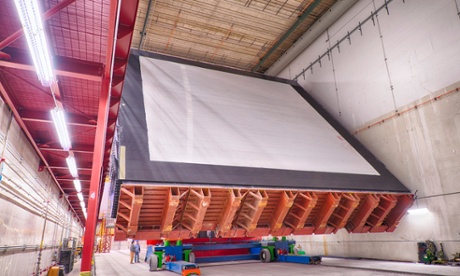
 Construction of Noνa, apparently the biggest free-standing plastic structure in the world. And a neutrino detector. Photograph: FNAL
Construction of Noνa, apparently the biggest free-standing plastic structure in the world. And a neutrino detector. (Credit: FNAL)
via theguardian

NASA’s Orion capsule floats inside US Navy ship

A test version of NASA's Orion capsule floats in the rear of the USS Anchorage during a recovery drill off the coast of California September 15, 2014. Orion is NASA's next exploration spacecraft, designed to carry astronauts to destinations in deep space, including an asteroid and Mars. Picture taken September 15, 2014.  (Credit: REUTERS/Mike Blake)
A test version of NASA’s Orion capsule floats in the rear of the USS Anchorage during a recovery drill off the coast of California September 15, 2014. Orion is NASA’s next exploration spacecraft, designed to carry astronauts to destinations in deep space, including an asteroid and Mars. Picture taken September 15, 2014. (Credit: REUTERS/Mike Blake)
via reuters

How big data is fueling a new age in space exploration

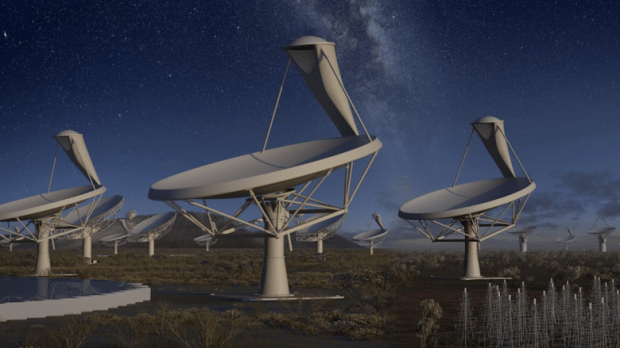
A few major factors will drive exponential growth in the amount of terabytes falling on us from the skies over the next couple of decades: the increasing speed of commercial satellite deployment, implementation of faster communication technology, and the onset of interplanetary missions. (Credit: SKA Telescope, Golubovich)
via venturebeat

The difficulty of using the Doppler shift to measure the wobble of a star

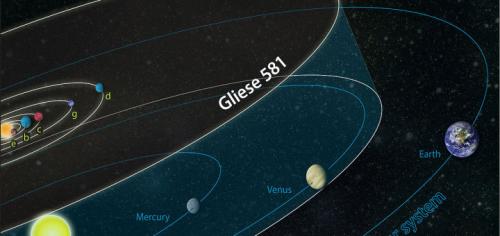
One of the biggest advances of astronomy in the past decade has been the discovery of planets orbiting other stars, known as exoplanets. But just how many exoplanets have been discovered? According to the Extrasolar Planet Encyclopedia, a semi-official catalog based in Europe, there were as of the end of September last year 990 confirmed exoplanets and 2,321 candidate exoplanets. (Credit: Zina Deretsky, National Science Foundation)
How many exoplanets have been discovered? According to the Extrasolar Planet Encyclopedia, a semi-official catalog based in Europe, there were as of the end of September last year 990 confirmed exoplanets and 2,321 candidate exoplanets. (Credit: Zina Deretsky, National Science Foundation)
via phys.org

Pressing the accelerator on quantum robotics

The theoretical work has focused on using quantum computing to accelerate the machine learning. (Credit: SINC)
via sciencedaily

How much should a robot be allowed to hurt its coworkers?

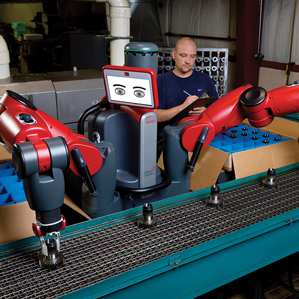
, a collaborative robot from Rethink Robotics, works on a mocked-up assembly line. (Credit: Rethink Robotics)
A collaborative robot from Rethink Robotics, works on a mocked-up assembly line. Setting limits on the level of pain a robot may (accidentally) inflict on a human is a crucial goal of the first safety standards being drawn up for these “collaborative” robots. (Credit: Rethink Robotics, Simonite)
via technologyreview

Why ‘Frankenstein’ Robots Could Be the Future of Artificial Intelligence

via motherboard

Why didn’t they win? 10 huge discoveries without a Nobel Prize

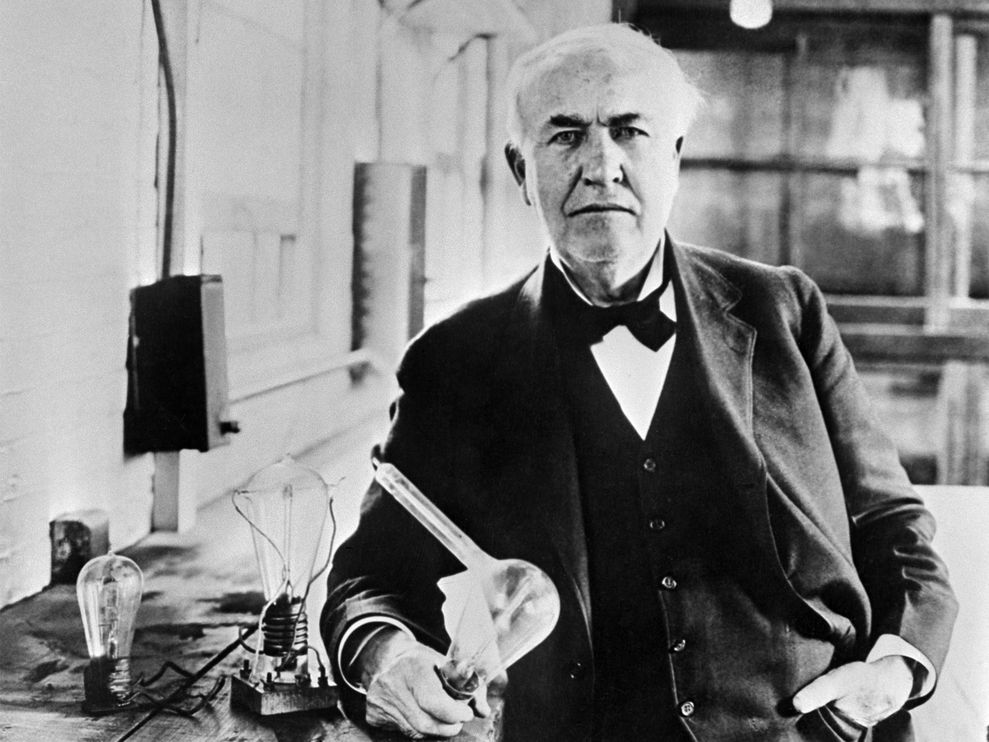
Thomas Edison is famous for his lightbulb, but he never won a Nobel Prize. (Credit:  AFP/Getty)
Thomas Edison is famous for his lightbulb, but he never won a Nobel Prize. (Credit: AFP/Getty)
via nationalgeographic

Physics in the News

Monday, October 6, 2014

Princeton scientists observe elusive particle that behaves both like Matter and Antimatter discovered

via princeton

Turn your smart phone into a cosmic ray telescope

Professor Justin Vandenbroucke leads the development of the DECO app. (Credit: Jeff Miller/UW-Madison)
via wisc.edu

Physicists succeed in compressing quantum data for the first time

if we have a system of qubits all in the same state (with the same probability distributions), we have identical qubits, even though we might get different results upon measuring the individual qubits. Strangely enough, particles in the quantum world can be both identical and distinct at the same time.  (Credit: M. Byrne)
if we have a system of qubits all in the same state (with the same probability distributions), we have identical qubits, even though we might get different results upon measuring the individual qubits. Strangely enough, particles in the quantum world can be both identical and distinct at the same time. (Credit: M. Byrne)

via motherboard

Composite image shows two black holes orbiting each other

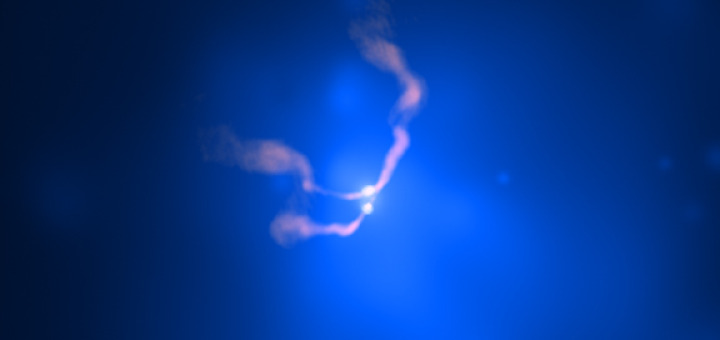
his composite X-ray/radio image of Abell 400 shows radio jets (pink), immersed in a vast cloud of multimillion degree X-ray emitting gas (blue) that pervades the cluster. The jets emanate from the vicinity of two supermassive black holes (bright spots in the image) in the galaxy. Chandra and radio data confirm that the unusual structure is due to the merger of two large galaxies, whose supermassive black holes are bound together by their mutual gravity. The swept-back appearance of the radio jets is produced by the rapid motion of the galaxy through the hot gas of the cluster, in much the same way that a motorcyclist's scarf is swept back while speeding down the road.Credit: X-Ray: NASA/CXC/D. Hudson, T.Reiprich et al. (AIfA); Radio: NRAO/VLA/ NRL
This composite X-ray/radio image of Abell 400 shows radio jets (pink), immersed in a vast cloud of multimillion degree X-ray emitting gas (blue) that pervades the cluster. The jets emanate from the vicinity of two supermassive black holes (bright spots in the image) in the galaxy. Chandra and radio data confirm that the unusual structure is due to the merger of two large galaxies, whose supermassive black holes are bound together by their mutual gravity. (Credit: X-Ray: NASA/CXC/D. Hudson, T.Reiprich et al. (AIfA); Radio: NRAO/VLA/ NRL)
via phys

NASA to put astronauts in deep sleep (therapeutic torpor) for Mars mission

via discovery

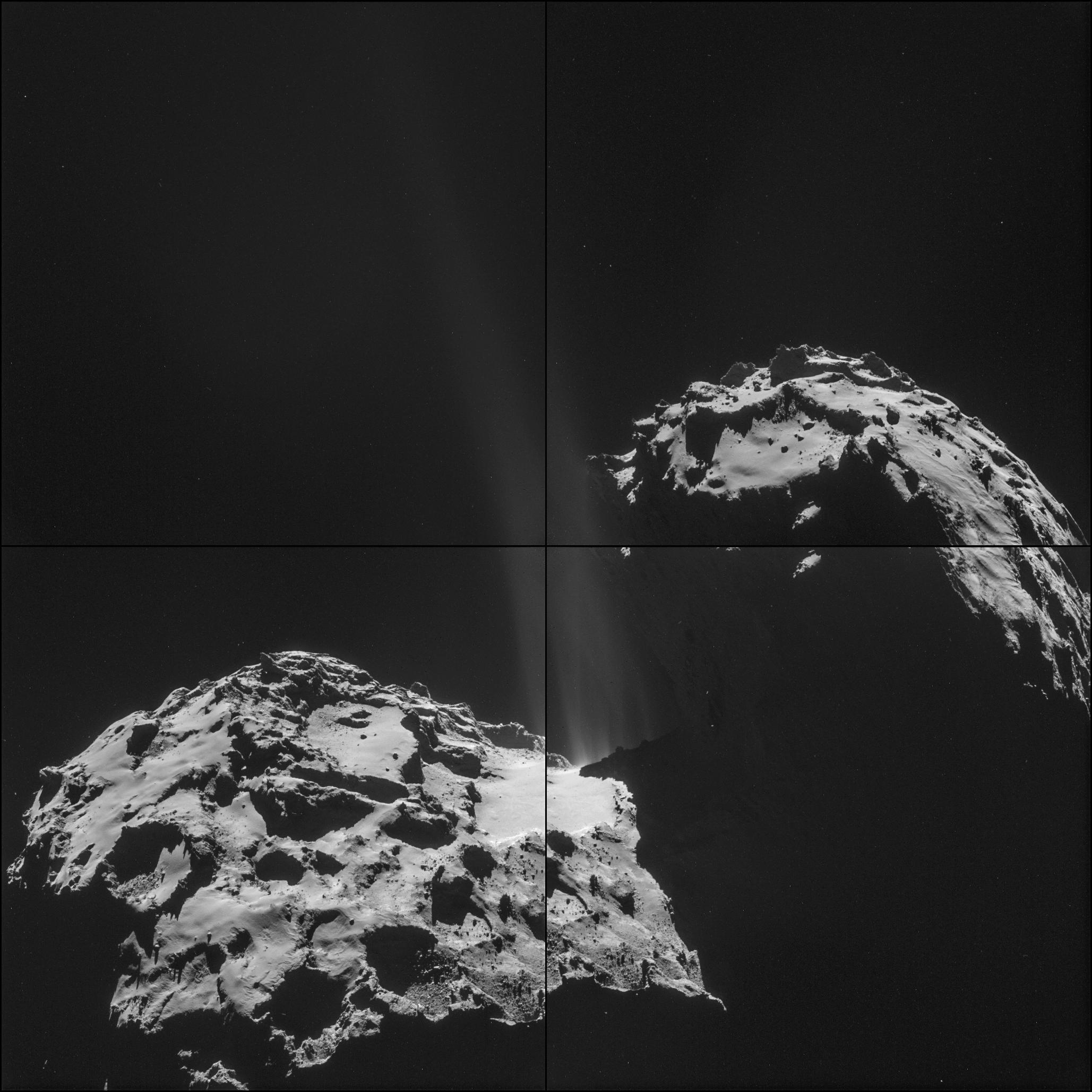
Jet activity at the neck of the Rosetta comet

rosettacomet
a region of jet activity can be seen at the neck of the comet. These jets, originating from several discrete locations, are a product of ices sublimating and gases escaping from inside the nucleus. (Credit: ESA, NASA)
via phys.org

Pluto the “Unexplored Planet” Is it a Planet? Could it have astrobiological potential?

via dailygalaxy

Rat brains enlisted in quest for spatial certainty

Researcher will mash together the visual recognition skills of humans and the spatial memory system of rats to enable robots to navigate in any environmental conditions. (Credit: The Australian)
via theaustralian

Tiny fossil galaxies of first stars of the Universe found orbiting Milky Way

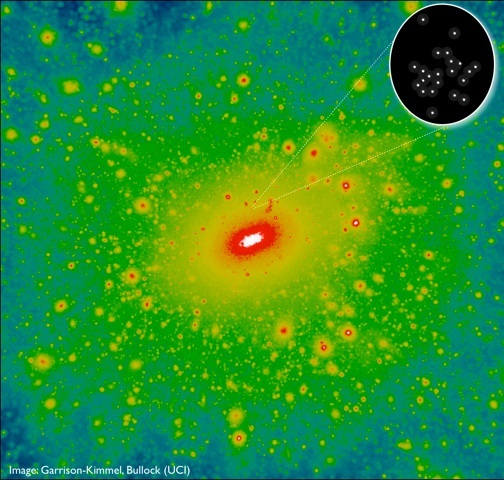
The image above shows a standard prediction for the dark matter distribution within about 1 million light years of the Milky Way galaxy, which is expected to be swarming with thousands of small dark matter clumps called `halos'. (Credit: Garrison, Kimmel, Bullock, UCI)
The image above shows a standard prediction for the dark matter distribution within about 1 million light years of the Milky Way galaxy, which is expected to be swarming with thousands of small dark matter clumps called `halos’. (Credit: Garrison, Kimmel, Bullock, UCI)
via dailygalaxy

Is the next supercollider a good investment?

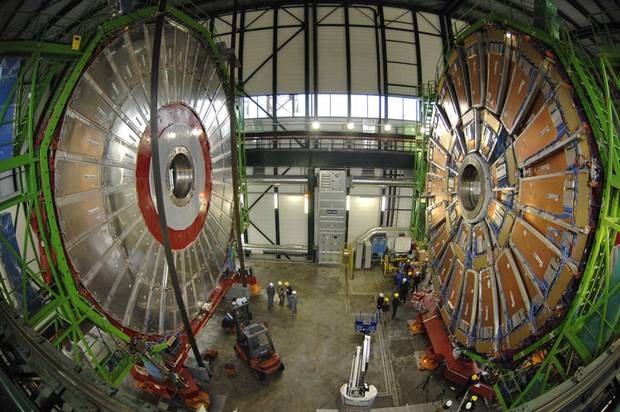
cern-030308
There is no doubt in my mind that society invests its billions well if it invests in theoretical physics. Whether that investment should go into particle colliders though is a different question. I don’t have a good answer to that, and I don’t see that the question is seriously being discussed. (Credit: Hossenfelder)
via backreaction

Physics in the News

Friday, September 26, 2014

New molecule found in space connotes life origins

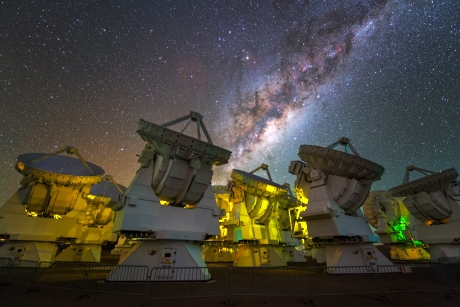
The vibrant, starry stream of the Milky Way frames radio telescopes of the Atacama Large Millimeter/submillimeter Array - known as the ALMA Observatory - in Chile’s Atacama Desert. (Credit: Y. Beletsky/ESO)
The vibrant, starry stream of the Milky Way frames radio telescopes of the Atacama Large Millimeter/submillimeter Array – known as the ALMA Observatory – in Chile’s Atacama Desert. (Credit: Y. Beletsky/ESO)
via cornell

Black holes declared non-existent again.

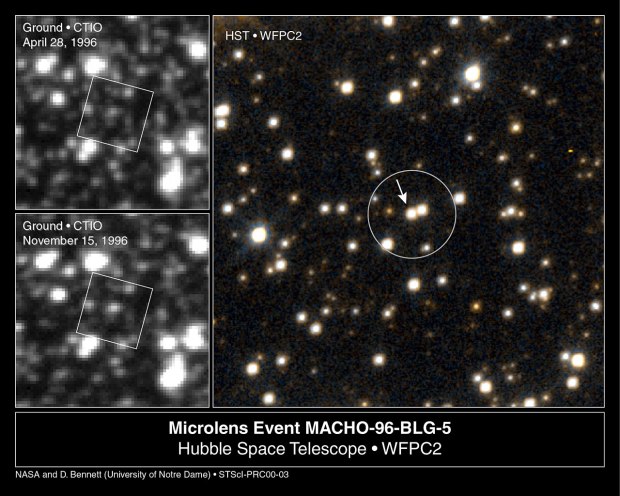
Two international teams of astronomers using the Hubble Space Telescope and ground-based telescopes in Australia and Chile have discovered the first examples of isolated stellar-mass black holes adrift among the stars in our galaxy. (Credit: NASA/ESA, D. Bennett)
via backreaction

First Quantum Logic Operation For An Integrated Photonic Chip

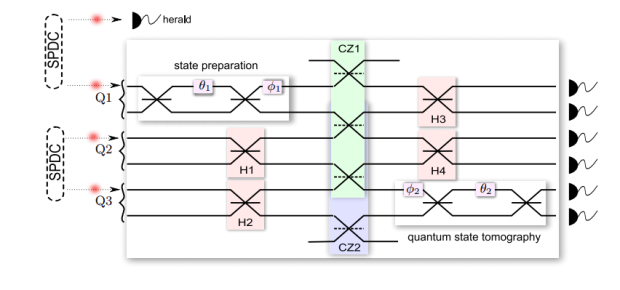
The first teleportation of a photon inside a photonic chip illustrates both the potential for quantum computation and the significant challenges that lay ahead.
via technologyreview

Cold Atom Laboratory Chills Atoms to New Lows

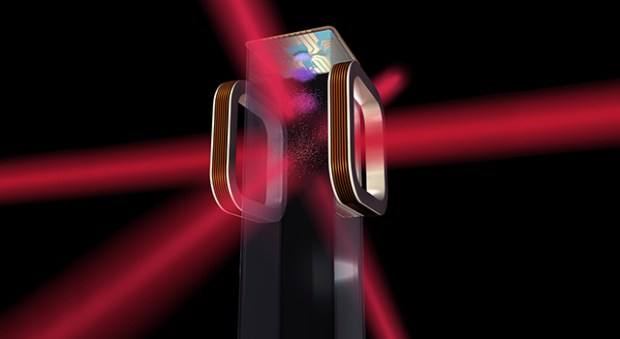
rtist's concept of an atom chip for use by NASA's Cold Atom Laboratory (CAL) aboard the International Space Station. CAL will use lasers to cool atoms to ultracold temperatures. (Credit: NASA)
rtist’s concept of an atom chip for use by NASA’s Cold Atom Laboratory (CAL) aboard the International Space Station. CAL will use lasers to cool atoms to ultracold temperatures. (Credit: NASA)
via jpl

A dramatic recent “discovery” in physics is looking rather dodgy

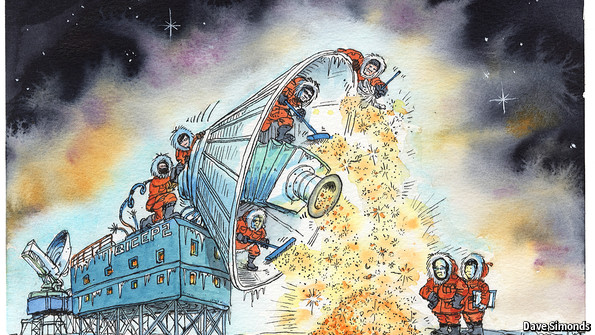
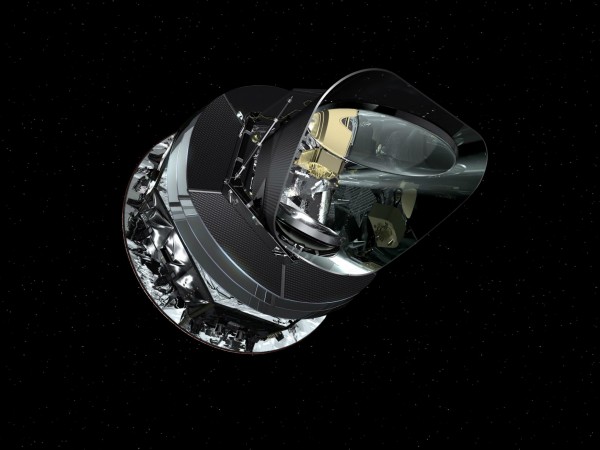
 A paper just released by the team behind Planck, a European space telescope, casts serious doubt on the BICEP-2 result. (Credit: D. Simonds)
A paper just released by the team behind Planck, a European space telescope, casts serious doubt on the BICEP-2 result. (Credit: D. Simonds)
via economist

Craig Nelson claims that the atomic era is in its twilight years

"The atomic age is an incredible epoch, filled with people we think we know already—from Marie Curie and Albert Einstein to Ronald Reagan and the plant workers of Fukushima—but they all turn out to be a lot more complicated and interesting than any of us could’ve imagined," says Nelson.(Credit: Helvio Faria)
“The atomic age is an incredible epoch, filled with people we think we know already—from Marie Curie and Albert Einstein to Ronald Reagan and the plant workers of Fukushima—but they all turn out to be a lot more complicated and interesting than any of us could’ve imagined,” says Nelson. (Credit: Helvio Faria)
via scitation

Physics in the News

Wednesday, September 24, 2014

New Results from Planck: It Doesn’t Look Good For BICEP2

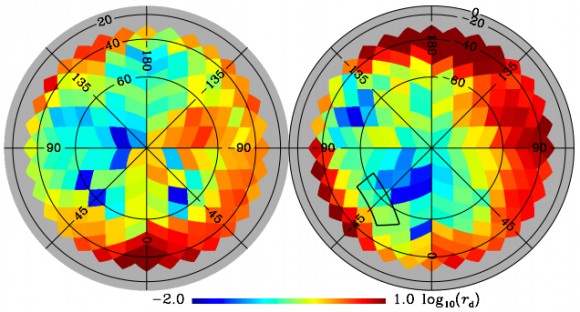
Dust map of the Universe. The region studied by BICEP2 is indicated by the rectangle in the right circle. (Credit: Planck Collaboration)
via universetoday

Artificial Atoms Talk … and Scientists Listen

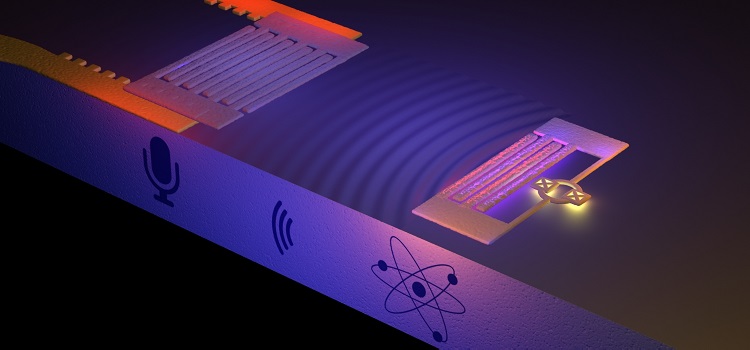
n this illustration, the artificial atom on the right side of the image sends out sound waves that are picked up by the microphone on the left. (Credit: Philip Krantz)
via livescience

What’s Next for Inflation Cosmology – New Updates

(Credit: Andrei Linde)
A serious challenge to the discovery of gravity waves by the BICEP2 2014 results has appeared: the researchers had underestimated the amount of interstellar dust that could be contaminating their data. (Credit: MacRobert, Andrei Linde)
via skyandtelescope

Clear skies reveal water on distant Neptune-sized planet

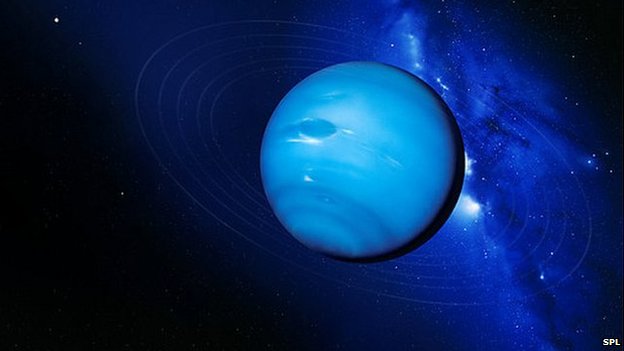
Scientists have found definitive traces of water on a relatively small exoplanet. HAT-P-11b is the size of Neptune and has copious amounts of both water vapor and hydrogen in its atmosphere. (Credit: NASA)
Scientists have found definitive traces of water on a relatively small exoplanet. HAT-P-11b is the size of Neptune and four times the size of Earth. The exoplanet has copious amounts of both water vapor and hydrogen in its atmosphere. (Credit: NASA)
via bbc

Hugh Everett: The man who gave us the multiverse

via newscientist

What is the geometry of the universe?

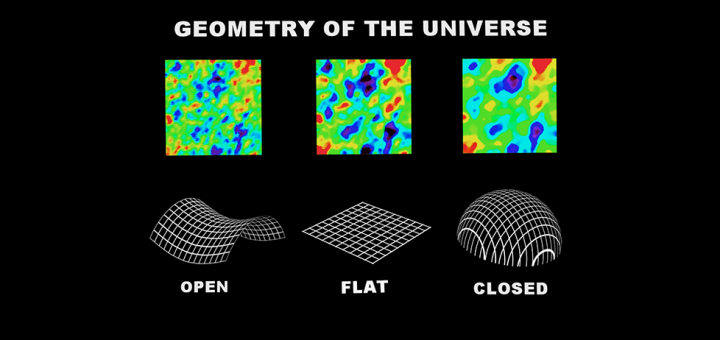
Our current model of the early inflationary period predicts that the universe should be flat, and so far that has held up. If the universe actually is curved, then the inflationary period must have been more complex than we have thought. (Credit: Koberlien)
via phys.org

Robot Octopus Takes to the Sea

via spectrum

Physics in the News

Tuesday, September 23, 2014

Brian Cox: ‘Multiverse’ makes sense

via bbc.com

UNC professor says black holes can’t exist (PDF)

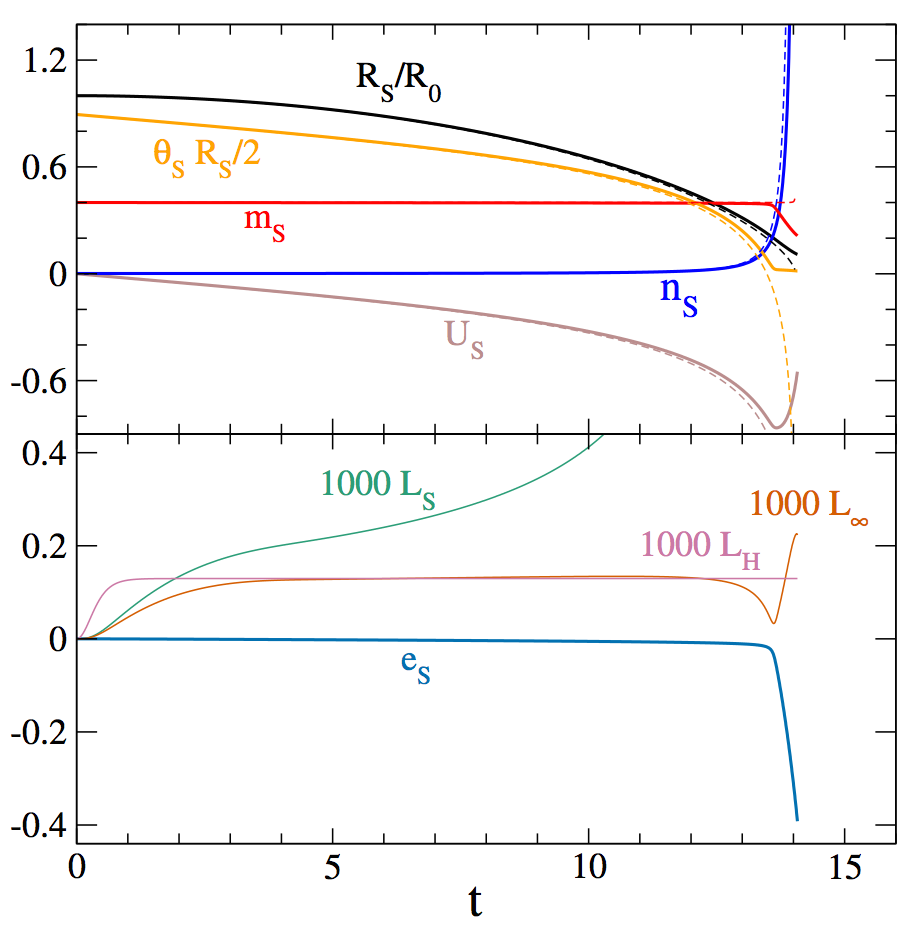
Evolution of pressure-free collapse with Hawking radiation. For easy of plotting, the luminosities are scaled by a factor of 1000. The thin dashed lines in the upper panel represent the respective quantities in a pure Oppenheimer-Snyder collapse of the same initial conditions.
Evolution of pressure-free collapse with Hawking radiation. For easy of plotting, the luminosities are scaled by a factor of 1000. The thin dashed lines in the upper panel represent the respective quantities in a pure Oppenheimer-Snyder collapse of the same initial conditions. (Credit: Mersini-Houghton, Pfeier)
via uncnews

Einstein’s Greatest Legacy

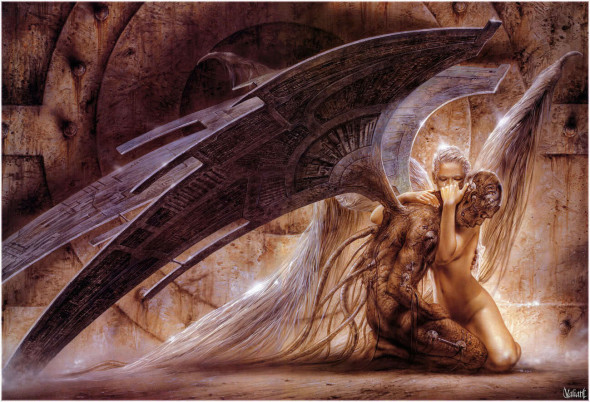
Einstein, like no other physicist before or after him, demonstrated how the power of human thought alone, used skillfully, can allow us to consider experiments that could never be practically performed. This line of thinking, these experiments performed only in our imaginations, showed we little humans often have the power to deduce equations that govern the natural world by logical deduction alone.(Credit: Siegel, Luis Royo Fantasy Art, via Photobucket user mikenolan78)
Einstein, like no other physicist before or after him, demonstrated how the power of human thought alone, used skillfully, can allow us to consider experiments that could never be practically performed. This line of thinking, these experiments performed only in our imaginations, showed we little humans often have the power to deduce equations that govern the natural world by logical deduction alone. (Credit:E. Siegel, Luis Royo Fantasy Art, via Photobucket user mikenolan78)
via medium

It’s okay: electromagnetic force hasn’t changed in 10 billion years

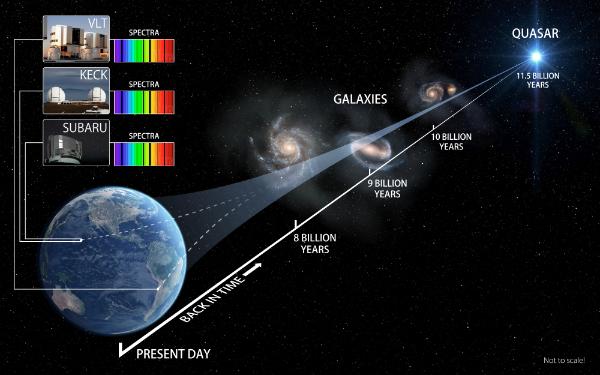
Astronomers find the strength of the electromagnetic force hasn’t changed in ten billion years. “We didn’t see any difference between electromagnetism in these three distant galaxies and here on Earth, so we don’t support that previous finding,” says Associate Professor Michael Murphy of Swinburne University. (S. Garry, Michael Murphy/Swinburne )
via abc

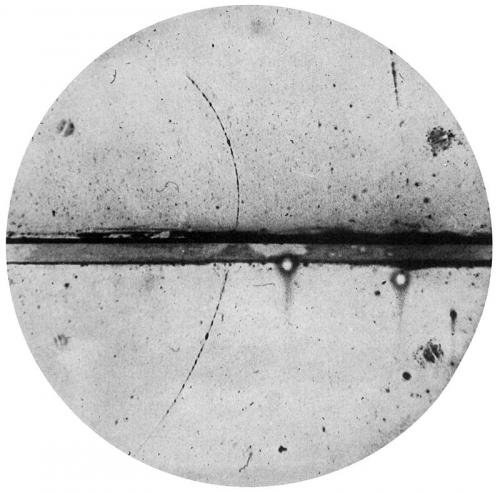
How cloud chambers revealed subatomic particles

Photograph of a cloud chamber showing the first discovered positron. (Credit: Carl D. Anderson)
via phys.org

Evidence for cosmic inflation wanes

Planck’s new microwave maps cast doubt on earlier results. (Credit: ESA/NASA/JPL-Caltech)
via sciencemag

India’s Mars Orbiter Mission could make history tomorrow

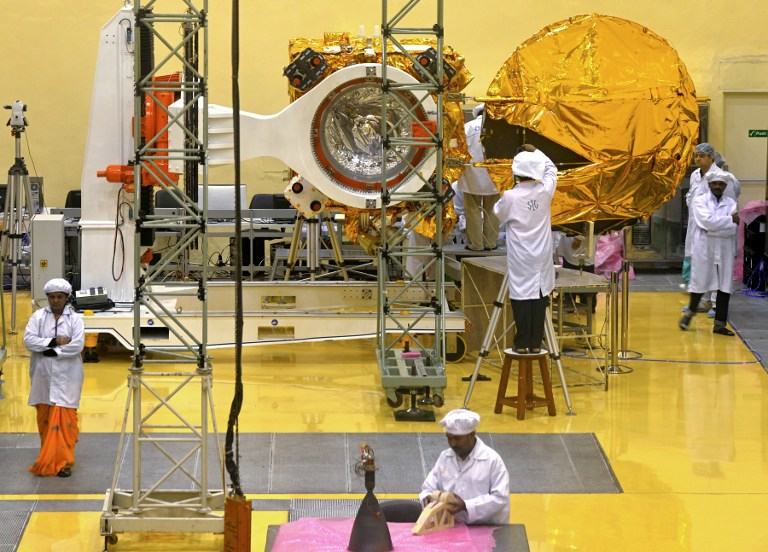
On Wednesday, Sept. 24, India could join the ranks of NASA, the European Space Agency and Russian Federal Space Agency having a successful mission to Mars. (Credit: AFP / Files / Manjunath Kiran)
via salon
When research worlds collide
via symmetrymagazine