Physics in the News

Friday, August 1, 2014

Physics-defying space drive confirmed by NASA, may revolutionize spaceflight
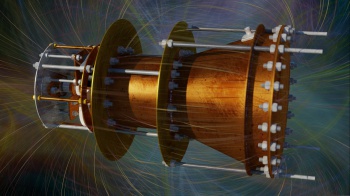
NASA has conducted experiments on a revolutionary space drive that seems to defy the laws of conservation of momentum and confirmed that it works. (Credit: EmDrive 3D render by Elvis Popovic)
via escapistmagazine

Why we’re five years overdue for a damaging solar super-storm (VIDEO)

via physicsworld

SpaceX launches 3D-printed engine chamber for crewed spaceflight (VIDEO)

via spacex

New holographic waveguide augments reality (VIDEO)

via physicsworld

Weird supernova may blow away star explosion theories
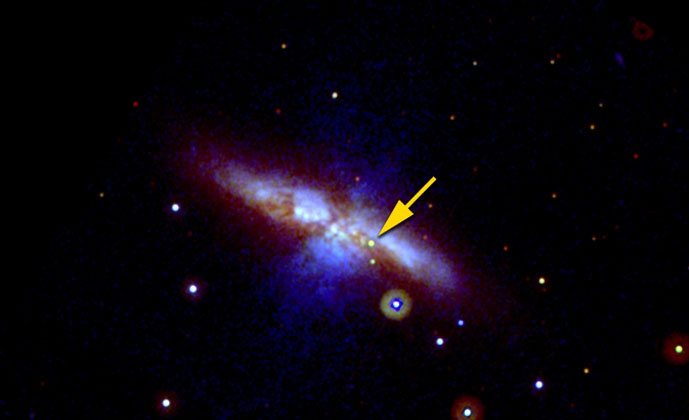
This image from NASA's Swift space telescope, taken on Jan. 22, 2014, shows the supernova SN 2014J as seen in three different exposures by the space observatory. Scientists suspect the weird supernova's progenitor star may have had a helium belt. (Credit: NASA/Swift/P. Brown, TAMU)
This image from NASA’s Swift space telescope, taken on Jan. 22, 2014, shows the supernova SN 2014J as seen in three different exposures by the space observatory. Scientists suspect the weird supernova’s progenitor star may have had a helium belt.
(Credit: NASA/Swift/P. Brown, TAMU)
via space

It’s not a drone: It’s a Creative Adaptation
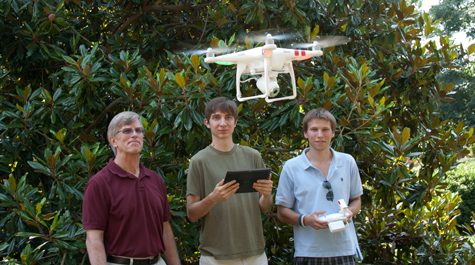
Reed Beverstock (right) pilots the physics department quadcopter while Daniel Duane (center) monitors the video feed on a computer tablet while Professor of Physics Bill Cooke looks on. They’re using the device to create video tutorials as part of a Creative Adaptation initiative. (Credit: Joseph McClain)
via wm.edu

Study finds physical link to strange electronic behavior
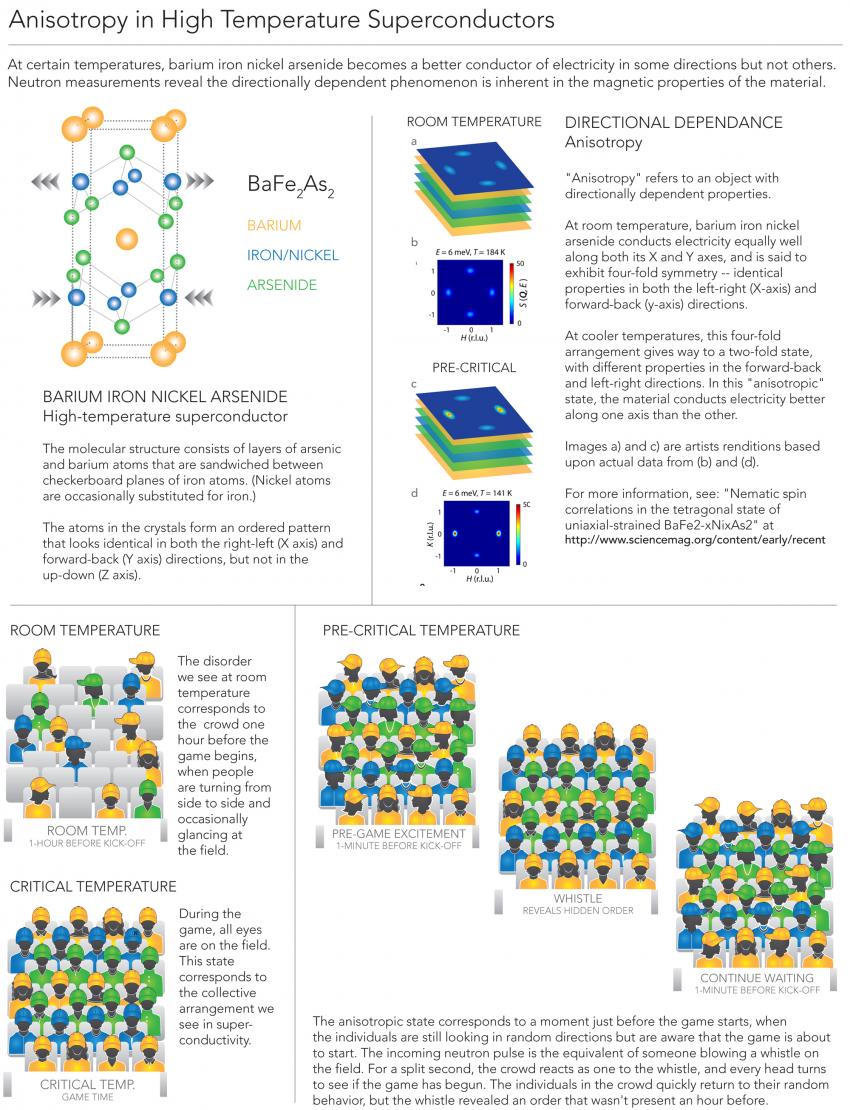
Inelastic neutron scattering experiments revealed a temporary, collective anisotropic order prior to the onset of magnetism in a temperature interval where anisotropic resistance had previously been measured. (Credit: Tanyia Johnson/Rice University)
via phys.org

The talented Mr Levinson

Mark Levinson : He's got a Physics Phd in particle theory and has been a key crew-member for the likes of David Fincher and Anthony Minghella. As his new documentary Particle Fever prepares to screen to sell out audiences. (Credit: Mark Levinson)
Mark Levinson : He’s got a Physics Phd in particle theory and has been a key crew-member for the likes of David Fincher and Anthony Minghella. As his new documentary Particle Fever prepares to screen to sell out audiences. (Credit: Mark Levinson)
via stuff

‘Quantum Glue’ is Step Toward Energy Superhighway
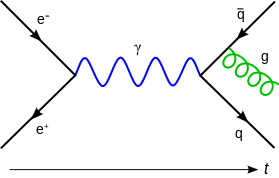
A Feynman diagram showing the radiation of a gluon when an electron and positron are annihilated. (Credit: Joel Holdswort CC by 2.5)
via laboratoryequipment
In 2013, Rutgers astronomer Rachel Somerville received the Dannie Heineman Prize in Astrophysics from the American Astronomical Society and the American Institute of Physics. The prize recognizes exceptional work by mid-career astronomers, citing her for providing fundamental insights into galaxy formation and evolution using modeling, simulations, and observations.

Physics in the News

Thursday, July 31, 2014

Weirdly wonky binary star system discovered

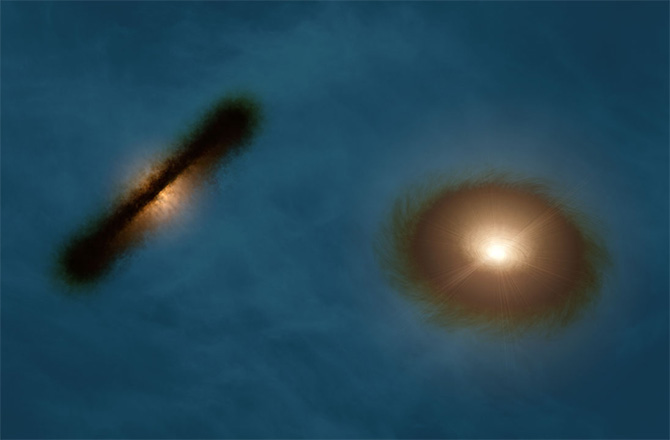
Artist’s impression of the discs around the young stars HK Tauri A and B (Credit: R. Hurt (NASA/JPL-Caltech/IPAC)
via discovery

NASA’s asteroid mission takes a beating

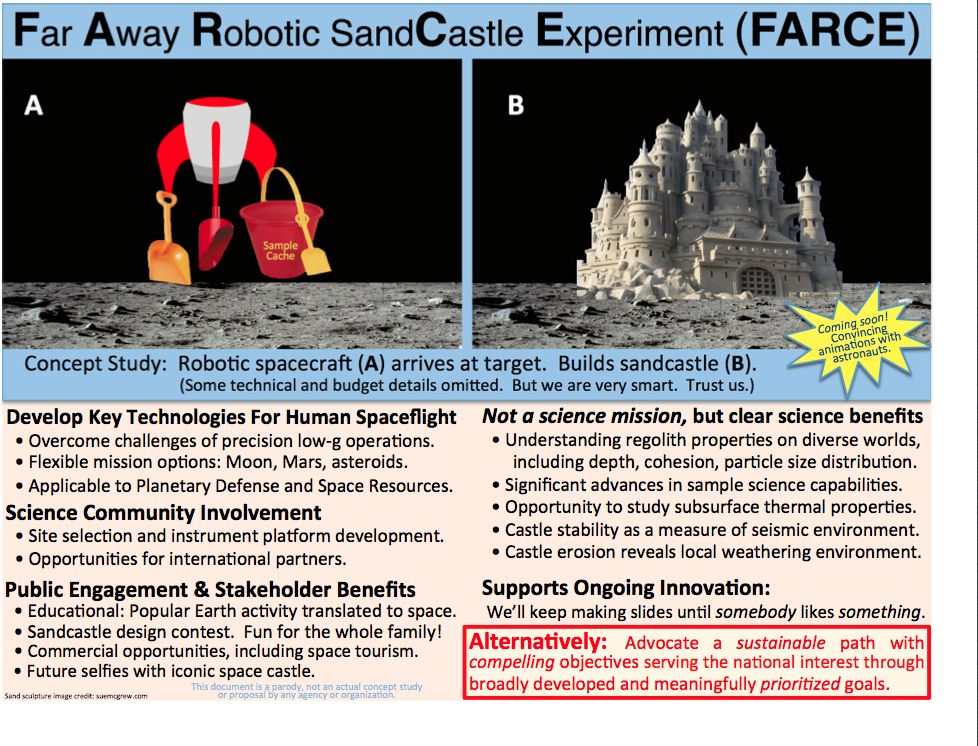
This Document is a Parody (Credit: Richard Binzel)
via chron

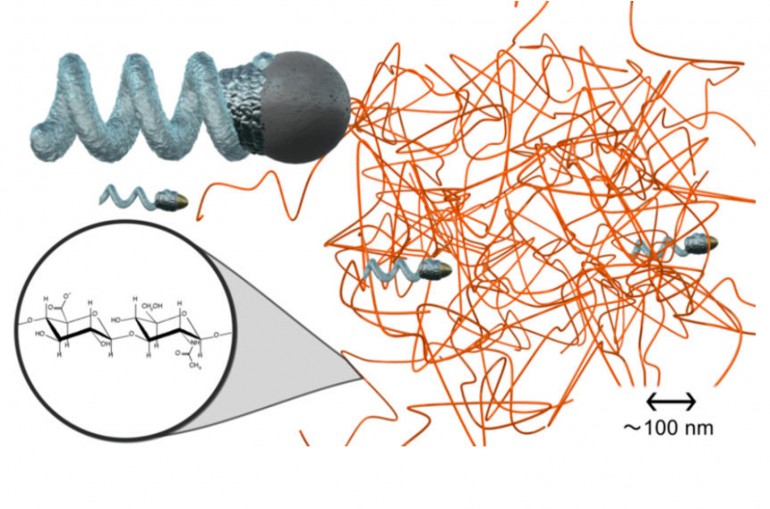
The tiniest propeller ever can sneak between cells

The nanoprop is able to easily pass between polymer chains, like those present in bodily fluids. (Credit:
via gizmag

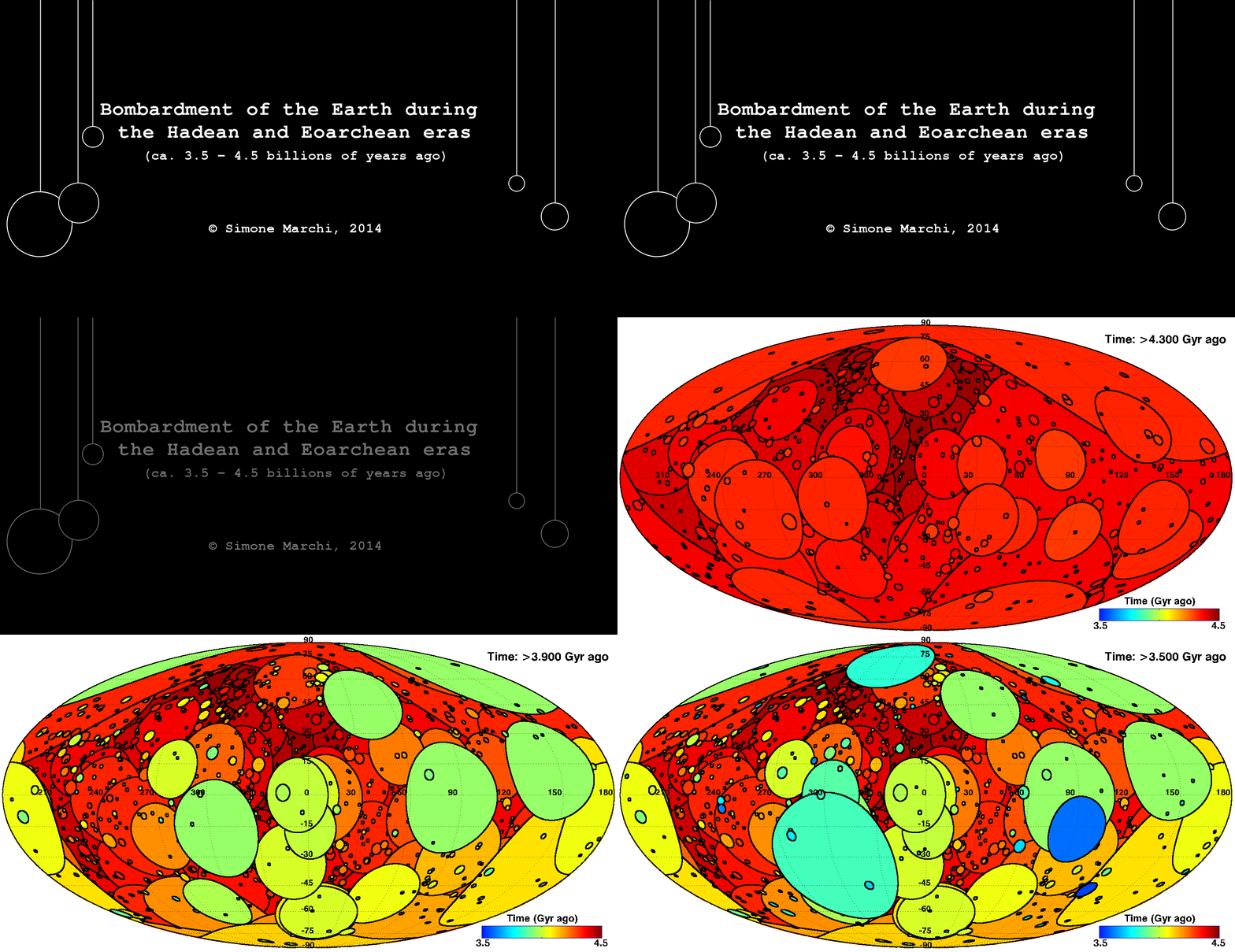
Incredible GIF shows early Earth being pummeled by asteroids

The GIF below shows the impacts the model suggests happened. They go forward in time from red to blue (4.5 billion years ago to 3.5 billion years ago). (Credit: Simone Marchi)
via businessinsider

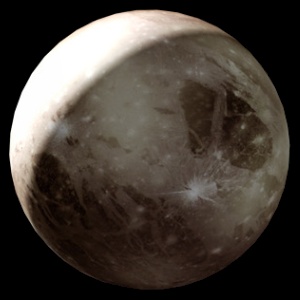
Scientists have recreated the core of Jupiter on Earth

The GIF below shows the impacts the model suggests happened. They go forward in time from red to blue (4.5 billion years ago to 3.5 billion years ago). (Credit: Collins et al)
via businessinsider

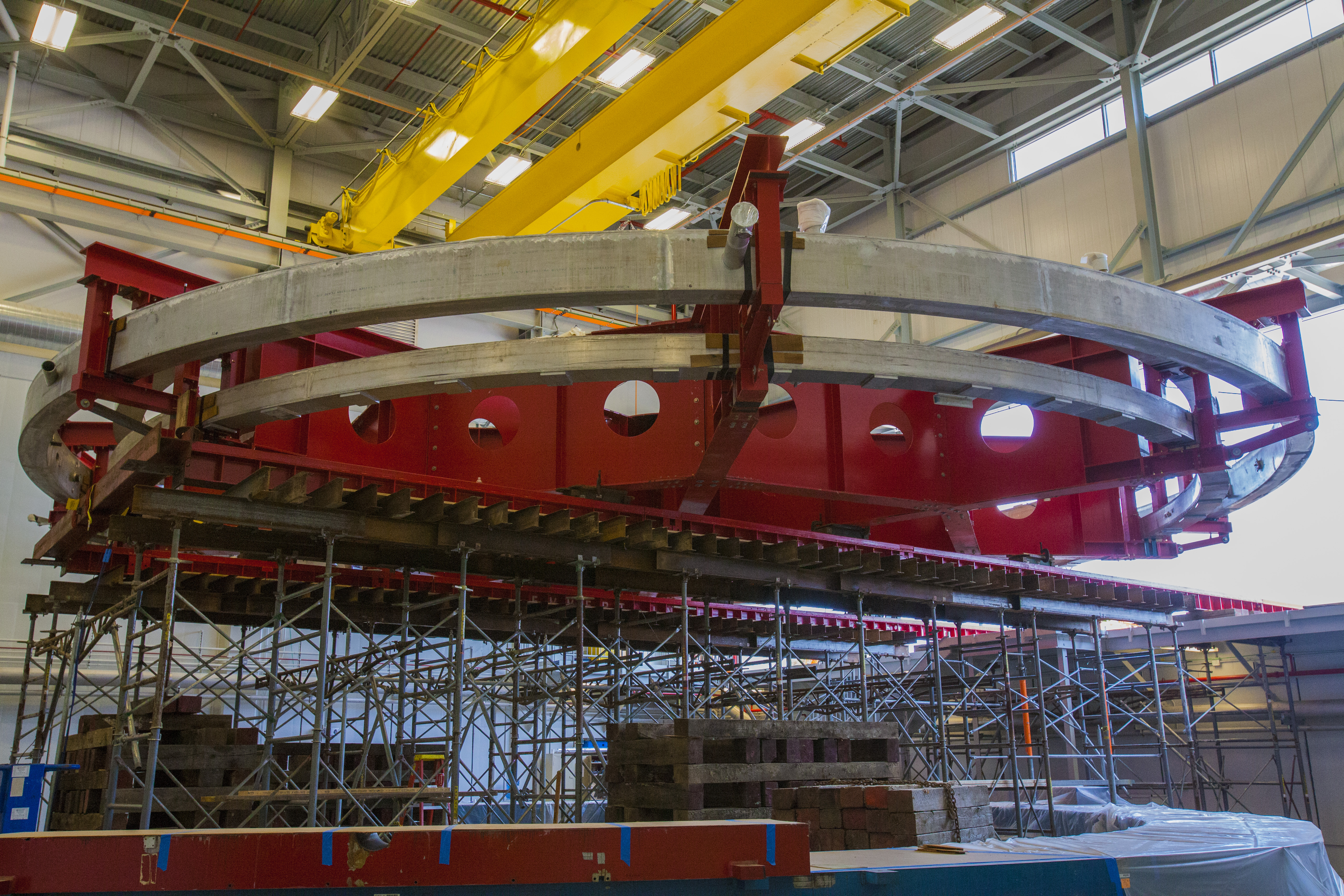
50-foot-wide Muon g-2 electromagnet installed at Fermilab

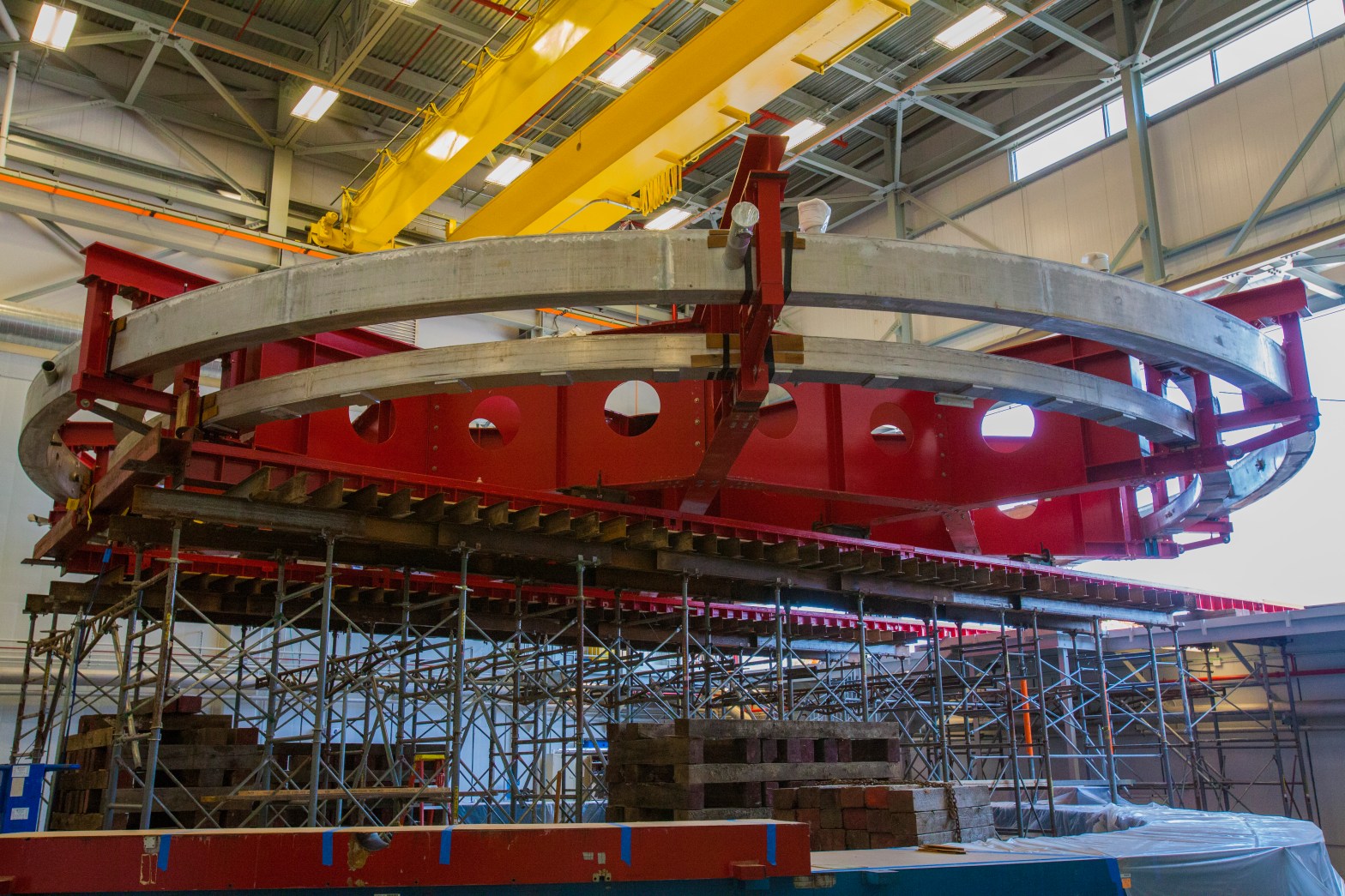
The 50-foot-wide Muon g-2 electromagnet at rest inside the Fermilab building that will house the experiment. The magnet was moved into the new building on Wednesday, July 30, 2014. The magnet will allow scientists to precisely probe the properties of subatomic particles called muons. (Credit: Fermilab.)
via phys.org

The Gaia Satellite will map one billion of the Milky Way’s stars (VIDEO)

via motherboard

Scientists explain mystery of our ‘lemon Moon’

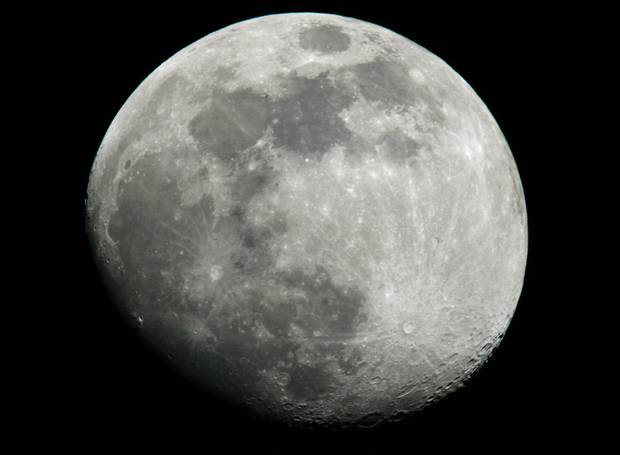
A new accurate map of the Moon has shown that it bulges slightly at one side and is flattened at the top and bottom - but how did it get this way? (Credit: NASA)
A new accurate map of the Moon has shown that it bulges slightly at one side and is flattened at the top and bottom – but how did it get this way? (Credit: NASA)

via independent

Physics in the News

Tuesday, July 29, 2014

First glimpse of Higgs Bosons at work revealed

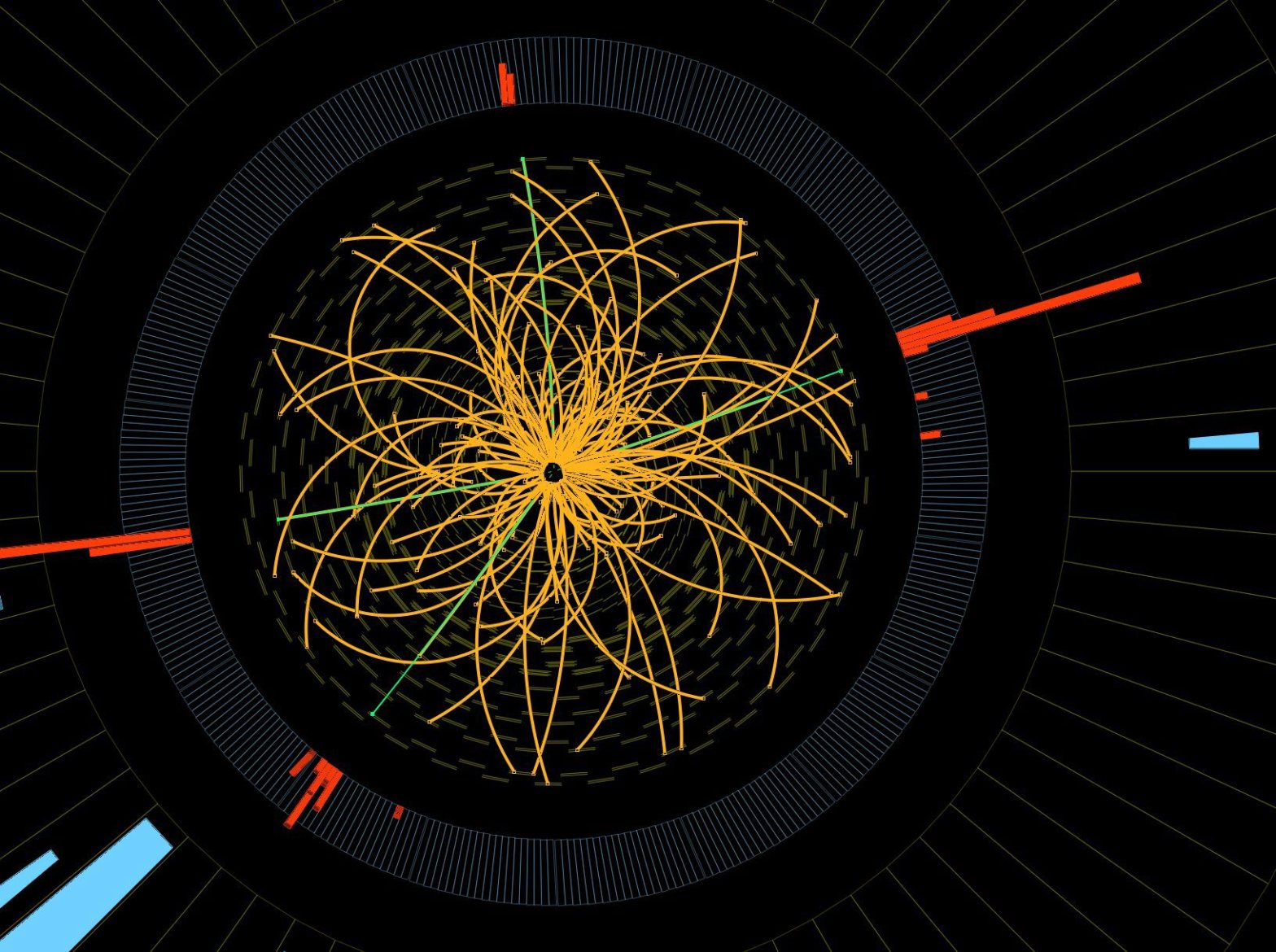
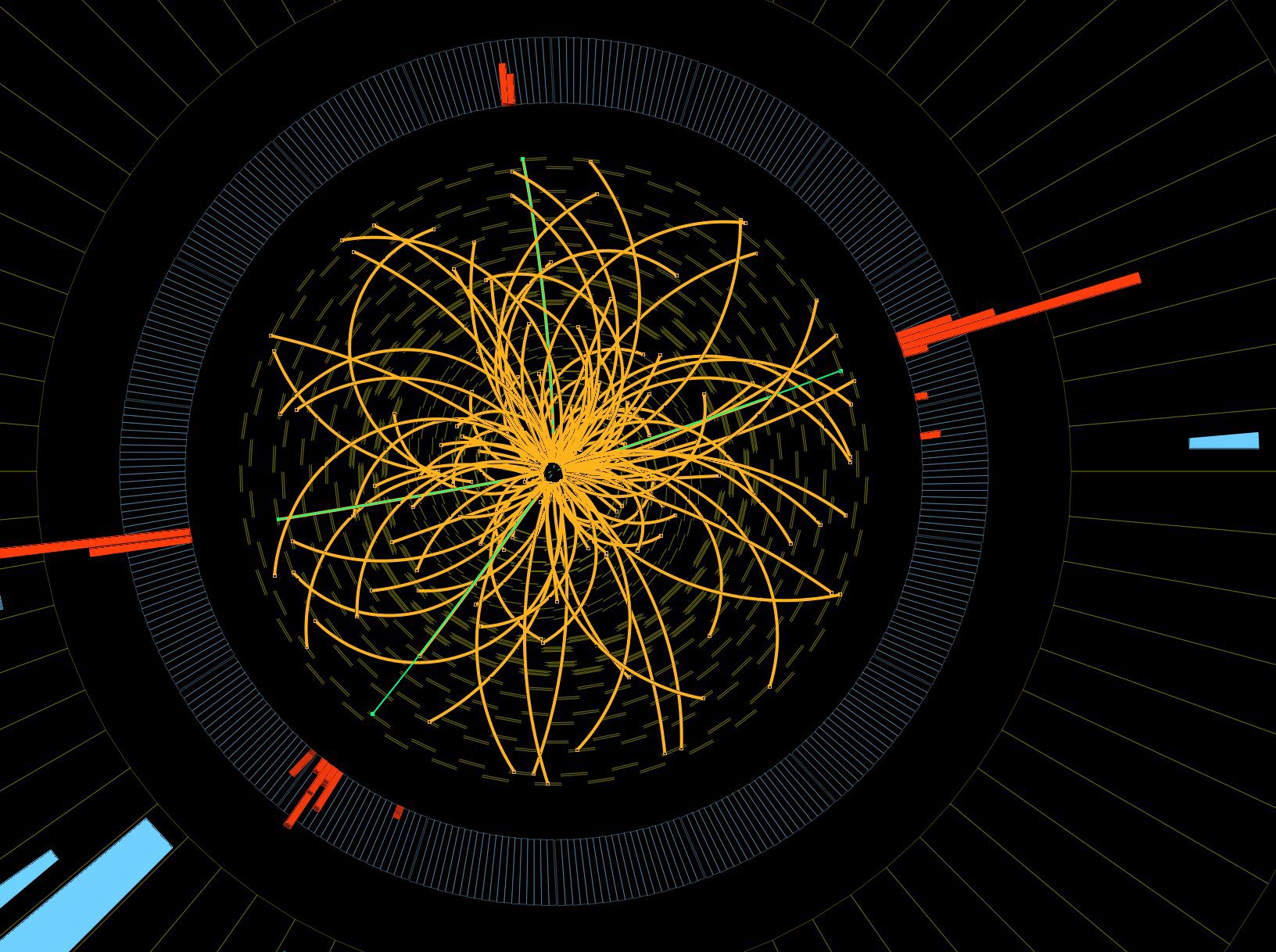
his 2011 image provide by CERN, shows a real CMS proton-proton collision in which 4 high energy electrons (green lines and red towers) are observed in a 2011 event. The event shows characteristics expected from the decay of a Higgs boson but is also consistent with background Standard Model physics processes.  To cheers and standing ovations, scientists at the world's biggest atom smasher claimed the discovery of a new subatomic particle Wednesday July 4, 2012, calling it "consistent" with the long-sought Higgs boson — popularly known as the "God particle" — that helps explain what gives all matter in the universe size and shape.  (Credit: AP Photo/CERN)
CMS proton-proton collision in which 4 high energy electrons (green lines and red towers) are observed in a 2011 event. The event shows characteristics expected from the decay of a Higgs boson but is also consistent with background Standard Model physics processes. (Credit: AP Photo/CERN)
via yahoo

Drone fly-by at Seattle’s Space Needle (VIDEO)

via adafruit

Opportunity Rover’s record-breaking Mars drive, mapped

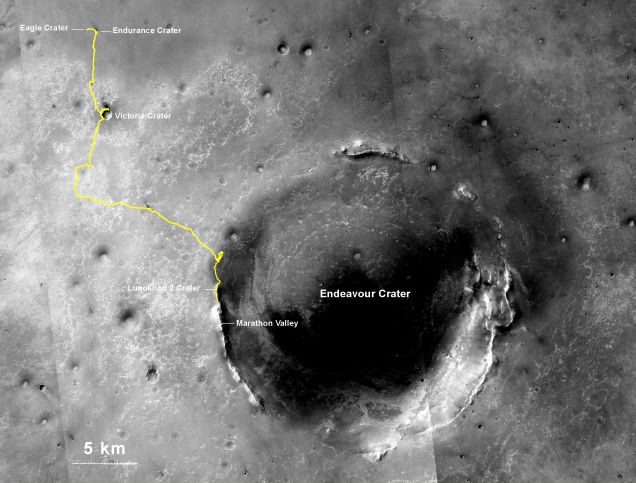
NASA reports that the Mars Rover has clocked up 25.01 miles of driving on the Red Planet—setting a record for the longest distance a vehicle has driven outside Earth. (Credit: NASA)
via gizmodo

New correction to speed of light could explain SN1987 neutrino burst

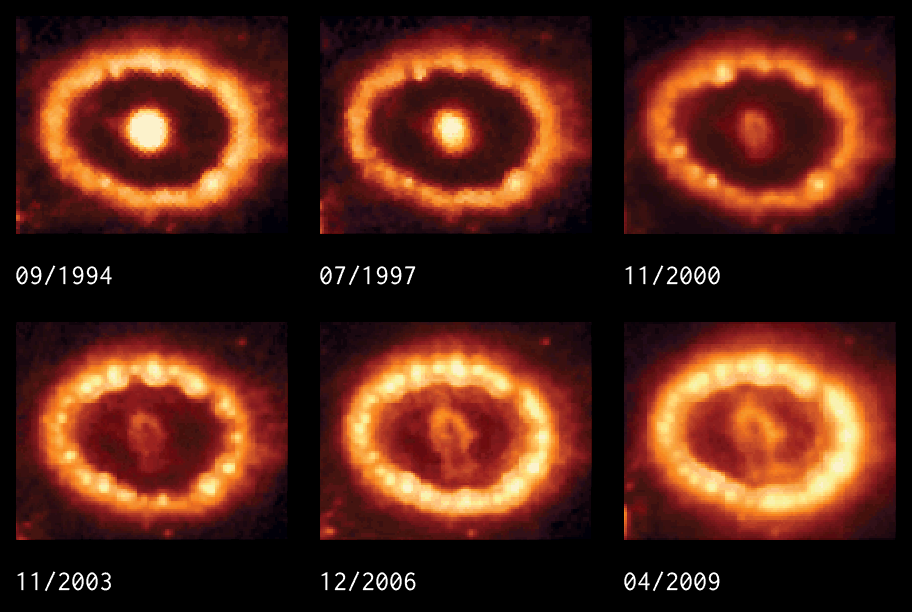
A time sequence of Hubble Space Telescope images, taken in the 15 years from 1994 to 2009, showing the collision of the expanding supernova remnant with a ring of dense material ejected by the progenitor star 20,000 years before the supernova
A time sequence of SN 1987A, taken in the 15 years from 1994 to 2009, showing the collision of the expanding supernova remnant with a ring of dense material ejected by the progenitor star 20,000 years before the supernova.
via physicsworld

A robot that grows

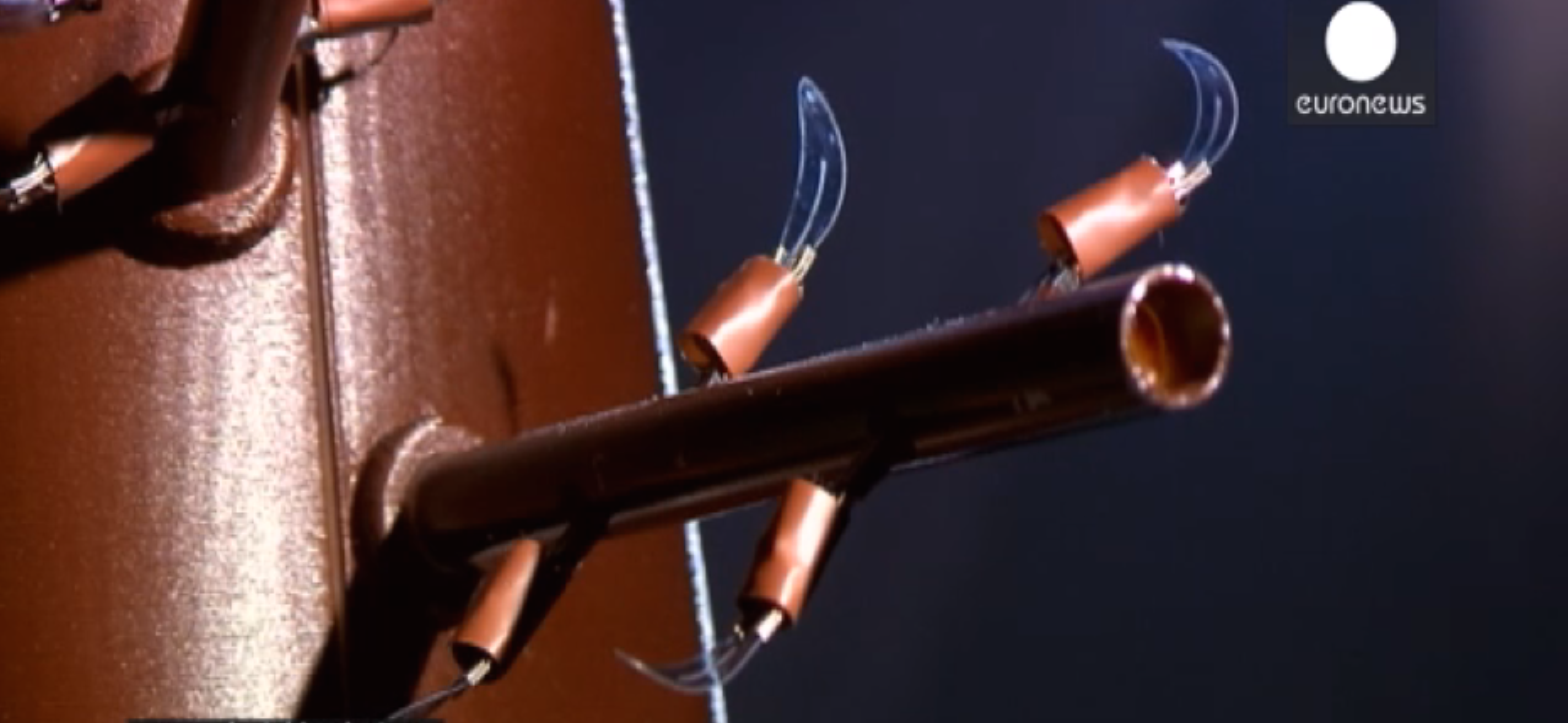
Scientists in Italy are working on creating robots that mimic the properties of plant roots, including the capacity for growth. (Credit: Euronews)
via euronews

The Moon could be littered with fossils from Earth

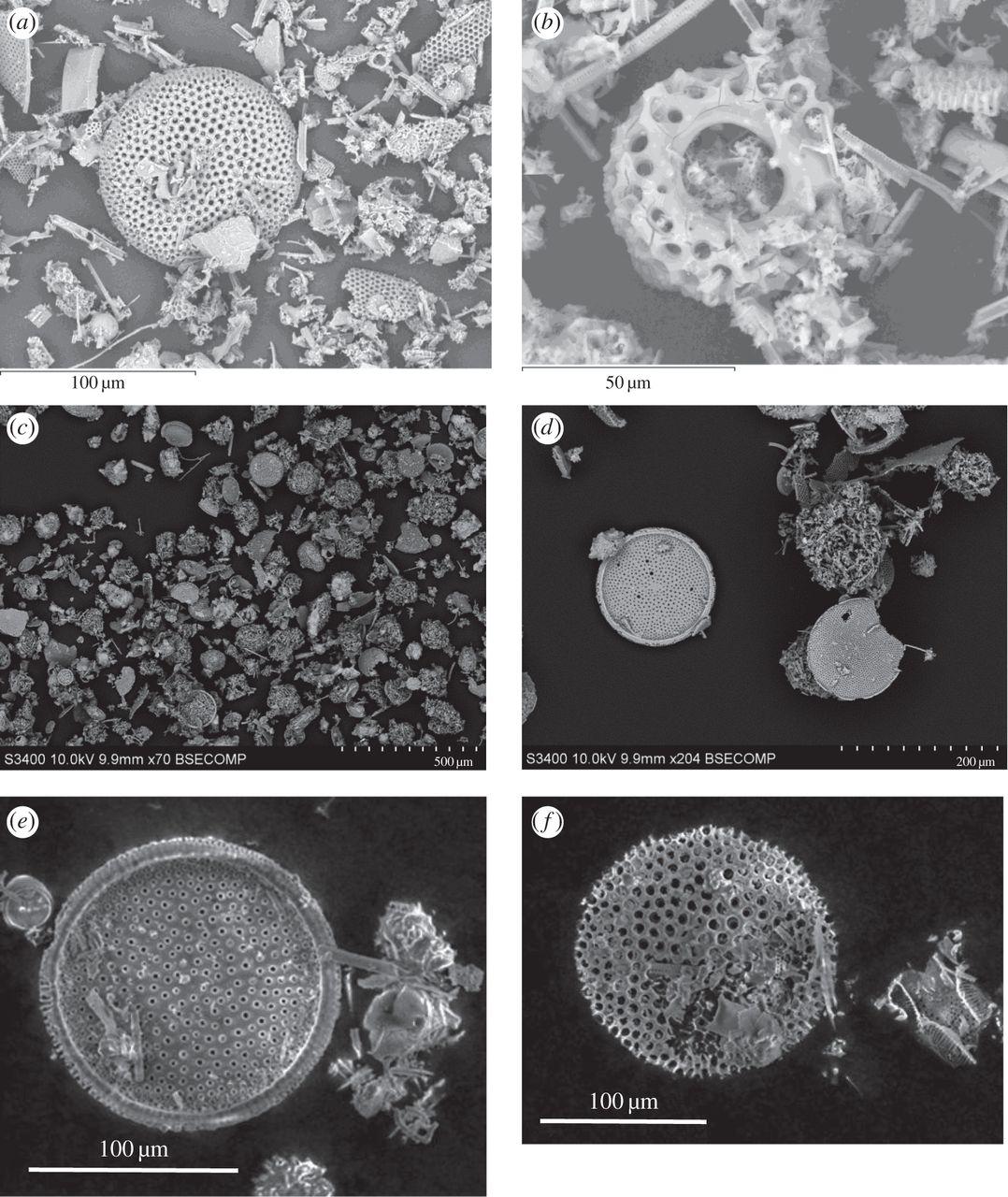
 Diatoms. Images a and b are raw diatoms; c and d are fossilized, and e and f are fossilized diatoms that were frozen but not shot. (Credit: Mark Burchell et al., Philosophical Transactions of the Royal Society)
Images a and b are raw diatoms; c and d are fossilized, and e and f are fossilized diatoms that were frozen but not shot.
(Credit: Mark Burchell et al., Philosophical Transactions of the Royal Society)
via popsci

 Best time to see 2014 meteor showers? Right about … now!

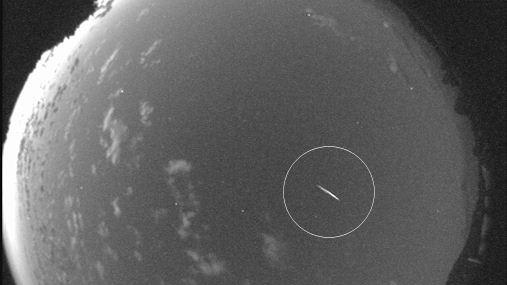
Look up, sky watchers! NASA cameras caught this streak over the New Mexico skies on Sunday, as the Perseid meteor shower heats up. (Credit: NASA)
via latimes

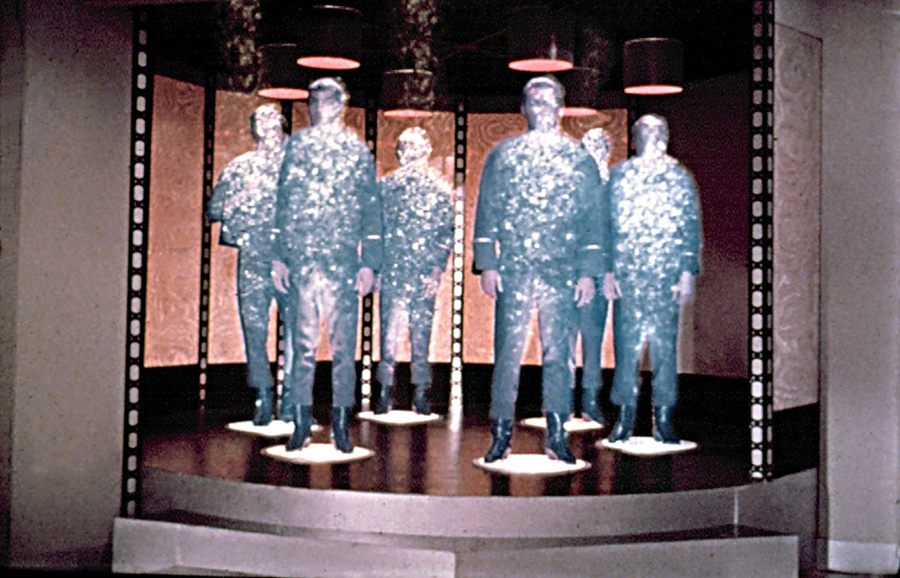
 Teleportation is closer than you think

Recent advances in theoretical physics are making Star Trek style transporters a reality. (Credit: Paramount/Everett Collection)
via mysteriousuniverse

Physics in the News

Saturday, July 26, 2014

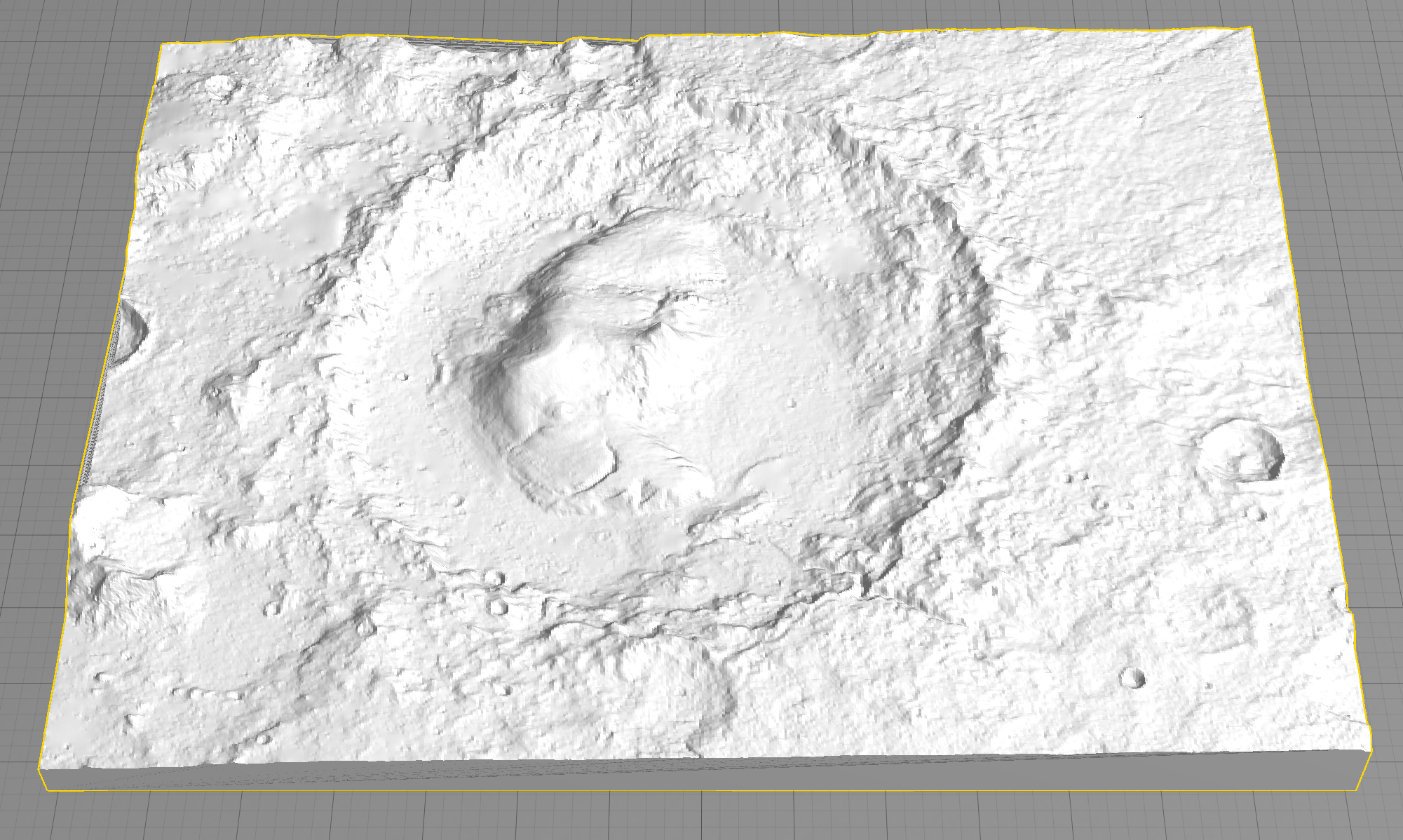
NASA just made it possible to 3D-print your own asteroid

Model of Mars' Gale crater.  NASA has released STL files so you can 3D print your own scale models of space probes, asteroids and the surface of the moon. (Credit: NASA)
Model of Mars’ Gale crater. NASA has released STL files so you can 3D print your own scale models of space probes, asteroids and the surface of the moon. (Credit: NASA)

via cnet

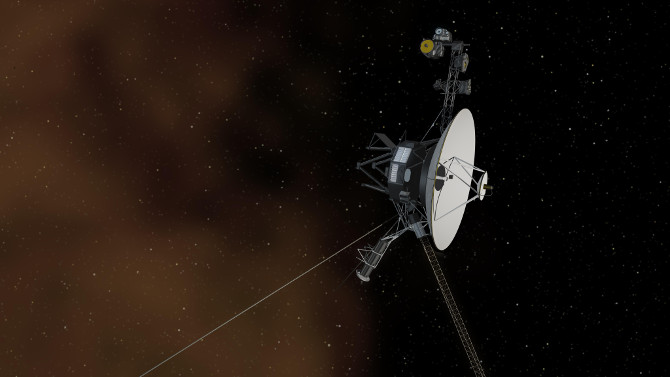
Voyager scientists disagree on whether craft has reached interstellar space

This artist’s concept shows the Voyager 1 spacecraft entering the space between stars. Interstellar space is dominated by plasma, ionized gas (illustrated here as brownish haze), that was thrown off by giant stars millions of years ago. (Credit: NASA/JPL-Caltech)
via forbes

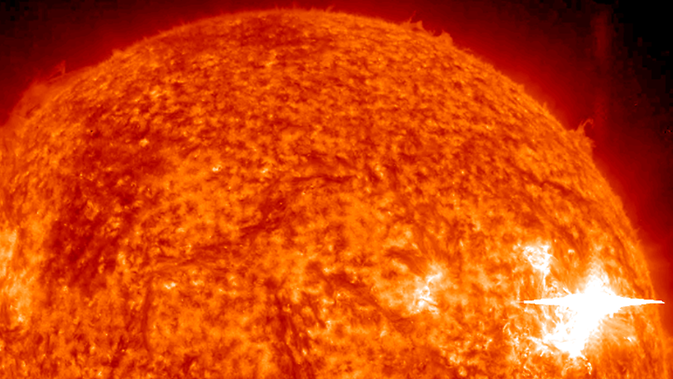
Earth survived near-miss from 2012 solar storm: NASA

A solar flare erupted on the far side of the sun on June 4, 2011, and sent solar neutrons out into space. Solar neutrons don't make it to all the way to Earth, but NASA's MESSENGER, orbiting Mercury, found strong evidence for the neutrons, offering a new technique to study these giant explosions. (Credit:  NASA/STEREO/Helioviewer)
A solar flare erupted on the far side of the sun on June 4, 2011, and sent solar neutrons out into space. Solar neutrons don’t make it to all the way to Earth, but NASA’s MESSENGER, orbiting Mercury, found strong evidence for the neutrons, offering a new technique to study these giant explosions. (Credit:
NASA/STEREO/Helioviewer)

via phys.org

Physicists discuss quantum pigeonhole principle

An image of pigeons in holes. Here there are n = 10 pigeons in m = 9 holes. Since 10 is greater than 9, the pigeonhole principle says that at least one hole has more than one pigeon. (Credit: SA 3.0, McKay)

via phys.org

Quantum computing and the value of storytelling in science(VIDEO)

via readwrite

The internet of things & MindMeld

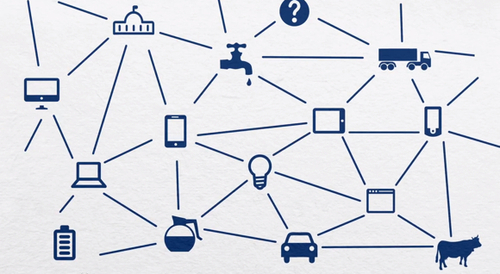
The Internet of Things, recently nicknamed the Internet of Everything, describes a future where all objects are linked together.
The Internet of Things, recently nicknamed the Internet of Everything, describes a future where all objects are linked together. (Credit: CISCO)

via expectlabs

Robotics, research and resupply round out week for station crew

Images of panels from the International Space Station. (Credit: NASA Ames Research Center)
via spacefellowship

The war in Gaza as seen from space: Astronaut shares wrenching photo

"If we ever will be visited by another species from somewhere in the universe, how would we explain to them what they might see as the very first thing when they look at our planet? How would we explain to them the way we humans treat not only each other but also our fragile blue planet, the only home we have?" Astronaut Alexander Gerst (Credit: (Alexander Gerst / European Space Agency)
“If we ever will be visited by another species from somewhere in the universe, how would we explain to them what they might see as the very first thing when they look at our planet? How would we explain to them the way we humans treat not only each other but also our fragile blue planet, the only home we have?” Astronaut Alexander Gerst (Credit: (Alexander Gerst / European Space Agency)

via latimes

Physics in the News

Thursday, July 24, 2014

The future of ultrashort laser pulses

View of a thin-disc laser. Its geometry ensures more stable operation at higher powers than is possible with conventional solid-state lasers. (Credit: Thomas Metzger)
via phys.org

Searching for water in the Milky Way, drier than first thought

The Hubble Space Telescope finished another step in a important mission, looking for water in the milky way. The results so far are a bit surprising, with three exoplanets (planets outside the solar system) coming up short in their water supplies. (Credit: Greg Bacon)
via inquisitr

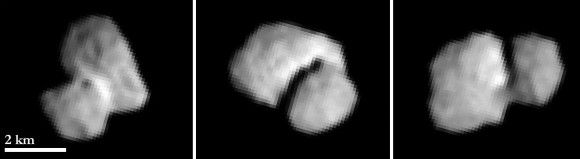
Neck of Rosetta’s ‘rubby duckie’ comet shows a bright ring

Rosetta imaged its target comet, Comet 67P/Churyumov-Gerasimenko, from about 3,417 miles (5,500 kilometers) away. The “neck” of the comet appears to be brighter than the rest of the nucleus. (Credit: ESA/Rosetta/MPS for OSIRIS Team MPS/UPD/LAM/IAA/SSO/INTA/UPM/DASP/IDA)
via universetoday

Calling for a debate over Pluto’s nature

Artist's concept of Pluto (Credit: NASA, ESA and G. Bacon (STScI))
Artist’s concept of Pluto (Credit: NASA, ESA and G. Bacon (STScI))
via huffingtonpost

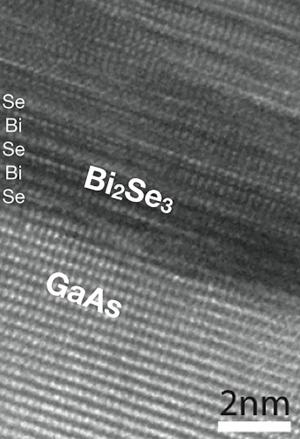
The birth of topological spintronics

The atomic layers of the topological insulator bismuth selenide are visible in this high-resolution electron microscope image. (Credit: Samarth lab, Penn State University)
via phys.org

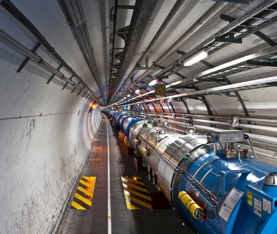
China Plans Supercollider

Proposals for two particle accelerators could see the country aim to become the collider capital of the world. View of the LHC tunnel sector 3-4. (Credit: Maximilien Brice (CERN))
via scientificamerican

Higgs and top: a new window on dark matter

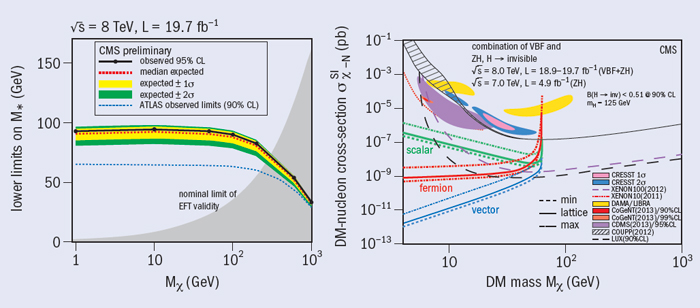
Fig. 1. Left: Limits on the dark-matter particle mass as a function of the effective interaction scale from the associated production of the particle with a top-quark pair. Fig. 2. Right: The limits set on the dark-matter particle mass from the search for invisible Higgs-boson decays compared with those from direct-detection experiments.
Fig. 1. Left: Limits on the dark-matter particle mass as a function of the effective interaction scale from the associated production of the particle with a top-quark pair. Fig. 2. Right: The limits set on the dark-matter particle mass from the search for invisible Higgs-boson decays compared with those from direct-detection experiments. (Credit: CMS)
via cerncourier

Unleashing the power of quantum dot triplets

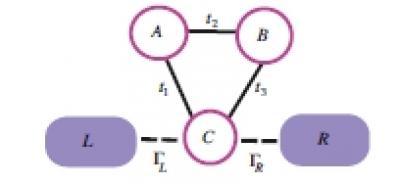
 One approach of making computers faster relies on quantum dots, a kind of artificial atom, easily controlled by applying an electric field. A new study demonstrates that changing the coupling of three coherently coupled quantum dots with electrical impulses can help better control them. (Credit: Tooski, S. B. et al.)

One approach of making computers faster relies on quantum dots, a kind of artificial atom, easily controlled by applying an electric field. A new study demonstrates that changing the coupling of three coherently coupled quantum dots with electrical impulses can help better control them. (Credit: Tooski, S. B. et al.)
via sciencecodex

 Still confused about quantum computing? This may help

There’s nothing like a Star Trek reference (yay Tribbles!) to help explain complex stuff like quantum computing. (Credit: Microsoft, Michael-Freedman)
via gigaom