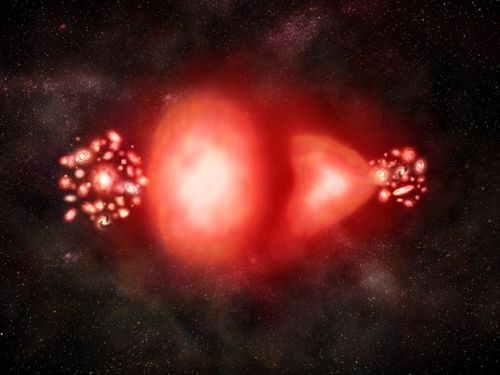
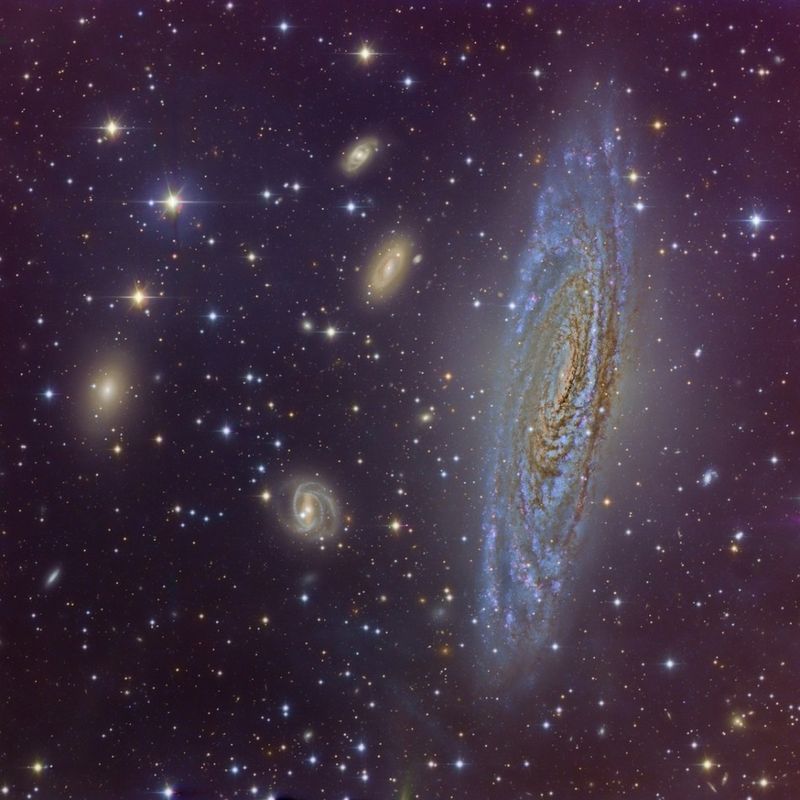
“The dark matter seems to ‘know’ how the visible matter is distributed. They seem to conspire with each other such that the gravity of the visible matter at the characteristic radius of the dark halo is always the same,” said Dr. Benoit Famaey (Universities of Bonn and Strasbourg).
via dailygalaxy
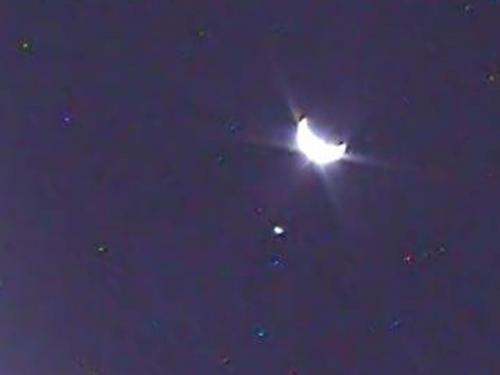
A zoomed-in image of Earth from the perspective of NASA’s Lunar Crater Observation and Sensing Satellite (LCROSS). The small dot below it is the moon. Credit: NASA Ames
via phys.org
This is Spaceport America’s Operations Center. The building, which Hendrickson notes is affectionately called “the sock,” houses the facility’s mission control center on its upper floor. (Credit: Dan Hendrickson)
via theverge
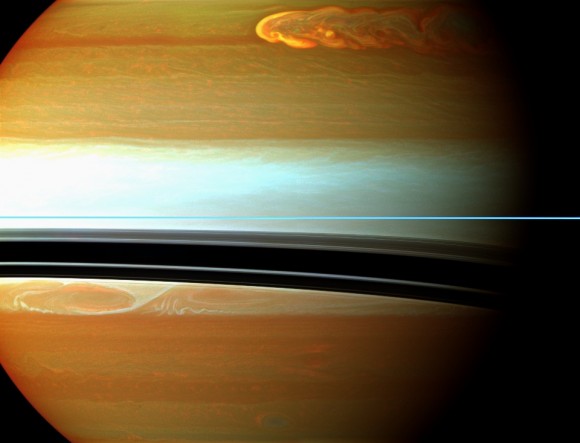
Saturn’s northern storm marches through the planet’s atmosphere in the top right of this false-color mosaic from NASA’s Cassini spacecraft. (Credit: NASA/JPL-Caltech/Space Science Institute)
via universetoday
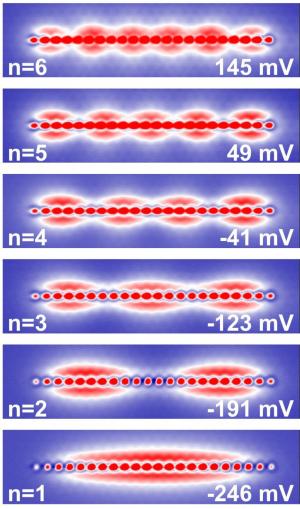
This image shows quantized electron states, for quantum numbers n = 1 to 6, of a linear quantum dot consisting of 22 indium atoms positioned on the surface of an InAs crystal. (Credit: Stefan Fölsch/PDI)
via phys.org
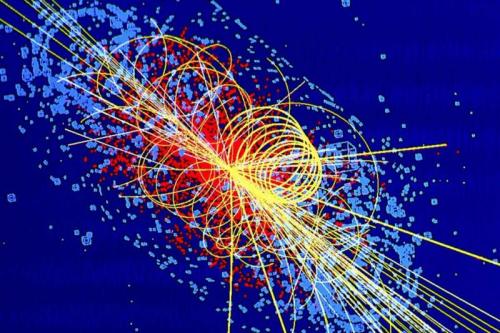
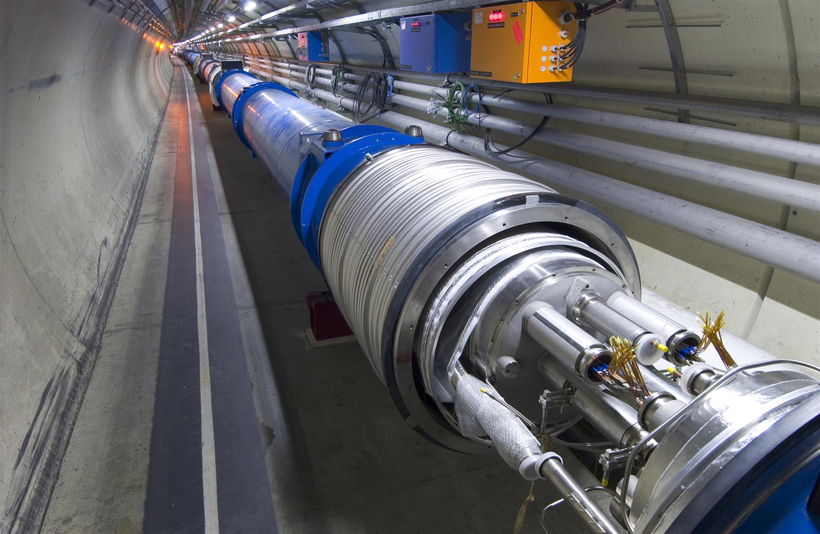
A method to correct tiny defects in the LHC’s superconducting magnets (example shown above) was crucial to the discovery of the Higgs boson, which was announced in 2012. (Credit: CERN)
via aip.org
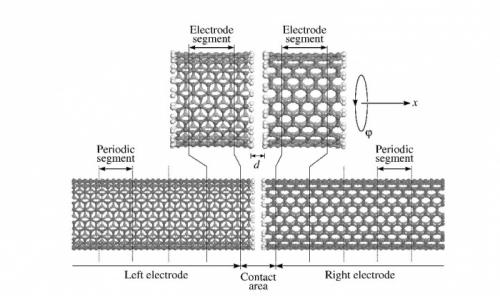
A group of researchers from Russia, Belarus and Spain, including Moscow Institute of Physics and Technology professor Yury Lozovik, have developed a microscopic force sensor based on carbon nanotubes. (Credit: Computational Materials Science journal)
via phys.org
Scientists from the Indian Space Research Organisation work in the Indian Regional Navigational Satellite System control room at the Indian Deep Space Network (Credit: AP)
via the independent
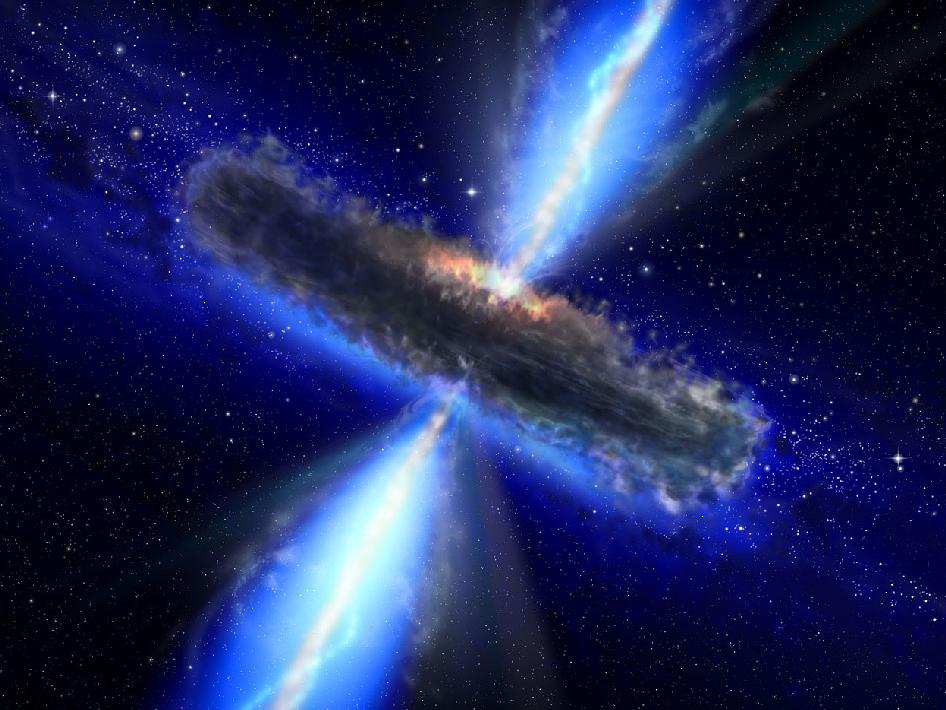
An artist’s concept illustration shows a quasar, or feeding black hole, similar to APM 08279+5255, where astronomers discovered huge amounts of water vapor. (NASA/ESA)
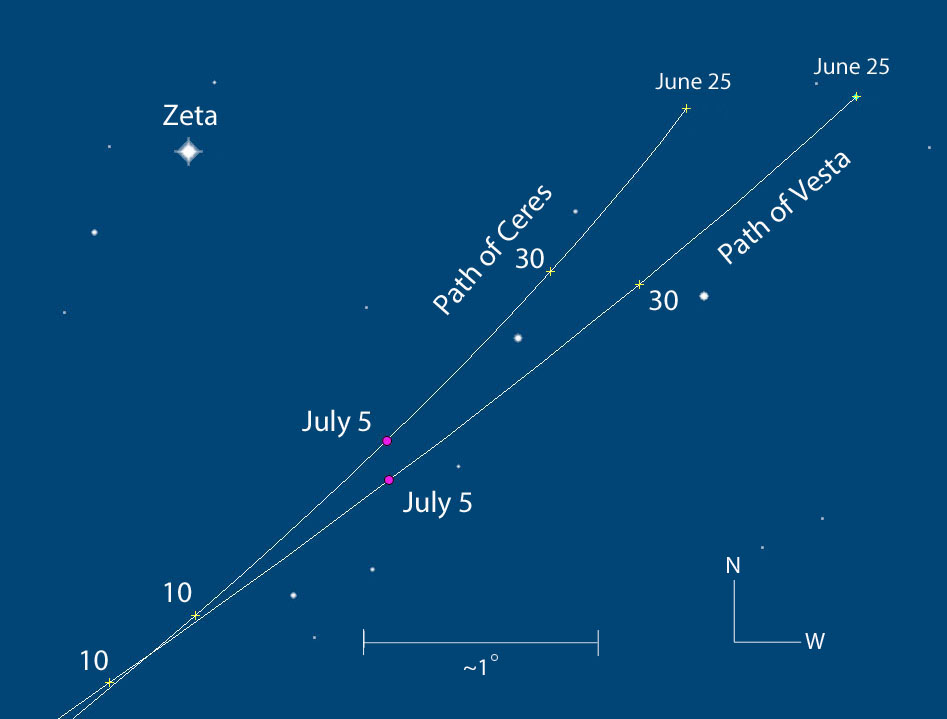
Map showing Ceres and Vesta as they approach each other closely this coming week. Both asteroids are near the easy-to-find star Zeta in Virgo not far from bright Mars. Although the asteroids appear very close together in the sky, they’re really about 51 million miles apart with Vesta in the foreground. (Credit: Chris Marriott’s SkyMap)
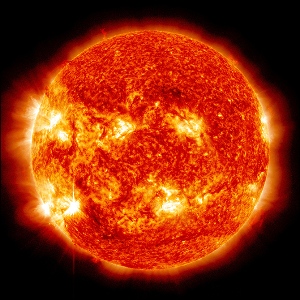
By filtering light from the sun, CQT researchers have made a strong detection of a quantum effect known as ‘photon bunching’ in its light. This is a hallmark of the sun radiating like a black body. (Credit: NASA/SDO)
via azoquantum
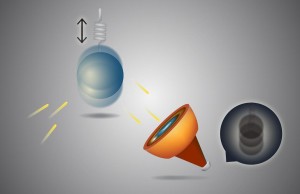
Mechanical oscillators translate an applied force into measurable mechanical motion. The Standard Quantum Limit is imposed by the Heisenberg uncertainty principle, in which the measurement itself perturbs the motion of the oscillator, a phenomenon known as “quantum back-action.” (Credit: Kevin Gutowski)
via newscenter
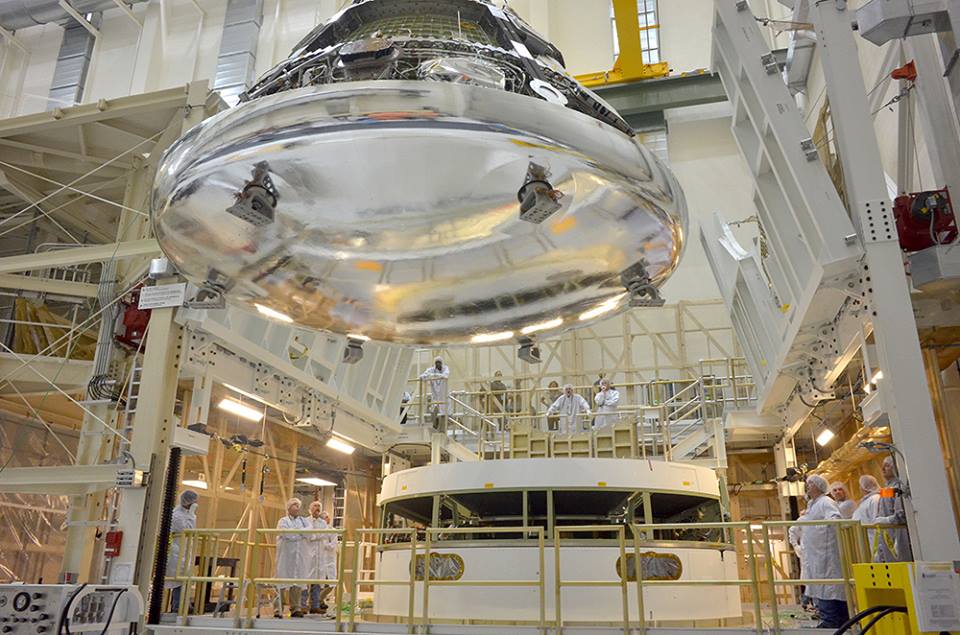
Orion, seen here with its heat shield installed, being maneuvered for stacking on the spacecraft’s service module at KSC earlier this month. (Credit: NASA)
via americaspace
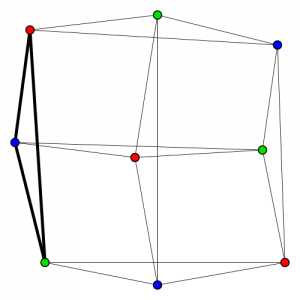
The Paley graph of order 9 is a perfect graph, making it an appropriate object of veneration and study on June 28, a perfect day. Image: David Eppstein. (Credit: Wikimedia)
via scientificamerican
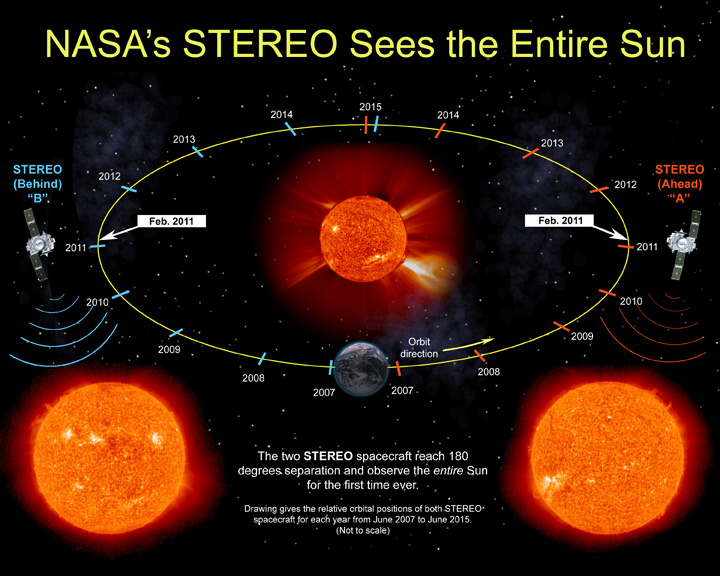
Illustration of the positions of the two STEREO spacecraft show that they attain 180 degrees of separation in Feb. 2011, thus allowing the world to see the entire Sun for the first time. (Credit: NASA/STEREO/SSC)
via thewatchers
Einstein and Oppenheimer: Both men in their later years dismissed black holes as anomalies, unaware that they contained some of the deepest mysteries of physics (Image: Alfred Eisenstaedt, LIFE magazine)
via scientificamerican
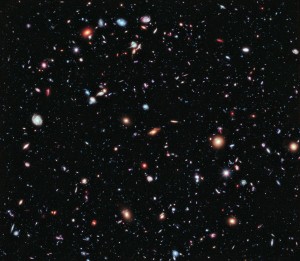
Hubble Space Telescope image. (Credit: NASA, ESA, G. Illingworth, D. Magee, and P. Oesch (University of California, Santa Cruz), R. Bouwens (Leiden University), and the HUDF09 Team)
via scientificamerican
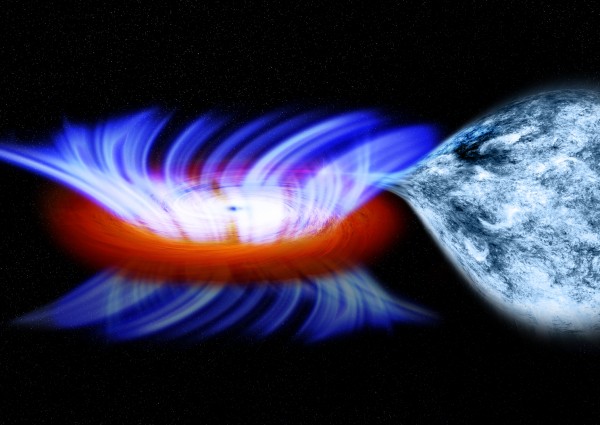
A binary system containing a stellar-mass black hole called IGR J17091. The strong gravity of the black hole, on the left, is pulling gas away from a companion star on the right. This gas forms a disk of hot gas around the black hole, and the wind is driven off this disk(Credit: NASA/CXC/M.Weiss)
via scienceblogs.com
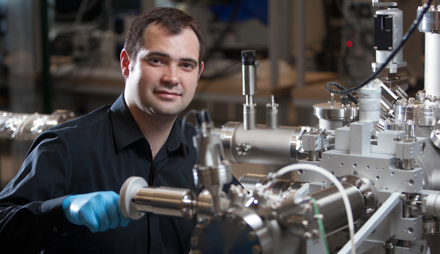
A new technique developed by a Binghamton University physicist and his colleagues will improve the quality of flexible, conductive, transparent glass. (Credit: NASA)
via phys.org