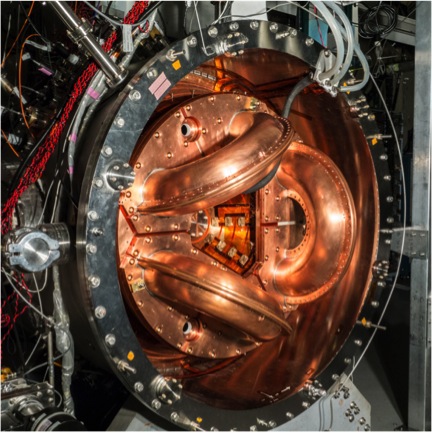
The UW’s current fusion experiment, HIT-SI3. It is about one-tenth the size of the power-producing dynomak concept. (Credit: U of Washington)
via washington.edu
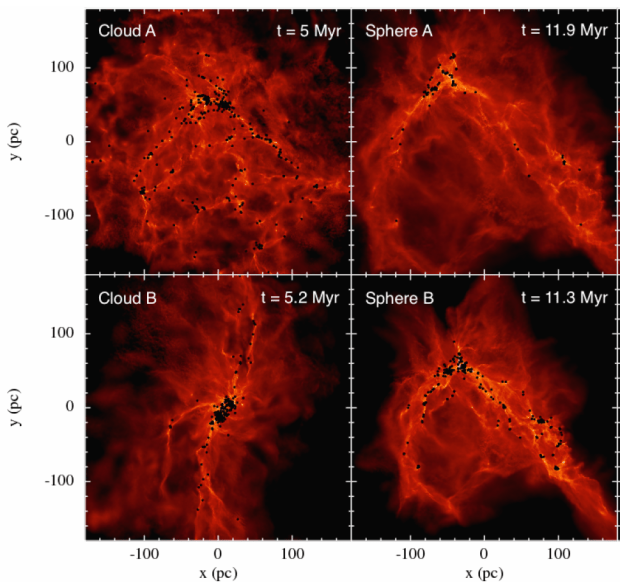
Gas column density 5 Myr after stars begin forming in the “real” Clouds (left panels) and corresponding Spheres (right panels). The Spheres begin forming stars 5-6 Myr after t=0, so the figure shows simulations at a similar stage of star formation. Clouds show more widespread star formation, and alignment of their major gas filaments along the larger-scale structures present in the galaxy. (Credit: Rey-Raposo, Dobbs & Duarte-Cabral 2014)
via astrobites
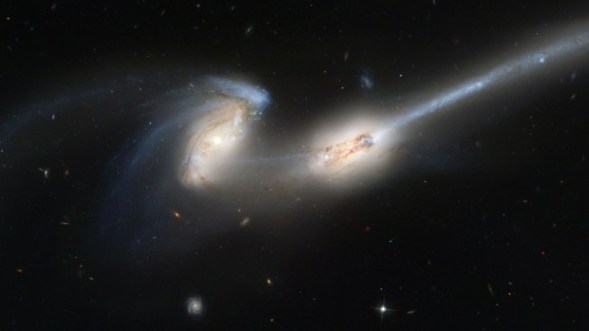
Larger galaxies are unable to create new stars at a rapid enough pace so they start to “eat” stars in neighboring galaxies. (Photo By Nasa/Getty Images)
via cbs
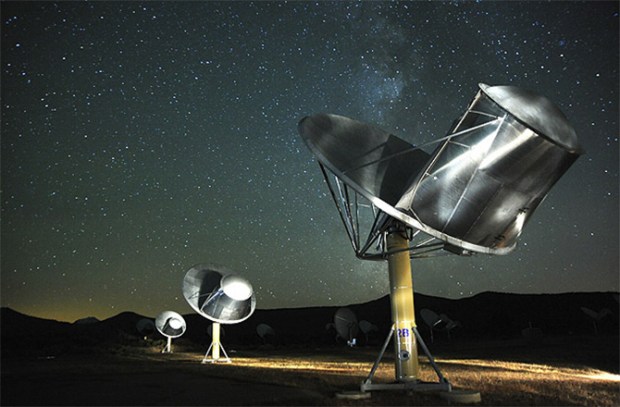
The SETI Institute’s Allen Telescope Array (ATA) is hunting for radio signals from hypothetical intelligent alien life in our galaxy. (Credit: SETI) Institute
via aninews
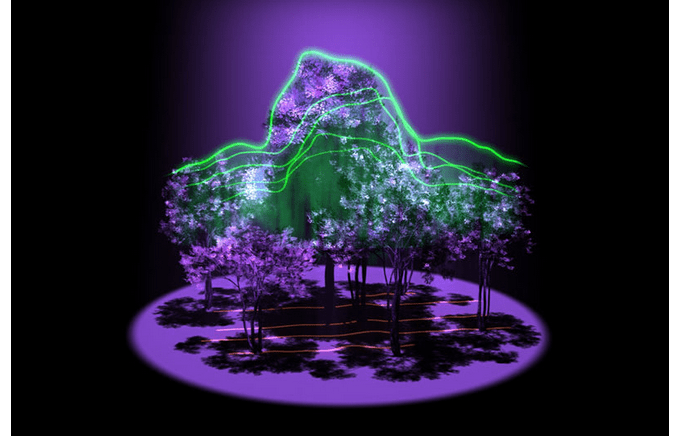
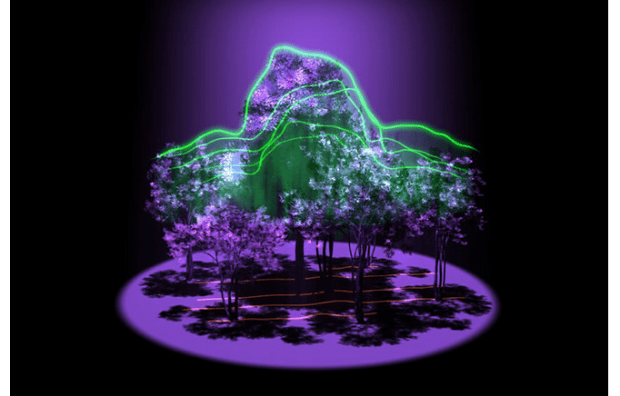
NASA has a new project underway called GEDI. The sole purpose of GEDI is to point a laser-based device at Earth from the International Space Station in order to map out forests in 3D, eventually determining the amount of carbon in Earth’s forests. (Credit: NASA’s Goddard Space)
via industrytap
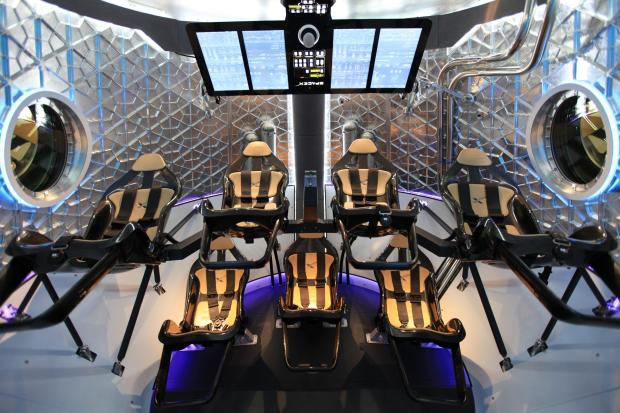
A look through the open hatch of SpaceX’s Dragon V2 capsule, one of two designs chosen for NASA’s Commercial Crew Transportation Capability program. Both Boeing and SpaceX have been told to halt production of their space taxi designs until a protest filed by the Sierra Nevada Corporation has been resolved. (Credit: NASA)
via popsci
German winner of the Nobel Prize for chemistry Stefan Hell gestures at a small party with his colleagues in Goettingen, Germany, Wednesday, Oct. 8, 2014. Hell shares the prize with Americans Eric Betzig and William E. Moerner for developing ways to dramatically improve the resolution of optical microscopes. Hell developed the underlying technology for R&D 100 Awards-winning super-resolution microscopes from Leica. (Credit AP/dpa, Swen Pfoertner)
via rdmag
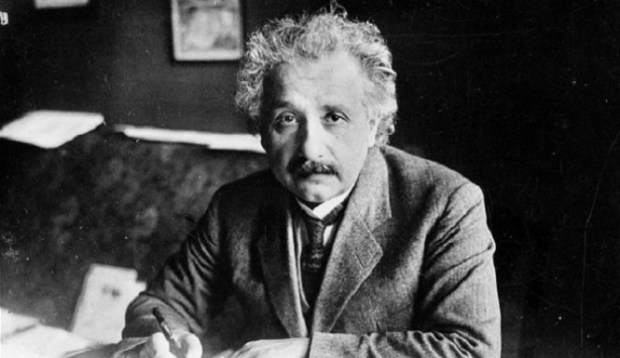
The Einstein Papers Project, a group of scholars devoted to collecting and transcribing Einstein’s works and publishing The Collected Papers of Albert Einstein both online and in printed format, have collected thousands of Einstein’s letters, both those from him and to him. But this exchange is new. (Credit: The Telegraph)
via inquisitr
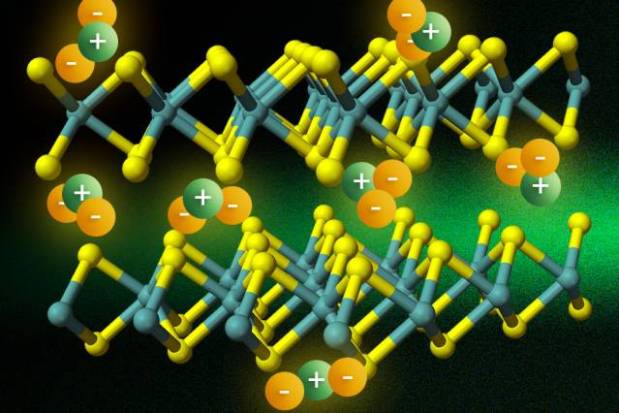
Shown here is the crystal structure of molybdenite, MoS2. When hit with a burst of laser light, freed electrons and holes combine to form combinations called trions, consisting of two electrons and one hole, represented here by orange and green balls. (Credit: Jose-Luis Olivares/MIT)
via mit
A test version of NASA’s Orion capsule floats in the rear of the USS Anchorage during a recovery drill off the coast of California September 15, 2014. Orion is NASA’s next exploration spacecraft, designed to carry astronauts to destinations in deep space, including an asteroid and Mars. Picture taken September 15, 2014. (Credit: REUTERS/Mike Blake)
via reuters
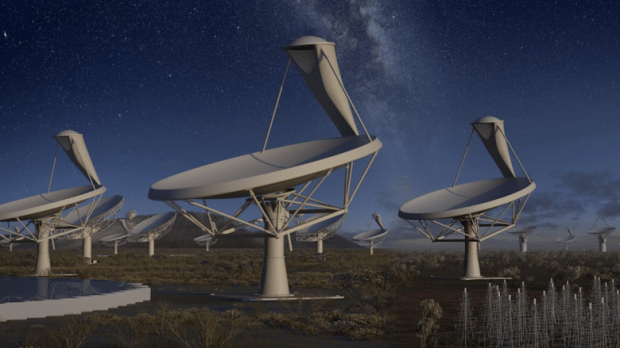
A few major factors will drive exponential growth in the amount of terabytes falling on us from the skies over the next couple of decades: the increasing speed of commercial satellite deployment, implementation of faster communication technology, and the onset of interplanetary missions. (Credit: SKA Telescope, Golubovich)
via venturebeat
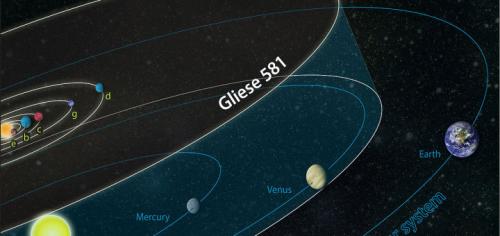
How many exoplanets have been discovered? According to the Extrasolar Planet Encyclopedia, a semi-official catalog based in Europe, there were as of the end of September last year 990 confirmed exoplanets and 2,321 candidate exoplanets. (Credit: Zina Deretsky, National Science Foundation)
via phys.org
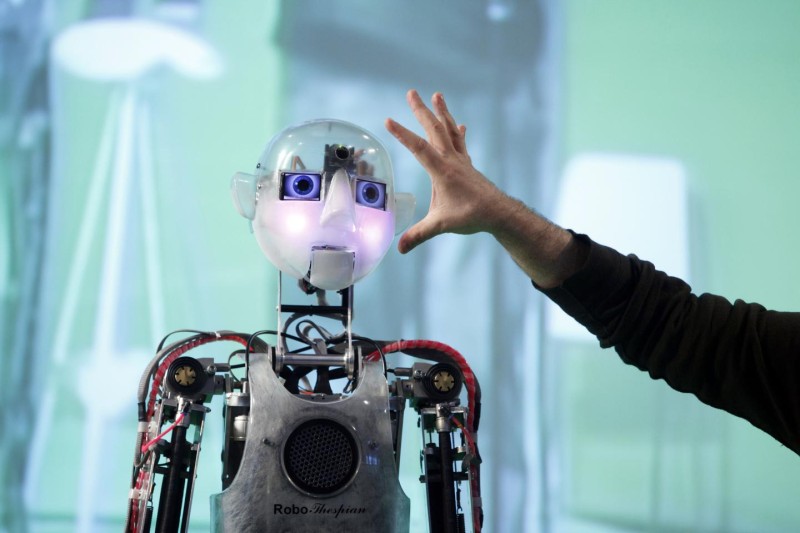
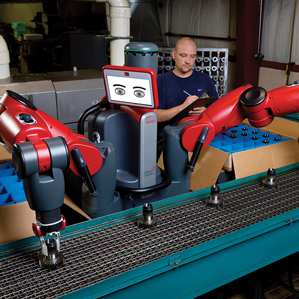
A collaborative robot from Rethink Robotics, works on a mocked-up assembly line. Setting limits on the level of pain a robot may (accidentally) inflict on a human is a crucial goal of the first safety standards being drawn up for these “collaborative” robots. (Credit: Rethink Robotics, Simonite)
via technologyreview
if we have a system of qubits all in the same state (with the same probability distributions), we have identical qubits, even though we might get different results upon measuring the individual qubits. Strangely enough, particles in the quantum world can be both identical and distinct at the same time. (Credit: M. Byrne)
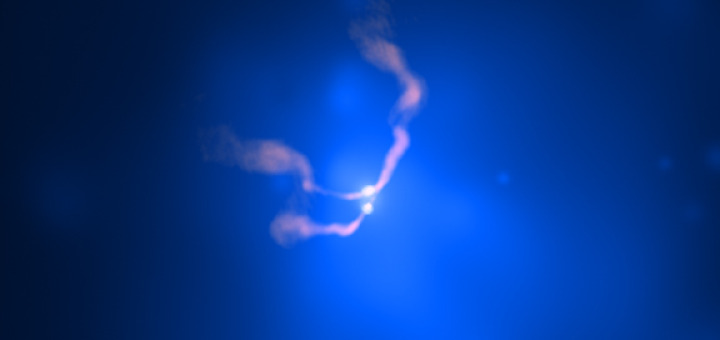
This composite X-ray/radio image of Abell 400 shows radio jets (pink), immersed in a vast cloud of multimillion degree X-ray emitting gas (blue) that pervades the cluster. The jets emanate from the vicinity of two supermassive black holes (bright spots in the image) in the galaxy. Chandra and radio data confirm that the unusual structure is due to the merger of two large galaxies, whose supermassive black holes are bound together by their mutual gravity. (Credit: X-Ray: NASA/CXC/D. Hudson, T.Reiprich et al. (AIfA); Radio: NRAO/VLA/ NRL)
via phys
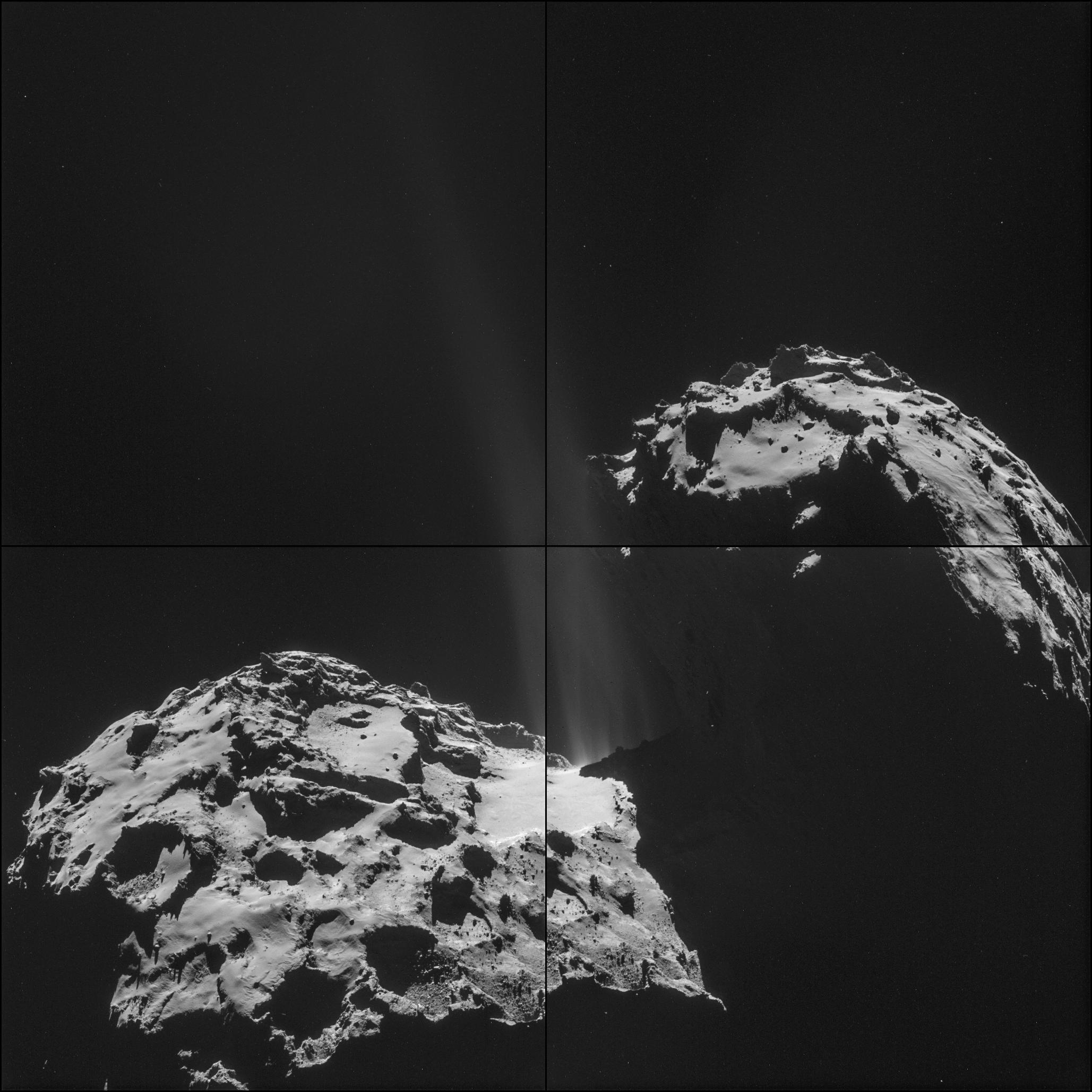
a region of jet activity can be seen at the neck of the comet. These jets, originating from several discrete locations, are a product of ices sublimating and gases escaping from inside the nucleus. (Credit: ESA, NASA)
via phys.org
Researcher will mash together the visual recognition skills of humans and the spatial memory system of rats to enable robots to navigate in any environmental conditions. (Credit: The Australian)
via theaustralian
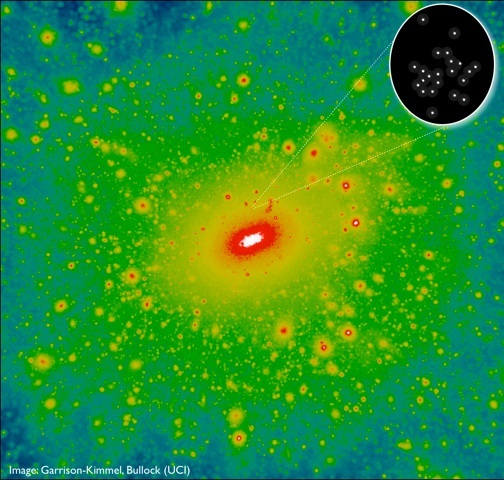
The image above shows a standard prediction for the dark matter distribution within about 1 million light years of the Milky Way galaxy, which is expected to be swarming with thousands of small dark matter clumps called `halos’. (Credit: Garrison, Kimmel, Bullock, UCI)
via dailygalaxy
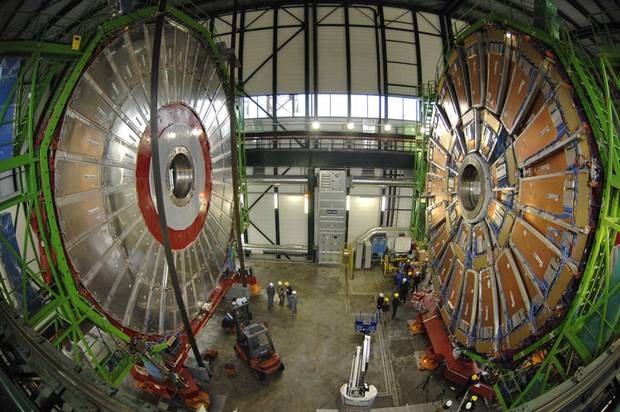
There is no doubt in my mind that society invests its billions well if it invests in theoretical physics. Whether that investment should go into particle colliders though is a different question. I don’t have a good answer to that, and I don’t see that the question is seriously being discussed. (Credit: Hossenfelder)
via backreaction
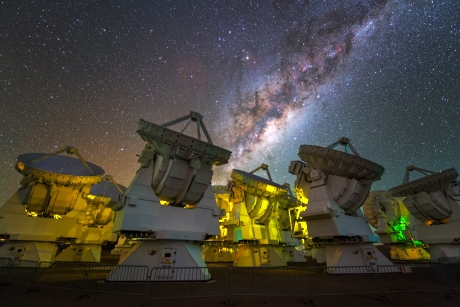
The vibrant, starry stream of the Milky Way frames radio telescopes of the Atacama Large Millimeter/submillimeter Array – known as the ALMA Observatory – in Chile’s Atacama Desert. (Credit: Y. Beletsky/ESO)
via cornell
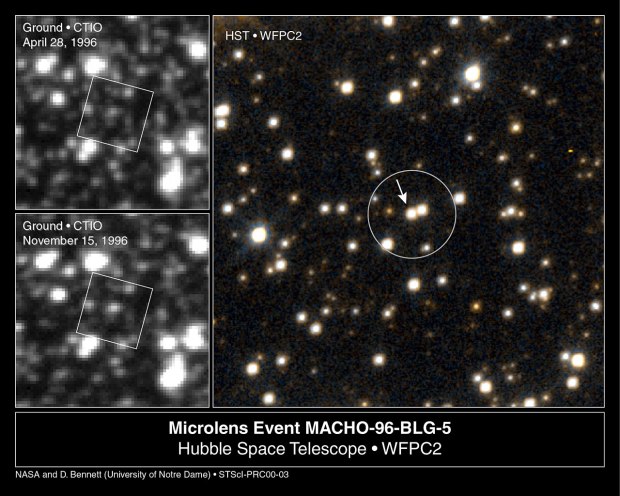
Two international teams of astronomers using the Hubble Space Telescope and ground-based telescopes in Australia and Chile have discovered the first examples of isolated stellar-mass black holes adrift among the stars in our galaxy. (Credit: NASA/ESA, D. Bennett)
via backreaction
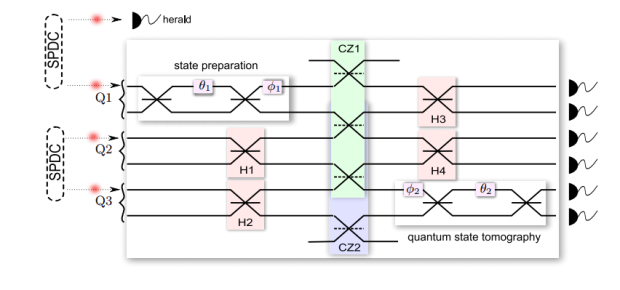
The first teleportation of a photon inside a photonic chip illustrates both the potential for quantum computation and the significant challenges that lay ahead.
via technologyreview
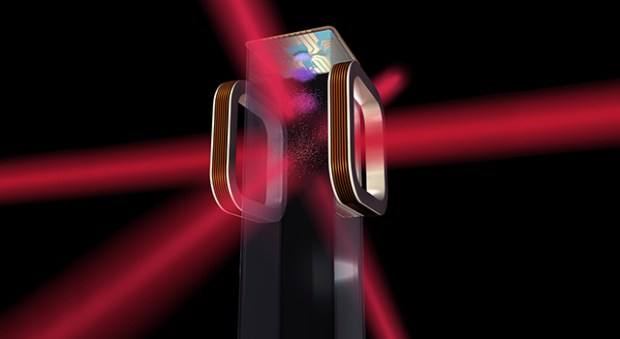
rtist’s concept of an atom chip for use by NASA’s Cold Atom Laboratory (CAL) aboard the International Space Station. CAL will use lasers to cool atoms to ultracold temperatures. (Credit: NASA)
via jpl
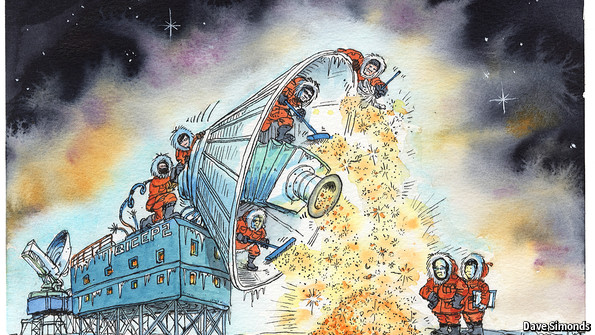
A paper just released by the team behind Planck, a European space telescope, casts serious doubt on the BICEP-2 result. (Credit: D. Simonds)
via economist
“The atomic age is an incredible epoch, filled with people we think we know already—from Marie Curie and Albert Einstein to Ronald Reagan and the plant workers of Fukushima—but they all turn out to be a lot more complicated and interesting than any of us could’ve imagined,” says Nelson. (Credit: Helvio Faria)
via scitation
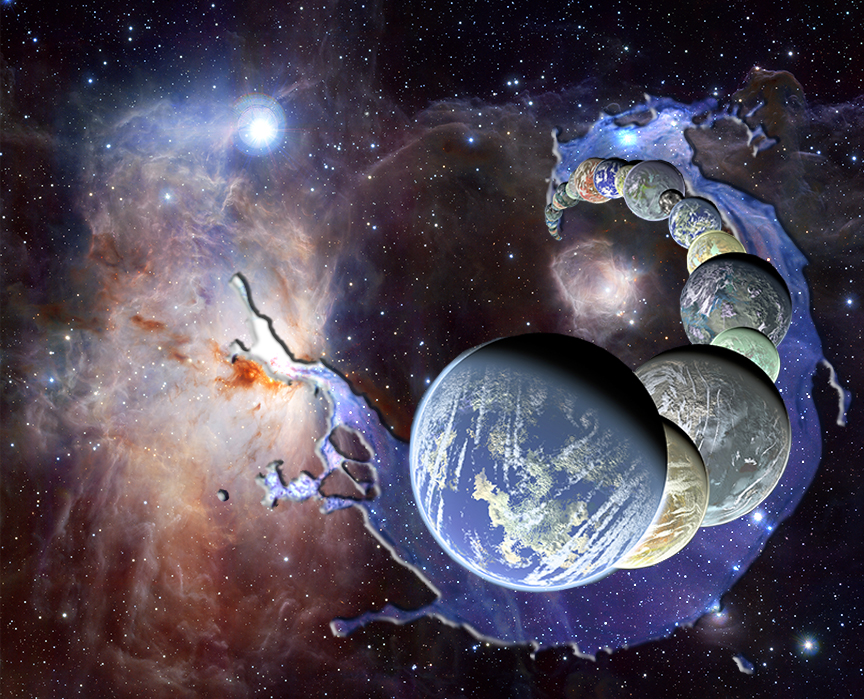
Planets form in the presence of abundant interstellar water inherited as ices from the parent molecular cloud.(Credit: NASA/JPL-Caltech/R. Hurt (SSC-Caltech)/ESO/J. Emerson/VISTA/Cambridge Astronomical Survey Unit)
via space
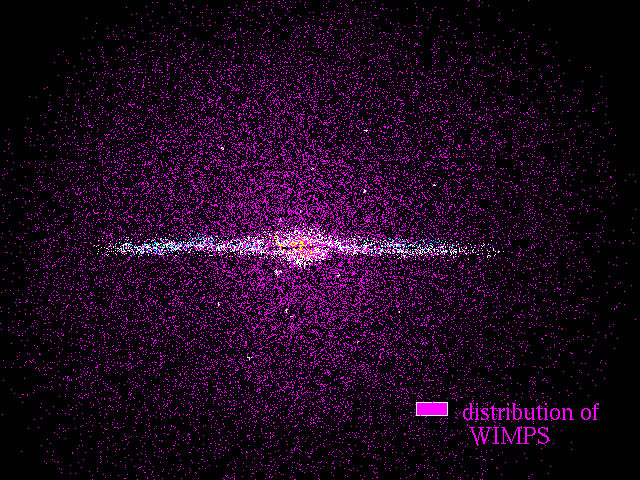
In astronomy, WIMPs, or weakly interacting massive particles, figure into one explanation of the dark matter problem.The particles are called “weakly interacting” because they seem not to have much interaction with normal matter (electrons, protons, and neutrons) other than gravitational attraction (thus “massive”). (Credit: NASA, ESA. Hubble)
via scientificamerican
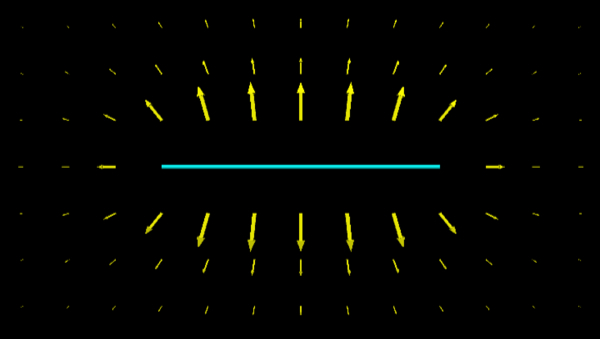
It’s difficult to create a uniformly charged electric rod and even harder to measure the electric field at different points in space. (Credit: Rhett Allain)
via wired
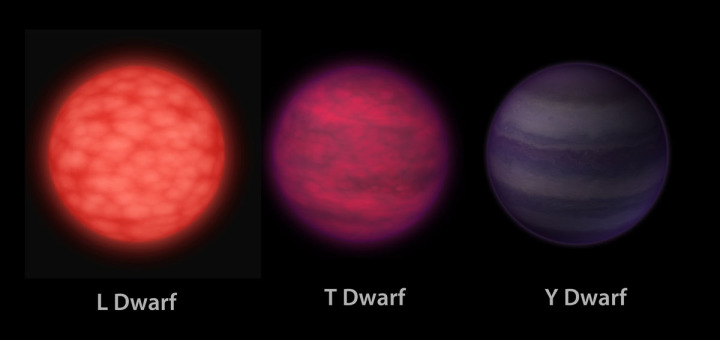
One way that stars are categorized is by temperature. Since the temperature of a star can determine its visual color, this category scheme is known as spectral type. The main categories of spectral type are M, K, G, F, A, B, and O. The coolest stars (red dwarfs) being M, and the hottest stars being O. Our own Sun is a G star. (Credit: B Koberlein, NASA/JPL-Caltech)
via briankoberlein