Physics in the News

Wednesday, September 24, 2014

New Results from Planck: It Doesn’t Look Good For BICEP2

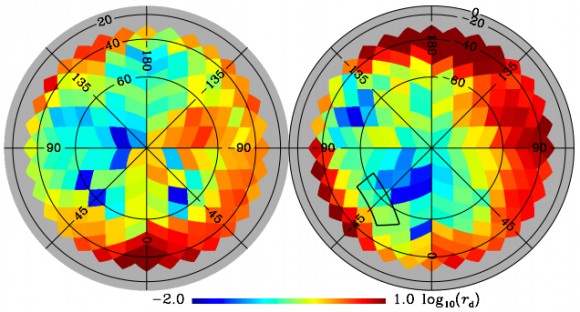
Dust map of the Universe. The region studied by BICEP2 is indicated by the rectangle in the right circle. (Credit: Planck Collaboration)
via universetoday

Artificial Atoms Talk … and Scientists Listen

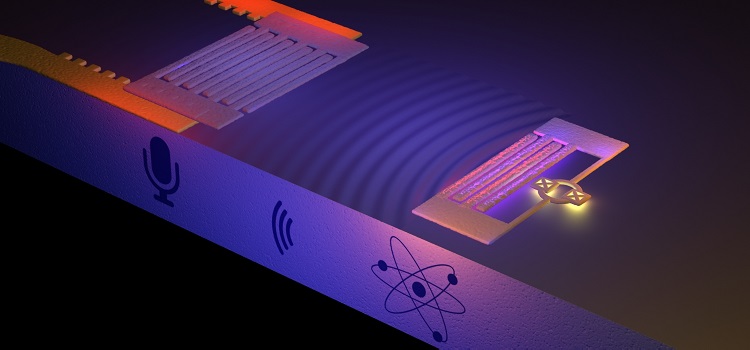
n this illustration, the artificial atom on the right side of the image sends out sound waves that are picked up by the microphone on the left. (Credit: Philip Krantz)
via livescience

What’s Next for Inflation Cosmology – New Updates

(Credit: Andrei Linde)
A serious challenge to the discovery of gravity waves by the BICEP2 2014 results has appeared: the researchers had underestimated the amount of interstellar dust that could be contaminating their data. (Credit: MacRobert, Andrei Linde)
via skyandtelescope

Clear skies reveal water on distant Neptune-sized planet

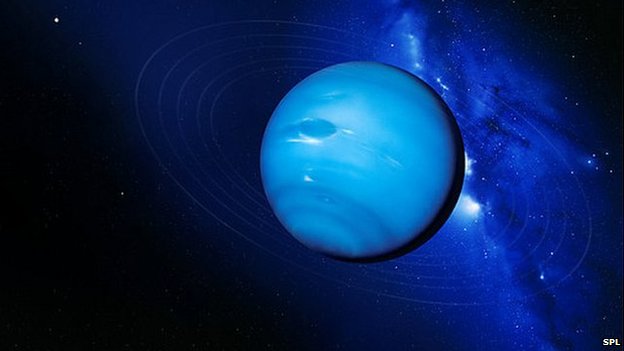
Scientists have found definitive traces of water on a relatively small exoplanet. HAT-P-11b is the size of Neptune and has copious amounts of both water vapor and hydrogen in its atmosphere. (Credit: NASA)
Scientists have found definitive traces of water on a relatively small exoplanet. HAT-P-11b is the size of Neptune and four times the size of Earth. The exoplanet has copious amounts of both water vapor and hydrogen in its atmosphere. (Credit: NASA)
via bbc

Hugh Everett: The man who gave us the multiverse

via newscientist

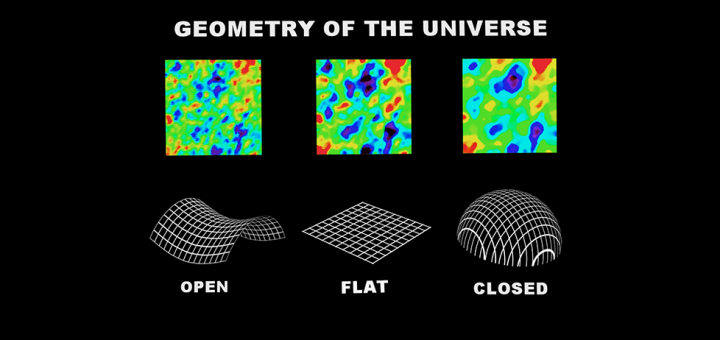
What is the geometry of the universe?

Our current model of the early inflationary period predicts that the universe should be flat, and so far that has held up. If the universe actually is curved, then the inflationary period must have been more complex than we have thought. (Credit: Koberlien)
via phys.org

Robot Octopus Takes to the Sea

via spectrum

Physics in the News

Tuesday, September 23, 2014

Brian Cox: ‘Multiverse’ makes sense

via bbc.com

UNC professor says black holes can’t exist (PDF)

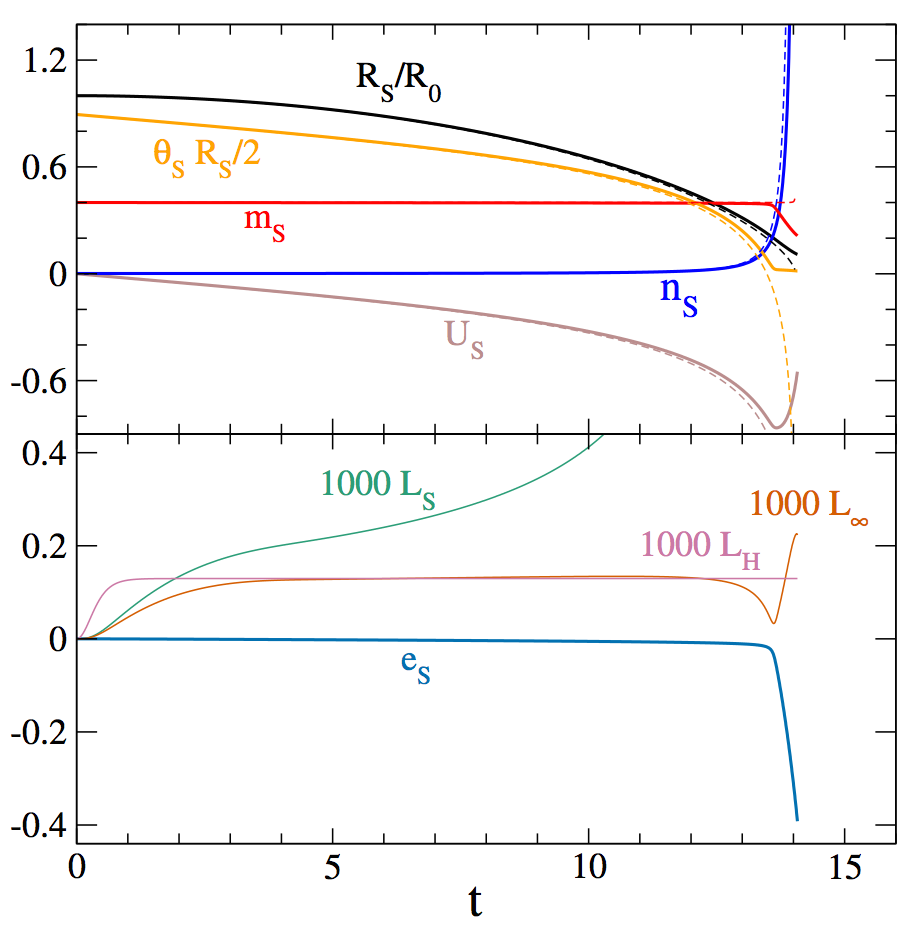
Evolution of pressure-free collapse with Hawking radiation. For easy of plotting, the luminosities are scaled by a factor of 1000. The thin dashed lines in the upper panel represent the respective quantities in a pure Oppenheimer-Snyder collapse of the same initial conditions.
Evolution of pressure-free collapse with Hawking radiation. For easy of plotting, the luminosities are scaled by a factor of 1000. The thin dashed lines in the upper panel represent the respective quantities in a pure Oppenheimer-Snyder collapse of the same initial conditions. (Credit: Mersini-Houghton, Pfeier)
via uncnews

Einstein’s Greatest Legacy

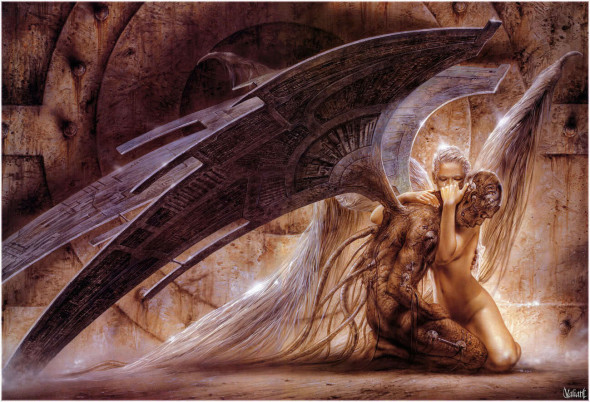
Einstein, like no other physicist before or after him, demonstrated how the power of human thought alone, used skillfully, can allow us to consider experiments that could never be practically performed. This line of thinking, these experiments performed only in our imaginations, showed we little humans often have the power to deduce equations that govern the natural world by logical deduction alone.(Credit: Siegel, Luis Royo Fantasy Art, via Photobucket user mikenolan78)
Einstein, like no other physicist before or after him, demonstrated how the power of human thought alone, used skillfully, can allow us to consider experiments that could never be practically performed. This line of thinking, these experiments performed only in our imaginations, showed we little humans often have the power to deduce equations that govern the natural world by logical deduction alone. (Credit:E. Siegel, Luis Royo Fantasy Art, via Photobucket user mikenolan78)
via medium

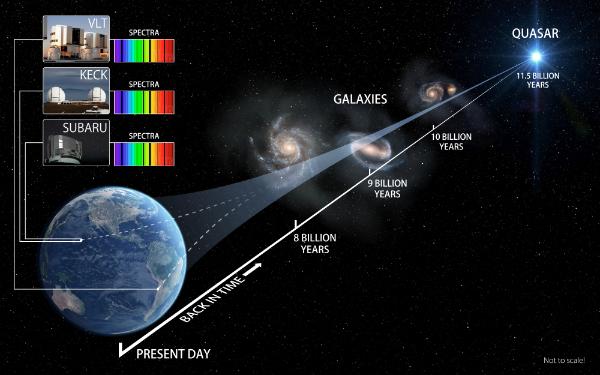
It’s okay: electromagnetic force hasn’t changed in 10 billion years

Astronomers find the strength of the electromagnetic force hasn’t changed in ten billion years. “We didn’t see any difference between electromagnetism in these three distant galaxies and here on Earth, so we don’t support that previous finding,” says Associate Professor Michael Murphy of Swinburne University. (S. Garry, Michael Murphy/Swinburne )
via abc

How cloud chambers revealed subatomic particles

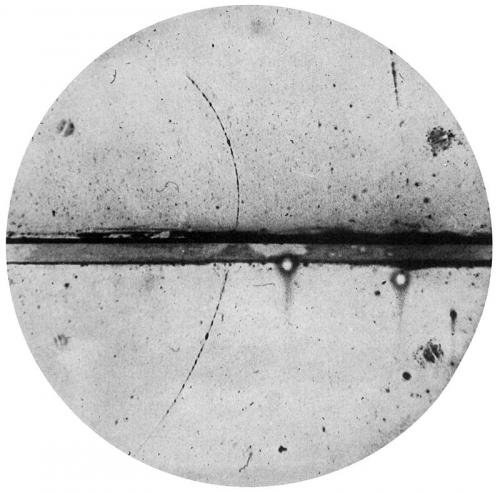
Photograph of a cloud chamber showing the first discovered positron. (Credit: Carl D. Anderson)
via phys.org

Evidence for cosmic inflation wanes

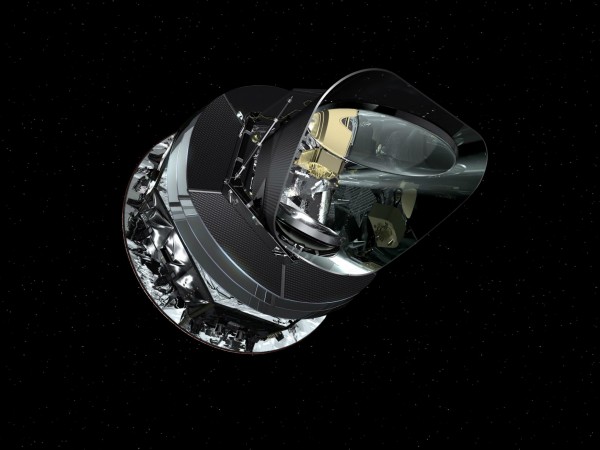
Planck’s new microwave maps cast doubt on earlier results. (Credit: ESA/NASA/JPL-Caltech)
via sciencemag

India’s Mars Orbiter Mission could make history tomorrow

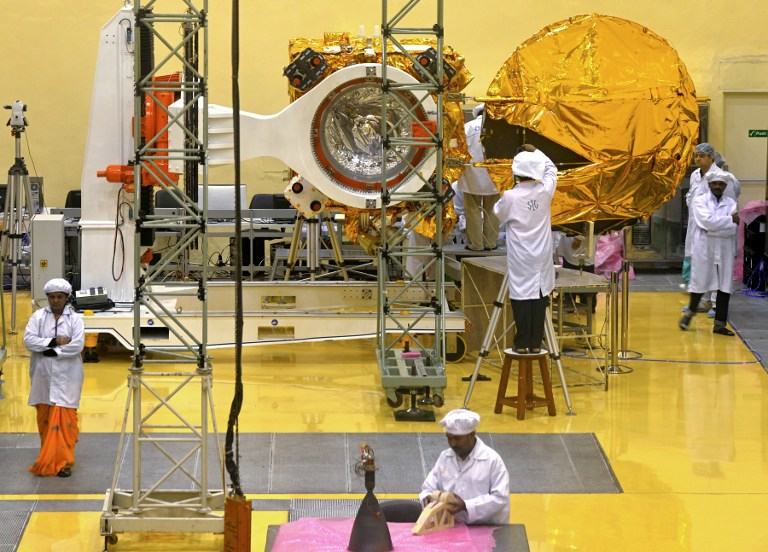
On Wednesday, Sept. 24, India could join the ranks of NASA, the European Space Agency and Russian Federal Space Agency having a successful mission to Mars. (Credit: AFP / Files / Manjunath Kiran)
via salon

When research worlds collide

via symmetrymagazine

Physics in the News

Monday, September 22, 2014

The Biggest Cosmological Problem Is…

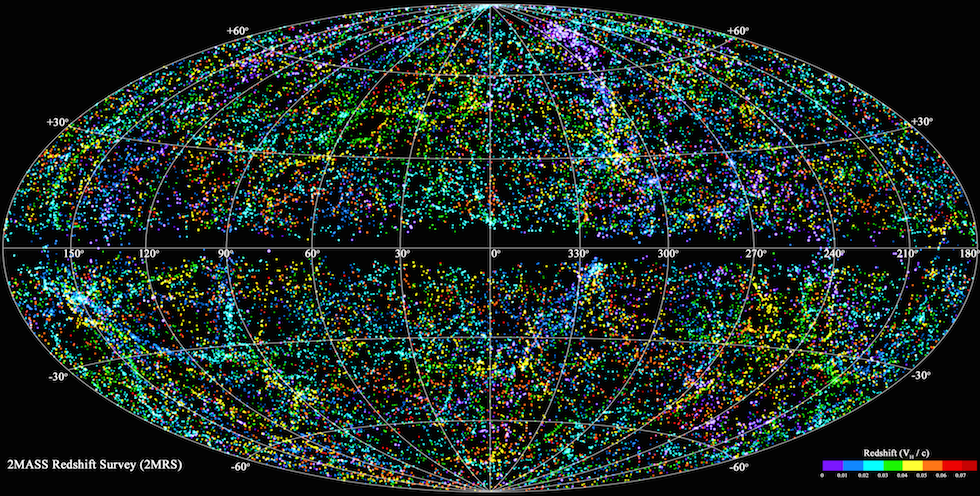
The 2MASS survey of tens of thousands of 'nearby' galaxies, plotted in Galactic coordinates, where the Milky Way lies across the horizontal. (Credit ESA, NASA)
The 2MASS survey of tens of thousands of ‘nearby’ galaxies, plotted in Galactic coordinates, where the Milky Way lies across the horizontal. (Credit ESA, NASA)
via scientificamerican

‘Big Bang Signal’ Could All Be Dust

The BICEP2 telescope detected a swirl pattern resembling an expected signal from the Big Bang, but was it all cosmic dust? (Credit: Olena Shmahalo/Quanta Magazine)
via simonsfoundation

US spacecraft enters Mars orbit, India probe next

via businessweek

Cosmic smash-up: BICEP2′s big bang discovery getting dusted by new satellite data

via washingtonpost

Major breakthrough in carbon material could have broad DOD applications

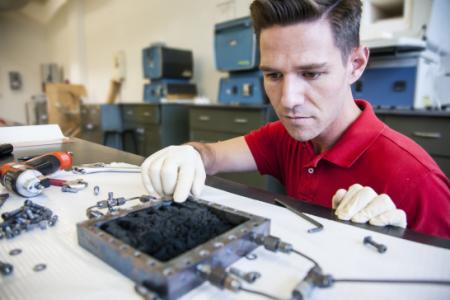
Lt. Will Curtin, a student in the mechanical engineering program, demonstrates the carbon nano-fiber foam (CFF) following its creation in the NPS Functional Materials Laboratory. For the first time, NPS researchers have developed a CFF that behaves as a viscoelastic solid with stable mechanical properties without the need of a polymeric component. (Credit: Javier Chagoya)

via dvidshub

 Physical constant is constant even in strong gravitational fields

lasersystem

via phys.org

A breakthrough in electron microscopy: Scientists reconstruct third dimension from a single image

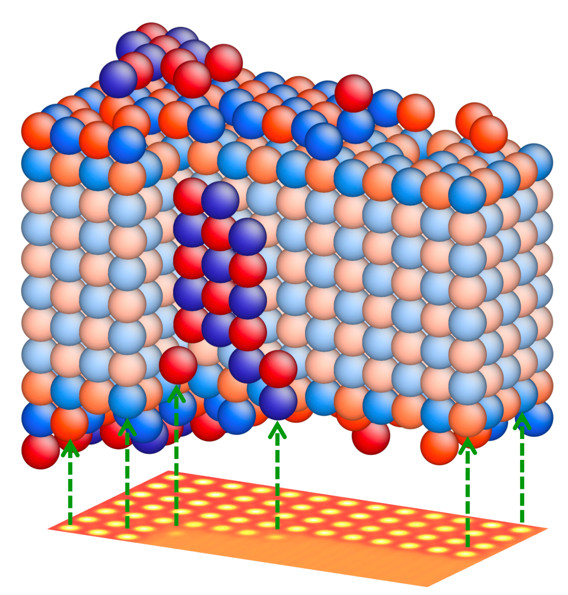
From the electron microscope image of nanocrystals – here a magnesium oxide nanocrystal (below) – the three-dimensional structure is reconstructed with atomic precision using a new method developed by researchers from Jülich and Xi’an. The red spheres represent magnesium, the blue, oxygen. (Credit: Forschungszentrum Jülich)
via sciencedaily

“Seeing” Gravitational Waves Using an Overlooked Prediction of Einstein’s Theory of Relativity

The image at the top of the page shows open star clusters M35 and NGC 2158.  M35, on the upper left, is relatively nearby at 2800 light years distant, relatively young at 150 million years old, and relatively diffuse, with about 2500 stars spread out over a volume 30 light years across. (Credit: http://asterisk.apod.com)
The image at the top of the page shows open star clusters M35 and NGC 2158. M35, on the upper left, is relatively nearby at 2800 light years distant, relatively young at 150 million years old, and relatively diffuse, with about 2500 stars spread out over a volume 30 light years across. (Credit: http://asterisk.apod.com)
via dailygalaxy

Physicists teleport quantum state of photon to crystal over 25 kilometers

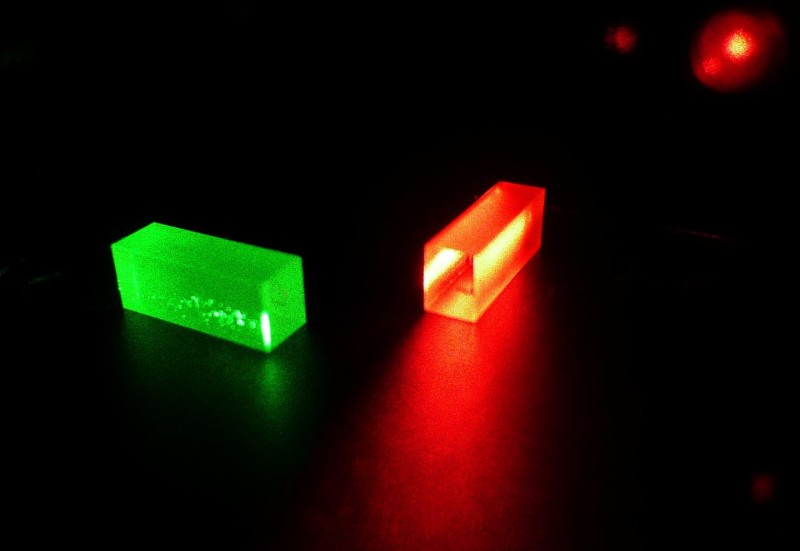
Crystals which contain photonic information after the teleportation. (Credit: Copyright GAP, University of Geneva (UNIGE))
Crystals which contain photonic information after the teleportation.  (Credit: Copyright GAP, University of Geneva (UNIGE))
via sciencedaily

 Japanese Construction Company Plans To Have Space Elevator Working By 2050

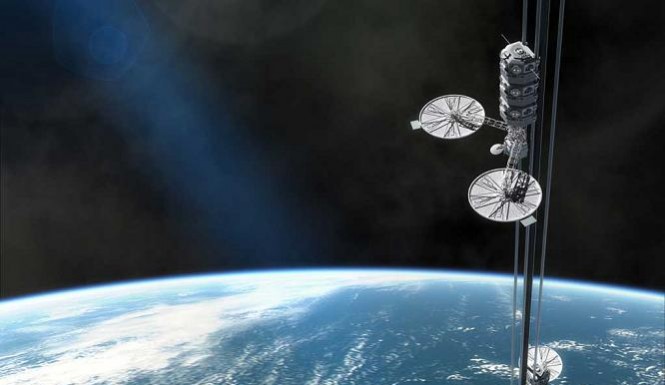
Japanese construction giant Obayashi believe that carbon nanotechnology is developing quickly enough that a space elevator may be a reality as early as 2050, and they plan to be the first to make one. (Credit: ABC News Australia)
via abc

Anisotropic Properties of Particles Deform Fermi Surface in Quantum Gas

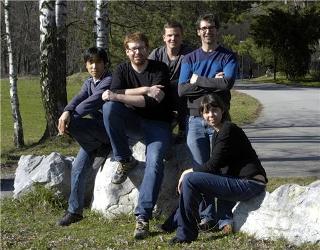
The Erbium Team (from left): Kiyotaka Aikawa, Albert Frisch, Simon Baier, Michael Mark, and Francesca Ferlaino (not pictured: Cornelis Ravensbergen) (Credit: University of Innsbruck)
via azoquantum

Rosetta’s Philae Lander: A Swiss Army Knife of Scientific Instruments

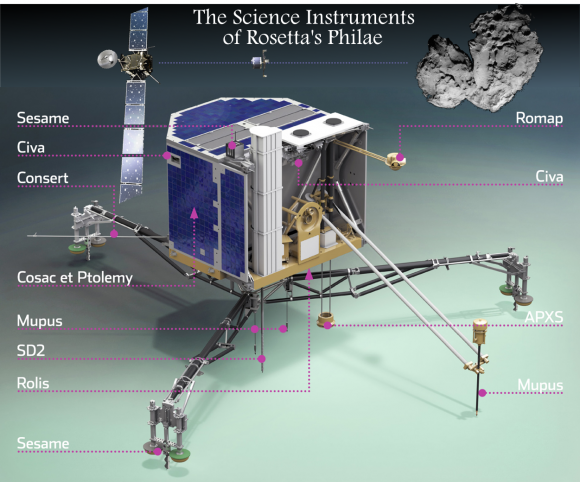
Rosetta’s Philae lander includes a carefully selected set of instruments and is being prepared for a November 11th dispatch to analyze a comet’s surface. (Credit: ESA, Composite – T.Reyes)
via universetoday

Physics in the News

Saturday, September 20, 2014

Special relativity aces time trial

Few scientists doubt that Einstein was right. But the mathematics describing the time-dilation effect are “fundamental to all physical theories”, says Thomas Udem, a physicist at the Max Planck Institute for Quantum Optics in Garching, Germany, who was not involved in the research. “It is of utmost importance to verify it with the best possible accuracy.”
Few scientists doubt that Einstein was right. But the mathematics describing the time-dilation effect are “fundamental to all physical theories”, says Thomas Udem, a physicist at the Max Planck Institute for Quantum Optics in Garching, Germany, who was not involved in the research. “It is of utmost importance to verify it with the best possible accuracy.” (Credit: A. Witze, Martin Poole/Getty)
via nature

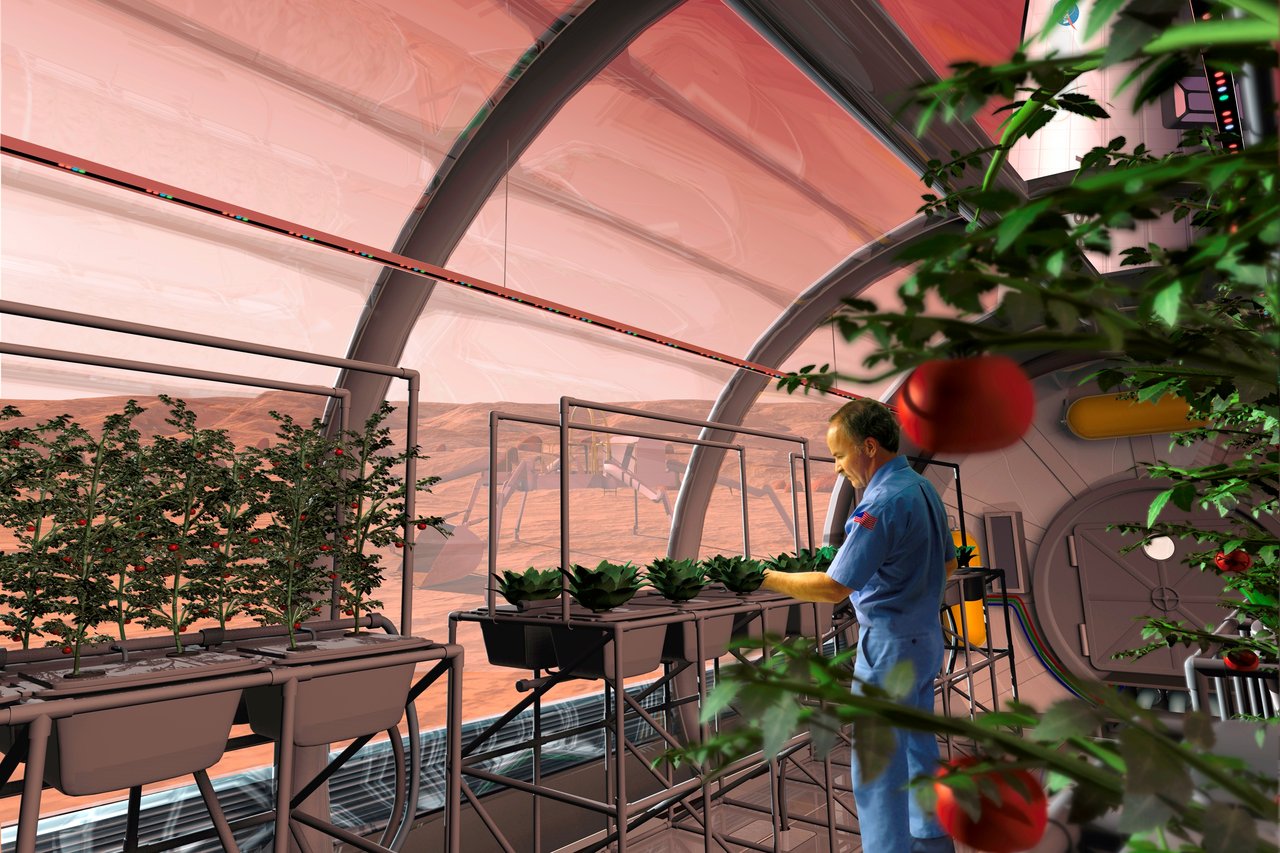
Is Martian soil actually good for farming?

A NASA rendering of farming in Martian greenhouses.

via vox

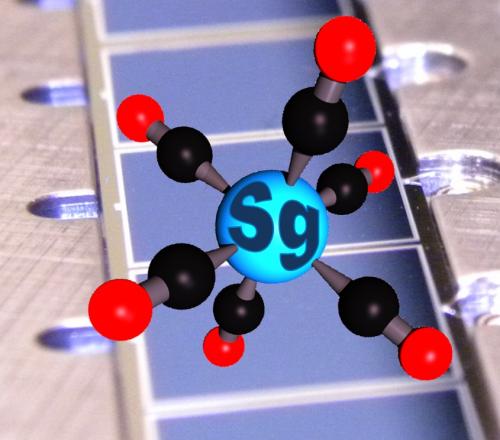
Einstein makes an appearance in superheavy chemistry

Graphic representation of a seaborgium hexacarbonyl molecule on the silicon dioxide covered detectors of a COMPACT detector array. (Credit: Alexander Yakushev (GSI) / Christoph E. Düllmann)
via newscientist

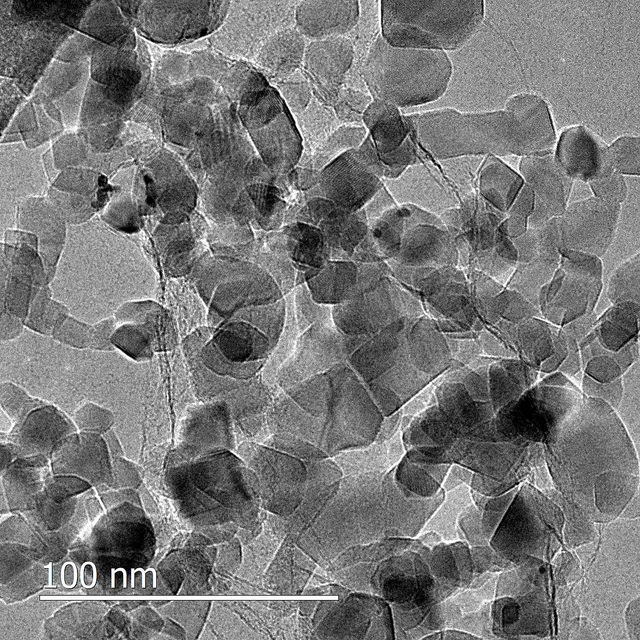
A nano-sized hydrogen generator

A transmission electron microscopic image of titanium dioxide plates resting on a near-invisible sheet of graphene. (Credit: Rozhkova et. al.)
via anl.gov
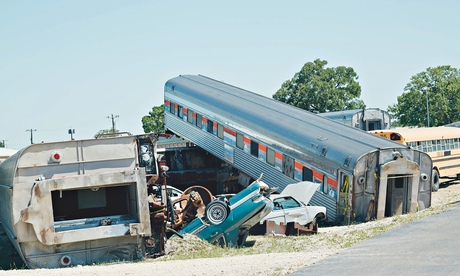
There have been recent near misses – an explosion over Russia, a mysterious crater in Nicaragua. But what would we do in the event of an actual meteor strike?  A simulated meteor strike at a training facility in Texas. (Credit: Nick Ballon)
There have been recent near misses – an explosion over Russia, a mysterious crater in Nicaragua. But what would we do in the event of an actual meteor strike? A simulated meteor strike at a training facility in Texas. (Credit: Nick Ballon)
via theguardian

Astrophysicist sees positive signs science ‘is trendy’

via kearneyhub

Enormous black hole resides at core of tiny galaxy

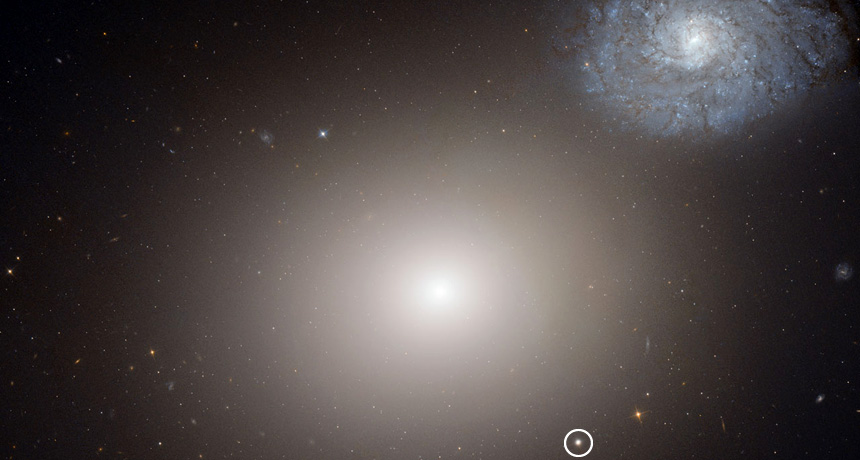
ITTY BITTY LIVING SPACE  The tiny galaxy M60-UCD1 (circled in white) harbors a black hole with the mass of around 21 million suns. M60-UCD1 may be a remnant of a larger galaxy torn apart by the massive galaxy M60 (center), which is also pulling in a nearby spiral galaxy (upper right). (Credit: NASA, ESA)
ITTY BITTY LIVING SPACE The tiny galaxy M60-UCD1 (circled in white) harbors a black hole with the mass of around 21 million suns. M60-UCD1 may be a remnant of a larger galaxy torn apart by the massive galaxy M60 (center), which is also pulling in a nearby spiral galaxy (upper right). (Credit: NASA, ESA)
via sciencenews

‘Solid’ light could compute previously unsolvable problems about the behavior of matter

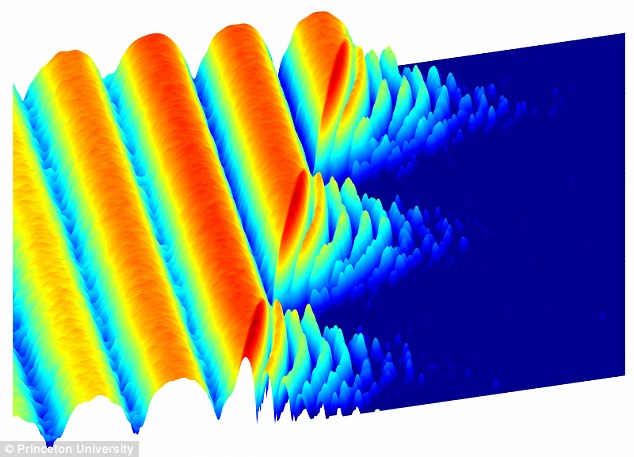
Scientists are a step closer to creating quantum computers after making light behave like crystal. At first, photons in the experiment flow easily between two superconducting sites, producing the large waves shown at left. After a time, the scientists cause the light to 'freeze,' trapping the photons in place. (Credit: Stanford)
The illustration shows how oscillating photons create an image of frozen light. At first, photons in the experiment flow easily between two superconducting sites, producing the large waves shown at left. After a time, the scientists cause the light to ‘freeze,’ trapping the photons in place. Fast oscillations on the right of the image are evidence of the new trapped behavior. (Credit: James Raftery et al.)
via princeton

Pakistan to join the CERN club

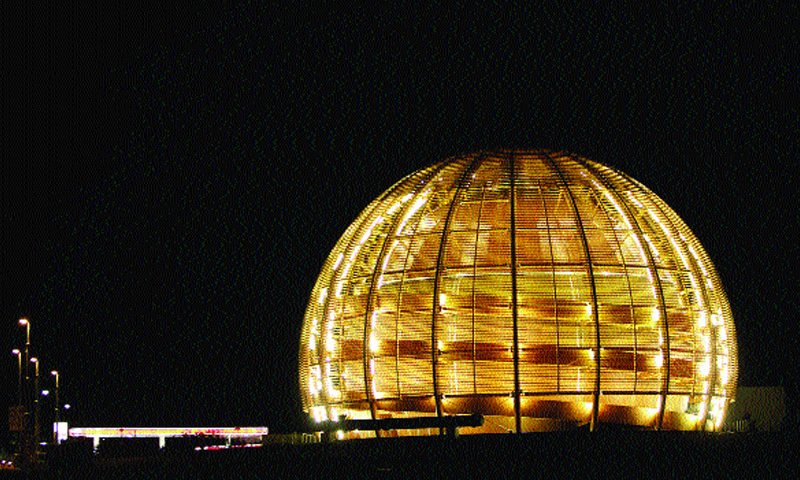
Pakistan is a signing ceremony away from becoming the associate member of the European Organisation for Nuclear Research. Above photo is of  CERN Labs on the Swiss-French border.  (Credit: CERN)
Pakistan is a signing ceremony away from becoming the associate member of the European Organisation for Nuclear Research. Above photo is CERN Labs on the Swiss-French border. (Credit: CERN)
via dawn

Quasicrystals and the Whimsy of Nature

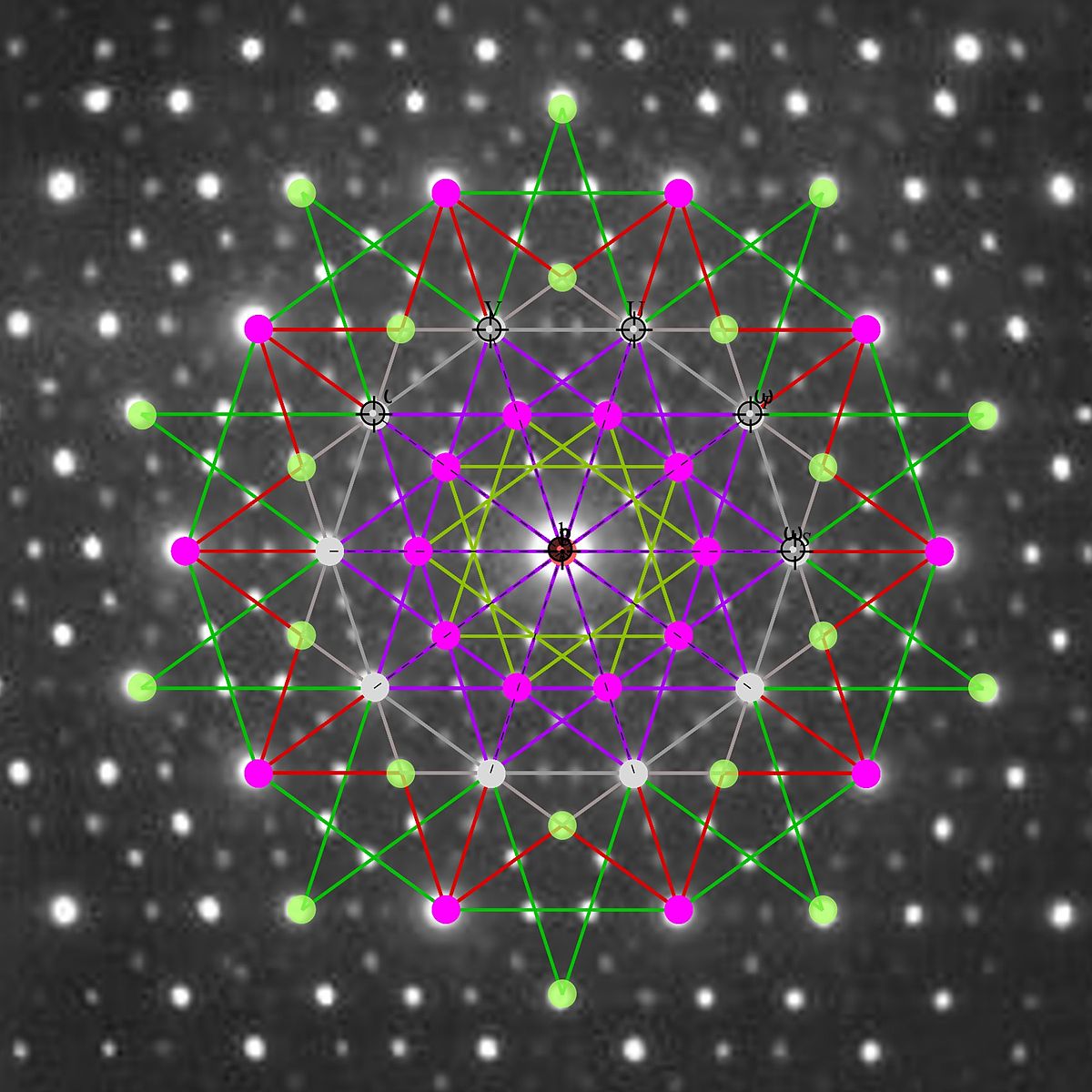
The quasicrystals formed 4.5 billion years ago in a violent collision between two rocks, among the asteroids that coalesced into planets. The rock with the quasicrystals landed in Chukotka as a meteorite. “They’re part of the primal stuff that formed our solar system,” Dr. Steinhardt said. The above is A penteract (5-cube) pattern using 5D orthographic projection to 2D using Petrie polygon basis vectors overlaid on the diffractogram from an Icosahedral Ho-Mg-Zn quasicrystal. (Credit: NYTimes)
via nytimes

Physics in the News

Friday, September 19, 2014

An anomaly in satellites’ flybys confounds scientists

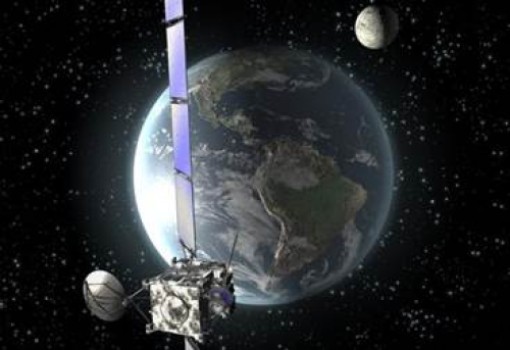
An artist's rendition of Rosetta probe during a flyby. (Credit: ESA/C.Carreau)
When space probes, such as Rosetta and Cassini, fly over certain planets and moons, in order to gain momentum and travel long distances, their speed changes slightly for an unknown reason. A researcher has now analyzed whether or not a hypothetical gravitomagnetic field could have an influence. However, other factors such as solar radiation, tides, or even relativistic effects or dark matter could be behind this mystery. An artist’s rendition of Rosetta probe during a flyby. (Credit: ESA/C.Carreau)
via sciencedaily

Particle detector finds hints of dark matter in space

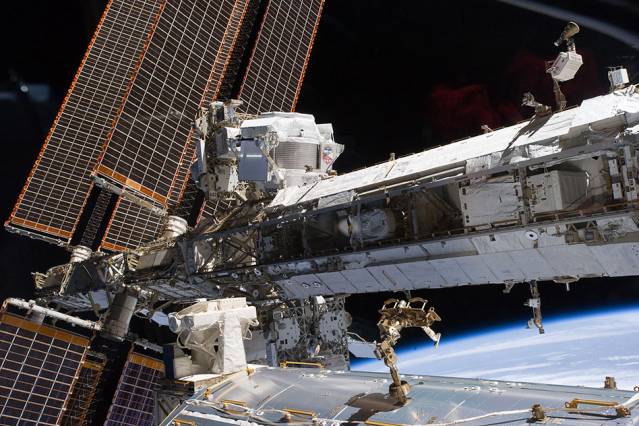
The starboard truss of the International Space Station while Space Shuttle Endeavour docked with the station. The newly installed Alpha Magnetic Spectrometer (AMS) is visible at center left. (Credit: NASA)
via mit
Finding dark energy in the details

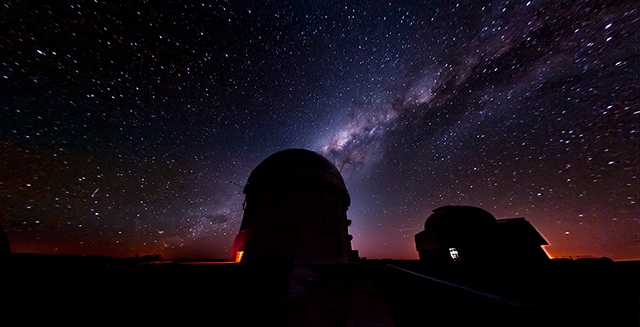
The dome of the Blanco Telescope, which houses DECam, the 570-megapixel CCD camera used for the Dark Energy Survey, at the Cerro Tololo Inter-American Observatory in Chile. (Credit: Reidar Hahn)
via simonsfoundation

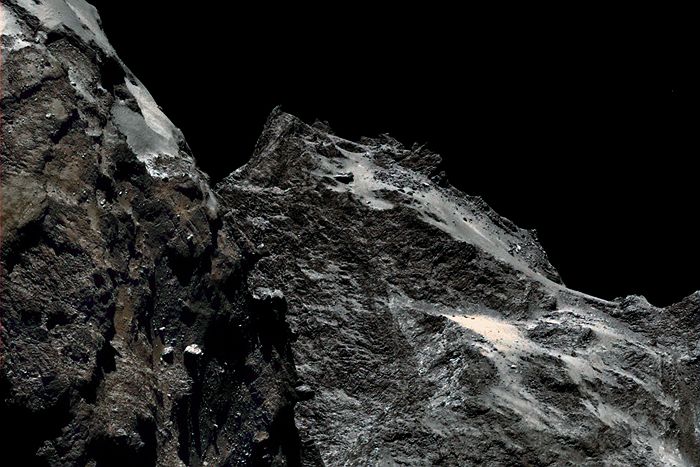
The lonely landscape of Rosetta’s comet

The lonely landscape of Rosetta's comet
The lonely landscape of Rosetta’s comet – Comet 67P/Churyumov-Gerasimenko from a distance of just 29 kilometers (Credit: ESA)
via abc

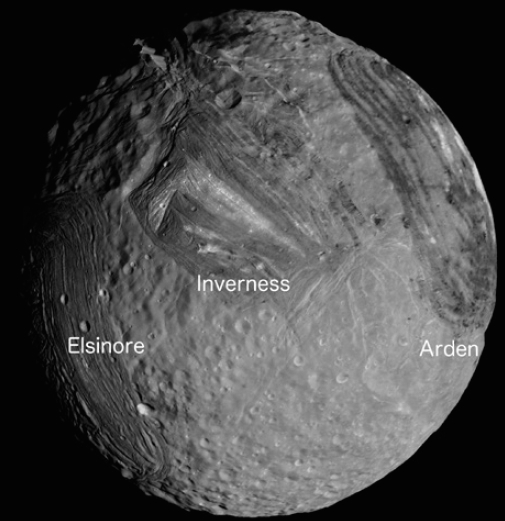
Miranda: An icy moon deformed by tidal heating

Mosaic of southern hemisphere of Miranda, the innermost regular satellite of Uranus, with radius of 236 km. Projection is orthographic, centered on the south pole. Visible from left to right are Elsinore, Inverness, and Arden coronae. (Credit: NASA/Jet Propulsion Laboratory/Ted Stryk)
via science2.0

Physical constant is constant even in strong gravitational fields

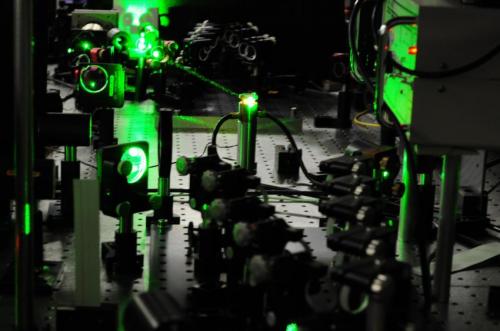
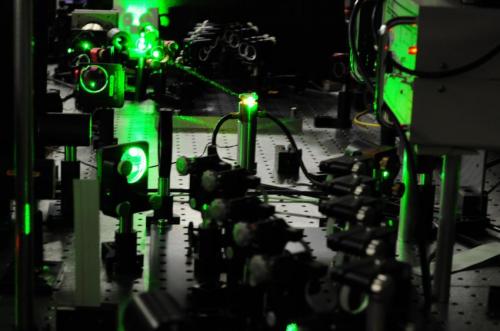
Picture of the laser system with which the hydrogen molecules were investigated on earth. (Credit: LaserLaB VU University Amsterdam/Wim Ubachs)
An international team of physicists has shown that the mass ratio between protons and electrons is the same in weak and in very strong gravitational fields. Pictured above is the laser system with which the hydrogen molecules were investigated on earth. (Credit: LaserLaB VU University Amsterdam/Wim Ubachs)
via phys.org

NASA’s Maven spacecraft will arrive at Mars this weekend

via nypost

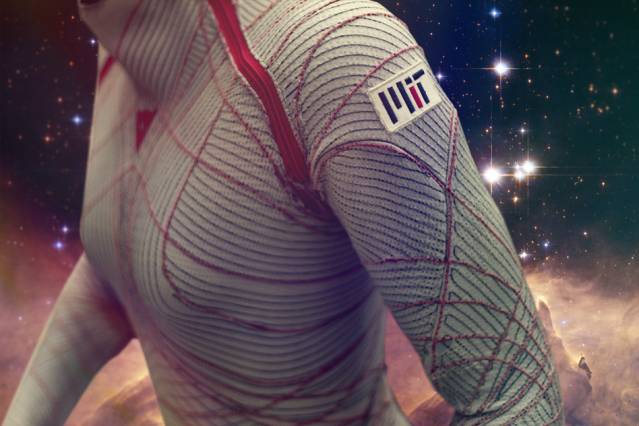
Shrink-wrapping spacesuits

The MIT BioSuit, a skintight spacesuit that offers improved mobility and reduced mass compared to modern gas-pressurized spacesuits. (Credit: Jose-Luis Olivares/MIT)
via mit