
Physics in the News

Tuesday, July 15, 2014

New qubit design provides parity bit for Schrödinger cat states
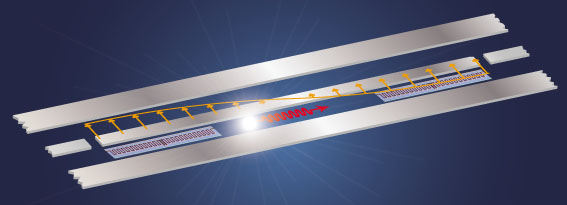
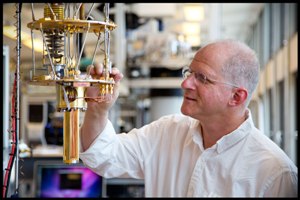
The device combines a superconducting microwave resonator to trap the photons and a circuit quantum electrodynamic qubit that's linked to the resonator.(Credit: Schoelkopf Lab, Yale)
The device combines a superconducting microwave resonator to trap the photons and a circuit quantum electrodynamic qubit that’s linked to the resonator.(Credit: Schoelkopf Lab, Yale)
via arstechnica

The world’s first photonic router

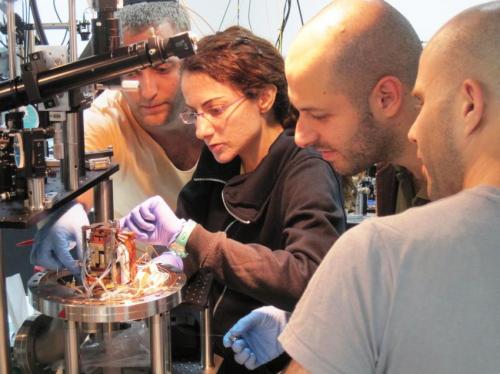
 This image depicts from left to right Serge Rosenblum, Yulia Lovsky, Orel Bechler and Itay Shomroni.  At the center of the photonic router is a single atom that routes photons  in different directions. (Credit: Weizmann Institute of Science)
This image depicts from left to right Serge Rosenblum, Yulia Lovsky, Orel Bechler and Itay Shomroni. At the center of the photonic router is a single atom that routes photons in different directions. (Credit: Weizmann Institute of Science)
via phys.org

Two anomalies worth noticing

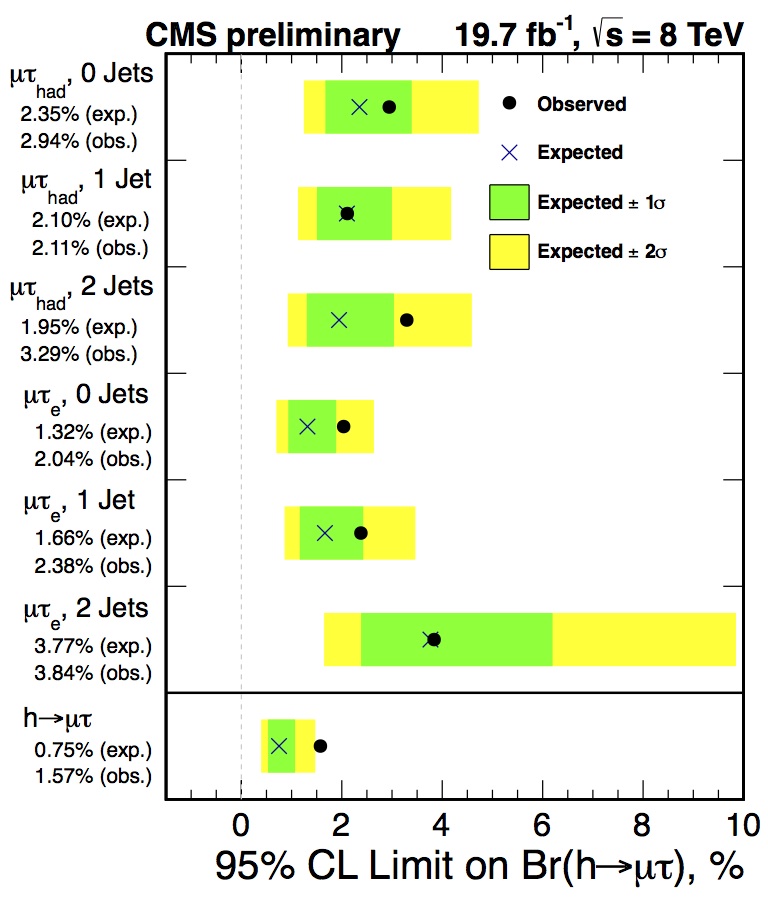
The results obtained by the CMS Collaboration showing that six different channels all give a non-zero value for the decay rate of Higgs boson into pairs of tau and muon. (Credit: Pauline Gagnon)
The results obtained by the CMS Collaboration showing that six different channels all give a non-zero value for the decay rate of Higgs boson into pairs of tau and muon.
(Credit: Pauline Gagnon)
via quantumdiaries

Ukraine to turn Chernobyl into ‘biosphere radiologic reserve’
The damaged 4th unit of the Chernobyl Nuclear Power Plant and a memorial sign “Heroes, Professionals – those who protected the world from nuclear disaster” in the Chernobyl Exclusion Zone (Credit: RIA Novosti)
via rt.com

Smallest Swiss cross—made of 20 single atoms
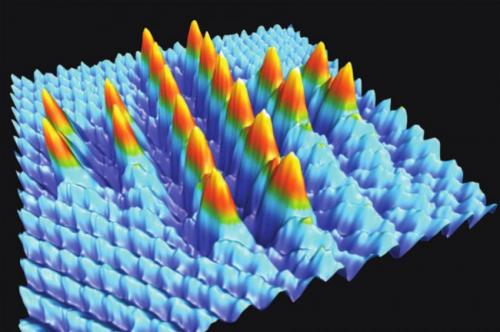
20 bromine atoms positioned on a sodium chloride surface using the tip of an atomic force microscope at room temperature, creating a Swiss cross with the size of 5.6nm. The structure is stable at room temperature and was achieved by exchanging chlorine with bromine atoms. (Credit: Department of Physics, University of Basel)
via phys.org

Consider the ‘Anticrystal’

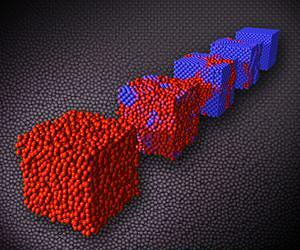
Materials can be described as being on a spectrum from a perfectly ordered crystal to a perfectly disordered anticrystal. (Credit: Liu, Goodrich, Nagel)
via spacemart

A Critical Test of Quantum Criticality
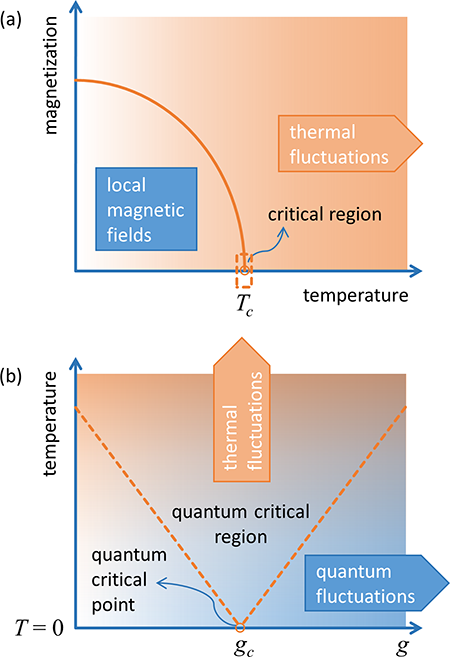
a) An example of the classical phase transition in a ferromagnet. Thermal fluctuations causing the random reorientation of the constituent spins grow with temperature. They compete with the tendency of the local magnetic fields to align the spins. As a result, the net magnetization in the ordered state continuously decreases with temperature (orange line) and drops to zero at a critical temperature Tc, surrounded by a narrow critical region (dashed rectangle). (b) A generic example of the quantum phase transition. Quantum fluctuations controlled by the nonthermal parameter g lead to a similar phase transition at a critical value gc, the so called quantum critical point, already at zero temperature, T=0. Their interplay with thermal fluctuations opens up a progressively broader, V-shaped quantum critical region extending much above the zero temperature (dashed lines).
via physics.aps

Online Isaac Newton manuscripts workshop
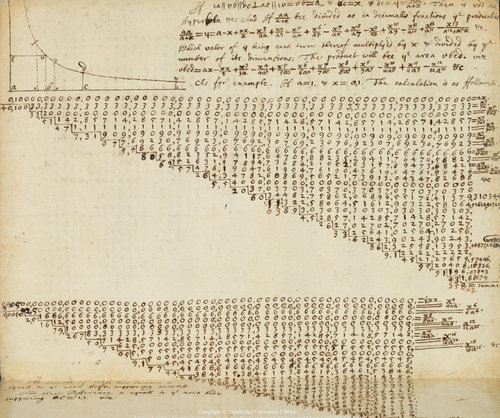
India's Zetatrek citizen science initiative is online workshop starting on 19th July, where science and math hobbyists from all over the world are invited to study the original manuscripts of Sir Isaac Newton.
India’s Zetatrek citizen science initiative is online workshop starting on 19th July, where science and math hobbyists from all over the world are invited to study the original manuscripts of Sir Isaac Newton.
via boingboing

Physics in the News

Monday, July 14, 2014

Confirmed: Magnetic waves cannot accelerate solar wind(VIDEO)

via thewatchers

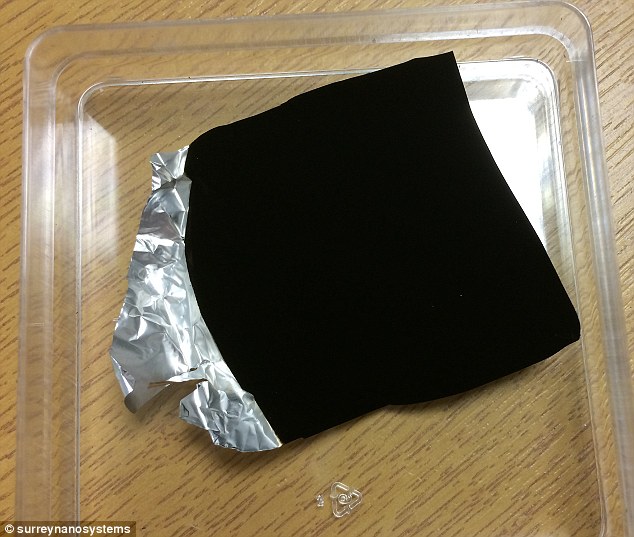
British researchers devise material so dark it looks like a black hole

British scientists have created a material which absorbs all but 0.035 per cent of light, a new world record, and is so dark the human eye struggles to discern what it is that it is seeing, giving the appearance of a black hole. (Credit: Surrey Nano Systems)
via independent

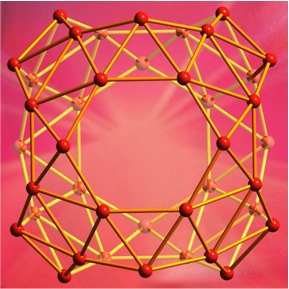
Boron ‘buckyball’ discovered

Researchers have shown that clusters of 40 boron atoms form a molecular cage similar to the carbon buckyball. This is the first experimental evidence that such a boron cage structure exists. (Credit: Wang lab / Brown University)
via .phys.org

How To Measure A Sun-Like Star’s Age

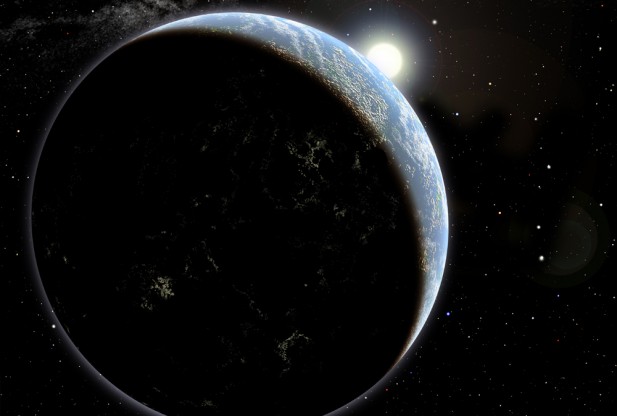
Image Caption: Artist's conception of a hypothetical exoplanet orbiting a yellow, Sun-like star. Astronomers have measured the ages of 22 Sun-like stars using their spins, in a method called gyrochronology. Before now, only two Sun-like stars had measured spins and ages. (Credit: David A. Aguilar (CfA))
Artist’s conception of a hypothetical exoplanet orbiting a yellow, Sun-like star. Astronomers have measured the ages of 22 Sun-like stars using their spins, in a method called gyrochronology. Before now, only two Sun-like stars had measured spins and ages. (Credit: David A. Aguilar (CfA))
via redorbit

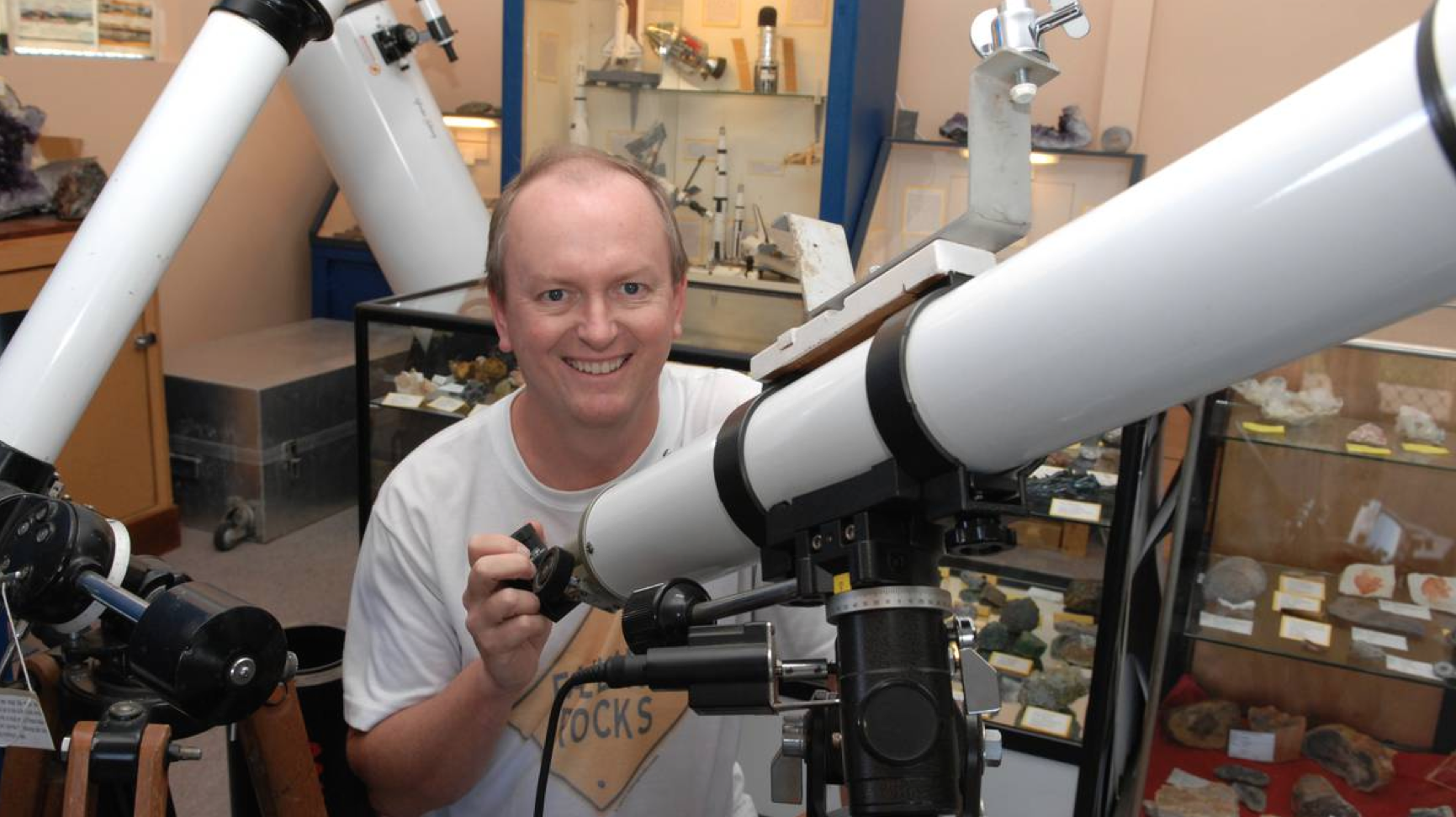
Keeping an eye on passing asteroids

Bathurst Observatory Research Facility manager Ray Pickard said work will begin on the Bathurst Asteroid Research Telescope next week. (Credit: ZENIO LAPKA)
via westernadvocate

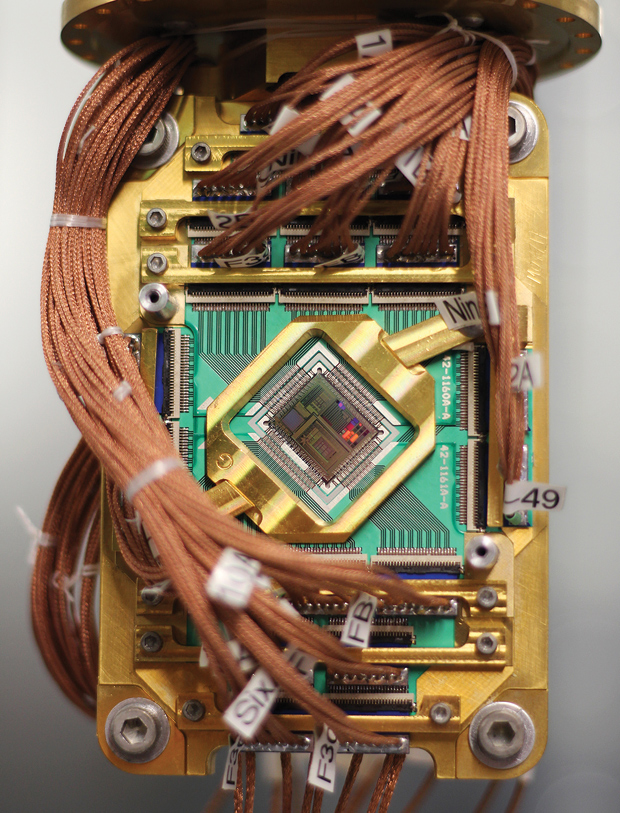
D-Wave Systems Secures $30M (CAD) Funding to Accelerate Quantum Computing

What’s going on inside the D-Wave Two is still a matter of debate. (Credit D-Wave Systems)
via marketwatch

A light bending exercise… in space!

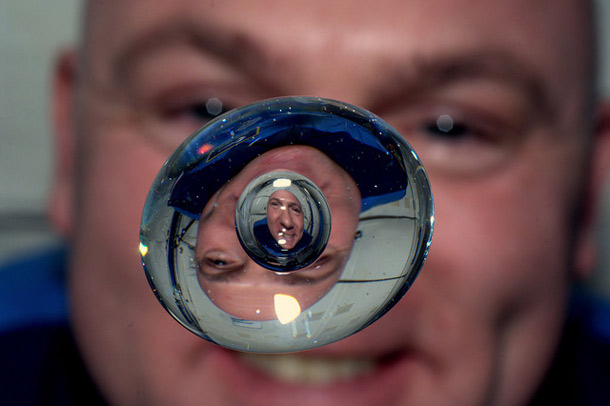
An air bubble was blown into the water droplet to create this effect. (Credit: Imgur)
On Board the International Space Station, ESA astronaut Andre Kuipers blows an air bubble into a water droplet to create this effect. (Credit: ESA/NASA)
via discover

Physics in the News

Sunday, July 13, 2014

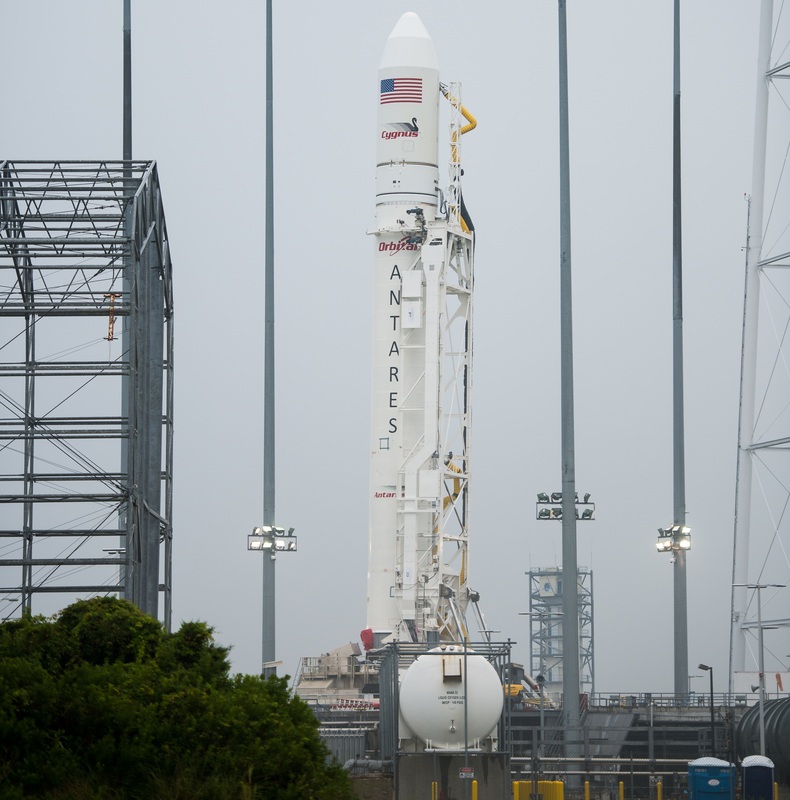
Orb2 launches today at 12:52p ET.(LIVE STREAM)

via spacecoastdaily

What happened to the light? 80% of Universe’s light “missing”(VIDEO)

via libertariannews

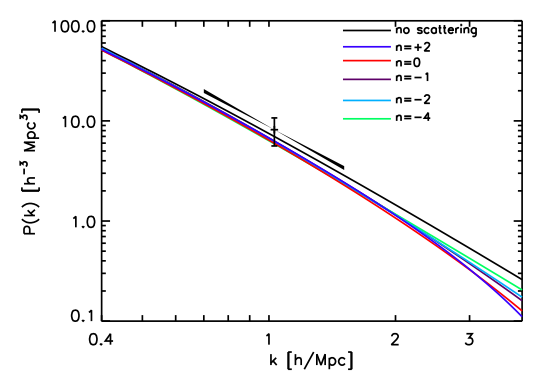
Growth of structure tells us how normal and dark matter scatter

The colored curves describe different velocity dependencies of the scattering strength; it is scaling as v to the nth power. The horizontal axis, k, is a measure of how separated two points in space might be; larger k corresponds to smaller physical separation. The vertical axis (technically known as a “power spectrum”) describes how correlated two points separated by a scale 1/k are; higher number mean more correlation. The one point with error bars shows that most of the models the authors consider are not very favored by the data. (Credit: C. Dvorkin, K. Blum, and M. Kamionkowski)
via astrobites

Venus Express rises again

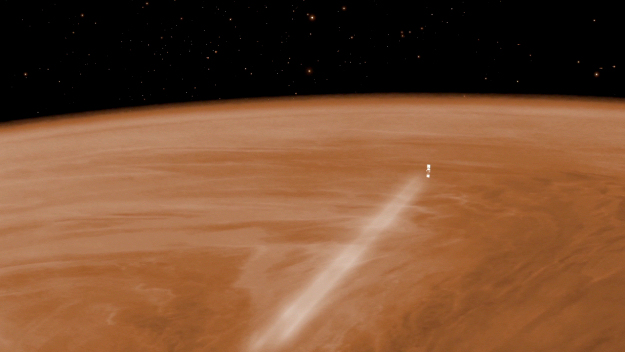
After a month surfing in and out of the atmosphere of Venus down to just 130 km from the planet’s surface, ESA’s Venus Express is about to embark on a 15 day climb up to the lofty heights of 460 km. (Credit: ESA – C. Carreau)
via esa

Privately funded solar spacecraft to launch in 2016

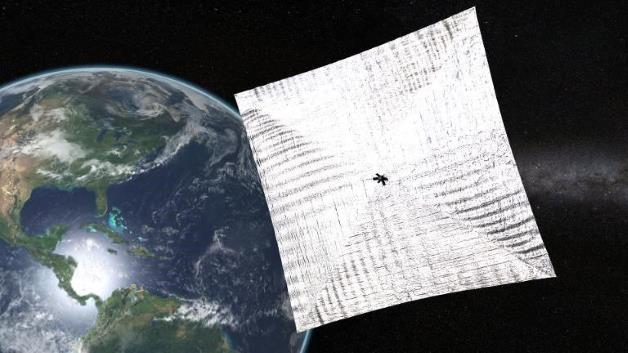
An illustration of The Planetary Society's LightSail spacecraft. (Credit: SpaceX)
An illustration of The Planetary Society’s LightSail spacecraft. (Credit: Plenary Society)

via msn

Early Universe explorer looks for answers

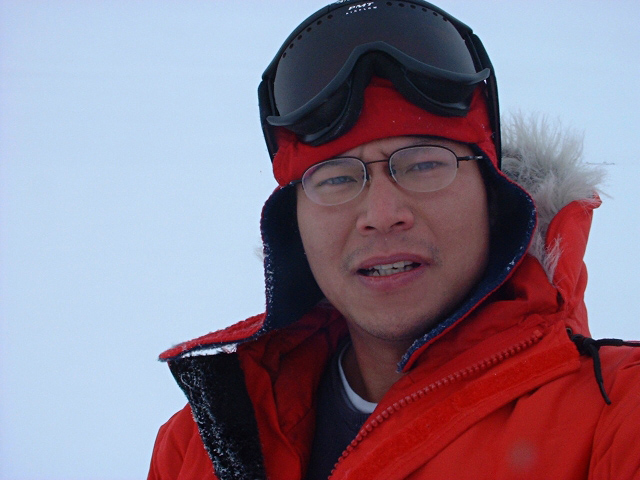
Chao-Lin Kuo, who helped design the BICEP2 experiment, isn’t bothered by criticism that cosmic dust may account for his results. He just wants to know the truth. (Credit: Chao-Lin Kuo)
via scientificamerican

The 1% of scientific publishing

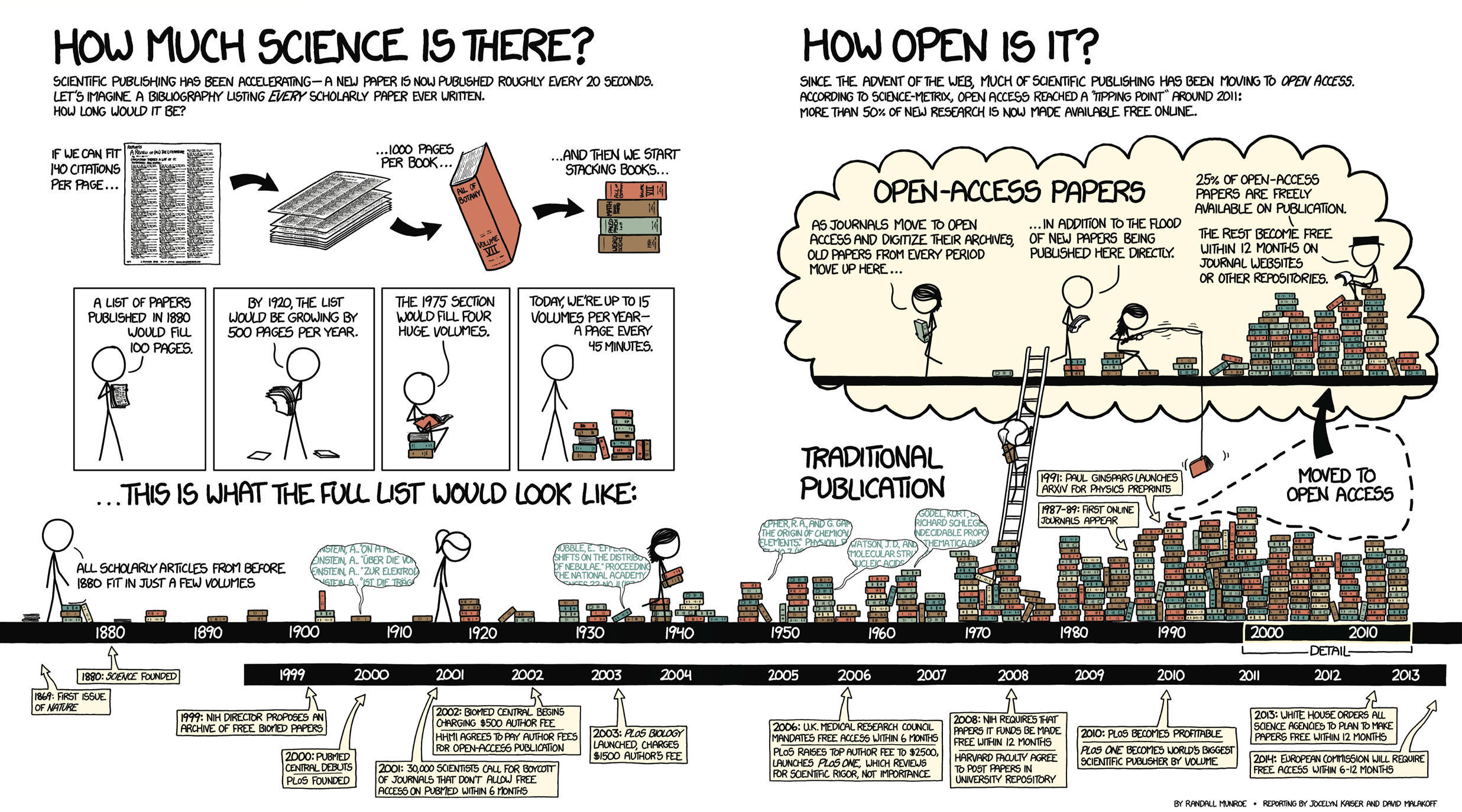
(Credit: sciencemag.org)
via sciencemag

Ask Ethan #45: How deep does the Multiverse go?

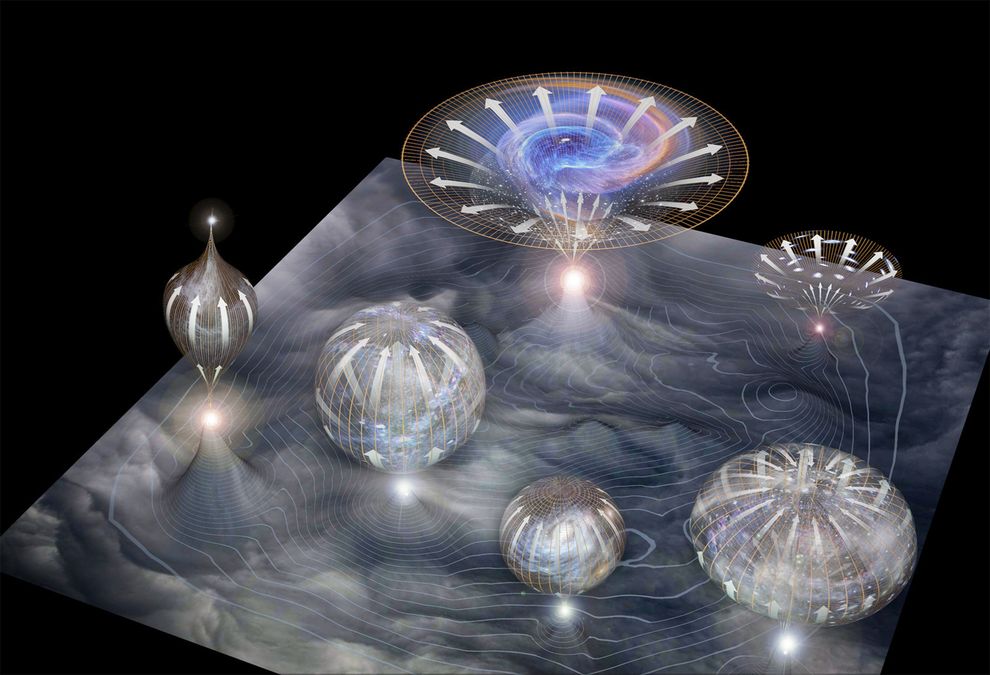
This illustration depicts a main membrane out of which individual universes arise; they then expand in size through time. (Credit: Moonrunner Design)
via scienceblogs

Physics in the News

Saturday, July 12, 2014

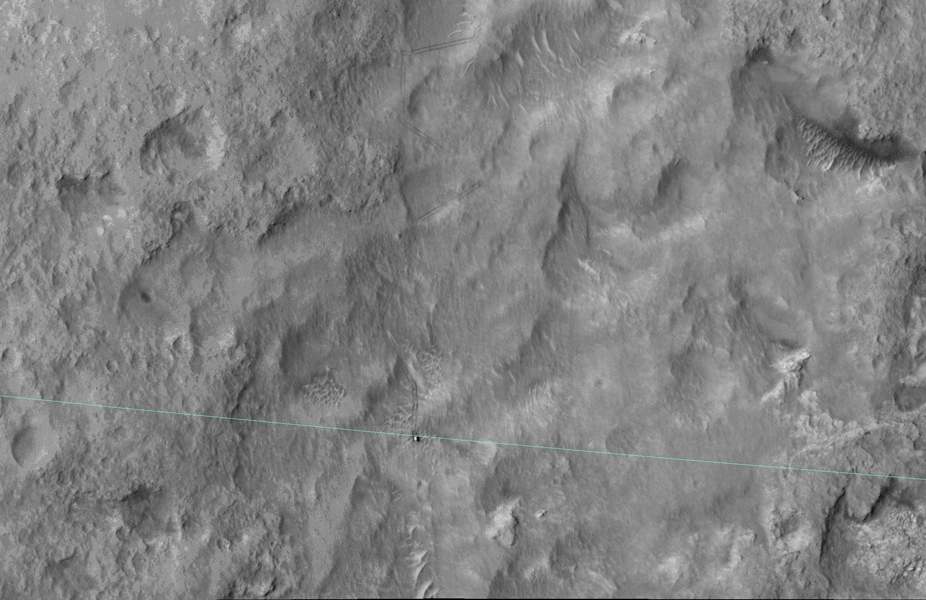
NASA Curiosity Rover is starting to explore dangerous new territory

The blue line added to this June 27, 2014, image from the High Resolution Imaging Science Experiment (HiRISE) camera on NASA's Mars Reconnaissance Orbiter is the edge of the ellipse that was charted as safe terrain for the rover's August 2012 landing. Curiosity is visible right on the ellipse line in the lower center of the image. This 3-sigma landing ellipse is about 4 miles long and 12 miles wide (7 kilometers by 20 kilometers). Curiosity reached the edge of it for the first time with a drive of about 269 feet (82 meters) earlier that day. (Credit: NASA)
The blue line added to this June 27, 2014, image from the High Resolution Imaging Science Experiment (HiRISE) camera on NASA’s Mars Reconnaissance Orbiter is the edge of the ellipse that was charted as safe terrain for the rover’s August 2012 landing. Curiosity is visible right on the ellipse line in the lower center of the image. This 3-sigma landing ellipse is about 4 miles long and 12 miles wide (7 kilometers by 20 kilometers). Curiosity reached the edge of it for the first time with a drive of about 269 feet (82 meters) earlier that day. (Credit: NASA)
via technobuffalo

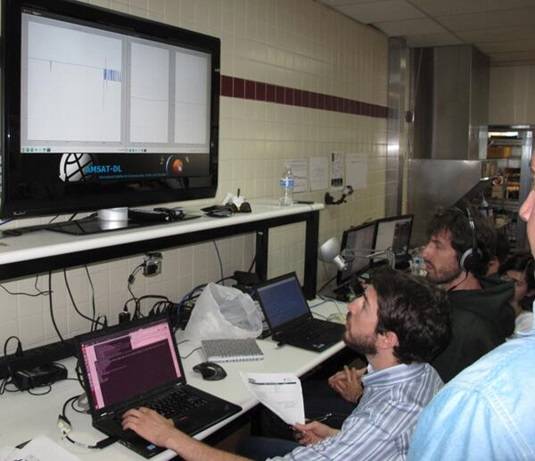
Space geeks’ resurrected NASA sun probe ISEE-3 now on collision course with the moon

An old McDonalds serves as ISEE-3 mission control (Credit: ISEE-3)
via theregister

Richard Feynman, sexism and changing perceptions of a scientific icon

via scientificamerican

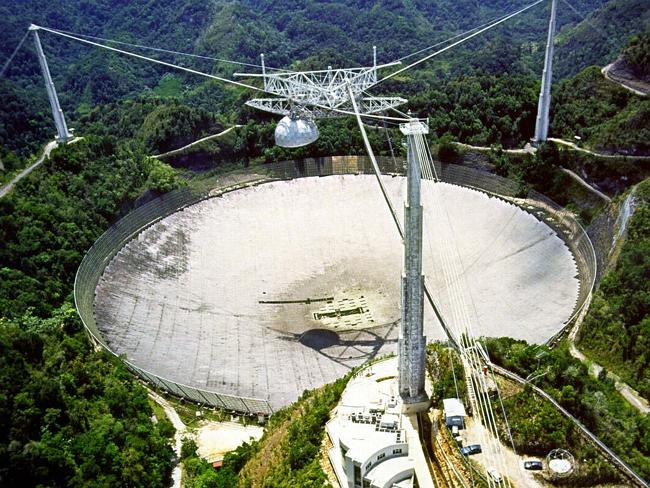
Scientists ‘have no handle on’ radio bursts coming from deep space

The Arecibo Observatory in Puerto Rico is the largest single-dish radio telescope in the world. (Credit: David Parker)
via news.com

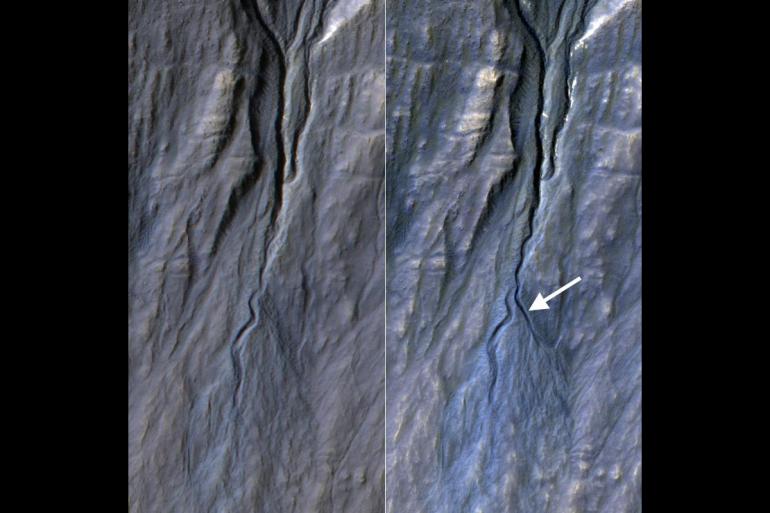
NASA spacecraft observes more evidence of dry ice gullies on Mars

This pair of before (left) and after (right) images captured by the HiRise camera on NASA’s MRO documents the formation of a new channel on a Martian slope between 2010 and 2013. (Credit: NASA/JPL-Caltech/University of Arizona)
via ibtimes

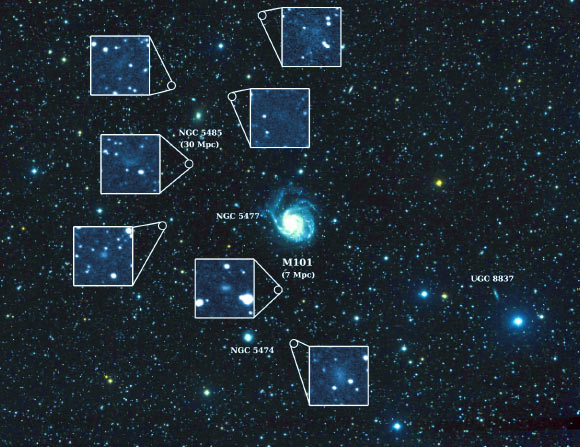
Dragonfly telephoto array discovers seven dwarf galaxies around Messier 101

This image shows the nearby spiral galaxy Messier 101 and the seven newly discovered dwarf galaxies. (Credit: Allison Merritt et al.)
via sci-news

Microsoft and Niels Bohr Institute QDev partner to realize Quantum Information

The base for the research collaboration between Microsoft and the Center for Quantum Devices, called Station Q–Copenhagen, aims to realise quantum information (Credit: ku.dk)
The base for the research collaboration between Microsoft and the Center for Quantum Devices, called Station Q–Copenhagen, aims to realise quantum information  (Credit: ku.dk)
via azoquantum

Physics in the News

Friday, July 11, 2014

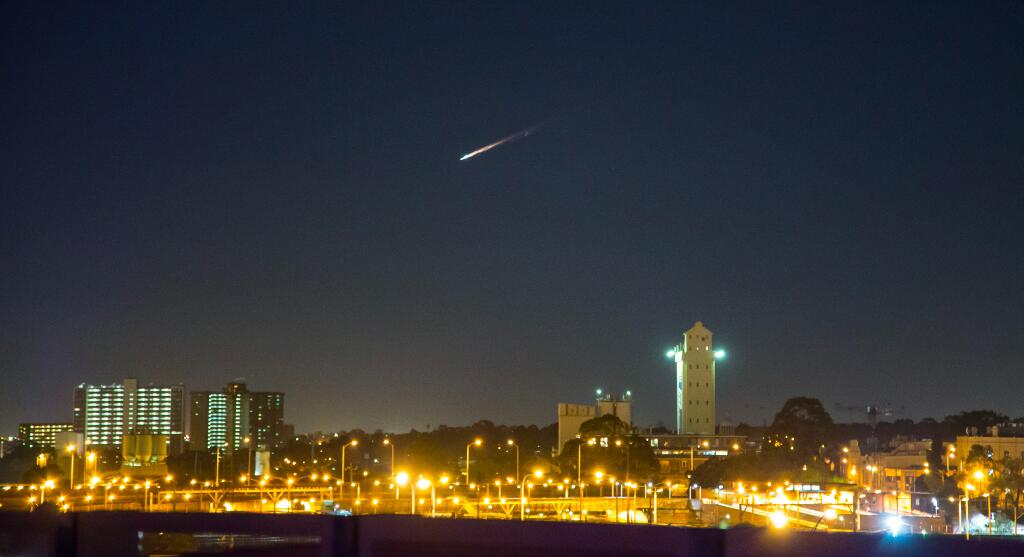
Fireball as Russian space junk ‘belly flops’ to Earth above Australia

Steven Wright saw the fireball Thursday, July 10 (Credit: Steven Wright)
via cnn

Uncertainty gives scientists new confidence in search for novel materials

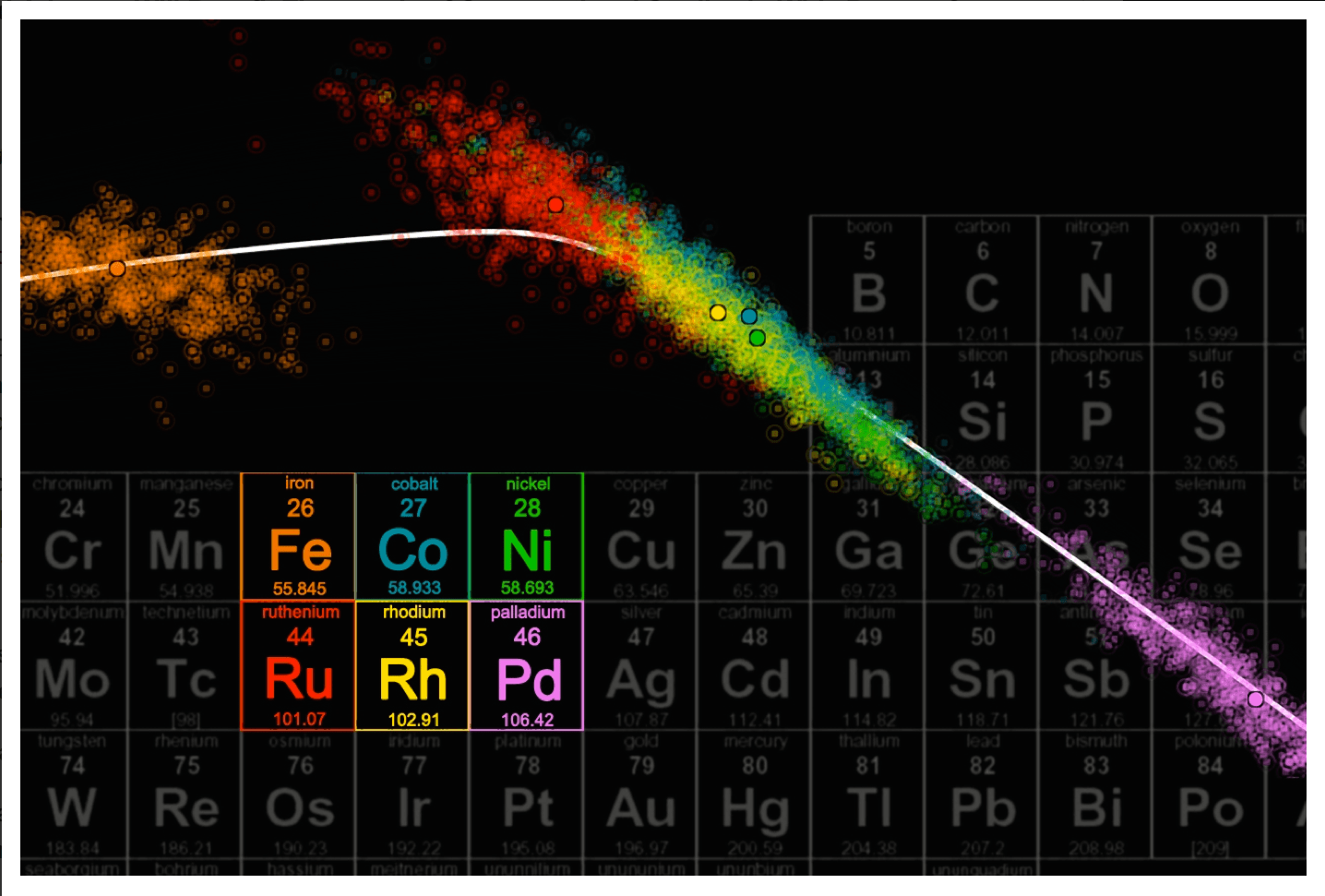
This image shows the results of calculations aimed at determining which of six chemical elements would make the best catalyst for promoting an ammonia synthesis reaction. Based on thousands of these calculations, which yielded a range of results (colored dots) that reveal the uncertainty involved, researchers estimated an 80 percent chance that ruthenium (Ru, in red) will be a better catalyst than iron (Fe, in orange.) (Credit: Andrew Medford and Aleksandra Vojvodic/SUNCAT, Callie Cullum)
via redorbit

Astronomers discover two objects in the mysterious Milky Way halo

ULAS J0015+01 at the center of the photo. (Credit: NASA)
via gizmodo

19th century math tactic gets a makeover—and yields answers up to 200 times faster

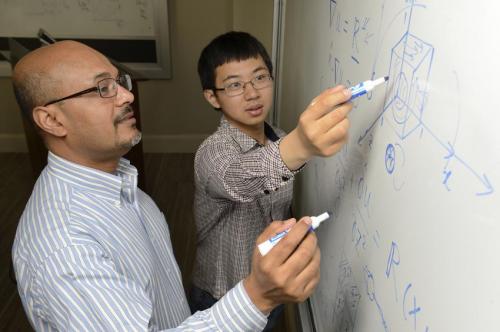
ohns Hopkins graduate student Xiang Yang, at right, teamed up with Rajat Mittal, a professor of mechanical engineering, to revamp a "useless" 169-year-old math strategy, making it work up to 200 times faster. (Credit: Will Kirk/JHU)
Johns Hopkins graduate student Xiang Yang, at right, teamed up with Rajat Mittal, a professor of mechanical engineering, to revamp a “useless” 169-year-old math strategy, making it work up to 200 times faster. (Credit: Will Kirk/JHU)
via phys.org

Artificial spacetime experiment could show tantalizing effects of gravitational waves(VIDEO)

via phys.org